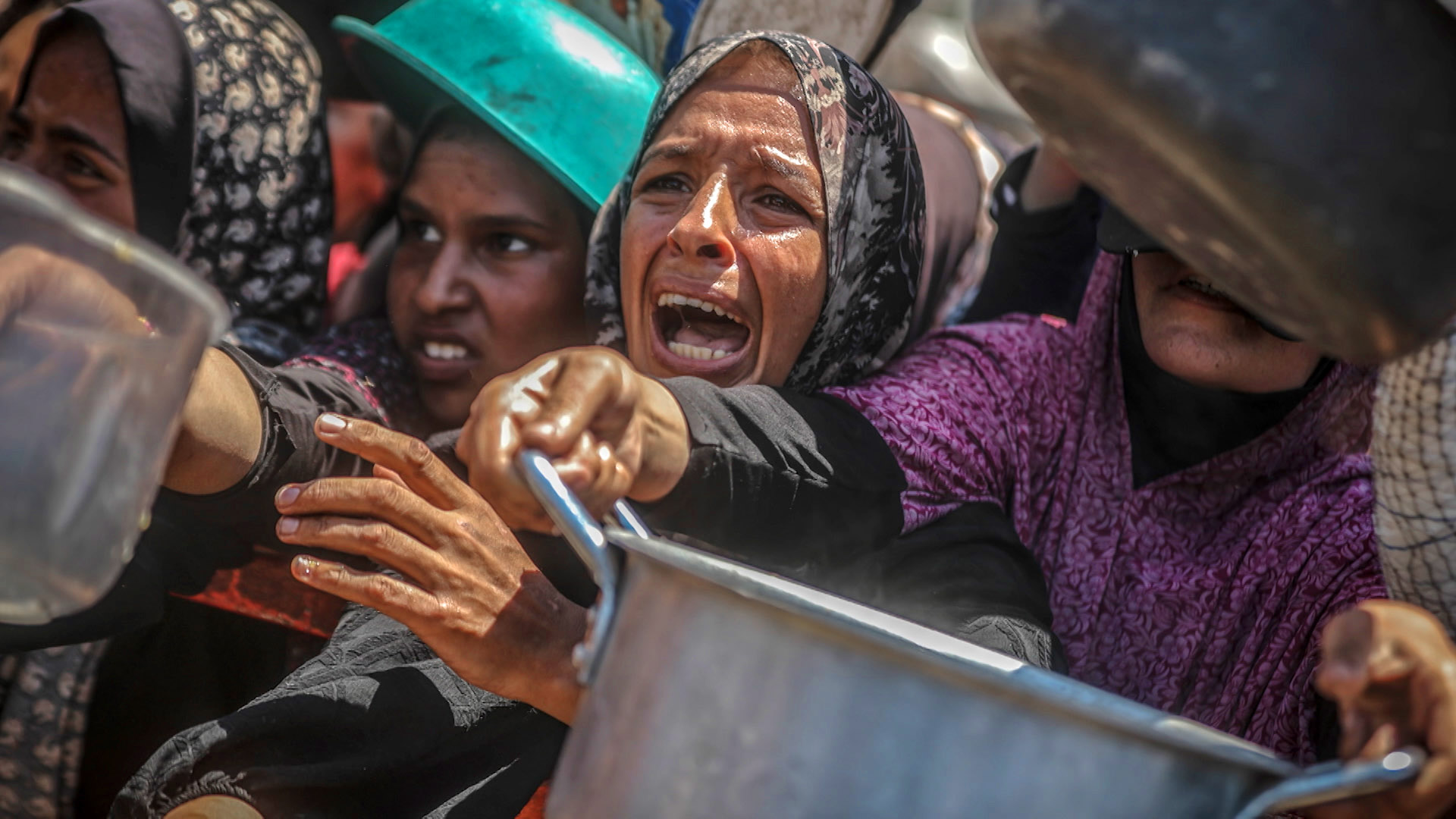
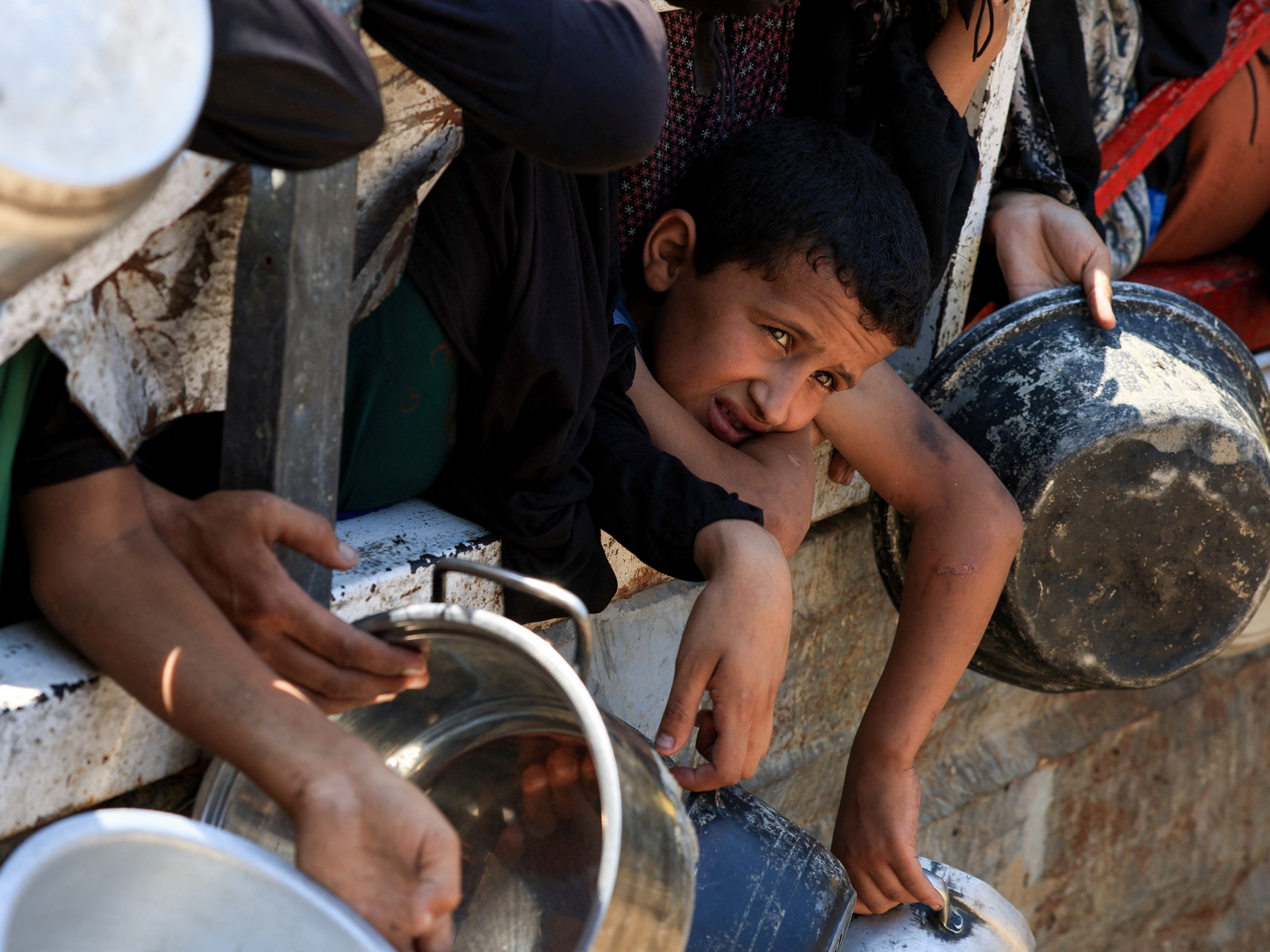
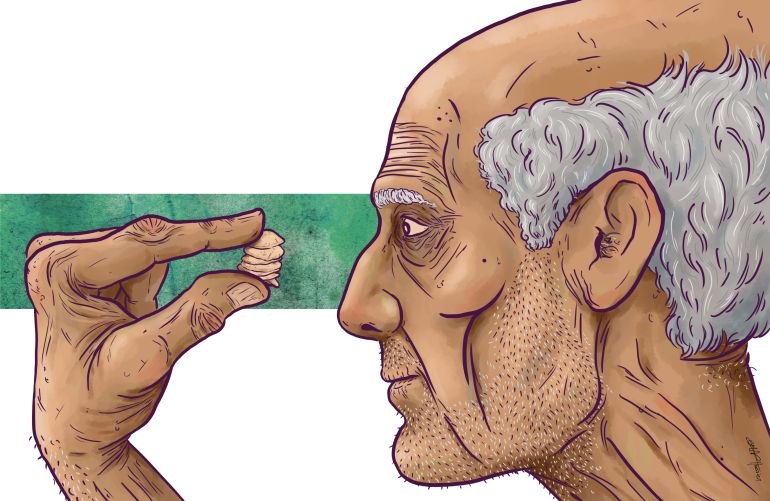
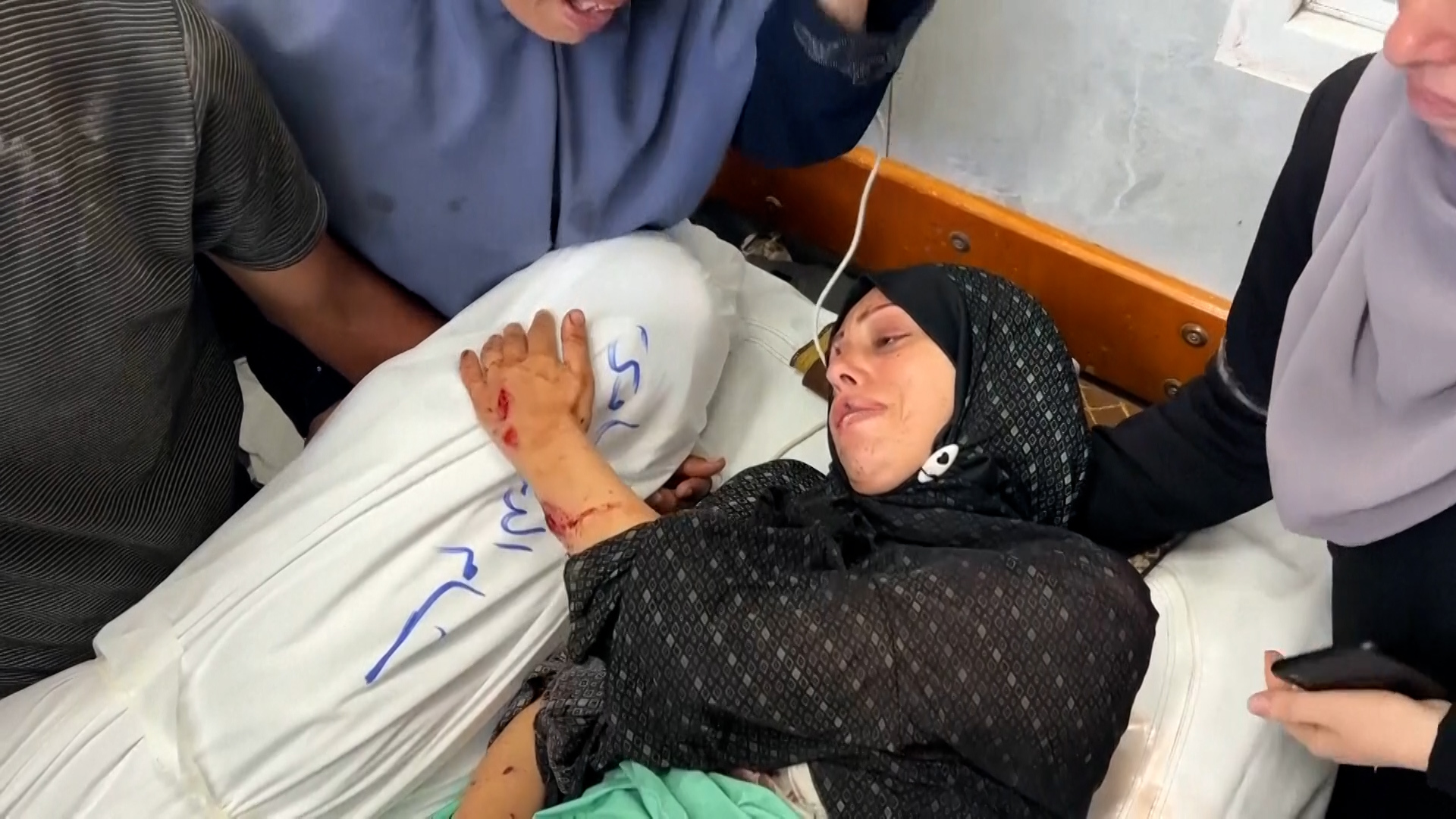
The Israeli blockade of aid has caused a hunger crisis in Gaza and is condemning a growing number of its people to death by starvation. Nonetheless, Palestinian journalists are risking their lives to expose what Western media often softens or obscures: the use of starvation as a tool of genocide.
Contributors: Diana Buttu – human rights lawyer Alice Rothchild – Health Advisory Council, Jewish Voice for Peace Anas al-Sharif – correspondent, Al Jazeera Alex de Waal – author, Mass Starvation
On our radar
In Iran, TV channels, news bulletins and newspapers have been in patriotic overdrive. Meenakshi Ravi reports on the wave of nationalism that has been sweeping across Iran since its 12-day war with Israel.
Galamsey: Covering Ghana’s illegal gold rush
Journalists covering illegal gold mining in Ghana face violent and powerful enemies. Iraklis Taxiarchis reports on the multibillion-dollar “galamsey” industry and the politics influencing its coverage.
Featuring:
Kwadwo Afriyie – Kwame Nkrumah University of Science and Technology Emmanuel Ameyaw – cofounder, Climate Journalists Network Ghana Erastus Donkor – environmental journalist
Palestinians in the Gaza Strip are pleading for help as more people have starved to death under Israel’s unrelenting blockade of the coastal enclave.
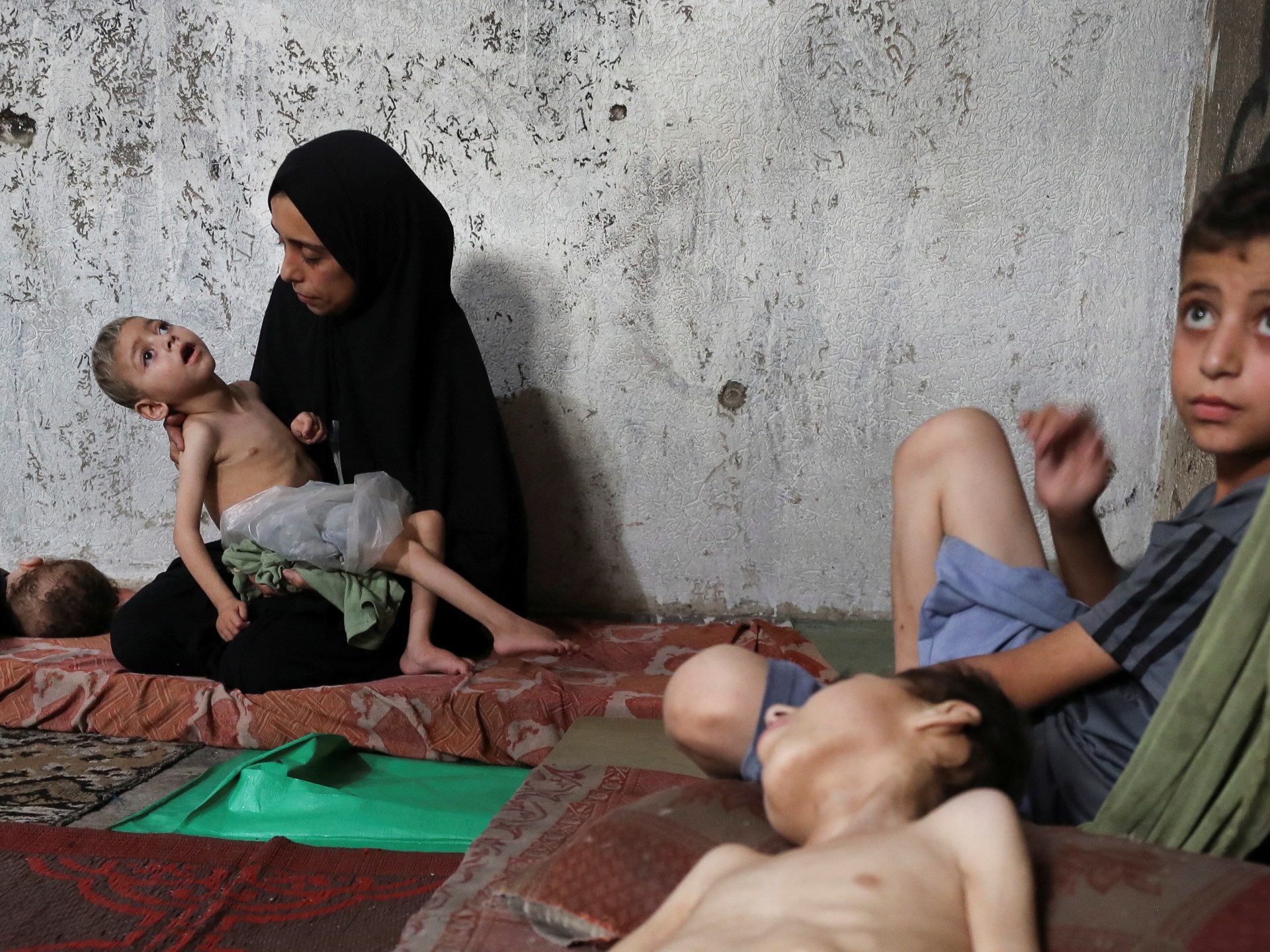
The Gaza Health Ministry said in a statement on Friday that local hospitals recorded nine new malnutrition deaths in the previous 24 hours.
That brings the total number of such deaths to 122 since Israel’s war on Gaza began in October 2023, including at least 83 children.
“We urgently demand an immediate end to the famine, the opening of all crossings, and the entry of infant formula now, along with 500 aid trucks and 50 fuel trucks daily,” the Health Ministry said.
“We hold the Israeli occupation, the US administration, and other states complicit in this genocide—such as the UK, Germany, and France—as well as the international community at large, fully responsible for this historic crime.”
Sources at Nasser Hospital in Khan Younis, in southern Gaza, told Al Jazeera early on Saturday that a six-month-old infant also succumbed to starvation-related medical complications.
Starvation deaths have steadily increased in Gaza this week as Israel continues to maintain a strict blockade on the territory, preventing a steady flow of food, water, medicine and other supplies from reaching Palestinians.
Noor al-Shana, an independent journalist in central Gaza’s Nuseirat, told Al Jazeera that extreme hunger is affecting all aspects of life in the Strip.
She said she now struggles to find enough for one meal per day, while four of her relatives were killed while seeking food at aid distribution points run by the notorious Israel- and United States-backed GHF.
“The world is just saying ‘Free Palestine’ … We don’t want words, we want solutions,” she said.
“Enough, we are tired,” al-Shana added, fighting back tears. “We are suffocating. We are dying here.”
‘Deliberate mass starvation’
Separately, sources at hospitals in Gaza told Al Jazeera that at least 38 people were killed by Israeli attacks across the enclave since the early hours of Friday morning.
Of that, at least six Palestinians were killed while trying to collect food at aid distribution sites.
Philippe Lazzarini, head of the UN agency for Palestinian refugees (UNRWA), on Friday reiterated criticism of the GHF, calling it a “cruel” politically driven effort that “takes more lives than it saves”.
Lazzarini called for the UN agency’s aid stockpiles to be let into Gaza, warning that the enclave is suffering from “deliberate mass starvation”.
“Today, more children died, their bodies emaciated by hunger,” he said in a post on X. “The unfolding famine can only be reversed by a political will.”
The Israeli military has blamed international organisations for the crisis, claiming that aid trucks are inside Gaza but that the UN has refused to distribute the assistance.
UN officials have rejected that, saying repeatedly that they have not received the necessary approvals from the Israeli authorities to distribute the aid.
The UN and other humanitarian groups have also refused to work with the GHF aid distribution scheme, which they say does not adhere to humanitarian principles such as impartiality and independence.
As the crisis continues to spiral, United States President Donald Trump on Friday solely blamed Hamas for the apparent collapse of Gaza ceasefire talks, saying the group is going to be “hunted down”.
“Hamas didn’t really want to make a deal. I think they want to die, and it’s very, very bad,” Trump told reporters at the White House.
The US president’s comments came a day after his Middle East envoy said US negotiators had withdrawn from ceasefire talks in Qatar.
Hamas responded to the US’s announcement with surprise, saying on Thursday that it had submitted a positive and constructive response to the latest proposal it was offered.
Despite Hamas’s insistence that it is ready to work towards a deal, Israeli Prime Minister Benjamin Netanyahu has said that Israel and the US are weighing ways to secure the release of captives in Gaza that do not depend on a negotiated agreement with the Palestinian group.
“Together with our US allies, we are now considering alternative options to bring our hostages home, end Hamas’s terror rule, and secure lasting peace for Israel and our region,” Netanyahu said.
Israel’s war on Gaza has killed at least 59,676 Palestinians and wounded 143,965 others. An estimated 1,139 people were killed in Israel during the Hamas-led October 7, 2023, attacks and more than 200 were taken captive.
UK Prime Minister Keir Starmer, under pressure to recognise a Palestinian state, said he would do so only as part of a wider peace deal. His Labour-led government is facing growing calls to recognise a Palestinian state after France said it will and a cross-party group of parliamentarians urged Starmer to act before it is too late.
More than 200 lawmakers in the United Kingdom have called on the British government to recognise a Palestinian state, as pressure mounts on Prime Minister Keir Starmer to take concrete action amid Israel’s war on Gaza.
Some 221 MPs from across the political spectrum signed an open letter on Friday calling on Starmer’s Labour government to recognise a Palestinian state in advance of a United Nations conference on Palestine next week.
“We are expectant that the outcome of the conference will be the UK Government outlining when and how it will act on its long-standing commitment on a two-state solution; as well as how it will work with international partners to make this a reality,” the letter reads.
“Whilst we appreciate the UK does not have it in its power to bring about a free and independent Palestine, UK recognition would have a significant impact due to our historic connections and our membership on the UN Security Council, so we urge you to take this step.”
Parliamentarians from nine political parties were among the signatories, Labour MP Sarah Champion said, including Labour, the Conservatives, Liberal Democrats, SNP, and the Greens.
The letter comes as public anger is growing in the UK and around the world over Israel’s continued bombardment and blockade of the Gaza Strip, which has spurred a deadly starvation crisis.
221 MPs, from 9 parties, have sent a joint letter to the Prime Minister & Foreign Secretary urging them to recognise Palestine as a state now pic.twitter.com/b2hbX2XCGR
It also comes a day after French President Emmanuel Macron announced that France would recognise the State of Palestine at the UN in September.
“Consistent with its historic commitment to a just and lasting peace in the Middle East, I have decided that France will recognise the State of Palestine,” Macron said in a social media post on Thursday.
“I will make this solemn announcement before the United Nations General Assembly this coming September. The urgent priority today is to end the war in Gaza and to bring relief to the civilian population.”
Macron’s announcement drew the ire of Israeli leaders, including Prime Minister Benjamin Netanyahu, who said the move “rewards terror”.
But Netanyahu has faced widespread condemnation for Israel’s continuing assault on Gaza, which has killed more than 59,000 Palestinians since it began in October 2023.
Israel’s blockade of the enclave has caused a deepening humanitarian crisis, with the United Nations and top human rights groups reporting that many Palestinian children are now suffering from severe malnutrition and at risk of death.
In a statement on Friday, Starmer said “the appalling scenes in Gaza are unrelenting”.
“The continued captivity of hostages, the starvation and denial of humanitarian aid to the Palestinian people, the increasing violence from extremist settler groups, and Israel’s disproportionate military escalation in Gaza are all indefensible,” he said.
But Starmer stopped short of announcing plans to recognise a Palestinian state, instead saying he was working “on a pathway to peace in the region”.
“That pathway will set out the concrete steps needed to turn the ceasefire so desperately needed, into a lasting peace,” he said.
“Recognition of a Palestinian state has to be one of those steps. I am unequivocal about that. But it must be part of a wider plan which ultimately results in a two-state solution and lasting security for Palestinians and Israelis.”
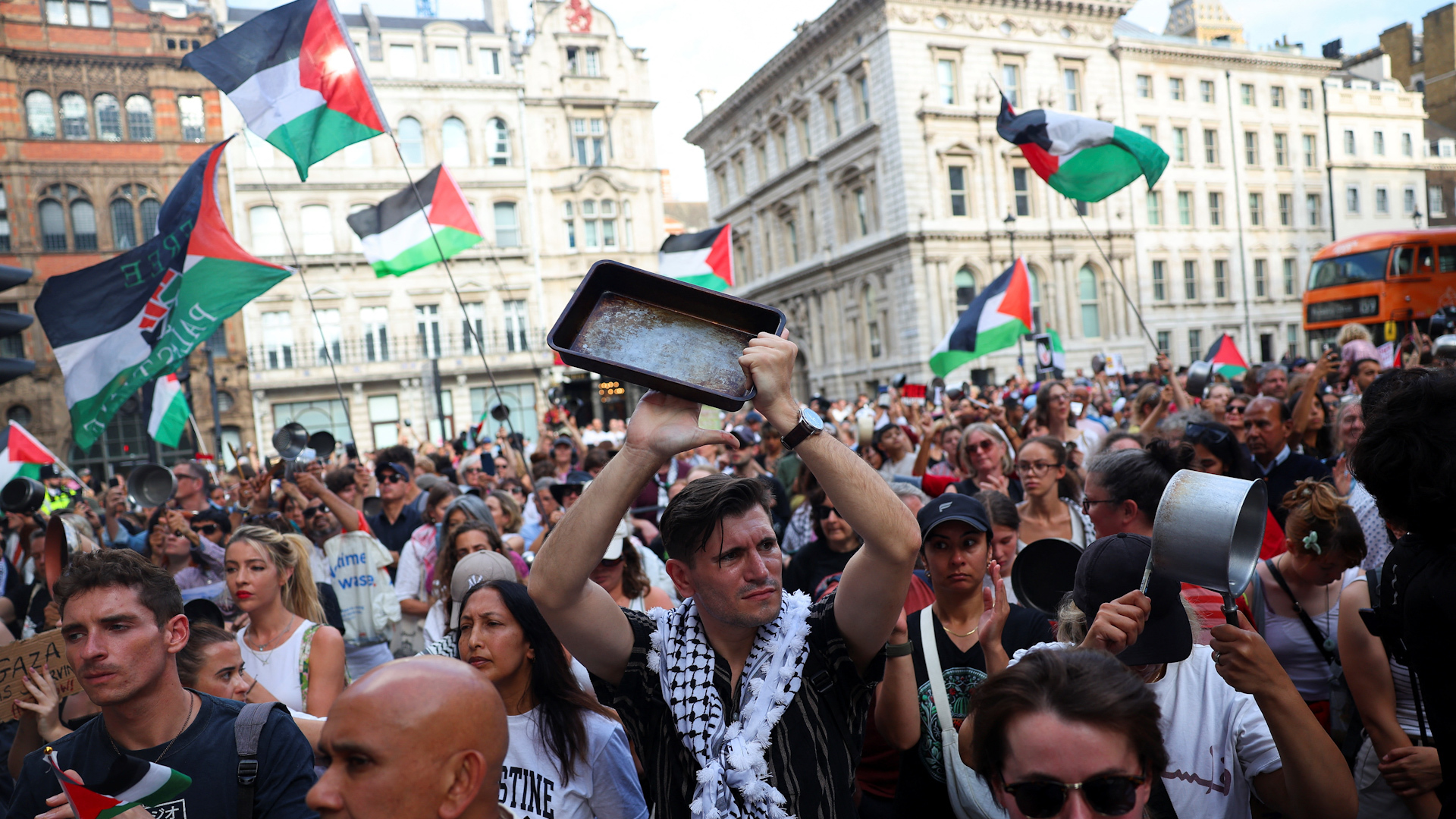
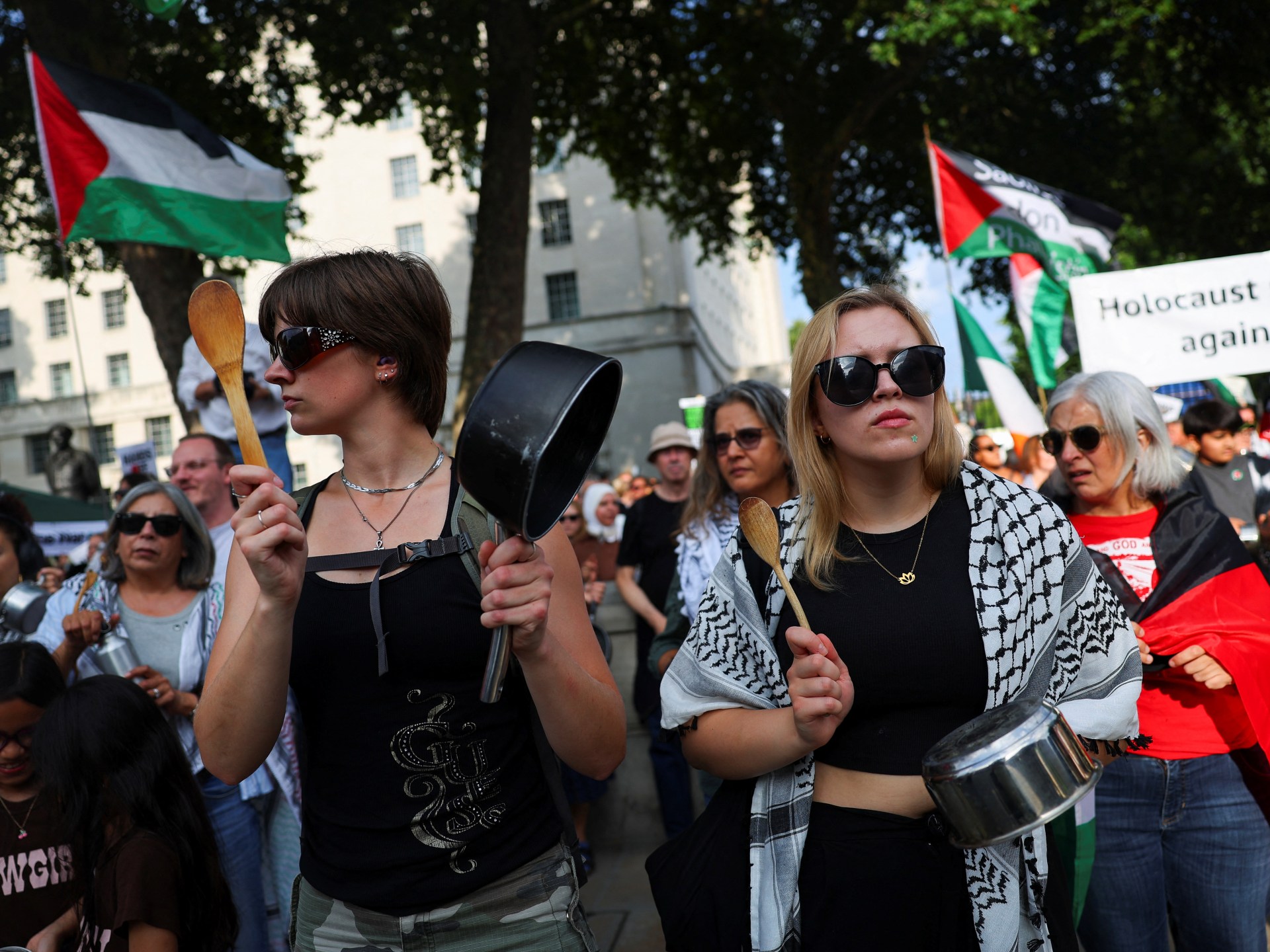
Reporting from a protest outside Starmer’s residence in London on Friday afternoon, Al Jazeera’s Milena Veselinovic said demonstrators expressed “outrage” at the British government’s stance amid the dire situation in Gaza.
“Many of them feel powerless, so one of the only things they can do is gather here, make as much noise as they can, and hope that it will be noticed by the people in power,” she said.
“They want Keir Starmer to do more with the power that he has, and with the influence that he has, to put an end to this.”
In addition to recognising a Palestinian state, the British government has faced growing calls to sanction Israel and impose an arms embargo against the country.
Veselinovic said Starmer is in “a difficult diplomatic situation” as he prepares to meet United States President Donald Trump, who was travelling to Scotland on Friday.
She explained that Macron’s announcement added pressure on the UK, which is a close ally of both France and the US, to also recognise a Palestinian state, but noted that Trump has criticised the French president’s move.
“It does seem like a gulf is emerging here over what the European stance is overall, which is much more aligned with what UN aid agencies are saying is going on on the ground in Gaza, and the American position, which seems to nearly 100 percent back whatever is the Israeli government’s version of events is,” she said.
“And in the middle of that is Keir Starmer, who wants to maintain good relations with both sides.”
Georges Ibrahim Abdallah flown to Lebanon from France after incarceration ends.
France has released Georges Ibrahim Abdallah, a pro-Palestinian Lebanese fighter jailed since 1984, and put him on a flight to Beirut after he spent nearly four decades behind bars.
Shortly before 3:40am (01:30 GMT) on Friday, a convoy of six vehicles with flashing lights was seen leaving the Lannemezan prison in southern France, according to journalists with the AFP news agency on the ground. A source confirmed the 74-year-old had been freed and later boarded a flight to Lebanon.
Abdallah, who was convicted in 1987 for his role in the killings of United States military attache Charles Robert Ray and Israeli diplomat Yacov Barsimantov in Paris, had long been eligible for release. However, repeated applications were rejected, often due to pressure from the US, which was a civil party in Abdallah’s case.
Last month, the Paris Court of Appeal ruled in favour of his release, effective on Friday, on the condition that Abdallah leave French territory and never return.
His lawyer, Jean-Louis Chalanset, told AFP that the former fighter appeared “very happy” during their final visit “even though he knows he is returning to the Middle East in an extremely tough context for Lebanese and Palestinian populations”.
Abdallah, the founder of the now-defunct Lebanese Revolutionary Armed Factions, had declared during a recent visit by a lawmaker that he remained a “militant with a struggle”. French police uncovered submachine guns and communication equipment in one of his flats at the time of his arrest.
Abdallah has never expressed regret for his actions and has always insisted he is a “fighter” who has battled for the rights of Palestinians and is not a “criminal”.
The Paris court described his behaviour in prison as irreproachable and said in November that he posed “no serious risk in terms of committing new terrorism acts”.
The appeals court cited the length of Abdallah’s detention and his advanced age, calling his continued imprisonment “disproportionate”. In France, inmates serving life sentences are typically released after less than 30 years.
Abdallah’s family said they would greet him at Beirut’s airport before travelling to his hometown of Kobayat in northern Lebanon, where a reception has been planned.
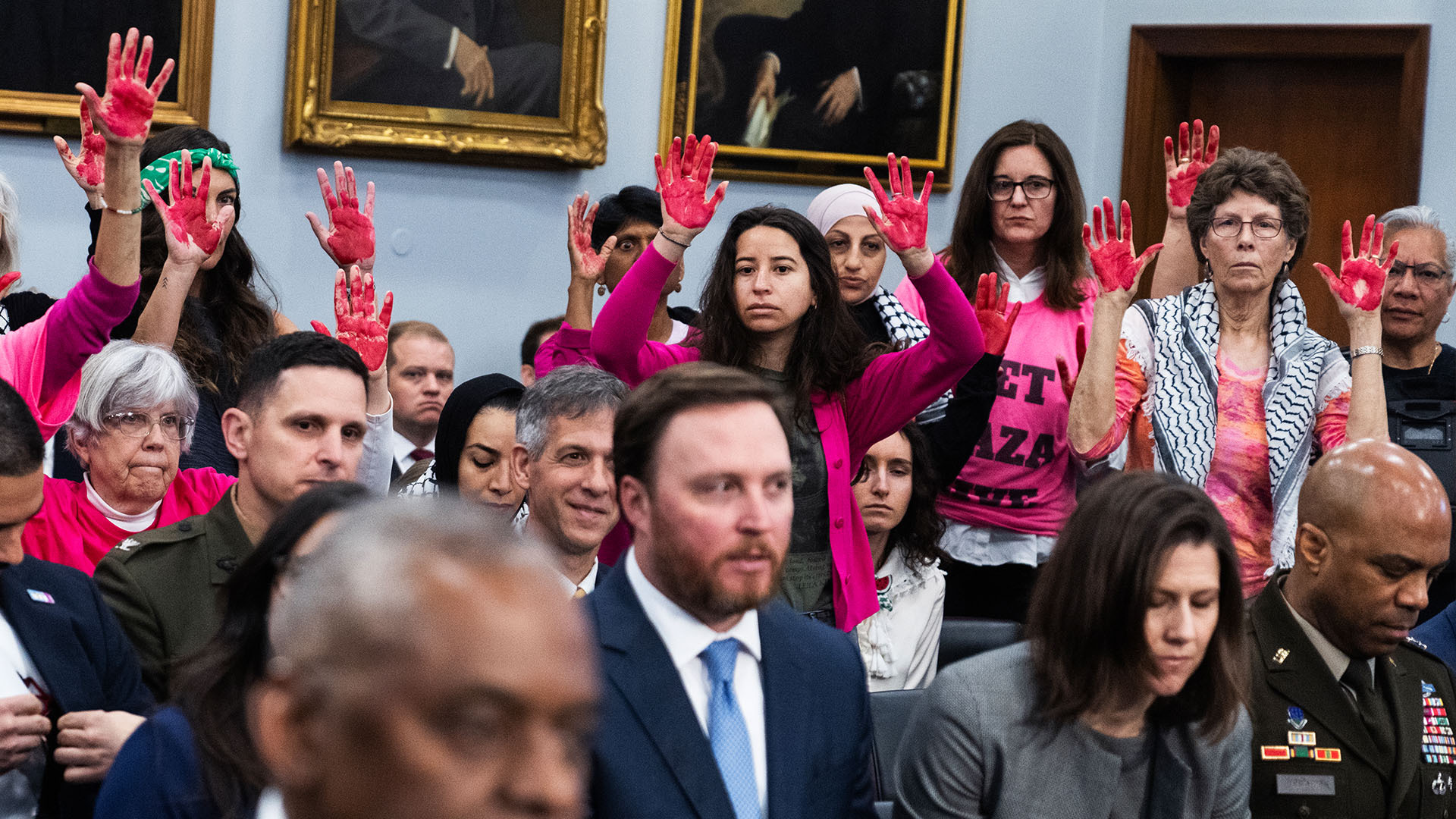
US protest group Code Pink is targeting key politicians they say are involved in Israel’s starvation campaign in Gaza. The group has previously targeted former President Joe Biden and Senator Lindsey Graham over their support for Israel’s war.
At least 62 people have been killed, including 19 who were seeking aid, in Israeli attacks across Gaza, hospital sources told Al Jazeera, and two people died from malnutrition amid growing international outrage over Israel’s conduct in the war.
Gaza’s Health Ministry said on Thursday that at least 115 Palestinians have starved to death in the enclave since Israel launched its war on Gaza in October 2023. Most of the deaths, which include many children, have been in recent weeks.
Israel imposed a total blockade on Gaza in March and has only allowed a trickle of aid into the territory since late May, triggering a dire humanitarian crisis and warnings of mass starvation.
In a statement on Thursday, the United Nations agency for Palestinian refugees (UNRWA) warned that “families are breaking down” amid the hunger crisis.
“Parents are too hungry to care for their children,” agency head Philippe Lazzarini said in a post on X. “Those who reach UNRWA clinics don’t have the energy, food or means to follow medical advice”.
The UN humanitarian agency, OCHA, added that Israel has been preventing it from verifying aid waiting at distribution centres.
Reporting from Gaza City, Al Jazeera’s Hani Mahmoud said the situation was deteriorating, with Palestinians clamouring for any aid they can find.
“Enforced starvation, enforced dehydration, and hunger are gripping the Gaza Strip, with more people reported with malnutrition and a severe, acute shortage of food supplies and other basic necessities,” he said.
“According to what we hear from health sources, people’s immune systems are falling apart. They’re unable to fight the many diseases that are spreading because their bodies are unable to fight,” he said.
With dire conditions on the ground largely unchanged, international condemnation has continued to grow.
On Thursday, more than 60 members of the European Parliament (MEPs) demanded an emergency meeting to push actions against Israel in a letter sent to European Union foreign policy chief Kaja Kallas.
Speaking to Al Jazeera, Lynn Boylan, an Irish member of the European Parliament, accused EU leaders of a double standard when it comes to Palestinian lives.
“Clearly, Palestinian lives are not seen by the elite in the EU as equivalent to, for example, Ukrainian lives,” Boylan told Al Jazeera.
“There’s a chilling effect, that if you dare to speak up against Israel, if you dare to call out the war crimes that you’re witnessing, there is immediately a backlash and an attack,” she said.
Outrage among European leaders has also soared in recent days, with 28 countries earlier this week condemning the aid blockade, while calling for an immediate end to the fighting.
On Thursday, the United Kingdom’s government announced Prime Minister Keir Starmer would hold a call with his German and French counterparts, to “discuss what we can do urgently to stop the killing and get people the food they desperately need”.
Breakdown in talks
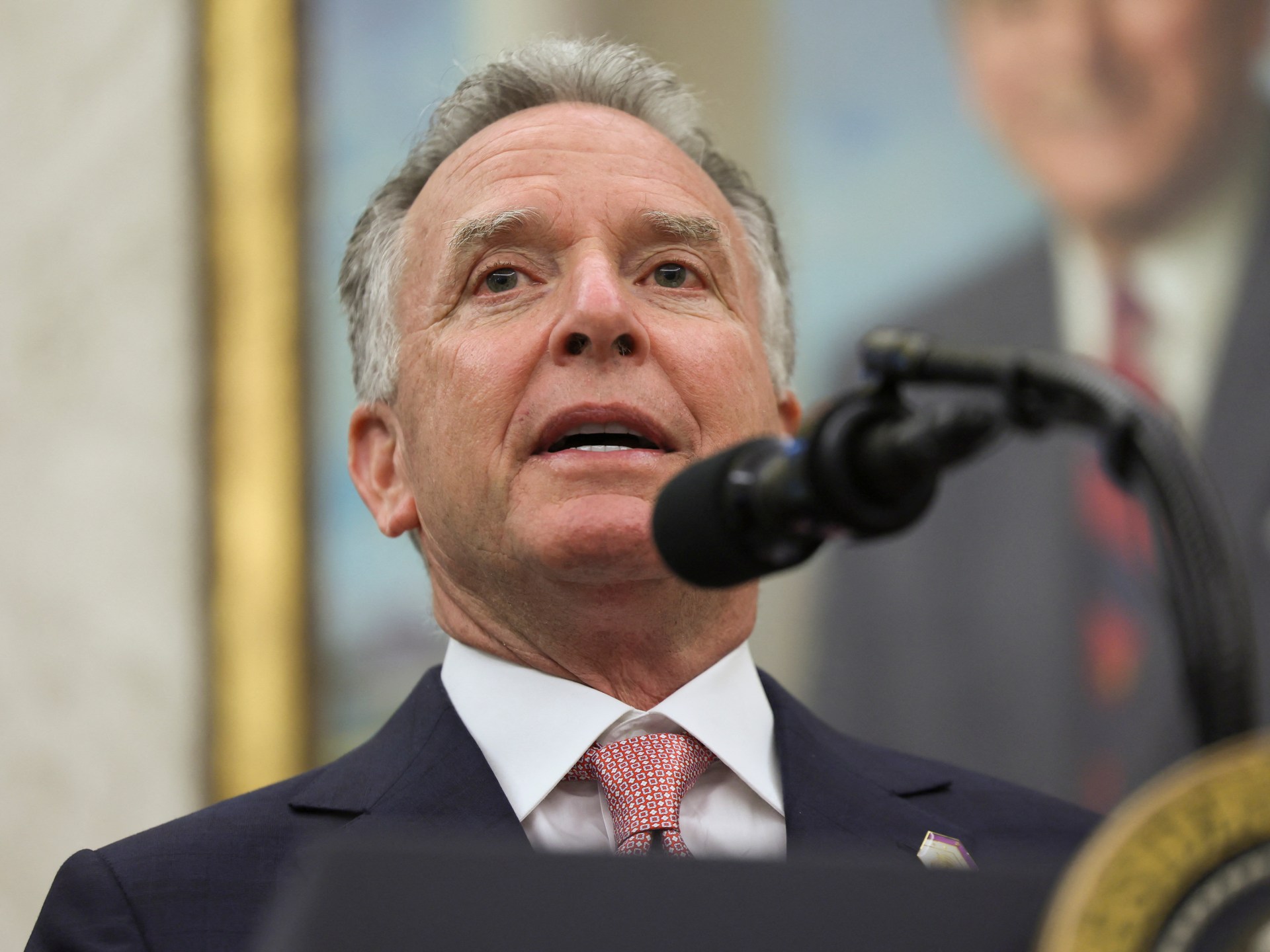
As the humanitarian situation in Gaza continues to spiral, negotiations to end the war again broke down, with US envoy Steve Witkoff announcing that his team was leaving negotiations in Qatar early.
That came shortly after Israel announced it was withdrawing its delegation from the talks.
In a statement, Witkoff accused Hamas of showing “a lack of desire to reach a ceasefire”.
“We will now consider alternative options to bring the hostages home and try to create a more stable environment for the people of Gaza,” Witkoff said, without elaborating.
Hamas, which has repeatedly accused Israel of blocking a ceasefire agreement, said it was surprised by Witkoff’s remarks.
“The movement affirms its keenness to continue negotiations and engage in them in a manner that helps overcome obstacles and leads to a permanent ceasefire agreement,” said Hamas in a statement released late on Thursday.
US President Donald Trump, meanwhile, has continued to push for a deal, while simultaneously supporting the displacement of Palestinians from the enclave to nearby countries, in what would potentially constitute ethnic cleansing.
France to recognise Palestine
Late on Thursday, French President Emmanuel Macron announced he would officially recognise the State of Palestine at the United Nations General Assembly in September.
Macron said the decision was “in keeping with [France’s] historic commitment to a just and lasting peace in the Middle East”.
The move will make France the largest and arguably most influential country in Europe to recognise a Palestinian state.
The move was hailed by the deputy of Palestinian Authority President Mahmoud Abbas, who said it showed France’s “commitment to international law and its support for the Palestinian people’s rights to self-determination and the establishment of our independent state”.
Israeli officials swiftly condemned the move, with Defence Minister Israel Katz calling it a “disgrace and a surrender to terrorism”.
“We will not allow the establishment of a Palestinian entity that would harm our security, endanger our existence, and undermine our historical right to the Land of Israel,” he said.
US special envoy Steve Witkoff accuses Palestinian group of showing ‘a lack of desire’ to reach a ceasefire in Gaza.
United States special envoy Steve Witkoff has said he is cutting short talks aimed at reaching a truce in Israel’s war on Gaza, after the latest proposal from Hamas showed “a lack of desire to reach a ceasefire”.
Witkoff made the announcement in a statement on Thursday, just hours after the office of Prime Minister Benjamin Netanyahu said Israel had also recalled its negotiating team from Qatar amid the latest diplomatic flurry.
There was no immediate comment from Hamas. The group has repeatedly accused Israel of blocking a ceasefire agreement.
Earlier in the day, Hamas had submitted its latest response to a ceasefire framework floated by mediators Qatar, Egypt and the US. Netanyahu’s office confirmed receipt of the response, and said it was under review. Neither side disclosed the contents.
Both Israel and Hamas are facing growing international pressure to reach an agreement as the humanitarian and hunger crisis in the territory continues to deteriorate sharply amid Israel’s severe restrictions on the entry of aid.
At least 115 people have died from malnutrition since Israel launched its war on Gaza in October 2023, mostly in recent weeks, as the United Nations and aid agencies have warned that Gaza’s residents were facing mass starvation.
“While the mediators have made a great effort, Hamas does not appear to be coordinated or acting in good faith,” Witkoff said in a statement.
“We will now consider alternative options to bring the hostages home and try to create a more stable environment for the people of Gaza,” Witkoff said, without elaborating.
Witkoff, a businessman with no formal diplomatic experience prior to his appointment, said the US remains “resolute” in seeking an end to the war in Gaza, adding it was “a shame that Hamas has acted in this selfish way”.
The current proposal under discussion has been reported to include a 60-day ceasefire in which Hamas would release 10 living captives and the remains of 18 others. In turn, Palestinians imprisoned by Israel would be released and aid supplies would be ramped up as the two sides held negotiations on a lasting truce.
Details of the current sticking point were not immediately clear, but officials from both sides have previously pointed to a dispute over what would happen in the wake of any new ceasefire.
Israel has repeatedly said it plans to deploy the military long term in Gaza, seeking a complete defeat of Hamas, despite warnings that such a goal is unrealistic.
Earlier this month, Israeli Defence Minister Israel Katz reportedly laid out a plan for the forced transfer of Palestinians to a “humanitarian city” within Gaza, a maximalist approach that critics say would violate international law.
Israel’s government has also faced domestic pressure over the plan, amid fears it would foreclose ceasefire negotiations and block the release of captives still held in Gaza.
Reporting from Washington, DC, Al Jazeera’s Shihab Rattansi said it remained unclear whether the US withdrawal from the talks was a “negotiating tactic”.
“It’s a very sternly worded tweet, talking about ‘alternative options for a more stable environment for the people of Gaza,’” he said.
“We know that Trump simply hasn’t ruled out ethnic cleansing, so-called ‘self deportation’, in his words, of Palestinians.”
“Right now, we simply don’t know whether it’s a negotiating position or the end of the negotiations,” Rattansi said.
Israel’s war in Gaza has killed at least 59,587 Palestinians since it began in the wake of the Hamas-led attack on southern Israel on October 7, 2023, which killed at least 1,139 people.
This week, more than 100 aid groups blamed Israel’s restrictions on aid for “mass starvation” in the enclave.
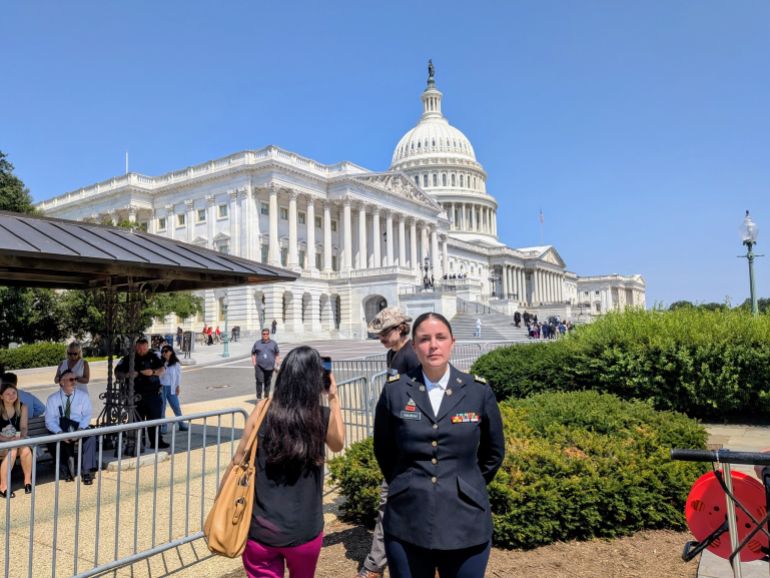
Washington, DC – Josephine Guilbeau’s voice remained steady as it rose with anger and frustration outside the United States Capitol while she described the Israeli-imposed hunger crisis in Gaza.
“The level of evil that it takes to make a decision to starve a baby as a means of war, as a weapon of war – what have we come to as a humanity? What have we come to as a country?” the 17-year US Army veteran said on Thursday.
Guilbeau had joined several fellow veterans, doctors, former officials and Congresswoman Rashida Tlaib in calling on the lawmakers and President Donald Trump to listen to the US public and end unconditional support for Israel.
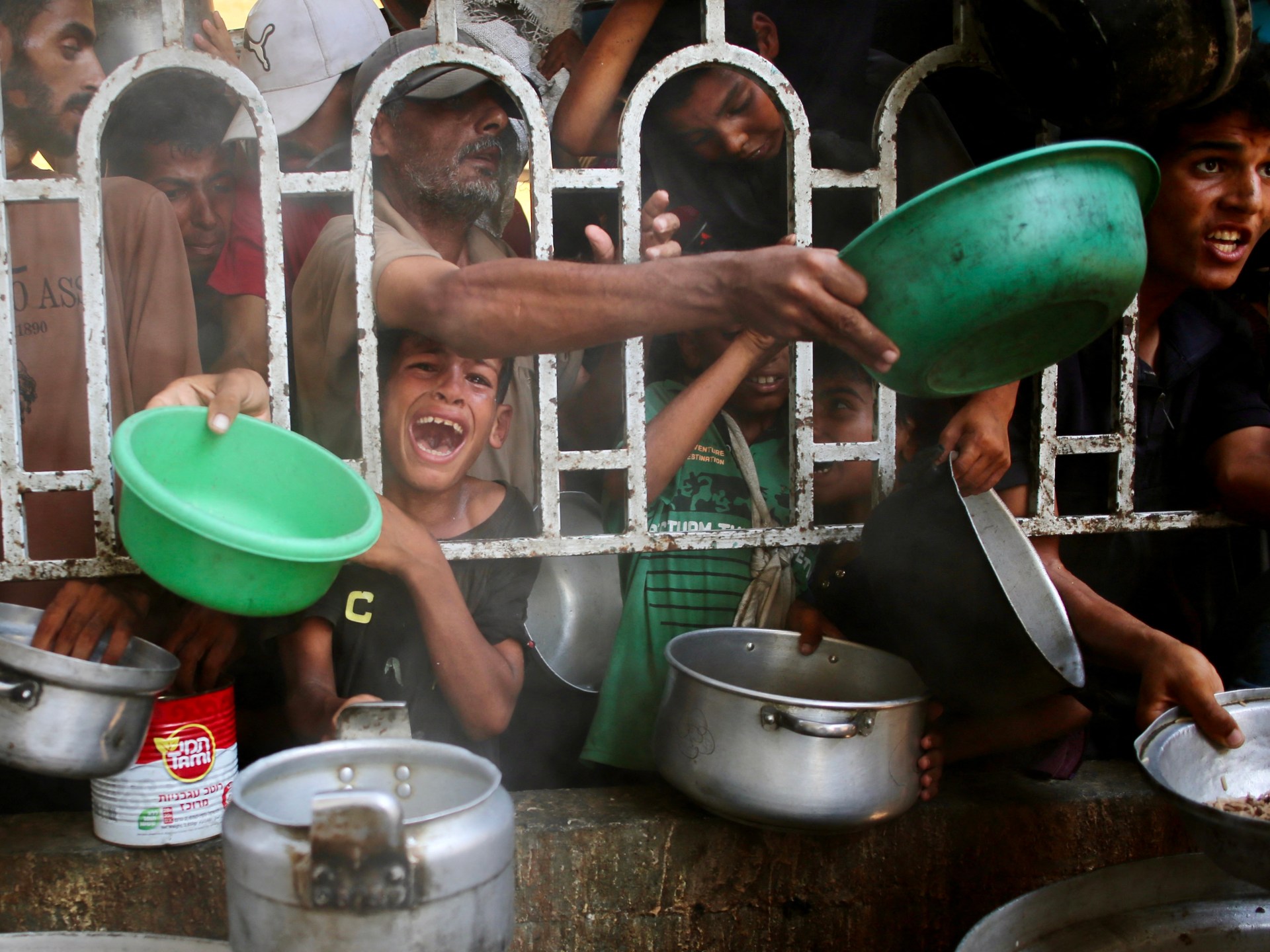
The advocates banged on empty pots outside the Capitol to draw attention to the starvation in Gaza, where many have not eaten in days and more than 100 have died of hunger due to the Israeli blockade, according to United Nations agencies and local health officials.
Holding photos of famished Palestinian children, doctors and veterans stressed the US role in enabling Israel’s conduct through military aid, weapons provision and diplomatic support.
Tlaib called on her colleagues in Congress to join their constituents in opposing Israeli atrocities.
Recent public opinion polls have shown growing US public discontent with Israel over its treatment of Palestinians, but Congress remains staunchly supportive of Israel on a bipartisan basis.
“Americans serving in Congress, wake up because the American people are telling you over and over again: We’re not in support of this,” Tlaib told reporters outside the US Capitol.
“So maybe for once, would you listen to your constituency? Poll them like you like you poll everything else. They will tell you they do not want one goddamn freaking dime going to starve a whole people.”
‘Stop enabling the genocide’
Tlaib appeared to criticise a vote by her progressive ally Alexandria Ocasio-Cortez against a measure to stop $500m in missile defence aid to Israel.
Only six lawmakers voted in favour of the amendment, introduced by Republican Congresswoman Marjorie Taylor Greene, last week.
Ocasio-Cortez, who was one of 422 legislators to vote against the proposal, argued that cutting off “defensive” aid to Israel does not help end the bombardment of Palestinians.
Tlaib, however, suggested on Thursday that she is not convinced by that justification.
“No matter what weapons – I don’t care if it’s offensive or defensive, whatever you call it – let’s stop enabling the genocide,” the Palestinian American congresswoman said.
Although Ocasio-Cortez has described Israel’s war on Gaza as genocide and supported measures to restrict arms to Israel, her vote last week stirred a backlash from left-wing activists who said any weapons to Israel would enable its bombardment campaign against Palestinians.
Washington provides Israel with billions of dollars in military assistance annually despite allegations of rights violations that would make the country ineligible for security aid under US law.
UN experts and leading rights groups have accused Israel of committing genocide in Gaza.
Stacy Gilbert, who resigned from the US Department of State last year after a 20-year career in protest to a government report denying that Israel is blocking aid to Palestinians, said on Thursday that the starvation in Gaza is the result of a “deliberate” decision by Israel.
“I am calling on Trump to make a break with this policy that started under Joe Biden, this disastrous policy of unconditional military support for Israel,” Gilbert told reporters.
Doctor says Trump ‘failed’ supporters
Nidal Jboor, a Michigan-based physician with the advocacy group Doctors Against Genocide, also warned Trump against following the same policies as his predecessor, stressing that the US president has the power and leverage to end the war.
“If you don’t stop it today, then you are as sleepy as Joe was. It’s your call,” Jboor said, invoking Trump’s moniker for Biden, “Sleepy Joe”.
“This is not who we are. Americans are better than this. What we are supporting in Gaza does not make America great again. Shut down the killing zone. Flood Gaza with aid. End the genocide. History will remember at this point and this moment what we did and what we failed to do.”
During the election race last year, Trump courted the sizable Arab and Muslim communities in Michigan with promises of bringing peace to the region.
The US president initially took credit for a truce that came into effect in January. But shortly after taking office earlier this year, he proposed removing all Palestinians from Gaza – a plan that rights advocates say would amount to ethnic cleansing, a crime against humanity.
Moreover, he has continued to arm Israel, and his administration has backed Israel’s resumption of the war in March, the siege on Gaza and the upending of the aid system in the territory.
Jboor said Trump “failed” his Arab and Muslim supporters.
“People were voting for him because he promised peace, and now he’s breaking his promises,” the doctor told Al Jazeera.
US Army veteran and Palestinian rights advocate Josephine Guilbeau outside the US Capitol, Washington, DC, July 24, 2025 [Ali Harb/Al Jazeera]
US touts GHF
In May, the US and Israel launched an initiative to monopolise aid distribution through a private entity, dubbed GHF.
But Palestinians and rights groups have described GHF aid distribution sites, concentrated in the south of Gaza, deep inside areas under Israeli army control, as death traps.
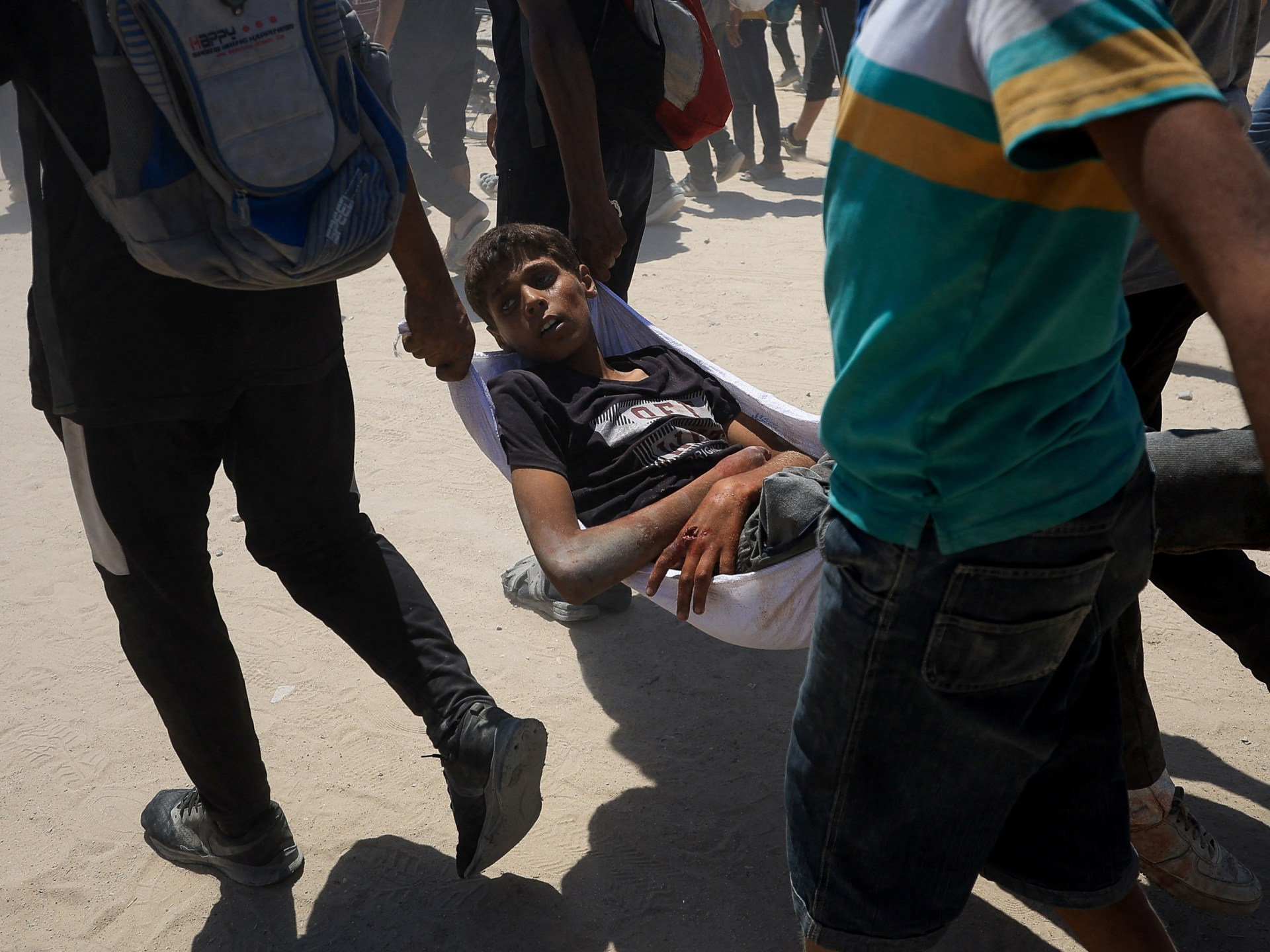
Israeli troops have been opening fire daily at aid seekers, killing hundreds of people.
While the US proudly proclaims that GHF has distributed 90 million meals since May, the tally amounts to a fraction of the food needed to feed the territory’s two million people.
In recent weeks, Israel has allowed some aid convoys to enter the north of Gaza, but the assistance trucks have also come under Israeli firing and shelling there, as well.
Despite the bloodshed, the US has been touting the GHF operation as a success, reiterating false claims that Hamas steals aid distributed through the UN and its partner organisations.
Asked about the hunger spreading in Gaza, State Department spokesperson Tommy Pigott told reporters on Thursday that the US is “aware” of the humanitarian situation in the territory and wants to see an end to the devastation.
“That’s why we have seen this commitment to get aid to the people who need it, in a way where it is not weaponised by Hamas,” Pigott added, referring to GHF.
Shortly before Pigott expressed continuing support for GHF, Israeli Heritage Minister Amichai Eliyahu appeared to confirm that his country is purposely starving Gaza, saying that “there is no nation that feeds its enemies.”
“The government is racing ahead for Gaza to be wiped out,” Eliyahu said in a radio interview, according to The Times of Israel.
Back on Capitol Hill, the advocates appeared confident that their voices could make a difference, even after 22 months of war that have seen the crisis deepen and the death toll mount daily.
“Every single voice is so powerful to move the needle; we have to change the minds of our leaders and make them understand that if they do not stop funding Israel, we will vote them out,” Guilbeau, the US Army veteran, told Al Jazeera.
Columbia University will pay $221m to settle accusations by the Trump administration that it failed to police anti-Semitism on campus. Critics say the deal threatens academic freedom and sets a dangerous precedent.
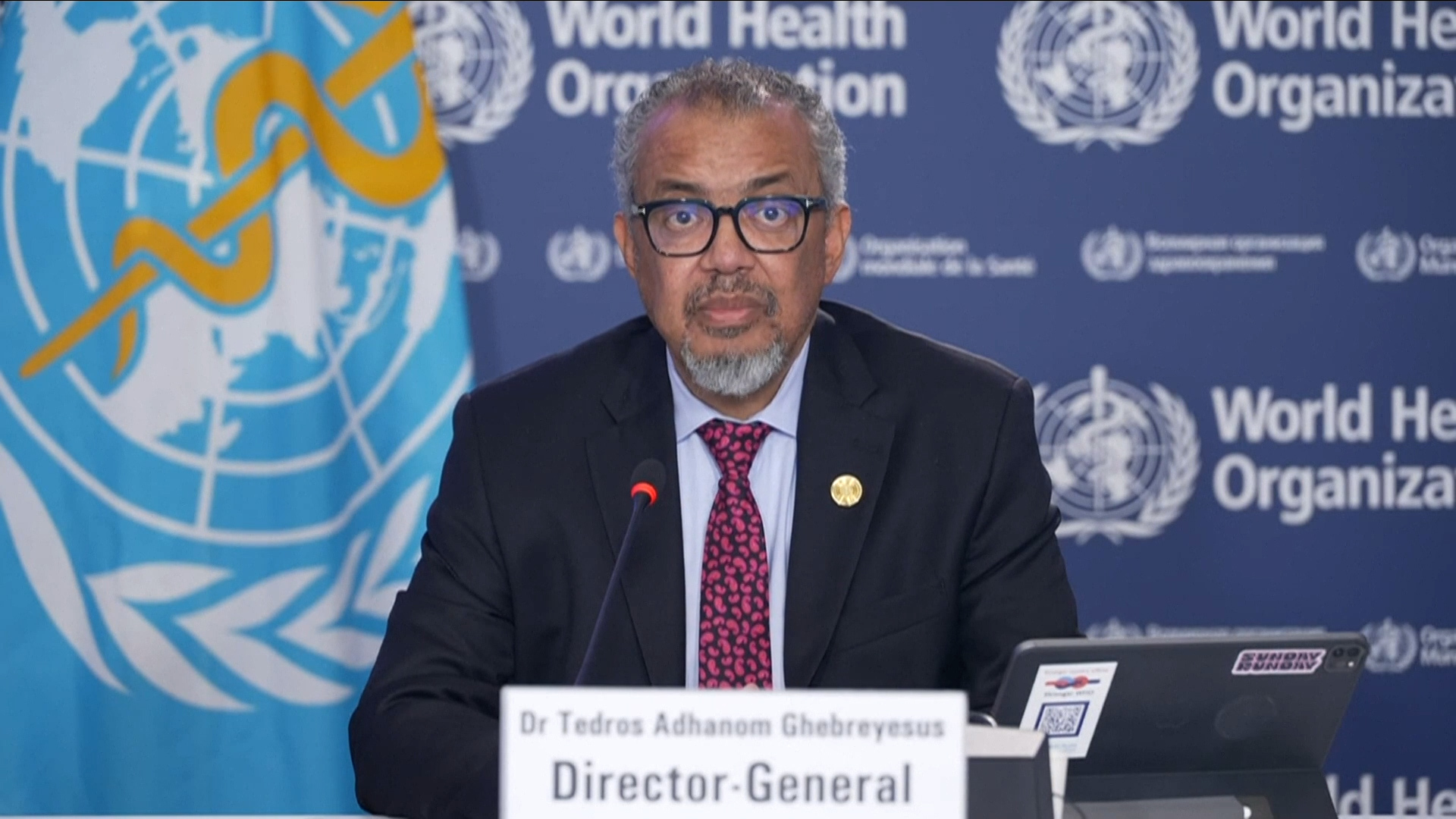
The Director-General of the World Health Organisation has warned more than two million people in Gaza are facing starvation, as deaths from malnutrition surge. His comments come as Israel continues to prevent aid supplies, including baby formula, from reaching the enclave.
Two Palestinian teenage boys have been killed by Israeli forces in the town of al-Khader, south of Bethlehem in the occupied West Bank, according to the Wafa news agency, in the latest deadly violence in the territory continuing in tandem with Israel’s genocidal war on Gaza.
The bodies of 15-year-old Ahmad Ali Asaad Ashira al-Salah and 17-year-old Muhammad Khaled Alian Issa, who were killed at dawn, were withheld by the Israeli army, the report said, adding that two more children were also injured in the gunfire.
The deadly incident came as Israeli forces arrested at least 25 Palestinians in multiple raids across the occupied West Bank, according to Wafa.
The arrests include 10 Palestinians in the town of Beit Ummar, north of Hebron; two in the town of Idhna, west of Hebron; three in the town of Dura al-Qari, north of Ramallah; one in the city of Ramallah; five in the village of al-Mazraa ash-Sharqiya, east of Ramallah; and four in the city of Nablus.
‘Making Palestinian lives impossible’
Since the start of the war on Gaza, Israeli violence in the occupied West Bank has escalated dramatically, with near-daily reports of mass arrests, killings and Israeli settler attacks, often supported by Israeli soldiers. Settlers have been rampaging with impunity, attacking and killing Palestinian civilians and burning their properties and olive groves.
According to the UN Office for the Coordination of Humanitarian Affairs (OCHA), at least 948 Palestinians have been killed in the territory by Israeli soldiers since October 7, 2023. Of that figure, at least 204 are children.
Meanwhile, from the beginning of 2024 until the end of June 2025, more than 2,200 Israeli settler attacks were reported, resulting in more than 5,200 Palestinian injuries, according to OCHA figures. In that same period, nearly 36,000 Palestinians were forcibly displaced across the occupied West Bank due to Israeli military operations, settler violence or home demolitions carried out by the Israeli government.
The Israeli settler violence in the occupied West Bank is part of the Israeli government’s strategy for preventing the establishment of a Palestinian state, according to Amjad Abu El Ezz, a lecturer of international relations at the Arab American University.
The increased number of killings, and the destruction of Palestinian homes and vehicles by Israeli settlers in coordination with the Israeli army, aim to encourage Palestinians to leave their land, Abu El Ezz told Al Jazeera from Ramallah.
Israel is weakening the governing Palestinian Authority, “making Palestinian lives impossible”, while at the same time “building Israeli facts on the ground” to prevent the Palestinians from building their own state, he added.
“We are talking about more than 700,000 Israeli settlers. They have weapons, they are acting as an army in parallel to the Israeli army,” Abu El Ezz said.
On Wednesday, Israel’s parliament approved a symbolic measure calling for the annexation of the occupied West Bank.
Knesset lawmakers voted 71-13 in favour of the motion on Wednesday, a non-binding vote which calls for “applying Israeli sovereignty to Judea, Samaria and the Jordan Valley” – the Israeli terms for the area.
The motion, advanced by Prime Minister Benjamin Netanyahu’s coalition, is declarative and has no direct legal implications, though it could place the issue of annexation on the agenda of future debates in the parliament.
The Palestinian Mujahideen Movement has called the Israeli parliament’s non-binding vote on the annexation of the occupied West Bank a “dangerous escalation”.
In a statement on Telegram, the group said the move was a “clear disregard for the international community” and a way for Israel to implement “its criminal plans targeting the land of Palestine and its people”.
The West Bank, along with the Gaza Strip and East Jerusalem, has been under Israeli occupation since 1967. Since then, Israeli settlements have expanded exponentially, despite being illegal under international law and, in the case of settlement outposts, Israeli law.
Before this catastrophe began, I was living the happiest days of my life, surrounded by the warmth of my family, the affection of my friends, and dreams that felt within reach. I spent most of 2023 preparing for my graduation and getting ready to move from lecture halls to practical training fields, rotating between the laboratories of the Islamic University in Gaza and the eye hospitals spread across the Gaza Strip.
On the evening of October 6, I was organising my books, tools and white coat, getting ready for a long training day at Al-Nasr Eye Hospital in Gaza. My feelings were a mix of excitement and nervousness, but I had no idea that night would mark the end of my peaceful life. At 6am the next morning, October 7, it wasn’t the sound of my alarm that woke me, but the sound of rockets. I opened my eyes, wondering, “Is this a dream or a nightmare?” But the truth was impossible to deny. A war had begun, turning our once-bright lives into a never-ending nightmare.
On October 8, I received the devastating news that my university had been destroyed – its laboratories, its classrooms and every place where I had learned how to help patients. Even the graduation hall, where I had pictured myself celebrating at the end of the year, had turned to rubble. I felt a sharp pain in my chest, as if a part of my soul had collapsed. Everything fell apart so suddenly. Overnight, all that I had dreamed of was reduced to ashes.
On December 27, 2023, the bombing in our neighbourhood intensified, and we were forced to leave our home and flee to the so-called humanitarian zones in Rafah. There, we took shelter in one of the hundreds of tents that had become the only refuge for survivors.
There was one thing I still held on to: my knowledge and modest experience in the field of eye care. I began to notice children and women suffering from persistent eye infections, caused by inhaling smoke and dust and constant exposure to dirt. Even I developed an infection in my own eyes. I looked at them, then at myself, and I knew I couldn’t just stand by and watch. I wanted to be a reason someone healed, a reason the light returned to their eyes.
In December 2024, I volunteered at Al-Razi Health Center, working in the eye clinic under the supervision of a remarkably compassionate doctor. At first, I was afraid and hesitant. The war had taken a toll on my memory and shaken my confidence. But the doctor told me words I will never forget: “You are hardworking. You’ll remember everything. And you will become a tool for healing others.”
Patients started arriving from everywhere: north, central and southern Gaza. The clinic wasn’t equipped for such numbers, but we did everything we could. I witnessed cases I had never seen before:
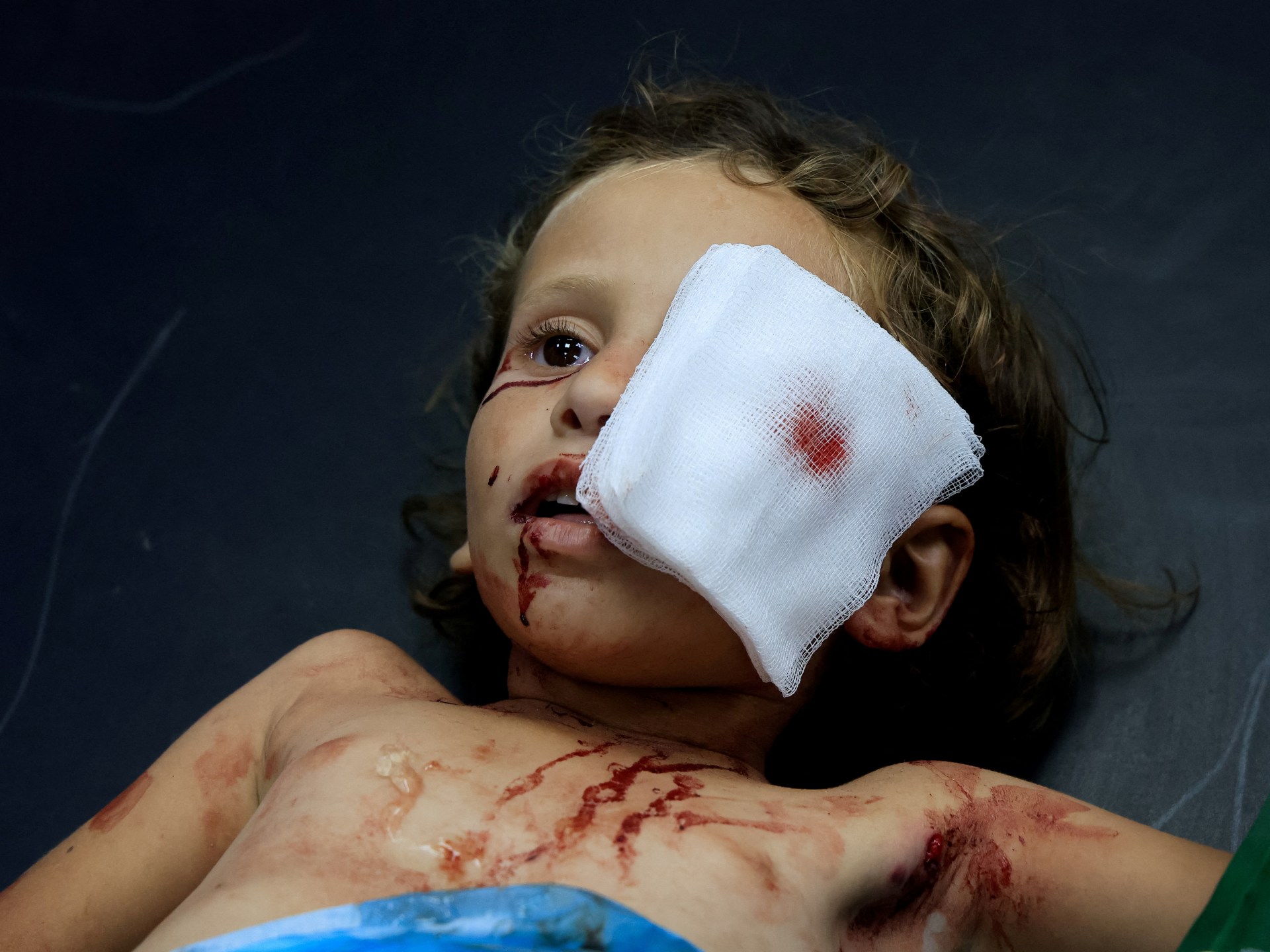
A four-year-old girl lost her vision completely due to severe corneal burns caused by an explosion near her home. She screamed in pain. She was far too young to endure such suffering. Despite the lack of resources, she underwent surgery to remove her damaged eye and replace it with an artificial one.
A man in his late 30s was struck by shrapnel in the face and suffered skull fractures. He had a torn upper eyelid and a deep corneal injury. He needed delicate surgery, but it was postponed multiple times because it required repeated general anaesthesia, which was impossible under the current conditions.
A young woman in her 20s had taken a direct hit that caused an orbital fracture and muscle tears around the eye, leading to hypotropia and facial asymmetry. She broke down emotionally at every visit. As a young woman like her, I felt her wound as if it were my own.
There was also an elderly man suffering from eye cancer. The disease was eating away at his eye, and there was a strong possibility it would spread to the other one. But we couldn’t help him. Resources were unavailable, and he couldn’t travel for treatment due to the closure of the borders. At every visit, I did my best to lift his spirits, hoping that maybe, just maybe, I could ease his pain, even if only a little.
Most children were suffering from chronic conjunctivitis and the appearance of chalazion (fatty cysts on the eyelid), due to dust, touching their eyes with their hands, and a lack of hygiene in the camps.
The elderly, most of whom suffered from cataracts, a condition that leads to gradual loss of vision, needed lens removal surgery and intraocular lens implantation, but all such operations were postponed due to the disruption of communication with northern Gaza, the only place in the Strip where the necessary equipment was available.
During those months, the operating rooms turned into real teaching labs for me after the occupation destroyed the university’s lab. I accompanied the doctor to every surgery, performing them by the light of hope and the sounds of bombing. One time, a rocket hit a house next to the centre while we were inside the operating room. Despite the panic, we held ourselves together. We didn’t break down. Instead, we completed the operation successfully.
In the few moments of spare time, there wasn’t only room to talk about medicine. We spoke about the pain, about our lost homes, about our missing relatives, about postponed dreams. The war spoke from every corner of the clinic.
We faced severe difficulties due to the shortage of medicines. We had to prescribe alternatives whose side effects we didn’t fully know, but what else could we do? There was no other choice. The crossings were closed, and the medicines were unavailable.
One day, during a surgery, I felt dizzy and had severe chest pain. I couldn’t bear it, and fainted from extreme exhaustion, malnutrition and psychological pressure. I was just a person trying to hold on. But I didn’t give up. I returned the same day to continue my work at the clinic.
In January 2025, with the announcement of a temporary ceasefire, the university resumed sessions at the European Hospital. I went only four times. The road was long, and the place was desolate, filled with the remnants of war. Just one kilometre (two-thirds of a mile) from the clinic’s window, tanks were stationed. I wondered: Should I flee or stay? The ceasefire was no guarantee. Indeed, days didn’t pass before the war returned and the sessions were cancelled, after the occupation took control of the area.
We returned to square one.
I am still here, moving between health centres, healing, listening and trying to bring light back into people’s lives, literally. My purpose is not forgotten. My spirit is not broken. I was made to help. And I will continue, even through smoke and rubble, with steady hands and an unshakable heart, until the light returns for all of us.
The views expressed in this article are the author’s own and do not necessarily reflect Al Jazeera’s editorial stance.
It is the child who wakes up asking for biscuits that no longer exist. The student who studies for exams while faint from hunger.
It is the mother who cannot explain to her son why there is no bread.
And it is the silence of the world that makes this horror possible.
Children of the famine
Noor, my eldest sister Tasneem’s daughter, is three; she was born on May 11, 2021. My sister’s son, Ezz Aldin, was born on December 25, 2023 – in the early months of the war.
One morning, Tasneem walked into our space carrying them in her arms. I looked at her and asked the question that wouldn’t leave my mind: “Tasneem, do Noor and Ezz Aldin understand hunger? Do they know we’re in a famine?”
“Yes,” she said immediately. “Even Ezz, who’s only known war and ruins, understands. He’s never seen real food in his life. He doesn’t know what ‘options’ are. The only thing he ever asks for is bread.”
She imitated his baby voice: “Obz! Obza! Obza!” – his way of saying “khobza” (a piece of bread).
She had to tell him, “There’s no flour, darling. Your dad went out to look for some.”
Ezz Aldin doesn’t know about ceasefires, borders, or politics. He doesn’t care about military operations or diplomatic statements.
He just wants one small piece of bread. And the world gives him nothing.
Noor has learned to count and recite the alphabet from her mother. Before the war, she loved chocolate, biscuits. She was the first grandchild in our family, showered with toys, snacks, and little dresses.
Now, every morning, she wakes up and turns to her mother with wide, excited eyes. “Go buy me 15 chocolates and biscuits,” she says.
She says 15 because it’s the biggest number she knows. It sounds like enough; enough to fill her stomach, enough to bring back the world she knew. But there’s nothing to buy. There’s nothing left.
Where is your humanity? Look at her. Then tell me what justice looks like.
[Omar Houssien/Al Jazeera]
Killed after five days of hunger
I watched a video that broke my heart. A man mourned over the shrouded bodies of seven of his family. In despair, he cried, “We’re hungry.”
They had been starving for days, then an Israeli surveillance drone struck their tent near al-Tabin School in Daraj, northern Gaza.
“This is the young man I was raising,” the man in the video wept. “Look what became of them,” as he touched their heads one last time.
Some people still don’t understand. This isn’t about whether we have money. It’s about the total absence of food. Even if you’re a millionaire in Gaza right now, you won’t find bread. You won’t find a bag of rice or a can of milk. Markets are empty. Shops are destroyed. Malls have been flattened. The shelves are not bare – they are gone.
We used to grow our own food. Gaza once exported fruits and vegetables; we sent strawberries to Europe. Our prices were the cheapest in the region.
A kilo (2.2 pounds) of grapes or apples? Three shekels ($0.90). A kilo of chicken from Gaza’s farms? Nine shekels ($2.70). Now, we can’t find a single egg.
Before: A massive watermelon from Khan Younis weighed 21 kilos (46 pounds) and cost 18 shekels ($5). Today: The same watermelon would cost $250 – if you can find it.
Avocados, once considered a luxury fruit, were grown by the tonne in al-Mawasi, Khan Younis and Rafah. They used to cost a dollar a kilo. We had self-sufficiency in dairy, too – cheeses and yoghurts made in Shujayea by local hands.
Our children were not spoiled – they just had basic rights. Breakfast meant milk. A sandwich with cheese. A boiled egg. Now, everything is cut off.
And no matter how I explain it to the children, they cannot grasp the words “famine” or “price hike”. They just know their bellies are empty.
Even seafood – once a staple of Gaza’s diet – has disappeared. Despite strict fishing restrictions, we used to send fish to the West Bank. Now, even our sea is silent.
And with all due respect to Turkish coffee, you haven’t tasted coffee until you’ve tried Mazaj Coffee from Gaza.
It had a strength you could feel in your bones.
This is not a forecast. Famine is now. Most of us are displaced. Unemployed. Mourning.
If we manage one meal a day, we eat it at night. It’s not a feast. It’s rice. Pasta. Maybe soup. Canned beans.
Things you keep as backup in your pantries. Here, they are luxury.
Most days, we drink water and nothing more. When hunger becomes too much, we scroll through old photos, pictures of meals from the past, just to remember what life once tasted like.
Starving while taking exams
As always, our university exams are online, because the campus is rubble.
We are living a genocide. And yet, we are trying to study.
I’m a second-year student.
We just finished our final exams for the first semester. We studied surrounded by hunger, by drones, by constant fear. This isn’t what people think university is.
We took exams on empty stomachs, under the scream of warplanes. We tried to remember dates while forgetting the last time we tasted bread.
Every day, I talk with my friends – Huda, Mariam, and Esraa – on WhatsApp. We check on each other, asking the same questions over and over:
“What did you eat today?”
“Can you even concentrate?”
These are our conversations – not about lectures or assignments, but about hunger, headaches, dizziness, and how we’re still standing. One says, “My stomach hurts too much to think.” Another says, “I nearly collapsed when I stood up.”
And still, we keep going. Our last exam was on July 15. We held on, not because we were strong, but because we had no choice. We didn’t want to lose a semester. But even saying that feels so small compared to the truth.
Studying while starving chips away at your soul.
One day, during exams, an air strike hit our neighbours. The explosion shook the walls.
A moment before, I was thinking about how hungry I felt. A moment after, I felt nothing.
I didn’t run.
I stayed at my desk and kept studying. Not because I was OK, but because there is no other choice.
They starve us, then blame us
Let me be clear: The people of Gaza are being starved on purpose. We are not unlucky – we are victims of war crimes.
Open the crossings. Let aid enter. Let food enter. Let medicine enter.
Gaza doesn’t need sympathy. We can rebuild. We can recover. But first, stop starving us.
Killing, starving, and besieging are not just conditions – they are actions forced upon us. Language reveals those who try to hide who is responsible.
So we will keep saying: We were killed by the Israeli occupation. We were starved by the Israeli occupation. We were besieged by the Israeli occupation.
At least 10 more Palestinians have starved to death in the besieged Gaza Strip, health officials say, as a wave of hunger crashes over the enclave.
The latest starvation deaths bring the death toll from malnutrition since Israel’s war began in October 2023 to 111, most of them in recent weeks.
At least 100 other Palestinians, including 34 aid seekers, were killed in Israeli attacks over the past 24 hours, Gaza’s Ministry of Health said on Wednesday.
The World Health Organization (WHO) said that 21 children under the age of five were among those who died of malnutrition so far this year. It said it had been unable to deliver any food for nearly 80 days, between March and May, and that a resumption of food deliveries was still far below what is needed.
In a statement, 111 organisations, including Mercy Corps, the Norwegian Refugee Council and Refugees International, said that “mass starvation” was spreading even as tonnes of food, clean water and medical supplies sit untouched just outside Gaza, where aid groups are blocked from accessing them.
Al Jazeera’s Tareq Abu Azzoum, reporting from Deir el-Balah in central Gaza, said that “hunger has become as deadly as the bombs. Families are no longer asking for enough, they are asking for anything”.
He said that Gaza residents have described “a slow, painful death playing out in real time, an engineered famine that the Israeli military has orchestrated”.
Israel cut off all goods from entering the territory in March, but has allowed in a trickle of aid starting in May, mostly distributed by the controversial United States-backed Gaza Humanitarian Foundation (GHF).
The United Nations and aid groups trying to deliver food to Gaza say Israel, which controls everything that comes in and out, is choking delivery, while Israeli troops have shot dead hundreds of Palestinians close to aid distribution points since May.
“We have a minimum set of requirements to be able to operate inside Gaza,” Ross Smith, the director of emergencies at the UN World Food Programme, said. “One of the most important things I want to emphasise is that we need to have no armed actors near our distribution points, near our convoys.”
Recurring attacks on aid seekers have turned the few remaining hospitals in Gaza “into massive trauma wards”, Rik Peeperkorn, the WHO’s representative for the occupied Palestinian territory, said.
The food scarcity is so extreme that people cannot do their work, including journalists, teachers and even their own staff, Peeperkorn added.
Nour Sharaf, an American doctor from al-Shifa Hospital in Gaza City, also warned that people “haven’t eaten anything for days and are dying of hunger”.
“Doctors sometimes don’t get food, but they still do their jobs,” she told Al Jazeera, adding that medical workers often work long hours.
Two more journalists killed
Israeli strikes have continued to pound various parts of the enclave, including Gaza City, where the Israeli army said it was “intensifying operations”.
The area has come under intense bombardment in recent days.
Gaza’s Government Media Office also announced the Israeli killing of two Palestinian journalists, Tamer al-Za’anin and Walaa al-Jabari, raising the number of media workers killed in the enclave since October 2023 to 231.
The statement said that al-Za’anin was a photojournalist with various media organisations, while al-Jabari worked as a newspaper editor with several media outlets.
Meanwhile, US Middle East envoy Steve Witkoff is heading to Europe for “very sensitive negotiations” over a Gaza ceasefire and captive release deal, the White House said.
During the visit, Witkoff “will meet with key leaders from the Middle East to discuss the ongoing ceasefire proposal to end this conflict in Gaza and to release the hostages”, White House spokesperson Karoline Leavitt told reporters.
Talks on a proposal for a 60-day ceasefire between Israel and Hamas, which would include the release of more of the 50 captives still being held in Gaza, are being mediated by Qatar and Egypt, with Washington’s backing.
A Palestinian official close to the Gaza ceasefire talks and the mediation efforts said that Hamas had handed its response on the ceasefire proposal to mediators, declining to elaborate further.
Successive rounds of negotiations have achieved no breakthrough since Israel broke a ceasefire in March.
Israeli President Isaac Herzog told soldiers during a visit to Gaza that “intensive negotiations” about returning the captives held there were under way and that he hoped that they would soon “hear good news”, according to a statement.
A senior Palestinian official earlier said that Hamas might give mediators a response to the latest proposals in Doha later on Wednesday, on the condition that amendments be made to two major sticking points: details on an Israeli military withdrawal and how to distribute aid during a truce.
Knesset lawmakers vote 71-13 in favour of annexation, raising questions about the future of a Palestinian state.
Israel’s parliament has approved a symbolic measure calling for the annexation of the occupied West Bank.
Knesset lawmakers voted 71-13 in favour of the motion on Wednesday, a non-binding vote which calls for “applying Israeli sovereignty to Judea, Samaria and the Jordan Valley” – the Israeli terms for the area.
It said that annexing the West Bank “will strengthen the state of Israel, its security and prevent any questioning of the fundamental right of the Jewish people to peace and security in their homeland”.
The motion, advanced by Prime Minister Benjamin Netanyahu’s coalition is declarative and has no direct legal implications, though it could place the issue of annexation on the agenda of future debates in the parliament.
The idea was initially brought forward last year by Israel’s far-right finance minister, Bezalel Smotrich, who himself lives in an illegal Israeli settlement and holds a position within Israel’s Ministry of Defence, where he oversees the administration of the West Bank and its settlements.
The West Bank, along with the Gaza Strip and East Jerusalem, has been under Israeli occupation since 1967. Since then, Israeli settlements have expanded, despite being illegal under international law and, in the case of settlement outposts, Israeli law.
Palestinian leaders want all three territories for a future state. Some 3 million Palestinians and more than 500,000 Israeli settlers currently reside in the West Bank.
Annexation of the West Bank could make it impossible to create a viable Palestinian state, which is seen internationally as the most realistic way to resolve the Israeli-Palestinian conflict.
Last year, the Israeli parliament approved a similar symbolic motion declaring opposition to the establishment of a Palestinian state.
Hussein al-Sheikh, deputy to Palestinian Authority President Mahmoud Abbas, said the motion was “a direct assault on the rights of the Palestinian people”, which “undermines the prospects for peace, stability and the two-state solution”.
“These unilateral Israeli actions blatantly violate international law and the ongoing international consensus regarding the status of the Palestinian territories, including the West Bank,” he wrote in a post on X.
The Palestinian Ministry of Foreign Affairs and Expatriates said in a statement that it strongly rejects any motion for annexation.
The ministry stressed that the “colonial measures” reinforce a system of apartheid in the West Bank and reflect a “blatant disregard” for many United Nations resolutions and the advisory opinion of the International Court of Justice (ICJ), which was issued in July 2024.
The statement, carried by the official Palestinian Wafa news agency, also warned that such actions deliberately undermine the prospects of implementing a two-state solution.
The ministry added that while settlement expansion continues, de facto annexation is already occurring on a daily basis.
Following Israel’s deadly war on Gaza, Israeli forces have intensified attacks on Palestinian towns and villages in the occupied West Bank, displacing thousands of Palestinians and killing hundreds. Settlers, often backed by Israeli soldiers, have also escalated assaults on Palestinians, their land, and property.
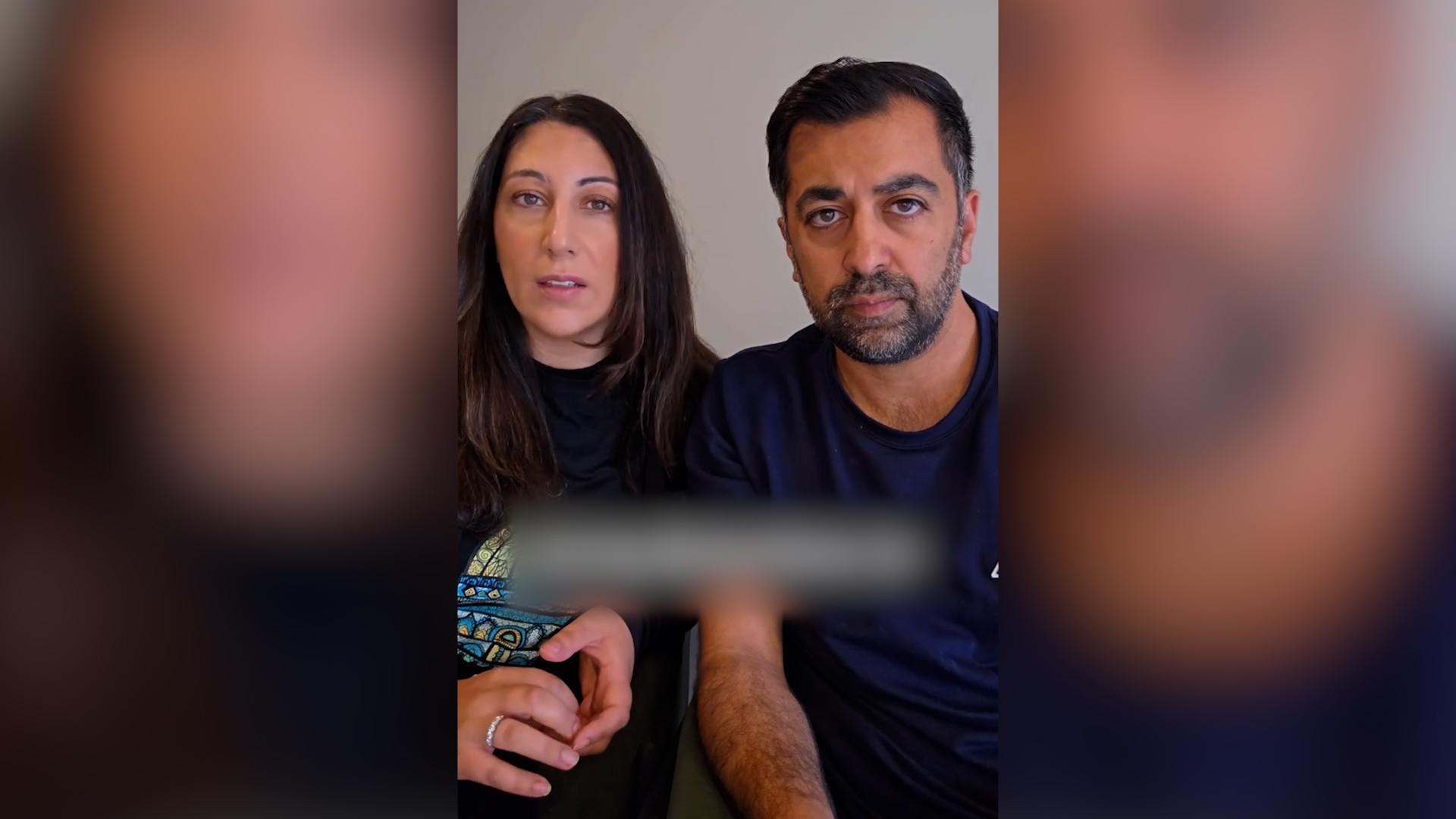
Scotland’s former First Minister Humza Yousaf and his wife say their relatives in Gaza, including a baby, are being deliberately starved. In an Instagram video, the couple plead for borders to open and aid to reach Palestinians.
A former security guard who worked at Gaza Humanitarian Foundation ‘aid distribution sites’ described to Israeli media abuses he witnessed firsthand, including the potentially lethal use of pepper spray and tear gas.
Three Israeli strikes hit homes and a tent in Gaza City on Tuesday, killing at least 21 people, mostly women and children. The attacks come as the besieged territory faces extreme hunger and ongoing bombardment.