


UCLA women’s basketball focused on championship habits, not results
The UCLA women’s basketball team isn’t concerned about being hunted as the reigning national champions, coach Cori Close said. That’s up to somebody else.
“Having a target on your back means that you’re worried about what someone else is going to do,” she added. “That’s an outcome-based [way of] thinking, and we have to be obsessed with our process, obsessed with our standards.”
As the Bruins prepare to open the season at Pauley Pavilion against Lehigh on Monday, they are focused on getting better every day and following the championship-level process the program established. It’s not their job to worry about what others think about them, forward Sienna Betts said.
“I don’t really care what the media has to say or whatever,” Betts said. “It really is just a matter of what is in these four walls and what we know we’re putting into practice every day.”

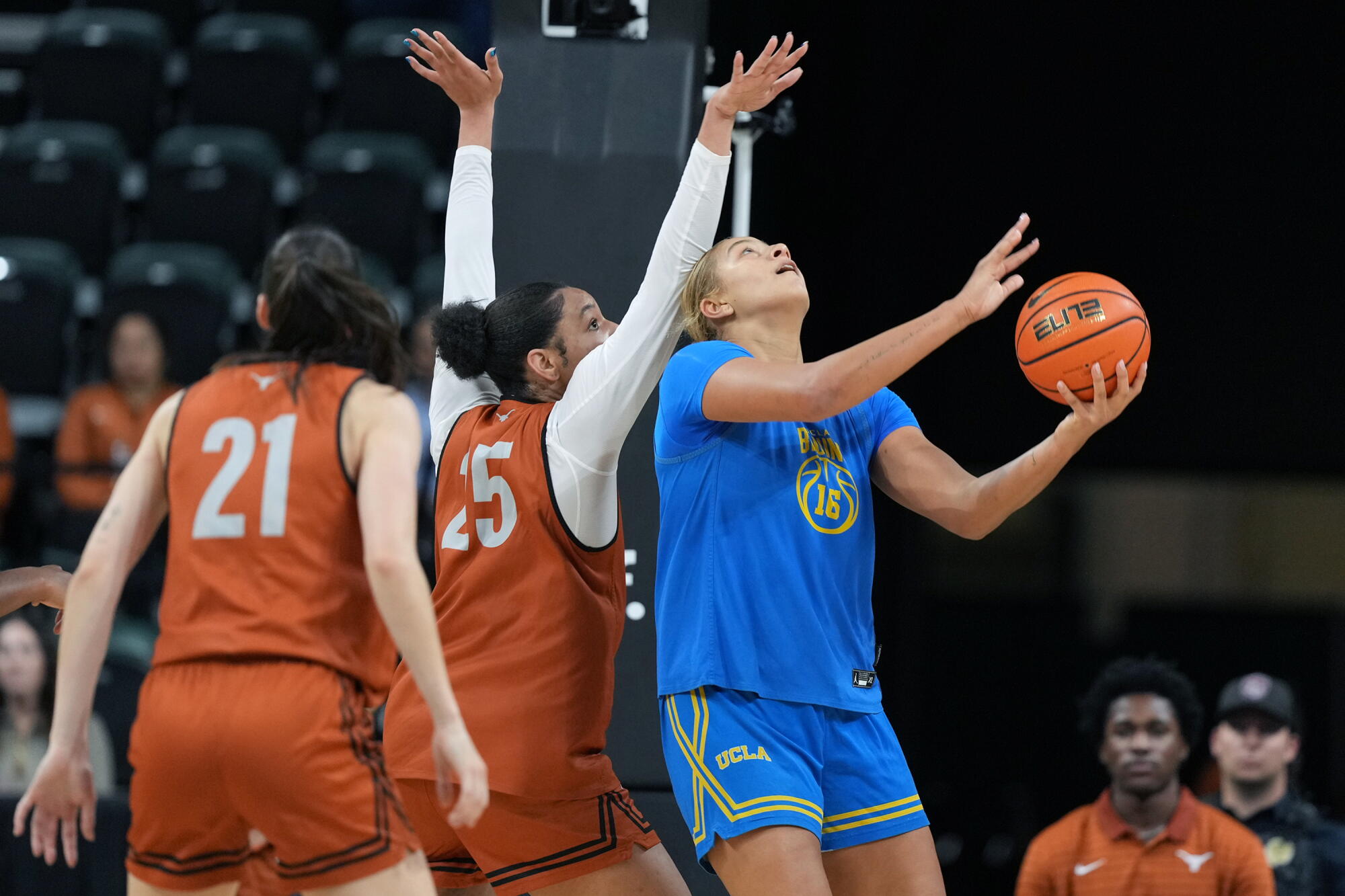
UCLA forward Sienna Betts shoots under pressure from Texas’ Breya Cunningham at H-E-B Center in Cedar Park, Texas, on Sunday.
(Scott Wachter / Getty Images)
While the Bruins are maintaining the same championship standards as last year, the group tasked with meeting them looks considerably different than last season.
UCLA will begin the 2026-27 season with five players returning from the championship team, Betts being one of them. None of the returning players were starters, with the top six performers getting selected in the 2026 WNBA draft. The rest of this season’s Bruins consists of seven newcomers, including two freshmen and five transfers.
“We’re not trying to repeat an outcome, we’re repeating a process,” Betts said. “We’re our own group and I don’t think it’s fair to put the weight of last year on this group.”
Close’s roster includes the No. 5 transfer portal class in the nation, according to ESPN. The group includes Donovyn Hunter, who transferred from TCU and described the process of transferring as uncomfortable. She also said adjusting to a new system is difficult.
“We’re going to mess up, we’re going to make mistakes, we’re not going to get it on the first try, but knowing that there’s a coach that’s behind you, that knows you’re going to get to that level has been the most important thing for all of those transfers and the freshmen,” Hunter said.
Three of the five transfers are international players learning English, including Elina Aarnisalo, who returned to Westwood after spending a season at North Carolina.

UCLA guard Donovyn Hunter drives to the basket in front of Texas’ Breya Cunningham in Cedar Park, Texas, on Sunday.
(Scott Wachter / Getty Images)
“We spent a lot of time together … so that’s helped us on court and obviously practicing every day,” Aarnisalo said. “… Even though there might be a language barrier, sometimes we’re just spending time together and learning [from] each other so that relationship part comes pretty naturally for all of us.”
Regardless of the language barriers, Betts said building the team’s chemistry is a good start and a work in progress as they enter the start of the season.
“I think our connection on the court, it’s really showing and we’re still just learning how to play with each other. … It takes time,” she said. “The team last year, they were playing with each other for four years and over.”
Even with the added pressure that comes with last year’s championship run, Aarnisalo isn’t worried about the expectations. She’s enjoying the kind of media attention the Bruins are getting.
She’s happy the returning players were able to lift the trophy last year and says the exposure that goes with it is an opportunity to show off the newly reloaded UCLA team.
“We’re making our own process out of this,” she said. “Obviously, the standards are the same, like it’s championship standards, but it’s completely new people, new personalities. [We’re] just trying to create our own storyline for this year.”
Quinn brings new perspective to UCLA

Breeze coach Noelle Quinn directs players during an Unrivaled game against the Laces on Feb. 27 in Medley, Fla.
(Leonardo Fernandez / Getty Images)
After spending 12 years as a professional player and six years coaching in the WNBA, Noelle Quinn has returned to Westwood. She is a two-time WNBA champion, winning a title as a player and a coach.
“I have not been able to find anyone else that has won a conference championship in college, a WNBA championship as a player and as a coach,” Close said. “You don’t think when she talks, they listen?”
The fourth overall pick in the 2007 WNBA draft has had an influence among the UCLA coaches, with Close noting associate head coach Tony Newnan told Quinn during a staff meeting that she was making him a better coach.
On the court, Quinn’s defensive expertise is creating an environment that has helped Bonnie Deas get excited about playing defense.
“I love defense and she brings so much energy to our defensive side of the game,” Deas said. “She’s so switched on with our scout and film, she makes defense really, really exciting.”
Betts describes her defensive presence as calming.
“I love the way she just talks and the way she talks about defense and just the game,” she said. “She brings such warmth to this gym.”

Flavio Bolsonaro flees Brazil after election loss, US says will grant visa | Donald Trump News
The media reports come a day after Supreme Court ordered Bolsonaro hand over passport as part of money laundering probe.
Published On 27 Oct 2026
A senior US State Department official has said that the Trump administration will issue visas to Brazilian Senator Flavio Bolsonaro and his family, allowing them to enter the US after news outlets reported that Bolsonaro had fled Brazil following his loss in the country’s presidential election.
The news came on Tuesday, one day after Brazil’s Supreme Court ordered Bolsonaro to turn over his passports as part of a probe into alleged money laundering. Bolsonaro has denied any wrongdoing and said on Monday that he would stay in the country and lead the opposition.
Recommended Stories
list of 3 itemsend of list
Brazilian President Luiz Inacio Lula da Silva, who has previously accused members of the Bolsonaro family of courting US interference in Brazilian affairs for their political benefit, called the right-wing senator’s actions shameful.
“This is what the Bolsonaro family is like,” Lula said. “Brazil is their second nation, the US is their first.”
Bolsonaro, the son of former right-wing president Jair Bolsonaro, initially refused to acknowledge the election results and said he would seek their annulment. His party released a statement on Monday saying it accepted the results of the election, which the conservative candidate lost by more than 4.4 million votes.
US President Donald Trump reacted by casting doubt on the election result, telling reporters it “looked like another rigged election”.
No evidence has emerged that the vote was marred by malfeasance. While critics seized on a last-minute decision to extend polling hours, Lula’s eventual victory was commanding, and the extension was unlikely to change the outcome.

This Serbian Truck Carries A Truly Massive Mortar
Serbia has released the first footage of its TSMB M-25 heavy self-propelled mortar in action, revealing an unusual artillery system that puts a massive 203mm weapon on a comparatively light, six-wheeled truck. The system is designed to hurl projectiles weighing around 220 pounds at targets up to approximately seven-and-a-half miles away, bringing super-heavy firepower to a platform that looks surprisingly modest for the job.
The Serbian Ministry of Defense published the brief footage in a larger video montage, seen immediately below, but has not disclosed when or where the firing tests took place or what they demonstrated. Regardless, the M-25’s configuration alone makes it stand out.

Tehnološki razvoj odbrambene industrije Srbije i doprinos povećanju borbene moći Vojske Srbije

The Teški Samohodni Minobacač (TSMB, translated as heavy self-propelled mortar) M-25 was developed by Serbia’s state-owned Military Technical Institute and first appeared publicly at the Partner 2025 defense exhibition in Belgrade. Its design lineage stretches back to the Yugoslav M-65 155mm howitzer, itself a licensed copy of the widely used American M114, first introduced in World War II.

The M-25 takes that heritage in a different direction, with a 203mm barrel measuring 24 calibers in length and an automated loading mechanism for mortar projectiles. The mortar barrel has an elevation range from 0° to 75°, and the barrel must return to 0° in elevation for the next round to be loaded from the muzzle end.
The standard 203mm mortar bomb weighs around 220 pounds, including approximately 60 pounds of explosive material. This results in a claimed destruction radius of around 250 feet, using impact fuzing.
The system is intended to fire both high-explosive and concrete-piercing ammunition, making it particularly suited to attacking hardened positions and fortifications. Developers have also provided for rocket-assisted projectiles to extend its range and precision guidance kits to improve the accuracy of compatible rounds.
The weapon is mounted on a FAP 2026 three-axle truck in a 6×6 configuration, a general-purpose off-road type made by Serbian vehicle manufacturer Fabrika automobila Priboj. This platform provides a range of 500 miles and a top speed of 50 miles per hour on the road. The vehicle has an armored cab for a crew of four, while its fire-control suite includes an inertial navigation system, a ballistic computer, communications equipment, and a dedicated gunner’s computer. The same truck has also been adapted to mount a 152mm gun/howitzer, under the name NORA B-39.

The wheeled chassis is the defining feature of the M-25. While a weapon of this size would normally be either towed or mounted on a large tracked vehicle, Serbia has opted for a lighter truck-based arrangement. This offers advantages in road mobility and makes the system easier to move between firing positions, using “shoot and scoot” tactics. A general-purpose truck is cheaper to acquire and operate, and easier to maintain. It can also be more easily transported by air, although out-of-area operations are not generally on the Serbian Armed Forces’ agenda. However, its cross-country performance and overall survivability will be reduced compared to a tracked chassis.

The M-25 is intended to deliver heavy fire against targets such as bunkers and other fortified positions, then relocate before an opponent can respond. Its relatively short stated range compared with many modern 155mm howitzers makes it a specialized system rather than a direct replacement for conventional long-range artillery. Its appeal lies instead in combining a very large projectile with a comparatively compact and mobile platform.
Mortars have a long and grim history in the Balkans, particularly during the wars that accompanied the breakup of Yugoslavia in the 1990s. The steep trajectories of mortar rounds made them useful in the region’s mountainous terrain and in fighting around fortified positions and during sieges, while their ability to deliver indirect fire meant crews could engage targets without a direct line of sight.

As far as we know, the M-25 is the only 203mm mortar in current development and/or production. There are a few larger mortars on mobile platforms, notably Russia’s 2S4 Tyulpan, a 240mm self-propelled mortar, but this is on a significantly bigger tracked chassis.
At approximately 19 metric tons, the M-25 is substantially lighter than the 2S4 Tyulpan, which weighs around 27.5 metric tons. Its tracked platform reflects a very different approach to moving super-heavy mortar firepower around the battlefield. The Tyulpan can deliver a 300-pound standard mortar round to a range of around six miles, or up to 11 miles away when using rocket-assisted rounds.


Serbia claims the M-25 has a rate of fire of up to three rounds per minute, thanks to the automated loading mechanism. In contrast, the Tyulpan can hurl a maximum of one round every 62 seconds. Indeed, its sluggish rate of fire is one of the reasons that saw it fall from more widespread Russian use.
There are still important unknowns. The newly released footage does not establish whether the advertised firing rate was achieved, how the weapon performs under sustained fire, or whether the system has entered operational service. Serbia has shown the M-25 at an exhibition and now in live-fire footage, but detailed test results have not been made public.
Still, the concept is striking: a high-mobility wheeled truck carrying a 203mm mortar is a distinctly different take on super-heavy firepower, but one that might just find a niche in the Balkan environment.
Contact the author: thomas@thewarzone.com

George Ezra finally shares fan update after disappearing from spotlight two years ago & sparking concern
GEORGE Ezra has given fans a glimpse into life away from the spotlight — revealing the recording studio he has built in his hometown.
The Shotgun singer has been quietly working behind the scenes on Hotel Québec in his hometown of Hertford, opening its doors to other musicians.
While his own social media accounts have been silent since July 2024, George has been pouring his energy into creating a space where artists can write, record and rehearse.
Originally created for his own musical projects, the studio has since become a business welcoming other performers and producers.
In a message on its website, George described his venture as a “truly special place” and shared his excitement about welcoming fellow musicians.
He said: “I look forward to hearing what you create here at Hotel Québec.”


Set inside a restored 18th-century listed building near the River Lea, the studio features a huge live room, control room and lounge.
There is even a roof terrace where musicians can relax between sessions.
And visiting artists can get their hands on George’s personal guitar collection, alongside an array of keyboards and recording equipment.
The studio marks a new chapter for the singer, who became a household name with breakthrough hit Budapest.
The track reached No3 in the UK, while his debut album Wanted On Voyage topped the charts in 2014 and went on to sell more than a million copies here.
He followed it with Staying At Tamara’s in 2018, scoring another No1 album and spawning hits including Paradise and Shotgun.
The latter became his first UK No1 single, cementing his status as one of Britain’s biggest pop stars.
His success was recognised at the 2019 Brit Awards, where he was crowned British Male Solo Artist.
The dad of one completed a hat trick of chart-topping albums with Gold Rush Kid in 2022, which featured the hit singles Anyone For You and Green Green Grass.
George previously had to postpone gigs in London and Leeds in March 2023 after being diagnosed with acute vertigo.
His official website currently lists no upcoming live shows.

Alexandria outlines 5.6x–6.2x year-end leverage goal while reaffirming $6.40 2026 FFO per share midpoint (NYSE:ARE)
Earnings Call Insights: Alexandria Real Estate Equities (ARE) Q3 2026
Management View
- “We had a solid third quarter leasing over 1.2 million square feet” and “we expect that to contribute importantly to fourth quarter projected leasing of about 1.25 million square feet” (Founder & Executive
Seeking Alpha’s Disclaimer: This article was automatically generated by an AI tool based on content available on the Seeking Alpha website, and has not been curated or reviewed by humans. Due to inherent limitations in using AI-based tools, the accuracy, completeness, or timeliness of such articles cannot be guaranteed. This article is intended for informational purposes only. Seeking Alpha does not take account of your objectives or your financial situation and does not offer any personalized investment advice. Seeking Alpha is not a licensed securities dealer, broker or US investment adviser or investment bank.

High school girls’ tennis: City Section playoff results
HIGH SCHOOL GIRLS TENNIS
CITY SECTION PLAYOFFS
MONDAY’S RESULTS
Semifinals
OPEN DIVISION
#1 Palisades 20.5, #4 El Camino Real 9
#2 Granada Hills 25, #3 GALA 4.5
First Round
DIVISION I
#1 GALA, bye
#8 Eagle Rock 24.5, #9 Larchmont 5
#5 SOCES 17, #12 Cleveland 12.5
#4 Chatsworth 23.5, #13 Bell 6
#3 Venice 24, #14 Taft 5.5
#11 Carson 24, #6 North Hollywood 5.5
#10 L.A. Marshall 19, #7 Van Nuys 10.5
#2 El Camino Real, bye
DIVISION II
#1 Granada Hills Kennedy 27, #16 Legacy 2.5
#9 Fairfax 16.5, #8 Gardena 13
#12 New West 15, #5 San Pedro 14.5
#4 South East d. #13 Grant
#3 Wilmington Banning 25.5, #14 RFK Community 4
#6 South Gate 20.5, #11 King/Drew 9
#7 Downtown Magnets 22, #10 Los Angeles 7.5
#2 LACES 28.5, #15 Sylmar 1
WEDNESDAY’S SCHEDULE
Finals
At Balboa Tennis Center, 11 a.m.
OPEN DIVISION
#2 Granada Hills vs. #1 Palisades
Note: Divisions I-II quarterfinals Thursday, Oct. 29 at higher seeds; Division I-II semifinals Monday, Nov. 2 at higher seeds; Division I-II finals Wednesday, Nov. 4 at higher seeds, 11 a.m.

Trump showcases Venezuelan oil as he seeks to rally voters in Texas | US Midterm Elections 2026 News
US president seeks to underscore Latin American military operation, as Iran war causes midterm affordability threat.
United States President Donald Trump has featured a ship he said is carrying Venezuelan oil during a visit to Texas, where he will hold two rallies one after the other in the hopes of boosting Republican chances in a make-or-break Senate race.
Speaking at Corpus Christi on Tuesday on his fourth trip to the state this campaign season, Trump pointed to a ship in the distance.
Recommended Stories
list of 3 itemsend of list
“It’s got 1 million barrels of oil on it from Venezuela,” he said, adding the cargo was “thanks to our big victory in our recent war with Venezuela”.
The emphasis on the oil comes as US consumers have wrestled with high fossil fuel prices amid the US-Israel war with Iran, a key issue in the upcoming midterm elections.
“We’re celebrating the greatest oil victory in history,” Trump said.
It was not immediately clear under what pretext the oil had been shipped or whether the details Trump gave were correct. The US had received crude oil shipments from Venezuela before the US abduction of Venezuelan leader Nicolas Maduro on January 3, but those transfers have increased this year.
In August, the Trump administration announced a deal giving the Pentagon a 35 percent stake in North America Blue Energy Partners, a new company overseeing 65 billion barrels of proven oil reserves. The White House said in September that the first shipment from the deal would likely hit US reserves in November, although experts have cast doubt on whether the deal will have any short-term impact.
Speaking to reporters earlier in the day, Trump referred to the shipment as a “gift” from Venezuela. The country’s interim leader, Delcy Rodriguez, has not commented on the specific shipment.
At the rally, Trump also floated making Venezuela the “51st state”.
Key race
Trump’s frequent visits to Texas underscore the state’s significance for Republicans.
Trump endorsed Attorney General Ken Paxton in the Republican primary over incumbent Senator John Cornyn. The scandal-ridden Paxton now faces a punishing contest against Democrat James Talarico, a Presbyterian seminarian.
Polls have regularly shown Talarico leading Paxton, although that lead has largely remained within the margin of error. A RealClearPolitics average of polls had Talarico leading Paxton by 1.7 points.
Talarico’s victory would mark a sea change in a state that has not elected a Democrat to statewide office since 1994.
It would also represent a major rebuke to Trump, whose Republican Party is fighting to maintain its narrow control of the Senate. Democrats are widely projected to take control of the US House of Representatives in the November 3 vote.
Talarico has used the final stretch of the race to focus on years of corruption allegations against Paxton, while drawing a contrast to voters’ affordability concerns.
“Ken Paxton represents everything that’s wrong with this broken, corrupt system,” he said during an event in Houston last week.
Paxton has sought to portray Talarico as too “radical” for Texas, saying his policies would hurt a state known for its pro-business policies.
Trump and other administration officials, notably Vice President JD Vance, have regularly focused on cultural issues, distorting Talarico’s past comments on transgender rights and border security.
Speaking in Corpus Christi, Trump repeated those attacks and urged his supporters to vote as if he were on the ballot.
“If you go out, and if you all vote, we win in a landslide,” Trump said.

Forever Wars: Why can’t America stop? | US Midterm Elections 2026
Iran, Iraq, Afghanistan. Why does the US keep going to war, and can voters stop it?
The United States is once again at war in the Middle East, and most Americans say it isn’t worth the cost.
Al Jazeera’s Josh Rushing asks why the US keeps fighting: oil, a $2.4 trillion defence industry, lobbyists or a political system that rarely holds anyone to account?
Retired General Mark Kimmitt and journalist Spencer Ackerman debate why, and whether voters can end the forever wars.
Contributors:
Mark Kimmitt – Retired US Army brigadier general and former assistant secretary of state for political-military affairs
Spencer Ackerman – Journalist, author and writer of the Forever Wars newsletter
Published On 27 Oct 2026

Coronation Street actor swaps cobbles for a Hollywood film as he shares behind-the-scenes snaps with Brit acting legends
THE dreary Coronation Street cobbles were left behind on Tuesday as soap star Ryan Prescott prepared for a new role in a Hollywood film.
The actor, best known for playing Ryan Connor in the long-running ITV show, has won a part in director Rocky Rodriguez Jr.’s forthcoming comedy drama, Waif.
Currently filming on location in London, Ryan, 37, shared a selfie with established co-stars Jason Flemyng and Dexter Fletcher during a break between scenes.
Sharing the photos with Instagram followers, he wrote: “We are rollllliiiing, first week in to the WAIF shoot and loving it, thank you all for the amazing energy on set!” [sic]
The Mancunian actor will play ‘a drifting art collector living life on his own terms amid the skateparks, guitar shops and art openings of east London.’
Actress Helen Foster has been cast as Prescott’s romantic interest in the new film, writer-director Rodriguez Jr.’s third feature.
READ MORE ABOUT RYAN HERE


Commenting on the post, one enthusiastic follower wrote: “Love this!!!!!!”
A second added: “Love it .. smash it Ryan. Can’t wait to see it.”
While a third shared: “Top drawer actor my favourite on the cobbles at the moment.”
Ryan broke into acting with a short-lived role as Flynn Buchanan on ITV soap Emmerdale before winning a prominent role on Coronation Street in 2018.
Drafted in to play the returning Ryan Connor, a role previously played by Ben Thompson, and later, Sol Heras, the actor has tackled a series of turbulent storylines on the hit soap – among them a bitter feud with gangster Ronald Truman.
Connor was left with horrific burns to his face and neck after protecting intended target Daisy Midgely from the attack, orchestrated by crazed stalker Justin Rutherford.
Discussing the storyline on This Morning shortly after the episode aired, Ryan said Coronation Street would be focusing on his character’s slow recovery long into the future.
“That’s one thing we wanted to include was to have some longevity within the parameters of soap, which obviously moves very quickly,” he confirmed.
“We wanted to have some kind of longevity in the aftermath.
“Acid attack survivors go through hundreds of operations, multiple skin grafts and quite often a lifetime of post-traumatic stress disorder.
“We want to show the different stages of his recovery.”

The Times’ top 10 City Section high school football rankings
The Times’ top 10 high school football rankings from the City Section:
1. CARSON (8-1). Colts get to face unbeaten Mary Star at home in test to see if they can beat a team with a large and powerful offensive line.
2. CLEVELAND (9-0). Cavaliers go for rare 10-0 regular season with home game against Chatsworth.
3. KING/DREW (6-3). Coliseum League title can be finalized with win over Dorsey.
4. SAN PEDRO (6-2). Pirates need to regroup after 35-0 loss to Carson.
5. BIRMINGHAM (4-5). Receiver Paul Turner continues to have great season.
6. CRENSHAW (6-3). Cougars get win over rival Dorsey.
7. KENNEDY (9-0). Golden Cougars cruise to Valley Mission League title.
8. GARFIELD (8-1). It’s the East L.A. Classic vs. Roosevelt on Friday at East L.A. College.
9. MARSHALL (9-0). QB Nathaniel Cadet threw for seven touchdowns in win over L.A. Wilson.
10. PALISADES (5-3). QB Robert Holohan has 1,500 yards passing.
Exit polls following Israeli elections indicate no clear winner | Israel Election 2026 News
BREAKINGBREAKING,
The official results are due to be published on November 4, more than a week after the vote.

Published On 27 Oct 2026
Exit polls following what many pundits and voters have billed as the most pivotal election in Israel’s history indicate no clear winner in the hard-fought contest.
According to exit polls, Israeli Prime Minister Benjamin Netanyahu’s bloc is projected to secure 50 seats, while the bloc led by opposition candidate Gadi Eisenkot is expected to win 52 or 53 seats. Sixty-one seats are needed to form a majority government. Arab parties are projected to collectively win 18 seats.
Recommended Stories
list of 3 itemsend of list
Polling stations closed at 10pm (20:00 GMT) local time. Preliminary results are expected on Wednesday, followed by a final tally on Friday. The official results are due to be published on November 4, eight days after the vote.
Exit polls are based on interviews with voters immediately after they have cast their ballots. The interviews help project the election’s outcome and have in previous elections tended to anticipate the results closely.
Voter turnout in the Israeli election reached 74.3 percent as of 8pm (18:00 GMT), according to data released by the Central Elections Committee. By comparison, turnout in the 2022 election was 70.63 percent.
Polls predicted a tight race between incumbent Prime Minister Benjamin Netanyahu and leading opposition candidate Gadi Eisenkot, the leader of the Yashar party and a former army chief.
Israel’s Central Elections Committee rejected a request by Netanyahu’s Likud Party to extend voting hours.
The election is the first since Israel launched its genocidal war on Gaza three years ago, following Hamas-led attacks on the country, and is widely seen as a referendum on Netanyahu’s handling of the events on October 7, 2023 and the conflicts that followed.
Fleetwood v Arsenal: Carabao Cup tie halted for eight minutes because of drone
Arsenal’s match with Fleetwood Town in the last-16 of the Carabao Cup was delayed for more than eight minutes after a drone was flown above the stadium during the match.
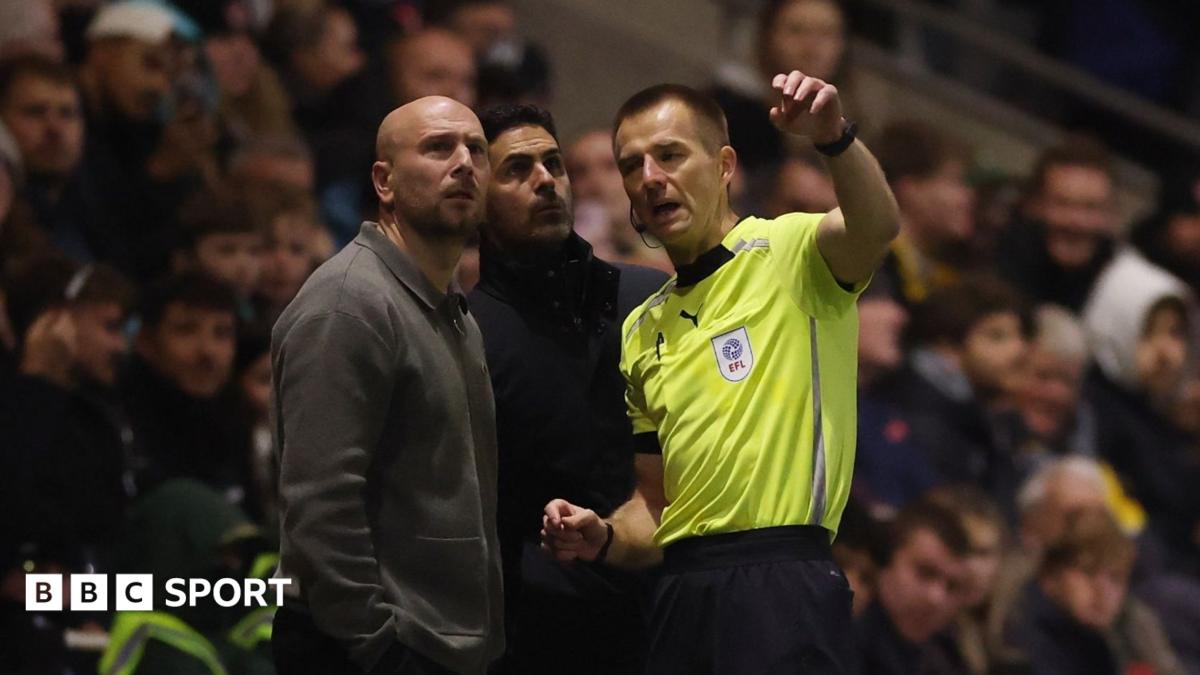
Referee Michael Salisbury stopped play with one minute and 40 seconds on the clock after spotting the drone flying above the pitch while Arsenal waited to take a free-kick at Highbury Stadium.
The game was halted while the referee spoke to the management and staff on both benches with police also investigating.
The match got back underway with 10 minutes on the clock; the commentator on Sky saying police had located the drone operator.
More to follow.

Kelly Osbourne breaks down in tears on her birthday
KELLY Osbourne was reduced to tears while spending quality time with her infant son on Tuesday – after brother Jack reunited with their estranged sister.
The TV personality choked up after son Sidney, four, her only child with ex-fiancé Sid Wilson, presented her with a thoughtful gift for her 42nd birthday.
Celebrating her second birthday without late father Ozzy, Kelly was overwhelmed after opening the present, a small keyring fashioned in the shape of a bat – a poignant reference to the legendary Black Sabbath rocker.
Reading the trinket’s accompanying message for social media followers, she said. “When life turns you upside down, look ahead and don’t look round.
“Even in stillness you can see, your strength awakened, alive and free.”
Sharing a video of the moment with Instagram followers, she wrote: “If today was not emotional enough already, but then my favorite little man in the world went and did this!
READ MORE ABOUT KELLY HERE


“I’m so lucky that I get to be his mummy! He truly is the best thing that has ever happened to me!”
Recent photos show the TV personality hugging his eldest sister, 43, as their mum Sharon watches on.
Jack – who took part in last year’s I’m A Celebrity… Get Me Out Of Here! – is also shown warmly embracing his mother.
Back in September, Kelly ended her relationship with sister Aimee – and says there’s no chance of reconciliation.
The pair have been feuding for years, with Kelly admitting she felt Aimee was “embarrassed” of the family.
Aimee, 43, who famously opted out of appearing on the family’s iconic reality show, The Osbournes, is accused of “never truly acknowledging” her siblings.
In an emotional interview on Paul C Brunson’s We Need To Talk podcast, Kelly, 42, expressed deep resentment over never having a supportive older sister, and explains why she has cut her out of her life permanently.
Asked of there was hope for a reconciliation, she said: “No… I respect her, I accept her, but we’re different, and that’s okay…
“If you’re not going to accept me for who I am, and constantly be trying to change me and say horrible things about me, and truly seem to thrive when I’m not doing well, I don’t want you in my life.”
The Osbournes aired on MTV from 2002 to 2005 and ran for four series.
Whatever Happened to Romania? | Global Finance Magazine
Romania has great tech and is the region’s top energy producer, yet it’s mired in an economic slump.
This article appears in the November issue of Global Finance Magazine.
For investors, southeastern Europe’s largest and most diversified country remains a mystery.
Renowned for its potential, Romania boasts a thriving information, communications, and technology sector; unicorn start-ups such as automation software company UiPath; and regional stars like OMV Petrom, the region’s largest energy producer; renewables producer Hidroelectrica; and Automobile Dacia. But development has gone badly off track, making Romania an outlier to the region’s upbeat picture.
Romania recorded negative growth of 0.8% in the first half of 2026, down from just 0.7% for all of last year, according to the latest Regional Economics Survey from the European Bank for Reconstruction and Development. The fiscal deficit, the current account deficit, and inflation remain either the highest or among the highest in the EU.
A dramatic drop in foreign direct investment inflows, from €3.4 billion ($3.82 billion) in the first half of 2025 to just €527 million in the first half of this year, suggests difficulty in covering a predicted 2026 current deficit of €14.2 billion, leaving Romania heavily dependent on EU fund inflows, which have increased 32.5% year-over-year to €5.16 billion.
What Went Wrong?

Romanians are being hit by steep hikes in energy and food prices and persistently high inflation. But much of the blame for the country’s failure to address these problems lies with its fractured, ineffectual political class, which has blocked attempts by successive coalition governments to control spending and carry out structural reforms.
Romania has been without a government since May 5, when one of Prime Minister Ilie Bolojan’s coalition partners, the Social Democrats, sided with the far-right Alliance for the Union of Romanians to block a package of spending cuts intended to address a rising budget deficit. Since then, Bolojan has been unable to pass a budget or form a new government, causing the Romanian leu to depreciate and dramatically boosting inflation and borrowing costs.
“Romania’s political class is doing what Italy’s did in the late 20th century, ramping up spending and debt to unsustainable levels,” said Charles Robertson, head of Macro Strategy at consultancy FIM Partners. “Bond markets now price Romania as a junk bond country, although the rating agencies have it just inside investment grade, all with a negative outlook.”
In its last review, on July 31, Fitch Ratings affirmed Romania at BBB- Negative, citing “deteriorating public finances due to large, albeit declining, fiscal deficits and rising government debt/GDP.”
Malgorzata Krzywicka, director on Fitch Ratings’ Emerging Europe Sovereign team, expects Romania’s economy to contract by 0.6% this year, bringing average real GDP growth to just 0.3% in 2024-26, compared with 4.7% in 2015-19. Potential growth has fallen from about 3.5% before the pandemic to closer to 2%.
“The key challenge,” she said, “is whether private investment and recent structural reforms can offset these trends as EU funding gradually normalizes from recent peaks and public investment becomes a less powerful growth driver.”
Can Confidence Be Restored?
Yes, but Romania’s political class must get its act together, said Radu Cracan, regional, policy & strategy economist at the EBRD.
“We strongly advocate for better and more reliable governance, more targeted and private sector-facing economic policymaking, more innovation, and better skills and human capital,” he said. “Ensuring a predictable regulatory and fiscal environment will be critical for foreign investor confidence.”
That’s a tall order for a country that has long puzzled investors by failing to make progress on these fronts.
Nic Wirtz is a contributing writer based in Guatemala.
Hunter Biden laptop drama renewed as judge rips case vs. ex-FBI staff
WASHINGTON — A federal judge on Tuesday scolded the Justice Department for its unorthodox handling of a criminal case against two former FBI officials accused of making false statements to Congress about their knowledge of a laptop the Justice Department says belonged to Hunter Biden, the son of former President Biden.
U.S. Magistrate Zia Faruqui struck from the record an amended criminal complaint filed in the middle of the night by the Justice Department that added a new obstruction charge against the two former officials, Nikki Floris and Bradley Benavides. Such charging documents require sign-off from a judge that probable cause exists that a crime was committed by a defendant, and this complaint lacked that.
“It is not our court’s practice — and I think it is appropriately not our practice — that unsigned complaints are filed on the docket,” Faruqui said.
He later added: “I want to know why the United States is reticent or averse to putting before a probable cause determination that you must believe is righteous. Why today on this one case have you changed the entire history of how you charge cases?”
The dismissal of the superseding complaint was an embarrassing setback for a Justice Department that has undertaken a series of splashy and politically charged investigative actions in the run-up to next week’s midterm elections. But the original false statements case against the former officials, announced Friday, remained intact as Faruqui proceeded Tuesday with a preliminary hearing.
The case says officials falsely minimized what they knew
The case accuses the former officials of falsely playing down their knowledge about a laptop the Justice Department says Hunter Biden abandoned at a computer repair shop in 2019.
But beyond that, it represents a Trump administration broadside against a since-disbanded FBI task force that was set up to monitor foreign influence. Congressional Republicans have long criticized the task force, saying it tried to discredit their own investigations into the Biden family.
Defense lawyers were set to challenge the case at the preliminary hearing Tuesday in Washington’s federal court, including by highlighting the unusual fact that the ex-FBI officials were charged via a criminal complaint signed by a magistrate judge rather than an indictment voted on by a grand jury. The Justice Department repeatedly has struggled in high-profile cases to persuade grand juries in the nation’s capital to return indictments.
Hours before the hearing, the Justice Department added a new obstruction charge that said the former officials’ alleged false statements allowed them to avoid questioning about their knowledge of Hunter Biden and impeded an investigation by House lawmakers into the Bidens.
“What is going on at the D.C. U.S. Attorney’s Office?” lawyers for Floris asked in a statement early Tuesday. “In the middle of the night, the government filed an unsigned and unsworn complaint attempting to fix the issues with their original charge against Ms. Floris and adding a new charge just as meritless as the first one.”
“In our combined decades of DOJ service,” the lawyers said, “we have never seen or even heard of something like this being filed.”
It is a very intricate saga
The prosecution, a rare Justice Department criminal case against a former employee, revisits a tangled saga that roiled the final weeks of the 2020 race after the New York Post revealed the existence of a laptop it said had been dropped off by the younger Biden at a Delaware computer repair shop about a year earlier.
The Post said it obtained a hard drive of the laptop from Rudy Giuliani, a close ally of President Trump, and reported on some of the contents of the computer, including emails that appeared to show some of Hunter Biden’s foreign business dealings.
The curious circumstances of the laptop’s discovery raised concerns among Democrats and former intelligence officials about the possibility of Russian involvement, particularly when the Trump administration’s own intelligence community had assessed that Moscow was attempting to undermine the candidacy of Democratic nominee Joe Biden, who went on to defeat Trump in 2020, and as Giuliani had traveled abroad looking for dirt on the Bidens.
But Trump’s then-national intelligence director, John Ratcliffe, quickly sought to quell speculation about the laptop’s provenance by saying there were no signs it had anything to do with Russian actors. The FBI said it had nothing to add to Ratcliffe’s statement and investigated the younger Biden on gun and tax charges that later resulted in felony convictions. President Biden pardoned his son in late 2024.
The accused led the Foreign Influence Task Force
The FBI officials under scrutiny, Floris and Benavides, were leaders of the Foreign Influence Task Force, which was established in the first Trump administration to police influence campaigns staged by Russia and other nations aimed at sowing discord, undermining democracy and spreading disinformation.
In that capacity, the FBI officials briefed Republican Sens. Chuck Grassley and Ron Johnson in August 2020 as the lawmakers were doing their own investigation into Hunter Biden’s work in Ukraine. News of the briefing leaked, and the senators lashed out at the FBI, saying their efforts to scrutinize the Biden family had been discredited and falsely linked to Russian disinformation.
The criminal complaint accuses them of lying to lawmakers in 2023 by denying contemporaneous knowledge of the Biden laptop or participating in internal FBI conversations about it. Their lawyers have denied any allegations of wrongdoing.
The task force was disbanded in February 2025 by then-Attorney General Pam Bondi.
Tucker, Kunzelman and Richer write for the Associated Press.

Was the Ballon d’Or in London the most chaotic?
Hundreds of people gathered outside the London Palladium to try to get a glimpse of the biggest stars in football on the red carpet. A security perimeter of metal fencing and barricades had been erected to try to keep those without a ticket out.
But the BBC Sport team witnessed those barriers being scaled, broken and ripped down and several people being evicted by security after making their way through.
The atmosphere at times was tense, with footage on social media appearing to show fans clashing with security and police.
A Metropolitan Police spokesperson told BBC Sport that officers were requested to help “after concerns were raised about crowd behaviour and the potential for a breach of the peace”.
“A Section 35 dispersal order was authorised at 19:49 GMT and was in place until 04:00 on Tuesday, 27 October,” a statement read.
“Officers cleared the crowd, who began throwing scaffolding clips and bricks towards police. No officers were injured.
“Later in the evening, officers dealt with a relatively small number of individuals who had climbed a neighbouring building.”
It added that two arrests were made – one for breaching the dispersal order and another for affray and violent disorder.

US’s RFK Jr claims Arabs ‘don’t produce science’: Why he’s very, very wrong | US Midterm Elections 2026 News
United States Health Secretary Robert F Kennedy Jr has sparked uproar with comments he has made denying Arab contributions to mathematics, science and literature.
In a high-voltage rant on Monday, the US health secretary said, “There’s five hundred million Arabs in the world. And yet they don’t produce science. They don’t win the Nobel Prize. They don’t win the Fields Prize. They don’t win the Wolf Prize. They don’t produce literature.”
RFK Jr, who has been involved in anti-vaccine campaigns and has promoted a debunked theory linking vaccines to autism, made the comments during a US election campaign event in Grand Rapids, Michigan while supporting Republican nominee Mike Rogers, who is up against Arab-American Democrat nominee Abdul El-Sayed, in a tightly contested battle for Michigan’s Senate seat in next week’s midterm elections.
Critics said the comments were racist, Islamophobic and factually inaccurate, pointing to modern and historic Arab innovation in multiple fields.
Here’s how Arabs have made vital contributions to the human understanding of maths, science and literature through the centuries.
Arab contributions to maths, science and humanities
The period known as the Islamic Golden Age, from around 750 AD to 1258 AD, produced many key Arab contributions to medicine at a time when Europe was said to be in its Dark Ages. During this time, Arabic was the language of science and scholarship.
1st-4th centuries: The numerals 0-9, which originated in ancient India, were adopted by Arab mathematicians who spread them across the world. They displaced Roman numerals as a more advanced number system in mathematics.
8th century: Arab and Persian mathematicians were studying the ancient Indian concept of zero in mathematics in Baghdad, long before the Europeans. The number zero was crucial to the development of mathematics – but was absent from widely used Roman numerals in Europe.
813-833: The Arab mathematician Muḥammad ibn Musa al-Khwarizmi – one of those studying the number 0 – is often referred to as the “father of algebra” as he was the first to treat the method as a separate mathematical discipline in his work, Al-Jabr. This method provided the first linear and quadratic equations, still used as a core part of mathematical study today.
965-1040: Ibn al-Haytham, known as the “father of modern optics”, explained the role that light entering the eye plays in human vision. He was born in Basra in Iraq, but spent most of his working life in Cairo attending to noble families.
936-1013: Abu al-Qasim al-Zahrawi, called “the father of modern surgery”, was considered the greatest surgeon in the Middle Ages. He wrote a 30-volume encyclopaedia detailing medical practices and designed and illustrated many surgical instruments. Born in Azahara, in Andalusia, he was known as Abulcasis in Europe.
9th century: Fatima al-Fihri founded the University of al-Qarawiyyin in Fez, Morocco. It is often cited as the oldest continually operating university.
1213-1288: Ibn al-Nafis described pulmonary circulation – the process by which blood passes through the lungs – several centuries before Europeans understood it. He wrote more than 110 volumes of work on surgery, ophthalmology and philosophy while working as a chief physician in Egypt.
915-965: Abu al-Tayyib al-Mutanabbi, regarded as the greatest poet in the Arabic language, was Yemeni and grew up immersed in Bedouin Arabic culture. He wrote in classical Arabic and many of his verses became sayings used in everyday Arabic.
1100-1165: Muhammad al-Idrisi was a geographer known for making the Tabula Rogeriana, one of the most accurate and detailed medieval world maps, and a high point of Islamic geography. He was born in Ceuta in Morocco.

Prize-winning Arabs
In more modern times, RFK Jr’s assertion that Arabs do not win Nobel prizes for science and literature is very far from the truth. Here are some of the highlights:
1960: Nobel Prize for Medicine
Peter Medawar won the Nobel Prize for Medicine for work on for work on acquired immune tolerance, which underpins organ transplantation. He was born in Brazil to a Lebanese father.
1966: The Fields Medal
Michael Atiyah won the Fields Medal, the most prestigious award for mathematics, in 1966. He was born in London to a Lebanese father and Scottish mother. Educated in Egypt, he spent much of his childhood in Cairo and Khartoum.
1988: Nobel Prize for Literature
Egyptian Naguib Mahfouz won the Nobel Prize in Literature for his body of work, including the Cairo Trilogy, which the Swedish Academy said formed “an Arabic narrative art that applies to all mankind”. He is still the only winner of the prize who wrote in Arabic.
1990: Nobel Prize for Chemistry
Elias James Corey won the Nobel Prize for Chemistry for developing retrosynthetic analysis. He is an American of Lebanese descent.
1993: Wolf Prize for Chemistry
Egyptian Ahmed Zewail won the Wolf Prize for Chemistry. The Wolf Prize is an international award which has been presented to living scientists and artists every year in Israel by the Wolf Foundation since 1978.
1999: Nobel Prize for Chemistry
Zewail also won the Nobel Prize for Chemistry for pioneering femtochemistry, which is the study of chemical reactions on extremely short timescales. He also won the Wolf Prize in Chemistry in 1993.
2005: Nobel Peace Prize
Egyptian scientist Mohamed ElBaradei shared his Nobel Prize with the International Atomic Energy Agency, which he led.
2018: Wolf Prize for Chemistry
Omar M Yaghi, born in Jordan to a Palestinian refugee family, won the Wolf Prize in Chemistry in 2018 for work on metal-organic frameworks. He shared the prize with Japan’s Makoto Fujita. The Palestinian Campaign for the Academic and Cultural Boycott of Israel (PACBI) condemned his acceptance of the award because the prize is awarded by an Israeli foundation.
2023: Nobel Prize for Chemistry
Moungi Bawendi won the Nobel Prize for Chemistry for the discovery and synthesis of quantum dots. He was born in France to a Tunisian father, but based in the US.
2025: Nobel Prize for Chemistry
Yaghi also won the Nobel Prize for Chemistry for developing metal-organic frameworks. These are crystalline materials with large internal cavities that can capture and store gases, harvest water from air, and trap pollutants. He shared the prize with Susumu Kitagawa from Japan and Richard Robson from Australia.
In a post on X, vaccine scientist Peter Hotez of the Texas Medical Center weighed in on historical Arab scholarship, saying, “It was the Arab scientists of the Middle Ages who kept Aristotle, Hippocrates, Galen alive to hand it down in the Renaissance.”
Broadcaster Mehdi Hasan described RFK Jr’s comments as “racist” and, in a post on X, wrote: “One of the men who won the Nobel Prize for Chemistry last year was a Palestinian-American, Omar Yaghi.”
The Council on American-Islamic Relations called for the US health secretary to be removed. It said: “To stand on a public stage as a sitting US cabinet official and dehumanise half a billion people – and millions of Muslim and Christian Arab Americans – with fabricated, white supremacist talking points is utterly disqualifying for public office. His sweeping erasure of Arab contributions to humanity is not only maliciously false, but it also fans the flames of anti-Arab and anti-Muslim hate at a time when communities are already vulnerable to bigoted attacks from other public officials nationwide.”

Dutch zookeeper dies after being mauled in leopard enclosure
An experienced keeper at a Dutch zoo has died days after being mauled in a leopard enclosure, the safari park has confirmed.
The woman, who had worked at Beekse Bergen park for 40 years, was caring for two Persian leopards in an indoor facility when she was attacked on Saturday.
She sustained injuries to her head and neck but despite undergoing surgery, the park confirmed her death on Tuesday.
An independent investigation will be launched into the incident, it added in a statement.
Announcing her death, Beekse Bergen – in the south of the Netherlands – said the keeper began her career there when she was 17 and had worked there on-and-off for four decades.
“Her passing has deeply affected us all, and our hearts go out to her family, friends, and loved ones. At this moment, our primary focus is on supporting her family and her colleagues,” the statement added.
The two leopards, which are usually kept away from staff, had been brought inside due to bad weather conditions.
It is not clear exactly what happened in the enclosure because there are no CCTV cameras inside.
Local news website NL Times reported that despite her injures she managed to alert colleagues via her walkie-talkie. She was then taken to hospital in a helicopter in a critical condition before she died days later.
A park spokesperson told Omroep Brabant, a local media outlet, that the leopards were behaving naturally and they would not be euthanised.
“They are, and remain, predators.”
Beekse Bergen said it would create a memorial location for guests and staff members to share their condolences.

Susan Saint James dead: ‘Kate & Allie,’ ‘McMillan & Wife’ star was 80
Susan Saint James, the TV star who shared the screen with Rock Hudson as his on-screen wife in “McMillan & Wife” and co-led the heartfelt, blended family comedy “Kate & Allie” with Jane Curtin, has died.
The Los Angeles native died Monday after being diagnosed with pancreatic cancer, according to People, which first reported the actor’s death. She was 80.
Saint James’ family remembered the actor for her warm personality and kindness, writing in a statement shared with the magazine, “Every person she met became the most important person in the room at that moment, from a fellow board member to the clerk at the shoe store, who usually walked away knowing her entire life story.”
Her acting career spanned almost six decades — she broke out as Peggy Maxwell in NBC series “The Name of the Game” — from the mid-1960s to the 2020s across TV and film, but audiences know the actor best for starring as Hudson’s detective wife in “McMillan & Wife.” The NBC series, which aired from 1971 to 1977, centered on San Francisco police commissioner Stuart “Mac” McMillan and wife Sally McMillan as they solve a variety of crimes. Saint James earned four Emmy nominations for her work.
She pivoted to film and TV movies after the series ended, garnering roles in “Love at First Bite,” “The Kid from Nowhere,” and “Don’t Cry, It’s Only Thunder.”
After nearly a decade away from the TV series scene, Saint James returned in CBS’ unconventional sitcom, “Kate & Allie.” She starred as Kate McArdle, one of the series’ titular divorcées who decide to raise their children under the same roof. Saint James’ Kate was the modern and no-nonsense counterpart to Curtin’s old-fashioned, sweet Allie. The series aired from 1984 to 1989 and earned Saint James two additional Emmy nominations.
When the stars and creative team of “Kate & Allie” reunited amid the COVID-19 pandemic in 2021, Saint James reflected on how the show was representative of a same-sex household and how mothers raising their own children related to the show’s material. She and her co-stars also said they knew at the time that the series was something special.
“It wasn’t like we went back and said, ‘You don’t know what you got ‘till it’s gone.’ It was just fun,” she said.
Saint James mostly stayed away from Hollywood in the decades following “Kate & Allie,” save for brief appearances in series including “Law & Order: SVU,” “Suits” and “Upload.” She notably found herself in the spotlight again in the early 2000s, but for family tragedy.
Her son Edward “Teddy” Ebersol died at age 14 in a 2004 Colorado plane crash that also claimed the lives of two other people. Teddy Ebersol, whom Saint James shared with husband and former NBC Sports Chairman Dick Ebersol, was aboard a chartered Canadair CL-601 Challenger jet with his father and older brother, Charles, on Nov. 28, 2004, when it crashed during takeoff in light snow and freezing temperatures from the airport near Montrose, Colo. The pilot and a flight attendant were also killed in the crash. Dick and Charlie sustained injuries in the crash, and a copilot was critically injured.
“Here’s the bad part … I’ve never touched his clothes, I’ve never been able to move his things,” Saint James told Oprah in a 2006 interview. She continued to speak publicly about her grief in the following years.
“The thing that could move me on was that I could embrace Teddy finally in a way that was, ‘he’s my kid,’” she said during a 2009 panel on grief. “They can take his body, but I own that boy and I love that boy.”
Beyond her screen work and family tragedy, Saint James was also known for her longtime advocacy in the sports world. Saint James supported the mission of the Special Olympics since an early iteration of the games in California in 1972. The first Special Olympics was held in Chicago in 1968.
In a statement published Tuesday, Special Olympics said Saint James “believed deeply in the power of inclusion” and she served as a board member and a campaign co-chair for Special Olympics Connecticut. Her advocacy included founding the annual Susan Saint James poker tournament fundraiser. The organization’s Susan Saint James Leadership Award honors individuals who “embody her remarkable spirit of leadership, generosity, and dedication to our mission,” the post said.
“Thank you, Susan, for being an extraordinary champion of our athletes,” Special Olympics added in its statement. “Your legacy will live on through the lives you touched and the inclusive future you helped build.”
The actor, born Aug. 14, 1946 and raised in Rockford, Ill., received her star on the Hollywood Walk of Fame in 2008 and partially attributed her success in the industry to her connection with Special Olympics. Former California first lady Maria Shriver, daughter of Special Olympics founder Eunice Kennedy Shriver, attended the ceremony.
During that ceremony, Saint James said she managed to achieve her dream of becoming a Hollywood movie star “through the good works of a lot of wonderful people that created a loving and home-like environment for me all those years.”
“But the thing that really contributed to my success and happiness with my career was coupling it up with the work that I did with the Special Olympics,” she said, adding, “you can guess that being associated with them turned out to be getting to know some pretty amazing people since I’m now really cozy with the first lady of the state of California.”
Saint James was married three times, first to scriptwriter Richard Neubert from 1967 to 1968, according to People. She remarried in 1971 to makeup artist-turned manager Thomas Lucas. They share two children — daughter Sunshine and son Harmony — and divorced in 1977.
Saint James remarried to then-NBC executive Dick Ebersol after they met in 1981 when she hosted “Saturday Night Live.” They welcomed children Charles, William and Edward (Teddy.)
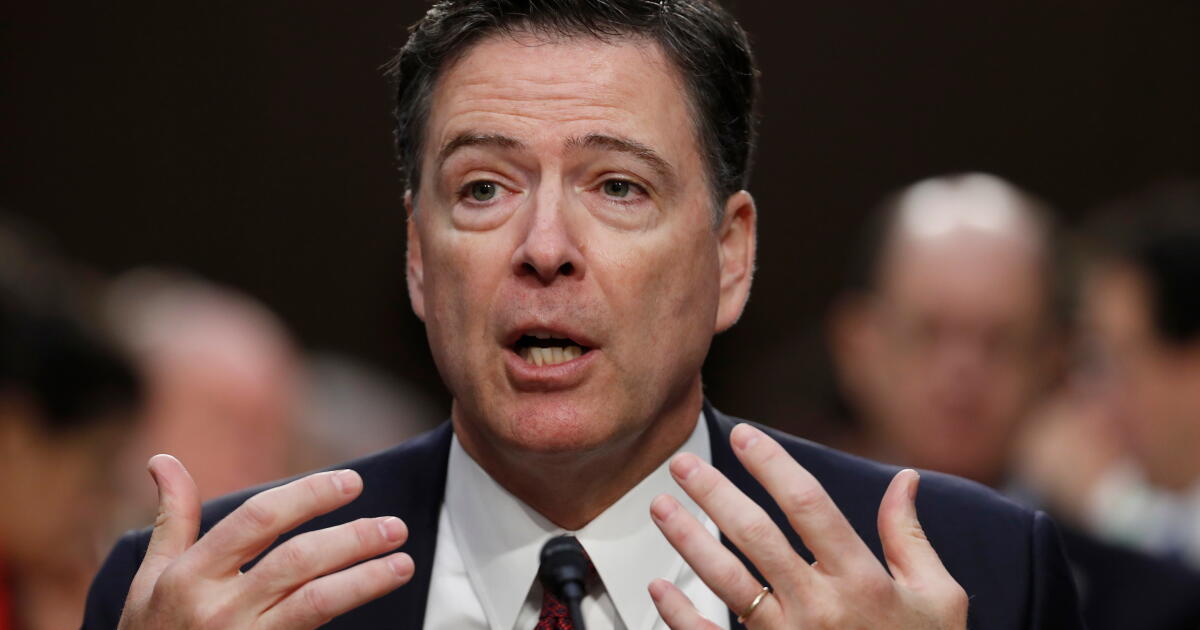
Trump administration attempting to prosecute former FBI Director James Comey again
WASHINGTON — The Trump administration is attempting to prosecute James Comey for what it calls a decade-old leak of classified information, an effort the former FBI director’s lawyers immediately dismissed as legally invalid and outside the legal time limit for when the Justice Department can file a criminal indictment.
The allegations from the Justice Department were revealed Monday in newly unsealed court documents that shed light on a closed-door fight that represents an unmistakable escalation in the administration’s targeting of Comey, a longtime critic and foe of President Trump who has faced two other criminal cases since the Republican returned to the White House last year.
The effort to prosecute Comey is also part of a series of politically charged investigative actions the department has undertaken in the run-up to next week’s midterm elections.
“Well, they’re back — again,” Comey said in a video statement Monday. “It would almost be funny if it weren’t such an appalling abuse of the Department of Justice — one that we cannot become numb to. Nothing’s changed with me; I’m still innocent, I’m still not afraid of these people — and I still believe in the independent federal judiciary.”
The Justice Department said it had filed what’s known as a “criminal information” to extend the statute of limitations for charges in the case.
“Filing a criminal information to toll the statute of limitations is a widely recognized practice in federal court and has been approved by multiple Circuit Courts of Appeals. This is an ongoing criminal investigation, and we will not comment further,” a department spokesperson said.
Asked about the Comey case, Trump told reporters upon arriving back to Joint Base Andrews in Maryland late Monday following his rally in Mississippi that “I don’t know much about it. I just heard about it.”
He added, “He’s a dirty cop, James Comey. But I know nothing about it.”
An information can be filed without the approval of a judge or a grand jury’s finding of probable cause to a court. Comey’s lawyers made clear that they intend to fight the charges as invalid because the Justice Department did not file an indictment, which must be voted on by a grand jury, inside the 10-year statute of limitations required under the law.
“For the third time in little more than one year, the Department of Justice has attempted to charge Mr. Comey with a federal crime. Mr. Comey steadfastly maintains his innocence,” his attorney, Patrick Fitzgerald, said in a statement.
The allegation was previously investigated
The latest allegation concerns an October 2016 New York Times story related to a secret court order that required Yahoo to scan emails for messages potentially linked to a foreign terrorist organization. The story cited two government officials who spoke on the condition of anonymity about the order from a judge on the Foreign Intelligence Surveillance Court that Yahoo was barred from publicly disclosing.
Federal authorities, including prosecutor John Durham, began investigating the disclosure in early 2017. Durham, who later investigated the FBI’s conduct as it scrutinized potential ties between Russia and Trump’s 2016 presidential campaign, wrote a classified memo in December 2018 recommending no criminal charges against anyone in connection with the disclosure, Comey’s attorneys said in a recent court filing.
In January 2019, the U.S. Attorney’s office for the District of Columbia opened a second investigation of the same matter under the code name “Tropical Vortex.” But that investigation was closed without any charges filed in February 2020.
“Both times the Government determined that no charges should be brought against anyone. Now, ten years after the article was published, the Government filed an “Information” against Mr. Comey that was not approved by a judge nor issued by a grand jury. It purports to charge Mr. Comey with crimes that he did not commit,” Fitzgerald said.
Prosecutors in a newly unsealed filing said investigators found evidence that Comey “sought to correct misinformation which had appeared in the press by way of Reuters the day before” that New York Times story was published, directed his staff to speak to a journalist at the newspaper related to accuracy concerns “and thereby illegally transferred classified information.”
The criminal information was filed under seal on Oct. 5, 10 years after the 2016 story was published. “But,” Comey’s lawyers said, “the applicable statute of limitations explicitly demands an indictment within 10 years of the offense; an information does not suffice.”
They have asked a judge to dismiss the information, a request that is still pending.
Trump and Comey have a long and uneasy history
The first criminal case against Comey, filed in federal court in Virginia, accused him of having lied to Congress in 2020 but was dismissed by a judge who concluded that the prosecutor who brought the charges was illegally appointed. A separate pending indictment charges the former FBI director with threatening Trump through an Instagram photo of seashells in the numerical arrangement of “86 47,” a case Comey has sought to dismiss.
The prosecutions are part of a Trump retribution campaign that has even extended to Comey’s daughter, Maurene, who was fired from her job as a Justice Department prosecutor in New York last year in a termination that a federal judge on Monday ruled was illegal.
Comey was the FBI director when Trump took office in 2017, having been appointed by then-President Barack Obama, a Democrat, and serving before that as a senior Justice Department official in President George W. Bush’s Republican administration.
But the relationship was strained from the start, including after Comey resisted a request by Trump at a private dinner to pledge his personal loyalty to the president — an overture that so unnerved the FBI director that he documented it in a contemporaneous memorandum.
Trump fired Comey in May 2017 amid an FBI investigation into potential ties between Russia and Trump’s campaign. That inquiry, later taken over by special counsel Robert Mueller, found that while Russia interfered in the 2016 election and the Trump team welcomed the help, there was insufficient evidence to prove a criminal collaboration.
The two men have been bitterly at odds ever since Comey’s firing.
Comey in 2018 published a memoir, “A Higher Loyalty,” that painted Trump in deeply unflattering ways, likening him to a mafia don and characterizing him as “untethered to truth.” Trump, for his part, has repeatedly claimed that Comey should face charges for “treason” — an accusation Comey dismissed as “dumb lies” — and called him an “untruthful slime ball.”
The Justice Department has made a series of splashy moves in recent weeks , including a criminal complaint last Friday charging two former FBI officials with lying to Congress about their participation in investigations concerning Hunter Biden, and the search by federal agents of the Washington home of Democratic congresswoman Ilhan Omar of Minnesota.
Tucker, Richer and Kunzelman write for the Associated Press. AP writer Will Weissert contributed to this report.
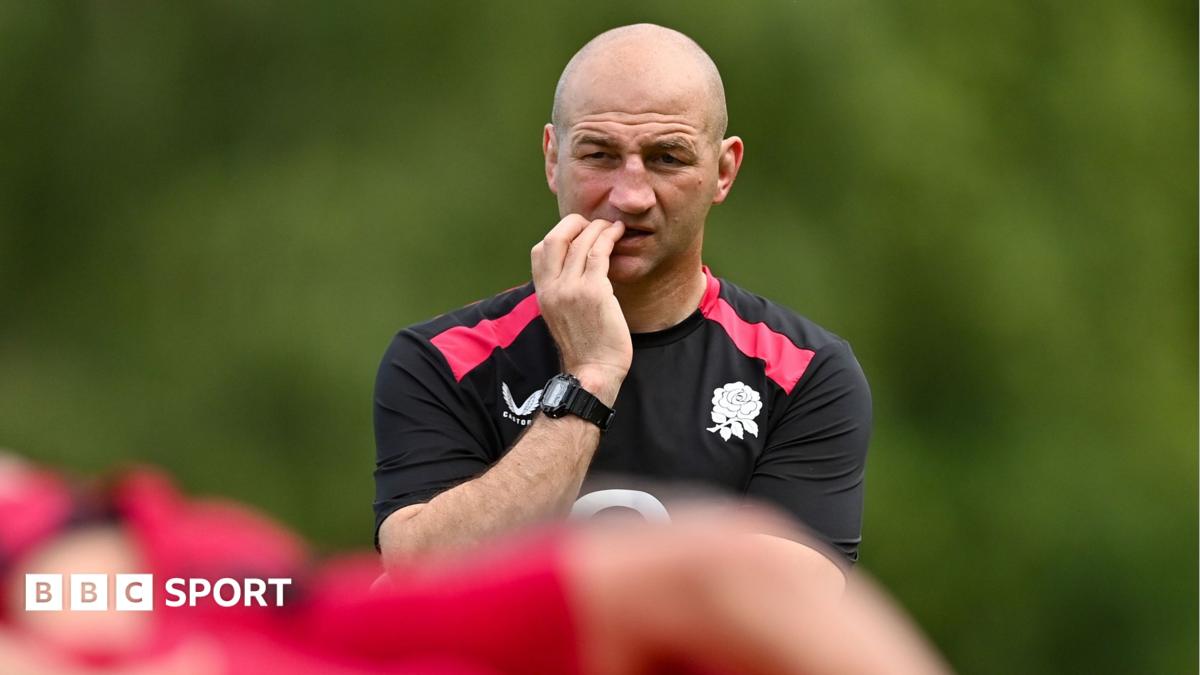
Steve Borthwick: England preparation time for Nations Championship opener ‘a challenge’
England’s preparations have also been affected by the Prem schedule, with players involved in Sunday’s fixtures having less time for full squad training.
“We had a session today really that was affected obviously by the fact that we had a Sunday game in Prem Rugby,” Borthwick explained.
“Fortunately, we don’t have any Sunday games this coming week in Prem Rugby, which I’m pleased about.
“So that should allow players to be recovered in a proper run into the Test match.”
Borthwick acknowledged the challenge of balancing club and international commitments, but said playing at the weekend could benefit England.
“They’ll go back and play the rugby and in so many ways that will be a positive for us for next weekend,” he said.
“The players are match fit at club level, playing regularly at club level, and as long as they don’t get injured, then they’re all available for selection next week, then that will be positive.
“I’d say on one side, I think it’s a real strength of English rugby that the players have such great loyalty and passion for their clubs as we saw very evidently in this last round with the derbies that went on.
“They are team-mates and best of mates the next day for a couple of days [with England] and then they go back to being rivals again until they come back into camp next week.”
Borthwick also identified the breakdown as an area where England need to adapt to the demands of international rugby.
He pointed to the recent European fixtures, in which English clubs collectively lost more of their own breakdown ball and won less opposition breakdown ball than teams from other competing nations.
“Part of my job is identify those bits of where I need to bridge from where the players are in Prem rugby to where they are in Test rugby,” he said.
“The level of competition [at the breakdown] is at a different level in Test rugby.”

The WhatsApp ‘general’ behind Lula’s election comeback in Brazil | Elections News
As Luiz Inacio Lula da Silva celebrated his election victory on Sunday in Sao Paulo, he placed his hand on the head of a man standing beside him and beaming in a green and yellow Brazilian football jersey.
Lula thanked him for his role in the campaign, calling him “our general”.
Recommended Stories
list of 4 itemsend of list
Andre Janones, a 42-year-old Brazilian congressman who had spent the final weeks of the presidential run-off building a mass online movement to get Lula re-elected, then embraced the president.
“He played an exponential role in this campaign in lifting the morale of our troops every day, morning, noon and night,” Lula told thousands of supporters who packed Paulista Avenue, the city’s main artery.
Just three weeks earlier, the president seemed to be in trouble. He had finished behind his right-wing rival Flavio Bolsonaro after the first round of voting, his campaign struggling to keep up with the right’s powerful social media operation.
Janones, who had also helped coordinate Lula’s digital operation in his run-off against Jair Bolsonaro in 2022, was convinced Lula’s campaign needed a change – and that he could help turn things around.
He posted a video declaring, “We are going to win this election. Lula will be re-elected president of Brazil.”
His plan centred on a WhatsApp channel he had launched months earlier.
Called Exercito do Lula, or “Lula’s Army”, it had about 60,000 followers after the first round.
By election day, Lula’s Army had grown to almost 11 million subscribers, with Janones widely credited with helping Lula stage his comeback.
How Andre Janones built Lula’s WhatsApp army
Janones is a lawyer and congressman who grew up in a working-class family in Minas Gerais. He made a name for himself through his social media commentary during Brazil’s 2018 truckers’ strike and was elected to Congress that year.
In 2022, he dropped his own presidential bid to endorse Lula, joining his run-off campaign.
“At the time, he became widely known for employing tactics similar to those used by Bolsonarism, despite operating on the left,” said Viktor Chagas, a professor at Fluminense Federal University who studies digital politics and online campaigning.
Janones coined the term “cultural Janonism” to describe his approach, which relied on urgent messages, memes and calls for supporters to take action, as well as what Chagas described as the occasional use of negative campaigning and “content of questionable origin”.
But the scale of Lula’s Army in 2026 was unprecedented, Chagas said.
In the video declaring that Lula would win, Janones urged supporters to enlist as “soldiers” by posting saluting emojis and joining his WhatsApp channel, where he assigned them what he called “missions”.
The tasks were simple, from recruiting three friends to sharing campaign videos to promoting hashtags.
They came in a relentless stream of messages from Janones himself, often written in capital letters. Supporters couldn’t reply, but they could forward the messages or react with emojis, often doing so in the tens of thousands.
Chagas described the strategy as a form of “electoral gamification”, with Janones setting targets for supporters to reach together.
For Andre Pagliarini, an assistant professor of history and international studies at Louisiana State University and the author of a book on Lula, the appeal of Janones’s approach was giving people something they could actually do to help Lula win.
“It became an organising platform that grew exponentially because it spoke to a desire that many Lula supporters evidently had to do something tangible to defeat Flavio Bolsonaro,” he said.
How Lula’s campaign changed its message
But the path to victory wasn’t just about mobilising supporters online.
Pagliarini credited the campaign for also finding a more effective way to tell the story of the president’s working-class past.
“The campaign’s mistake in the first round was to present this history as a finished monument, worthy of admiration but distant from the lives of the people it was meant to represent,” he wrote.
After Bolsonaro mocked the president for having nine fingers during the final televised debate, for example, Lula responded by recalling how he lost a finger at 17 while working a night shift at a factory. He then linked his experience to workers injured as a result of employers’ negligence.
“Unlike Flavio, he reminded voters, he knew the world of work because he had lived in it,” said Pagliarini.
After the debate, Janones spread the message online, promoting the hashtag #SomosTodos9Dedos, or “We Are All Nine Fingers”. Supporters shared the slogan, with some posting photographs of their own amputated fingers in solidarity.
Janones had also publicly called for simpler, less polished campaign videos that showed a more relatable side of Lula, drinking coffee, visiting people’s homes and talking to ordinary Brazilians. Around the same time, the campaign started posting more informal, selfie-style videos.
“Lula was looser in his political communication, less mediated,” Pagliarini said.
![Screenshots from Andre Janones’s WhatsApp channel, Exército do Lula, or “Lula’s Army,” show messages urging supporters to gather on São Paulo’s Paulista Avenue to celebrate Luiz Inacio Lula da Silva’s election victory on October 25, 2026 [Exército do Lula]](https://i0.wp.com/occasionaldigest.com/wp-content/uploads/2026/10/Untitled-1-21-1793120665.jpg?w=640&ssl=1)
Did Lula’s WhatsApp army help him win?
It is difficult to establish whether Janones’s digital army actually delivered votes.
“I am not sure there is a way to empirically connect the group to the outcome,” Pagliarini said.
But he believes Janones helped turn the campaign around.
“Janones himself became a kind of character in the campaign, a cheerleading strategist who seemed confident in a plan that had been missing throughout much of the race,” wrote Pagliarini.
Chagas agreed that it was “difficult to imagine the outcome we achieved without Lula’s Army”, adding that the channel brought together left-wing supporters who had previously been scattered across fragmented online communities, and gave them a way to work together.
The challenge now is keeping that momentum going, Chagas said, pointing to the far right’s use of “permanent campaigning”, maintaining the engagement of supporters between elections.
On election night, at least, Janones kept his soldiers busy.
“EVERYONE TO PAULISTA TO CELEBRATE,” he wrote, urging them to gather on Sao Paulo’s Paulista Avenue. “NOW.”
Later, he asked them not to go to sleep, adding that he’d let them go once he got back from the celebrations.
“Then we’ll discuss a few days off for you,” he joked in a message that drew more than 225,000 reactions.