



High school girls' volleyball: Southern Section playoff pairings
CIF Southern Section high school girls’ volleyball playoff pairings and schedule.
Source link
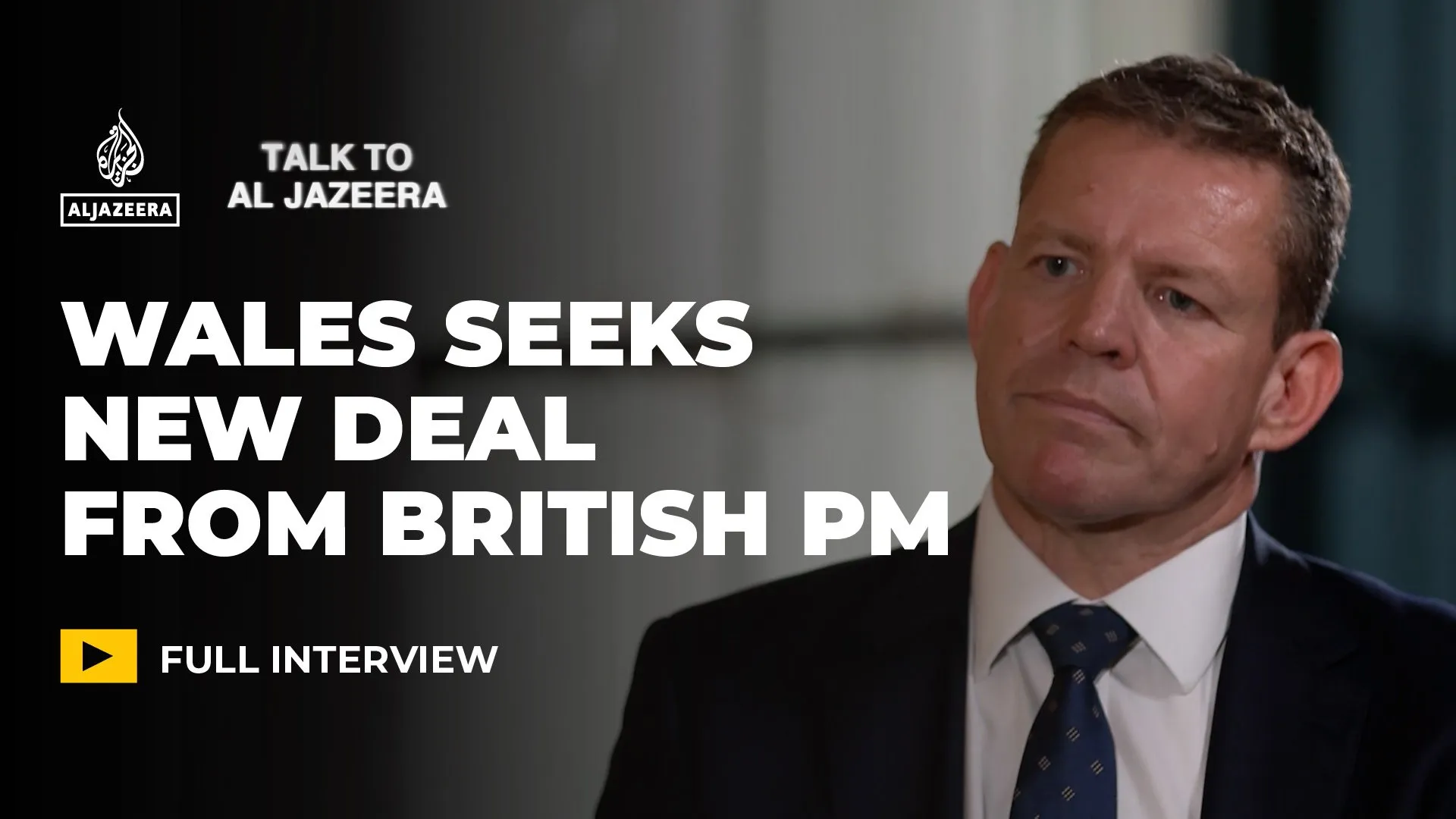
Wales first minister : ‘We’re within a union that is not a union of equals’ | Politics
The first minister of Wales says his nation deserves a new deal from the United Kingdom. Rhun ap Iorwerth says its relationship with the UK is not working because the union is not one of equals. That is why he is pushing for an agreement that will fix what he calls “historic unfairness”.
In a letter to the British prime minister, the Welsh first minister has formally requested the transfer of more power to Wales to allow it to control its policing, justice system, rail network and natural resources. His centre-left Welsh nationalist party, Plaid Cymru, came to power in May, ending more than a century of Labour Party dominance in Wales. Just four months into his term, he signed a pact with Scotland and Northern Ireland declaring their right to self-determination, and warning the British Parliament that its time is coming to an end.
He insists that the agreement is not meant to tear down the UK but rather to allow the Welsh government to decide its own future. He says Wales is on the journey towards independence. But he will not push for a referendum this parliament.
Published On 27 Oct 2026
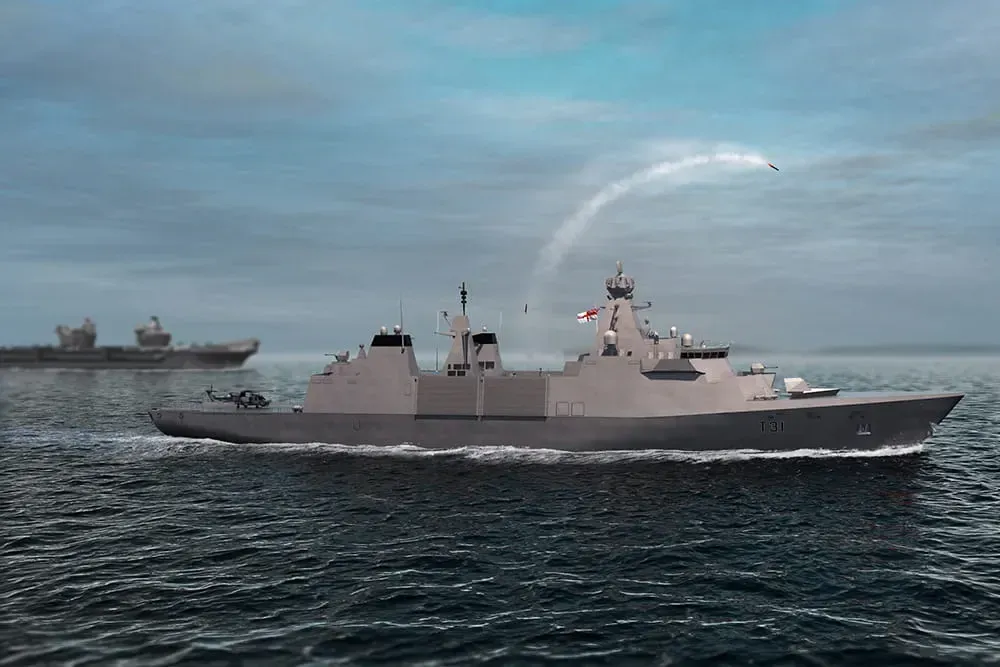
British Type 31 Frigate Variant Offered To The U.S. Navy
British defense contractor Babcock has confirmed that it is putting itself forward for the U.S. Navy’s future frigate program, with its Arrowhead 140 general-purpose frigate, the design behind the Royal Navy’s Type 31 class, expected to form the basis of its proposal. The move adds another foreign-designed warship to Washington’s search for a relatively mature frigate that can be built quickly and in significant numbers.
Babcock has held preliminary discussions with Pentagon officials and is expected to submit an expression of interest before the end of October, according to recent reporting by The Telegraph and Navy Lookout. The proposal is understood to potentially involve Huntington Ingalls Industries (HII), America’s largest military shipbuilder, with the two companies exploring an arrangement that could see the Arrowhead 140 built in the United States under license.

“Of course we’re interested. We have a world-class frigate, close links to the U.S. and U.S. industry. It would be insane for us not to respond,” Sir Nick Hine, head of Babcock’s marine business and a former Second Sea Lord, told The Telegraph.
The initiative comes as the U.S. Navy seeks to accelerate the acquisition of smaller surface combatants after the troubled Constellation class frigate program was axed. Japan’s upgraded Mogami class, South Korea’s Chungnam class, and Turkey’s Istanbul class have also been reported as candidates for the Navy’s international frigate effort. You can read more about all three designs here.


Fincantieri Marine Group, which had developed the cancelled Constellation class frigate for the U.S. Navy, also says it sees a possible new opportunity in the service’s latest frigate plans.
Meanwhile, German defense contractor Rheinmetall, a newcomer to the surface combatant market, recently unveiled its GMF 140 frigate, which it has said it plans to offer “initially as part of a procurement project in North America” before pursuing opportunities with other allied navies.
For Babcock, the opportunity would be a major expansion of its relationship with the U.S. defense industry. If successful, the company would likely provide the design, engineering expertise, and potentially the intellectual property needed for American shipyards to manufacture the frigates.
This would mirror the process for the Polish Navy’s Project 106 Miecznik (Swordfish) class, which is building three new multirole frigates in Poland, rather than using the company’s own facilities in Britain.

The Navy’s assessment of potential options is due by November 12. No contract has been awarded, and the details of any Babcock-HII proposal remain unconfirmed.
The Arrowhead 140 is the foundation of the Royal Navy’s five-ship Type 31 program, which is being built at Babcock’s Rosyth shipyard in Scotland. The design is derived from the Danish Iver Huitfeldt class frigate. As well as Poland, the warship has also been selected for Indonesia.

The Type 31 Frigate in action
The Arrowhead 140 has a baseline length of approximately 455 feet, a beam of 65 feet, and a displacement of around 5,700 tonnes, although national variants may be considerably heavier. The vessel uses a conventional combined diesel-and-diesel (CODAD) propulsion system and can achieve speeds exceeding 28 knots. Its design emphasises long endurance, with a baseline endurance of approximately one to two months. The AH140 incorporates a flight deck and hangar for naval helicopter operations, accommodation for embarked personnel, boat-handling facilities, and adaptable mission spaces. Its modular architecture allows customers to integrate different sensors, combat management systems, electronic warfare equipment, and weapons according to national requirements.
Taking the Polish Navy’s Project 106 class as an example of an Arrowhead 140 iteration, this is a notably heavily armed adaptation, featuring a 76mm Leonardo Strales main gun, a 32-cell Mk 41 vertical launch system for surface-to-air missiles, eight Naval Strike Missiles for anti-ship strike, and lightweight torpedo launchers. The Polish variant is reported to have a maximum displacement of approximately 7,700 tonnes.

The Type 31 is a general-purpose warship capable of undertaking maritime security, escort, and surface warfare missions. Its relatively large hull offers considerable internal volume for weapons, sensors, aviation facilities, and future upgrades.
That could make it attractive to a U.S. Navy looking for a ship able to protect convoys, operate independently, and supplement its larger destroyers. A frigate with a significantly lower operating cost than an Arleigh Burke class destroyer could still take on a range of missions, freeing more capable combatants for broad area air and missile air defense, sustained strike operations, and other more demanding tasks.

The Arrowhead 140’s size could also provide flexibility in accommodating American weapons and combat systems. However, a U.S. version would require a defined configuration, and there is no publicly established weapons fit for a potential American variant.
At the same time, the Royal Navy’s Type 31 frigate has not yet entered operational service, and its baseline configuration is not optimized for every mission the U.S. Navy may require. In particular, the integration of the sonar and other systems needed for sustained anti-submarine warfare would be a significant undertaking.
The Navy will also have to wrestle with how much of the existing design can be retained while meeting its own requirements. One of the major lessons from the Constellation program was that extensive modifications to an existing foreign design can create huge cost and schedule risks. With so little left of the original design after it was adapted to Navy specifications, this eventually doomed the program.

For Babcock, it will be essential to keep the Arrowhead 140 as close as possible to its established configuration, while integrating essential American equipment, to keep the proposal competitive.
Babcock does not operate a shipyard in the United States, making an American industrial partner central to its approach.
HII, which operates major shipbuilding facilities at Newport News and Ingalls, would offer substantial experience constructing warships for the U.S. Navy. Babcock and HII already have an established relationship in the submarine sector, including work supporting the Virginia class attack submarine program.
Babcock’s facilities in Rosyth and Bristol manufacture tactical missile-tube assemblies for General Dynamics Electric Boat, supporting the Common Missile Compartment used by the U.S. Navy’s Columbia class and the Royal Navy’s Dreadnought class ballistic missile submarines. HII has also expanded its relationship with Babcock through work involving Virginia class submarine components.

Those existing industrial relationships could provide a foundation for a surface-ship partnership. Under a potential arrangement, Babcock could transfer the necessary design rights and provide technical support while an American yard undertakes construction.
Such an arrangement would fit the Trump administration’s stated goal of using allied expertise to accelerate warship production while rebuilding domestic shipbuilding capacity. It would also allow Babcock to pursue a potentially significant U.S. order without requiring Rosyth to absorb a large new construction program alongside its Royal Navy commitments.
The prospect of HII supporting more than one design raises questions about production capacity, program priorities, and how the company would manage competing demands on its shipyards.
More generally, the administration’s interest in foreign frigates reflects growing concern about the time and expense involved in developing new American warships.
The Constellation class program was supposed to provide a modern replacement for the Navy’s retired Oliver Hazard Perry class frigates. Based on the European FREMM design, it underwent extensive modifications for American service before suffering serious schedule and cost problems. The Navy subsequently abandoned the program.

The service is now pursuing FF(X), a patrol frigate intended to be easier to build and field. Its initial configuration, however, is not expected to include a vertical launch system, limiting its ability to provide some of the capabilities associated with a more heavily armed multi-mission combatant.

HII is building the FF(X) frigate, based on the Coast Guard’s Legend class National Security Cutter. It is somewhat telling that they would partner with Babcock on the foreign frigate offering considering they already have the FF(X) contract.

The international frigate effort is intended to examine whether a ship based on an existing allied design could provide a different balance of capability, cost, and delivery speed.
An August presidential memorandum opened a route for the Navy to consider allied designs and, under limited circumstances, overseas construction through a national security waiver. The approach has been compared with a model in which an initial small number of ships could be constructed abroad before production moves to U.S. yards.
The reported framework limits overseas construction to no more than two ships and ties it to investment in American shipbuilding. Any eventual Babcock proposal would therefore need to demonstrate how the design could be transferred and produced domestically at the required pace.
That could be a big challenge. Babcock’s own Type 31 production line is already committed to the five ships ordered by the Royal Navy, while setting up an American production line would require workforce training, supply-chain development, and the transfer of manufacturing knowledge.
The Navy will also need to establish whether a foreign design can meet its minimum operational requirements without undergoing the kind of extensive redesign that dogged the Constellation program.
Babcock enters a field that already includes several established frigate designs from Japan, South Korea, and Turkey — and potentially more.
Each offers a different combination of design maturity, combat systems, production capacity, and potential industrial arrangements. The Mogami and Chungnam programs have operational ships in service, while the Arrowhead 140 has been selected for multiple export programs but is yet to enter operational service.

Introducing the Babcock Arrowhead 140
Babcock’s selling point is likely to be the Arrowhead 140’s size, adaptability, and established design pedigree, combined with the prospect of American production through HII.
With the Arrowhead 140 adopted by multiple navies, this brings potential cost savings through economies of scale, shared design evolution, and collaborative upgrades across the fleet. A wider international user base also brings the possibility of overseas industrial partnerships, including training and logistical support around the globe.
At the same time, U.S. Navy selection would represent a major endorsement of the platform and would further strengthen its position in other export markets.
For now, Babcock’s confirmation that it intends to pursue the opportunity adds another contender to the Navy’s search for a new frigate. Whether the Arrowhead 140 advances beyond the initial expression of interest will depend on how its capabilities and production prospects compare with the other candidates. And critically, Babcock and its U.S. partners will need to convince the Pentagon that they deliver a ship that meets the Navy’s requirements without repeating the delays and redesign challenges of the Constellation program.
Contact the author: thomas@thewarzone.com

Why tragic Jake McLean’s family are fuming at Yazmin Oukhellou over fears she’ll smear ex as Towie star films new show

YAZMIN Oukhellou has sparked fury from the family and friends of her late ex Jake McLean – and it’s all because of a new reality show.
The former Towie star was recently confirmed as part of the celebrity line-up for Stacey Dooley Sleeps Over.
The series will see the Strictly winner spending an overnight with various stars and, according to the programme’s announcement, getting to know “who they are behind the headlines”.
But sources close to Jake’s loved ones tell The Sun that his nearest and dearest are very concerned she’ll talk about him on the show, and potentially not in a flattering way.
My source said: “Jake’s family and friends are really worried about what Yazmin will say about him.
“There is no love lost between Yaz and his family – they aren’t fans of hers at all, and didn’t invite her to his funeral. They don’t like her talking about their son.”
Yazmin, 32, and Jake had an on-off relationship, first dating in 2019 before splitting.
Then they got back together in May 2021 until July 2022, when Jake was tragically killed in a car accident in Bodrum, Turkey.
Yazmin was in the car with Jake when it veered off a cliff, but managed to survive the horror ordeal.
My source added: “Obviously it is a big part of Yazmin’s life story and a trauma she has been through, so it will definitely come up on the show.
“But Jake’s family hate when she speaks about him – they just don’t like Yaz and didn’t think she was good for Jake.
“Their relationship was volatile at times, and there was speculation she and Jake had rowed in the moments leading up to the car accident, but Yazmin has always firmly denied that.
“Either way though, they didn’t like her when Jake was alive and they don’t like her since he has died.
“They don’t think it’s fair to discuss that when Jake isn’t here to give his side of the story.”
Not helping matters is the fact that, when Yaz was announced as part of the show line-up, the official synopsis for the series mentioned Jake.
Yaz’s bio on the show’s website read: “Yazmin left The Only Way Is Essex following the tragic death of her partner, Jake McLean, and embarked on a new life as an influencer.
“Yazmin has faced criticism for publicising her cosmetic surgery procedures, and Stacey discovers the challenges she faces as she reinvents herself.”
And in a quote from Stacey, she promises some “very honest conversations”, something that has only made the McLean family more anxious.
The source added: “They don’t want Jake’s story told by Yaz.
“They feel like she shouldn’t talk about him out of respect, especially if she is going to paint him in a light that they don’t recognise.”
Jake first became known when he started dating Lauren Goodger in 2012.
The pair were on-and-off for four years, but in 2019 he was linked romantically to Towie’s Yazmin.
Yazmin later left Essex and moved to Dubai to be with Jake and they confirmed their relationship with loved-up snaps from a romantic night out in Dubai.
But sadly their love story was cut short by the car crash in Turkey.
Jake was behind the wheel of the Mercedes E-Class when it left the road and plunged down a ravine.
Emergency crews were scrambled to the scene but sadly Jake couldn’t be saved.
Passenger Yazmin was badly hurt in the smash, but managed to crawl from the wreckage.
It later found that Jake was nearly three times the drink-drive limit and on cocaine when he died in the horror crash.
A post mortem in Turkey after the 4.30am accident in Bodrum last July showed the booze and drugs in Jake’s system.
Coroner Dr Shirley Radcliffe told the inquest in Walthamstow, East London, last week: “The post mortem found no natural disease, as you would expect in a young man of 33. The cause of death was skull fractures and brain damage.”
Lauren Goodger, who dated Jake for four years, attended his funeral in 2023.
But Yamzin was banned by his family over allegations that a row between the pair had played a part in the crash.
Yazmin’s representatives have been contacted for comment.



England rugby league: Jez Litten and Morgan Knowles in, Brad O’Neill out for crucial World Cup match
Georgia Roche replaces Jenna Foubister at half-back for England women, with Hope Millard stepping up to the bench for their must-win final group game.
England have to beat Samoa to finish second in Group A and qualify for the semi-finals.
They beat Wales 70-6 in their opener, but were thrashed 78-0 by reigning champions Australia in Perth last weekend.
Foubister, 19, started against Australia after a superb domestic season where she was named Super League Woman of Steel.
But she struggled against the strength of Australia, so coach Stu Barrow has opted for the experience of Roche instead.
The loss of key player Eva Hunter to a leg injury suffered against the Jillaroos has prompted a pack reshuffle, with Hollie-Mae Dodd moving from prop to the back row.
Mary Coleman comes in at prop as a result, while England are boosted by captain Jodie Cunningham overcoming an ear injury suffered last week to be named on the bench.
Georgia Wilson is in for Molly Jones in the centres, while Millard – the only heritage player left in the England set-up following Jasmin Strange’s tournament-ending knee injury – is back in the squad.
A win would earn England a semi-final spot, where they would most likely face New Zealand, who beat them in the last four of the previous World Cup in 2022.
England women: Fran Goldthorp, Anna Davies, Georgia Wilson, Connie Boyd, Amelia Brown, Izzy Rowe, Georgia Roche, Mary Coleman, Keara Bennett, Liv Wood, Lucy Murray, Hollie-Mae Dodd, Megan Williams.
Interchange: Jodie Cunningham, Vicky Whitfield, Hope Millard, Lucie Sams.
Reserves: Ruby Bruce, Evie Cousins, Molly Jones

Palestinian citizens of Israel can vote, but cannot expect change | Israel Election 2026
For the majority of Israelis, the general election on October 27 is a choice between Prime Minister Benjamin Netanyahu and the forces that oppose him, led by former general Gadi Eisenkot. But for the Palestinian citizens of Israel, who make up 20 percent of the population, the upcoming polls present a different dilemma.
As the political mainstream in Israel continues to shift to the far right, Palestinian citizens face growing threats to their political and collective rights. Palestinian communities in Israel experience increased violence, while settlers are encroaching on their boundaries. The recent push to expand policing and militarisation of civilian life is another source of growing anxiety within the Palestinian population.
In this context, the anti-Netanyahu bloc does not seem to offer the prospect of policy reversal or change. Therefore, the question on many Palestinian minds is whether voting in the Israeli elections can make any difference at all.
Recolonisation of 1948 Palestine
Since the Nakba of 1948, the Palestinians who managed to remain in their homes in what was declared as territory of the new State of Israel have had a different fate than the Palestinians in the West Bank and Gaza. In 1952, they were granted Israeli citizenship, and in 1966, the martial law under which they were forced to live was lifted.
Although Palestinian citizens of Israel have the right to vote and participate in politics, citizenship has not shielded them from the broader system of dispossession and attempts to reshape their Palestinian identity and national belonging.
Through land confiscation and the regulation of education and culture, the Israeli state has sought to detach Palestinians from their historical roots and collective past, promoting instead a model of the “Arab Israeli” as a citizen whose identity is separate from its Palestinian and Arab national context.
Formal citizenship has not secured substantive equality for Palestinians as they face discriminatory laws, systemic underfunding of basic services, and political and socioeconomic marginalisation.
Instead of engaging in direct violence towards Palestinian citizens – as it has done in the West Bank and Gaza – the Israeli state has instead “outsourced” brutality to criminal networks.
As a result, Palestinian communities have faced killings, shootings, bombings and arson while Israeli law enforcement has largely ignored the problem. More recently, this problem has escalated, as organised crime groups obtained advanced weapons reportedly stolen from Israeli army stockpiles or smuggled across borders. This growing militarisation of organised crime has claimed hundreds of lives.
In parallel, Israeli settlements next to Palestinian communities have expanded, accompanied by accelerated seizure of land. This process of “recolonisation” began in mixed cities, such as Jaffa and Lydd, where religious-nationalist settler groups started establishing themselves in Palestinian neighbourhoods in 2021.
Since October 2023, this process has accelerated. In August, Israel’s Finance Minister Bezalel Smotrich unveiled his party’s plan to “Judaise” the Naqab and northern Israel. He proposes to add one million Jewish residents to the two regions, establishing 40 new settlements and dozens of farms, expanding existing settlements, and creating hundreds of thousands of new housing units.
The idea is to extend the model of territorial control from the occupied West Bank into the Naqab and northern Israel, where Palestinian communities are concentrated.
There are also indications that the policing of Palestinian towns and villages could increasingly fall under the National Guard, established under National Security Minister Itamar Ben-Gvir.
The idea of creating the force was prompted by the May 2021 protests, known as the Dignity Uprising, which spread across Palestinian communities in Lydd, Haifa, Umm al-Fahm, and dozens of other towns and villages.
Ben-Gvir has advocated expanding the state’s capacity to suppress such unrest. Although the National Guard’s precise role and operational framework remain under development, its potential deployment against mass protests raises serious concerns about the right to protest and the protection of democratic freedoms.
The government has strengthened settler security squads and integrated them into a broader security framework, raising concerns about the growing role of armed civilian groups in enforcing control over Palestinian communities.
At the same time, Ben-Gvir has widened access to personal firearms, issuing 300,000 gun licences since taking office.
Together, these measures normalise civilian policing and deepen the militarisation of everyday life, reinforcing the unequal distribution of coercive power in a society structured on the dispossession and subordination of Palestinians.
The Palestinian response
Parties seeking to represent Palestinian citizens of Israel, such as the United Arab List (Ra’am), led by Mansour Abbas, have long argued that parliamentary participation and support for the anti-Netanyahu camp can help remove the far right from power and halt its settler-colonial agenda. But the party’s own track record proves this premise wrong.
Ra’am joined the coalition government formed after the elections in 2021, which excluded Netanyahu, but it failed to bring about fundamental changes in the conditions of Palestinian citizens. The coalition was fragile and often rocked by deep ideological contradictions.
In 2022, Mazen Ghnaim, a member of Ra’am, publicly acknowledged that he could not push through policies that would benefit the Palestinian population, despite his party being part of the ruling coalition and despite promises being made that such policies would be accepted. He also lamented the heavy criticism he faced whenever he was visiting Palestinian communities.
Ra’am’s experience in that coalition illustrated the challenge of sustaining Palestinian political participation in a government whose other constituent parties uphold exclusionary nationalist policies.
The problem, therefore, extends beyond Netanyahu himself: Palestinian support for the anti-Netanyahu camp cannot translate into meaningful policies that challenge the broader structures of discrimination and dispossession Palestinian citizens of Israel face.
Voting may offer a way to slow down this project, but it cannot reverse the deeper transformation taking place within Israeli society. The cultural shift towards fascism extends beyond the government and its political leadership, becoming increasingly embedded in social attitudes and everyday life.
That said, I believe another four years of far-right rule would pose an immediate threat to Palestinian communities and their rights. Therefore, I will vote in Tuesday’s election.
But Palestinians need to recognise that electoral participation must be accompanied by a more radical political response capable of confronting the structures and ideologies driving this transformation. This requires, among other things, reforming the High Follow-Up Committee for Arab Citizens of Israel and rooting it more firmly in Palestinian society through popular committees and grassroots organising.
It also demands a broader commitment to democratisation and de-Zionisation across historic Palestine, as part of a larger political project aimed at building a different future through alternative institutions, mechanisms, and forms of collective action.
Whatever the Israeli state might claim, the fate of the Palestinian citizens of Israel is tied to the fate of the rest of the Palestinian population. That is a realisation that Palestinian political leaders must finally embrace.
The views expressed in this article are the author’s own and do not necessarily reflect Al Jazeera’s editorial stance.

Last-Ditch Meeting In Iran Seeks To Stave-Off A Restart Of All-Out Fighting In The Region
As the U.S. and Israel once again mull decisions on whether to resume strikes on Iran, regional powers held an unprecedented meeting in Tehran today in an effort to find ways to stave off a further conflict. The gathering of officials from Iran, Saudi Arabia, Pakistan and Turkey reportedly also addressed the ongoing war between Riyadh and the Iranian-backed Houthi rebels of Yemen. Frequent Houthi attacks on Saudi Arabia’s oil infrastructure are adding to strain on the global economy that relies heavily on Middle Eastern energy supplies.
“The participants agreed to continue the dialogue to strengthen cooperation amongst the four regional countries, including for peace and security in the region,” the four nations said in a joint statement after the hastily called, last-ditch meeting concluded.
The meeting was the first meeting between Iran and the other three countries since they formed a new military alliance in August called the Mecca Joint Defense Agreement. The attendance of Saudi Arabia is of particular note as Iran struck Saudi Arabia repeatedly during Operation Epic Fury and Saudi Arabia hosted U.S. forces that attacked Iran. Iran’s proxies in Yemen, the Houthis, have been pummeling the Kingdom with drones and missiles as of late, too.
Regardless, details about the conclave are sparse, with officials saying this was just the first of what is expected to be a series of such efforts.
“Very good discussions took place between us,” Mohsen Rezaei, Secretary of Iran’s Supreme National Security Council, told Iranian state television. “I feel that a new atmosphere is emerging in the region… I sensed a very positive atmosphere in the discussions among the gentlemen.”
“We have reached an understanding with Pakistan, Turkey, and Saudi Arabia that the security of the region is achieved through its countries,” Rezaei added.
The Tehran visit was called “as part of the continued efforts by the Makkah Joint Defense Agreement countries for de-escalation between parties involved in the ongoing crisis, and promoting dialogue and diplomatic solutions, in support of the mediation efforts carried out by the State of Qatar and the Islamic Republic of Pakistan,” Saudi Deputy Minister for Public Diplomacy Rayed Krimly said Monday on X before the meeting began. He used an alternative English spelling of the Saudi holy city.
Both Qatar and Pakistan have been key to previous efforts to find a diplomatic solution to the U.S.-Iran conflict. The two countries helped broker a 14-point Memorandum of Understanding (MoU) signed on June 17. The MoU provided a 60-day extension of the ceasefire to iron out an agreement to end fighting throughout the region, including Lebanon, prevent Iran from seeking nuclear weapons, end U.S. sanctions, and resume the flow of traffic through the Strait of Hormuz among other points.
That effort soon fell apart as the U.S. and Iran resumed striking each other. It has been more than a month, however, since the two nations traded direct blows.
“The visit underscores the pivotal role of Makkah Joint Defense Agreement countries in reinforcing regional security and stability, and working with all countries in the region to achieve that goal,” Krimly added about today’s Tehran meeting.
The Mecca Joint Defense Agreement was created as a pact designed to assist the Kingdom in its fight against the Houthis. An attack on one is supposed to be considered an attack on all. However, the agreement has evolved to take on the larger issue of overall regional stability amid concerns about the individual members’ own national security interests.
The Tehran meeting was attended by high-level officials, Krimly noted. Saudi Prince Khalid bin Salman bin Abdulaziz Al-Saud, Minister of Defense, led the Kingdom’s delegation, he stated. In addition, Field Marshal Asim Munir, Pakistani Chief of Army Staff, and Ibrahim Kalin, Director of the Turkish National Intelligence all met with the President of the Islamic Republic of Iran Dr. Masoud Pezeshkian, and Rezaei.
Before the meeting, Iranian Foreign Ministry spokesperson Esmaeil Baghaei said the discussions on regional security would include “Israel’s expansionist policies, developments in the Palestinian territories and Lebanon, and the repercussions of U.S. and Israeli military action against Iran,” according to Reuters.
Baghaei said the meeting, proposed during a visit by Munir to Tehran last week, could be a first step towards establishing regional security mechanisms based on the interests of countries in the region.
Iranian officials told Munir ahead of today’s meeting that there would be no talks with Washington until Tehran’s demands were met, Reuters reported, citing Iranian media.
It is unclear at this point whether any results from this round of meetings will change whatever plans U.S. President Donald Trump is drawing up for Iran. Before the meeting began, a senior U.S. official downplayed it to us when we asked about it.
“The United States is in a very strong position with control of the Strait of Hormuz and the Iranian economy collapsing,” the senior U.S. official told us in response to our question about whether the Tehran meeting will influence any decisions by Trump on his next moves toward the Islamic Republic. “Iran has been decimated, and one way or the other, the conflict in Iran will be over very soon. President Trump holds all the cards and will do whatever is best for the United States.”
The Tehran talks took place after Trump once again claimed he was at an inflection point on deciding his future approach toward Iran. On Sunday, the American leader said it’s “getting to be decision time” on whether he will make a new deal with Tehran or resume attacks as Iranian and Houthi threats against Americans in the Middle East continue to grow.
“I have a decision to make: Do I finish it off, which would be very easy to do, or do I make a deal? That’s all,” Trump said in an interview with Fox News’ Sunday Morning Futures. “We don’t play games.”
“There won’t be a strike today,” he told reporters later Sunday as he left the White House. On Friday, U.S. Ambassador to Turkey Tom Barrack suggested the U.S. could strike Iran as early as this past weekend, but that failed to materialize.
Still, tensions in the region are increasing.
U.S. forces in the Middle East “are prepared to launch new, potentially major, military operations against Iran ‘within 96 hours of receiving’ an order from President Donald Trump,” CNN reported on Sunday, citing two U.S. officials.
“Sufficient forces are now deployed in the region to carry out the potential attacks,” the sources told the network. “The scope of new U.S. military operations would likely go beyond efforts to simply ‘mow the lawn’ or maintain the status quo by striking radars, launchers and other Iranian assets that can be quickly reconstituted — as has been the case since Trump halted full combat operations earlier this year.”
You can read more about how the U.S. is deploying additional Navy, Marine and Air Force assets to the Middle East in our report about that here.

Adding to U.S. concerns, on Saturday, The Wall Street Journal reported that “U.S. intelligence suggests Iranian preparations to attack Americans throughout the Middle East have reached ‘advanced stages,’ prompting a sudden exodus of personnel from embassies and military bases throughout the region.”
Jay Clayton, the director of national intelligence, “summarized that finding in a brief memo Friday to Secretary of State Marco Rubio,” the newspaper added.
“Iran has substantially increased efforts to target U.S. personnel. The lethal plotting efforts by the Iranians against U.S. citizens have reached advanced stages in both the Middle East and certain other countries,” Clayton wrote.
The U.S. in recent days also “ordered the departure of diplomats and staff from the embassy in Saudi Arabia and other countries, initially citing threats from the Iran-backed Houthi militants in Yemen,” the Journal noted. “The U.S. also has evacuated personnel from military bases across the region in preparation for renewed fighting, according to U.S. officials familiar with the planning.”
Trump on Sunday told reporters that there “are two very different sets of intelligence reports on Iran. I have them both. They are very different.”
Israel too appears to be continuing its planning for renewed hostilities with Iran. Its previous attacks during Operation Epic Fury were carried out in close coordination with the U.S., a cooperative effort that is ongoing.
Prime Minister Benjamin Netanyahu on Sunday repeated his warning that Iran or its proxies could launch an attack before the close election to disrupt the vote, citing intelligence.
“The (military) is ready both to defend and to strike,” he said in a video statement. “You will suffer disproportionate blows far greater than you can imagine.”
In addition, Netanyahu and Israeli Defense Forces (IDF) Chief of Staff Lt. Gen. Eyal Zamir “clashed over a military action that could renew the conflict with Iran days before Israel’s elections,” according to the Jerusalem Post.
“Recently, Zamir received a directive from the political echelon to carry out an action, which security officials told N12 would ‘trigger a rapid escalation into a confrontation with Iran,’” the newspaper added. “Due to the sensitive nature of the action, N12 reported that Zamir requested an in-depth discussion and formal authorization before moving forward with the action.”
Israeli Defense Minister Israel Katz disputed those reports.
“I state unequivocally that there was no intention on Israel’s part to initiate an attack on Iran before the elections in Israel—when we made clear that if Iran attacks Israel, we will respond with great force, and all reports on the matter are entirely false,” Katz stated on X. “The attempt by opposition figures to exploit these reports to attack the Prime Minister and me and to cast doubt on our judgment—at a time when we are prevented for understandable reasons from addressing the details of the Iranian issue—is shameful and irresponsible. We will overcome this too.”
Last Monday, in a phone call with Trump recorded live on Monday and posted on his X account, Netanyahu suggested future operations against Iran.
“Donald, we have a job to finish [in Iran]…and we’ll finish it together,” the Israeli leader told Trump. “We’ll finish it, and no one else will do it.”
That post appears to have been since been deleted.
Actions by both Trump and Netanyahu are taking place against a backdrop of heated domestic politics in their respective countries.
With continued Republican control of Congress on the line, the Nov. 3 midterm elections are a huge factor in Trump’s plans. The president has previously said the war with Iran would end “immediately after the election” and has reportedly told aides he expects to resume strikes on the Islamic Republic after the midterms. Domestic U.S. polls show the ongoing conflict continues to be deeply unpopular with voters, who are also eager to see it concluded.
Meanwhile, Netanyahu faces a vote on his future tomorrow in a nationwide parliamentary election, and there are concerns, as we noted last Friday, that the Israeli leader could use a new conflict with Iran to bolster his hold on office. Given the fractious nature of Israeli politics, election results will not necessarily immediately determine who Israel’s next prime minister will be.
“Coalition negotiations can take weeks or even months as parties attempt to reach agreements on who will govern and under what terms,” The National noted. “Israel has a history of political deadlock. Between 2019 and 2022, the country held five elections as parties repeatedly struggled to form stable governments.”

Iran isn’t just threatening the U.S. and Israel.
“Following the intensification of Berlin’s anti-Iranian stance, Tehran has warned of the consequences should Germany directly enter the military conflict, emphasizing that facilities and military installations associated with Germany in the region could become targets within the scope of Iran’s legitimate defense,” the semi-official Iranian Fars News Agency reported on Sunday.
As mentioned earlier in this story, officials meeting in Tehran also addressed the ongoing fighting between the Houthis and Saudi Arabia and its proxies in Yemen.
“The urgency of the initiative was underscored by fresh explosions in Riyadh overnight and warnings of a hostile aerial threat, as the Houthis claimed another attack on the Saudi capital’s international airport,” Gulf News reported. In addition, the Houthis are expanding their attacks on oil infrastructure in Saudi Arabia, including a recent strike near the Shaybah oilfield. Combined with a spike in Iranian attacks on shipping in the Strait of Hormuz, the Houthi strikes on Saudi oil interests have sent the price of Brent crude rising. However, the Tehran talks may be tempering things. According to OilPrice.com, the per-barrel price of Brent crude was over $115 as of Monday evening, a slight drop from Friday, when it was more than $117.
With the issue of oil flow in mind, Adm. Brad Cooper, the commander of U.S. Central Command (CENTCOM), visited the Strait of Hormuz on Oct. 25 as U.S. forces reached “the milestone of assisting Gulf partners in exporting more than 1.5 billion barrels of crude oil since summer,” Cooper said.
Cooper “observed the current operational environment while flying in a U.S. Army CH-47 Chinook over the international waterway,” according to a CENTCOM post on X. “More than 3,000 commercial vessels have successfully transited the Strait of Hormuz with support from CENTCOM forces over the last six months.”

“We continue to stand shoulder to shoulder with our Gulf partners and the shipping industry,” said Cooper. “This visit underscores our strong commitment to continued freedom of navigation through the Strait of Hormuz.”
CENTCOM added that “American forces successfully cleared the strait’s international shipping lanes of sea mines laid by Iran’s Islamic Revolutionary Guard Corps (IRGC).”
“Today, primary transit routes in the Strait of Hormuz remain free and clear of Iranian sea mines thanks to incredible efforts by our people,” said Cooper. “We remain intensely focused on keeping commercial traffic flowing as we work with our teammates in the U.S. interagency, Gulf Cooperation Council, and shipping industry.”
In recent months, “over 95% of ships navigating the Strait of Hormuz have sailed through safely despite the IRGC’s unwarranted aggression, clearly demonstrating that the United States and regional partners control the international waterway,” CENTCOM claimed. TWZ cannot independently verify this.
That the four-way meetings between Iran, Saudi Arabia, Pakistan and Turkey will continue to seek a peaceful way forward is a positive sign. Still, how much, if at all, this effort changes the threat picture are open questions and the answers will be provided by Washington, Jerusalem and Tehran in the coming days and weeks.
Contact the author: howard@twz.com

Coronation Street’s Ali King teases ‘devastating’ Carla scenes in Idris plot
As Coronation Street villain Idris Nazir takes cruel action against Underworld owner Carla Connor-Swain, actress Alison King has revealed ‘devastation and disaster’ ahead

Carla Connor-Swain will be cruelly targeted by a Coronation Street villain(Image: ITV)
Carla Connor-Swain will be cruelly targeted by a Coronation Street villain very soon.
Now, actress Alison King, who has played Carla for 20 years, has teased “devastation and disaster” ahead. While Carla’s wife Lisa Connor-Swain will be there to support her, Carla faces rough times.
With her business, Underworld, facing ruin, villain Idris Nazir goes out of his way to steal it from her, including by sabotaging her plans. Soon, Carla has a fight on her hands with her livelihood at risk.
Ali shared: “She’s trying her absolute best to keep a lid on how stressed she is so she doesn’t panic everyone. But with inflation, everything is tight.
“The orders haven’t been coming in, and they haven’t been winning the contracts they wanted. She’s keeping it under her hat, but they are really struggling.
“She’s been trying to be strong and deal with it on her own, but she’s had a lot coming at her. I think she’s taken her eye off the game a bit and hasn’t been as invested.
“We also haven’t had the full team together, Sarah’s been awaiting her trial. There’s been a lot of turmoil for everyone.” Lisa’s there for Carla, but it leads to tension between them, with Ali adding: “Lisa is very literal, so she says things coming from a place of love, but it really rubs Carla the wrong way.
“Carla is learning to deal with that and understand what Lisa actually means, but she hated the thought of that. The factory is a huge part of Carla’s identity, it’s everything to her. It’s that or nothing.
“She lives very much in the present, and that fight-or-flight mode keeps her going.” Of course Idris is doing his best to get to Carla, with him after Underworld. Ali said: “Idris instantly rubbed her up the wrong way.
“Just the fact that he chimed in as if he knew anything about her, the way he speaks to her, and how he carries himself, everything about him annoys her right from the off. It was very abrupt, and there was almost literal hatred there from the start.
“She doesn’t know she’s underestimated him yet because she doesn’t realise he was behind [what happens]. Carla fights fire with fire and isn’t frightened of someone like him, but she underestimates just how nasty and manipulative he can be.
“Her instincts about bad people are usually spot on, but at the moment, he doesn’t scare her because she doesn’t know what lengths he will go to.” Carla hopes to salvage things before they are lost though.
Ali said: “Everything is on track if she can get this massive order out. That would tide them over into the next contract, and they’d be fine. This new client is someone she’s been wanting to work with for ages, and she knows anyone in the industry would vouch for Underworld’s track record. She’s really looking forward to working with him.”
But things change as devastation strikes, while fans will have to wait and see what happens. Ali went on: “She loves her workforce, they mean everything to her. They’re like her children, especially after giving her the most beautiful wedding.
“So having to let them down, especially financially right before Christmas, is absolutely devastating for her. She’s completely gutted. She’s devastated. She keeps it to herself for as long as she can before having to confess that the insurance won’t cover it.
“She simply overlooked it because her head was full with everything else, Sarah, Betsy, and keeping things running. Given past trauma like the roof collapse, it’s a massive trigger for her. At this point, she genuinely thinks it was just a terrible, tragic accident.”
Carla will not go down without a fight though. Ali said: “Running it with someone else wouldn’t be her first choice, but if it’s her only option to keep everyone above water, she’d do it. What’s driving her to save it is the panic of having no plan B, not wanting to play second fiddle to Lisa, and feeling a massive responsibility toward her staff and being a role model for Betsy.
“But she does not want Idris involved at any cost.” Ali has enjoyed playing Carla’s “vulnerable” side in the scenes too. She said: “Bringing vulnerable Carla out of the box reminds everyone of who she really is.
“Every time she goes through a crisis like this, she comes back a bit more understanding and empathetic toward others, even if she still loses her temper along the way!” On her future if Underworld does close, she added: “Her default seems to be helping Roy in the cafe, I would love that, she could live the dream running a cafe.
“But she likes the day to day cut and thrust of running the factory so it might not keep her satisfied for too long. She isn’t ready to slow down.”
Coronation Street airs weeknights at 8:30pm on ITV1 and ITV X. * Follow Mirror Celebs and TV on TikTok , Snapchat , Instagram , Twitter , Facebook , YouTube and Threads .

Five Star Bancorp GAAP EPS of $0.92 beats by $0.07, revenue of $52.62M beats by $1.31M
Five Star Bancorp GAAP EPS of $0.92 beats by $0.07, revenue of $52.62M beats by $1.31M
Source link

Where are Wales internationals really made? BBC Sport traced the last 100
BBC Sport examined Wales men’s international debutants numbered 1125 to 1224, using player biographies, club and competition records, school and junior-club histories, and Gareth Rhys Owen’s own rugby commentary research notes accumulated while preparing for broadcasts. The working database was cross-referenced and individual pathway decisions were reviewed.
Birthplace is the recorded town and country of birth. Formative rugby education covers the main junior club, school and local rugby catchment up to approximately age 16.
Finishing development covers the main academy or equivalent pathway from roughly 16 to 20.
First professional club means the club of the player’s first senior appearance in a fully professional competition; semi-professional Welsh Premiership appearances are excluded.
Current club or retirement status is a snapshot at 9 October 2026.
The four Welsh regional labels used for early education describe broad geographical rugby catchments, not necessarily formal academy membership. Some players moved between systems, so identifying one principal pathway involved editorial judgement.
This is a study of the past 100 Wales debutants, not all professional players or a controlled ranking of academy performance.

AI makes discoveries in mathematics, computer science, physics, OpenAI says | Technology News
OpenAI’s announcement is the latest in a series of claimed scientific breakthroughs credited to AI.
OpenAI has announced that its AI models have made several scientific discoveries in mathematics, computer science and physics.
The AI giant said on Monday that the three new discoveries concerned the fields of harmonic analysis, complexity theory and quantum field theory.
Recommended Stories
list of 4 itemsend of list
Among the discoveries, AI models proved the local smoothing conjecture, one of the central propositions of harmonic analysis, in every spatial dimension for the first time, according to OpenAI.
Researchers in harmonic analysis, a branch of mathematics that studies how complex signals and functions can be broken down into elementary waves, had previously only proved the theory in three dimensions.
‘Historic development’
Alex Iosevich, a professor of mathematics at the University of Rochester who specialises in harmonic analysis, said OpenAI appeared to have “cracked” the conjecture in a “historic development”.
“The conjecture was formulated by my PhD adviser, Chris Sogge, so it is near and dear to my heart, and the news was a shock at first,” Iosevich told Al Jazeera.
“Now I am filled with joy and optimism, because the scientific enterprise as a whole is going to make giant leaps as a result of the AI revolution, and we have the chance to be a part of this historic development.”
Iosevich said he expected the field of theoretical mathematics to “change drastically” due to AI.
“I feel a twinge of sadness as a result,” Iosevich said.
“Many theoretical mathematicians I know feel the same way, but I firmly believe that these feelings will soon give way to the realisation that there is so much we can now accomplish.”
“Problems in pure mathematics did not arise in a vacuum,” he added. “Many of them came out of concrete physical considerations, and these connections can now be explored rapidly and decisively.”
According to OpenAI’s announcement, its models also disproved the Exponential Time Hypothesis, which relates to the time it takes to solve complex computational problems, and provided “mathematically rigorous [proof of the] existence” of quantum chromodynamics, which studies the interaction of quarks and gluons.
The ChatGPT creator said it had reached out to scientists outside the company to turn its “raw research data into scientific understanding”.
The San Francisco-based company said it decided on several different methods for releasing the findings based on consultations with three expert groups chosen to act as “shepherds”.
While the groups collaborating on the mathematics and computer science problems opted to make the AI-produced data public immediately, the physics group decided to defer the release in order to write up their own interpretation of the findings, OpenAI said.
“All of these approaches involve tradeoffs,” OpenAI said.
“On the one hand, the collaborations empower experts to foster unpacking the results and contextualizing them in the broader academic community,” the $852bn start-up said.
“On the other hand, choosing initial shepherds necessarily shapes who gets involved first and creates asymmetry of information. We welcome feedback on how to broaden participation and make this process more useful.”
OpenAI’s announcement is the latest in a series of claimed scientific breakthroughs credited to AI.
Last month, Claude creator Anthropic announced the discovery of a new enzyme said to resemble CRISPR, the groundbreaking gene editing mechanism used in treating conditions such as cancer and sickle cell disease.
Anthropic’s announcement drew mixed reactions among scientists.
While some researchers hailed the finding as an exciting development, others suggested that the AI company had exaggerated its significance.

Macklemore opens ‘Free Palestine’ tour in Dublin | Newsfeed
American rapper Macklemore opened his ‘Free Palestine’ tour before a sold-out crowd in Dublin after announcing that all tour proceeds would support organisations helping Palestinians. The three-city tour comes after his exclusion from Ed Sheeran’s concerts following pro-Palestinian remarks.
Published On 27 Oct 2026

Why Friends cast WON’T appear in Matthew Perry Netflix doc as family members break silence on star’s tragic death at 54
MATTHEW Perry’s five surviving Friends co-stars will not appear in a new Netflix documentary about the late actor, with the filmmaker behind the series confirming they were approached.
Jennifer Aniston, Courteney Cox, Lisa Kudrow, Matt LeBlanc and David Schwimmer are all absent from The One About Matthew Perry, which arrives on Netflix on October 27.
The three-part series drops one day before the third anniversary of the star’s death.
Director Mary Robertson has now addressed their absence, saying the cast remain deeply affected by the loss of their longtime friend and co-star.
“We know the Friends cast loves Matthew and is grieving Matthew,” Robertson told The New York Times.
“We did approach them about participation. They decided not to participate.”


Robertson also told Page Six there were no hard feelings towards the stars, or Perry’s family members who declined to participate.
“I think everyone grieves in their own way. And I understand why someone might feel that this isn’t the moment to talk,” Robertson told the outlet.
A source also previously told Page Six that the stars did not want to publicly revisit their grief over Perry’s death, with Aniston said to have found the prospect particularly difficult.
“She isn’t going to sit down and start crying on camera. She doesn’t want to relive it and have it be so public,” the insider said.
Most read in Entertainment
Further reports suggested that feeling extended across the group rather than there being any objection to the documentary itself.
“It’s still too raw,” an insider told New Idea, which reported that Aniston and Kudrow were still struggling to discuss Perry without becoming emotional.
The source claimed LeBlanc and Schwimmer were also uncomfortable with appearing and said the stars wanted to honor Perry privately, on their own terms and in their own time.
However, the stars have all paid tribute to Matthew since his death and some have spoken about him in interviews.
Aniston told Vanity Fair of losing Perry, “As hard as it was for all of us and for the fans, there’s a part of me that thinks this is better. I’m glad he’s out of that pain.”
Cox also wrote in an Instagram tribute after his death, “I am so grateful for every moment I had with you Matty and I miss you every day,” adding, “He was funny and he was kind.”
While none of Perry’s five main co-stars appear in the documentary, his younger sister Mia Perry Bowick does take part and speaks about her brother on camera for the first time.
Bowick offers several intimate insights into Perry’s relationships, his addiction troubles and his time on Friends, including how much the storyline between his character Chandler Bing and Courteney Cox’s Monica Geller meant to him.
She says her brother had sometimes felt that Schwimmer and Aniston’s Ross and Rachel received more of the spotlight on the beloved show.
Bowick says Perry was therefore thrilled when Chandler’s relationship with Monica developed, giving his character a major emotional storyline of his own to get his teeth into.
“He was not just silly Chandler anymore,” Bowick says in the documentary.
She explains that the romance allowed Perry to move beyond Chandler’s familiar comedy and demonstrate a more tender, romantic and vulnerable side of his acting.
Bowick says the family also understood how much Perry himself longed for the kind of love and family life that Chandler eventually found with Monica.
But her most poignant recollection of the Friends cast comes as she describes seeing them together at Perry’s private funeral.
Bowick says in the documentary that it was a small affair attended by family and close friends and that the five Friends stars entered together.
“I hadn’t seen them in easily 20 years,” Bowick recalls.
She says Aniston was the first of the group to approach her, giving her a huge hug, before the other cast members embraced her.
Bowick then watched as they all walked towards Perry’s casket holding hands and stood around their former co-star crying together.
Bowick also recalls an unexpected moment of laughter during the funeral as Perry was being moved into a mausoleum.
She says she suddenly felt as though her brother was standing behind her shoulder and could imagine him making a joke.
The thought caused her to start laughing during one of the most painful moments of the service, and she says it was the first time since his death that she had strongly felt her brother’s presence.
Robertson told Page Six that Bowick’s account of the funeral was both “wrenching and harrowing”, but said the unexpected laughter was also true to Perry’s personality.
The documentary also features Perry’s close friends and former NBC executive Warren Littlefield who recalled being in the room when Perry auditioned for Chandler.
Perry was found unresponsive in the hot tub of his Los Angeles home on October 28, 2023. He was 54.
His death was ruled accidental, with the acute effects of ketamine listed as the primary cause and drowning among the contributing factors.
Brixmor Property raises dividend by 7.3% to $0.33 a share
- Brixmor Property (BRX) declares $0.33/share quarterly dividend, 7.3% increase from prior dividend of $0.31.
- Forward yield 4.69%
- Payable Jan. 15; for shareholders of record Jan. 5; ex-div Jan. 5.
- The company raised its quarterly dividend by 7.3% after paying a

High school girls’ volleyball: City Section playoff results and pairings
CITY SECTION PLAYOFFS
MONDAY’S RESULTS
First round
DIVISION I
#1 SOCES d. #16 Birmingham, 25-20, 25-18, 12-25, 25-21
#9 North Hollywood d. #8 LACES, 25-15, 25-10, 25-13
#5 L.A. University d. #12 Foshay, 3-0
#4 San Pedro d. #13 GALA, 3-1
#14 L.A. Marshall d. #3 Sylmar, 25-22, 25-23, 14-25, 25-23
#11 Lincoln d. #6 Mendez, 25-20, 22-25, 25-22, 25-20
#7 Sun Valley Poly d. #10 L.A. Roosevelt, 25-22, 21-25, 26-24, 25-22
#2 Granada Hills Kennedy d. #15 King/Drew, 26-28, 25-12, 25-18, 25-22
DIVISION II
#1 South East d. #16 New West, 25-14, 25-17, 25-13
#8 Carson d. #9 San Fernando, 3-1
#5 Alliance Levine d. #12 Bravo Medical, 25-18, 25-21, 23-25, 25-22
#13 Panorama d. #4 Triumph Charter, 26-24, 25-22, 25-15
#14 South Gate at #3 Grant
#11 Maywood CES d. #6 Central City Value, 3-0
#7 Verdugo Hills d. #10 L.A. Hamilton, 27-25, 25-14, 29-27
#15 Reseda d. #2 East Valley, 3-1
DIVISION III
#17 RFK Community d. #16 University Prep Value, 25-20, 25-27, 25-27, 25-14, 15-11
#13 Port of Los Angeles d. #20 Vaughn, 26-28, 9-25, 25-20, 25-22, 17-15
#19 Sun Valley Magnet d. #14 Gertz-Ressler, 20-25, 25-19, 25-22, 22-25, 16-14
#18 L.A. Wilson d. #15 Animo Robinson, 27-25, 25-12, 23-25, 25-21
DIVISION IV
#17 Los Angeles d. #16 Northridge Academy, 3-0
#20 Downtown Magnets d. #13 Westchester, 23-25, 35-15, 25-12, 25-22
#14 Hollywood d. #19 Esperanza College, 25-19, 21-25, 25-13, 25-19
#15 Jefferson d. #18 South LA College, 25-20, 25-13, 25-11
DIVISION V
#16 Orthopaedic d. #17 Alliance Marine, 25-18, 25-16, 25-21
#9 USC Hybrid d. #24 Dorsey, 25-9, 25-11, 25-7
#21 Discovery d. #12 East College Prep, 27-25, 25-20, 25-15
#13 Camino Nuevo d. #20 Alliance Bloomfield, 25-22, 25-14, 25-14
#14 Smidt Tech d. #19 Hawkins, 25-10, 25-14, 25-13
#11 Diego Rivera d. #22 Collins Family, 25-14, 25-22, 23-25, 25-23
#190 Van Nuys d. #23 Valley Oaks CES, 25-13, 25-13, 25-16
#15 Manual Arts d. #18 Aspire Ollin, 16-25, 25-13, 25-17, 25-21
WEDNESDAY’S SCHEDULE
(Matches at 4 p.m. unless noted)
Quarterfinals
OPEN DIVISION
#8 Eagle Rock at #1 Venice
#5 El Camino Real at #4 Taft, 6 p.m.
#6 Granada Hills at #3 Cleveland, 5 p.m.
#7 Chatsworth at #2 Palisades, 5 p.m.
Second Round
DIVISION III
#17 RFK Community at #1 Franklin
#9 Marquez at #8 Animo De La Hoya
#12 Harbor Teacher at #5 Annenberg
#13 Port of L.A. at #4 Wilmington Banning
#19 Sun Valley Magnet at #3 Narbonne
#11 Larchmont Charter at #6 Stern
#10 Brio College Prep at #7 Math & Science College
#18 L.A. Wilson at #2 Lake Balboa College Prep
DIVISION IV
#17 Los Angeles at #1 Santee
#9 Middle College at #8 Arleta
#12 Fairfax at #5 Bell
#20 Downtown Magnets at #4 Community Charter
#14 Hollywood at #3 Huntington Park
#11 Canoga Park at #6 WISH Academy
#10 Monroe at #7 Legacy
#15 Jefferson at #2 Garfield
DIVISION V
#16 Orthopaedic at #1 Elizabeth
#9 USC Hybrid at #8 San Fernando Arroyo
#21 Discovery at #5 Magnolia Science Academy
#13 Camino Nuevo vs. #4 Animo Pat Brown at Ross Snyder Park, 2 p.m.
#14 Smidt Tech at #3 Burton
#22 Collins Family / #11 Diego Rivera at #6 Angelou
#10 Van Nuys at #7 Lakeview Charter
#15 Manual Arts at #2 Stella
THURSDAY’S SCHEDULE
(Matches at 4 p.m. unless noted)
Quarterfinals
DIVISION I
#9 North Hollywood at #1 SOCES
#5 L.A. University at #4 San Pedro
#14 L.A. Marshall at #11 Lincoln
#7 Sun Valley Poly at #2 Granada Hills Kennedy
DIVISION II
#8 Carson at #1 South East
#13 Panorama at #5 Alliance Levine
#11 Maywood CES vs. #3 Grant / #14 South Gate
#15 Reseda at #7 Verdugo Hills
Note: Quarterfinals (Divisions IIII-V) Fri., Oct. 30 or Sat., Oct. 31 at higher seeds; Semifinals (all divisions) Tues., Nov. 3 at higher seeds; Finals (all divisions) Fri., Nov. 6 or Sat., Nov. 7 (times and sites TBD).
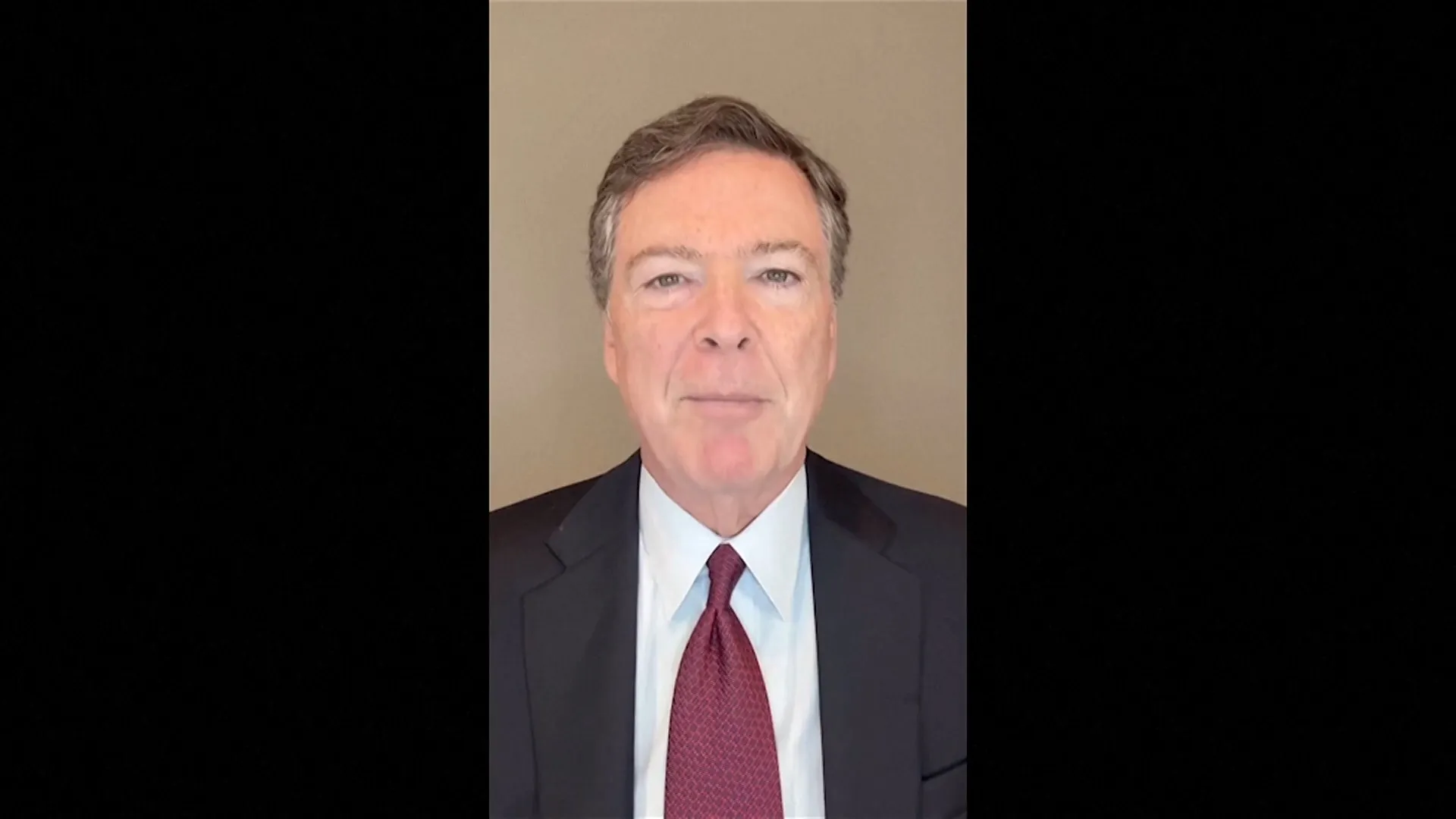
Ex-FBI chief Comey defiant in the face of third prosecution | Newsfeed
President Trump’s Justice Department is trying to prosecute former FBI Director James Comey for a third time in two years. He is accused of sharing sensitive national security information in the lead-up to the 2016 election. Comey has denied the charges and defended himself in a video on Instagram.
Published On 27 Oct 2026

Man with fake gun shot after using abused partner as shield | Gun Violence
Brazilian police shot a man who assaulted and threatened his partner with a fake gun in Criciuma, southern Brazil. Video shows him striking her and attempting to use her as a human shield as officers arrived. Both were taken to hospital for treatment.
Published On 27 Oct 2026

Real-life violence encroaches on ‘Miami Vice ’85’ film set
A New York City man is facing charges after allegedly pulling out a knife near the set of the latest “Miami Vice” reboot.
On Friday around 11 p.m., the New York Police Department received a call about a man brandishing a knife near the intersection of Avenue N and McDonald Avenue in the borough of Brooklyn.
The caller, identified only as a 42-year-old man, told police that he had been in a verbal dispute with an “unidentified individual” when the man took out a knife, according to a police spokesperson.
The suspect was identified as Brooklyn resident Alex Perez, 23. The police spokesperson said Perez was taken into custody without incident and charged with menacing and criminal possession of a weapon. There were no reported injuries, she said.
In a video obtained by TMZ, a man the outlet identified as Perez is shown taking out a large butcher’s knife from his black sweatshirt pocket.
The Brooklyn district attorney’s office did not immediately respond to a request for comment Monday night. It was not immediately clear whether Perez has a lawyer.
NBC New York reported that “Miami Vice ‘85” had been filming nearby along Bay Parkway and McDonald Avenue, near Washington Cemetery.
Universal, the studio behind the film, did not immediately respond to a request for comment. Joseph Kosinski, the director behind “F1” and “Top Gun: Maverick,” is directing “Miami Vice ’85.” The movie, which according to Universal was in production as of Oct. 12, features Michael B. Jordan as Tubbs and Austin Butler as Crockett, according to the company’s social media posts.
The movie is based on Anthony Yerkovich’s iconic 1980s TV cop show. A movie adaptation directed by Michael Mann, also called “Miami Vice,” came out in 2006 but was a box-office flop, The Times reported at the time.


DSA’s national leaders postpone decision on rescinding Raman’s endorsement for mayor
A national panel of the Democratic Socialists of America decided Monday to once again delay voting on whether to uphold or rescind the Los Angeles chapter’s endorsement of Nithya Raman in the L.A. mayor’s race over concerns that Raman hadn’t taken a sufficiently tough stance against Israel.
The left-wing group’s National Political Committee had begun a review of the DSA-L.A.’s endorsement of Raman after some members pointed out that Raman hadn’t been asked for her position on “R22,” a DSA resolution that requires local chapters to inquire about a candidate’s support for the Boycott, Divestment and Sanctions movement against Israel before they are endorsed.
The committee met last week and again Monday, when it voted to work with DSA-LA to organize an Oct. 31 meeting with Raman to assess her position on BDS and other issues related to the Gaza conflict.
If she fails to “provide clear and unequivocal commitments” to their questions, the national committee will vote on whether to rescind DSA-LA’s endorsement, a spokesperson confirmed.
If Raman wins the Nov. 3 election, the group also wants a commitment by her to oppose weapons being shipped to Israel out of Los Angeles International Airport.
If Raman has not “expressed support for BDS and condemned weapon shipments out of LAX” by Jan.1, the National Political Committee will “compile the documentation of fair and ample opportunity for education about the Palestinian struggle for liberation necessary to begin a disciplinary process under R22 and thereafter schedule a vote on expelling Nithya Raman on those grounds,” according to a resolution approved by the committee.
The Raman campaign sent a statement to DSA on Monday during the national committee meeting that outlined her stance on BDS.
“I believe the best way for working Angelenos to stand in solidarity with Gaza is through non-violent protest, legislative action, and diplomatic pressure, including BDS,” Raman said in the statement.
The Raman campaign declined to say whether the council member personally supports BDS, and pointed The Times back to the statement she sent to the DSA and other statements she has made in the past. Raman has said she does not plan to make BDS part of her mayoral platform.
Some Angelenos in DSA were frustrated with the move to rescind the endorsement.
“I feel that this is unnecessary, but that I am encouraged that Nithya has actually expressed support for Palestine and our priorities and that she is compliant with R22,” said Clayton Ryles, a member of DSA-LA who also serves on the 27-person national committee, after the meeting. “Not everybody agrees on that.”
Ryles — one of a few DSA-LA members on the committee — plans to vote against rescinding the endorsement. He also supported Raman’s endorsement as a member of DSA-LA.
Revoking DSA-LA’s endorsement of Raman would have represented a major incursion by the national organization into the local chapter’s politics, invalidating a democratic vote to endorse Raman that passed 937 to 484 in September.
The co-chairs of DSA-LA acknowledged that they had failed to include a question about BDS on their candidate questionnaire, though they said they had inquired about Palestine both on the questionnaire and during a candidate interview.
“This was an oversight,” Leslie Chang and Sean Wakasa, the co-chairs of DSA-LA, wrote in an email to members.
“Nithya had strong answers on Palestine in her DSA-LA questionnaire, in public forums … and in her response to the NPC today,” Chang said in a statement to The Times on Monday. “We are disappointed that the members of the NPC passed their resolutions without reading the materials we sent them, which clearly answer the many questions that are posed to us in the two resolutions.”
“In these last few days of the election, we would like to focus on electing our entire slate and continuing to fight for working Angelenos,” Chang said.
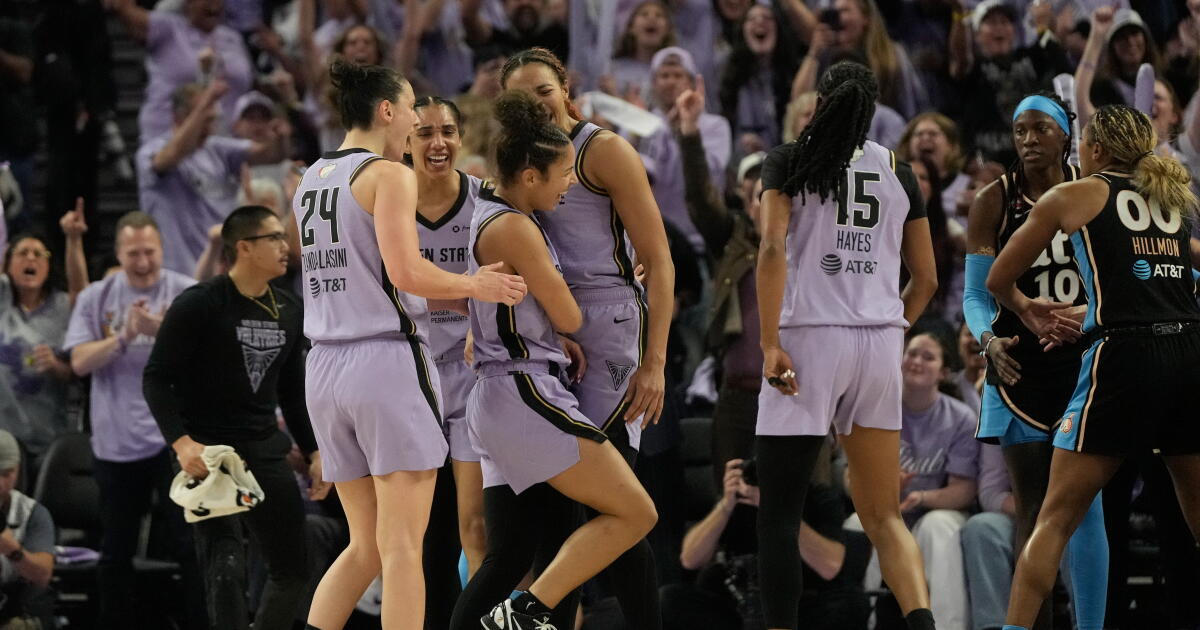
Valkyries defeat Dream to move within a win of WNBA title
SAN FRANCISCO — Kiah Stokes had 13 points, eight rebounds and three blocked shots as the Golden State Valkyries moved within one win of a championship in their second season, beating the Atlanta Dream 64-55 in Game 5 of the WNBA Finals on Monday night.
Angel Reese finished with seven points, 15 rebounds and five assists — a big difference from her two standout performances in the first two games of the series at Chase Center. Reese shook her head when whistled for the second of her three offensive fouls with 7:43 to play.
Fans screamed and clapped thunder sticks following the final buzzer as Stokes spoke from the floor to chants of “MVP!”
“We appreciate you,” a smiling Stokes said. “We got one more.”
On a night leading scorer Gabby Williams struggled to find her shooting touch, Golden State found the “strength in numbers” mantra that coach Natalie Nakase has praised all season long and everybody made an influence. Veronica Burton had 13 points and eight rebounds.
On Saturday, Nakase had changed up her lineup for a 67-62 Game 4 win by inserting Tiffany Hayes and Kaila Charles into the starting five. She stayed with those two Monday night, and it worked again. Hayes, who played 10 seasons for Atlanta and came out of retirement two years ago, had 12 points — and Nakase has said she wants to win it all for the veteran guard.
Williams began two for 11 and missed all four of her three three-point tries, but she converted a three-point play with 9:08 remaining to put the Valkyries ahead 49-42 and finished with nine points on three-for-14 shooting and six rebounds.
Atlanta will now try to stave off elimination at home Thursday in Game 6 and force a deciding Game 7 back at Chase Center on Saturday. The Dream hurt themselves with 17 turnovers that led to 21 points for Golden State.
Stokes hit a key three-pointer with 2:46 to go in the third quarter and another with 7:21 left in the game, which ignited chants of “Ki-ah! Ki-ah!” from the crazed, rally towel-waving “Ballhalla” home crowd at Chase Center.
Stokes has recorded three or more blocks in six straight games, tying her with Lisa Leslie in 2003 for the longest such streak in a single WNBA postseason.
The Valkyries used a dominant second half after they led 25-22 at the break, the lowest scoring first half combined score in WNBA Finals history.
Rhyne Howard’s three-point play with 4:59 left in the third pulled Atlanta within 34-31, but after that it was Stokes, Burton and the Valkyries coming up with all the crucial plays on both ends.
Golden State owner Joe Lacob promised a championship within five years in a bold declaration when the expansion franchise was granted to the Bay Area three years ago, yet this season has exceeded even what he could have envisioned.
Neither team could find a flow from three-point range in the first half as the teams combined to shoot five for 29 from deep — three of 16 by Golden State and two for 13 by Atlanta.
Earlier Monday, the league announced Game 6 would be played at 17,000-seat State Farm Arena in Atlanta starting at 12:30 p.m. EDT on Thursday — a time when many fans on both coasts will be working.
“I’d like to see it be a national holiday for all WNBA championship games so whatever somebody can do,” Dream coach Karl Smesko said. “I hope everybody gets to see it somehow and I know that for some people it’s not realistic, they have jobs and won’t be able to make it. So I’m disappointed for that but I’m really hopeful that as many people can see the game as possible.”
McCauley writes for the Associated Press.