money

Why Marathon Digital Could Be a Millionaire-Maker Stock

This company is doing the hard work to secure its future supply of a key input.

It’s often said that picks and shovels made more fortunes in gold rushes than most prospectors. In crypto’s version of the story, the picks are electricity, mining chips, and hardware uptime. And that’s where Marathon Digital Holdings (MARA -0.40%) aims to win by operating as an industrial-scale and increasingly efficient miner of Bitcoin.

After Bitcoin’s most recent halving, only miners with cheap, reliable energy and top-tier efficiency can thrive. Marathon’s strategy is built around both. Let’s map out if an investment might help turn Marathon investors into millionaires.

A Bitcoin floats on top of a wallet sitting on a cell phone.

Image source: Getty Images.

Cost and clean power are the moat

In terms of the company’s production capacity, Marathon’s management targets 75 exahash of computing capability by the end of 2025, up by more than 40% from 2024. Efficiency has been trending the right way; after closing 2024 at roughly 20 joules of energy per terahash of computing power (J/TH), its hardware fleet was improved to about 18.3 J/TH by the second quarter of 2025, marking a meaningful cut.

To accomplish that and future efficiency improvements, the company expects to begin energizing its Texas wind power generation site in the second half of 2025. If it can secure further cheap renewable energy buildouts, its self-powering operations will have a competitive advantage that could drive significant returns over the long run.

Is this a millionaire maker?

Marathon currently has 52,477 BTC, which ties its operating results tightly to price appreciation of the coin over time. If we assume Bitcoin will continue to gain value over time, could buying shares of this business mint millionaires?

The 100x outcome that’s necessary to create millionaires implies a process of massive value creation; Marathon’s market cap is currently $6.5 billion. Marathon could, over the course of years, exhibit such value creation via its energy investments, assuming Bitcoin cooperates and the mining company’s execution is solid.

So it isn’t impossible, but it isn’t a safe base case to do your investment planning around, either. Marathon’s potential rewards come with significant risks.

Source link

Seven Payments Principles for Treasury in 2025 and Beyond

Treasurers today are under tremendous pressure. Cash must move seamlessly to keep pace with rapid technological change and fast internal decision making.

Vendors expect instant payments. Employees count on timely payments and reimbursements. Meanwhile, regulations are continually changing. Patric Leone, Product Owner, Connectivity, at Fides Treasury Services, discusses seven payment principles treasurers need to apply to meet modern treasury demands and focus on what really matters — the continuing health and future of the business.

Making a payment used to be simple. Now, it’s a daily exercise in compliance, technology, and risk management, and it’s vital that treasurers have the right policies, processes, safeguards, and technology partners in place.

The advent of ISO 20022, real-time payments, purpose codes, AI-driven automation, and digital identity frameworks are all pushing even seasoned treasury professionals to adapt.

Significant regulatory changes are also underway. Verification of Payee (VoP) in Europe will help prevent payment fraud and errors. The mandatory use of structured address data for international payments will enhance anti-money laundering and sanctions screening.

There’s a lot to learn, and a lot of potential for innovation. But in the pursuit of progress, foundational safeguards like secure connectivity and process integrity are often deprioritized.

Seven Treasury Payments Principles

To simplify the process, treasurers can apply the following seven principles to achieve a solid framework for security, compliance, and risk management:

  • Balance Self-Service and Centralized Control
    Flexible, self-service sign-off frameworks are valuable for organizations of every size, from small and midsized companies to multinational enterprises. Even if you choose to streamline routine payments, applying a systemwide maximum payout helps maintain strategic oversite and governance across teams, geographies, and business units.
  • Implement Role-Based Access Controls (RBAC)
    Whether you are connecting to banks and processing payments through an ERP, TMS, bank portal, or connectivity provider like Fides, role-based permissions ensure compliance, from over-limit approvals by senior staff to restricting BIC and Swift configurations to technical experts.
  • Regularly Revalidate Access Rights
    Dynamic global teams demand flexible access models, but also are subject to more frequent organizational and responsibility changes. You should regularly review and update the granular user roles, such as administrators and signers for account setup and approval-only profiles, that you set up as part of your RBAC strategy.
  • Keep on Top of Sanctions Screening
    Sanctions lists are constantly evolving, especially in today’s volatile geopolitical climate. To reduce risk and ensure compliance, every payment must be screened every time with no exceptions.
  • Use Allow Lists
    Adding accounts to an “allow list” ensures only trusted recipients are paid. To reduce risk of error or fraud, security can be handled via the “four-eyes principle” within a treasury aggregation platform or coded into an ERP or TMS.
  • Don’t Rely on AI Alone
    The market is buzzing with new AI-based fraud prevention tools. While these tools have promise to help streamline workflows, we aren’t yet at a point where AI can (or should) operate without a human in the loop.
  • Partner with a Connectivity Provider
    Secure, intelligent, and scalable connectivity is not just a technical requirement. It’s the foundation of modern treasury. Look for a connectivity provider with experience across multiple connectivity channels and extensive implementations. A track record of reliability, auditability, and high customer service ratings is a must. In addition to technical know-how, your connectivity partner should act as an expert advisor, including providing guidance on banks, tools like ERPs and TMSs, and treasury trends to help you adapt to change today and in future.

Building a Resilient Treasury

The key strength of treasury is in resilience: protecting the business against risk while enabling growth. Treasury leaders may be experiencing more pressure than ever before — but that also means there are more opportunities to add value. By following key principles designed to ensure secure and compliant payments and working with trusted partners to help implement the right framework and processes, treasurers are establishing a platform for success.

Source link

3 No-Brainer Warren Buffett Stocks to Buy Right Now

These companies are relentless compounders with strong competitive moats that can make solid additions to your portfolio today.

Warren Buffett is a legend in the investing world, known for taking a disciplined approach to allocating capital, favoring durable businesses with strong competitive moats and management teams with high integrity. His success stems from embracing simplicity and resisting market noise, compounding returns over the course of decades.

Buffett’s investing style has yielded extraordinary long-term results, turning Berkshire Hathaway into a trillion-dollar business, and reinforcing the importance of taking a long-term approach to investing. If you’re looking for stocks to add to your diversified portfolio, here are three no-brainer Buffett stocks to buy now.

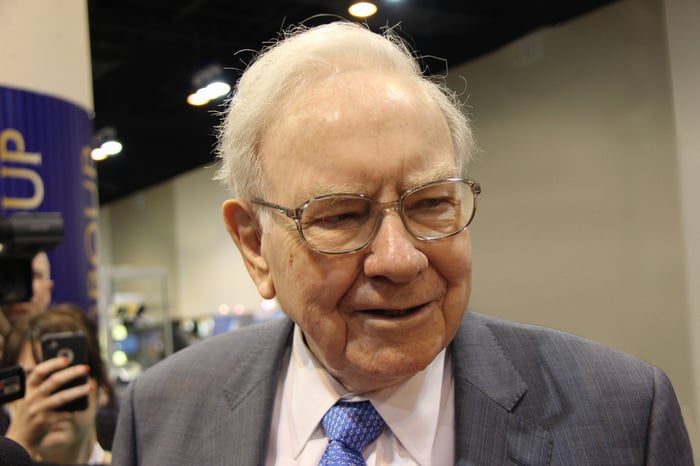
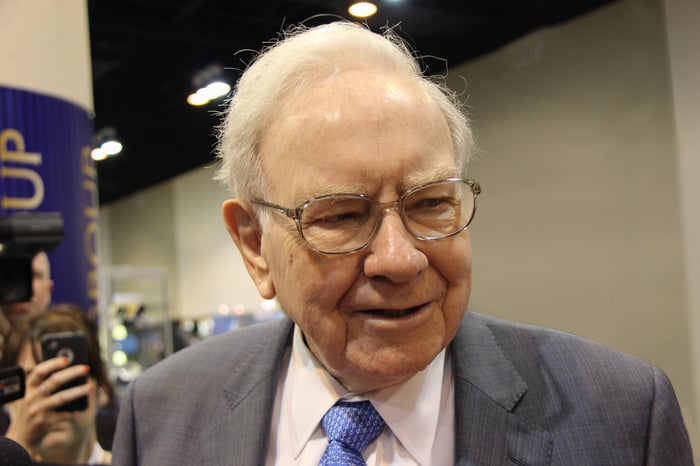
An image of Berkshire Hathaway CEO Warren Buffett.

Image source: The Motley Fool.

Visa

As a global leader in digital payments, Visa (V -0.01%) has had decades to establish a robust payment network worldwide. It benefits from network effects, as each new customer or merchant added strengthens its ecosystem and reinforces Visa’s dominance. In 2023, Visa processed a total of $6.3 trillion in purchase volume, giving it a 32% global market share and a 52% share in the U.S.

The Visa brand is trusted worldwide, and its infrastructure is deeply embedded in commerce. Visa’s growth is tied to secular trends, such as digitalization, e-commerce, and global financial expansion, which are structural tailwinds that should continue to support it in the long term.

Not only that, but Visa doesn’t issue credit or assume consumer risk. Instead, it earns fees from transactions, making its revenue model resilient across economic cycles. As a result, it has a capital-light business structure that enables high margins and robust free cash flow.

Some investors have expressed concern about the potential threat to Visa’s business from stablecoins. Visa’s management sees it differently, believing stablecoins are an opportunity to solve payment problems, particularly in emerging markets and cross-border money movement. The payments company looks to leverage its strengths and integrate stablecoins into its broader payments ecosystem.

Visa’s sound business and strong network provide it with durable competitive advantages, allowing it to grow alongside an expanding economy, making it an excellent Buffett stock to buy today.

Amazon

Amazon (AMZN -0.28%) has been a visionary in the e-commerce market, building up an incredibly strong position during the past few decades. However, Berkshire didn’t invest in the e-commerce giant until 2019, and it was one of Buffett’s investment managers, Todd Combs or Ted Weschler, who initiated the position.

Amazon’s core retail business operates on razor-thin margins as it strives to maintain its position as the lowest-cost retailer in the U.S. Its dominance is rooted in logistical mastery and data-driven innovation. However, it’s Amazon’s smart reinvestment of profits back into the business that has driven its growth.

The company is laser-focused on optimizing its logistics networks to improve efficiency and reduce costs. Key to this was transforming fulfillment into regional hubs, which stock items closer to customers, resulting in faster delivery, fewer packages, and lower costs. The company continues to invest in its fulfillment network, utilizing artificial intelligence (AI) and robotics. It has deployed Deep Fleet, an AI system that serves as a traffic management system to coordinate robots and improve travel efficiency by 10%.

In addition, Amazon Web Services (AWS), the market leader in cloud computing, transformed the company into a cash-generating powerhouse. Last year, Amazon raked in nearly $40 billion in operating income from this business alone. AWS’s high-margin, recurring revenue model provides stability and fuels reinvestment across Amazon’s ecosystem.

Amazon’s consistent growth in free cash flow, combined with its strong position in multiple sectors with solid growth potential, makes it an excellent long-term investment.

Chubb

Chubb (CB 0.85%) operates as one of the world’s largest publicly traded property and casualty insurers and is recognized as the largest commercial lines insurer in the U.S. With operations in 54 countries and territories, Chubb truly has a global reach.

What makes it stand out is its breadth of knowledge combined with its disciplined underwriting and conservative risk management. This broad-based approach diversifies Chubb’s insured risk to various geographies, customers, and product areas, helping support long-term, sustainable growth.

Disciplined underwriting is vital to Chubb’s success across various market cycles. The company stresses disciplined underwriting and will not take any business below what it deems an adequate price. For example, Chief Executive Officer Evan Greenberg noted that the insurer has “begun walking away where necessary” in specific markets where insurers have become more aggressive in their pricing. While this may limit growth, it also shows Chubb’s commitment to steady, profitable growth over time.

Chubb’s ability to price risk accurately and maintain underwriting discipline across market cycles has resulted in industry-leading combined ratios. This translates to steady underwriting profits, even in volatile environments, and is also a big reason Chubb has raised its dividend payout for 32 consecutive years. For investors seeking steady growth over time, Chubb is another excellent Buffett stock to consider today.

Source link

5 Super Semiconductor Stocks to Buy and Hold for the Next 5 Years

The semiconductor industry is the beating heart of the artificial intelligence (AI) revolution. Developing AI models wouldn’t be possible without powerful chips and advanced networking equipment, and for them to continue getting “smarter,” semiconductor suppliers will have to deliver more and more computing capacity.

For that reason, Nvidia (NVDA -0.82%) CEO Jensen Huang expects data center operators to spend up to $4 trillion on upgrading their infrastructure to meet demand from AI developers by 2030. Nvidia will be a major beneficiary of that spending over the next five years, but so will many of its peers and competitors.

Here are five semiconductor stocks to buy right now.

A digital rendering of computer chips, with one labeled AI.

Image source: Getty Images.

1. Nvidia

Let’s start with the most obvious pick. Nvidia’s graphics processing units (GPUs) for data centers are the gold standard for AI development. The company just started shipping a new GPU called the GB300, which is based on its Blackwell Ultra architecture, and it’s up to 50 times more powerful in certain configurations than its flagship H100 chip, which dominated the market in 2023 and most of 2024.

The latest AI reasoning models consume significantly more tokens (words and symbols) than older one-shot large language models (LLMs), because they spend more time “thinking” in the background to weed out errors before generating outputs. This calls for more computing power, which is expected to drive explosive demand for the GB300 from the best AI developers like OpenAI, Anthropic, Meta Platforms, and xAI.

Nvidia generated a record $41.1 billion in data center revenue during its fiscal 2026’s second quarter (ended July 27), which was up 56% year over year. That number also grew by a staggering 1,081% compared to the same quarter in fiscal 2023, which was right before the AI revolution started gathering momentum. If AI infrastructure spending really does hit $4 trillion over the next five years, Nvidia will probably be one of the best stocks investors can own.

2. Broadcom

Broadcom (AVGO 0.15%) supplies AI accelerators (a type of data center chip) to at least three hyperscalers, including Alphabet. These chips have become a popular alternative to GPUs because they can be customized to suit the needs of each customer, so they offer more flexibility.

Broadcom is also a top supplier of networking equipment. Its Ethernet switches regulate how fast data travels between chips and devices, and its new Tomahawk Ultra variant delivers industry-leading low latency and high throughput, which facilitates faster processing speeds with less data loss.

Broadcom’s AI semiconductor revenue soared by 63% to $5.2 billion during its most recent quarter, but it might just be getting warmed up. The company says its three hyperscale customers plan to deploy over 1 million AI accelerators each in 2027, creating a $90 billion opportunity. Separately, a new mystery customer recently placed a $10 billion order for accelerators, and Wall Street is speculating it could be OpenAI.

3. Advanced Micro Devices

Advanced Micro Devices (AMD -0.03%) supplies chips for some of the world’s most popular consumer electronics, from Sony‘s PlayStation 5, to the infotainment systems inside Tesla‘s electric vehicles. However, the company is now laser-focused on catching up to chipmakers like Nvidia in the AI data center business.

AMD’s latest MI350 series of GPUs are based on a new architecture called Compute DNA 4, and they are 35 times faster than its previous generation that launched less than two years ago. Next year, AMD will start shipping the MI400 series, which will be paired with specialized hardware and software systems to create a fully integrated data center rack called Helios, delivering a tenfold improvement in performance relative to the MI350 series.

This highlights how quickly AMD is progressing from a technological perspective. The company is slowly capturing market share already, but these new chips could cement its position as a real player in the data center space for the long term.

4. Micron Technology

GPUs wouldn’t be as efficient without high-bandwidth memory (HBM), which stores data in a ready state to accelerate processing speeds. Simply put, more HBM capacity allows the GPU to unleash its maximum performance, which is essential in data-intensive AI workloads.

Micron Technology‘s (MU -2.83%) HBM3E solution for the data center offers industry-leading capacity and energy efficiency, and it’s embedded in Nvidia’s Blackwell Ultra GPUs and also AMD’s MI350 series. But the company will raise the bar again next year with its HBM4 solution, which will offer 60% more performance and 20% less power consumption.

Simply put, investors who believe Nvidia and AMD will sell truckloads of data center GPUs over the next five years should also be bullish on Micron’s business.

But it gets better, because some smaller AI workloads are slowly migrating to personal computers and smartphones, so they also require higher memory capacities. That’s great news for Micron because it’s a major player in those markets, too.

5. Taiwan Semiconductor Manufacturing

Finally, Taiwan Semiconductor Manufacturing (TSM -0.58%) could be the ultimate picks-and-shovels play as AI infrastructure spending ramps up. It’s the world’s largest semiconductor fabricator, and Nvidia, Broadcom, and AMD are just a few of its top clients.

Taiwan Semi offers unmatched expertise when it comes to manufacturing the most advanced chips. It works with the smallest nodes in the industry, so it can pack more transistors into each chip which is the key to unlocking processing power and energy efficiency. That is an ideal combination when it comes to AI GPUs.

Investors who own Taiwan Semi stock won’t be too concerned about which chip giant wins the AI race, because whether it’s Nvidia, Broadcom, or AMD, the demand for manufacturing capacity is only heading in one direction: up.

Source link

Better Stock to Buy: Newsmax vs. The New York Times

See how these two media stocks stack up against each other.

Newsmax (NMAX -1.68%) and The New York Times Company (NYT -1.05%) represent two opposite ends of the political spectrum in the media, and they’re also two of the few pure-play news media stocks available for investors.

While some might think of the news media as a dying industry, the response to Newsmax’s initial public offering (IPO), which faded soon after, and the success of The New York Times’ digital transformation, shows otherwise.

Let’s take a closer at these two stocks to determine which is the better buy today.

A person sitting against a couch reading a newspaper.

Image source: Getty Images.

Business model: Newsmax vs. New York Times

NewsMax is a diversified media company, best known for its Newsmax linear cable channel.

Today, more than 40 million Americans watch, read, and listen to Newsmax. Newsmax has grown over time to become the fourth-largest with 21 million regular viewers.

The company’s broadcasting assets include two streaming channels, Newsmax and World at War, and Newsmax2, a free streaming channel. Additionally, Newsmax Radio offers a syndicated radio and several podcasts. Newsmax also has a digital arm that includes online advertising and specialized subscription newsletters, and it has a publishing subsidiary, Humanix Publishing, which has published around 100 titles. Additionally, it owns Medix Health, which sells 22 nutraceutical products, and Crown Atlantic Insurance, an insurance agency that sells annuities, life insurance, and other insurance offerings.

That collection of businesses makes Newsmax different from other media companies. While the vast majority of its revenue comes from cable subscription fees and ad revenue, the company also makes money from selling nutrition and insurance products, as well as books that it can advertise on its programming.

The New York Times may be the best example of a traditional newspaper that transitioned to the digital era. While the transition hasn’t always been smooth, the Times now makes the vast majority of its revenue from digital subscriptions and ad revenue, though digital ads have not been as lucrative as print ads.

After selling assets like The Boston Globe, the Times has sought to add complementary news products to the core New York Times newspaper, including sports through The Athletic, games such as Wordle, Cooking, and Wirecutter, a product review site. Overall, the Times continues to set the news agenda in the country, giving it outsize influence over the media landscape, despite the relatively small size of the company, which currently has a market cap of $9.5 billion, even as it trades at an all-time high.

Financials: Newsmax vs. The New York Times

Newsmax is still small. In the second quarter, the company reported $46.4 million in revenue, up 18.4% from the quarter a year ago. Broadcast revenue growth was particularly impressive at 28.5% to $38 million.

However, the company reported a loss on an adjusted earnings before interest, taxes, depreciation, and amortization (EBITDA) basis of $3.8 million, down from a profit of $1.9 million.

The New York Times also delivered solid growth in the second quarter with revenue up 9.7% to $685.9 million, while total subscribers were up 10% to 11.9 million. Its adjusted operating profit rose from $104.7 million to $133.8 million, giving it an operating profit margin of near 20%. Adjusted earnings per share was up $0.45 to $0.58.

Valuation: Newsmax vs. The New York Times

Newsmax currently has a market cap of $1.15 billion. It is not profitable, and analysts expect it to continue to report a loss at least through 2026. Newsmax currently trades at a price-to-sales ratio of 9.

The New York Times, on the other hand, is solidly profitable and trades at a lower price-to-sales ratio of 3.6. On a price-to-earnings ratio, the stock trades at a multiple of 30. The New York Times also offers a dividend yield of 1.2%.

What’s the better buy?

While Newsmax attracted some attention when it went public earlier this year, it’s still losing money and is more expensive on a P/S basis than The New York Times.

The Times, meanwhile, is delivering solid revenue growth and strong and expanding profit margins. It’s the better buy of the two.

Source link

“Rule Breaker Investing” Audiobook Sneak Peek

Order “Rule Breaker Investing” (hardcover, e-book, audiobook) wherever you buy books.

In this podcast, we’ve got a 5-minute listen from Chapter 3 of David Gardner’s latest Rule Breaker Investing book. In “After Yesterday,” David tells the CNBC story of a co-host stunned that he still liked cloud stocks and why Rule Breaker investors don’t let yesterday’s tape write tomorrow’s script. Enjoy the excerpt, then share it with a friend who could use a smarter, happier, and richer mindset.

To catch full episodes of all The Motley Fool’s free podcasts, check out our podcast center. When you’re ready to invest, check out this top 10 list of stocks to buy.

A full transcript is below.

This podcast was recorded on Sept. 13, 2025.

David Gardner: Hey, Fools. Happy weekend. David here with a quick Rule Breaker investing Weekend Extra. I’ve got something special for you today. It’s a five minute listen in from the Rule Breaker Investing audio book, which arrives just days away September 16, alongside the hardcover and the eBook versions. Now, if you’re an audible fan or you just like hearing ideas rather than reading them, this is your sneak peek, or listen. A quick word on what you’re about to hear. This excerpt captures the spirit of my book, practical, optimistic, maybe a little mischievous, equal parts, habits, stock picking traits, and portfolio principles, all in service of making us smarter, happier, and richer. This is the start of Chapter 3. It’s in my own voice, of course, with a few points you may recognize as a regular listener of this podcast and a story you probably haven’t heard yet. If you enjoy it, you can pre order wherever you get your books and audio books. Here’s a pro tip. Pre orders helps signal to the world that investors still read and listen. If someone in your life could use a friendly on ramp to investing, and send them this episode, consider it the audio appetizer before the main course lands on September 16. Enough for me. Let’s queue it up, producer Bart Shannon, five minutes from the Rule Breaker Investing Audio Book. I hope it entertains here on your weekend as a Weekend Extra, and I hope this audio book, pays for itself many times over in the years to come. Let’s get started. Fool on.

You still like Cloud computing stocks? The host queried me during the commercial break. After yesterday, I was co hosting the early morning CNBC market Show with a smart young anchor. Our perspectives couldn’t have been further apart. During the first commercial break, I’d mentioned several of my favorite stocks like Salesforce, and her jaw dropped. The Cloud computing sector had sold off 7-10% the day before. You still like cloud computing stocks after yesterday? My co host, we shall call her after yesterday, wasn’t a day trader or a high frequency trading supercomputer. This was a well educated, successful broadcast journalist who got up at dawn to cover the markets. People tuned in to her to learn the days ins and outs of business and market developments. Except maybe in a sense, she was a day trader. Anyone who follows the markets for a living and makes other people feel like rubes for still liking a stock after yesterday would seem to be day trading the headlines, trends, and buzz, even if not day trading the stock market. If you follow something minute by minute, every zig zag, pass, shot, or tackle becomes noteworthy. You magnify it, and heck, after yesterday isn’t being paid for her financial advice, she’s great at what she does. Anchoring live TV at any hour of the day is a demanding job. Just don’t confuse her perspective with financial expertise or let it guide your money. I’d guess some people watching CNBC think the opposite. In most aspects of life, I’d bet after yesterday is well mannered and exemplary. It’s only with the stock market that she thinks and likely acts contrary to her and your best outcomes, ironic and crazy. If you ever wonder how common capital F Fools like you and me can outperform Wall Street and its indices, you now know your answer.

The surest way to beat the market over time involves maintaining the same equanimity and perspective with your money that you do in other aspects of your life. Maybe Billy Joel crooned the greatest investment secret of all, don’t go changing. In other words, buy stocks to keep them, not trade them. You’ll do so much better if you invest for at least three years. If your absolute minimum holding period is less than three years, you’re doing it wrong. We often misunderstand what invest means and what investing looks like. The Latin root for invest is investire, meaning to put on the clothes, wear the garments. Think of a related phrase like priestly vestments. Picture fans wearing the jerseys of their favorite teams. As they walk to the stadium, find the way to their seats, cheer their team on, they are sporting the home team colors. And whether their team wins or loses, they keep that jersey on. Whether their team has a good or bad season, they keep that jersey on. Why? Because they’re deeply invested. Ironically, many may be more invested in their sports teams than in something of far more value the financial investments they make. Sports fans know their team is not going to win every game or year. Rule Breaker investors know the same of our stocks. If you find a great team, stick with it. Putting on the clothes can be literal. People wear shirts with an Apple logo, love their Lululemon’s, have Harley tattooed on their shoulder. These are not the same people. You likely have logo garments in your wardrobe. My wishes for you are A, that you own those stocks, and B, that those investments will outlast your clothes. Whether or not you have the shirt yet, I want you to love the companies you’re invested in. My portfolio includes enterprises that I believe do good things in this world, are purpose driven, manage for the long term, show resilience, exhibit optionality. I believe their success leads to a better world. When you’re actually invested like this, it’s natural, even in hard times to keep that jersey on. If people treated financial investments like their lifelong emotional investments in their sports teams, they’d be smarter, happier, and richer.

Source link

2 Quantum Computing Stocks Up Over 2,200% to Throw $200 At

A small group of quantum computing stocks have generated unbelievable returns over the past year.

Quantum computing isn’t as well known as artificial intelligence (AI), but a small group of these stocks has generated astounding returns in just a year or two.

These companies are trying to build and commercialize the next innovation of the computer. Instead of using bits, the most basic unit of digital information and the foundational component of the computer, quantum computers use qubits that can process data in much more complex ways, allowing these machines to compute much more complicated equations.

If researchers are correct, quantum computers will be able to play instrumental roles in developing new and more effective drugs and tackling some of the biggest problems in society like climate change, which would obviously send these stocks to multiples of what they are today. While there is still much to achieve and certainly associated risks, here are two quantum computing stocks up at least 2,200% to throw $200 at.

Two people look at tablet.

Image source: Getty Images.

Rigetti Computing: Up 2,847% in past year

Yes, you read that correctly: Rigetti Computing (RGTI 0.52%) is up over 2,800% (at the time of this writing) in just one year. Perhaps due to the artificial intelligence revolution, investors have noticed the quantum computing space and started to believe these machines are not only possible, but can live up to the hype.

To really understand how quantum computers work, you need to be well versed in quantum mechanics, but Rigetti builds its machines in house with superconducting qubit-based quantum processors that are highly scalable and offer both fast gate times and fast program execution times. In July, Rigetti announced that its 36-qubit system had achieved 99.5% median two-qubit gate fidelity, which is a strong measure of accuracy. The company also said this system achieved a 2 times reduction in its median 2-qubit gate error rate from its previous best results.

Rigetti believes these results will pave the way for it to build and release a quantum computer with over 100 qubits (the more qubits, the more powerful the system) and similar accuracy before the end of the year.

Rigetti also just announced that it has been awarded a three-year contract from the Air Force Research Laboratory for $5.8 million. Rigetti will partner with a Dutch quantum start-up to work on developing advanced superconducting quantum networking, which would essentially be the next evolution of the internet with capabilities that could include functions like sending communication that can’t be hacked.

While Rigetti has a high ceiling, investors should understand that the company still makes very little in revenue, is losing money, and trades at a $7.8 billion market cap. So if things don’t go as planned or quantum computers turn out to be difficult to develop or do not live up to the hype, the stock could get hit hard.

D-Wave Quantum: Up 2,278% in past year

D-Wave Quantum (QBTS 0.51%) is another quantum computing stock that has been a moonshot over the past year. D-Wave differs from others in the quantum computing space because it uses annealing quantum computing technology, which uses concepts from quantum physics to identify the most precise solution in a more energy-efficient manner.

In a J.P. Morgan report on quantum computing, analysts praised D-Wave’s Advantage2 prototype, which has over 1,200 qubits with 20-way connectivity, and a goal to eventually build a system with 7,000 qubits.

“This prototype claims significant speedups over classical supercomputers,” the report said. “Developed with a lower-noise, multilayer superconducting integrated circuit fabrication stack, the Advantage2 prototype demonstrates substantial performance gains on hard optimization problems, such as spin glasses, and shows improved performance on constraint satisfaction problems. … However, (D-Wave’s) approach is limited to specific problem types, and they face debates about the broader applicability of quantum annealing.”

Clearly, the potential for D-Wave is there and it could even stand out in a standout industry. But like Rigetti, the company still doesn’t have much revenue and is reporting losses, while trading at a $7.85 billion market cap.

Investing is all about trying to predict the future before it becomes the present, so I understand to some degree why investors are gung-ho about quantum computing. But investing is also about future risk management. That’s why I still only recommend a smaller, more speculative position in quantum computing stocks, whether that’s a few hundred dollars or a few thousand. It all depends on your specific financial profile.

JPMorgan Chase is an advertising partner of Motley Fool Money. Bram Berkowitz has no position in any of the stocks mentioned. The Motley Fool has positions in and recommends JPMorgan Chase. The Motley Fool has a disclosure policy.

Source link

Why Marvell Technology Stock Trounced the Market Today

The company is pushing hard on share buybacks, announcing not one, but two initiatives.

Next-generation chipmaker Marvell Technology (MRVL 7.46%) announced two shareholder-pleasing measures on Wednesday, and the moves attracted investors to the stock. Collectively they pushed the company’s share price up by 7% in a trading session that saw the bellwether S&P 500 index sag by 0.3%.

Repurchase rally

This morning, Marvell announced that its board of directors has greenlighted a new share buyback program. It has authorized up to $5 billion in purchases of the company’s common stock, in an initiative that essentially refreshes an existing initiative. Marvell said that, as of Aug. 2, there was roughly $2 billion left under the authorization for that program.

Person at a work desk studying something on a PC monitor.

Image source: Getty Images.

So far this quarter, the company added, it has bought back $300 million worth of stock.

Additionally, Marvell has entered into an accelerated share repurchase program to snap up $1 billion of common stock. It is doing this in collaboration with what it described as “a leading financial institution” it didn’t name.

Marvell CEO and chairman of the board Matt Murphy said in a statement the program “reflects our conviction in the business and the intrinsic value of our stock, as we drive sustained revenue and cash flow growth.”

Making hay while the sun shines

While there is usually some degree of corporate hype in such announcements, Marvell has genuinely been doing well lately. In its most recently reported quarter, revenue rose by 58% year over year to top $2 billion for the first time in company history. On the bottom line, across that stretch Marvell flipped to a headline net profit of almost $195 million, against the year-ago loss of more than $193 million.

Eric Volkman has no position in any of the stocks mentioned. The Motley Fool recommends Marvell Technology. The Motley Fool has a disclosure policy.

Source link

All Investors Have Regrets | The Motley Fool

Three Motley Fool contributors talk it out.

In this podcast, Motley Fool contributors Rick Munarriz, Lou Whiteman, and Jason Hall discuss selling decisions they wish they could take back. They also look at some stocks that could thrive in the new normal. There’s also a sporty look at some of this year’s biggest winners and losers.

To catch full episodes of all The Motley Fool’s free podcasts, check out our podcast center. When you’re ready to invest, check out this top 10 list of stocks to buy.

A full transcript is below.

This podcast was recorded on Sept. 08, 2025.

Rick Munarriz: Don’t go on a path to sell destruction. Motley Fool Money starts. I’m Rick Munarriz, and today I’m joined by two of my favorite voices in Fooldom, Jason Hall and joining us for Hidden Gems, Lou Whiteman. We’re going to take a look at some stocks that we believe will head higher in the coming months. We’re also going to play a new game called Double Trouble. But first, investors spend a long time treating their stocks as soul mates. Sometimes they should be treated as cell mates. We spend a lot of time discussing meat cutes when it comes to stock ideas. Today, I want to talk about breakups. More to the point, what’s the decision to sell that you regret the most? Mine is easy, but I want to start with you, Lou. Like trying to figure out what to do with a blank spreadsheet square, let’s talk about your worst sell decision.

Lou Whiteman: I’m a terrible person to ask this because it’s so boring, Rick. Not because I’m brilliant, not because I don’t have terrible mistakes, but rather I don’t tend to dabble in the early stage companies that get these great explosions later higher. I assure you, if I would have owned Amazon or if I would have owned Tesla back in the day, I would have sold them, and I would have regretted them now. But I do have a lot of regrets, and I do think there’s a lesson there because I share a theme. Two really good companies I sold years ago. One, Axos Financial, the online bank. I think it’s up like 200% since then. I really regret that. The other is Loews, not the home improvement company, but the financial hotel conglomerate. It’s almost a double since then. The similarities, the reason I regret them, these aren’t the oh, my gosh, I’d be a trillionaire now, but I’ll be honest, I sold them without any good reason. I had no magic process. I had no guiding principle. I basically got bored with them, and I saw something shinier and flashier, and that is the worst reason to sell. Not dramatic declines. This just eats at me because this is the danger of acting on the whim instead of with real intent. Every time I look at those, I get a little sad inside.

Rick Munarriz: A lot of real world relationships end for the same reason, Lou. Jason, what’s on your plate?

Jason Hall: I could go with one that Lou mentioned. I could go with Tesla. I bought I believe in around 2016. I sold a couple of years later for a decent little profit. Stocks up 2,000% since I held. Rule Breaker investors that that followed the Rule Breakers portfolio have enjoyed 16,000% in wins owning Tesla. Now, clearly a financial mistake, but not sure that I regret it because I didn’t sell it for concerns about the business as much as just concerns about Elon Musk’s ability and interest in staying focused on Tesla, and concerns about the company’s ability to deliver more than just EVs and maybe batteries. I could also go with selling half of my Nvidia stake about two years ago. Stock is up 446%, and it’s never been below the price that I sold. I don’t really regret that though because I sold it at this point in my financial life where I’m thinking about position sizing, and it had become such an out-sized position in my portfolio. I’m still OK with that decision even though maybe I should have let that problem become a much bigger problem. But the one that I really regret, Rick, I even wrote about it on fool.com in August of 2013, and that was selling Microsoft, and it was right as Steve Ballmer was leaving and set to be replaced by Satya Nadella. I sold entirely because I just ran out of patience at really the absolute wrong time to have been running out of patience with Microsoft, and it’s been an 18-bagger since I wrote that article and since I sold my shares.

Rick Munarriz: Ouch, Jason. I have a story to share too. Invest long enough, and you’ll get a 10-bagger. If your aim is true, you may even wind up with 100-bagger, 1,000-bagger, a 10,000-bagger, or understandably even more rare. I have 100,000 bagger in my portfolio, and it’s killing me. I bought 500 shares of Netflix in October 2002 when it was a broken IPO, just a few months after hitting the market. After a pair of stock splits, I would have 7,000 shares worth $8.7 million today. Unfortunately, I have sold 99% of my shares over the past 23 years. I sold 80% just a couple of months into my shareholder tenure, and I regret that a lot more than the other 19% I paired back much later as the position became a larger part of my portfolio.

Lou Whiteman: My heart goes out to all of us, and terrible stories. Also, I don’t think we should be afraid to sell. If anything, I feel like I should be more open to selling for the right reasons. I think you can make bad decisions if you refuse to sell. But again, I come back to, looking at mine, you have to have a reason. You have to have a process and stick with it. If the thesis has changed, you should probably sell. If you don’t believe it anymore, it’s selling because you actually want to use the money for a life event, if you’re going to get married or you have kids. Look, that’s a reason to sell. We’re going to use the money. I’ve tried to work on being more purposeful to slow things down, to not react, not look for shiny objects. I think you can avoid the worst regrets by just have a plan, stick to it. It’s just, gosh, Jason, there’s so much stimulus coming at us. How do you stay on a plan?

Jason Hall: Yeah, Lou, you’re right. I think regret minimization is something that as investors, we have to sharpen that skill and really build that muscle. That doesn’t mean ignoring mistakes and pretending like they don’t happen. You have to learn from them. But one of the things that I’ve learned to do is to build a framework that helps me reduce the unforced errors, basically making short term decisions with long term investments. That’s a lot of times the things that leads us to sell too soon, and better align my actions with all of my financial goals, whether they are the long term ones, but also the short term ones too. Aligning those decisions based on what the asset itself is can be one of the most important steps to take. It’s certainly the one that’s helped me avoid most of the worst mistakes. You know what? My heart doesn’t go out to you, Rick. My heart doesn’t go out to you, Lou. I don’t feel sorry for myself here because I look at my portfolio, and overall, mistakes are part of the process, and I know all three of us have done quite well and we’re set out to reach all of our short term and long term financial goals. It’s part of the process, and hopefully, sharing these stories with others that have made mistakes. Fools listening, I hope this helps you out a little bit too.

Lou Whiteman: Yeah.

Rick Munarriz: My lesson is that you should never buy a stock just because it goes down. By the same metrics, you also shouldn’t sell a stock just because it goes up. I agree with you both, not dwelling on the selling, learn something and move on. Or in the words of Nicole Kidman as she walks into an empty AMC theater, somehow heartbreak feels good in a place like this. Coming up next, we shift gears to talk about stocks we like right now. Lou, Jason, we’re not a boy band yet, but like NSYNC, we’re going to go over some buy-buy-buys.

The market came under pressure on Friday after a week jobs report made it even more likely that the Fed will start to cut rates later this month. Every move creates an opportunity. I want to go around the room and see what stocks is on your radar as a potential buy ahead of what could be three months of small but potent rate cuts. Jason, what’s one stock you think will rise in the fall?

Jason Hall: I’m going to go on a limb here, and I’m going to bring up one that I don’t think that rate cuts directly are the reason that the stock is going to go up, and I’m going to give you a hot take on Starbucks. I’m going to give it to you in a lot less time than it would have taken you to get your favorite cup of caffeine from that coffee giant over the past couple of years. Starbucks’ shares are basically on a six-year highly volatile losing streak. Revenue growth has stalled. Tons of legit competition has emerged all over the world. We’ve got another IPO that’s coming up pretty soon in that coffee space. I know that sounds like a terrible stock to expect to go up, right, Rick?

Rick Munarriz: Yeah, but you had me percolating, Jason. Why do you think Starbucks will rise in the fall?

Jason Hall: In short, Starbucks looks like it’s finally working through years of problems that have hurt the business, and these problems were happening before we realized they were problems. The collision of too much technology that was driving a ton of orders ran into too much complexity behind the counter, along with a number of other poor operational decisions, hurt the customer experience, hurt the company’s relations with its workers. Here’s a stat. Starbucks hasn’t had a positive quarter of comps. That’s that important measure of retail of sales at stores that have been open for at least one year. Hasn’t had a positive comps quarter since the end of 2023. That’s seven straight negative comp quarters, seriously. Now, Brian Niccol, I believe is the best operator in the restaurant industry, was brought in just 13 months ago to fix really a broken business that’s attached to an incredible brand. There have been signs of life the past couple of quarters. Comps have still been down, but much less worse than prior to Niccol’s implementing the Starbucks’ Back to Starbucks initiative. When we combine that positive momentum over the past six months with a really brutal comp period that was last year’s fall quarter. It was particularly bad, comps were down a brutal 7%. I think the combination of low expectations and a low bar for what could look like pretty good results that sets Starbucks up to beat expectations when it reports in October, and I think there’s going to be momentum that can drive the stock up.

Rick Munarriz: Yeah, let’s hope so. Lou, tell us about a stock that you like here.

Lou Whiteman: Conventional wisdom has it that small caps do better in a rate cut environment because the cost of borrowing should come down, and smaller companies tend to be more on the edge when it comes to debt. With that in mind, what I’m watching is a stock called Montrose Environmental, ticker MEG. They’re only about $1 billion market cap. They’re a roll up, and they’re an active acquirer, so they have a lot of debt, specifically 330 million debt compared to just 11 million in cash. They’re the type of company that gets a longer lifeline or life gets a lot easier for them if their cost of debt can come down.

Rick Munarriz: Lou, I remember you writing about Montrose a couple years ago when it was a beneficiary of COVID-related testing. Why do you think it will rise in the fall?

Lou Whiteman: Yeah, that was more of a distraction. What they do at a core, they provide necessary services with environmental cleanup and environmental air quality monitoring, water quality monitoring. These are long term needs, Rick. These are things that we just any administration, whatever’s going on, there’s a need for this. Montrose has a lot of patents in areas like neutralizing micro plastics and getting them out of the water. What sets them apart from me is this roll up. It is a risk, but in an industry full of, basically, small and regional players, they are a national player. They’ve been a consolidator. They have the scale to take on bigger projects, and also large corporate customers that have operations all over the country. They have the option with Montrose to just do business with one vendor. If you’re a mining company, you can work with them nationwide instead of having to find a partner in every market they operate. This is no sure thing, but it’s intriguing, and if they can get borrowing rates down, their odds of success improve.

Jason Hall: One of the things that’s so compelling about what you’re talking about, Lou, is the market is littered with these sleepy little underappreciated companies in markets like that that are massively fragmented that have a good record of rolling up and consolidating. I think that’s worth taking a look at.

Lou Whiteman: It’s just expensive, and if the debt gets cheaper, just life gets easier.

Rick Munarriz: Yeah, find a consolidator in a fragmented sector, and you can make a lot of money that way. My stock is Zillow Group. There are two classes of shares here, but I’m going with the Class A voting stock trading on the ticker symbol ZG. Zillow operates the leading residential real estate portal with 243 million average monthly unique users.

Jason Hall: Wow, housing, not a beautiful market right now, Rick. What’s got you thinking that Zillow can rise in the fall?

Rick Munarriz: If financing rates start moving markedly lower in the coming months, it’s going to breathe new life into the depressed residential real estate market that has seen its transaction volume inch just 1-2% higher over the past year. Demand will spike as homebuyers cash in on getting more bang for their mortgage buck. Supply will also finally start to ease once homeowners aren’t afraid to cash out of their low rates on existing digs. Zillow lights the housewarming candle on both ends. The surge in demand creates more app and website traffic, and that’s a dinner bell for the real estate agents and other advertisers paying for exposure to this lucrative audience. More homes hitting the market will make it even more important to pay up to stand out on the platform. Zillow’s stock is beating the market over the past year, but it’s also flat with where it was five years ago. It doesn’t seem fair. Zillow is back to posting double-digit revenue growth, and adjusted earnings is growing even faster. It’s doing well now. It should really be doing well a few months from now.

Lou Whiteman: Rick, I love the stock idea, but I’m more intrigued with the three of us as a boy band. We need to talk about that more after this is over.

Rick Munarriz: We will, in harmony. When we get back, I break out a new game to see if Jason and Lou can sort this year’s biggest gainers from its biggest losers. Stick around. We’ll end the show in sync.

Jason, Lou, from our culture Exchange Program with Hidden Gems, let’s play Double Trouble. Let’s go over the rules because it’s a brand new game. I will mention a stock that’s been on the move this year. If you think it has more than doubled, say double. If you think it’s lost more than half of its value in 2025, say trouble. Simple enough, let’s go. First one, Freshpet, FRPT, the company behind refrigerated dog and cat food. Double or trouble, Jason?

Lou Whiteman: I’m going to say trouble. I hear about it so much, but maybe. I was going to say double. Well, just let’s have fun.

Rick Munarriz: We are having fun. But Jason is right, trouble, down 63%. Freshpet is still posting double digit sales growth, but it began the year with a steep valuation that’s high even in dog years. Next up, Wayfair. ticker symbol W, online furniture retailer. We probably know this company. Double or trouble, Lou?

Lou Whiteman: I haven’t personally bought anything in a while, but I think other people have. I’ll say double here.

Jason Hall: I think it’s bounced back. It’s struggled so much coming out of the pandemic. I think there’s been a little bit of a recovery.

Rick Munarriz: Yeah, it’s been quite a recovery, at least for the stock. Up 103%, so a double, you’re both correct. Wayfair is getting market share during a cyclical downturn, but in its latest quarter, adjusted earnings nearly doubled. Third up, we’re traveling far away for Banco Santander, SAN is the ticker symbol, Spain’s largest bank. Double or trouble? Start with you, Jason.

Jason Hall: Man, I think I’m wrong here, but I’m going to say double because I know European banks have just taken it on the chin, but I think there’s some life coming back into that sector.

Lou Whiteman: Yeah, definitely double for me, just where Europe’s going.

Rick Munarriz: Yeah, up 110%. The banking giant has been expanding across Europe and Latin America for some time, and early this year, it formed a partnership with Verizon to boost its presence in the US. Next up, C3.ai. Ticker symbol, AI. A provider of AI software tools for the energy industry and other enterprises. Double or trouble, Lou?

Lou Whiteman: This is trouble.

Jason Hall: Yeah, absolutely trouble. I don’t want to get sued, so I’m not going to say anything but trouble.

Rick Munarriz: Yeah, down 55%, net losses keep widening, and revenue is now going the wrong way. Having some challenges there, despite its awesome ticker symbol for the times. Finally, Newegg Commerce, NEGG, consumer electronics retailer. Double or trouble, Jason?

Jason Hall: I’m going to say double. I’m making a wild guess here. Completely coming from the perspective of a consumer of computer electronics, they’re still the gold standard.

Lou Whiteman: They were crazy a while ago. They’ve come back to Earth. It’s not trouble. It’s got to be a double.

Rick Munarriz: Yeah, not just a double. Up 452%.

Lou Whiteman: Still, wow.

Rick Munarriz: Yeah, revenue growth has turned positive in 2025 after three years of decline. That’s the good thing. But what’s really carrying it is mostly the fact that it’s riding the new wave of meme stock, so that’s happening right now for that stock. But clearly, the company that’s fundamentals at least are starting to turn the corner. Jason and Lou, thank you for going over the highs and lows of investing and price moves with me today. If you want to give the boy band a shot, we can try try try.

Lou Whiteman: Rick, I’m bullish on you. You’re a double.

Rick Munarriz: That sounds like trouble. Thank you. Thank you to the two of you. A double dose of wisdom to my me them. As always, people on the program may have interest in the stocks they talk about, and the Motley Fool may have formal recommendations for or against, so don’t buy or sell stocks based solely on what you hear. All personal finance content follows Motley Fool editorial standards and is not approved by advertisers. Advertisements are sponsored content and provided for informational purposes only. To see our full advertising disclosures, please check out our show notes. For Jason Hall, Lou Whiteman, and the entire Motley Fool Money team, I’m Rick Munarriz. May your days be sunny and your life, Motley Fool Money.


Source link

Why Micron Stock Dropped Today

Micron’s headline numbers looked strong last night, but be careful to read the fine print.

Micron Technology (MU -2.83%) stock fell 2.8% through 3:15 p.m. ET Wednesday despite beating earnings and giving strong guidance last night.

Heading into its fiscal fourth-quarter 2025 report, analysts forecast Micron would earn $2.86 per share on $11.2 billion in revenue. In fact, Micron earned $3.03 per share (adjusted for one-time items) in the period ended Aug. 28, and sales were $11.3 billion. Management forecast strong sequential growth in both sales and profits in fiscal Q1 2026.

A white arrow going down against a red backdrop.

Image source: Getty Images.

Micron Q4 earnings

Despite investors giving Micron stock the cold shoulder today, Micron’s numbers looked red-hot. Quarterly sales grew 45% year over year. Gross profit margin gained nearly 10 full percentage points, rising to 44.7%, and operating margin gained 12 points to 32.3%.

On the bottom line, earnings as calculated according to generally accepted accounting principles (GAAP) rose to $2.83 — not quite as good as the adjusted earnings, but still more than triple what Micron earned a year ago.

For the full year fiscal 2025, Micron booked $37.4 billion in revenue (49% sales growth), and earned $7.59 per share.

Is Micron stock a buy?

So why are investors upset with the results? Here’s one possibility: Although not highlighted in the report, buried deep within the cash-flow statement it appears that while Micron delivered powerful operating cash flow in fiscal 2025 — $17.5 billion, or more than twice the cash generated in fiscal 2024 — Micron then had to turn around and spend almost all its cash on capital expenditures.

The company still ended up with positive free cash flow for the year, but only $1.7 billion. Turns out, for every $1 in GAAP profit the company earned, it generated only $0.20 in real cash profit.

With numbers like those, I might be tempted to sell Micron stock myself.

Rich Smith has no position in any of the stocks mentioned. The Motley Fool has no position in any of the stocks mentioned. The Motley Fool has a disclosure policy.

Source link

Ethereum Tumbled 9%, Bitcoin Declined 3%. Here’s What Investors Need to Know About Sept. 22’s Sharp Crypto Sell-Off.

The plunge highlights high levels of leverage by crypto investors.

Cryptocurrency prices slumped Sept. 22 with Ethereum (ETH 0.01%) losing 9% in the early hours of Monday morning. The second-biggest cryptocurrency fell from almost $4,500 to $4,075, before finishing the day at $4,200. Bitcoin (BTC 1.56%) dropped 3% and the total crypto market cap slipped back below $4 trillion.

Crypto positions saw more than $1.6 billion in liquidations in 24 hours — the biggest liquidation this year, according to CoinGlass data. Ethereum was hardest hit with more than $500 million wiped out. It’s a reminder of the way excessive leverage in crypto can quickly snowball. The market moved against investors who had borrowed to fund bullish positions. As it did, their positions were forcibly closed, which added to the broader downward pressure.

Let’s dive in to find out what the rocky start to the week means for crypto investors.

What investors need to know about the sell-off

When cryptocurrency prices are rising, it’s often easy to forget about the risk involved. Dramatic shifts and liquidations remind us that this is still a relatively new and evolving asset class.

1. Cryptocurrency volatility hasn’t gone away

Bitcoin is still a volatile asset. That volatility has lessened as it has gained traction as a store of value and attracted institutional investment, particularly through exchange-traded funds (ETFs). According to Fidelity, Bitcoin was less volatile than shares of Netflix in the two years running up to March 2024. However, the volatility is still there.

This is even more so for Ethereum, which serves a different purpose than Bitcoin and has not yet benefited from the same inflows of corporate and institutional capital. Ethereum is starting to be viewed as the smart contract workhorse of crypto, supporting a wealth of stablecoin and decentralized finance applications. However, it is still more volatile than Bitcoin as this week’s dramatic price swing demonstrates.

2. Keep an eye on crypto leverage

Investing using margin and leverage involves using borrowed funds to take a larger position in an investment. It can work in different ways, but for many crypto investors, it involves depositing assets as collateral to increase purchasing power. As an investor, it can be risky because you could lose your collateral — known as liquidation — if the market doesn’t rise or falls.

On a broader level, leverage amplifies market activity. That’s why it’s concerning that the levels of crypto leverage are coming close to those of Q4 2021 and Q1 2022. An August Galaxy report showed that total crypto-collateralized lending increased to more than $53 billion in the second quarter of 2025. That’s a 27% increase from on the quarter before.

In 2022, we saw the way that excessive leverage can quickly spiral and exacerbate market volatility. Markets are cyclical by nature, and history shows us that cryptocurrency bull runs don’t last forever. When prices start to fall, as they did at the start of the week, those declines are magnified by the various forms of buying crypto using borrowed money.

There’s also growing concern about crypto corporate treasury companies, some of which are using debt to fund their Bitcoin and Ethereum purchases. Adding crypto to company balance sheets using borrowed money has become popular this year. The danger is that when prices fall, they may need to sell their crypto to service debts, causing prices to fall further.

Screen showing falling prices in red with names of securities blurred.

Image source: Getty Images.

3. Bitcoin and Ethereum are still trending upward

Dramatic price swings are always unsettling, but it’s important to keep them in context. Bear in mind that both Bitcoin and Ethereum are still outperforming the S&P 500 — in spite of the recent sell off. As of Sept. 24, the S&P 500 has gained about 16% year over year. Bitcoin is up almost 77% and Ethereum increased 57% in the same time period.

Prepare for further turbulence

Crypto prices seem to have stabilized today, with Bitcoin holding its head over the $113,000 mark and Ethereum at almost $4,200. However, Bloomberg warns that the market is braced for further volatility. It says Bitcoin options traders are betting on two extremes — a slide to $95,000 or a rally to over $140,000, showing that we may yet see more dramatic price swings.


Bitcoin and Ethereum have rallied this year, buoyed by a crypto-friendly administration, changes in regulation, and — most recently — hopes for Federal Reserve interest rate cuts. Potential Securities and Exchange Commission approvals of spot altcoin ETFs may also give the industry a boost in the coming months. Even so, economic doubts and inflation concerns continue to weigh on prices. If further rate cuts do not materialize as anticipated, crypto prices may not be able to sustain recent gains.

As a long-term investor, one way to manage volatility is to use dollar-cost averaging, buying a set amount of crypto at regular intervals rather than in a lump sum. It’s also important that crypto only make up a small amount of your portfolio, and that you set clear goals to avoid making panic investment decisions.

Source link

Why APA Rallied Today | The Motley Fool

Oil stocks are rising again as President Trump took a more threatening tone with Russia.

Shares of APA (APA 3.02%) rallied 4.1% on Wednesday as of 1:30 p.m. ET, continuing a second straight day of gains for oil stocks.

As was the case yesterday, oil prices leapt higher, albeit off of a low price, as tensions between NATO countries and Russia ratcheted up once again. But this time, the source of increased tensions came from President Donald Trump, in an unexpected reversal from his prior conciliatory tone toward Russia.

Trump gives his blessing to NATO strikes and Ukraine retaking territory

Yesterday, President Trump wrote on Truth Social that:

After getting to know and fully understand the Ukraine/Russia Military and Economic situation and, after seeing the Economic trouble it is causing Russia, I think Ukraine, with the support of the European Union, is in a position to fight and WIN all of Ukraine back in its original form.

The comments reveal a significant about-face for the president, who seemed to be more sympathetic to Russia than Ukraine at the beginning of his term. But it now seems the president is taking an adversarial tone with Russia, which could have implications for oil markets.

In a separate Truth Social post, Trump also advocated for Europe to cease all energy purchases from Russia, noting:

In the event that Russia is not ready to make a deal to end the war, then the United States is fully prepared to impose a very strong round of powerful tariffs… But for those tariffs to be effective, European nations would have to join us in adopting the exact same measures… they have to immediately cease ALL energy purchases from Russia.

Tariffs or sanctions on Russian oil or countries that buy Russian oil could have the effect of lowering supply, which could shoot prices higher, given that Russia accounts for about 10% of all global oil supply. Russia also sells lots of natural gas to Europe, so curtailing that could also boost international natural gas prices as well.

APA is a large upstream oil and gas company with operations outside of Russia, in the U.S., South America, the U.K., and Egypt. So, its production stands to benefit from higher prices if Russia supply is curtailed, either by sanctions or due to Ukraine’s new attacks on Russia storage depots.

Oil derricks at sunset.

Image source: Getty Images.

Think of traditional energy as a dividend-paying hedge

Oil price shocks usually come from geopolitical conflicts, which have the potential to harm the economy — and many of your stocks along with it. However, traditional energy stocks in oil and natural gas can benefit from those shocks, as we saw in 2022. Therefore, APA and its peers can act as a hedge against geopolitical conflict, while the stock also pays out a 4.2% dividend yield in the meantime.

Billy Duberstein and/or his clients have no position in any of the stocks mentioned. The Motley Fool has no position in any of the stocks mentioned. The Motley Fool has a disclosure policy.

Source link

Nvidia Just Announced a Record $100 Billion Deal With OpenAI — Here’s What It Means for Investors

Nvidia makes another aggressive move to control the AI market.

Nvidia (NVDA -0.73%) is no stranger to investing in its customers. The company has put billions to work to expand the artificial intelligence (AI) ecosystem, aiming for more growth and investment from its core growth market. The company’s latest deal with OpenAI — the maker of ChatGPT — is a prime example of this strategy.

Here’s what the deal between Nvidia and OpenAI means

The first thing to understand about this deal is that it is simply a letter of intent. That means the partnership is non-binding, with no legal obligation for either of the companies to follow through on the deal framework discussed below. Even if the deal is non-binding, however, the spirit of the partnership is clear: Nvidia and OpenAI will be working closely together to enable each other’s businesses.

Next, let’s discuss the figures you may have seen in the headlines. Nvidia, for example, has pledged to invest $100 billion into OpenAI. The details, however, paint a slightly different picture than the headlines. What the deal essentially outlines is OpenAI’s intention to purchase Nvidia hardware for a massive, multiyear infrastructure buildout. According to a press release, OpenAI intends to “build and deploy at least 10 gigawatts of AI data centers with NVIDIA systems representing millions of GPUs for OpenAI’s next-generation AI infrastructure.” In return, Nvidia will invest in OpenAI equity in tranches, with each funding tranche being initiated as the infrastructure gradually expands.

OpenAI gets two things from this partnership. First, it gets funding in the form of direct cash for equity. Second, it gets preferential treatment from Nvidia when it comes to technology sourcing. Nvidia’s chips are in high demand, at one point facing 12-month shipping delays. OpenAI has now secured a long-term strategic advantage, gaining the ability to scale its infrastructure with the best chips on the planet, chips that the competition may not be able to source.

Nvidia, meanwhile, gains an even stronger backlog. It locks in a huge customer for years to come. It also helps fund an accelerated buildout of AI infrastructure — another long-term tailwind for its business.

A large data center.

Image source: Getty Images.

Should you buy even more Nvidia stock?

This is the type of deal that only Nvidia and OpenAI could pull off. Both are industry heavyweights with sizable competitive advantages. By joining forces, both companies stand to gain even more ground on the competition.

Should you buy stock in Nvidia due to this deal alone? Probably not. The deal, as mentioned, is simply a signal of intent. Nothing is legally binding. Plus, the tie-up could draw the scrutiny of regulators. According to Reuters:

The scale of Nvidia’s latest commitment could attract antitrust scrutiny. The Justice Department and Federal Trade Commission reached a deal in mid-2024 that cleared the way for potential probes into the roles of Microsoft, OpenAI and Nvidia in the AI industry. However, the Trump administration has so far taken a lighter approach to competition issues than the Biden administration.

Even if there are changes to the deal due to regulators or external influences, investors should be very bullish simply about Nvidia’s ability to forge such a deal. It has a huge lead on the competition when it comes to real-world chip performance, access to capital, and industry influence. By making moves like this, the company is ensuring that its dominant market shares have the possibility of continuing far into the future. So while shares aren’t a buy simply due to the deal with OpenAI, investors should take this news as a strong positive for Nvidia’s future.

Ryan Vanzo has no position in any of the stocks mentioned. The Motley Fool has positions in and recommends Microsoft and Nvidia. The Motley Fool recommends the following options: long January 2026 $395 calls on Microsoft and short January 2026 $405 calls on Microsoft. The Motley Fool has a disclosure policy.

Source link

New Possibilities In a Blended World of Traditional and Digital Assets

Change and uncertainty have become a new normal for capital markets in recent years. As the established powerhouse of global economic growth, Asian economies have borne much of the impact of this unpredictability. This year, capital markets in Asia have seen fluctuating returns, and a sense of investor nervousness that slowed inbound flows.

Yet with regional wealth continuing to grow steadily, Asia’s long-term investment outlook remains unshaken, according to Ee Fong Soh, Group Head of Financial Institutions, Securities & Fiduciary Services, Global Transaction Services at DBS. The Asia-Pacific region is expected to lead the expansion of global financial wealth, with annual growth projected at 9% through 2029 – far more than any other region1.

“Urbanising demographics and rising wealth continue to boost investment interest among high-net-worth, retail, and institutional investors across the region,” Soh highlights. Moreover, for investors in Asia and around the world, digital assets have moved into focus.

Ee Fong Soh, Group Head Financial Institutions, Securities & Fiduciary Services, Global Transaction Services at DBS

Fortifying Regulatory Foundations In Digital Assets

Regulators are demonstrating clear ambitions to encourage the growing interest in digital assets, with the US leading the charge.

In July, US regulators passed the stablecoin-focused Genius Act, with other legislative projects underway. According to Soh, crypto natives are welcoming this change, especially because lawmakers are looking to protect investors.

However, regulators are understandably prudent in enacting the legislation. Against the backdrop of the rising demand, they must balance multiple priorities – most crucially, investor protection and the stability of the financial system.  

As such, investors should “keep a sharp eye on developments, while also understanding that regulators will move at different paces, and that a complete framework is still some time away,” Soh recommends. 

Old Meets New

“In custody, the near-term implication is the need to support a hybrid investment environment,” says Soh, who in 2025 was named The Asset’s Digital Custodian Banker of the Year.

However, the distinct characteristics of digital vs traditional assets make the concurrent trading and settlement of both complex.

Many equity exchanges, for example, follow T+2 settlement with restricted trading hours. Crypto currencies (and other digital assets) move 24/7, with near instant settlement. Managing these two parallels with consistent servicing is a new, complicated reality for custodians. “Many are still learning to manage the sheer velocity of transactions in a multi-chain world,” says Soh.  

Other unresolved issues include AML and KYC concerns on public chains. The lack of unified governance over onchain due diligence exemplifies the broader struggle of keeping regulation in step with growth. In addition, the high cost of fraud insurance covering digital assets, and persistent concerns over cyber security, particularly in relation to crypto currencies remain significant. In 1H 2025, more assets were stolen in crypto-related crimes than in all of 20242.

While they remain high, Soh believes these hurdles are not unsurmountable. “Banks, industry partners, and regulators must work together, combining intelligence, data, and technology to support this prospering landscape,” she adds.

Amalgamating Opportunities

Given the additional risk concerns, asset safety is at the forefront of product innovation. As both Asia’s Safest Bank and the Best Digital Assets Custody Specialist in APAC, DBS maintains safety as a central principle when developing solutions to meet the growing regional demand for digital assets.

Under the new reality of a hybrid environment, DBS is developing new solutions and services to meet demand. The Bank announced its tokenised structured notes on the Ethereum public blockchain and offering it to eligible investors on third-party digital investment platforms and digital exchanges. By ensuring more flexible and accessible investment opportunities in crypto, this move supports DBS’ ambitions to democratise investing. The Bank’s fiduciary services are expanding accordingly. For example, in 2024, DBS began supporting stablecoin issuers with custody services.


“For us, safety is always paramount, so for this emerging area of custody, we ensure onchain segregation of proprietary assets, in line with the latest regulations.”

Ee Fong Soh, Group Head Financial Institutions, Securities & Fiduciary Services, Global Transaction Services at DBS


Emerging technology is also providing opportunities to bring new efficiencies to investor processes. For example, DBS continues to leverage APIs to aid in the reporting of fiat and digital assets settlement, providing clients with instant transaction assurance.

Distinct Markets, Multiple New Realities

When it comes to a region as diverse as Asia, it is critical to remember that no one market is the same. “As with any emerging asset class, we evaluate investor demand and regulatory readiness on a market-by-market basis – as well as at the regional level,” says Soh.

To keep abreast with evolving regulations and emerging opportunities in the region, she urges investors to lean on a trusted provider with attention to detail and relentless focus on safety.

Source link

1 Reason Wall Street Is Obsessed With Synopsys Stock

This technology company’s share price crashed recently, creating a buying opportunity for investors.

Electronic design automation (EDA) and engineering simulation software company Synopsys (SNPS -4.08%) recently released a disappointing set of third-quarter earnings, resulting in a collapse in its share price. As ever, Wall Street analysts immediately rushed to lower price targets.

But here’s the thing. Generally, the adjusted price targets remain significantly above the current price. Of the 22 analysts covering the stock, 18 have “buy” or “outperform” ratings, while one has an “underperform” rating.

Wall Street still loves Synopsys

The price targets on the post-earnings analyst updates range from Piper Sandler’s $630 to Berenberg’s $500. This compares to the current price of almost $500 and a post-earnings price of below $390.

One possible reason why Wall Street remains obsessed (in a good way) with the stock is that the problems revealed in the update relate to its smaller Design Intellectual Property (IP) segment. In contrast, its core EDA segment (sales up 23.5% year over year) is performing well, and the exciting recent addition of engineering simulation software company Ansys adds a new growth dimension.

The idea is that Ansys’ broader range of end-market customers will naturally align with Synopsys’ core EDA business as more industries and customers begin to incorporate semiconductors and AI-driven applications into their products. As such, the opportunity to offer what Synopsys management calls “silicon to systems” solutions to customers has a natural appeal. Customers can both design chips with Synopsys’ EDA and test the interactions between these chips and their embedded products.

Hiker on rock, looking into distance with telescope.

Image source: Getty Images.

Where next for Synopsys?

It will take time for management to turn things around in the Design IP segment, but a few quarters of ongoing growth in EDA, combined with the successful integration of Ansys, will help strengthen the long-term case for the company. Wall Street believes that the potential of the latter outweighs the downside risk associated with the former.

Lee Samaha has no position in any of the stocks mentioned. The Motley Fool has positions in and recommends Synopsys. The Motley Fool has a disclosure policy.

Source link

Did Alphabet Just Say “Checkmate” to OpenAI?

Skeptics on Wall Street think the rise of ChatGPT could pose an existential threat to Google Search.

Ever since OpenAI introduced ChatGPT to the public a few years ago, some Wall Street analysts have sounded the alarm for Alphabet (GOOGL -1.02%) (GOOG -0.96%). The concern is straightforward: As consumers increasingly turn to chatbots to answer queries, Alphabet’s long-standing dominance in Google Search could face disruption.

Since the bulk of the company’s revenue comes from advertising fees tied to search, any erosion in Google’s market share seemingly poses an existential threat to Alphabet’s financial engine. On the surface, this bearish narrative is compelling. But the reality is far more nuanced.

Alphabet’s financial resilience, strategic partnerships, and product evolution suggests that the company is not only prepared to defend its turf but may also emerge stronger in the face of rising competition.

Analyzing Alphabet’s financial fortress

In the table below, I’ve summarized Alphabet’s advertising revenue from Google Search over the past year:

Category Q3 2024 Q4 2024 Q1 2025 Q2 2025
Google Search revenue (in billions) $49.4 $54.0 $50.7 $54.2
Growth (YOY) 12% 12% 10% 12%

Data source: Alphabet. YOY = year over year.

Given the profile above, there is little evidence that ChatGPT or other large language models (LLMs) represent material headwinds for Google’s dominance across the internet. The figures above suggest that advertisers continue to view Google as one of the most effective channels for capturing engagement and attention online.

What’s even more critical to recognize is that Alphabet’s advertising business operates at exceptionally high profit margins. This profitability provides the company with a powerful buffer. What I mean by that is if LLMs eventually chip away at Google’s market share, Alphabet is still well-positioned to absorb the impact by reinvesting this cash flow into next-generation products — a strategy the company is already executing today.

In recent years, Alphabet has poured significant resources into expanding its cloud infrastructure platform to better compete with Microsoft Azure and Amazon Web Services (AWS). At the heart of Google Cloud Platform (GCP) is its custom-built hardware, Tensor Processing Units (TPUs). These are specialized chips designed to handle advanced artificial intelligence (AI) workloads such as machine learning and deep learning.

In a striking development, OpenAI signed on as a major GCP client. The irony here is hard to dismiss: Even if ChatGPT diverts some internet traffic that might otherwise flow to Google, Alphabet still benefits financially on the back end by powering the very company allegedly threatening its leadership position.

A person staring at a chess board.

Image source: Getty Images.

Turning Google into an LLM

Alphabet’s defensive posture extends well beyond monetization. The company has also integrated its own AI model, Gemini, across its ecosystem.

Within Google Search, users can now toggle into “AI Mode” — effectively transforming the search experience into an LLM-powered interface. By embedding a ChatGPT-like experience natively into Google, the company layers its own generative AI capabilities into the familiar query box.

This approach delivers two major advantages. First, it preserves ingrained user habits — making switching to other platforms less appealing. Second, it allows Alphabet to maintain robust advertising economics — albeit in a reimagined format.

Together, these moves underscore a dual positioning: defending the core search business while simultaneously profiting from the very companies seeking disruption. Put differently, Alphabet isn’t treating LLMs as a binary threat. Instead, the company has created a hedge that few can match — making money whether users type a query into Google or send a prompt to ChatGPT.

Is now a good time to buy Alphabet stock?

While OpenAI currently commands much of the cultural and technological AI spotlight, Alphabet’s response is more than simple defensive insulation. The company is actively reshaping its narrative — repositioning itself as a business woven together by AI-powered services.

GOOGL PE Ratio (Forward) Chart

GOOGL PE Ratio (Forward) data by YCharts

The valuation expansion outlined above suggests that investors are now just beginning to recognize the breadth of Alphabet’s AI story. Yet, based on forward earnings, the market has not assigned the same premium to Alphabet as other beneficiaries of the AI revolution.

Alphabet may not have declared a “checkmate” against OpenAI, but it has clearly moved past a stalemate. With its shares trading at a steep discount to its peers, I see Alphabet stock as a compelling opportunity as the company’s AI investments continue to bear fruit.

Adam Spatacco has positions in Alphabet, Amazon, Microsoft, and Nvidia. The Motley Fool has positions in and recommends Alphabet, Amazon, Microsoft, Nvidia, and Oracle. The Motley Fool recommends the following options: long January 2026 $395 calls on Microsoft and short January 2026 $405 calls on Microsoft. The Motley Fool has a disclosure policy.

Source link

MillerKnoll Sales Jump 11 Percent

MillerKnoll (MLKN -4.42%) reported first-quarter fiscal 2026 results on September 23, 2025, with consolidated net sales of $956 million, up 10.9% year over year, and adjusted earnings per share (EPS) rising 25% to $0.45. The quarter featured strong execution in contract segments, ongoing tariff headwinds, and an accelerated U.S. retail expansion.

The following insights highlight key drivers and risks shaping the long-term investment thesis.

Gross margin expansion signals improved execution

Gross margin reached 38.5% despite $8 million in net tariff-related costs, and adjusted operating margin in North America Contract expanded 200 basis points year over year to 11.4%. The company generated $9 million in operating cash flow, ended the period with $481 million in liquidity, and maintained a net debt to EBITDA ratio of 2.92 turns, well below covenant thresholds.

“In the first quarter, we generated adjusted earnings of $0.45 per share, significantly outperforming the midpoint of our guidance and 25% ahead of prior year, driven by better than expected sales and strong gross margin performance that benefited from leverage on our sales growth. Consolidated net sales in the first quarter were $956 million, above the midpoint of our guide. Versus prior year, net sales were up 10.9% on a reported basis and up 10% organically, driven by strength in all segments of the business.”
— Kevin Veltman, Interim Chief Financial Officer

This margin outperformance demonstrates management’s ability to drive profitable top-line growth and cost discipline in a challenging macro and tariff environment, reinforcing MillerKnoll’s business model resiliency.

Retail expansion and new products fuel growth

MillerKnoll opened four new retail stores in North America and plans to open a total of 12 to 15 U.S. locations in fiscal 2026, aiming to more than double its DWR (Design Within Reach) and Herman Miller store footprint over several years. New product launches accounted for more than 20% year-over-year order growth in retail, with North America web traffic up 17% and net sales in the region up 7% year over year.

“For the full fiscal year, we anticipate opening a total of 12 to 15 new stores in the U.S., as we execute on our strategy to more than double our DWR and Herman Miller store footprint over the next several years. Onto our retail assortment expansion initiatives. This year, we’re launching 50% more product newness than we did in fiscal 2025. And new product is already positively impacting our performance with new product order growth of over 20% in the quarter. This bodes well for the future.”
— Andi Owen, Chief Executive Officer

This aggressive cadence of retail expansion and product innovation indicates MillerKnoll’s prioritization of omni-channel growth and customer acquisition, supporting a long-term growth thesis.

Pricing actions and tariff mitigation protect margins

Net tariff-related expenses reduced gross margin by $8 million and are expected to pressure next quarter’s results by $2 million to $4 million. Management asserts that mitigation measures, including surcharges and price increases introduced in June, will restore margin in the second half of the fiscal year.

The company’s backlog declined $67 million to $691 million, as previously signaled due to fourth-quarter order pull forwards triggered by announced tariff surcharges and list price changes.

“The point of the net is to say we’ve been working on pricing. We put a surcharge in place. We had a price increase in June as well. And the way it works for us is those take a little while to flow through back and through our contracts with customers. So the net impact in the short term is the $8 million that we called out from a pressure perspective. We expect that to be less in Q2, $2 million to $4 million of net impact. And then when we get into the back half of the year, we believe our pricing mitigation actions will be offsetting those costs based on the current tariff environment.”
— Kevin Veltman, Interim Chief Financial Officer

Effective pricing and mitigation strategies are critical to offsetting external cost pressures and maintaining profitability as tariffs persist.

Looking ahead

Management expects net sales between $926 million and $966 million, gross margin of 37.6% to 38.6%, and adjusted EPS between $0.38 and $0.44 for the next quarter. Tariff impacts are forecast to reduce gross margin by $2 million to $4 million, but company actions are anticipated to fully offset these costs in the second half of the year. No full-year margin or EPS guidance was provided due to macro uncertainty.

Motley Fool Markets Team is a Foolish AI, based on a variety of Large Language Models (LLMs) and proprietary Motley Fool systems. The Motley Fool takes ultimate responsibility for the content of these articles. Motley Fool Markets Team cannot own stocks and so it has no positions in any stocks mentioned. The Motley Fool has no position in any of the stocks mentioned. The Motley Fool has a disclosure policy.

Source link

Warren Buffett Says to Buy This Vanguard ETF. It Could Turn $1,000 per Month Into $264,000 in 10 Years.

Investing with a simple and consistent approach can result in a fantastic outcome.

It’s probably safe to say that the world hasn’t seen a better capital allocator than Warren Buffett. His incredibly long track record running Berkshire Hathaway speaks for itself, as his investment prowess transformed the company into a $1 trillion conglomerate.

Average investors are right to listen to Buffett’s advice. And one of his recommendations is extremely simple. The Oracle of Omaha says to buy this Vanguard exchange-traded fund (ETF). It could turn a monthly $1,000 investment into $264,000 in a decade.

S&P 500 in front of gold bars with red down arrow and green up arrow.

Image source: Getty Images.

Simple is best

Every investor wants to be like Buffett, picking individual businesses based on expert financial analysis skills. However, this is obviously not something everyone can do. Even professional money managers struggle to find success, with many funds lagging the overall market.

Buffett believes that most retail investors are better off taking a simpler approach. This means buying a low-cost ETF that tracks the performance of the S&P 500, such as the Vanguard S&P 500 ETF (VOO -0.56%). It carries an extremely low expense ratio of 0.03%, which is probably why Buffett is so supportive of it.

What’s more, investors are buying an ETF offered by a leading firm in the asset management industry that has been around since 1975. Vanguard had $11 trillion in total assets under management as of July 31, highlighting its tremendous scale and the amount of capital it’s trusted to handle.

The Vanguard S&P 500 ETF tracks the performance of the S&P 500. Investors in the fund get exposure to 500 large and profitable companies, with tech behemoths like Nvidia, Microsoft, and Apple having big weights. However, there is still broad diversification, as all sectors of the economy are represented.

Owning this ETF essentially means that investors are betting on the ongoing growth and ingenuity of the U.S. economy. That doesn’t mean there isn’t international exposure. Many of the companies in the S&P 500 generate revenues from overseas markets. This can be beneficial as other countries potentially register more growth than the U.S. in the long run.

Stellar performance

In the past decade, the S&P 500 has generated a total return of 304% (as of Sept. 19). On an annualized basis, this translates to a gain of 15%. It’s hard to complain with this performance, which has been driven by historically low interest rates, lots of passive capital flowing into the stock market, and the rise of massive tech companies.

If trailing-10-year returns (from August 2015 to August 2025) repeated over the next decade, investing $1,000 monthly into the Vanguard S&P 500 ETF would turn into $264,000 by September 2035. This proves that even small sums of money can result in huge returns over the long term.

This approach is considered dollar-cost averaging, and it works so well because investors are building a consistent habit of allocating capital to their portfolios. Plus, it lessens the importance of trying to correctly time the market, which is a losing proposition.

But to be clear, past returns provide no guarantee of future results. Looking out over the next decade, the Vanguard S&P 500 ETF could generate worse performance than it did since 2015. This is entirely in the realm of possibilities. One area of concern is the historically expensive valuation of the S&P 500, which might be one of the main reasons Buffett and Berkshire have been net sellers of stocks in recent years.

It’s best to have realistic expectations. While the returns could be great, it’s also possible that the S&P reverts back to its long-run average of 10% yearly gains. Either way, buying the Vanguard S&P 500 ETF on a monthly basis is perhaps one of the best things investors can do, at least in Buffett’s opinion.

Neil Patel has positions in Vanguard S&P 500 ETF. The Motley Fool has positions in and recommends Apple, Berkshire Hathaway, Microsoft, Nvidia, and Vanguard S&P 500 ETF. The Motley Fool recommends the following options: long January 2026 $395 calls on Microsoft and short January 2026 $405 calls on Microsoft. The Motley Fool has a disclosure policy.

Source link

‘Money I’ll never have’: $15K US visa bond halts Malawians’ American dreams | Migration News

Lilongwe, Malawi – In the rural valleys of Malawi, where homes are built of mud and grass, and electricity is scarce, Tamala Chunda spent his evenings bent over borrowed textbooks, reading by the dim light of a kerosene lamp.

During the day, he helped his parents care for the family’s few goats and tended their half-acre maize field in Emanyaleni village, some 400km (249 miles) from the capital city, Lilongwe. By night, he studied until his eyes stung, convinced that education was the only way to escape the poverty that had trapped his village for generations.

Recommended Stories

list of 3 itemsend of list

That conviction carried him through his final examinations, where he ranked among the top 10 students in his secondary school.

Then, this May, a letter arrived that seemed to vindicate every late-night hour and every sacrificed childhood game: a full scholarship to the University of Dayton in Ohio, the United States.

“I thought life was about to change for the first time,” Chunda told Al Jazeera. “For my entire family, not just myself.”

News of the award brought celebration to his grass-thatched home, where family and neighbours gathered to mark what felt like a rare triumph. His parents, subsistence farmers battling drought and rising fertiliser costs, marked the occasion by slaughtering their most valuable goat, a rare luxury in a village where many families survive on a single meal a day.

Distant neighbours even walked for miles to offer their congratulations to the boy who had become a beacon of hope for the children around him.

But just months later, that dream unravelled.

The US embassy informed Chunda that before travelling, he would have to post a $15,000 visa bond – more than 20 years of the average income in Malawi, where the gross domestic product (GDP) per person is just $580, and most families live on less than $2 a day, according to the World Bank.

“That scholarship offer was the first time I thought the world outside my village was opening up for me,” he said. “Now it feels as if I’m being informed that no matter how hard I work, doors will remain sealed by money I will never have.”

Malawi
Scholarship recipient Tamala Chunda, whose dream of studying in the United States has been put on hold due to the $15,000 visa bond requirement [Collins Mtika/Egab]

A sudden barrier

Chunda is one of hundreds of Malawian students and travellers caught in the sweep of a new US visa rule that critics say amounts to a travel ban under another name.

On August 20, 2025, the US State Department introduced a yearlong “pilot programme” requiring many business (B-1) and tourist (B-2) visa applicants from Malawi and neighbouring Zambia to post refundable bonds of $5,000, $10,000 or $15,000 before travelling.

The programme, modelled on a proposal first floated during the Trump administration in 2020, is intended to curb visa overstays. But Homeland Security’s own statistics suggest otherwise.

In 2023, the department reported that Malawian visitors had an overstay rate of approximately 14 percent, which is lower than that of several African nations not subject to the bond requirement, including Angola, Burkina Faso, Cape Verde, Liberia, Mauritania, Nigeria and Sierra Leone.

“It is the equivalent of asking a farmer who earns less than $500 a year to produce 30 years’ worth of income overnight,” said Charles Kajoloweka, executive director of Youth and Society, a Malawian civil society organisation that focuses on education. “For our students, it is less of a bond and more of an exclusion order.”

A US embassy spokesperson in Lilongwe told local media that the bond programme was intended to discourage overstays, and said it did not directly target student visas.

While student visas, known as F-1s, are technically exempt from the bond requirement in the pilot phase of the programme, in practice the situation is more complicated, observers note.

International students on F-1s are allowed to enter the US up to 30 days before their programme start date. However, for those needing to arrive prior to that – for orientation programmes, housing arrangements, or pre-college courses, for instance – they must apply for a separate B-2 tourist visa.

That means that many scholarship recipients need tourist visas to travel ahead of the academic year. But without funds to secure these visas, the scholarships can slip away.

For students entering the US on tourist visas with the intention of changing their status to F-1 once they are there, this is legally permissible, but it must be approved by the US Citizenship and Immigration Services. The visa bond requirements make this pathway much more complicated for Malawian students.

Even for those who manage to raise the funds, there is no guarantee of success. Posting a bond does not ensure approval, and refunds are only granted if travellers depart on time through one of three designated US airports: Logan in Boston, Kennedy in New York, and Dulles outside Washington.

Kajoloweka added that the policy also places extraordinary discretion in the hands of individual consular officers, who decide which applicants must pay bonds and how much.

Malawi
The United States embassy in Malawi, where the new visa bond requirement has caused widespread concern among students and business owners [Collins Mtika/Egab]

Students in limbo

For decades, programmes such as the Fulbright scholarships, the Mandela Washington Fellowship, and EducationUSA have created a steady pipeline of Malawian talent to American universities.

“Malawi depends on its brightest young minds acquiring skills abroad, especially in fields where local universities lack capacity,” said Kajoloweka. “By shutting down access to US institutions, we are shrinking the pool of future doctors, engineers, scientists, and leaders … It is basically a brain drain in reverse.”

The visa bond has strained decades of diplomatic and educational ties between the US and Malawi, a relationship built by programmes dating from the 1960s and reinforced by sustained investment in education and development.

Last month, Malawi’s foreign minister, Nancy Tembo, called the policy a “de facto ban” that discriminates against citizens of one of the world’s poorest nations.

“This move has shattered the plans most Malawians had to travel,” said Abraham Samson, a student who had applied for US scholarships before the bond was announced. “With our economy, not everyone can manage this. For those of us chasing further studies, these dreams are now a mirage.”

Samson has stopped monitoring his email for scholarship responses. He feels there is little point, believing that even if an offer were to arrive, the overall costs of studying in the US would remain far beyond his reach.

Section 214(b) of US immigration law already presumes every visa applicant intends to immigrate unless proven otherwise, forcing students to demonstrate strong ties to their home country.

The bond adds another burden, wherein applicants must now prove both their intention to return and that they have access to wealth beyond the means of most.

Malawi
A motorist pumps fuel into his vehicle in the commercial capital of Malawi, Blantyre [File: Eldson Chagara/Reuters]

Hope on hold

The situation is even more difficult for small business owners.

One businessman has spent two decades creating his small electronics import company in Lilongwe, relying on regular trips to the US to identify cost-effective suppliers.

In the aftermath of the mandate, the $15,000 visa bond has disrupted his plans, forcing him to buy from middlemen at outrageous prices.

“Every delay eats away at my margins,” he explained, speaking under the condition of anonymity to protect future visa prospects. “My six employees rely on me. If I can’t travel, I may have to send them home.”

Civil society groups, such as the one Kajoloweka helms, are mobilising against the policy. The group is documenting “real-life stories of affected students,” lobbying both locally and internationally, and “engaging partners in the United States and Europe to raise the alarm”.

“We refuse to let this issue quietly extinguish the hopes of Malawian youth,” he said. “This bond is a barrier, but barriers can be challenged. Your dreams are valid, your aspirations are legitimate, and your voices matter. The world must not shut you out,” he added, speaking generally to Malawian youth.

Meanwhile, back in his village, Chunda contemplates a future far different from the one he had imagined. His scholarship to the University of Dayton sits unused, a reminder of an opportunity denied.

“I thought life was about to change for the first time,” he lamented. “For my entire family, not just myself. I now have to look elsewhere to realise my dream.”

This article is published in collaboration with Egab.

Source link