Middle East

Travel disruptions still hit Middle East in wake of US-Israel-Iran conflict | Israel-Iran conflict News

Airlines are forced to reroute or cancel flights, affecting major hubs like Doha and Dubai, despite a ceasefire announced between Iran and Israel.

The Israel-Iran conflict, together with the military intervention of the United States and Tehran’s retaliation, has continued to heavily disrupt global travel despite some Middle East nations saying their airspaces were now open again.

The delays, suspensions and cancellations by multiple airlines continued on Tuesday after Iran launched a limited missile attack on US forces at Qatar’s Al Udeid Air Base on Monday in retaliation for US strikes on Sunday at three Iranian nuclear sites.

Qatar temporarily closed its airspace just hours earlier, forcing state-owned Qatar Airways to announce that its flights were suspended because of the closure.

Airports throughout the region have been on edge since Israel began the deadly conflict on June 13 – with a surprise barrage of attacks on Iran, which retaliated with its own missile and drone strikes.

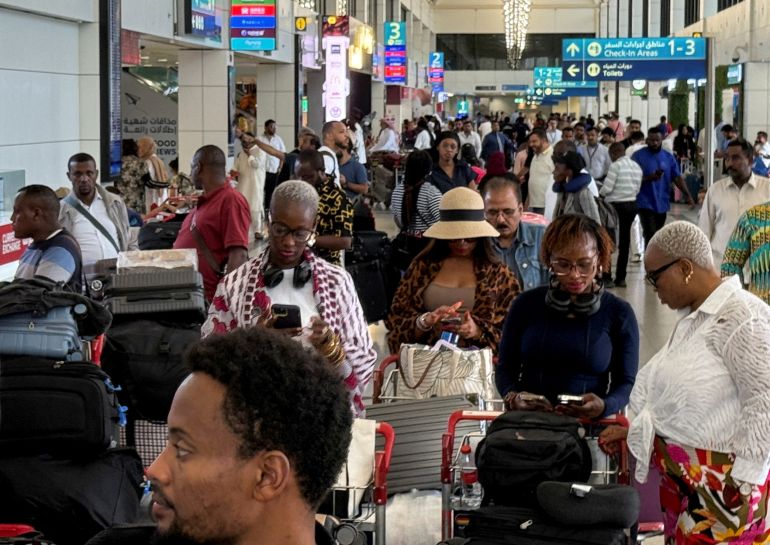
Passengers queue at Dubai International Airport, following Iran Monday's attack on a U.S. military base, in Dubai, United Arab Emirates, June 24, 2025.
Passengers queue at Dubai International Airport, following Iran’s Monday attack on a US military base, in Dubai, United Arab Emirates, June 24, 2025 [Reuters]

In the days following the US strikes, more and more carriers cancelled flights, particularly in Qatar and the United Arab Emirates, which sit just across the Persian Gulf from Iran.

While US President Donald Trump announced a truce between Tehran and Tel Aviv late on Monday night, many airlines have halted select routes through the middle of the week, citing safety concerns.

Middle East carriers severely affected

Dubai-based Emirates suspended all flights to Iran and Iraq, including those serving Baghdad and Basra, through June 30. An unspecified number of other Emirates flights were rerouted but continuing to operate as scheduled, using flight paths well distanced from conflict areas, according to the airline, which added that some flights may be delayed.

Gulf Air, the carrier of the Kingdom of Bahrain, extended the cancellation of scheduled flights to Jordan until June 27.

Air tracking data from FlightAware showed 382 cancellations worldwide just after 10:30am ET (14:30 GMT) Tuesday, following 834 cancellations seen on Monday.

Airports in the Middle East are some of the busiest in the world, covering an area stretching from Iran and Iraq to the Mediterranean and serving as a connecting hub for flights between Europe and Asia.

However, in an early sign of normalcy returning to the region, Iraqi airspace reopened and flights were now transiting it, flight-tracking website Flightradar24 wrote on X on Tuesday.

It’s unclear whether Iranian airspace is now also open to international arrivals and departures to and from Tehran.

In the meantime, the Israel Airports Authority says Ben Gurion Airport near Tel Aviv is returning to full operation.

Meanwhile, Singapore Airlines cancelled some flights to and from Dubai starting Sunday and through Wednesday, citing “a security assessment of the geopolitical situation in the Middle East”.

And British Airways said it had suspended flights to and from Doha through Wednesday, adding that it “will keep the situation under review”.

Source link

Is the 12-day Israel-Iran war really over – and who gained what? | Donald Trump News

Since Sunday, the Middle East has lurched from escalating war to fragile ceasefire. A truce seems to be holding, and what US President Donald Trump called “The 12 Day War” between Israel and Iran seems to be over – for now.

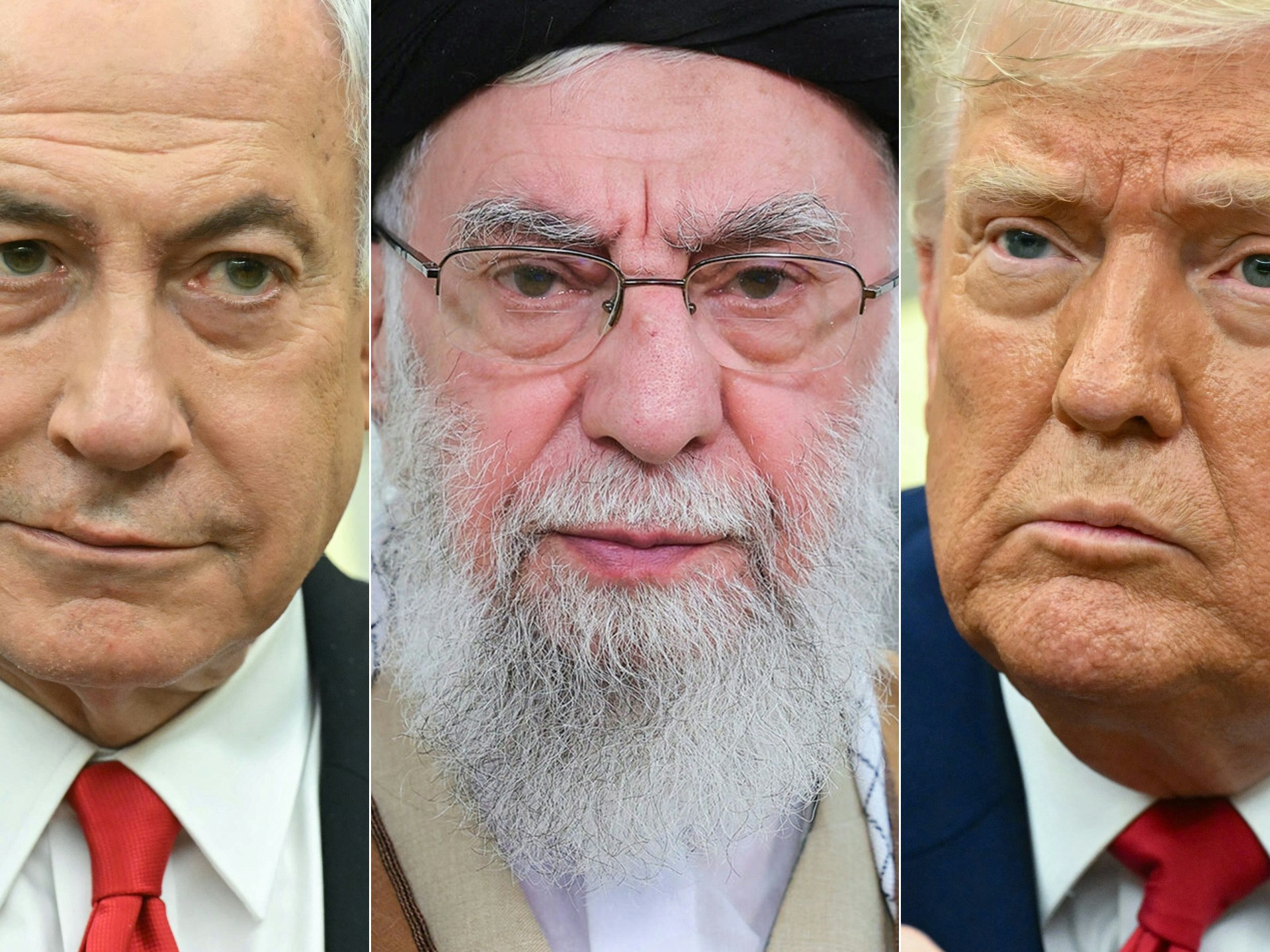
Meanwhile, Trump, Israel’s Prime Minister Benjamin Netanyahu and Iran’s leaders have all claimed that the pause in the conflict happened on their terms.

So, what’s the truth? What did Israel achieve? Did Iran manage to defend its strategic assets? And is the truce a pathway to peace?

How did events unfold?

Late on Saturday night, at Israel’s behest, the US entered the Israeli-Iranian war with strikes on Iran’s nuclear facilities at Fordow, Natanz and Isfahan, “completely obliterating” them, in Trump’s words.

On Monday, Iran struck back, firing missiles at the largest US airbase in the Middle East, Al Udeid in Qatar.

It appeared as though the Middle East was poised for a broader, longer war.

But within hours, Trump announced on Truth Social, his social media platform, “It has been fully agreed by and between Israel and Iran that there will be a Complete and Total CEASEFIRE.”

Trump called it “the 12 Day War … that could have gone on for years and destroyed the Middle East”.

Four hours after the ceasefire was supposed to take effect, Israel launched a strike against Iran in retaliation for what it said were two ballistic missiles entering its airspace, launched from Iran. Both were intercepted. Israel’s retaliation destroyed a radar station near Tehran.

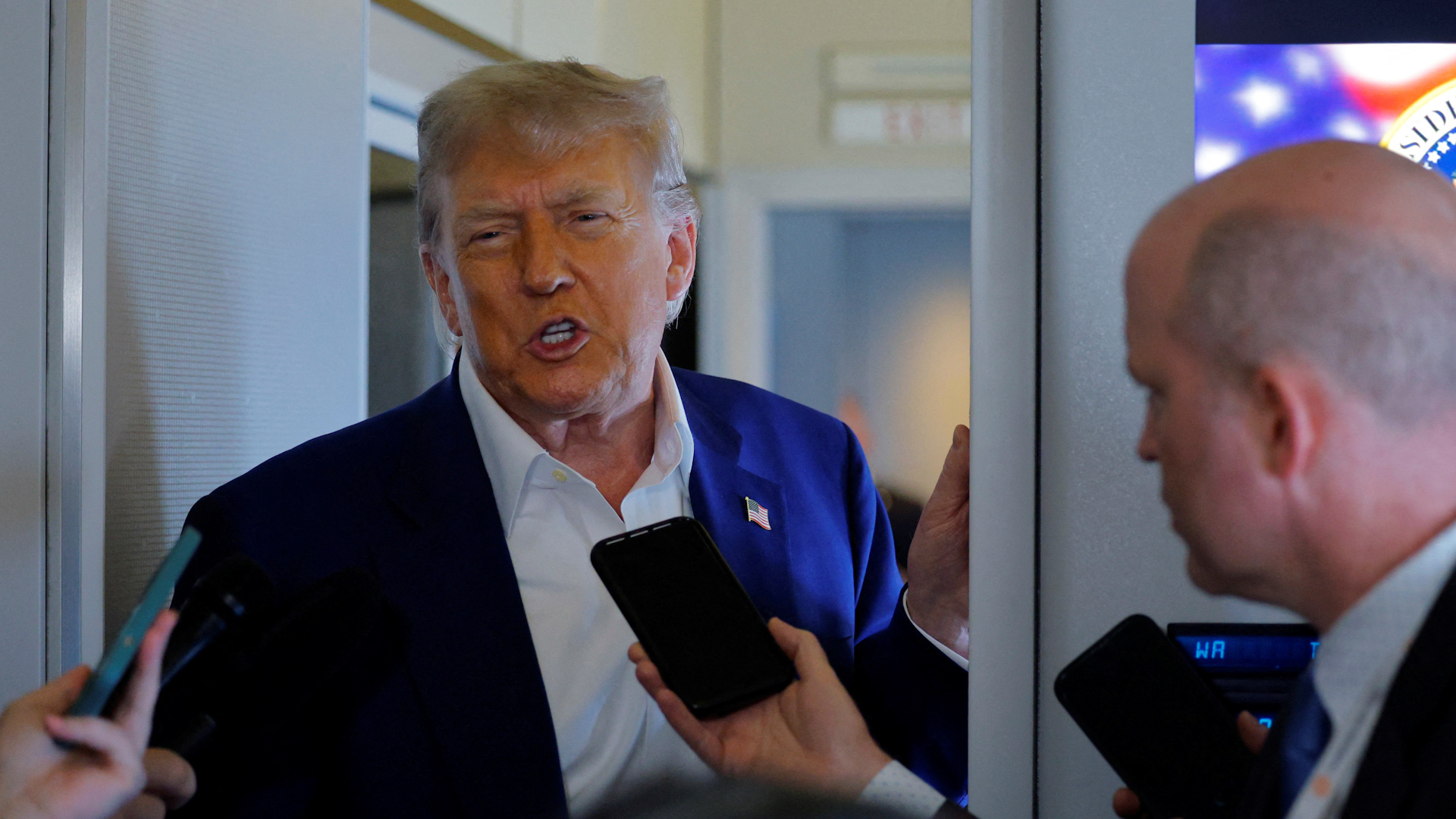
Trump was furious. “I’m really unhappy that Israel went out this morning,” he told reporters.

“We’ve got two countries that have been fighting so hard and for so long, that they don’t know what the f*** they’re doing.”

Iran said it did not fire those missiles. By 11:30 GMT the ceasefire was back in effect. Trump spoke to Netanyahu.

“ISRAEL is not going to attack Iran. All planes will turn around and head home, while doing a friendly ‘Plane Wave’ to Iran. Nobody will be hurt, the Ceasefire is in effect!” Trump wrote on Truth Social.

What did Israel achieve?

Israel has long claimed that Iran is its number one existential threat, but it has never before struck Tehran’s nuclear facilities.

On June 13, it crossed that red line, bombing the surface installations of the Natanz fuel enrichment plant and the Isfahan nuclear technological complex. Iran retaliated by launching drones and missiles at Israel.

Israel had struck nuclear installations in Syria and Iraq before, but it has now proved it can carry out a complex mission much further afield.

It also withstood international accusations that its mission wasn’t legal. Israel claims it was anticipatory self-defence, but not everyone agrees that Iran is developing a nuclear bomb, or that it planned to use it against Israel imminently.

“I speak with world leaders and they are very impressed by our determination and the achievements of our forces,” Netanyahu said on June 18.

Finally, Israel proved it can convince the US to enter a limited Middle Eastern offensive it has started. In previous wars in 1967 and 1973, the US had provided material support to Israel when it was attacked, but had not assisted it with direct operational involvement.

Netanyahu thanked Trump for “standing alongside us”.

Operation Rising Lion against Iran took place in the wake of conflicts that Israel has waged against Iran’s regional allies – the Houthis in Yemen, Hamas in Gaza and Hezbollah in Lebanon. Hamas and Hezbollah have been weakened over the past two years.

Did Iran manage to defend its nuclear programme?

Israel managed to significantly damage surface targets in Iran, and the US claims to have destroyed underground nuclear facilities.

But while satellite photography shows that their missiles hit their mark, there is no independent confirmation available to verify what was destroyed. That will need on-site inspections.

“At this time, no one – including the IAEA – is in a position to have fully assessed the underground damage at Fordow,” said Rafael Grossi, director of the International Atomic Energy Agency, the United Nations nuclear watchdog, on Monday, after the US strikes. “Given the explosive payload utilized, and the extreme vibration-sensitive nature of centrifuges, very significant damage is expected to have occurred,” he said.

Also unknown are the whereabouts of 400 kilogrammes (880 pounds) of highly enriched uranium that the IAEA has said Iran now possesses.

Mohammad Eslami, the head of Iran’s Atomic Energy Organisation, suggested the nuclear programme would emerge unscathed. “Preparations for recovery had already been anticipated, and our plan is to prevent any interruption in production or services,” he said on Tuesday in a statement carried by the semi-official Mehr news agency.

Meanwhile, confusion lingers over the source of two ballistic missiles that hit Israel on Tuesday morning, three and a half hours after the ceasefire began. Iran’s government officially denied having launched the missiles.

So who did? And were they fired accidentally – like the Iranian missile that accidentally brought down a Ukrainian passenger plane in 2021, killing 176 people?

How likely is another strike on Iran?

What Israel and Iran have agreed to is a ceasefire. They haven’t made peace.

On Iran’s nuclear programme, experts say that there are – broadly speaking – two possible future paths.

Renewed UN inspections of Iranian nuclear facilities and a new treaty with Iran, perhaps resembling former US President Barack Obama’s Joint Comprehensive Plan of Action of 2015, might help Tehran ease global pressure on its programme, though it was Trump who pulled out of the JCPOA, not Iran.

This is where European powers can play a role. Three of them, the United Kingdom, France and Germany, met with Iranian Foreign Minister Abbas Araghchi on June 20, along with the European Union’s foreign policy chief, Kaja Kallas, in an effort to avert US strikes. That bid failed, but although the EU cannot alone leverage Iran into a compromise, it can act as a counterpoint to US-Israeli hard power.

“Iran will try to involve the Europeans diplomatically by proposing enhanced monitoring and making commitments in its nuclear programme,” Ioannis Kotoulas, an adjunct lecturer in geopolitics at Athens University, told Al Jazeera.

“The US could accept a peaceful nuclear programme – [US Secretary of State Marco] Rubio has already said so. The likelihood is that the US won’t try to force regime change,” he said. “Europe is now Iran’s only way out. Russia is unreliable.”

But Israel has previously tried to scupper any nuclear deal between the West and Iran, and is unlikely yo accept a fresh agreement.

And will Iran even be open to a compromise, after the US pulled out of its previous nuclear deal with Tehran, then changed goalposts during recent talks, and finally joined Israel in bombing Iranian nuclear facilities while they were supposed to be negotiating an agreement?

“That really depends on dynamics within the country and how any climbdown is phrased, but there have already been calls to cease uranium enrichment from activists within the country,” Ali Ansari, a professor of Iranian history at St Andrews University, told Al Jazeera.

So far, Iran sounds unyielding in the pursuit of its nuclear programme.

On Monday, the national security committee of Iran’s parliament approved a bill pushing for the full suspension of Tehran’s cooperation with the IAEA if approved in a plenary session.

Meanwhile, Trump emphasised on Tuesday on social media that he would not allow Iran’s nuclear programme to resume.

If that fundamental tension remains intact, another round of strikes and counterstrikes that suck in the US might only be a matter of time.
Source link

US-Israel-Iran conflict: List of key events, June 24, 2025 | News

Here are the key events as a ceasefire was declared in the 12-day Israel-Iran conflict.

Here’s where things stand on Tuesday, June 24:

Fighting

  • A US-brokered ceasefire began at around 04:00 GMT on Tuesday, with Iran halting attacks first and Israel following suit 12 hours later.
  • After a rocky start, the ceasefire was holding later in the day, with the missiles and drones silent in both directions for the first time in nearly two weeks.
  • The phased 24-hour process was initially violated by both Iran and Israel.
  • Israeli Defence Minister Israel Katz initially ordered “intense strikes” on Tehran, accusing Iran of violating the truce first, something Iran denies.
  • Israeli Prime Minister Benjamin quickly acceded to United States President Donald Trump’s demand to stand down on further attacks.
  • Netanyahu’s office said Israel’s military “destroyed a radar installation near Tehran”, claiming it was in retaliation for several earlier Iranian missile strikes.
  • Iran’s Islamic Revolutionary Guard Corps (IRGC) said 14 missiles were launched against military centres across Israel, adding that the last wave of missiles was carried out minutes before the ceasefire implementation and in response to deadly Israeli strikes.

Casualties and disruptions

  • Iran’s Red Crescent Society announced that four of its ambulance workers were killed by the Israeli military. They identified the medics as Mojtaba Maleki, Mehdi Zartaji, Amirhossein Jamshidpour and Yasser Zivari.
  • The Iranian judiciary said several employees and visiting family members died as a result of Israel’s attack on Evin Prison on Monday.
  • Iran’s Health Ministry said 610 people were killed in Israeli strikes over the past 12 days.
  • Israel’s military said a soldier, identified as 18-year-old Eitan Zacks from Beersheba, was killed “as a result of a missile launched from Iran”. Three others died in that attack.
  • Israel said its airspace has reopened for emergency flights, while Israel’s flag carrier said it will boost its flight schedule to bring tens of thousands of Israelis back from abroad.
  • Syrian airspace reopened after being temporarily closed, Syrian media reported.
  • Oman Air said its flight operations also returned to normal following cancellations last night over regional tensions.
  • Other countries in the region, including Qatar and Iraq, also reopened their airspace, with flight operators confirming their plans to resume services on Tuesday.

Politics and diplomacy

  • Trump said he was “really unhappy” with Israel for violating the truce. He called on Israel to stop dropping bombs and to “bring your pilots home, now!”
  • Iranian President Masoud Pezeshkian declared the “end of the 12-day war” with Israel to be a “total victory”.
  • Pezeshkian also said his country is ready to resolve issues with the US based on international frameworks.
  • Pezeshkian called Qatar’s Emir Sheikh Tamim bin Hamad Al Thani a day after an Iranian attack on the US military base Al Udeid and expressed “regret”, noting Qatar and its people were not the target of the attack.
  • Netanyahu said that Trump “expressed his immense appreciation” for attacking Iran, and that Israel “achieved all of the war’s goals”.
  • Netanyahu also said: “We rose like a lion, and our roar shook Tehran. This war will be studied in all the armies of the world. We destroyed the critical facilities in Arak, Natanz, and Isfahan.”
  • Trump said in a post on his Truth Social platform that it was a “great honour” to “destroy” Iran’s nuclear facilities, and then “stop the war”.
  • Iranian Foreign Minister Abbas Araghchi said Tehran is more determined to hold on to its nuclear programme after the 12-day Israeli assault, saying “our scientists made massive sacrifices and even lost their lives for this goal”.
  • Iranian Deputy Foreign Minister Saeed Khatibzadeh, in remarks to Al Mayadeen TV, said that Iran is alert and ready to respond to any attack.
  • Yemen’s Houthi rebels lauded Iran’s “heroic” battle against Israel, with the group’s spokesman Mohammed Abdulsalam saying the war was also against “other Western countries that stood with the aggressors”.
  • Foreign Minister Wang Yi said China supports Iran in achieving a “genuine ceasefire” after it condemned the US for striking the country’s nuclear sites.
  • .British Prime Minister Keir Starmer, French President Emmanuel Macron and German Chancellor Friedrich Merz met at the NATO summit in The Hague, saying that it was now “time for diplomacy”, as the fragile ceasefire took hold.

Source link

Fragile Iran-Israel ceasefire calms oil markets | Israel-Iran conflict News

Oil prices hit a five-month high over the weekend after the United States struck Iran’s nuclear facilities. Tehran retaliated with an attack on the US Al Udeid Air Base in Qatar, keeping global energy markets on edge.

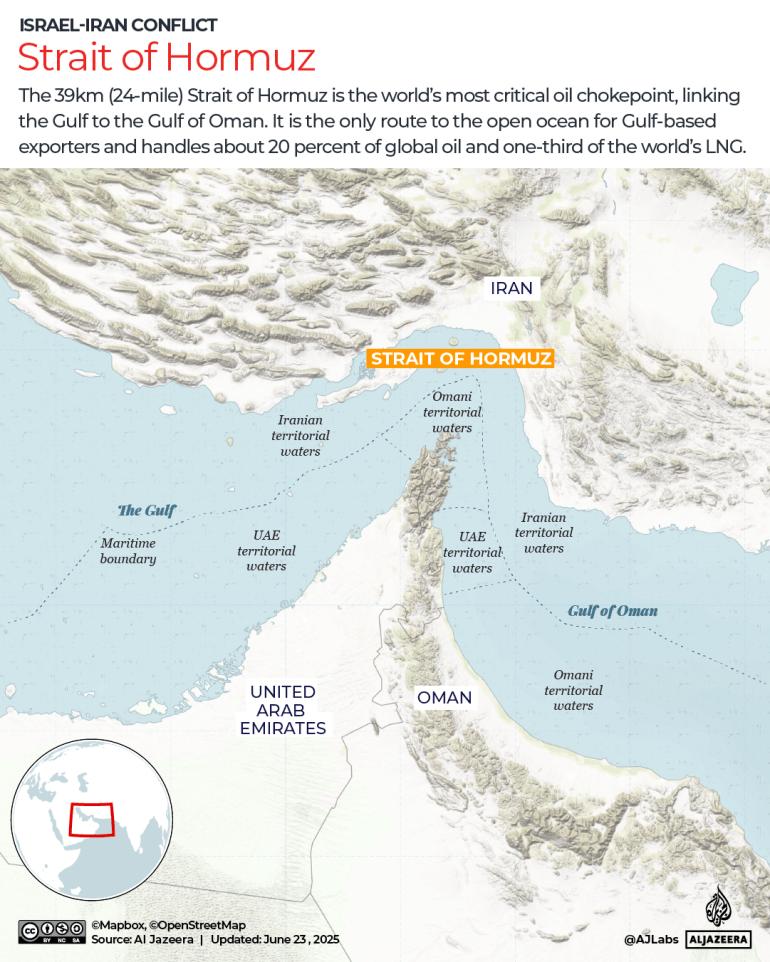
But oil prices dropped sharply on Tuesday after it appeared that Iran was holding off further attacks for now, including avoiding closing the Strait of Hormuz, a critical chokepoint in global trade.

Brent Crude, the international benchmark for oil prices, has tumbled more than 5.6 percent so far in the trading day and is currently trading at around $66 a barrel.

Strait of Hormuz closure still a concern

One of Iran’s most significant potential retaliatory economic measures would be to shut down the Strait of Hormuz.

The narrow waterway is a key transit route for 20 percent of the world’s oil supply, as well as a broader trade corridor between Europe and Asia.

While Iran’s parliament has backed a proposal to close the strait, the final decision lies with the country’s Supreme National Security Council.

Iran has made similar threats in the past, including in 2018 during US President Donald Trump’s first term, after the US withdrew from the Iran nuclear deal brokered under former President Barack Obama.

A closure could involve laying sea mines across the strait – which at its narrowest point is just 33 kilometres (21 miles) wide – and even attack or capture vessels. As recently as March, the Revolutionary Guard seized ships it accused of smuggling diesel. Similar tactics were used during the Iran-Iraq War in the 1980s.

Shutting the Strait would send a jolt through global markets, though analysts believe there is enough spare capacity to blunt the immediate impact. Still, the risk of further volatility remains high, mirroring the energy market disruptions seen in 2022 following Russia’s invasion of Ukraine.

HSBC analysts say that crude oil prices could top $80 a barrel if the Strait is closed. Goldman Sachs forecasts that it could be $110.

But the strike on the US airbase in Qatar actually calmed global markets because it suggested that economic retaliation is not at the forefront of Tehran’s arsenal.

“If Iran were serious about retaliation, it would sink an oil tanker in the Straits of Hormuz. The fact that it isn’t doing that means it’s bending the knee,” Robin Brooks, senior fellow at the Brookings Institution, said in a post on the social media platform X.

INTERACTIVE - Strait of Hormuz Map Iran Israel-1750677677

Moment of flux

Outside of the conflict, the oil market was already in a moment of flux. In May, OPEC agreed to increase production by as much as 411,000 barrels per day for the month of July, part of a move to unwind voluntary output cuts after demand crashed during the COVID pandemic.

There are other ways to mitigate the impact of a supply shortage.

Spare production capacity from OPEC+, primarily in Saudi Arabia and the United Arab Emirates, could quickly add about 2.5 million barrels per day to the market, with as much as five million available over the longer term, according to analysis from Third Bridge Capital.

That could buy time if there is a hit on global oil supplies before it ultimately impacts consumers at the gas pump.

Iran produces 4 percent of the global oil supply, most of which goes to China due to existing global sanctions on Iranian oil.

“It’s hard to see in the current environment how Iran would push more barrels into the market since a lot of their supply ends up going to China,” Peter McNally, global head of Sector Analysts and global sector lead at Third Bridge Capital, told Al Jazeera.

China purchases nearly 90 percent of Iran’s oil exports, totalling about 1.6 million barrels per day. China is already grappling with US tariffs and any increase in energy prices will hurt its economy, says Abigail Hall Blanco, professor of economics at the University of Tampa.

“Oil markets are incredibly interconnected. And so if the price of oil globally shoots up as a result of a closure or a restriction of oil tankers passing through the strait, then certainly you would see those impacts on the US and other markets as well,” Hall Blanco told Al Jazeera.

Earlier this morning, Trump said that China can continue to buy Iranian oil.

Meanwhile, regional producers are bracing for a fallout. Iraq’s state-run Basra Oil Company has begun evacuating foreign staff, fearing Iranian retaliation against US forces stationed in the area.

Western firms are also taking precautions. BP, which partners with Iraq’s Basra operation in the massive Rumaila oil field – averaging 3.32 million barrels per day – has reduced its on-site personnel. However, the company says output will not be affected. As of 3pm in New York (19:00 GMT), BP’s stock is down by 1.4 percent.

Outside OPEC+, producers like Brazil, Canada, Guyana and the US could increase output to help fill any supply gap. But with the exception of the US and Canada, the other countries take longer to make those moves, experts said.

“The difference with everyone except the US is just its bit longer lead time. There’s less of an instantaneous response to higher prices. The growth is going to continue. If there is an outage, by way of Iran and the Strait of Hormuz, the quickest [way] to add production is either in Saudi Arabia, the UAE or the US,” McNally said. “But like longer term, the non-OPEC supply will continue to meet most of the demand growth going forward.”

Over the past decade, non-OPEC countries have significantly ramped up production, a trend that’s expected to continue. The Energy Information Administration (EIA) projected in December (PDF) that 90 percent of oil production growth this year will come from non-OPEC sources.

The US also has a strategic petroleum reserve at its disposal that currently holds 402.5 million barrels. The reserve is intended to be tapped into in moments of a dip in production due to global emergencies.

While the US does produce more oil than any other country in the world, at current levels, it will cost $20bn and several years to refill the strategic reserve.

A political risk for Trump

On Monday, Trump on Truth Social said in all-caps, “EVERYONE, KEEP OIL PRICES DOWN, I’M WATCHING.”

Trump campaigned on cutting prices for everyday goods. But his volatile trade policies and tariffs have pushed prices upward. In the most recent consumer price index report, a key metric the central bank uses to measure the rate of inflation, food prices are up 2.9 percent compared to this time last year.

But oil has remained a key strength for the Trump administration, with prices dropping, including a 12 percent decline in gas prices from this time last year.

But that could change very quickly as prices fluctuate.

“It’s just that it’s a fluid situation,” McNally said.

Source link

Will Israel and Iran stop fighting? | News

US President Trump urges Israel and Iran to stick to their agreed ceasefire.

In a region that’s seen its fair share of instability, the conflict between Israel and Iran is threatening to create unprecedented chaos.

US President Donald Trump announced a ceasefire, just hours after Iran launched missiles towards the US military base in Qatar. That ceasefire is now at risk of falling apart.

Trump urged Israel to “calm down” and demanded that both sides do more to stick to the truce. But will it hold? And where does Iran go from here?

And is there a new balance of power in the Middle East?

Presenter: Imran Khan

Guests:

Dania Thafer – Executive director at the Gulf International Forum

Ellie Geranmayeh – Deputy head of the Middle East and North Africa programme at the European Council on Foreign Relations

Doug Bandow – Senior fellow at the Cato Institute and former special assistant to US President Ronald Reagan

Source link

Iran’s Pezeshkian expresses ‘regret’ to the emir of Qatar | Israel-Iran conflict News

Iranian president says neither Qatar nor its people were targets of attack on US base in the gas-rich Gulf nation.

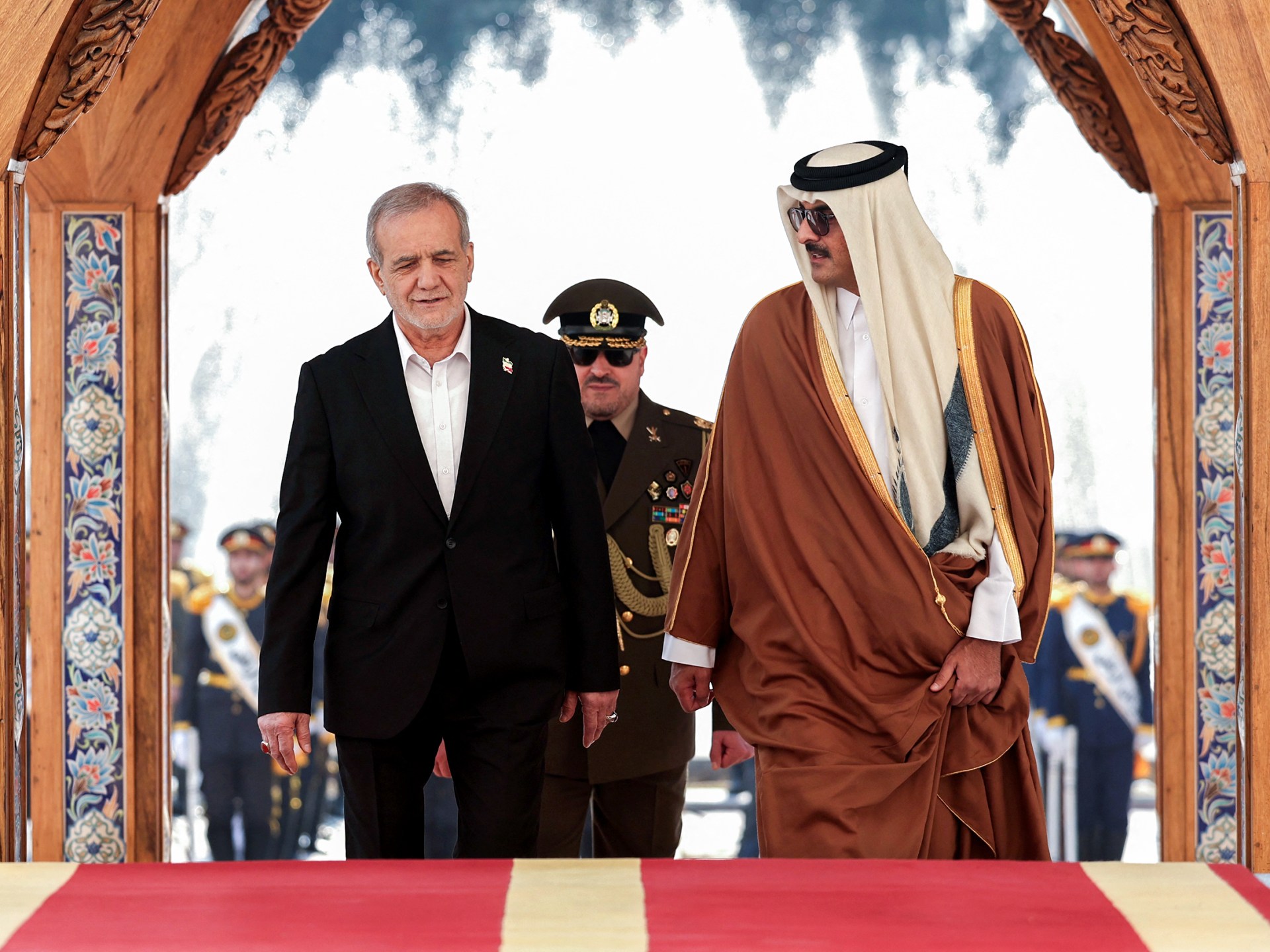
Iranian President Masoud Pezeshkian has expressed his “regret” to Qatar’s Emir Sheikh Tamim bin Hamad Al Thani over Tehran’s missile attack on a US base on Monday.

In a phone call on Tuesday with the emir, Pezeshkian noted that neither Qatar nor its population were the target of the attack on the Al Udeid Air Base, the United States base in Qatar, and that it did “not represent a threat” to the Gulf nation, the Diwan (emir’s office) said in a statement.

“[Pezeshkian] stressed that the State of Qatar will remain a neighbouring, Muslim, and sisterly state, and expressed his hope that relations between the two countries will always be based on the principles of respect for the sovereignty of states and good neighbourliness,” the statement said.

Iran launched 19 missiles at the US base, which is the largest in the Middle East, with Qatari defence forces intercepting 18 of them, according to officials from the Ministry of Interior. Iran’s Islamic Revolutionary Guard Corps (IRGC) said it had launched this “powerful and devastating missile attack” in response to the “blatant military aggression” by the US on Iran’s nuclear facilities on Sunday.

Translation: His Highness the Emir receives a phone call from His Excellency Dr. Masoud Pezeshkian, President of the Islamic Republic of Iran.

During the Iranian attack, a series of flares and loud explosions were observed in Qatar’s capital, Doha, as well as other areas of the country. Qatari officials confirmed that the airbase was evacuated before the attack.

According to the Diwan, the emir “reiterated Qatar’s strong condemnation” of the attack, considering it a “flagrant violation of its sovereignty and airspace”.

“His Highness the Emir also expressed that this violation is completely inconsistent with the principle of good neighbourliness and the close relations between the two countries, especially since Qatar has always been an advocate of dialogue with Iran and has made strenuous diplomatic efforts in this regard,” the statement added.

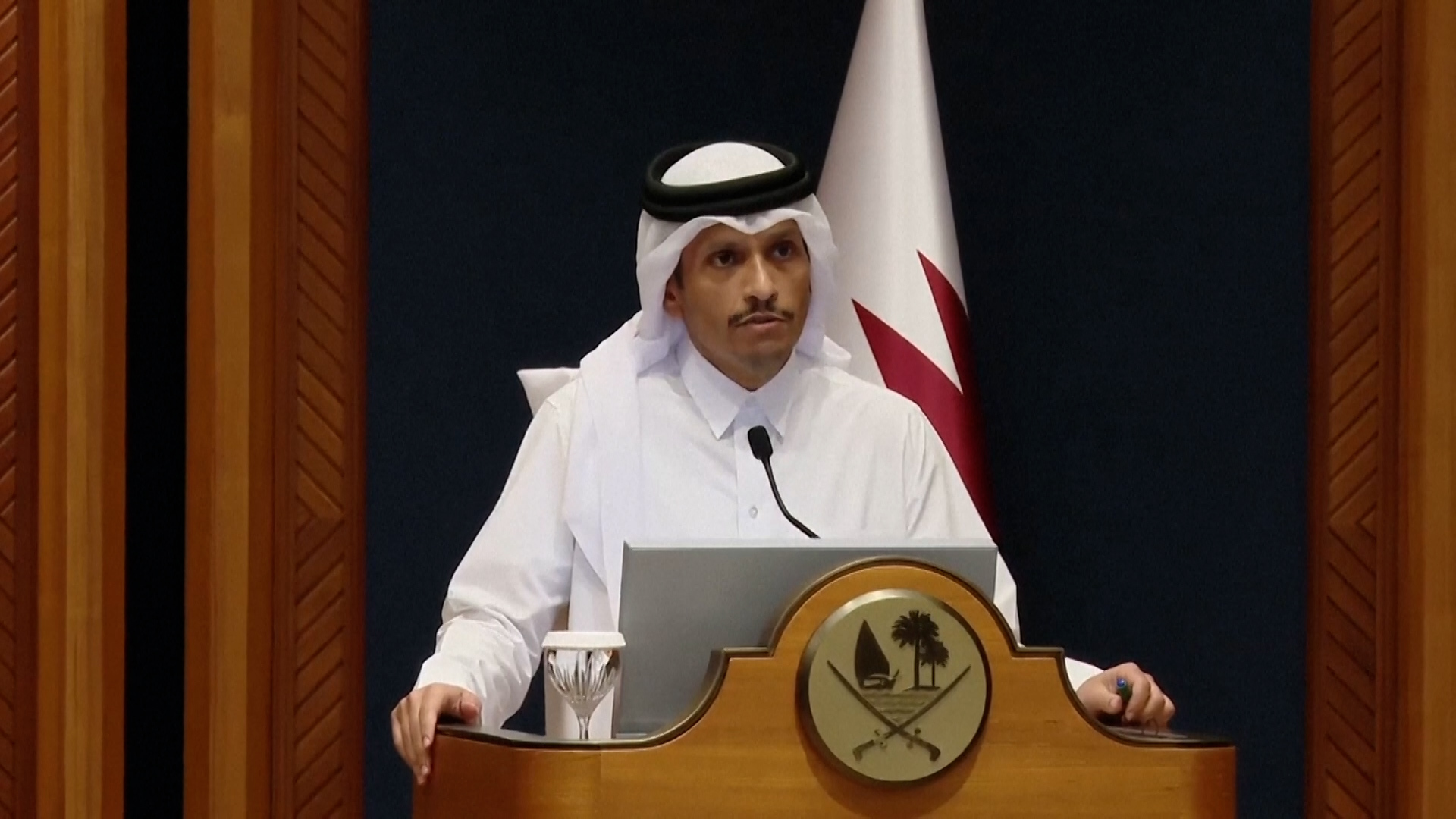
Iran and Qatar have long enjoyed fraternal relations, and the Qatari government has condemned both the Israeli and US attacks on Iran. But Qatar’s Prime Minister Sheikh Mohammed bin Abdulrahman bin Jassim Al Thani spoke at a news conference on Tuesday of a “scar” to relations between Doha and Tehran that would need time to heal.

Earlier on Tuesday, Qatar’s Foreign Ministry said it sent a letter to United Nations Secretary-General Antonio Guterres and the UN Security Council, denouncing the IRGC’s “extremely dangerous escalation” and saying the attack posed a “direct threat to regional peace and security”.

The tit-for-tat attacks between the US and Iran come amidst the conflict between Israel and Iran, which began on June 13, after the Israeli army struck multiple targets inside Iran.

Hours after the attack on the Al Udeid Air Base, US President Donald Trump announced late on Monday that Israel and Iran had agreed to a ceasefire. Nevertheless, both countries have accused each other of violating the truce.


Source link

Israel-Iran ceasefire off to rocky start, drawing Trump’s ire after fanfare | Donald Trump News

The ceasefire between Israel and Iran is already showing signs of strain – and has triggered frustration, and a televised expletive, from United States President Donald Trump, who accused Israel of undermining the deal just hours after its announcement.

The ceasefire, brokered by the US and Qatar, came into effect late Monday following days of intensive missile barrages between the two foes. Israel’s last wave of strikes targeted Iranian military infrastructure near Isfahan, prompting retaliatory drone launches by Tehran.

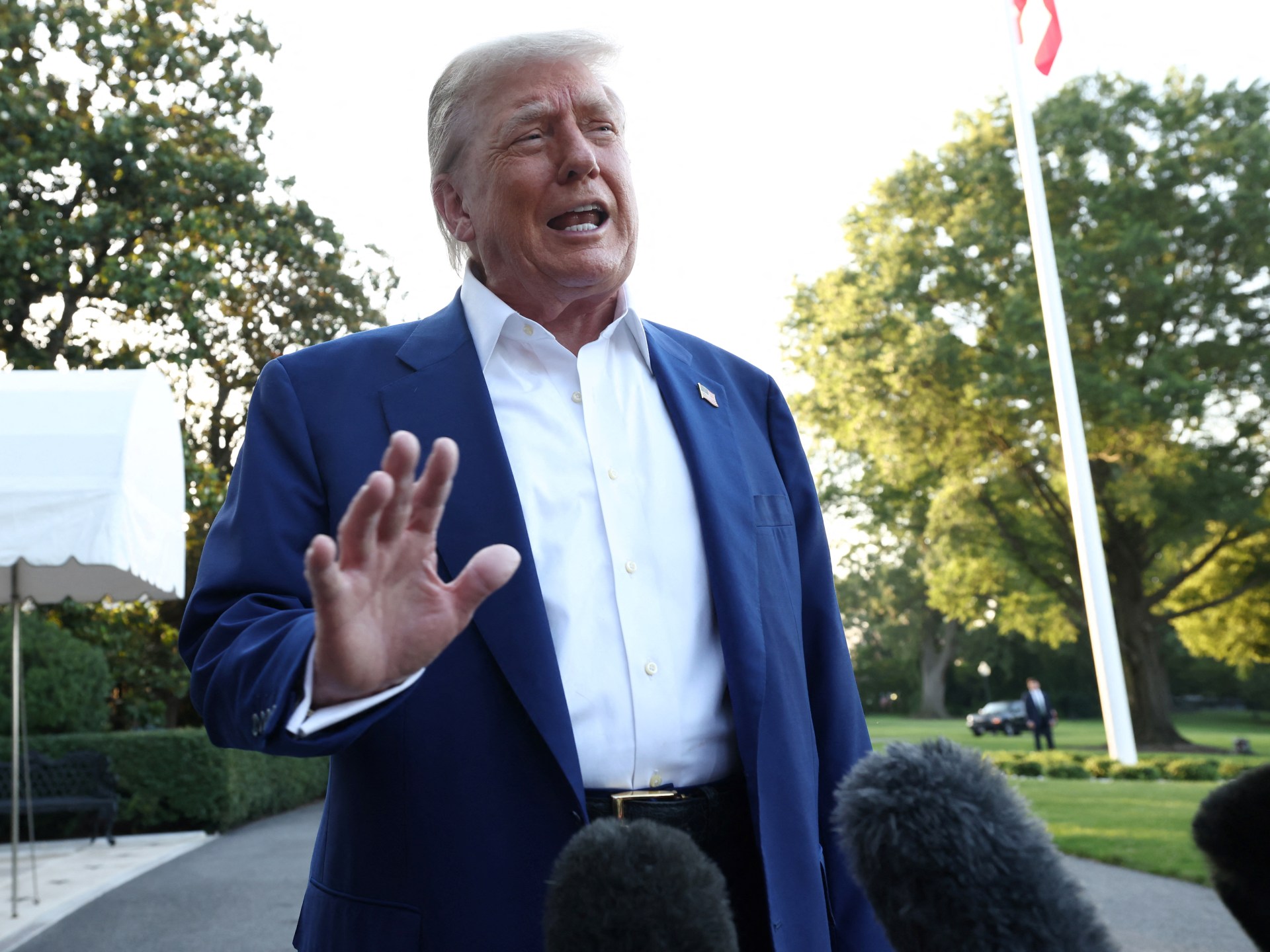
Iran violated the ceasefire, “but Israel violated it too”, Trump told reporters on the White House’s South Lawn on Tuesday as he departed for the NATO summit.

“So I’m not happy with them. I’m not happy with Iran either. But I’m really unhappy if Israel is going out this morning.”

“I’ve got to get Israel to calm down,” he said. “Israel, as soon as we made the deal, they came out and dropped a load of bombs, the likes of which I’ve never seen before.”

As he prepared to head to a NATO summit in The Hague in the Netherlands, Trump’s anger flared on the White House Lawn: “We have two countries that have been fighting so long and so hard that they don’t know what the f*** they’re doing.”

A day earlier, Trump boasted on his Truth Social app that “the Ceasefire is in effect!”

“ISRAEL is not going to attack Iran. All planes will turn around and head home, while doing a friendly ‘Plane Wave’ to Iran. Nobody will be hurt,” Trump wrote.

Trump’s unusually public display of anger at Israel saw the US leader apparently trying to force his ally to call off warplanes in real time on Tuesday.

Earlier the same morning, he had posted on Truth Social: “ISRAEL. DO NOT DROP THOSE BOMBS” – without it being clear which bombs he was referring to.

“IF YOU DO IT IS A MAJOR VIOLATION. BRING YOUR PILOTS HOME, NOW!”

Israeli Prime Minister Benjamin Netanyahu seemed to quickly accede, with his office saying in a statement on Tuesday that Israel still carried out one more attack near Tehran after Trump’s appeal, but is refraining from “further strikes”.

Israeli Defence Minister Israel Katz had said earlier on Tuesday that he had ordered the military to mount new strikes on targets in Tehran in response to what he claimed were Iranian missiles fired in a “blatant violation” of the ceasefire.

Iran denied launching any missiles and said Israel’s attacks had continued for an hour and a half beyond the time the ceasefire was meant to start.

For his part, Iranian Foreign Minister Abbas Araghchi said that his country would not fire at Israel if it was not fired upon, but that a “final decision on the cessation of our military operations will be made later”.

Despite the rocky start, Trump voiced support for the ceasefire itself, clarifying he is not seeking regime change in Iran, after some mixed messaging in recent days, and insisting that the ceasefire remains in effect.

If it holds, the truce would be a big political win for Trump in the wake of his risky gamble to send US bombers over the weekend to attack three nuclear facilities in Iran that Israel and the United States claim were being used to build an atomic bomb in secret.

US intelligence and the United Nations’ nuclear watchdog had previously recorded no indication Iran was developing a nuclear weapon.

Reporting from Tehran, Al Jazeera’s Ali Hashem said Iranian officials appeared to welcome Trump’s remarks, viewing them as a potential opening for diplomatic engagement.

“It might give the impression that Trump is serious about this ceasefire,” Hashem said.

In Washington, Al Jazeera’s Phil Lavelle, said Trump is feeling “quite annoyed” at and perhaps “betrayed” by Netanyahu violating the ceasefire.

“He was angry with both Israel and Iran. But you could really tell some of the extra anger there, the extra fury was aimed at Israel,” Lavelle said.

The US leader had said the truce would be a phased 24-hour process beginning at about 04:00 GMT Tuesday, with Iran unilaterally halting all operations first. He said Israel would follow suit 12 hours later.

Israel has been bombing Iran in an offensive that began June 13. The US joined the attack with a mission starting overnight Friday to Saturday against the deeply-buried and hard-to-access Fordow complex and two other sites.

Iranian officials say more than 400 people have been killed in air strikes. Retaliatory missile strikes have killed 28 people in Israel, the first time large numbers of Iranian missiles have penetrated – and on a daily basis – its much vaunted air defence systems, which mainly the US has provided.

Source link

How Israel failed in Iran | Israel-Iran conflict

What did Israel accomplish in Iran after 11 days of incessant bombing? Prime Minister Benjamin Netanyahu claimed in his statement acknowledging the ceasefire that the Israeli goals have been achieved. Such an assertion seems problematic, to say the least.

At the start of the short-lived war, he declared two goals: “decapitating the nuclear programme” and “regime change”.

Was the nuclear programme decapitated? The answer is likely negative. It seems that Iran transported fissionable material out of the Fordow facility attacked by the United States. This stockpile is the most important part of the nuclear programme, so “decapitation” seems to have failed.

What damage, if any, did Israel inflict on the Iranian nuclear programme? That is also unclear. Israel managed to persuade the US to attack Iranian nuclear facilities using bunker-busting bombs, Massive Ordnance Penetrators (MOPs), but the US did little else to help the Israeli offensive. The extent of destruction would be hard to evaluate since Iran is unlikely to grant outside access.

Has Israel generated “regime change” in Iran? The brief answer is that it has very much achieved the opposite. Israel attempted to trigger an uprising against the regime by killing military leaders of Iran’s various security structures. This strategy is based on the firm Israeli belief that the best way to destabilise an enemy is through assassinations of senior leaders. This has never worked. The only possible exception was the effect Hassan Nasrallah’s death had on Hezbollah in Lebanon, but that had a great deal to do with internal Lebanese political dynamics. In all other cases, Israeli assassinations have failed to create any major political change.

In the case of Iran, the assassinations rallied the people around the government. Israel assassinated the senior commanders of the Iranian Revolutionary Guard Corps (IRGC), perhaps the most powerful element in current Iranian politics, but also one of the most hated by the Iranian public. Regardless, many Iranians who consider themselves staunch opponents of the Islamic Republic and especially of the IRGC found themselves supporting it. Iranians saw Iran in its entirety under attack and not just “the regime”.

Israel’s attempts to bomb “regime symbols” only made the situation worse. It attempted to spin its air strikes on Evin Prison, infamous for the torture of political prisoners, as a contribution to the struggle of the Iranian people against the repression of the Islamic Republic. But Israel’s bombs effectively worsened the situation of the prisoners, as the authorities moved many of them to unknown locations.

Bombing the “Israel doomsday clock”, which Israelis often employ as a demonstration of Iran’s commitment to Israel’s destruction, was simply pathetic.

Israel’s bombing of the Iranian state broadcaster IRIB was also absurd. Israel claimed it was curtailing the regime’s attempt to spread propaganda. As many Israelis pointed out, this bombing gave the Iranians the vindication they needed to threaten Israeli television stations as well.

If Israel did not manage to achieve its stated war goals, did it at least manage to rally the world behind it, to make the public forget about Gaza and recast Israel again as fighting the good fight? That seems dubitable at best. True, President Donald Trump and the US did strike Iranian nuclear facilities. By doing so, they violated several major rules of international law. This is likely to have long-term implications. However, Trump did not join the war alongside Israel. Immediately after the strike, the strategic bombers returned to the US.

Before and after carrying out the bombing, Trump iterated and reiterated his desire for a deal between the US and Iran, one that may also include Israel. It seems likely that the US president assisted Israel to serve his own interests as well as those of his allies in the Gulf.

While several world leaders, most notably German Chancellor Friedrich Merz, were quick to support the US strikes and “Israel’s right to defend itself”, no one adopted Israel’s stringent list of demands, which included that  Iran should not be able to enrich uranium at all.

The world returned to the formula of “no nuclear weapon”, with which Iran had already announced it was willing to comply.

When it comes to the operational development of the Middle East, the world appears to find Iran a legitimate partner for doing business. This is a loss for Israel and a victory for Iran.

The very real damage to the Israeli heartland should also be considered. Israel achieved aerial dominance over Iran very quickly and struck almost at will. Iranian missiles, however, repeatedly managed to penetrate the famed Israeli air defence system, strike at the heart of Israel and across the entire country, and bring it to a standstill while inflicting an unprecedented number of casualties as well as massive destruction. Israel was running low on interceptor missiles without hopes of immediate replenishment. The Israeli economy was quickly grinding to a halt. This was another triumph for Iran.

Iran emerged from the war bruised and bombed, suffering hundreds of casualties and real damage from incessant bombing around the country. But the Islamic Republic did not crumble, even when facing a massive Israeli force.

Iranian missiles hit home, Iran’s image was not tarnished (it was seen by most of the world as a victim of an Israeli attack), and Iran’s options for response were not severely constrained. Iran successfully de-escalated by warning in advance about its “retaliation” for the US strike on its military base in Qatar.

Iran was powerful enough to convince Trump to warn Israel not to attack after the ceasefire appeared to have been violated. Iran emerged as it prefers to emerge – still standing, and with potential for the future.

The views expressed in this article are the author’s own and do not necessarily reflect Al Jazeera’s editorial stance.

Source link

What is life like for Gaza evacuees? | Gaza

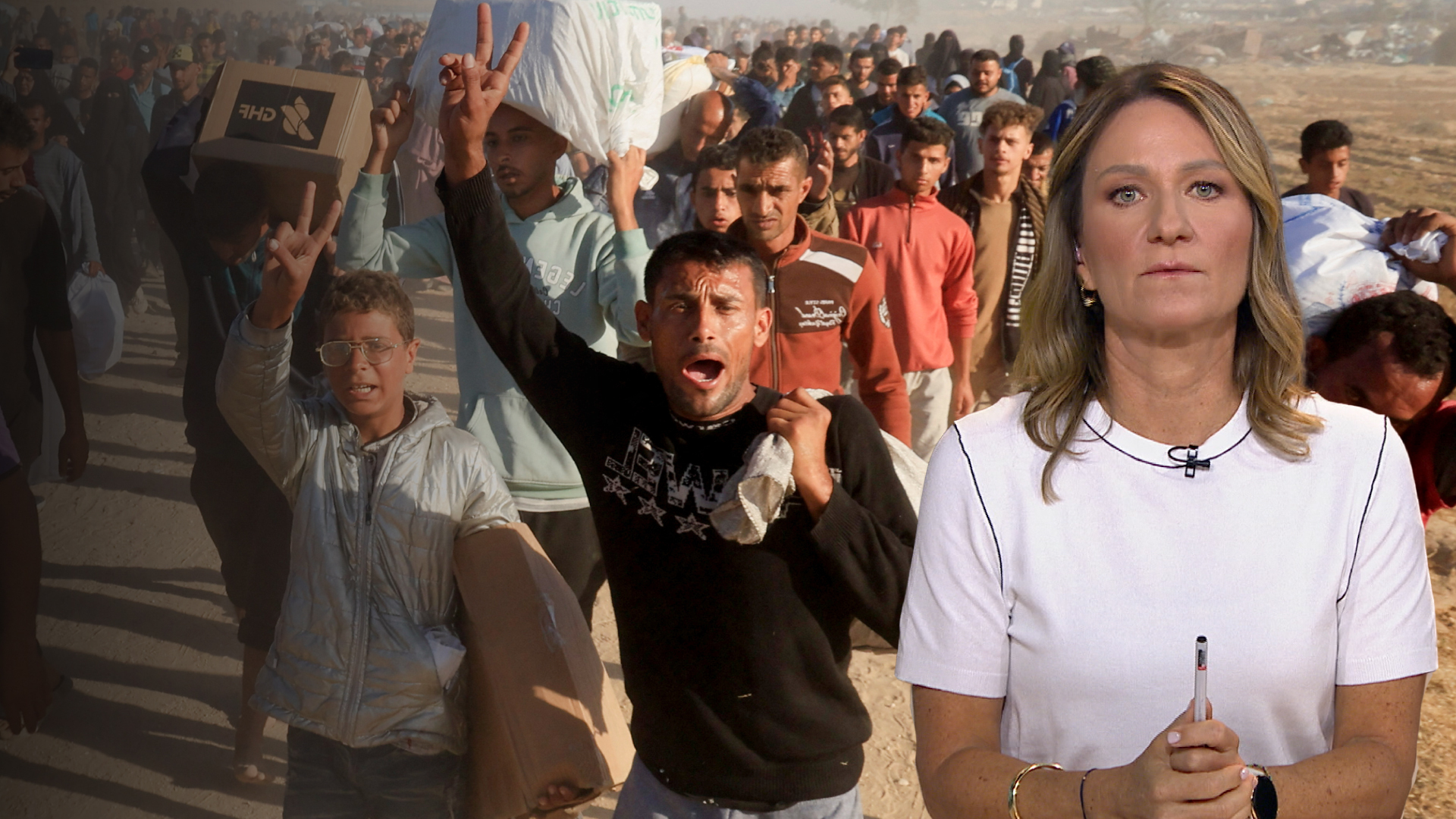
Today on The Stream: Two Palestinians who left Gaza during the genocide share their stories of escape and survival.

For the Palestinians who have managed to leave, the decision to stay and risk death or abandon their homes and loved ones is an agonising one. Many more are desperate to escape, but have no way out. So what becomes of those who do make it out? How do they carry on after such deep trauma, while fearing for the families and friends they left behind as the war continues? And will they ever truly heal?

Presenter: Stefanie Dekker

Guests:
Safwat Al Kahlout – Al Jazeera producer
Abubaker Abed – Palestinian journalist and commentator

Source link

Israeli military kills dozens in latest attacks on Gaza aid seekers | Israel-Palestine conflict News

Israeli forces and drones have reportedly killed dozens in the latest attacks on people seeking aid in Gaza.

The violence, carried out as Palestinians waited for aid at distribution sites across the enclave on Tuesday, may have killed as many as 50 people in total, according to Palestinian health workers and witnesses, although figures remain unverified.

The killings are the latest in a wave of daily carnage near aid distribution points established late last month by the controversial Israeli and United States-backed Gaza Humanitarian Foundation (GHF), which the head of the United Nations agency for Palestinian refugees (UNWRA) has labelled a “death trap”.

Sources in Gaza hospitals told Al Jazeera that up to 50 people had been killed by Israeli fire near aid distribution centres since dawn, along with 21 others across the territory.

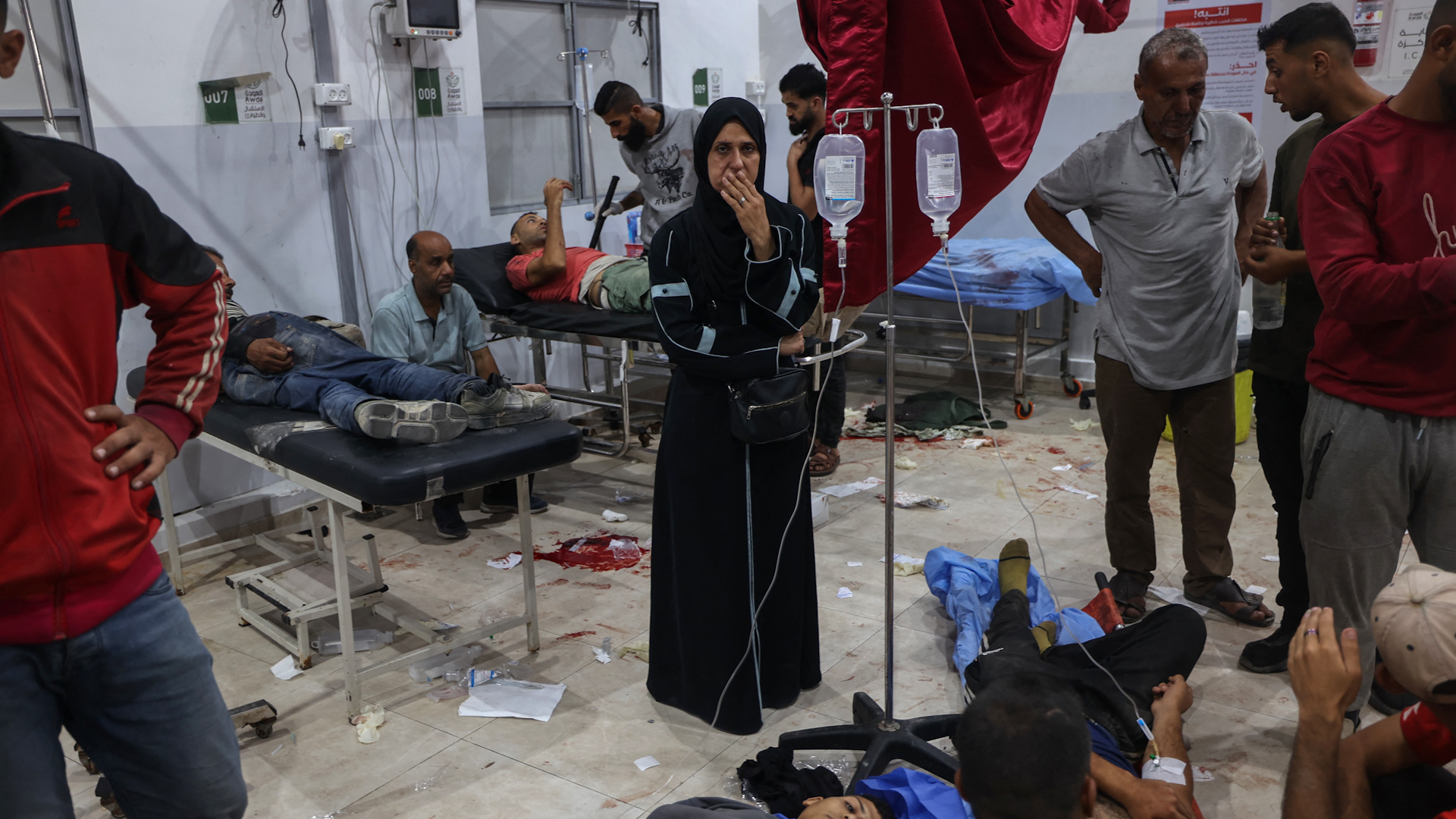
Medical sources reported that at least 25 people were killed in an incident on Salah al-Din Street south of Wadi Gaza in central Gaza, according to The Associated Press news agency. More than 140 other people were injured, 62 of them critically.

Footage posted on social media site Instagram, and verified by Al Jazeera’s Sanad agency, showed bodies being brought to al-Awda Hospital in the nearby Nuseirat refugee camp.

Similar scenes were reported from the Nasser Medical Complex to the south in Khan Younis, following unverified reports that the Israeli army had targeted people waiting for aid on al-Tina Street.

People approaching an aid point in Gaza City were also killed, Al Jazeera’s Hani Mahmoud reported from the city in the north of the territory, as well as Rafah in the south.

“Casualties were brought to various health facilities, including al-Shifa Hospital [in Gaza City],” he said. “The emergency ward there turned into a bloodbath, and many died waiting for medical care.”

Witnesses told AP that Israeli forces had opened fire as people were approaching the aid trucks.

“It was a massacre,” said Ahmed Halawa, reporting that tanks and drones had fired “even as we were fleeing”.

The Israeli military said it was reviewing reports of casualties from fire by its troops after a group of people approached soldiers in an area near the militarised Netzarim Corridor.

Israel has said that previous shootings near GHF aid sites have been provoked by the approach of “suspects” towards soldiers.

Witnesses and humanitarian groups have said that many of the shootings took place without warning.

‘Death trap’

The killing of aid seekers has become an almost daily occurrence since the Gaza Humanitarian Foundation (GHF) took over the distribution of food and other vital supplies.

The foundation launched its aid distribution programme in late May after Israel had completely cut off supplies into Gaza for more than two months, prompting warnings of mass famine.

The United Nations has refused to work with the GHF, citing concerns that it prioritises Israeli military objectives over humanitarian needs, and condemned it for its “weaponisation” of aid.

The GHF distribution sites have been plagued by scenes of chaos and carnage. More than 400 people have been killed and 1,000 wounded by Israeli soldiers since the GHF aid rollout began.

The head of the UN agency for Palestinian refugees, Philippe Lazzarini, said on Tuesday that the system for aid distribution in Gaza was “an abomination”.

“The newly created so-called aid mechanism is an abomination that humiliates and degrades desperate people,” said at a news conference in Berlin. “It is a death trap costing more lives than it saves.”

In a letter published on Monday, the International Commission of Jurists — a human rights NGO of prominent lawyers and judges — joined 14 other groups in condemning the GHF and calling for “an end to private militarized humanitarian aid operations in Gaza”.

Philip Grant, executive director of Geneva-based NGO TRIAL International, said GHF’s model of militarised and privatised aid delivery “violates core humanitarian principles”.

He added that those who enabled or profited from the GHF’s work faced a “real risk of prosecution for complicity in war crimes, including the forcible transfer of civilians and the starvation of civilians as a method of warfare”.


Source link

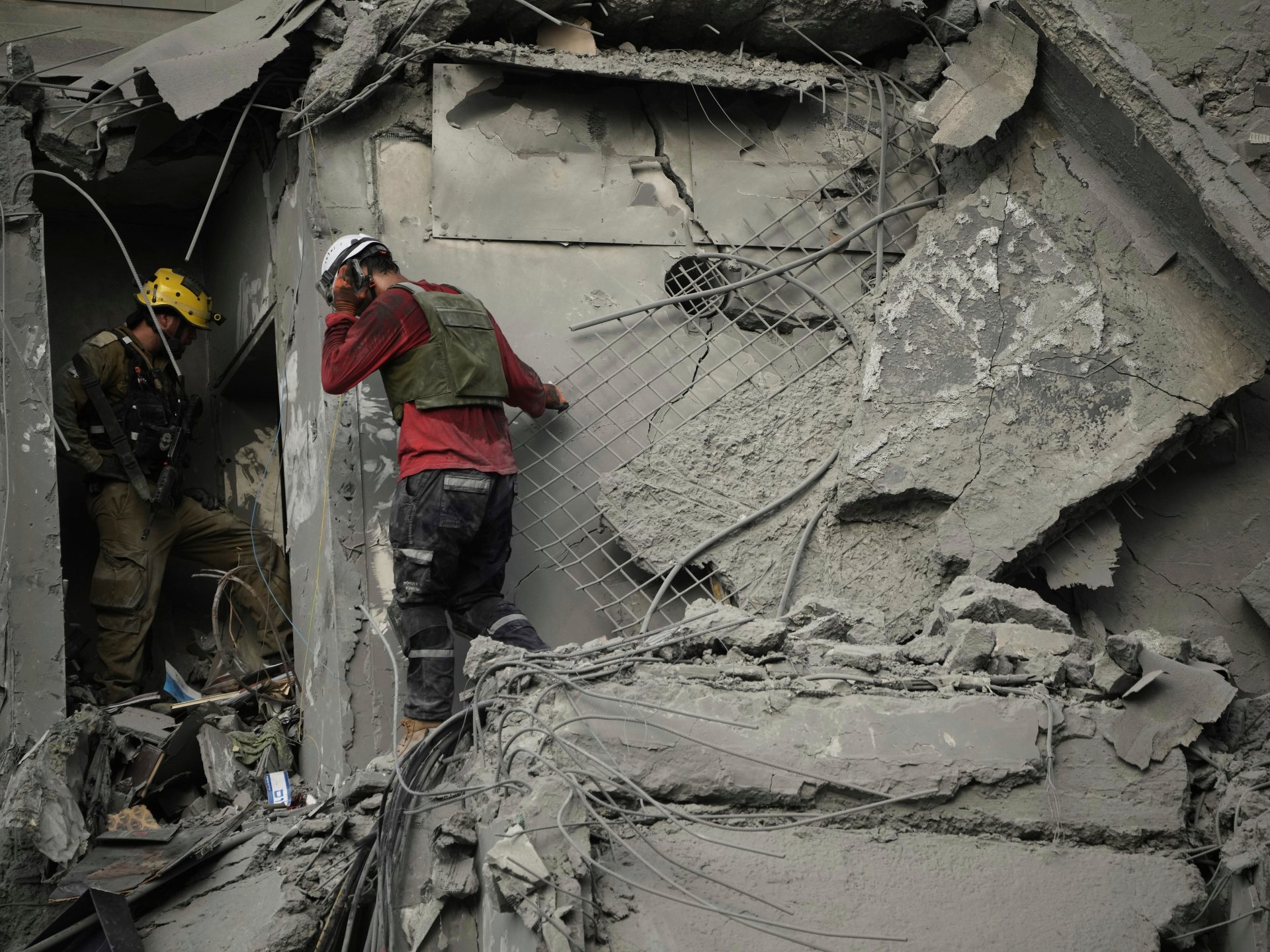
The aftermath of Iranian missile strikes in Israel | Israel-Iran conflict News

Iran launched waves of air strikes at Israel as the deadline approached for a ceasefire to which Tehran is reported to have agreed.

The launches came on Tuesday after 4am local time (7:30 GMT) in Tehran, the time Iranian Foreign Minister Abbas Araghchi said Iran would stop its attacks if Israel ended its air strikes.

Waves of missiles sent Israelis to bomb shelters for almost two hours in the morning.

Several people were reported killed in the early morning barrages, but there was no immediate word of further attacks.

Israel’s Magen David Adom rescue services said at least eight more people were injured.

The Israeli military later said people could leave the shelters but cautioned the public to stay close to protection in the coming hours.

Trump’s announcement that Israel and Iran had agreed to a “complete and total ceasefire” came soon after Iran launched a limited missile attack on Monday on a US military base in Qatar, retaliating for the US bombing of its nuclear sites.

Israel said later on Tuesday that it has agreed to the ceasefire after having “achieved all objectives” in its war with Iran.

Source link

Israel and Iran agree ceasefire amid waves of missiles | Israel-Iran conflict News

US President Trump calls for calm as truce agreement raises hope of an end to the dangerous conflict.

Iran and Israel are reported to have agreed to a ceasefire following 12 days of exchanging intense air strikes, including a “last-minute” barrage fired by Tehran.

Prime Minister Benjamin Netanyahu said in a statement on Tuesday morning that Israel had agreed to the truce proposal announced by United States President Donald Trump overnight. Earlier, Iranian state television reported that the ceasefire had begun.

The Israeli statement came not long after Trump had said in a post on social media that the ceasefire was under way.

“The ceasefire is now in effect. Please do not violate it!” he said.

While Netanyahu threatened that Israel would respond forcefully to any violation of the ceasefire, the agreement raises hopes for a de-escalation in a conflict that intensified dramatically in recent days, as the US bombed Iran’s nuclear facilities and Tehran attacked a US base in Qatar.

“In light of the achievement of the objectives of the operation, and in full coordination with President Trump, Israel has agreed to the President’s proposal for a bilateral ceasefire,” he said.

Waves of missiles

A fragile peace appeared to take hold early on Tuesday, with reports of hostilities ceasing following six waves of missile launches by Iran.

Iranian Foreign Minister Abbas Araghchi implied the strikes were launched just before a 07.30 GMT deadline announced by Trump.

“The military operations of our powerful Armed Forces to punish Israel for its aggression continued until the very last minute,” he wrote on social media.

Several people were killed in the attacks, emergency services and the Israeli military said. Not long afterwards, Israelis were told they could leave missile shelters, and no further launches have been reported.

Israel Iran Mideast Wars
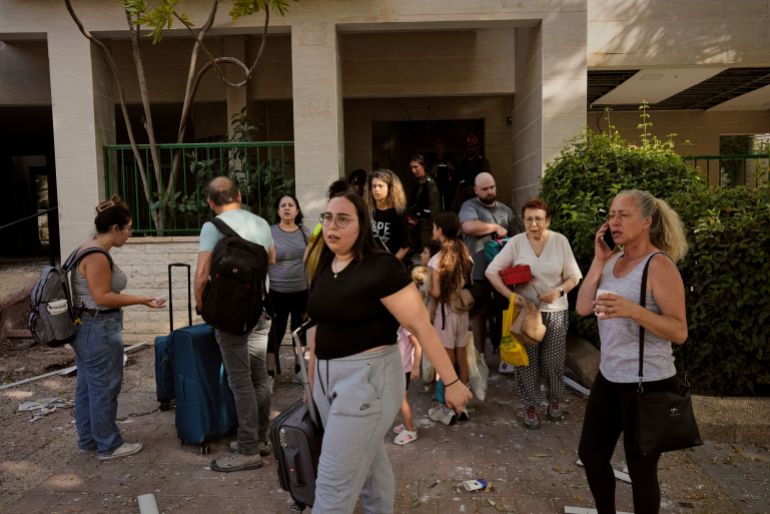
People evacuating a building next to a site struck by an Iranian missile strike in Beersheba, Israel, on Tuesday, June 24, 2025 [Bernat Armangue/AP Photo]

Reporting from Tehran, Al Jazeera’s Tohid Asadi said Israeli strikes on the capital had halted, calling the calm “a promising indication about the prospect of the ceasefire”.

But he noted that the situation remains fragile, with Iran, like Israel, having pledged to strike back in case there is any resumption of attacks against it.

‘Now Gaza’

Following Netanyahu’s announcement that his government had agreed to the ceasefire, Israel’s opposition called for him to seal a truce to end the 20-month war with Hamas in Gaza.

“And now Gaza. It’s time to finish it there too. Bring back the hostages, end the war,” opposition leader Yair Lapid wrote on social media.

However, hardliners criticised the agreement, insisting Iran remains dangerous.

The “regime in Iran is not a regime with which agreements are made but a regime that must be defeated,” wrote Dan Illouz, a member of Netanyahu’s Likud party.

“If not defeated” Iran will find new means against Israel, he declared.

Israel attacked Iran on June 13 saying that Tehran was close to developing a nuclear weapon. Trump made a similar assertion before the US strikes on Saturday.

The United Nations nuclear watchdog IAEA on Monday demanded access to Iran’s nuclear facilities to confirm the location and state of the country’s enriched uranium.

There has been speculation that Iran may have moved its stock of the nuclear material ahead of the US strikes on the Fordow, Isfahan and Natanz facilities.

Mohammad Eslami, head of Iran’s Atomic Energy Organization, said on Tuesday that Tehran is assessing damage to its nuclear industry and arrangements have been made for its restoration, the Reuters news agency reported.

“The plan is to prevent interruptions in the process of production and services,” Eslami said.

Source link

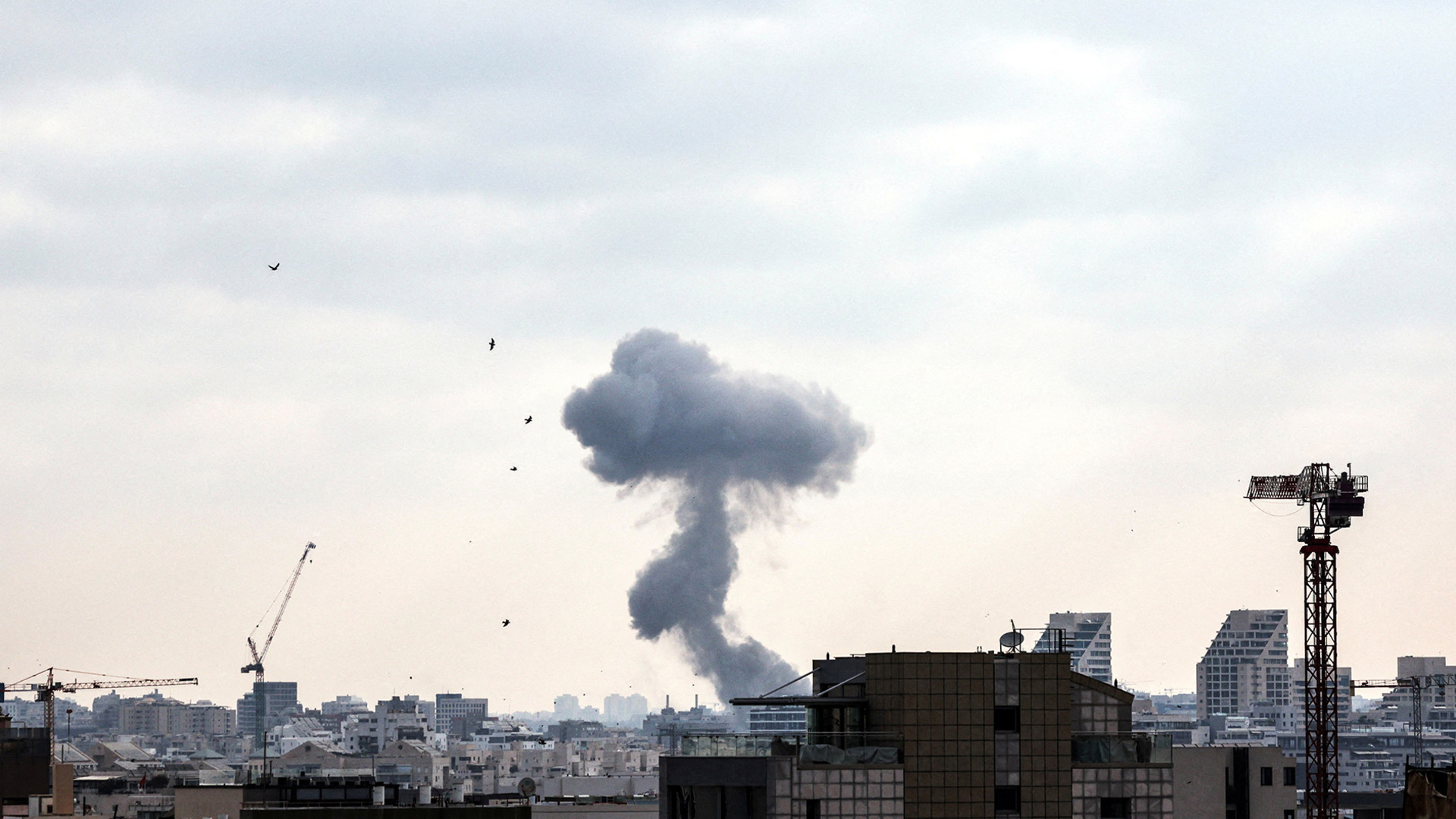
Israel bombs southern Lebanon amid conflict with Iran and assault on Gaza | Israel attacks Lebanon News

Israel has carried out near-daily violations of the November ceasefire that ended its 14-month war with Hezbollah.

Israeli air raids have targeted the outskirts of several areas in south Lebanon, including the villages of Zrariyeh, Kfrar Milki and Ansar, according to the country’s National News Agency.

The attacks on Monday appear to have targeted open areas outside of the towns. There were no immediate reports of casualties.

Monday’s airstrikes were reportedly more intense than the usual, near-daily, violations — that Israel has carried out — of the November 2024 ceasefire that ended its 14-month war with Hezbollah.

The Israeli military says it struck rocket launchers and an arms depot for Hezbollah, but provided no evidence of that.

Hezbollah chief Naim Qassem warned last week that the group may take “appropriate” measures if the conflict between Israel and Iran escalates further. So far, the Iran-allied group has not militarily intervened in the conflict.

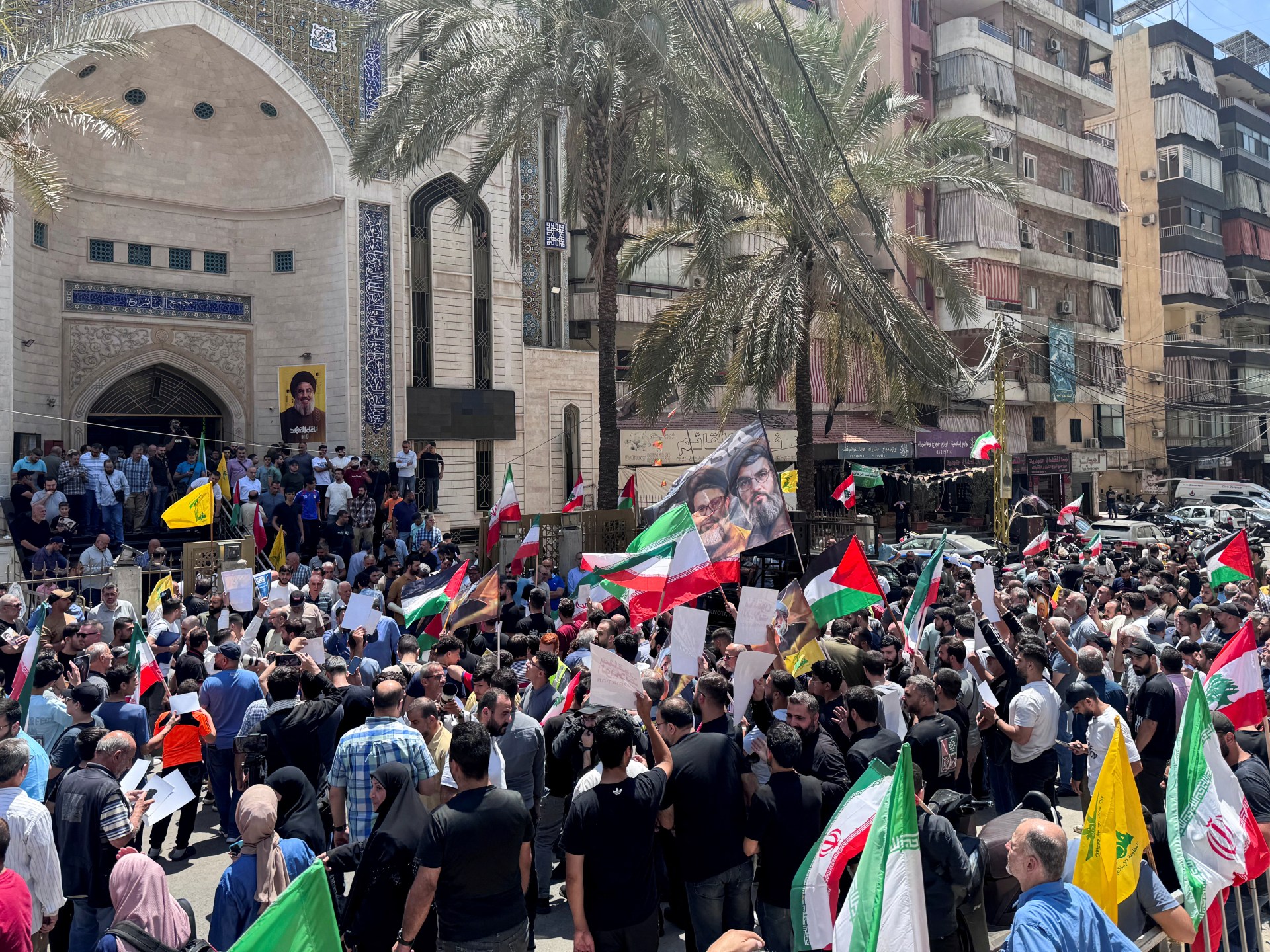
Demonstrators gathered for a rally in solidarity with Iran after Friday prayers in Beirut.

Al Jazeera has verified video in on of the locations of the Israeli bombing.

Translation: Scenes from the Israeli airstrikes on southern Lebanon now.

Earlier this month, launched a series of strikes targeting Beirut’s southern suburbs, sending huge numbers of residents fleeing their homes on the eve of the Muslim Eid al-Adha holiday after issuing a forced evacuation order an hour earlier.

Israel’s Defence Minister Israel Katz warned at the time that “there will be no calm in Beirut” and “no order or stability in Lebanon” unless Hezbollah is disarmed.

That Israeli attack was the fourth, and heaviest, carried out targeting Beirut’s southern suburbs – a Hezbollah stronghold – since the ceasefire ended hostilities.


Source link

US attacks on Iran risk global conflict, Russia and China warn | Israel-Iran conflict News

Russia called the US strikes on Iran ‘unjustified’ and ‘unprovoked’, while China warned they ‘set a bad precedent’.

Russia and China have strongly condemned US attacks on Iranian nuclear sites, warning they could drag the world into a broader war and set a dangerous international precedent.

The reactions came just hours before Iran launched missiles at the US base in Qatar on Monday in response to Sunday’s strikes.

Russian President Vladimir Putin on Monday described the American strikes as “unjustified” and said they were pushing the world towards a perilous tipping point.

Speaking after talks with Iranian Foreign Minister Abbas Araghchi at the Kremlin, Putin said Moscow would try to help the Iranian people but stopped short of detailing how.

“The absolutely unprovoked aggression against Iran has no basis and no justification,” Putin told Araghchi. “For our part, we are making efforts to assist the Iranian people.”

The Chinese government also weighed in, with Foreign Minister Wang Yi condemning both the Israeli strikes on Iran and the US bombardment of its nuclear facilities. He said the rationale of attacking over “possible future threats” sent the wrong signal to the world and urged a return to diplomacy.

Wang called for all parties to “immediately resume dialogue and negotiation”, warning the escalation risked destabilising the region.

Bringing the world ‘to a very dangerous line’

Tensions have soared in recent days, with US President Donald Trump and Israeli officials openly discussing the possibility of assassinating Iran’s Supreme Leader Ayatollah Ali Khamenei and pushing for regime change – moves the Kremlin warned could plunge the region into a full-blown war.

During the high-level Kremlin meeting on Monday, Araghchi reportedly handed Putin a message from Khamenei, though the contents were not disclosed. A senior Iranian source told the Reuters news agency the letter called for increased Russian support, but Moscow has not confirmed receiving any such appeal.

Later, while addressing a gathering of elite military recruits, Putin spoke more broadly about growing instability. “Extra-regional powers are also being drawn into the conflict,” he said. “All this brings the world to a very dangerous line.”

Despite signing a 20-year strategic pact with Iran earlier this year, Russia has avoided making concrete military commitments to defend Tehran, and the agreement lacks any mutual defence clause.

Iranian frustration

Iranian officials, speaking anonymously to Reuters, expressed frustration with Moscow’s perceived inaction. They said Tehran felt let down by both Russia and China, despite repeated calls for support.

Russian Deputy Foreign Minister Sergei Ryabkov declined to say whether Iran had asked for weapons or military aid but insisted Moscow’s ties with Tehran remained strong. “Our strategic partnership with Iran is unbreakable,” Ryabkov said, adding that Iran had every right to defend itself.

Still, the Kremlin appears wary of any move that might provoke a direct confrontation with Washington, particularly as Trump seeks to ease tensions with Moscow amid the war in Ukraine. Kremlin spokesman Dmitry Peskov said US-Iran developments would not affect the Russia-US dialogue, calling them “separate processes”.

Memories of US-led wars in the Middle East still linger. At Sunday’s United Nations Security Council session, Russia’s UN envoy Vassily Nebenzia drew comparisons with the 2003 Iraq invasion. He recalled how the US falsely claimed Iraq held weapons of mass destruction.

“Again, we’re being asked to believe the US’s fairytales,” Nebenzia said. “This cements our conviction that history has taught our US colleagues nothing.”

Russia, China and Pakistan have jointly submitted a resolution calling for an immediate and unconditional ceasefire in the Middle East.

Source link