Stevens

Yusuf/Cat Stevens reflects on how his brushes with death set him on a lifelong journey of faith and self-discovery

THEY say that a cat has nine lives – and this particular one has used up several of his.

For the life of Cat Stevens, the singer-songwriter who became Yusuf after converting to Islam, has been shaped by his brushes with death.

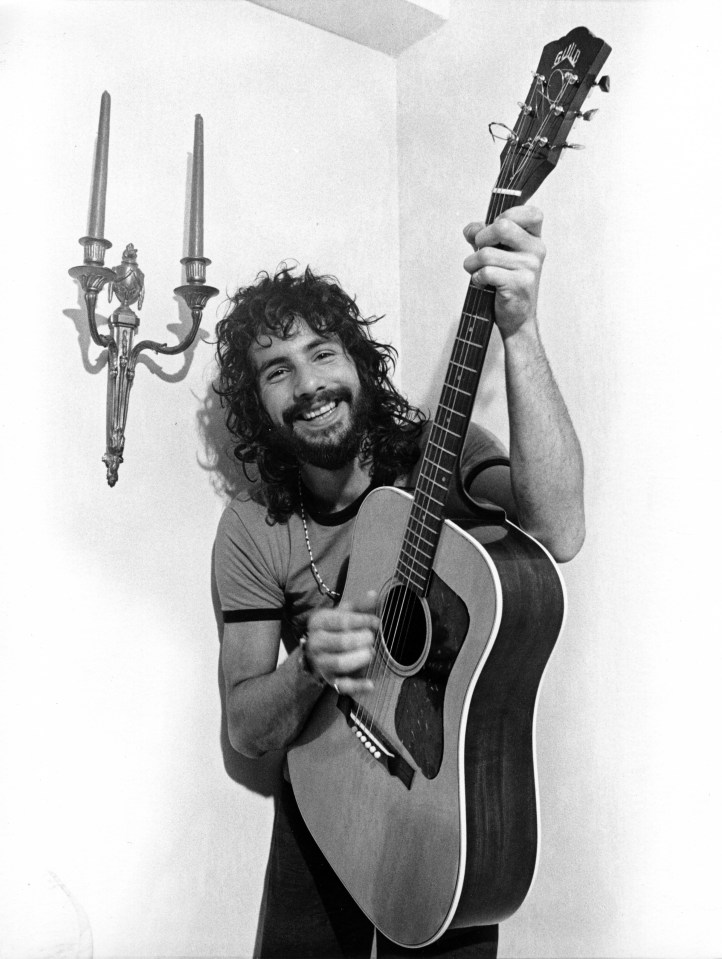
Black and white photo of Cat Stevens playing an acoustic guitar.

8

Cat Stevens became Yusuf after converting to IslamCredit: Getty
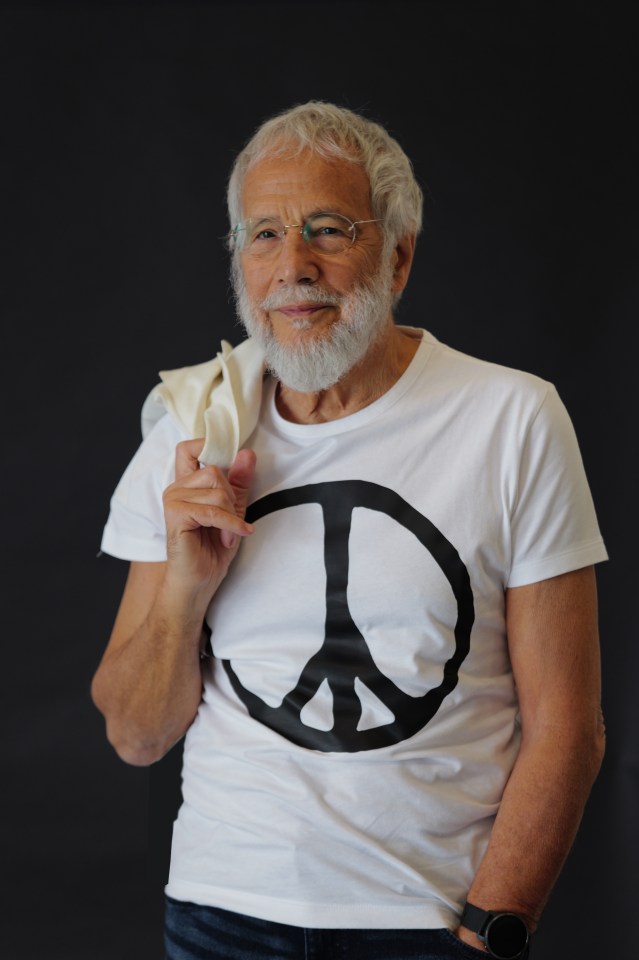
Portrait of Yusuf Islam (Cat Stevens) wearing a white t-shirt with a peace symbol.

8

The singer’s life has been shaped by his brushes with deathCredit: Aminah Yusuf
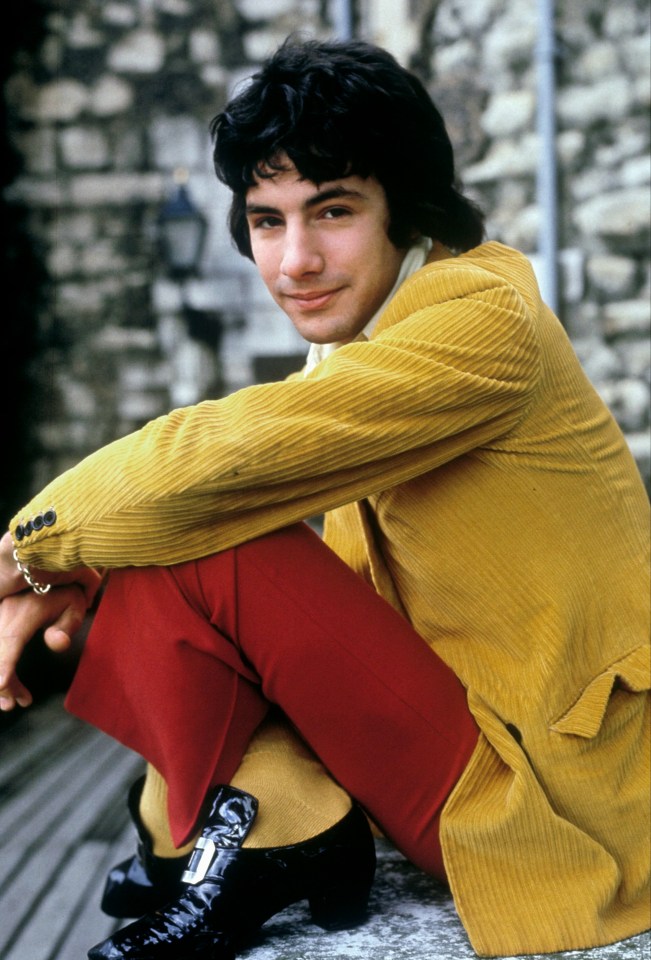
Cat Stevens in a yellow corduroy jacket and red pants in the 1960s.

8

Yusuf/Cat nearly died in his teens

The first of them happened in his early teens when the teeming streets — and inviting rooftops — of London’s West End were his playground.

One night, while out gallivanting with his best friend Andy, he found himself clinging by his fingertips to a ledge, several storeys up, near Prince’s Theatre on Shaftesbury Avenue.

Fall and his short life would be over but, as “the dark abyss” beckoned, Andy stretched out, grabbed his arm and pulled him to safety in the nick of time.

“It was the moment I first faced up to mortality,” Yusuf tells me, casting his mind back to the early Sixties.

“I already considered myself as a thinker by then and, as such, you can’t help thinking that one day you won’t be here.

“Whether it’s through an accident or illness or by dying in your sleep, it’s all one thing. You leave this world.

“That to me was a problem. I just had to understand more about it.”

So began a spiritual quest that Yusuf has carried with him to this day.
Two more narrow escapes followed.

In 1969, he contracted a life-threatening bout of TB which required months of recuperation.

With time to ponder his existence, he underwent a rapid transformation from Carnaby Street-styled pop star to tousle-haired, guitar-toting troubadour.

Cat Stevens sings Wild World in 1971

His thoughtful but hook-laden songs began flowing freely — Father And Son, Wild World, Moonshadow and Peace Train among them — and they made him a global superstar and bedsit pin-up.

Then, in 1976, he nearly drowned while swimming    off the coast of Malibu, California.

As his life ebbed away, he looked up to the sky and prayed, “Oh God, if You save me, I’ll work for You!”

At that moment, a wave rose up and nudged him towards dry land. He sensed that, “God was right there”.

Not long afterwards, his brother David Gordon bought him a copy of the Qur’an for his birthday.

It had a dramatic effect, prompting Cat Stevens to embrace Islam, change his name to Yusuf (a variation on Joseph) and begin a lengthy retreat from music.

He says: “I was like, ‘This is actually it’.

“Everything I’d been writing in my songs was converging into this one new message. It overtook everything.”

And yet, as we know, there was a second coming.

For the past two decades, Yusuf has rekindled his passion for songcraft — releasing acclaimed albums and keeping his timeless Cat Stevens songs alive with gigs around the world, including the Glastonbury “legends” slot.

‘BLANK CANVAS’

Now he has documented his singular journey in a heartfelt, detailed, illuminating, funny, sad, often profound memoir, Cat: On The Road To Findout.

There’s also a hits album celebrating his various eras, and last weekend he embarked on a book tour of the UK and US, described as “an evening of tales, tunes and other mysteries”.

That means I’ve been given another chance to speak to Yusuf via video call.

With his neat grey/white hair and beard framing still handsome features, the 77-year-old greets me warmly before diving into subjects closest to his heart.

After our chat ends, I realise we’ve covered his faith, his family, his music, the impact of those near-death experiences — all the things which have moulded Yusuf/Cat Stevens.

If I had to pick his defining song, I know which one I’d go for and I think the man himself might agree.

It’s the fourth track on side two (I’m going vinyl here) of his classic 1970 album Tea For The Tillerman.

Called, as you might have guessed, On The Road To Find Out, it serves as his mission statement — an early acknowledgement of his spiritual journey.

Recalling its creation, Yusuf says: “I had scraped my way through a lot of life’s difficulties and challenges but they were the things which built me and prepared me.

“So I was already feeling like a receptacle for some kind of inspiration to be my guide.”

I watch as he recites the opening lines of the song he’s sung so many times, “Well I left my happy home to see what I could find out/I left my folk and friends with the aim to clear my mind out.”

He maintains that when he wrote On The Road To Find Out, not being tied to one religion proved “very, very useful”.

“I wanted a blank canvas,” he says. “I didn’t want to be influenced by my background or wherever I was situated in society.”
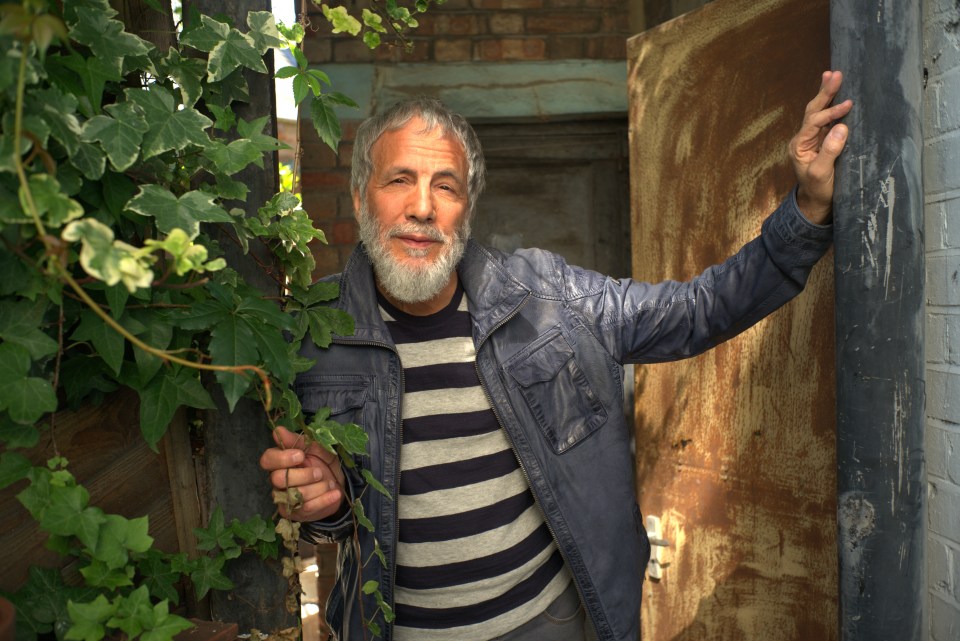
Yusuf Islam (Cat Stevens) leaning against a door.

8

At 77, Yusuf says he has no regretsCredit: Danny Clinch

Yusuf draws my attention to the end of the song and adds: “It’s incredible really. It says, ‘Pick up a good book’.

“I was absolutely determined to write ‘a’ good book, not ‘the’ good book. I didn’t want people to think it had to be The Bible.”

His thoughts turn towards his childhood, his first encounters with spirituality and the parents he writes so affectionately about in his memoir.

His “handsome, bold” Cypriot cafe owner father Stavros was Greek Orthodox and his “beautiful azure blue-eyed” Swedish mother Ingrid was a Baptist.

They sent their youngest of three children, Steven Demetre Georgiou, as he was known then, to St Joseph’s Roman Catholic elementary school and he also attended Mass.

Though this was the first time he came “close to God”, he still felt like an “outsider” as a non-Catholic.

“Sometimes, the church itself can be a barrier between you and your creator,” muses Yusuf.

“When Jesus was asked how to pray, he didn’t say go to church. He said, ‘Pray direct to God’.

Mum taught me how to love and dad taught me how to work

Yusuf/Cat Stevens

“I was fortunate not to be tied to a strict religion.

“That gave me flexibility — I achieved my observer status as far as spirituality was concerned.”

As a child, Yusuf was given a lively introduction to the world.

“Growing up in the West End had a big impact on me,” he says.

“It felt like the whole world was crammed into this little area of London where everything happened.

“You didn’t necessarily learn how to climb trees, but you did learn how to climb roofs,” he adds with a rueful smile about the time he nearly fell.

Next, I ask him to share memories of his parents.

“Mum taught me how to love and dad taught me how to work,” he replies.

Yusuf says that his mother Ingrid “had a massive impact on me”.

“Swedes have a characteristic which is beautiful in a way. It is called ‘lagom’ which means equality — you don’t need everything, you just need enough.
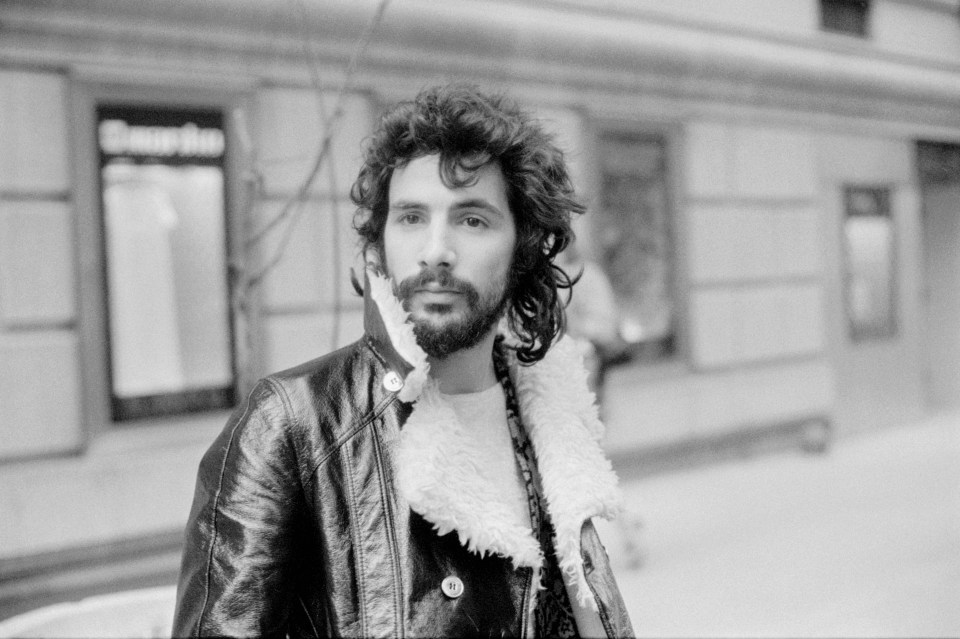
Black and white photo of Cat Stevens wearing a leather jacket.

8

As Cat Stevens in the early SeventiesCredit: Getty

“From that, you can develop your attitude towards charity and all sorts of things.”

He continues: “Mind you, Dad was also charitable. He used to give cups of tea to tramps.

“It was part of the culture of the family to appreciate having food on the table.”

Yusuf describes how his father Stavros “first went from Cyprus to settle in Egypt”.

“Then he went to America and, from there, he passed back through Greece to the UK — you know, to the Empire, because Cyprus was connected to Britain at that time.

“He gave me the traveller’s bug and also a work ethic. I certainly know how to wash dishes!”

Yusuf credits his parents to a certain extent for his love of music and performing.

He remembers writing a “sweet Swedish lullaby” with his “naturally musical” mother while they sat at the piano.

The final couplet translates as, “Come will you take my hand and lead me away/The way to my heart is so short.”

In the book, Yusuf describes Ingrid’s strength of character when she discovered her husband was having an affair with a waitress, leading to their separation.

She whisked her children to her hometown of Gavle for five months, where young Steven was the only “dark-eyed, black-haired lad in town”.

‘SO FORTUNATE’

Yusuf says his “extrovert” father probably gave him the characteristics to command a stage.

“He was extremely sociable to customers and an expert at Greek dancing with glasses of water balanced on his head.”

One of the most moving passages in the book arrives when Yusuf gets to 1978 and his dad has only days to live.

Stavros had called him “Stevie” from the day he was born but, as he lay on his deathbed, he whispered, “Where’s Yusuf?”

It was an act of acceptance for Yusuf’s Muslim faith for which he is eternally thankful.

He says: “You called your son one name all your life, and that’s the one you chose for him.

“Then, at the end, you accept his path and his identity. You don’t detach from it, you embrace it.

“My God, I was so fortunate. I was so lucky to have a dad like that.”

Now it’s time to turn our attention to music… after all, it’s what made Yusuf/Cat Stevens famous.

In the autobiography, he recalls buying his first single, Baby Face by Little Richard, how much he loved Buddy Holly and how later on he was blown away by John Lennon’s mighty holler on The Beatles’ cover of Twist And Shout.
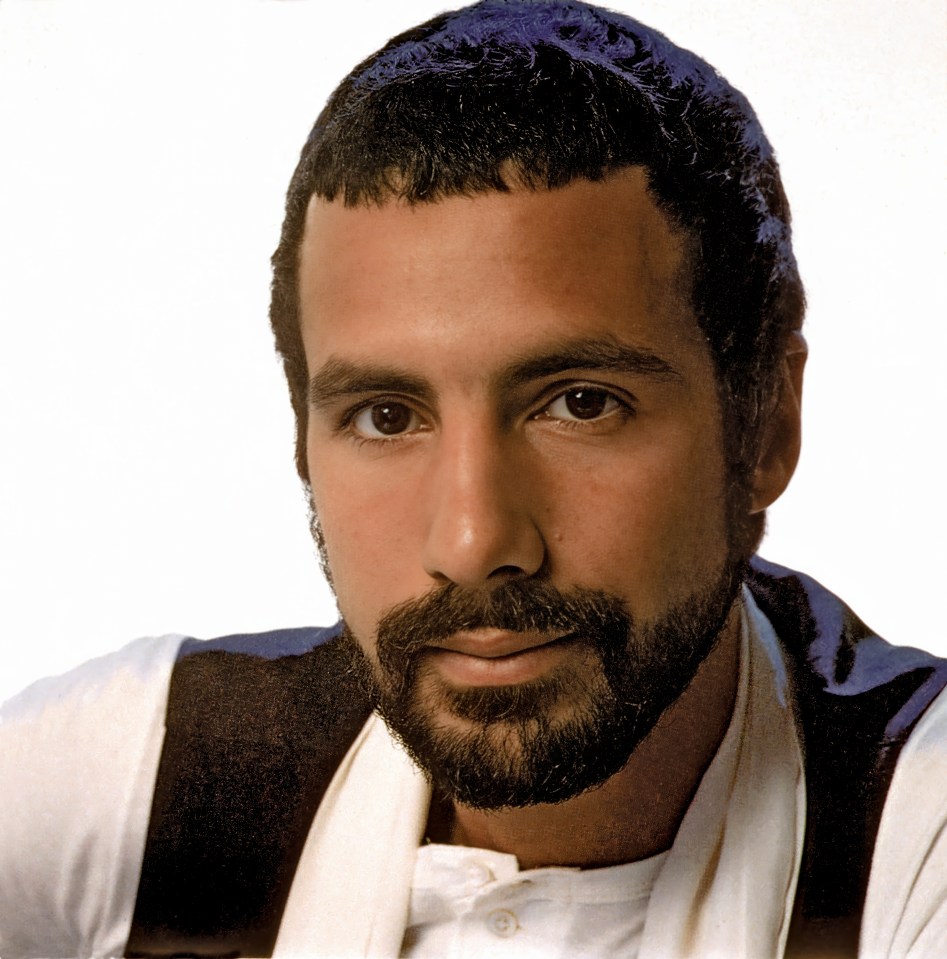
Photo of Cat Stevens.

8

Yusuf in the late Seventies

He tells me with a laugh: “You can just imagine the Queen at the Royal Variety Show watching The Beatles and wanting to pull off her pearls and diamonds and dance in the aisles.

“But I’m afraid she couldn’t.”

So what compelled him, already a gifted visual artist, to venture into the music business and adopt the “hip” stage name Cat Stevens?

“I felt I had something to offer,” he replies. “I felt that people should get it.

“It wasn’t just a career choice or business decision. It was more than that — it felt like a calling.

“I responded to it and it responded to me. My songs, everything, came so easily.

“I wrote The First Cut Is The Deepest when I was 17 [in 1965].

“My brother David also had a big hand in it because he was the business head of the family.

“He was instrumental in getting me contacts.”

After a run of hits including I Love My Dog, Matthew & Son and I’m Gonna Get Me A Gun, Cat Stevens went through his dramatic change of tack, prompted by him contracting TB.

“It was an opportunity to take another stab at life — from a new, inspired position,” says Yusuf.

As human beings, our way forward is to understand that we’re all the same in our dreams, our visions and our hopes

Yusuf/Cat Stevens

“By that time, I’d read a very interesting book dealing with metaphysical issues of the spirit, the soul, the beyond, the divine. It put me on another plateau.”

One of the songs written by the “new” Cat Stevens was Where Do The Children Play?, as relevant today as ever.

He says: “There’s a very poignant line pointing to what we are facing today, which is assisted dying.

“I say, ‘Will you tell us when to live/Will you tell us when to die?’.

“I mean, God Almighty, you’ve got a chance to live. You don’t want to lose that.

“When you look at the way the corporate world is moving, it really is designing life for the people of this planet.

“And it may not be the best life because we’re detached from nature so much of the time.

“Where Do The Children Play? is a song about nature and children are perfect examples of human nature.”

Before we go our separate ways, I ask Yusuf about the long hiatus from music after his conversion to Islam.

It was a time when he was dragged into various controversies.

One headline, which he repeats in the book, even read, “Cat Stevens Joins The Evil Ayatollah”.

“It’s just prejudice,” says Yusuf. “And that is something we have to be very careful about.

“As human beings, our way forward is to understand that we’re all the same in our dreams, our visions and our hopes.”

This comment reminds him of “what we’re seeing right now in Palestine”.
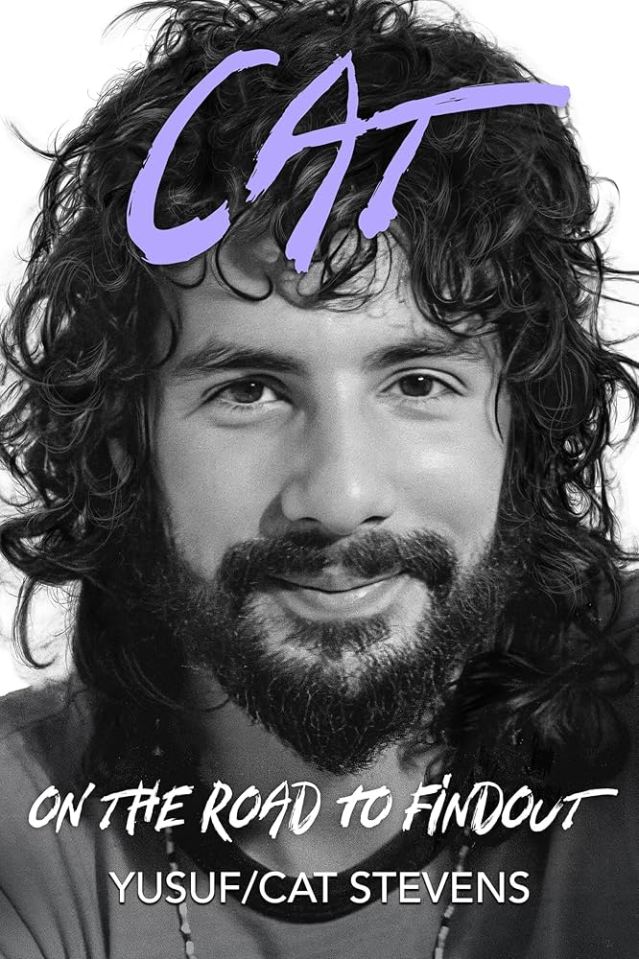
Cat Stevens/Yusuf Islam book cover: On the Road to Find Out.

8

Cat On The Road To Findout is out on October 2Credit: supplied
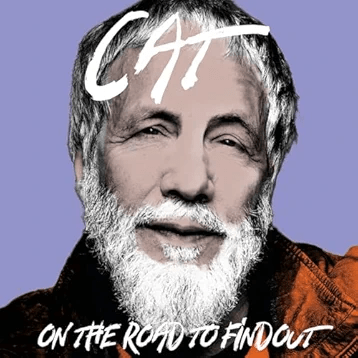
Cat Stevens album cover, "On the Road to Find Out"

8

A night of tales and music with Yusuf/Cat Stevens ends in Glasgow on September 22Credit: supplied

“These are people, these are families,” he says. “They’re not from an alien planet.

“That’s why it’s good to see the response from ordinary grandparents and ordinary kids, responding to the devastation people are facing.

“You may argue about the term genocide, but you can’t argue about the term infanticide.”

Returning to his break from music, he says: “I have no regrets at all. I chose the name Cat Stevens and was content with that.

“That was my success but it was not the success I was yearning for overall in my life.

“The biggest thing for me was finding my identity — and that’s twice as difficult when you have a show name.”

It was Yusuf’s son Yoriyos, one of his five children with wife Fauzia (a sixth died in infancy), who encouraged him to make his comeback.

“He got what I was about and he said, ‘This cannot be buried’.

“It wasn’t a case of reinventing, more of reviving the spirit. He saw it as a pure, good thing — and it inspired me.”

Finally, I ask Yusuf if he’s still on the road to find out.

He answers: “There’s a saying in the Qur’an — ‘If all the seas were ink and all the trees were pens, you would never exhaust the words and the knowledge of God’.

“So, yeah, no fear about drying up here.”
Source link

Musician Ray Stevens recovering after heart attack

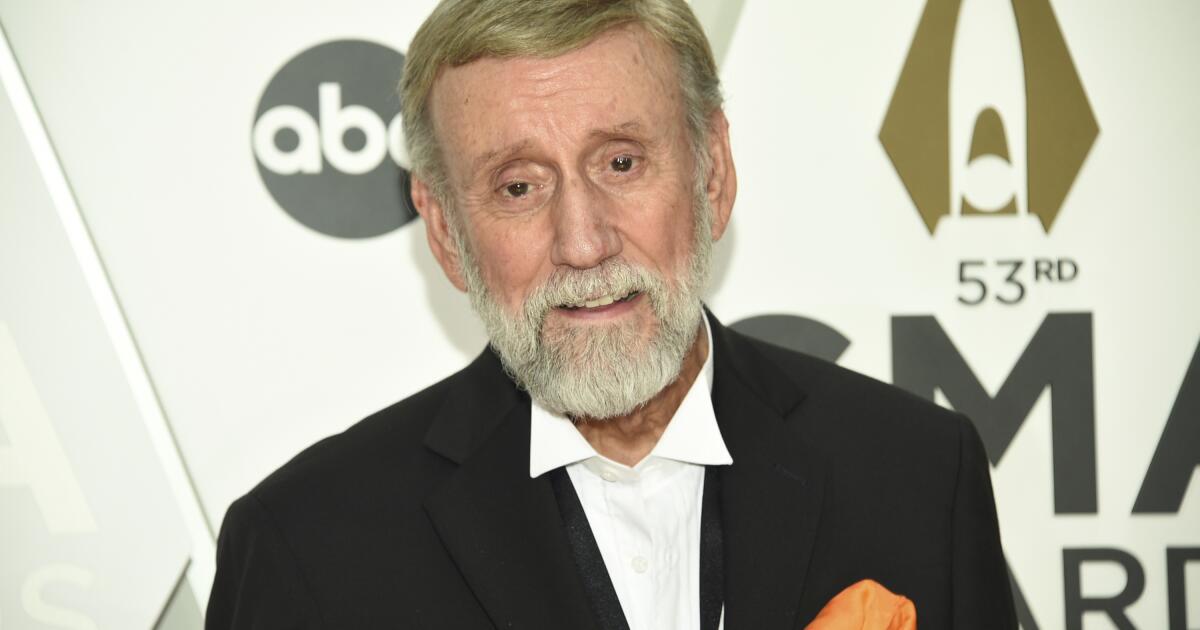
Singer Ray Stevens has shared his first update since being admitted to the hospital on July 4 for surgery.

According to his Instagram, the 86-year-old has been moved out of intensive care and is continuing to recover.

“Ray is out of ICU and beginning to walk the halls as therapy with a nurse’s assistance as he is working towards recovering from this surgery,” the post from Wednesday reads. “Ray is very grateful for all of the cards and get-well messages. Everything is Still Beautiful!!!!”

The last line is a reference to one of Stevens’ best-known songs, the Grammy Award-winning “Everything Is Beautiful.”

In a previous statement provided to People magazine, representatives of Stevens said he was recovering after a “minimally invasive heart surgery” on Monday. On July 4, he went to a Nashville hospital after experiencing chest pain.

Following a heart catheterization, Stevens was informed that he had suffered a minor heart attack. A subsequent surgery was carried out successfully.

Though the two-time Grammy winner’s upcoming performances at his CabaRay Showroom in Nashville have been canceled, fans are just happy to hear he is OK.

“This is the good news I was waiting for,” one Instagram user commented under the update. Another rejoiced, saying it was “great news in a world of such sadness and loss recently.”

Stevens has had a successful music career, cutting his first top 10 pop hit, “Ahab the Arab,” in 1962. The singer has recorded 45 albums, according to his website, won two Grammy Awards, and was inducted into the Country Music Hall of Fame in 2019.

Following the induction, Stevens was asked whether he would be retiring anytime soon.

“I feel fine; I’ll probably keel over after I hang up the phone,” he joked.

In 2024, he announced he would be hanging up his boots — only to change his mind a year later with the release of a new album, “Say Whut?”

“Although I said earlier that last year was going to be my final year at the CabaRay … I’m kind of going back on that because I want to promote this album,” he told NewsChannel 5 Nashville.


Source link

Angels put Christian Moore on IL, pick up Chad Stevens’ contract

The Angels placed rookie second baseman Christian Moore on the 10-day injured list with a sprained left thumb on Thursday.

Moore left the Angels’ 8-3 loss to the Atlanta Braves on Wednesday night with the injury. Moore suffered the injury when he dove for Ozzie Albies’ ground ball in the sixth inning. Moore’s hand bent awkwardly when he hit the ground.

Angels interim manager Ray Montgomery said he was grateful Moore would not require surgery, though he wouldn’t put a timetable on how much time the rookie might miss.

“Anytime you see somebody like him have an injury like that, you fear the worst,” Montgomery said, adding the hope Moore could miss two weeks might be “looking at the best-case scenario.”

Moore, a 2024 first-round draft pick from Tennessee, was hitting .189 in 53 at-bats following his promotion to the Angels on June 13.

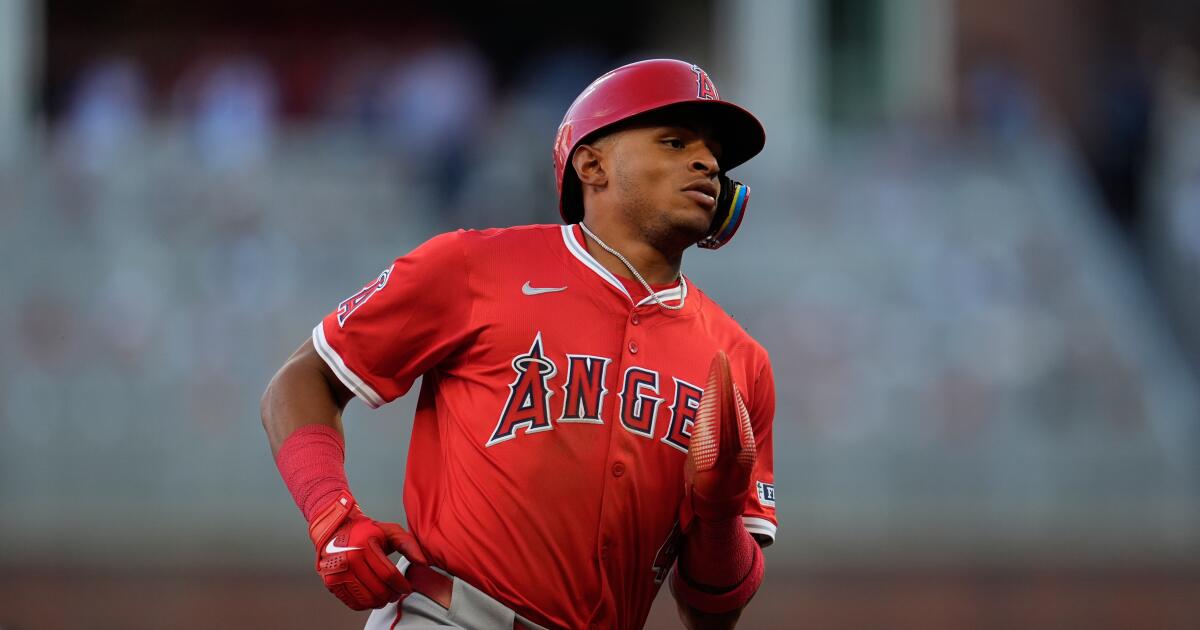
Infielder Chad Stevens, whose contract was selected from triple-A Salt Lake, moved into the starting lineup at second base on Thursday night in his major league debut.

“He’s been playing really well,” Montgomery said of Stevens. “He’s done everything he can do to earn this opportunity.”

The 26-year-old Stevens was hitting .307 with 14 homers at Salt Lake.

The Angels released right-hander Héctor Neris, who had a 7.80 ERA in 23 games.

Source link

Azurá Stevens makes five 3-pointers in Sparks’ win over Wings

Azurá Stevens had 21 points, including a career-high five three-pointers, Dearica Hamby added 20 points, and the Sparks beat the Dallas Wings 93-79 on Friday night to end a three-game losing streak.

Hamby and Stevens each reached 20-plus points for the fourth time this season. Odyssey Sims, who was coming off a 32-point performance in an 85-80 loss to Phoenix on Sunday, added 19 points and a trio of three-pointers for the Sparks.

The Sparks took a 45-40 lead at halftime after Sims converted a three-point play with 2.2 seconds left. Sims finished the half with nine points, Stevens added 13 and Hamby had 11.

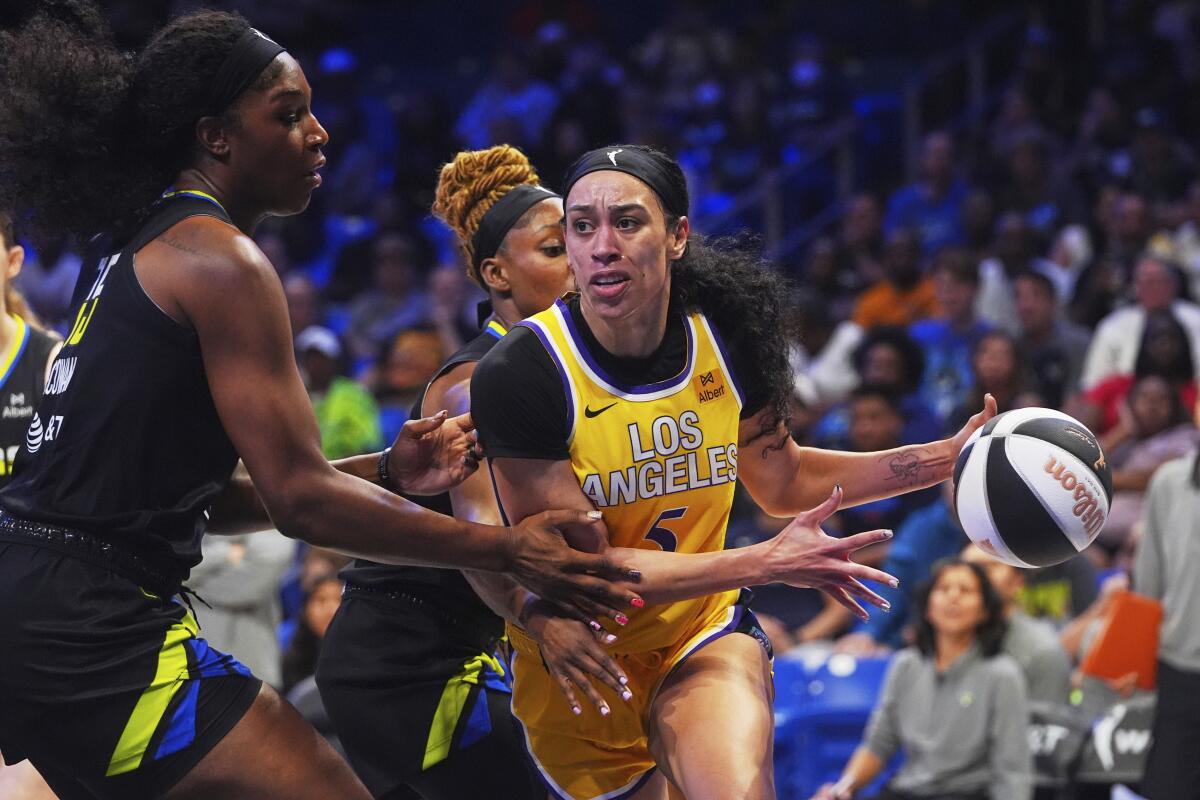
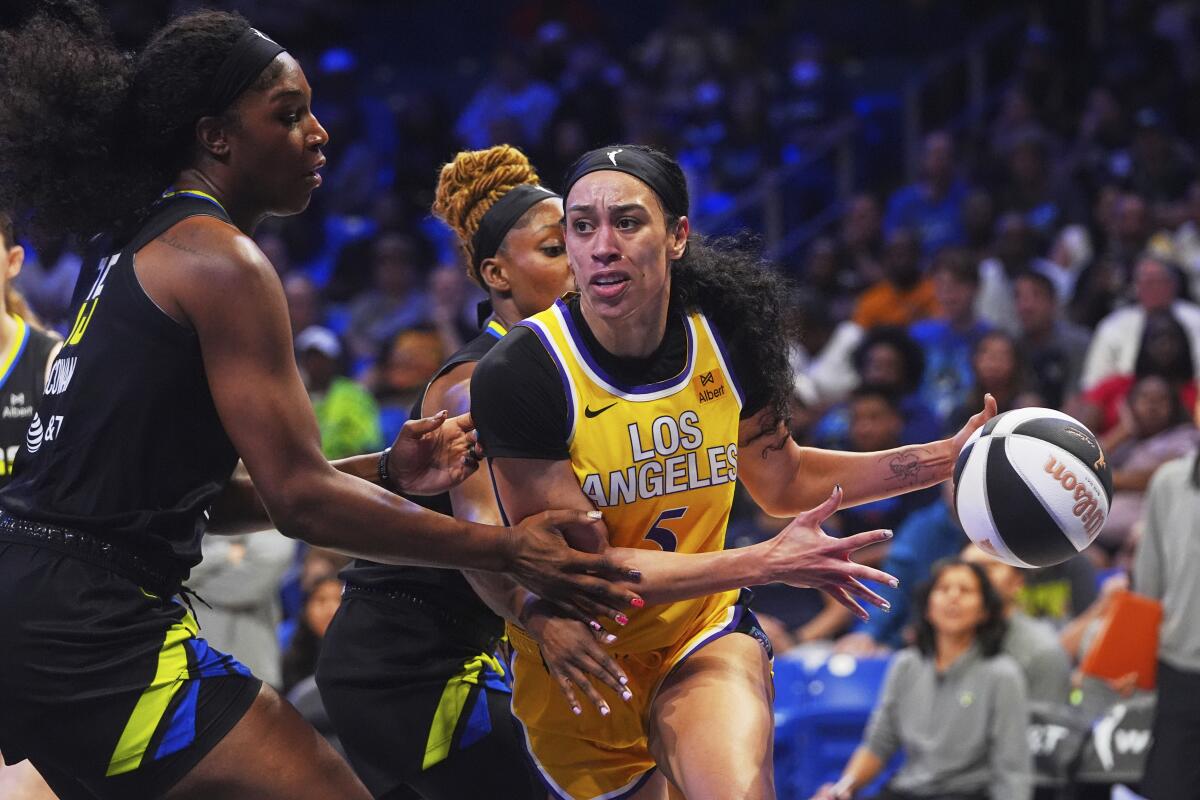
Sparks forward Dearica Hamby, right, drives against Dallas Wings center Teaira McCowan.

Sparks forward Dearica Hamby, right, drives against Dallas Wings center Teaira McCowan during the first half Friday.

(LM Otero / Associated Press)

The Sparks started the third quarter on a 6-0 run and added a 9-0 run to begin the fourth for a 76-55 lead. The Wings had three turnovers and two missed shots in the opening three minutes of the fourth.

Stevens hit her fifth three-pointer with 4:45 left in the fourth on a wide-open shot from the corner off a nice drive and pass by Kelsey Plum.

Plum had 11 points, five rebounds and nine assists and Rickea Jackson scored 10 for the Sparks (3-6).

DiJonai Carrington scored 16 points and JJ Quinerly had a career-high 14 for Dallas (1-8). Luisa Geiselsoder had 11 points and 10 rebounds for her first double-double. Kaila Charles had 10 points.

Dallas has yielded 90-plus points three times during its four-game losing streak.

Source link

Little Steven’s Underground Garage Cruise proves you can rock the boat

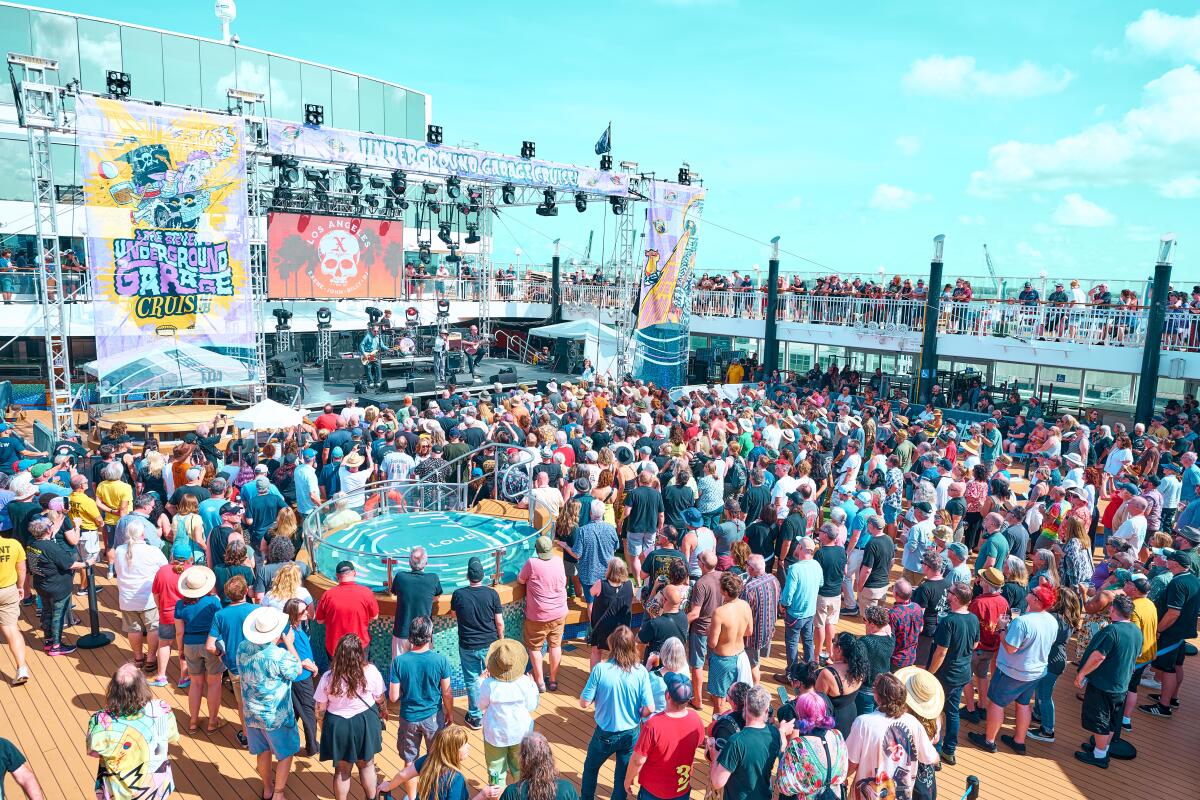
Imagine you’re on a cruise ship for a four-day excursion to the Bahamas. You’ve got your swimsuit, an adult beverage, and you’re ready to relax. As you make your way to the pool deck, you’re hit with the sound of distorted guitars and in-your-face vocals as legendary L.A. punk band X rips through “Johnny Hit and Run Paulene.”

That was the scene on Little Steven’s Underground Garage Cruise, which set sail from Miami on May 9-13 on board Norwegian Cruise Lines’ Norwegian Gem, and the 1,800 or so passengers were in punk rock heaven.

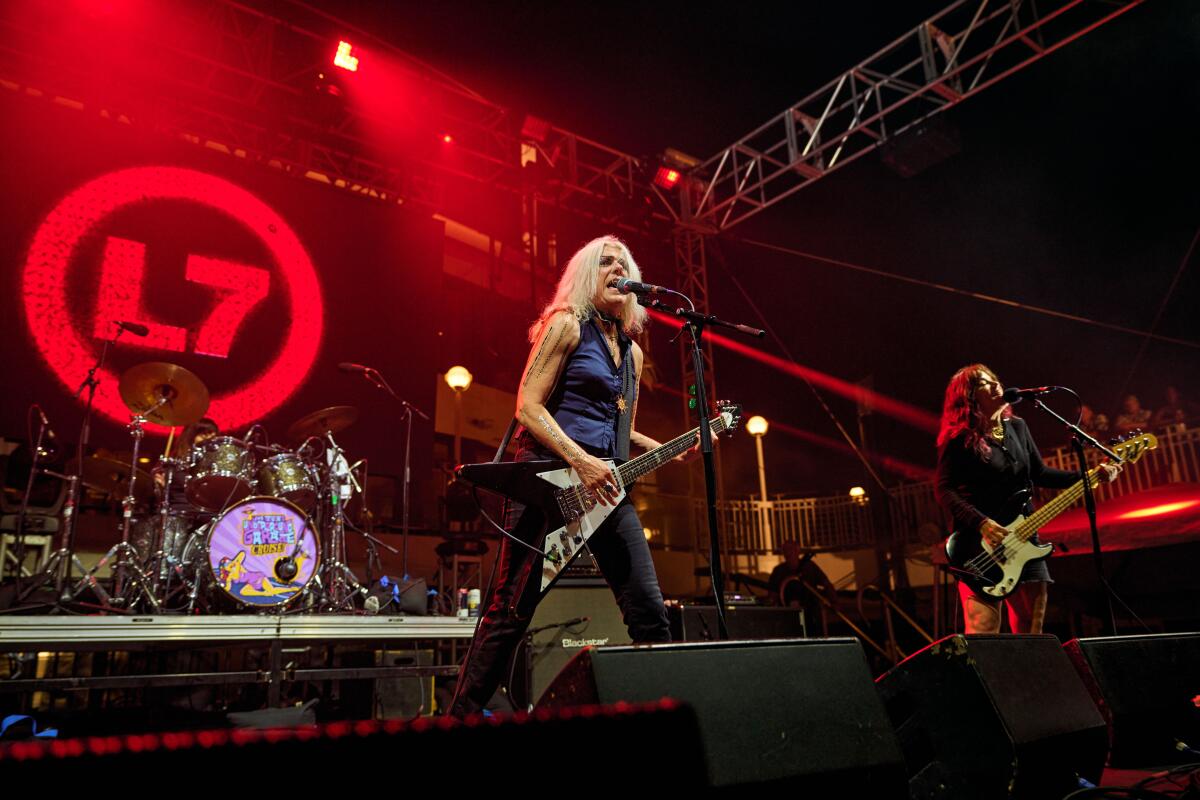
The lineup featured an array of SoCal-based bands, including Social Distortion, L7, Rocket From the Crypt, the Lords of Altamont and the Dollyrots. They were joined by dozens of other performers across the rock ’n’ roll spectrum, from the hard-stomping Fleshtones to the incorrigible Supersuckers, to Tommy Stinson’s Bash & Pop, to the ageless Linda Gail Lewis — younger sister of music icon Jerry Lee Lewis.

As John Doe of X said, “bands you never thought you’d see on a boat.”

The festival-at-sea concept isn’t new. Sixthman, the company that ran the cruise, has been organizing festivals since 2001 and offers more than 25 curated cruise experiences. Upcoming sailings include Keeping the Blues Alive at Sea Alaska, Chef’s Making Waves Boston, Rock the Bells Cruise and Headbangers Boat.

In many ways, the first Little Steven’s Underground Garage Cruise is an offshoot of Sixthman’s Outlaw Country Cruise, which completed its ninth sailing earlier this year. It was a somewhat somber celebration because both its architect, SiriusXM’s Jeremy Tepper, and its ambassador, Mojo Nixon, died suddenly in 2024.

That cruise drew an eclectic mix of performers such as Steve Earle, Lucinda Williams and Dave Alvin, who share musical DNA with many of the artists on the Underground Garage Cruise and vice versa. For example, Alvin’s former band the Blasters played alongside X during L.A.’s first wave of punk, and Social Distortion’s Mike Ness was often in the front row watching them play.

“Jeremy and Mojo were incredibly close,” Alvin said. “They were like soulmates in a weird way. Cultural, artistic soulmates.”

One surprise guest on the Outlaw Country Cruise was Jello Biafra, who released the album “Prairie Home Invasion” with Mojo Nixon in 1994. He played with Nixon’s backing band the Toadliquors during an emotional tribute to his late friend.

“It’s hard,” Biafra said, “because there is a little bit of a pall over this whole event, because Mojo isn’t here, and everybody’s got their memories bubbling up. I have plenty of that.”

Many of the performers, including some who’d never taken a cruise before, had reservations about what the Underground Garage Cruise would be like.

“I thought there was going to be a lot of crazy drunkenness,” said Donita Sparks of L7. “I was thinking it was a booze cruise, but I haven’t seen a whole lot of that. I haven’t seen a single fight. I’ve seen people laughing and hugging and rocking out to the music. I’ve just seen a lot of joyousness.”

John Reis, vocalist and guitarist of Rocket From the Crypt, was concerned about seasickness and feeling “trapped” but neither proved to be an issue, and he found it easy to “succumb to the vibe.”

“We don’t take certain things all that seriously,” Reis said of Rocket From the Crypt, “and festivals can be very regimented. There’s often a lot of stress involved, mainly with the people putting on the shows. The cruise isn’t like that at all. It’s way more casual.”

Even Ness of Social Distortion was seemingly won over by the cruising lifestyle. “Ease into the day, do what you want. No traffic, no hassles,” Ness said from the stage.

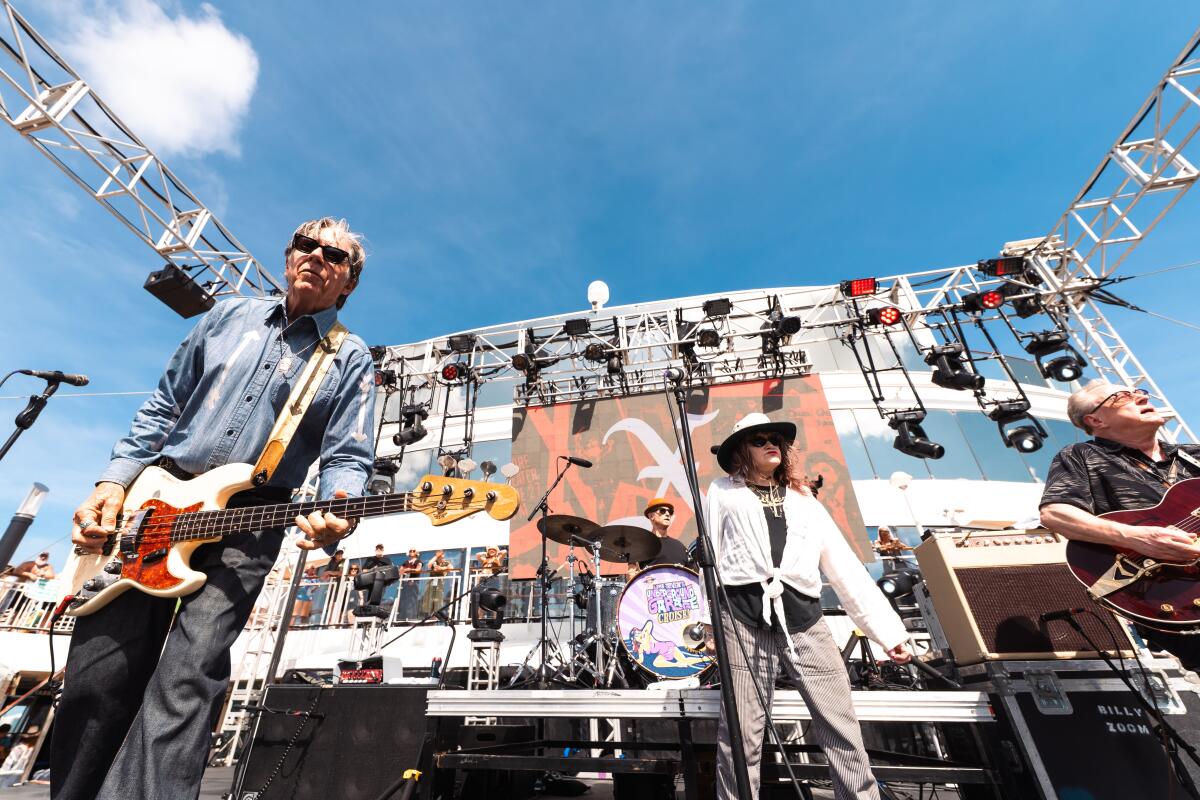
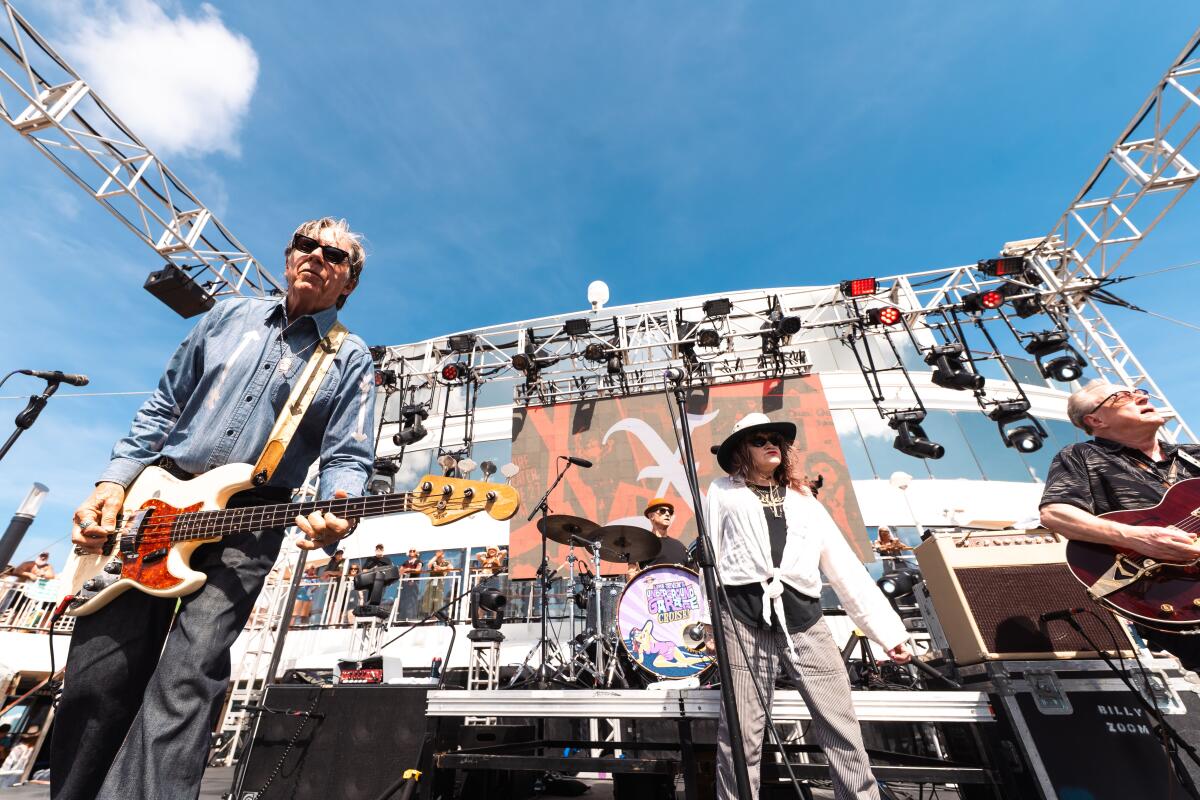
X performs on Little Steven's Underground Garage Cruise

X performs on Little Steven’s Underground Garage Cruise

(Eli Johnson)

Punks of a certain age are all too familiar with the phenomenon of looking forward to a show but, once it’s time to actually leave the house, losing all enthusiasm to drive across town, find parking and wait for opening bands to wrap up their sets. On the Underground Garage Cruise, all shows are a short walk away and run from an hour to an hour and fifteen minutes. No openers. No encores.

Although some shows overlap, unlike most festivals, the bands play several times throughout the course of the cruise. So if you missed a band’s performance on the spacious pool deck, you could catch them later at the 850-seat Stardust Theater or one of the more intimate lounges that provide a clublike setting.

That means you can choose where and when you want to see the band — even early in the afternoon.

“We’ve been doing this a long time,” Eddie Spaghetti of the Supersuckers told the crowd at the band’s 1:15 p.m. gig. “But never this early,” quipped bandmate “Metal” Marty Chandler.

Fans at a concert on a ship

Fans cram the deck of the cruise to watch their favorite bands play on a trip sailing from Miami to the Bahamas

(Rich Johnson)

Performers participated in events offstage as well: autograph signings, a wine tasting with the Dictators, a poker tournament with the Slim Jim Phantom Trio and interview sessions that will eventually make their way to the Little Steven’s Underground Garage channel on SiriusXM. An interview with Mike Ness ended with a surprise short set by Social Distortion, accompanied by keyboardist Ben Alleman on the accordion.

There are, of course, drawbacks to the cruise experience. If you’re not having a good time at a festival, you can always leave and go home. Obviously, you can’t do that on a cruise ship. There are also larger concerns with the cruise industry itself, from the impact these behemoth ships have on the environment to the low wages paid to foreign workers, who do the bulk of the cooking and cleaning.

John Doe said he was conflicted about the gig. “As you grow up, you do things for love or money, right? This is for money. But I love the band X.”

Then there’s the elephant in the room: the perception that cruises aren’t for kids; they’re for elderly people.

A lot of these old punks are, well, old. And if you were in the pit with bands like X, Social Distortion and L7 when they were first making waves, then so are you.

That’s not necessarily a bad thing.

“Rock ’n’ roll is like jazz now,” said Eddie Spaghetti. “Essentially, it’s become a niche art form for older people because most kids don’t like rock ’n’ roll anymore.”

As fans age, their bodies may break down but their passion for the music of their youth remains the same. But a lot of music fans, this writer included, deal with disability, health and/or mobility issues that can put a damper on the typical festival experience. Sixthman, however, excelled at making sure every passenger felt welcome.

For instance, all of the venues on the Underground Garage Cruise had an abundance of ADA seating, with staff designated to assist those who requested it. One staff member I spoke with told me she scans the crowds during the shows and looks for people who might benefit from extra assistance.

That kind of personal attention goes a long way toward explaining why fans, performers and staff members alike think of these cruises as a community. There’s a camaraderie on these trips that you won’t find at your typical festival.

The people you meet at the show aren’t just festivalgoers; they’re your neighbors and sometimes your breakfast companions. The intimidating-looking punk rocker covered in tattoos is a lot more approachable when eating pancakes with his partner at the buffet.

This camaraderie isn’t what leads most fans to sail on a music cruise, but it’s one of the reasons they return year after year. During the Outlaw Country Cruise in February, passengers assembled for a group photo for those who’d sailed on all nine Outlaw Country Cruises.

That camaraderie is important to the musicians too. Everyone I talked to raved about the shows they’d seen. Jonny Two Bags of Social Distortion told me that when he received the schedule, he highlighted the bands he wanted to see — just like any fan. He was especially excited to see Bash & Pop, who he’d played with in the early ’90s.

L7 performs at Little Steven's Underground Garage Cruise

L7 performs at Little Steven’s Underground Garage Cruise

(Rich Johnson)

Donita Sparks of L7 had fond memories of playing with the Supersuckers in the early ’90s. “We used to sleep on the Supersuckers’ floor in Seattle,” Sparks said, “and we would have a dance party every night.”

That excitement for what L7’s Jennifer Finch called “the buffet of bands” is infectious. It’s also why Little Steven’s Underground Garage Cruise will sail again next April, to Cozumel, Mexico.

“We’re all alive,” Sparks said. “We’re here and we’re still rocking.”

Jim Ruland is the L.A. Times bestselling author of “Corporate Rock Sucks: The Rise & Fall of SST Records” and of the novel “Make It Stop.”

Source link