World

South Korea proposes $7.1B relief budget amid inflation, oil shock

Data provided by the Ministry of Economy and Finance. Graphic by Asia Today and translated by UPI

March 31 (Asia Today) — South Korea’s Ministry of the Interior and Safety proposed a 9.52 trillion won ($7.1 billion) supplementary budget on Monday to ease the impact of high oil prices and inflation driven by instability in the Middle East.

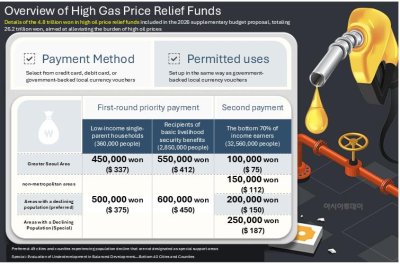
The plan includes direct cash payments ranging from 100,000 won to 600,000 won ($75 to $450) per person for low- and middle-income households, along with increased funding for local governments and youth employment programs.

The proposal was approved at a Cabinet meeting and will be submitted to the National Assembly for review.

At the center of the package is a 4.82 trillion won ($3.6 billion) relief program targeting the bottom 70% of income earners. Payments will vary depending on region and socioeconomic status.

Residents in the Seoul metropolitan area would receive 100,000 won ($75), while those outside the capital region would receive 150,000 won ($112). People living in areas facing population decline would receive between 200,000 won and 250,000 won ($150 to $187).

Additional support is aimed at vulnerable groups. Single-parent households and those in the near-poor category would receive 450,000 won ($337), rising to as much as 500,000 won ($375) for those outside the capital region. Recipients of basic livelihood assistance would receive 550,000 won ($412), or up to 600,000 won ($450) with regional adjustments.

The government estimates the program will cover about 32.56 million people in the bottom 70% income bracket, along with 360,000 near-poor and single-parent households and 2.85 million recipients of basic livelihood benefits.

Details such as eligibility criteria, payment timing and methods will be finalized through interagency consultations and announced separately.

The ministry also set aside 19.5 billion won ($14.5 million) for youth work experience programs, focusing on sectors such as caregiving, culture and environmental services. Officials said the initiative is designed to support young people facing increased employment uncertainty amid global economic volatility.

An additional 4.67 trillion won ($3.5 billion) in local government grants is included to help regional authorities respond quickly to local economic conditions and fund projects aimed at stabilizing livelihoods and boosting economic activity.

Interior and Safety Minister Yoon Ho-joong said the relief payments were structured to provide greater support to regions and populations facing deeper economic hardship.

“With growing external uncertainties, including the conflict in the Middle East, we will work closely with the National Assembly to ensure this budget serves as a stabilizing force for people affected by rising fuel costs and inflation,” Yoon said.

— Reported by Asia Today; translated by UPI

© Asia Today. Unauthorized reproduction or redistribution prohibited.

Original Korean report: https://www.asiatoday.co.kr/kn/view.php?key=20260331010009533

Source link

South Korea passes currency stabilization bill amid economic strain

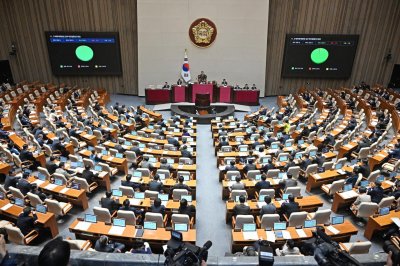
Lawmakers pass a revision to the Restriction of Special Taxation Act during a plenary session at the National Assembly in Seoul, with 206 votes in favor, 2 against and 2 abstentions out of 210 members present. Photo by Asia Today

March 31 (Asia Today) — South Korea’s ruling and opposition parties agreed Tuesday to pass a package of economic measures, including a currency stabilization bill, as the won weakened sharply amid prolonged conflict in the Middle East.

The legislation was approved during a plenary session alongside more than 60 bills aimed at stabilizing the economy and supporting livelihoods.

The currency measure includes tax incentives designed to encourage domestic investment by individuals who have invested in overseas markets, often referred to in South Korea as retail investors in foreign stocks. Officials said the goal is to increase demand for the Korean won and reduce volatility in foreign exchange markets.

The won traded at 1,530.1 per U.S. dollar on Tuesday, well above the psychologically significant 1,500 level, adding to inflationary pressure.

Floor leader Han Byung-do said the worsening Middle East crisis had begun to affect everyday life, emphasizing the need to contain exchange rate volatility and shield the economy from external shocks.

Lawmakers also approved additional economic legislation tied to the crisis. These include a measure to support corporate restructuring, allowing companies to streamline mergers and spin-offs and receive tax benefits as they respond to industrial challenges and shift into new sectors.

Other bills passed include revisions to trade-related laws aimed at helping businesses adapt to changes in the global trade environment.

Separately, lawmakers voted to fill several vacant leadership posts in National Assembly committees. The Democratic Party nominated Rep. Seo Young-kyo as chair of the Legislation and Judiciary Committee, along with Rep. Kwon Chil-seung and Rep. So Byung-hoon for other committee leadership roles. Their terms will run through May.

The votes were conducted by secret ballot and passed with support from the Democratic Party, while the People Power Party is believed to have opposed the selections.

The People Power Party had argued that the judiciary committee chair should be held by the opposition to ensure checks and balances, noting that the Democratic Party already holds the position of National Assembly speaker.

— Reported by Asia Today; translated by UPI

© Asia Today. Unauthorized reproduction or redistribution prohibited.

Original Korean report: https://www.asiatoday.co.kr/kn/view.php?key=20260401010009707

Source link

S. Korea intelligence agency says drone case was ‘personal misconduct’

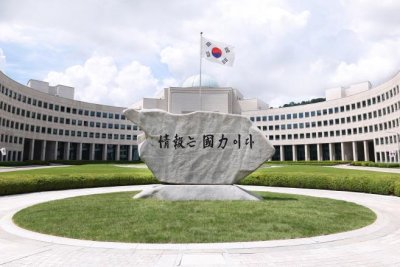
Exterior of the National Intelligence Service headquarters in Seoul. Photo by Asia Today

March 31 (Asia Today) — South Korea’s National Intelligence Service said Tuesday that an employee accused of involvement in a North Korea drone incident acted independently, describing the case as “personal misconduct” unrelated to official duties.

The agency said its internal inspection found the employee was an administrative staff member with no authority to collect or handle intelligence.

Officials added that the employee had known the main suspect – a graduate student in his 30s – since their college years, and that funds transferred in connection with the case were personal money, not tied to the agency.

Earlier in the day, a joint military-police task force referred the employee and two military officers to prosecutors without detention. The case involves allegations of aiding violations of national security and aviation safety laws.

The intelligence employee was sent to civilian prosecutors, while the two active-duty officers were referred to military prosecutors, all with recommendations for indictment.

Investigators said the suspects were involved in assisting the graduate student, identified only by his surname Oh, in flying a drone into North Korea.

The employee is believed to have known about the civilian suspects’ drone development activities and related business operations. Authorities said he provided about 2.9 million won ($2,200) to help cover production costs and meal expenses on the day of a test flight.

An intelligence agency official said the employee’s actions were “an individual deviation unrelated to official duties” and that the agency had cooperated fully with investigators to clarify the facts.

— Reported by Asia Today; translated by UPI

© Asia Today. Unauthorized reproduction or redistribution prohibited.

Original Korean report: https://www.asiatoday.co.kr/kn/view.php?key=20260331010009597

Source link

England player ratings: Which players impressed in Japan friendly and booked their World Cup place?

Jordan Pickford: Japan’s opening goal was the first time Pickford had conceded for England in 922 minutes. He had to produce a smart save in the second half to keep the hosts in the game. 6

Ben White: Beaten once early on but showed the consistency he has done for Arsenal after that. A constant hard-working presence down the right-hand side. One particularly good overlapping run in the first half. 6

Ezri Konsa: In with a big chance of starting the first game at the World Cup. One crucial block to deny Ayase Ueda with the shot hitting the bar and going over. 6

Marc Guehi: Given the armband by Tuchel for the first time. A couple of shaky moments early on but after that as dependable as ever. 6

Nico O’Reilly: Another important game for O’Reilly as he makes the left-back position his own before the summer. He showed his ability on the ball and moved into midfield whenever he could. 7

Kobbie Mainoo: A bright start and some nice footwork when moving the ball around midfield. Beaten a couple of times on Japan attacks when trying to defend. 6

Elliot Anderson: A certain starter at the World Cup. Assured in midfield, provided a drive to England’s play and tried to make things happen. One of the better performers on the night and clipped the crossbar with a good effort. 7

Cole Palmer: The Chelsea attacker was given the nod as the number 10 over Phil Foden who played as a false nine. There was always a sense that something could happen when Palmer was on the ball. However, he was caught on the ball and punished for Japan’s opener. Came off just before the hour mark. 6

Morgan Rogers: Started on the right wing and asked to provide a threat through the middle with no natural striker in the starting line-up. Not his best position but did the job that was asked of him. 6

Anthony Gordon: Put in another energetic performance with lots of hard work but not many moments to threaten the Japan defence. 5

Phil Foden: The Man City forward started as a false nine as Tuchel looks for a position for him in England’s squad. It was not a good night for Foden who will be worried about his place on the plane for the World Cup. Replaced in the 59th minute. 5

Source link

Ecuador’s narcotics traffickers paid more after U.S. anti-drug pressure

This photo shows moments before a boat suspected of carrying narcotics is struck in the Eastern Pacific on March 8. Photo by U.S. Southern Command

March 31 (UPI) — Increased military pressure by the United States on drug trafficking routes in the Pacific Ocean has forced criminal groups to sharply raise payments to those willing to transport narcotics by sea, a police official said.

In Ecuador’s coastal provinces of Manabí and Santa Elena, recruitment costs for local fishermen tasked with moving cocaine to Central America on speedboats have surged to unprecedented levels.

According to Ecuadorian outlet Primicias, in 2023 and 2024 criminal organizations paid up to $20,000 per trip to boat operators and about $5,000 to their assistants.

However, a large-scale deployment of U.S. and Ecuadorian forces under Operation Southern Spear, launched in October, has increased the risks of these journeys and driven up payments offered by traffickers.

Col. William Calle, head of Ecuador’s National Police in Zone 4, said operators piloting speedboats or semi-submersibles can now earn around $40,000 per trip. Assistants receive about $20,000, while those handling mid-sea refueling earn roughly $15,000.

Local reports, including from El Diario de Manabí, indicate payments can reach as high as $90,000 for high-risk missions or large shipments.

Since 2024, U.S. and Ecuadorian maritime authorities have conducted patrol flights and interdiction operations to monitor and intercept drug trafficking vessels in Ecuadorian waters.

President Daniel Noboa ratified two military cooperation agreements in February. The risk for traffickers has shifted from capture to potential airstrikes in international waters if vessels fail to stop.

Despite arrests and international warnings, criminal groups continue to rely on fishing vessels to transport drugs.

According to El Diario, fishermen detained after operations in Manta and Salinas on Thursday told courts that successful trips carrying one to two tons of drugs can yield payments of up to $90,000. Military intelligence has described these sums as the “price of silence” and compensation for the risk of attack.

Ecuador’s Navy said traffickers increasingly use so-called “mother ships” to extend range and cargo capacity, while smaller fiberglass boats serve as logistical support or for transfers at sea. This tactic complicates interdiction efforts, though shared intelligence has enabled several recent seizures.

Ecuador has become a primary departure point for cocaine produced in the region, with about 80% of shipments moving through the Pacific corridor.

For artisanal fishermen facing economic hardship due to declining catches and piracy targeting boat engines, a $40,000 payment can equal up to a decade of legal earnings.

However, many fishermen say participation is not voluntary but enforced under threats. Organized crime groups such as Los Lobos and Los Choneros control ports, extorting and forcibly recruiting experienced navigators whose knowledge of ocean currents helps evade detection.

The escalation of U.S. military actions under Operation Southern Spear has included at least 47 airstrikes against suspected vessels in the Caribbean Sea and Pacific Ocean. These operations, described President Donald Trump‘s administration as part of a fight against “narco-terrorism,” have resulted in at least 150 deaths.

Authorities have also reported significant seizures, including more than 2.9 tons of drugs near the Galápagos Islands and an additional 2 tons intercepted at sea in March

This month, the U.S. government also launched military and intelligence operations in Ecuadorian territory with authorization from Noboa.

The White House said the operations are aimed at dismantling Los Lobos and Los Choneros, which the U.S. State Department designated as foreign terrorist organizations in late 2025.

According to U.S. Southern Command, these groups are no longer treated solely as criminal organizations, but as threats to hemispheric national security.

Source link

Rugby World Cup 2027: Canberra to host warm-up between Australia and Ireland

“The rugby community in Canberra is deeply passionate and holds a great appreciation for international touring teams, as we witnessed last year when the biggest GIO Stadium Canberra rugby crowd in 20 years packed the venue for the Brumbies’ thrilling match against the British & Irish Lions,” said Rugby Australia CEO Phil Waugh.

“The Wallabies are looking forward to playing their first Test match at GIO Stadium Canberra in 10 years – and their first ever against Ireland in Canberra – as both teams finalise their preparations for the eagerly-anticipated home Rugby World Cup.

“On behalf of Rugby Australia, I would like to extend my sincere thanks to ACT [Australian Capital Territory] Chief Minister Andrew Barr and Deputy Chief Minister Yvette Berry for their support of Test rugby during an incredibly exciting period for the game in our country.”

The sides will meet beforehand as Ireland make the trip to Sydney to begin their Nations Championship summer tour on Saturday, 4 July, before facing Japan one week later and rounding off in Auckland against New Zealand on 18 July.

Source link

S. Korea to remove ‘China (Taiwan)’ label from e-arrival system after Taiwan’s protest

South Korea will remove the “China (Taiwan)” label from its e-arrival system, a foreign ministry official said Tuesday, after Taiwan changed South Korea’s name in its immigration system from “Korea” to “Korea (South)” in protest.

Seoul plans to remove the “last point of departure” and “next destination” fields from e-arrival cards, where the island nation had been listed as “China (Taiwan),” the official told reporters. It will remain listed as Taiwan in the country and region field.

“We have reviewed the matter and are moving forward with plans to remove the ‘last point of departure’ and ‘next destination’ fields from the electronic arrival card,” he said.

The official said the paper arrival cards already do not include those fields, and that the move is part of efforts to streamline the system, improve convenience for visitors from Taiwan, and align the paper and electronic arrival formats.

The Ministry of Justice is handling the matter in line with relevant procedures, the official said.

Seoul’s decision came after Taiwan called for a “correction” in its labeling as “China (Taiwan)” on e-arrivals, saying it has changed South Korea’s name in its immigration system from “Korea” to “Korea (South)” in a reciprocal measure.

Taipei had warned that it would take further corresponding steps if it sees no positive action from Seoul by the end of this month.

Taiwan’s foreign ministry said Tuesday that it has learned Seoul was under an “internal administrative and technical review” to update its e-arrival card system. It said Taiwan will temporarily suspend its own change to the e-entry registration.

Seoul noted that the decision was not made in response to Taiwan’s stated March 31 deadline for possible additional measures over the labeling, but was intended to address the issue in a way that promotes practical, unofficial cooperation with Taiwan.

Taiwan is also reportedly expected to take reciprocal steps to restore “Korea” in its foreign residents’ certificates.

Seoul’s decision to remove the two fields will be applied to all countries.

South Korea severed official diplomatic ties with Taiwan in 1992, when it established formal relations with mainland China. Since then, the two sides have maintained practical ties in an unofficial manner.

China considers Taiwan, self-governed since it broke away from the mainland in 1949, as part of its territory that must be reunified by force if necessary, and it has strongly objected to any country that challenges this stance.

“We maintain necessary communication with China on matters of mutual interest,” the Seoul official added.

Copyright (c) Yonhap News Agency prohibits its content from being redistributed or reprinted without consent, and forbids the content from being learned and used by artificial intelligence systems.

Source link

U.N. Human Rights Council adopts North Korea resolution

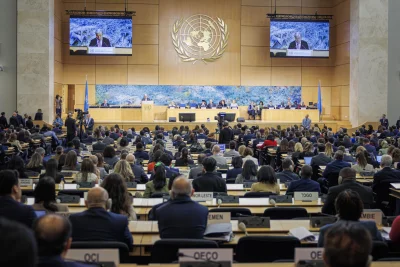
The U.N. Human Rights Council adopted a resolution condemning North Korea’s human rights violations during a session in Geneva Monday. The Council’s 61st session opened on Feb. 23, as seen in this file photo. File Photo by Valentin Flauraud/EPA

SEOUL, March 31 (UPI) — The United Nations Human Rights Council adopted a resolution condemning North Korea’s human rights violations, with South Korea joining 49 other countries as a co-sponsor despite speculation it might withhold support as it seeks to improve relations with Pyongyang.

The resolution was adopted by consensus at the Council’s 61st regular session Monday in Geneva. It expresses “deep concern about the systematic, widespread and gross human rights violations in the Democratic People’s Republic of Korea [and] the pervasive culture of impunity and lack of accountability for such violations.”

The measure urges Pyongyang to undertake sweeping reforms, including dismantling political prison camps, ending forced labor and ensuring freedom of expression and movement.

The Council has adopted a North Korean human rights resolution every year since 2003.

South Korea had reportedly weighed opting out of co-sponsorship this year, as the administration of President Lee Jae Myung pursues renewed engagement with the North and seeks to ease tensions on the Korean Peninsula.

However, Seoul ultimately decided to join as a co-sponsor “following in-depth consultations among relevant government agencies,” Foreign Ministry spokesman Park Il said at a press briefing Tuesday.

He pointed to the resolution’s references to humanitarian issues such as abductions and reunions for separated families, as well as language supporting dialogue and engagement.

“It was by taking all these aspects into account that we decided to participate as a co-sponsor,” Park said.

South Korea also backed a similar U.N. resolution at the General Assembly in November. Seoul had co-sponsored such measures from 2008 through 2018, but stepped back during a period of inter-Korean detente between 2019 and 2022 under then-President Moon Jae-in.

The latest resolution comes as Seoul weighs how to balance engagement with Pyongyang against pressure to address its human rights record.

President Lee has taken conciliatory steps since taking office in June, including restricting activist groups from sending propaganda leaflets across the border.

Last week, Human Rights Watch and more than two dozen organizations and individuals urged Lee’s government to continue supporting the resolution, warning in an open letter that recent policy moves “signal a troubling shift away from support for the victims of the North Korean government repression.”

“Sustainable peace on the Korean Peninsula cannot be achieved by excluding human rights,” the letter said. “Dialogue and engagement need to go hand in hand with the protection of human rights and accountability.”

North Korea has long rejected such resolutions as hostile acts, accusing the United Nations and Western countries of using human rights as a pretext to undermine its government.

Speaking at a session ahead of the vote Monday, North Korea’s deputy permanent representative to the United Nations in Geneva, Kang Myong Chol, said Pyongyang “categorically rejects” the measure.

“We condemn it as a falsified document motivated by ulterior political objectives of undermining the dignity of my country and discrediting its ideology and system,” Kang said.

A recent report by the U.N. special rapporteur found that the country’s human rights situation has “shown no improvement” over the past decade and in many cases has worsened, despite limited engagement with international mechanisms.

The report cited persistent restrictions on movement, expanded surveillance and the continued use of forced labor, as well as growing difficulty for citizens attempting to leave the country.

The resolution was adopted without participation from the United States, which withdrew from the Human Rights Council after President Donald Trump signed an executive order ending U.S. membership in February 2025.

Source link

Germany’s Merz says 80% of Syrian refugees to return home in 3 years

German Chancellor Friedrich Merz, right, and Syrian President Ahmed al-Sharaa attend a joint press conference during their meeting at the Federal Chancellery in Berlin on Monday, where they announced a goal of 80% of Syrian refugees who fled the country during its 14-year-long civil war to return home. Photo by Filip Singer/EPA

March 30 (UPI) — The chancellor of Germany and president of Syria on Monday said that their goal is for 80% of Syrian refugees who have fled there to return home in the next three years.

With few details offered, Chancellor Friedrich Merz and President Ahmed al-Sharaa set an ambitious goal for the majority of the roughly one million people there who sought asylum from the bloody civil war in Syria, The BBC reported.

Merz and Sharaa met Monday to discuss the return of Syrian refugees, while noting they have been a boon to Germany and are not being kicked out.

“Looking ahead over the next three years — as Sharaa has expressed his hope — around 80% of Syrians currently residing in Germany are expected to return to their home country,” Merz said during a press conference.

Sharaa thanked Merz and the country for welcoming Syrians during the civil war and said the country is “proud that Syrians have learned very quickly how to contribute to society.”

He said that his government is working with the German government to “establish a ‘circular’ migration model” that would allow Syrians to contribute to the reconstruction of Syria without abandoning the lives they have build in Germany.

Sharaa led forces that pushed former Syrian dictator Bashar al-Assd to flee the country in late 2024 after they captured Damascus. His administration is now working to reconstruct and unify the country after 14 years of civil war there.

At the press conference, Merz and Sharaa said that overall conditions in Syria have “fundamentally improved,” a point which German politicians have been debating since the new Syrian president took over, Deutche Weille reported.

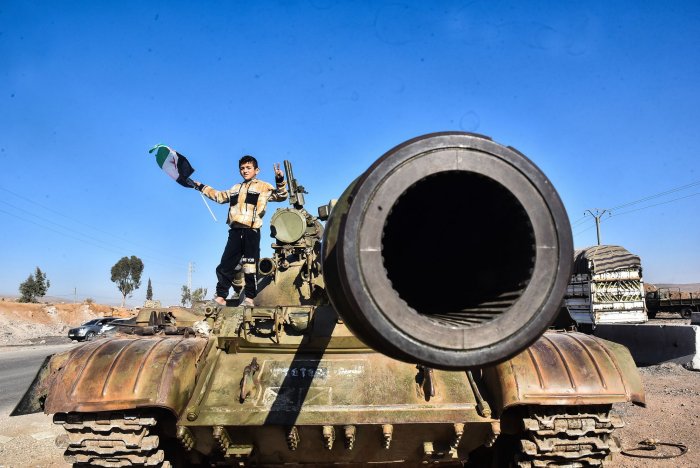
A child stands atop an abandoned tank while opposition fighters spread out to areas previously controlled by Assad’s regime in the liberated areas of Daraa, in northern Syria, on December 17, 2024. Photo by Fadel Itani /UPI | License Photo

Source link

World Cup 2026 risks becoming a ‘stage for repression’ – Amnesty report

In its 36-page report titled ‘Humanity Must Win: Defending rights, tackling repression at the 2026 FIFA World Cup’,, external Amnesty calls on the host countries’ governments to “meet their obligations under international human rights law, while Fifa, national FAs and sponsors all have clear responsibilities to respect human rights…”

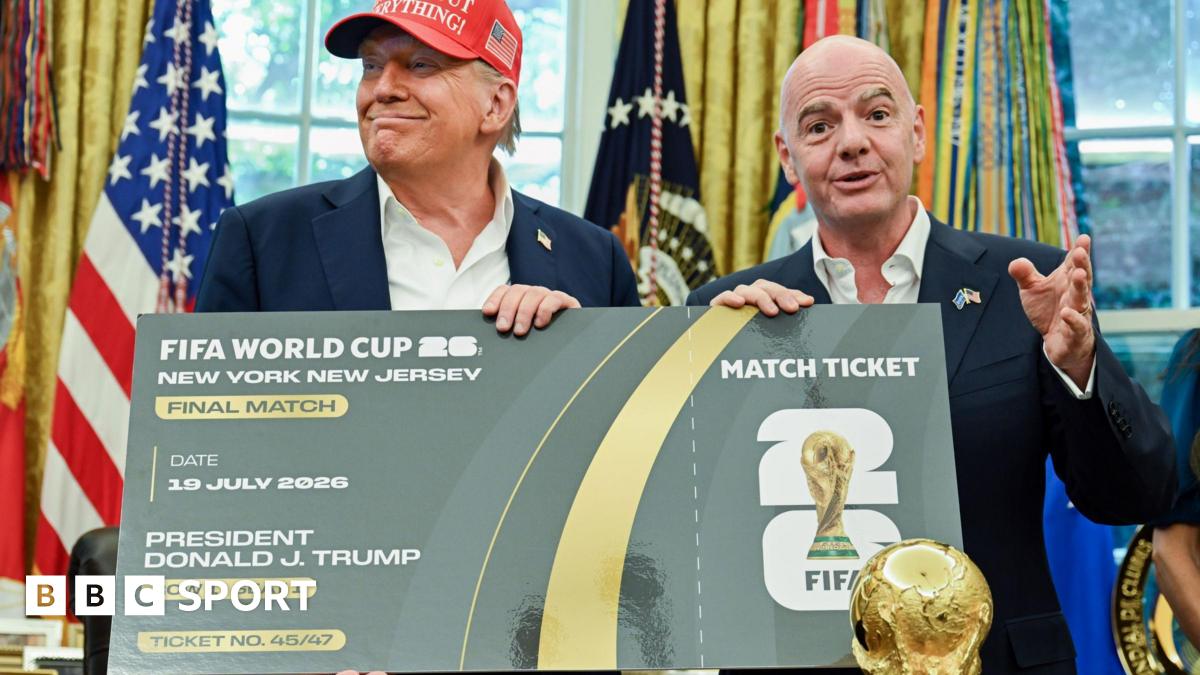
“The US government has deported more than 500,000 people from the USA in 2025, more than six times as many people than will watch the World Cup final in the MetLife Stadium”, said Amnesty’s head of economic and social justice Steve Cockburn.

“…It’s a deeply troubling time in the US, which will certainly extend to fans who want to take part in World Cup celebrations.”

Last month, the acting head of US Immigration and Customs Enforcement (ICE) said that the agency is “a key part of the overall security apparatus for the World Cup”, vowing it was “dedicated to ensuring that everyone that visits the facilities will have a safe and secure event”.

Earlier this year, ICE agents shot and killed two American citizens as part of US president Donald Trump’s immigration crackdown in Minneapolis.

Trump has sent federal agents, as well as the National Guard, to major US cities over the past year to make good on his campaign promise to crack down on illegal immigration. They have been met with protests and legal challenges in Democrat-led cities like Portland, Los Angeles and Chicago.

“Despite the astounding numbers of arrests and deportations, neither Fifa nor the US authorities have provided any guarantees that fans and local communities will be safe from ethnic and racial profiling, indiscriminate raids, or unlawful detention and deportation,” said Cockburn.

“Only four of the 16 host cities have so far published their human rights plans, and none of those that have done so to date say anything about protection from abusive immigration enforcement.

“This World Cup is no longer the ‘medium risk’ tournament that Fifa once judged it to be – whether it is to protect people from ICE, guarantee the right to protest or prevent homelessness, urgent action is needed to make sure the reality of this World Cup matches its original promise.”

Amnesty says that ICE and other agencies “pose a chilling threat to people living in the US, those traveling to see a game, and players themselves”.

It added: “Fans face intrusive surveillance, with proposals to force visitors to make their social media accounts available for vetting, and screening for “anti-Americanism”.

In January, fan group Football Supporters Europe (FSE) told BBC Sport it was “extremely concerned by the ongoing militarisation of police forces in the US” before the World Cup”.

At the time, Fifa said the safety and security of fans and participants was its “top priority”, adding it works closely with local authorities “to plan, co-ordinate and deliver comprehensive security measures for the tournament”.

The White House’s World Cup Task Force said that the tournament will be “the largest, safest, and most welcoming sporting event in history” and that it was working to deliver an event “that highlights America’s hospitality, commitment to security, and spirit of excellence”. It promised that fans “can look forward to a smooth, secure, and truly unforgettable tournament”.

Amnesty highlights Mexico’s response to high levels of drug cartel violence, which it says is “raising risks for people protesting”. Earlier this month the World Cup co-host announced plans to deploy nearly 100,000 security personnel to protect fans at this summer’s tournament.

And the campaign group also claims that in Canada, a growing housing crisis has “raised fears that people experiencing homelessness will again be displaced and pushed further to the margins”.

Fifa has been approached for comment.

Source link

South Korea to import eggs to curb chicken price surge

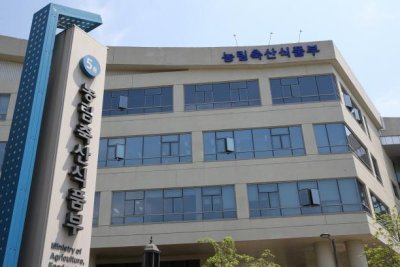
The Ministry of Agriculture, Food and Rural Affairs building. Photo by Asia Today

March 30 (Asia Today) — South Korea’s agriculture ministry said Monday it will urgently import 15 million broiler hatching eggs in an effort to curb rising chicken prices.

The Ministry of Agriculture, Food and Rural Affairs said retail prices for broiler chicken have climbed sharply in recent days, increasing by about 300 won (about $0.22) per kilogram over the past 10 days.

According to the Korea Agro-Fisheries and Food Trade Corporation’s price system, the average price rose from 6,252 won ($4.60) per kilogram on March 19 to 6,534 won ($4.80) on March 28. Peak prices rose from 7,182 won ($5.30) to 7,980 won ($5.90) over the same period.

Officials warned that rising chicken costs could lead to higher prices for fried chicken, a widely consumed food in South Korea, potentially pushing up overall dining-out inflation.

The ministry said it is in talks with the Netherlands over quarantine procedures for importing the eggs and is also considering Belgium as an alternative supplier if negotiations stall.

If talks are successful, imports could begin as early as early April. Combined with 778,000 eggs already imported from Spain in March, total imports would reach about 23 million eggs.

However, officials acknowledged that the measure may not provide immediate relief. It is expected to take about two months for the imported eggs to be hatched, raised and processed into chicken products available in stores.

The ministry is also reviewing measures to ask major poultry producers to refrain from raising prices during the period.

— Reported by Asia Today; translated by UPI

© Asia Today. Unauthorized reproduction or redistribution prohibited.

Original Korean report: https://www.asiatoday.co.kr/kn/view.php?key=20260330010009113

Source link

South Korea birth rate nears 1, but structural issues persist

Two mothers stand with their children in downtown Seoul, South Korea, 25 February 2026. According to data released by the Ministry of Data and Statistics, the number of births in South Korea in December 2025 reached 20,003, an increase of 1,747, or 9.6 percent, compared to the same month a year earlier. Photo by JEON HEON-KYUN / EPA

March 30 (Asia Today) — South Korea’s fertility rate rose to 0.99 in January, nearing the symbolic threshold of 1.0, but experts warn the increase does not signal a sustained recovery.

Statistics Korea reported 26,916 births in January, the highest monthly figure in nearly seven years, while marriages also reached their highest level since 2018. The rise in marriages, a leading indicator of births, has raised expectations that birth numbers could continue to increase over the next two to three years.

Despite the uptick, analysts say the improvement reflects a temporary demographic effect rather than a fundamental shift. The increase is largely attributed to people born in the early 1990s entering peak childbearing years, boosting birth numbers in what is often referred to as an “echo boom.”

Experts caution that broader structural challenges – including population decline, rapid aging and regional depopulation – continue to worsen.

The government is planning to restructure its population policy framework in response. Officials aim to expand the Presidential Committee on Low Birthrate and Aging Society into a “population strategy committee” with broader authority covering labor supply, immigration and regional demographics.

The proposed body would also coordinate policies across ministries and be granted authority to review budgets in advance, signaling a shift toward more centralized management of population-related policies.

The policy approach itself is also expected to change. Rather than focusing solely on raising the birth rate, the government is moving toward strategies that assume continued population decline and aim to adapt to long-term demographic changes.

However, progress has been slow. The vice chair position of the presidential committee has remained vacant for about three months, and plans to expand and strengthen the organization have yet to gain momentum.

Experts say policy must focus less on short-term birth rate figures and more on underlying structural issues.

Ha Hye-young, a senior researcher at the National Assembly Research Service, pointed to Japan’s experience with regional revitalization policies, saying South Korea should adopt models that account for a shrinking population rather than attempting to reverse it.

Kim Jong-hoon, head of a population research institute, said South Korea faces a growing imbalance as the working-age population declines while the burden of supporting older generations increases. He added that many current policies amount to a “zero-sum” effort to attract residents from other regions rather than expanding the overall population base.

— Reported by Asia Today; translated by UPI

© Asia Today. Unauthorized reproduction or redistribution prohibited.

Original Korean report: https://www.asiatoday.co.kr/kn/view.php?key=20260330010009243

Source link

Renoir, Cezanne, Matisse paintings stolen from Italian museum

March 30 (UPI) — Thieves made off with millions of dollars worth of paintings by Pierre-Auguste Renoir, Henri Matisse and Paul Cezanne in a heist last week at a private Italian museum, local authorities announced Monday.

The theft involved three paintings stolen from the Magnani-Rocca Foundation just south of Parma. The museum said the theft happened overnight March 22 into March 23.

The paintings were Les Poissons (The Fish) by Renoir, Still Life with Cherries by Cezanne and Odalisque on the Terrace by Matisse. All three artists were French

Renoir was a renowned leader of the Impressionist movement during the late 19th century, known for landscapes, figural paintings and still lifes. Cezanne, who worked around the same time as Renoir, was generally known as a Post-Impressionist whose interest in form and color would influence later Cubists and Fauves.

Working slightly later in the 19th century and early 20th century, Matisse was also considered a Post-Impressionist and an icon of the Fauvist movement.

All three artists were French.

“This is a loss that concerns the cultural heritage of all,” the foundation said in a statement posted to Facebook on Monday.

Italian public broadcaster Rai reported that the value of the three paintings was estimated to be just shy of $9 million, Sky News reported.

The museum said federal police were investigating the case.

Source link

U.S. resumes embassy operations in Venezuela after 7 years

In a statement released Monday, the U.S. representative in Venezuela, Laura Dogu, confirmed that Washington “formally resumed operations” in Caracas, File Photo by Gustavo Amador/EPA

March 30 (UPI) — The United States has reopened its embassy in Caracas, Venezuela, after seven years, marking a concrete step toward restoring diplomatic relations between the two countries, according to an official statement released by the U.S. mission.

In that statement released Monday, the U.S. representative in Venezuela, Laura Dogu, confirmed that Washington “formally resumed operations” in Caracas, signaling the return of permanent diplomatic staff and the beginning of a new phase in bilateral relations.

The announcement comes weeks after a key symbolic gesture: the raising of the U.S. flag at the diplomatic compound on March 14, exactly seven years after it was lowered in 2019, when both countries broke relations.

Venezuelan media reported that the ceremony was led by Dogu, who said the act marked “a new era” in bilateral ties.

According to members of the diplomatic mission, the reactivation will allow resumption of key functions, such as engagement with political actors and civil society, outreach to the business sector and rebuilding facilities, with the aim of restoring consular services in the future.

The United States closed its embassy in Caracas in March 2019 amid Venezuela’s political crisis. Since then, diplomatic management had been handled through the United States External Office for Venezuela based in Bogotá.

Although the embassy has resumed operations, the full restoration of consular services and the appointment of an ambassador have not yet been announced, indicating the process remains in an initial phase.

The resumption of operations takes place in a context of gradual rapprochement between both governments after recent political changes in Venezuela and could have implications in areas such as energy, migration and trade relations.

Source link

I visited the new biggest McDonald’s in the world that you can get to by train

IT’S no secret that Brits are obsessed with McDonald’s with over 3.8 million customers visiting every single day.

So when I heard the largest one in the world was opening just outside the UK, I had to see it for myself.

Travel Reporter Alice Penwill visited the world’s biggest McDonald’sCredit: Alice Penwill
The restaurant is in Disneyland Paris and has its own McCafé counterCredit: Alice Penwill

The biggest McDonald’s in the world was in Orlando – until the one at Disney Village in Paris opened just last month.

On the outskirts of the theme park, the new McDonald’s is 2,000sqm and set across three floors.

This makes it the biggest in the world overtaking the Orlando, Florida restaurant which measures 1,800sqm.

The new McDonald’s in France can seat up to 600 customers and has two outdoor terraces, each of which has space for 250 guests.

DIG IN

We found 20 of the cheapest all-inclusive hotels for summer… with breaks from £349pp


GET IT BOOKED

The ‘cheap luxury’ beach resorts under 4 hours from UK with breaks from £75pp

This is where you get the best views, including of Lake Disney and the PanoraMagique hot air balloon.

Inside is a wall mural of Disneyland Paris and even an indoor soft play area for kids.

During my visit to preview the World of Frozen, which officially opened on March 29, I decided to pop in and see it for myself.

Like other new McDonald’s, this one has opted for a sleek look with dark wooden panelling, glass balconies and neutral tones.

But for those who remember the original next door, I reckon the exterior is a bit of a let-down.

The old restaurant which closed last year after 25 years, was very 90s with the classic golden arches outside, lots of red and white stripes and a real retro feel.

What’s quite sad is that you can still see the remains of it – including the golden arches which now lay on the ground – outside from the pretty sun terraces.

Pushing aside my views on the exterior, I carried on and entered the restaurant where I was greeted by a member of staff who gave me a table number and directed me to one of the twenty-three self-service machines.

The one we went to wasn’t actually working, like quite a few of the touchscreen stations, which was surprising, seeing as the restaurant had been open for less than a month.

Other than that, the downstairs was clean, with a few tables (as most of the seating is on the upper floors) and the entrance to the soft play.

There was also a separate McCafé counter where you could get a coffee as well as a doughnut, McPop or macaron.

The outside of the new McDonald’s is much darker and neutral than the lastCredit: Alice Penwill
The old restaurant next door had a retro feel with huge holden archesCredit: Alamy

There are lots of unique McDonald’s treats that vary depending on which country you’re in, so I had to go for some French-only goodies.

First up, the Croque McDo, which is essentially a cheese and ham toasted sandwich – which set me back €3.70 (£3.21).

For anyone who enjoys a croque monsieur, I’d definitely recommend a Croque McDo, it was a tasty ham and cheese sandwich with crunchy toasted white bread.

I then opted for the Fries Cheddar Fondu-Bacon, which are the classic French fries with melted cheese and bacon bits.

I can’t say the same for the chips, when they finally got to us, they weren’t overly warm and I wasn’t a fan of the cheese topping or bacon bits.

And as a Brit, I’m a sucker for a dry chip dipped in some ketchup.

A medium portion set me back €5.30 (£4.60).

And for dessert, a small pistachio sundae for €2.80 (£2.43) – my favourite of the three.

The soft-serve ice cream came in a little reusable pot and was drizzled in sweet and nutty pistachio sauce – it was delicious, and probably would be even tastier on a hot summer’s day rather than a chilly March morning.

One surprising drink that you can get here – and at McDonald’s restaurants across France – is beer, which is usually a Kronenbourg 1664.

Scrolling through the menu, I sadly didn’t spot any beer – but that was most likely because it was 11am in the morning.

Wanting to enjoy the view of Lake Disney, I headed onto the first-floor sun terrace which I had to say had beautiful views.

The Croque McDo is a toasted sandwich you can only get in French MCDonald’sCredit: Alice Penwill
I wasn’t too keen on the ‘Fries Cheddar Fondu-Bacon’Credit: Alice Penwill
The pistachio sundae was a tasty delightCredit: Alice Penwill

Other aspects of the McDonald’s that has people talking is its soft play.

I briefly had a look, and it is spread across all three floors with a huge winding slide going from top to bottom.

While I didn’t step inside, the excited wails of children implied that they were having a fun time.

However, not all experiences at the new McDonald’s have been positive, with some on my social media saying their food was cold, and service was slow.

After exploring Disneyland Paris for myself, I’d say McDonald’s is a quick and easy solution when hunger strikes.

But with so many other restaurants and snack stalls to explore within the theme park, I’d probably take a chance on them before returning to the fast-food chain.

For those who are planning a trip to Disneyland Paris to see the new World of Frozen – here’s everything you need to know before you go.

And here’s the best time to visit Disneyland Paris for cheaper hotels and shorter queues.

The McDonald’s at Disneyland Paris is the largest in the worldCredit: Disney/Mcdonalds

Source link

Dodgers received 2025 World Series rings. What do they look like?

Clayton Kershaw’s 2025 teammates had already received their World Series rings in a pregame ceremony Friday at Dodger Stadium when the future Hall of Famer jogged out of the dugout wearing his No. 22 Dodgers jersey.

He took the ball from manager Dave Roberts on the mound and delivered the ceremonial first pitch. Then the team re-emerged to present Kershaw with his ring.

“For me it’s just a great ending to my career,” Kershaw said when asked what the new ring meant to him. “I couldn’t have scripted it any better.”

A detailed look at the inside of the Dodgers' 2025 World Series championship ring.

A detailed look at the inside of the Dodgers’ 2025 World Series championship ring.

(The Champions Collective)

Though his playing days are over, Kershaw’s time with the Dodgers will continue. He’s joining the front office as a special assistant, according to a person with knowledge of the situation not authorized to speak publicly.

The Dodgers’ ring ceremony was the second part of a two-day celebration of the team’s 2025 World Series title. On opening day, the Dodgers brought out their trophies from back-to-back World Series titles and raised their new championship banner.

“I’m excited,” Kershaw said a couple hours earlier, after watching the Dodgers take batting practice before facing the Arizona Diamondbacks. “It’s why we play, is to win some of these rings. I heard the ring is pretty over the top; I haven’t seen it yet.”

Over the top, indeed.

A detailed look at the inside of the Dodgers' 2025 World Series championship ring.

A detailed look at the inside of the Dodgers’ 2025 World Series championship ring.

(The Champions Collective)

The diamond- and sapphire-encrusted rings highlight the back-to-back nature of last year’s World Series victory. They include engravings of the 2024 and 2025 trophies on both the outside and inside of the ring.

The L.A. logo is made up of 17 custom-cut blue sapphires, one for every postseason game the Dodgers played last year.

On the underside side of the ring, the four playoff series are listed, along with “11.01.25,” the date of Game 7 of the World Series.

The ring top holds dirt collected from home plate during Game 7, visible through a glass window when the ring is opened. Inside the ring sits a bespoke band that’s also set with sapphires and a diamond.

Dodgers players (from left) Shohei Ohtani, Freddie Freeman, Mookie Betts and Max Muncy show off their World Series rings.

Dodgers players (from left) Shohei Ohtani, Freddie Freeman, Mookie Betts and Max Muncy show off their World Series rings before beating the Arizona Diamondbacks at Dodger Stadium on Friday.

(Gina Ferazzi / Los Angeles Times)

In a nod to the fan base, the total attendance figure for the 2025 season (4,012,470) gleams in blue on the bottom of the ring. Each players’ ring is also personalized with his signature, last name and number.

“Anytime you get to celebrate one more time with your teammates, it’s pretty special,” Kershaw said. “I know they’ve got to move on to this season, but I don’t have to. So I’m just going to keep relishing it. It’ll be great.”

Kershaw was already in town for work. He appeared on NBC’s broadcast of the Dodgers’ 8-2 win Thursday against the Diamondbacks.

A detailed look at the side of the Dodgers' 2025 World Series championship ring.

A detailed look at the side of the Dodgers’ 2025 World Series championship ring.

(The Champions Collective)

“It’s just talking baseball,” Kershaw said. “So if people want to hear me talk about baseball, I can do that all day. I love baseball.”

His new role with the Dodgers, first reported by the Athletic, is another form of talking baseball.

“Probably not physically here in L.A.,” Kershaw said. “But definitely, I’m sure I’ll watch games. I still want to be a part of the Dodgers, so if I can help in some small piece, I will.”

A detailed look at the side of the Dodgers' 2025 World Series championship ring.

A detailed look at the side of the Dodgers’ 2025 World Series championship ring.

(The Champions Collective)

Because Kershaw joined Team USA for the World Baseball Classic and then jumped into part-time broadcasting, he hasn’t fully experienced retirement yet. He said he doesn’t miss playing, but he misses the people.

“There’s a freedom with retirement,” Kershaw said. “If you don’t want to work out, you don’t have to. If your back hurts, it doesn’t matter. If your arm hurts, it doesn’t matter. You get to see a lot more stuff, be around for everything. So there’s a lot of great parts. It doesn’t take away from how special playing this game is, but there’s a lot of really awesome parts about being home.”

Source link

China ramps up online influence campaign during Japan election

Japanese Prime Minister and leader of the ruling Liberal Democratic Party (LDP) Sanae Takaichi (L) delivers a speech in support of a local candidate at an election campaign rally in Tokyo, Japan, 07 February 2026. File. EPA/FRANCK ROBICHON

March 29 (Asia Today) — China intensified an online influence campaign targeting Japan during the country’s February general election, sharply increasing English-language messaging aimed at shaping international opinion, according to a joint analysis cited by Japanese media.

The Yomiuri Shimbun reported Sunday that the findings were based on a joint study with AI firm Sakana AI, which examined social media posts, including on X, from Jan. 19 through mid-February.

The analysis tracked what researchers described as the “flow of narratives” in China-linked criticism of Japan. It found that English-language posts outnumbered Japanese-language content by as much as four to one, indicating a strategic shift toward influencing global audiences rather than domestic Japanese opinion.

The surge followed remarks by Japanese Prime Minister Sanae Takaichi in November, when she described a potential Taiwan contingency as a “crisis threatening Japan’s existence.” After several days of relative silence, China-linked accounts escalated criticism of Japan.

The volume of such posts rose steadily during the election period. Researchers estimated roughly 1,400 posts on Jan. 19, increasing to about 1,700 by Jan. 23 and 1,800 by Jan. 27. On Feb. 8, the day of voting, the number surged to around 4,000, though still below levels seen during a larger campaign in November.

The messaging themes also shifted. Earlier narratives focused on criticizing Japan’s leadership and accusing Tokyo of interfering in Taiwan-related issues. During the election, however, posts increasingly framed Japan in terms of “militarization,” “revival of militarism,” and economic decline. As voting approached, criticism of political leadership again became more prominent.

A Japanese government official said the messaging may have been designed to influence voter behavior through pressure or intimidation.

Separate analysis of posts from November through January showed a sharp rise in English-language output from accounts linked to the Chinese Communist Party. During a peak period in mid-November, English-language criticism reached roughly four times the volume of Japanese posts. In December, about 560 of roughly 900 posts were in English, and in January, more than half of approximately 300 posts were written in English.

Officials in Japan suggested the shift reflects a strategic recalibration. With the Takaichi administration maintaining relatively strong approval ratings despite earlier criticism, Chinese efforts may have pivoted toward shaping international narratives rather than domestic opinion.

A Chinese official was quoted as saying the campaign would continue to apply “tactical pressure” on Takaichi while seeking to prevent countries from aligning with Japan.

The report concluded that China’s social media operations during the election represented a coordinated effort to influence both domestic and global perceptions by leveraging political and security narratives.

— Reported by Asia Today; translated by UPI

© Asia Today. Unauthorized reproduction or redistribution prohibited.

Original Korean report: https://www.asiatoday.co.kr/kn/view.php?key=20260329010008715

Source link

UK beach ranks as third best in the world – not in Cornwall or Devon

One beach has been named third best in the world with its stunning backdrop, and it’s not in Cornwall, Devon or Yorkshire

Residents in a picturesque seaside town may need to prepare for an influx of tourists this year, after their stunning beach secured a spot on TripAdvisor’s ‘best of the best’ global list for 2026. It nearly claimed the top position, landing in an extremely impressive third place, thanks largely to its absolutely breathtaking backdrop.

When discussing beaches in the UK, Roker and Seaburn beaches have drawn comparisons to LA and Tynemouth has been likened to Australia’s Bondi Beach. Yet, for countless people – both residents and tourists alike – there’s one that will forever reign supreme in the North East, and that’s Bamburgh.

So much so, the location has been named Britain’s ‘best seaside’ town for five consecutive years, despite technically being a village, reports the Express.

Visited by celebrities including Hollywood A-lister Harrison Ford and Girls Aloud’s Nicola Roberts in recent years, the beach has long been considered amongst the finest destinations.

It boasts spectacular scenery, a brilliant day out, fresh sea air, and a chance to clear your head, regardless of the conditions.

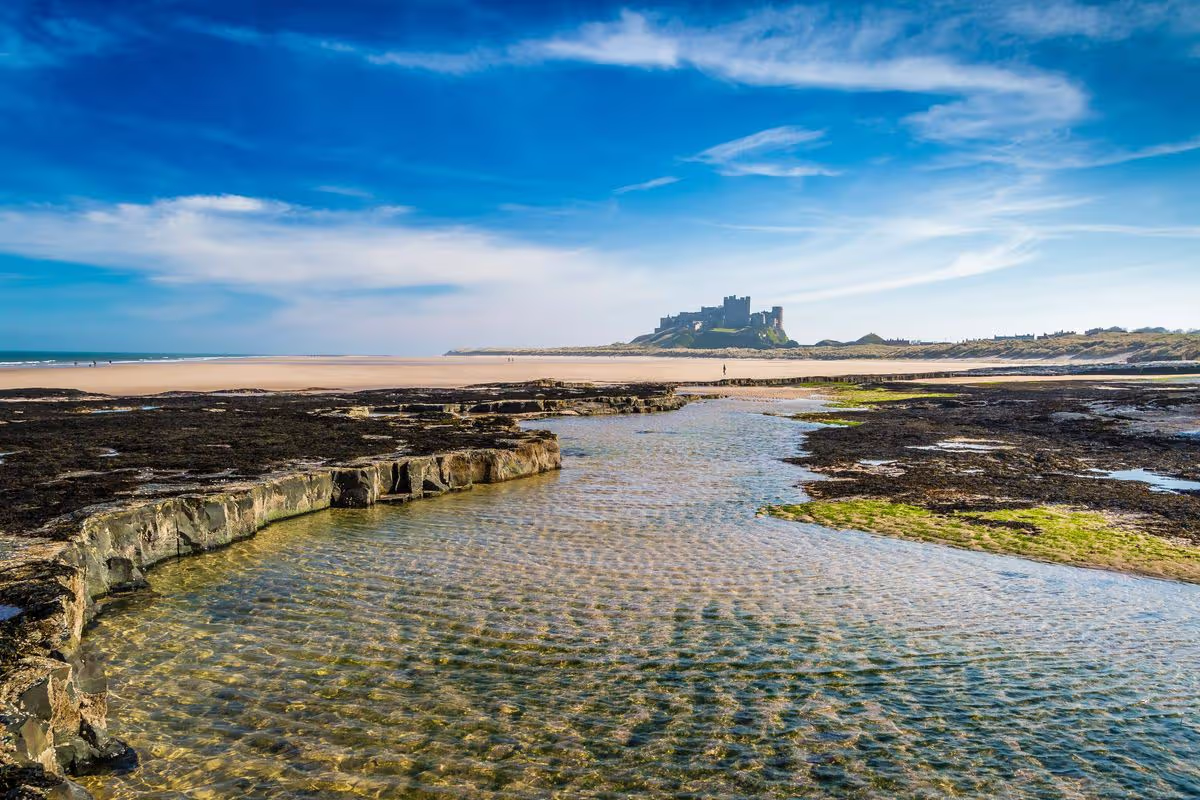
Even during the recent bitter cold snap, visitors have continued strolling along its renowned sands and admiring the ‘unparalleled’ and utterly magnificent views of Bamburgh Castle in the distance.

It is the very location where Hollywood star Harrison shot an Indiana Jones film in 2021.

Interestingly, in last year’s rankings, Bamburgh actually trailed behind Roker and Seaburn amongst the UK’s finest beaches.

The beach is now proudly representing the UK as the sole entry from British shores on TripAdvisor’s Travellers’ Choice Awards best-of-the-best list for one-of-a-kind beaches.

Bamburgh comes in third place, behind only Boulders Beach in South Africa and Isola Bella in Sicily – a prestigious list that celebrates beaches boasting the most extraordinary settings.

Bamburgh has been rightly recognised for its breathtaking Medieval backdrop, which sets it apart from the crowd.

Highlighting its position on the One of a Kind list, TripAdvisor writes: “Framed by the iconic silhouette of Bamburgh Castle, this beach boasts miles of soft white sand, and a dramatic coastal backdrop.

“The dog-friendly stretch is close to the charming Bamburgh village, making it a standout choice for unforgettable family escapes and romantic coastal breaks.”

Source link

Egypt enacts energy saving measures as Iran war affects import costs

March 29 (UPI) — Egypt is ordering stores and malls to close early, asking people to work from home and dimming street lights as energy costs have skyrocketed since since January.

The North African country put energy saving efforts into effect because the U.S. and Israeli war in Iran has sent the cost of importing oil and natural gas — which is how Africa gets the vast majority of its energy supplies — through the roof, The BBC and Anadolu Agency reported.

Many nations globally have seen the cost of fuel and natural gas increase, and several African and Asian nations have enacted efforts similar to Egypt, because Iran has blocked the Strait of Hormuz to attempt to get the two nations to end the airstrikes aimed at regime change there.

Roughly 20% of the world’s oil and natural gas supply moves through the Strait and choking it off has had a significant effect on Egypt.

Egypt imports liquefied natural gas from the United States and Qatar, among others, and recently signed a deal with Israel for gas that will be delivered via a pipeline, the Financial Times reported.

Although Egypt, with Pakistan and Turkey, are involved with talks to end the war, Egyptian Prime Minister Mostafa Madbouly said that because “there is no clarity about the duration of this war,” the energy reduction measures, which go into effect .

“These measures aim to mitigate the effects of energy import costs due to high global oil prices,” Madbouly said during a press conference.

Since January, Madbouly said that natural gas imports tripped from $560 million per month in January to $1.65 billion per month in March and that its petroleum bill more than doubled in the same time period from $1.2 billion per month to $2.5 billion per month.

Among the “exceptional measures” that will go into effect include stores, restaurants, cinemas and gathering places closing by 9:00 p.m. five nights per week; most employees being told to work from one or two days per week; street lighting and street advertisement lighting will be dimmed by 50% and government vehicles will see be required to use 30% less gas.

Despite talks starting to end the war, the price of Brent crude oil on Friday surpassed $111 per barrel as Iran continued to block most ships from passing through the Strait of Hormuz.

Although Iran allowed a handful of oil tankers through the Strait last week, which U.S. President Donald Trump called a show of good faith, global markets have been hit hard, even beyond energy, as a result of limited traffic transiting the passage.,

President Donald Trump stands with U.S. Secretary of Agriculture Brooke Rollins during an event celebrating farmers on the South Lawn of the White House on Friday. Photo by Aaron Schwartz/UPI | License Photo

Source link

In Paris, new Disney chief D’Amaro showcases empire that made him

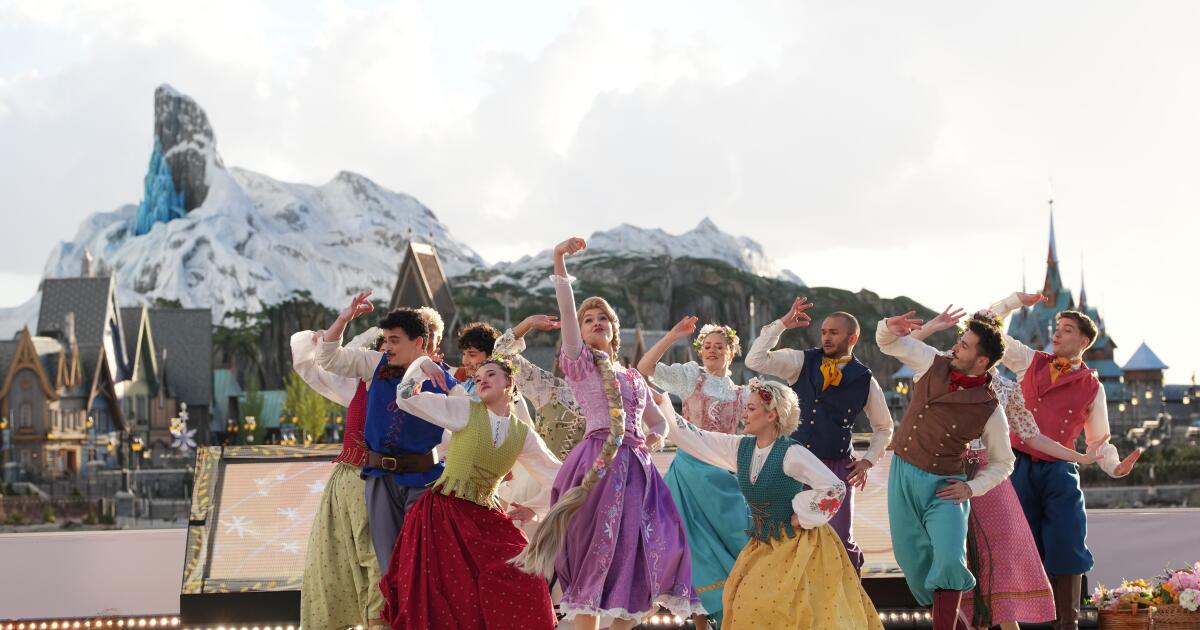
A 118-foot mountain of ice rose over the suburban Paris countryside this weekend as Disney opened its Arendelle kingdom to the world — Elsa’s palace glowing at the summit, a “Frozen” Nordic fishing village below, and the company’s new chief executive standing before a crowd of celebrities.

World of Frozen, an immersive land themed to the blockbuster animated franchise, opened Sunday as a centerpiece of a $2.2-billion transformation at Disneyland Paris.

The transformation renames one of Disneyland Paris’ two parks from Walt Disney Studios Park to Disney Adventure World. The inauguration drew Penélope Cruz, Naomi Campbell and Teyana Taylor.

It is the largest expansion in the 34-year history of Disneyland Paris, and one node in a roughly $60-billion global build-out of Disney’s parks, resorts and cruise lines.

A new CEO’s first stage

It is also the first major international stage for Josh D’Amaro, who took over as Disney’s CEO on March 18 — 11 days before the French gates opened — after nearly three decades in the company’s theme parks division.

The parks-and-experiences business reportedly generated 57% of the company’s $17.5 billion in segment operating income last year, the force that observers say propelled D’Amaro from parks chief to the corner office.

“The Walt Disney Co. was built on one man’s dream, and for more than 100 years we’ve shared that dream with the world,” D’Amaro told the inauguration crowd.

“Storytelling is fundamental to everything that we do, whether that’s on screen or stage, in our theme parks, on our cruise ships, or even at home.”

He called the opening “a transformational moment” and paid tribute to the creative team behind the attraction, including “Frozen” writer-director Jennifer Lee — who are all now at work on “Frozen 3.”

An Associated Press journalist accompanied D’Amaro on the “Frozen” ride Saturday night.

The carriage splashed through water to childlike cheers from riders and laughter from the new CEO as they glided past Elsa singing in the dark. Some stepped off lightly wet.

The evening’s emotional peak came when Lou, an 11-year-old whose wish was granted through Make-A-Wish France, took the stage to sing a few notes of “Do You Want to Build a Snowman?”

A next-generation robotic Olaf walked out to join her. It was the 25,000th wish fulfilled for a sick child at Disneyland Paris since 1992.

A French reversal

On Friday, D’Amaro had stood alongside Emmanuel Macron at the resort.

The French president used the visit to claim the park as a national economic asset, calling Disneyland Paris “the leading tourist destination in Europe” and describing it as “a genuine ecosystem of success.”

Macron said the latest expansion would create 1,000 additional direct jobs.

“Since the beginning, that’s 13 billion euros invested on this territory,” Macron said, a figure equivalent to about $15 billion.

Disneyland Paris says it has recorded more than 445 million visits since 1992, accounting for 6.1% of France’s national tourism revenue.

Macron’s presence underscored a remarkable reversal.

When the park opened as Euro Disney in 1992, French intellectuals derided it as a “cultural Chernobyl.” The president at the time, Francois Mitterrand, dryly derided the new attraction as “not exactly my cup of tea.”

Now a French president was standing in front of cameras calling it an engine of national prosperity.

European roots

“‘Frozen,’ of course, has its roots in European storytelling,” said Michel den Dulk of Walt Disney Imagineering.

“It’s very loosely based on Hans Christian Andersen. So to have a northern European, charming wooden little village here in Disneyland Paris — it just made sense.”

The new Tangled family ride, too, draws from European folklore — the Brothers Grimm’s Rapunzel.

The land re-creates Arendelle around a lagoon, its timber buildings painted in muted Scandinavian pastels, facades adorned with rosemaling, a traditional Norwegian decorative art.

At the center is Frozen Ever After, a boat ride featuring state-of-the-art animatronics and immersive projection effects.

Guests can meet Anna and Elsa inside Arendelle Castle, have a conversation with a responsive baby troll named Mossy who talks back, and watch a lagoon celebration called the Snow Flower Festival — featuring an original song.

Visitors praised the scale of the mountain and the detail of the village, even after delays and minor glitches.

“Despite the wait, it was well worth it. The attention to detail is incredible, and the perspective of the ice mountain is breathtaking,” said Daniel Weber, 41, an architect from Munich, Germany, after the ride Sunday.

“You forget you’re outside Paris. For a few minutes, it really feels like Arendelle,” said Léa Moreau, 27, a graphic designer from Lille, France.

Beyond World of Frozen, the rebranded park brings a vast new lake called Adventure Bay, a Tangled family ride, 15 new dining locations — including the posh Regal View Restaurant — and a nighttime spectacular called Disney Cascade of Lights featuring more than 380 drones.

A Lion King land, already under construction, will follow.

More than 90% of the second park’s offerings will have been redesigned since it opened in 2002, and Disney says the footprint will roughly double once the full transformation is complete.

Disney’s streaming has swung from deep losses to profitability, but the parks remain the company’s most dependable earnings engine — and D’Amaro is the man who ran them.

“We continue to dream bigger and bring stories to life in brand new ways,” D’Amaro told the crowd.

Pyrotechnics lighted up Arendelle Village.

The ice palace on the mountain turned blue.

And 34 years after Euro Disney became a punchline, a brand-new kingdom opened in the fields east of Paris — for the first time in forever.

Adamson writes for the Associated Press.
Source link

Japan to launch Pacific defense office amid China concerns

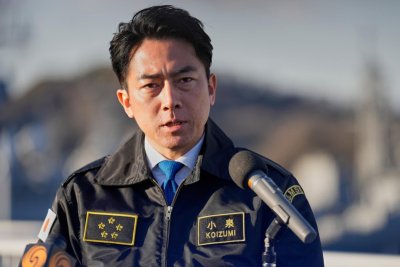
Japan’s Defense Minister Shinjiro Koizumi speaks with media after meeting with South Korea’s Defense Minister at the headquarters of the Japan Maritime Self-Defense Force Yokosuka District, south of Tokyo, Japan, 30 January 2026. Photo by EUGENE HOSHIKO / EPA

March 29 (Asia Today) — Japan will establish a new Pacific-focused defense unit and expand surveillance and infrastructure in remote island areas as part of efforts to counter China’s growing military presence, officials said.

Japanese Defense Minister Shinjiro Koizumi announced Saturday that the Defense Ministry will create a “Pacific Defense Planning Office” in April, citing what he described as gaps in Japan’s current defense coverage across vast Pacific air and maritime zones.

Speaking after attending a joint U.S.-Japan memorial ceremony on Iwo Jima, Koizumi said strengthening Pacific defenses was an urgent priority.

Japanese media, including the Yomiuri Shimbun, reported that Tokyo plans a comprehensive review of the structure and deployment of the Self-Defense Forces. The initiative will be reflected in planned revisions to key national security documents, including the National Security Strategy, later this year.

The government also plans to expand port facilities and radar networks across the Pacific, particularly in the Ogasawara Islands, which officials view as strategically vulnerable.

About 400 Self-Defense Forces personnel are currently stationed on Iwo Jima, but shallow coastal waters limit the ability of large vessels to dock. Authorities plan to begin feasibility studies next year to upgrade port infrastructure and establish supply systems for fuel and ammunition to support rapid fighter jet deployments. Runway reinforcement and measures to address volcanic risks are also under review.

Japan is also considering establishing an air defense identification zone over the Ogasawara Islands, where no such zone has been formally set since World War II, leaving what officials describe as a surveillance gap. The Defense Ministry plans to deploy mobile radar systems and build a permanent monitoring network in the area.

The moves come amid increased Chinese naval activity in the Pacific. China’s aircraft carrier Liaoning entered the Pacific beyond the so-called second island chain for the first time last year, and there have been instances of simultaneous carrier deployments. Japanese officials have also cited incidents involving Chinese aircraft tracking Japanese military planes near Okinawa.

Koizumi said deepening the U.S.-Japan alliance would be key to maintaining regional stability, adding that the new office would serve as a central hub for reorganizing Japan’s Pacific defense posture.

Iwo Jima, the site of one of the fiercest battles of World War II, remains a strategic location. Nearly 29,000 casualties were recorded there during the 1945 battle between U.S. and Japanese forces. Today, it is being repositioned as a key forward base in Japan’s evolving defense strategy.

— Reported by Asia Today; translated by UPI

© Asia Today. Unauthorized reproduction or redistribution prohibited.

Original Korean report: https://www.asiatoday.co.kr/kn/view.php?key=20260329010008723

Source link

Israel blocks Christian leaders from entering Holy Sepulchre for Palm Sunday mass

1 of 5 | Catholic Palestinians gather on Palm Sunday for the blessing of the olive branches in the courtyard of St. Saviour Monastry in the Old City of Jerusalem on Sunday. The traditional Palm Sunday procession from the Mount of Olives to the Church of the Holy Sepulchre was canceled due to the war with Iran, and Israeli police prevented Catholic leaders from entering the holy site. Photo by Debbie Hill/UPI | License Photo

March 29 (UPI) — Israeli police blocked Jerusalem’s top Catholic leaders from entering the Church of the Holy Sepulchre, a centuries-old tradition to mark Palm Sunday.

The Latin Patriarchate in Jerusalem said Cardinal Pierbattista Pizzaballa, the Latin patriarch, and Father Francesco Ielpo, custom of the Holy Land, were stopped as they attempted to enter the church.

The two leaders traditionally lead a procession from the Mount of Olives to the Church of the Holy Sepulchre, where they celebrate Palm Sunday mass.
Pizzabella announced earlier in the week that the traditional procession and mass had been canceled due to the war in Iran, which has resulted in attacks in Israel. He announced the procession would be replaced by a moment of prayer.

“Preventing the entry of the cardinal and the custos, who bear the highest ecclesiastical responsibility for the Catholic Church and the holy places, constitutes a manifestly unreasonable and grossly disproportionate measure,” a statement from the Latin Patriarchate of Jerusalem and Custody of the Holy Land said.

The office of Israeli Prime Minister Benjamin Netanyahu said the leaders were prevented from entering the church because of the danger of Iran strikes targeting holy sites.

“Israel has temporarily asked worshippers from all faiths not to worship at the holy sites in Jerusalem’s Old City to protect them,” the office said in a statement on X.
The statement said “there was no malicious intent whatsoever, only concern for [Pizzabella’s] safety and that of his party.”

“However, given the holiness of the week leading up to Easter for the world’s Christians, Israel’s security arms are putting together a plan to enable church leaders to worship at the holy site in the coming days.”

Source link