Peter Alexander, who covered Washington for NBC News for more than a decade, is leaving the network to join MS NOW, according to people familiar with his plans.
Alexander, 49, will serve as an anchor and chief national reporter for MS NOW. He will have a weekday program and also handle breaking news coverage throughout the day.
A 22-year veteran of NBC News, Alexander served as chief White House correspondent and co-host of the Saturday edition of “Today” with Laura Jarrett. He is among the most familiar faces in the White House briefing room.
Alexander told viewers at the end of his Saturday broadcast that he is departing NBC News but did not mention his new job. A representative for MS NOW declined comment.
MS NOW is the progressive-leaning cable channel formerly known as MSNBC. The network changed its name after it was spun off from Comcast into a new company called Versant.
After the split, MS NOW ended its relationship with NBC News. Journalists who worked on both MSNBC and NBC News had to chose which entity they would work for going forward.
Correspondents Jacob Soboroff and Ken Dilanian switched from NBC News to MS NOW. Data guru Steve Kornacki decided to stick with NBC News as he also has assignments at NBC Sports. Willie Geist, a co-host on MS NOW’s “Morning Joe,” is an exception as he continues to anchor NBC’s “Sunday Today.”
Alexander is the first NBC journalist to cross over to MS NOW since the split. His deal with Versant also gives him the opportunity to contribute to sports coverage on the company’s other cable properties, USA Network and the Golf Channel.
Alexander will anchor the 11 a.m. Eastern hour on MS NOW, succeeding Ana Cabrera, who is leaving the network when its daytime programming changes take effect in June.
Alexander joined NBC News after serving as an anchor on the network’s Washington station WRC.
He was White House correspondent from 2012 to 2014 during President Obama’s second term and returned to the assignment in 2018 to cover President Trump.
An aggressive questioner, Alexander has been chastised by Trump publicly over news conference questions that made him unhappy.
Viewers of NBC’s morning program learned Friday that Guthrie will be back to her hosting duties at the network’s Rockefeller Plaza studio in New York on April 6.
Guthrie has been absent from “Today” since Feb. 2, the day after learning her mother Nancy was abducted from her Tucson home. She appeared on the program this week in a taped interview with Hoda Kotb, her first since her mother went missing..
Guthrie’s re-entry on “Today” is certain to generate significant viewer interest. Her 84-year-old mother’s case, still being investigated by law enforcement, generated an outpouring of public affection for the co-host.
Many media industry insiders expressed serious doubts over whether Guthrie would return to television before law enforcement determined what happened to Nancy Guthrie. But people close to Guthrie believe her grit and deep religious faith will provide her with the strength to move forward.
Guthrie’s daily presence on “Today” will also help keep her mother’s case in the public eye. NBC is also airing a special “Dateline” episode on the abduction on Friday.
Guthrie has spent most of the last seven weeks in Tucson with her family. She canceled plans to be a part of NBC’s coverage of the Winter Olympics in Milan and before this week only appeared on TV and social media in taped messages asking for the help in finding her mother.
Nancy Guthrie was last seen Jan. 31, when she spent the evening with family members. Law enforcement officials believe she was removed from her Catalina Foothills home later that night against her will as her phone, wallet, car and medication were left behind.
Surveillance videos of a masked man who was outside Guthrie’s front door on the night she disappeared were released by the FBI.
Christmas is still quite some way away, but one attraction is already putting tickets on sale for its magical experiences, and if previous years are anything to go by it could sell out quickly
This immersive experience takes kids on a magical journey to meet Father Christmas(Image: LaplandUK)
It doesn’t feel that long since the Christmas decorations were packed away, but one festive attraction is already putting its tickets on sale today (March 27) for the Christmas 2026 season.
Tickets for LaplandUK, which has locations in Ascot and Cheshire, will go on sale tomorrow at 10AM with over a million people expected to join the queue. The experience is often likened to booking Glastonbury tickets, as hopeful parents will need to wait in a virtual queue and have ten minutes to complete their order once they reach the front.
Ticket prices for 2026 have been confirmed, starting at £60 for midweek dates in November, up to £155 per person for peak weekends in December. Both venues will also host a ‘Superstar Day’ on November 25 which is “adapted for families and guests with access requirements to create a quieter, more relaxed and accessible environment.”
While the tickets are costly, the cost does include a range of experiences that set it apart from the average Santa’s grotto. Families receive a special gift boxed invitation ahead of their day out to build the excitement, and this message from Father Christmas personally invites little ones to visit LaplandUK to help the elves with toy-making.
On arrival, visitors step into a magical world, walking through several different interactive experiences from the Elven Bazaar, where guests have to work out how to enter the door to Lapland, to the Lapland Bakery where kids can help make some Christmas treats before enjoying storytime with Mother Christmas.
The experience lasts around four-and-a-half hours, according to the LaplandUK website, and also includes ice skating, a soft toy for every child, a small toy to give to kids on Christmas Day, and of course, a special visit with the man in red himself, deep in a snowy forest.
Husband-and-wife founders of LaplandUK, Mike and Alison Battle, took to Facebook to update fans of the attraction about changes that are being made for 2026. Alison said: “Every year, we challenge ourselves to make the experience more special, more magical, more believable. And this year, we’ve got some very exciting things in store for you.”
The pair announced that invites would be sent earlier this year, towards the end of the summer, to build anticipation of the event. They added that the return experience will be upgraded, so that “coming home will be just as magical”, and that visitors to Little Rudy’s Stables will now be able to make reindeer food to take home with them.
One of the major changes will be in the Elven Village, which the pair said has expanded over the years to be more immersive and include more characters. Guests will now get more time in the village to listen to stories at Fable’s Library, skate on the ice rink, and meet characters along the way.
Those hoping to grab tickets for LaplandUK can either register on the official site to get a ticket booking link ahead of the sale, or visit the website from 9am to join the queue.
LaplandUK’s Facebook page confirmed that both sites will have their own booking queues accessed through a unique link. It said: “Upon entering a queue, you will be randomly assigned a place before bookings open. When the queue begins moving at 10 AM, you’ll gradually make your way forward.
“Once you reach the front, you will have 10 minutes to complete your booking for your chosen location.. We truly cannot wait to welcome you to Lapland to make treasured memories together this Christmas.”
Have a story you want to share? Email us at webtravel@reachplc.com
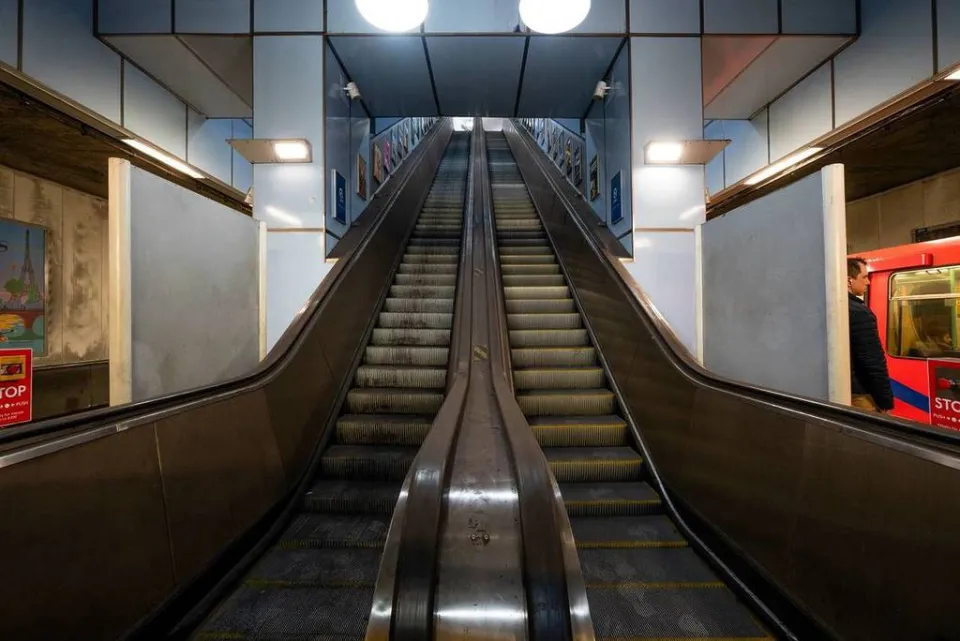
The shiny new escalators will be up and running from today – eight days earlier than TfL had announced – and should last the station 30-40 years.
The station is also much brighter as the escalators have rows of lights and the area has been whitewashed.
The pale blue panels have been replaced with white panels, which reflect light much better and have a noticeable effect on the station’s appearance.
A new lift has also been installed as well as energy-efficient lighting, upgraded safety features, local artwork, and a new raised ceiling.
Seb Dance, Deputy Mayor for Transport, told The Sun previously that it was “fantastic” the major upgrade at Cutty Sark DLR station could be delivered earlier than expected.
Before it closed, Cutty Sark was the third busiest station on the Docklands Light Railway (DLR), after Canary Wharf and Limehouse.
Thousands of passengers were forced to take the 121 station steps at Cutty Stark due to faulty escalatorsCredit: Alamy Stock Photo
The Bird Cage Theatre has stood inside Knott’s Berry Farm for 72 years — albeit not always soundly. Long framed by a tin roof and a tent, the theater had a reputation for discomfort, as it was a source of punishing heat and the occasional mouse sighting.
“It was hot, it stunk and it was dirty,” says Payden Adams, the park’s VP of entertainment.
Still, though it has long felt like an endangered species, the Bird Cage Theatre is one of Southern California’s most historic revival houses, a place for vaudeville-style, fourth-wall-breaking shows that deviate from the expected theme park fare. To quote the theater’s most recent production, its entertainment can be “flirtatious and a little bit saucy.”
Knott’s Berry Farm’s Bird Cage Theatre is modeled after a historic venue in Tombstone, Ariz.
(Kyusung Gong / For The Times)
Opened in 1954, the Bird Cage Theatre has specialized in vaudeville-style melodramas.
(Knott’s Berry Farm)
And now, against all odds, the Bird Cage is getting a second life. Knott’s Berry Farm recently completed a renovation designed to keep it thriving for another 72 years. Gone is the tarpaulin roof: The Bird Cage is now a fully enclosed, soundstage-like structure. And blessedly, it has modern air conditioning.
The theater reopened this past weekend with “The Great Bank Robbery,” a 30-minute-plus show in which audiences are encouraged to boo, hiss and swoon over the characters, a Bird Cage tradition since 1954. Characters are caricatures, be it a villain that feels plucked from a cartoon western, complete with a purring raccoon for a sidekick, to a greedy wannabe politician of a bank manager. Though set in Ghost Town with period garb, there are modern flourishes, such as tongue-in-cheek nods to the theme park’s attractions and a damsel in distress who ultimately proves to be anything but.
Though it once operated as a daily theater, the Bird Cage is today most active during holidays and seasonal events, such as the park’s annual Boysenberry Festival, which also began this weekend. Popular summer show “Miss Cameo Kate’s Western Burle-Q- Revue” is a 20-minute cabaret-style performance, complete with a torch song and a slightly risqué cancan finale.
When it’s running, the Bird Cage is a must-see attraction. Live theater in theme parks can feel like a moving target, as conventional wisdom often argues that today’s smartphone-addled guests are after thrills and more attention-grabbing, interactive experiences. But when it works, such as during the over-the-top silliness of “The Great Bank Robbery,” or at Universal Studios’ “Waterworld”-themed stunt show, it can offer guests some of the most memorable, personal moments at the parks.
The Bird Cage Theatre reopened this past weekend with the show “The Great Bank Robbery.”
(Kyusung Gong / For The Times)
“You’re not wrong, especially when it comes to attention spans. We experience that,” says Adams, who oversaw the theater’s restoration. “The way we’ve pivoted and navigated is just ensuring our shows are tight and clean. It might be a little over 30 minutes, but audiences are engaged. In melodramas, we ask the audience to participate, and we can train them how to participate beforehand. When you see characters, even when they’re heightened or over-the-top, people still connect with them.”
The Bird Cage Theatre first opened in the summer of 1954, its facade a near-replica of the original Bird Cage in Tombstone, Ariz. That the family-focused Knott’s would nod to the Arizona locale is an oddity in and of itself, as the actual theater had a bawdy reputation. Stories today speak of a place that initially opened with grand ambitions but eventually succumbed to gambling and prostitution.
At Knott’s, the theater was built around existing structures, although park founder Walter Knott, according to the book “Knott’s Preserved” by Chrstopher Merritt and J. Eric Lynxwiler, often talked about completing it as a full tribute to the Arizona space. That never really happened.
Knott’s re-created the original wallpaper of the Bird Cage Theatre for its remodeling.
(Kyusung Gong / For The Times)
And yet over the years the Bird Cage won over audiences thanks to programming from Vaudeville veterans. Early on, students from nearby colleges would appear at the space, including Steve Martin, whose signed photograph graces a celebrity wall in the Bird Cage’s introductory hall. Donna Mills and singer Rick Nelson have graced the Bird Cage’s horseshoe-shaped stage, as have Dean Jones and Skip Young.
It was, to say the least, a quirky place to perform. “Knott’s Preserved” tells of a show in which a mouse once sat at the base of the stage, and quotes Martin as reminiscing over performances affected by the weather. “When it rained, no one could hear each other because the rain was beating so hard on that tarp,” Martin said.
None of that should be a problem anymore, although returning guests will likely feel they’re in a familiar space. Though the Bird Cage has been outfitted with modern lighting capable of new theme park tricks and projections, the rig is hidden among curtains designed to re-create the look of the original tent. Lights, in bird cage enclosures, still hang above the audience seating area, which has room for about 250 guests.
The Bird Cage Theatre at Knott’s Berry Farm now has a properly enclosed roof and air conditioning.
(Kyusung Gong / For The Times)
And along the way a few discoveries were made. Adams says that when they began stripping away wooden walls added sometime in the 1970s, they found the Bird Cage’s original wallpaper, a scarlet-red strip that surrounds the space with flower-adorned bird cages. Not all of it could be salvaged, so Knott’s meticulously re-created the look. With the new-old wallpaper intact, Adams estimates that guests can count about 11,055 bird cages throughout the theater.
The original pieces will be preserved in the park and gifted to important Bird Cage players. Adams jokes, “If you have a mailing address for Mr. Steve Martin, I have a gift to send him.”
Many airlines are operating restricted schedules due to airspace restrictions in the Middle East, with 21,915 of the 38,193 services scheduled to fly since February 28 cancelled
15:11, 11 Mar 2026Updated 15:11, 11 Mar 2026
Yesterday, British Airways announced that it has suspended all flights to and from Amman, Bahrain, Doha, Dubai, and Tel Aviv until later this month,(Image: Getty Images)
Dozens of flights to and from the UK have been cancelled today as the war in Iran continues.
Many airlines are operating restricted schedules due to airspace restrictions in the Middle East, with 21,915 of the 38,193 services scheduled to fly since February 28 cancelled.
On Wednesday morning, Dubai International Airport was forced to temporarily pause operations due to a drone strike nearby, which wounded four people. Authorities have confirmed that flights have since continued.
Emirates and Etihad are still operating limited schedules from Dubai and Abu Dhabi airports, respectively. Qatar Airways said it is “doing everything possible to support affected passengers and help reunite them with family and loved ones” while Qatari airspace remains closed.
The airline said that operations will resume“ once the Qatar Civil Aviation Authority confirms the safe reopening of Qatari airspace.”
Yesterday, British Airways announced that it has suspended all flights to and from Amman, Bahrain, Doha, Dubai, and Tel Aviv until later this month, while its services to and from Abu Dhabi are cancelled until later this year. The decision means hundreds of BA services will be cancelled over the coming months.
Flight data shared exclusively with the Mirror by analytics firm Cirium shows that 55 of the planned services due to fly today had been cancelled as of 12.45 pm, which is 2.49% of the total scheduled to fly into the UK from the Middle East and vice versa.
UK flights cancelled on March 11
Arrival Country: Flights; Cancelled; Cancel %
Qatar: 18; 17; 94.44%
United Kingdom: 493; 15; 3.04%
United Arab Emirates: 32; 11; 34.38%
Bahrain: 3; 3; 100.00%
United States: 113; 2; 1.77%
Jordan: 3; 1; 33.33%
Israel: 7; 1; 14.29%
Germany: 116; 1; 0.86%
Denmark: 29; 1; 3.45%
Cyprus: 20; 1; 5.00%
Uganda: 1; 1; 100.00%
Ireland: 121; 1; 0.83%
If you are due to fly from or to the Middle East in the coming days, make sure you check your airline’s website for instructions and the Foreign Office website for the latest advice.
What have the airlines said?
Aegean Airlines – Greece’s largest carrier cancelled flights to Tel Aviv until March 20; Beirut, Erbil and Baghdad until March 25; Dubai and Abu Dhabi until March 19; and Riyadh until March 14.
Air France–KLM – Air France cancelled flights to Tel Aviv and Beirut through March 13, and to Dubai and Riyadh until March 12. KLM suspended flights to Dubai, Riyadh and Dammam until March 10, and to Tel Aviv for the rest of the winter season.
Cathay Pacific – Cancelled all flights to and from Dubai and Riyadh until March 31.
Delta – Cancelled flights from New York to Tel Aviv until March 22 and from Tel Aviv to New York until March 23.
Emirates – Operating a reduced flight schedule but expects to return to full operations within days, depending on airspace availability and operational requirements.
Etihad Airways – Resumed a limited commercial flight schedule between Abu Dhabi and several key destinations.
Iberia Express cancelled all flights to and from Tel Aviv through March 10.
Lufthansa Group – Lufthansa, Austrian Airlines, Swiss and Brussels Airlines suspended Tel Aviv flights through April 2 and Beirut flights through March 28. Flights to Tehran are suspended until April 30, and to Amman, Erbil, Dammam, Dubai and Abu Dhabi until March 15.
Norwegian Air – Now plans to start flights to Tel Aviv and Beirut on June 15, instead of the previously scheduled April 1 and April 4.
Qatar Airways – Operating a limited schedule to and from Doha, with some flights resuming from March 9 following temporary authorisation from Qatar’s civil aviation authority.
Saudia Airlines – Suspended flights to Amman, Kuwait, Abu Dhabi, Doha and Bahrain until March 10, and to Moscow and Peshawar until March 15. Limited operations to Dubai have resumed.
Wizz Air – Suspended flights to Israel until March 29, and flights from mainland Europe to Dubai, Abu Dhabi, Amman and Jeddah until mid-September.
Back in the early 2010s, the music industry was at a low point.
Piracy was rampant. Compact disc sales were on a steady decline. And the then-new audio streaming services, like Spotify, were taking hits from creators for paying low royalty rates.
Today, Spotify has grown into the world’s most popular audio streaming subscription service and the highest-paying retailer globally — paying the music industry over $11 billion last year. The Swedish company said in a recent post that the payouts aren’t strictly going to ultra-popular artists, but that “roughly half of royalties were generated by independent artists and labels.”
“A decade ago, a lot of the questions were really fair. Spotify had to be able to prove out if it could scale as an economic engine. People didn’t know if streaming would scale as a model,” said Sam Duboff, Spotify’s global head of marketing and policy of music business.
Duboff said Spotify’s payouts aren’t “plateauing — we’re still growing that royalty pool on Spotify more than 10% per year.” He credits the streaming platform’s growth to “incentivizing people to be willing to pay for music again” by providing personalized experiences and global accessibility.
The company, founded in 2006, serves more than 751 million users, including 290 million subscribers, in 184 markets.
“The average Spotify premium subscriber listens to 200 artists every month, and nearly half of those artists are discovered for the first time,” Duboff said. “When you build an experience where people can explore and fall in love with music, it inspires them to upgrade to premium and keep paying.”
The platform offers a wide variety of playlists, curated by editors like the up-and-comer-driven Fresh Finds or rap’s latest, RapCaviar. There are also personal playlists generated for users, such as the weekly round-up Discover Weekly and the daily mix of tunes called the “daylist.”
The streamer considers itself the first step toward “an enduring career” for today’s indie artists. Last year, more than a third of artists making $10,000 on the platform in royalties started by self-releasing their music through independent distributors.
“Streaming, fundamentally, is about opportunity and access. It’s artists from all over the world releasing music the way they want to and reaching a global audience from Day One,” Duboff said. He adds that when fans have a choice, they will discover new genres and music cultures that may have otherwise languished in obscurity.
In 2025, nearly 14,000 artists earned $100,000 from Spotify alone. The streamer’s data also show that last year the 100,000th highest-earning artist made $7,300 in Spotify royalties, whereas in 2015, an artist in that same spot earned around $350.
The company, with a large presence in L.A.’s Arts District, emphasizes that the roster of artists on its platform who earn significantly more money — well into the millions — is no longer limited to the few. A decade ago, Spotify’s top artist made around $10 million in royalties. Today, the platform’s top 80 artists generate over $10 million annually. Some of 2025’s top artists globally were Bad Bunny, Taylor Swift and the Weeknd.
Spotify claims those who aren’t household names can earn six figures, with more than 1,500 artists earning $1 million last year.
For some musicians, the outlook is not as clear
Damon Krukowski, a musician and the legislative director for United Musicians & Allied Workers, argues that Spotify’s money isn’t necessarily going to artists — it’s going to their labels.
Those without labels usually upload music through distributors such as DistroKid and CD Baby. These platforms charge a small fee or commission. For example, DistroKid’s lowest-level subscription is $24.99 a year, and the site states users “keep 100% of all your earnings.”
”There are zero payments going directly to recording artists from Spotify,” Krukowski asserts. “Recording artists deserve direct payment from the streaming platforms for use of our work.”
The advocacy group, which has mobilized more than 70,000 musicians and music workers, recently helped draft the Living Wage for Musicians Act to address the streaming industry. The bill, introduced to the U.S. House of Representatives last fall, calls for a new streaming royalty that would directly pay artists a minimum of one penny per stream.
In the Q&A section of Spotify’s Loud and Clear website, the streamer confirms that it “doesn’t pay artists or songwriters directly. We pay rights holders selected by the artist or songwriter, whether that’s a record label, publisher, independent distributor, performance rights organization, or collecting society.”
Instead of following a penny-per-stream model, Spotify pays based on the artist’s share of total streams, called a “streamshare.”
“Streaming doesn’t work like buying songs. Fans pay for unlimited access, not per track they listen to,” wrote the company online. “So a ‘per stream’ rate isn’t actually how anyone gets paid — not on Spotify, or on any major streaming service.”
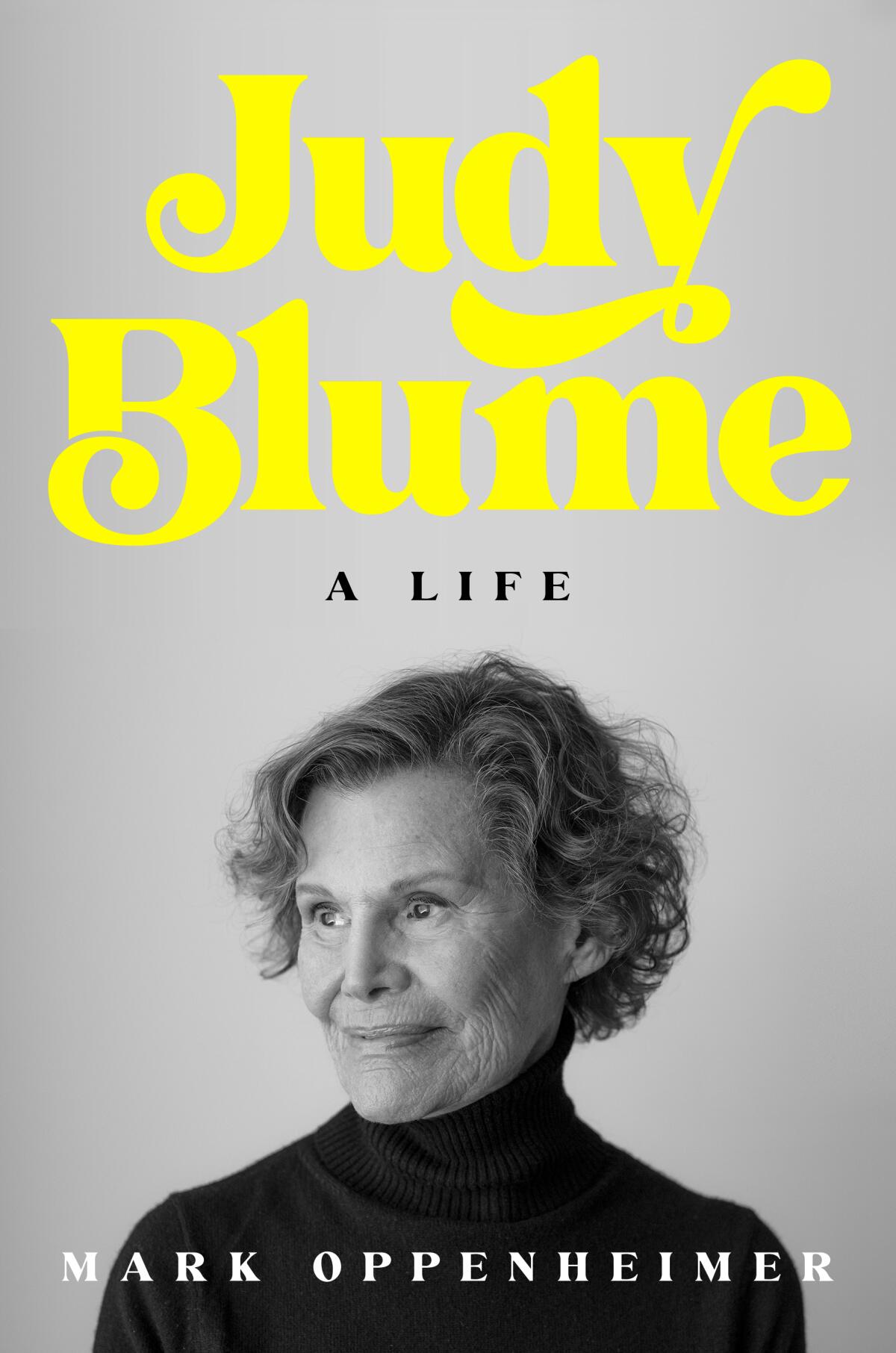
By Mark Oppenheimer G.P. Putnam’s Sons, 480 pages, $35
If you buy books linked on our site, The Times may earn a commission from Bookshop.org, whose fees support independent bookstores.
One of the biggest takeaways from the biography “Judy Blume: A Life” may not be in the story itself but in its author. Because of her frank talk about puberty and sexual awakenings, Blume’s work is usually associated with young female readers. Her biographer, Mark Oppenheimer, is a middle-aged father of five.
He says he received minimal pushback on the idea that a man should be allowed to write Blume’s definitive life story. If the whole point of her books is that there should be no shame in body awareness, what service does it do to say only a woman has the authority to write her story? Plus, although her books aren’t selling as well as they used to — who’s are? — Oppenheimer’s biography points out that there are still plenty of parents who will throw a copy of her seminal “Are You There God? It’s Me, Margaret.” at their kids rather than have the menstruation talk or risk any misinformation that may be online.
“No good writer should be ghettoized,” Oppenheimer says during a recent Zoom call with The Times. “If you’re a good writer, you shouldn’t be marketed just to girls or just to boys or just to white people or just to straight people. Good art should be for everyone.”
It is intrinsic and impossible not to parlay Blume’s stories of sibling rivalries, first loves, friends and frenemies, and (most famously) puberty with what was going on in your life when you read them. Books like “Deenie” and “Superfudge” and “Margaret” are also remarkably malleable enough so that, even if a kid picks them up decades after their release or cannot relate with a parallel experience, they can become placeholders and explainers for what must be going on in the minds of their classmates. Last year, TV creator Mara Brock Akil adapted “Forever,” Blume’s 1975 story of the kind of mutually shared devotion that feels like it will last eternally, into a miniseries set in 2018 Los Angeles.
“I think for many of us, Judy’s books are our first crush or our first love and they do hold a special place that no book we read in our world-weary, cynical 40s can hold,” says Oppenheimer.
Some of this can be attributed to time and brain space. Oppenheimer discovered Blume’s work when he was a child. He’s now a parent, with a career and all the other time-sucks that come with adulthood.
“The books I read as a child imprinted on me in a way that books today don’t,” he says. “I probably remember more plot points of the first Judy Blume books that I read than I do of any book I’ve read in the past five years.”
But what of Blume herself? Can America’s mom also be a three-dimensional person who makes her own mistakes? Discovering her four adult novels — especially “Wifey,” a book about a gilded-caged suburban housewife that even Oppenheimer describes as “a very salacious, one might say, smutty, adult novel” that even some of Blume’s collaborators wanted her to publish under a pseudonym — or watching documentaries about her like 2023’s “Judy Blume Forever,” in which she is seen joking about masturbation with employees at her Key West, Fla., bookstore, can seem as evasive and dangerous as reading your mom’s diary.
Author Mark Oppenheimer
(Lu Arie)
There have been other books about Blume and her work, most notably Rachelle Bergstein’s 2024 deep-dive “The Genius of Judy: How Judy Blume Rewrote Childhood for All of Us.” But Oppenheimer’s biography is a more straightforward tracing of Blume’s life and career. He starts with her childhood when she was encouraged to read Philip Roth at home and went to sleepovers at friends’ houses that were more about body awakenings. He discusses her stifling first marriage, which gave her the last name she carries with her to this day and her two children but is also where she hung her college diploma and another award over her washing machine as reminders of her intellect. There’s talk of her second marriage, which Blume has always been reluctant to discuss, as well as the two abortions that resulted from it. And there are details on her life with her third husband, the polymath George Cooper.
Oppenheimer relied on past news stories about Blume, as well as a collection of her work and professional correspondences that are archived at Yale’s Beinecke Rare Book & Manuscript Library and, probably most informatively, his own interviews with Blume and her friends and family. (Although Blume did agree to speak with Oppenheimer for his book, she declined our request to interview her for this story about that book).
“I think that the difficult subjects are sometimes the ones that make her more relatable,” Oppenheimer says of his subject. “I think most of her fans will find it interesting and admirable that she speaks so candidly about her abortions, about especially her divorce from her first husband, which came as she was getting involved in the [second-wave] women’s movement, about her early same-sex experiences, about masturbation as a girl; these are things we would expect Judy Blume to be candid about.”
Oppenheimer matches how these life events correspond with the ones of Blume’s characters because, for better or for worse, she almost always was an author who wrote what she knew even if her fandom transcended it. What her books lack in character diversity, they make up for in specificity. And that, in turn, also makes them relatable.
“Judy found incredibly compelling human drama in books about the New Jersey suburbs, and that’s a testament to her strength as an artist,” Oppenheimer says.
Writer Judy Blume at her nonprofit bookstore Books and Books on March 26, 2023, in Key West, Fla.
(Mary Martin / Associated Press)
Examining and reexamining Blume’s work as an adult also gave Oppenheimer a better perspective of her writing style. Blume didn’t begin to try to write professionally until she was a married mother of two and some have criticized her work for not being as flowery and polished as others’.
“All of her books tend to take a fairly tight focus on the characters,” Oppenheimer says. “They don’t tend to pull back and look at large societal forces or changes going on in the country or the world. And that’s fine. You know, the same could be said of Jane Austen.”
Perhaps the best example of this is Blume’s own religious foundation. Her most autobiographical novel, “Starring Sally J. Freedman as Herself,” has a protagonist who is paranoid that she sees Adolf Hitler on park benches and whose life is imprinted with stories of a relative who followed her mother into the concentration camps and the neighbors sitting shiva (a time of mourning) for their daughter who got pregnant with her non-Jewish boyfriend. And yet, Oppenheimer notes, Blume is not always immediately thought of as a Jewish writer. Nor have most of her readers been Jewish.
“I think that her Judaism is there, if you know where to look,” says Oppenheimer, who spends the early part of his biography looking at how the synagogue and religious community were a normal part of a young Blume’s life. He adds that “she is somebody who speaks really, really well across religious, cultural and racial differences, and that’s partly why she has sold tens of millions of books.”
Oppenheimer acknowledges that Blume’s characters may not be diverse enough by today’s standards; that they don’t usually discuss “gender identities or sexualities; children of multiracial backgrounds; children who have disabilities.” They can also feel like time capsules to other dimensions; his 12-year-old daughter was scandalized by how normative bullying was after she read “Blubber,” Blume’s 1974 novel about tween mean girls and body shaming.
He adds that some of today’s bestselling young adult novels, like Rick Riordan’s Percy Jackson series about a teen demigod or Suzanne Collins’ dystopia-set “Hunger Games” books, are “contemporary realism [that] focus on extraordinary or unusual circumstances.” And while he’s happy for these books’ popularities, he says that some subjects may be better told by kids who also aren’t tasked with saving the world. (I am pretty sure I learned more about male puberty from Blume’s 1971 story “Then Again, Maybe I Won’t,” which is as much about wealth divides and questionable friend choices as it is about a 13-year-old boy’s inner monologues about her awkward adolescence).
“If what you’re looking for is realism that isn’t focused on obvious external differences, but rather on interiority,” Oppenheimer says, “then Judy Blume still remains one of the premier novelists that you would want to read.”
Friedlander is a pop culture and entertainment journalist based in Los Angeles who hates coffee but loves Coke Zero.
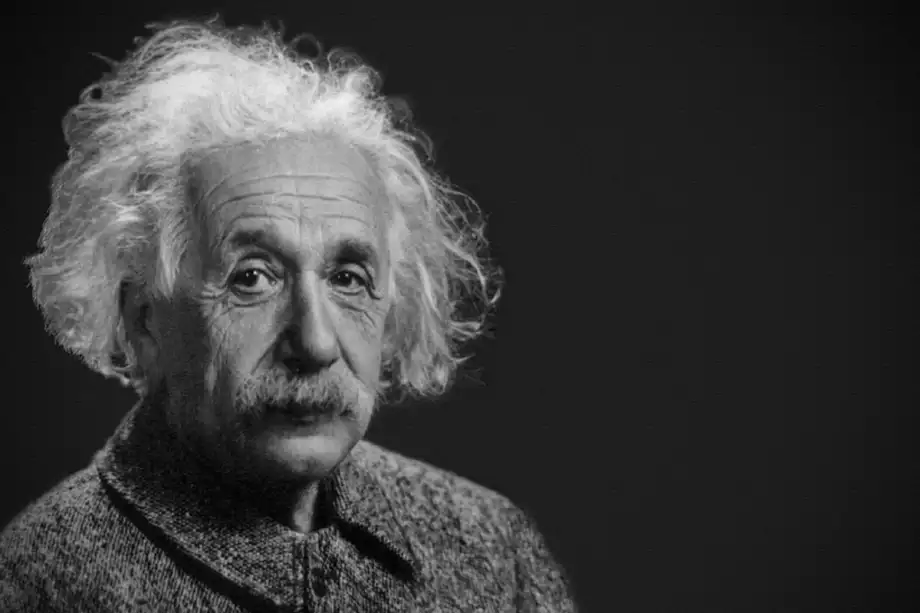
In 1948, as the foundations of the Israeli state were being laid upon the ruins of hundreds of Palestinian villages, Albert Einstein wrote a letter to the American Friends of the Fighters for the Freedom of Israel (AFFFI), condemning the growing Zionist militancy within the settler Jewish community. “When a real and final catastrophe should befall us in Palestine the first responsible for it would be the British and the second responsible for it the terrorist organisations built up from our own ranks. I am not willing to see anybody associated with those misled and criminal people.”
Einstein — perhaps the most celebrated Jewish intellectual of the 20th century — refused to conflate his Jewish identity with the violence of Zionism. He turned down the offer to become Israel’s president, rejecting the notion that Jewish survival and self-determination should come at the cost of another people’s displacement and suffering. And yet, if Einstein were alive today, his words would likely be condemned under the current definitions of anti-Semitism adopted by many Western governments and institutions, including the controversial International Holocaust Remembrance Alliance (IHRA) definition, now endorsed by most Australian universities.
Under the IHRA definition, Einstein’s outspoken criticism of Israel — he called its founding actors “terrorists” and denounced their betrayal of Jewish ethics — would render him suspect. He would be accused not only of delegitimising Israel, but also of anti-Semitism. His moral clarity, once visionary, would today be vilified.
That is why we must untangle the threads of Zionism, colonialism and human rights.
Einstein’s resistance to Zionism was not about denying Jewish belonging or rights; it was about refusing to build those rights on ethno-nationalist violence. He understood what too many people fail to grasp today: that Zionism and Judaism are not synonymous.
Zionism is a political ideology rooted in European colonial logics, one that enforces Jewish supremacy in a land shared historically by Palestinian and other Levantine peoples. To criticise this ideology is not anti-Semitic; it is, rather, a necessary act of justice and a moral act of bearing witness. The religious symbolism that Israel uses is irrelevant in this respect. And yet, in today’s political climate, any critique of Israel — no matter how grounded it might be in international law, historical fact or humanitarian concern — is increasingly branded as anti-Semitism. This conflation shields from accountability a settler-colonial state, and it silences Palestinians and their allies from speaking out on the reality of their oppression. Billions in arms sales, stolen resources and apartheid infrastructure don’t just happen; they’re the reason that legitimate “criticism” gets rebranded as “hate”.
To understand Einstein’s critique, we must confront the truth about Zionism itself. While often framed as a movement for Jewish liberation, Zionism in practice has operated as a colonial project of erasure and domination. The Nakba was not a tragic consequence of war, it was a deliberate blueprint for dispossession and disappearance. Israeli historian Ilan Pappé has detailed how David Ben-Gurion, Israel’s first Prime Minister, approved “Plan Dalet” on 10 March, 1948. This included the mass expulsion and execution of Palestinians to create a Jewish-majority state. As Ben-Gurion himself declared chillingly: “Every attack has to end with occupation, destruction and expulsion.”
This is the basis of the Zionist state that we are told not to critique.
Einstein saw this unfolding and recoiled. In another 1948 open letter to the New York Times, he and other Jewish intellectuals described Israel’s newly formed political parties — like Herut (the precursor to Likud) — as “closely akin in… organisation, methods, political philosophy and social appeal to the Nazi and Fascist parties.”
Einstein’s words were not hyperbole, they were a warning. Having fled Nazi Germany, he had direct experience with the defining traits of Nazi fascism. “From Israel’s past actions,” he wrote, “we can judge what it may be expected to do in the future.”
Einstein warned about what many still refuse to see: a state established on principles of ethnic supremacy and expulsion could never transcend its foundation ethos. Israel’s creation in occupied Palestine is Zionism in practice; it cannot endure without employing repression until resistance is erased entirely. Hence, the Nakba wasn’t a one-off event in 1948; it evolved, funded by Washington, armed by Berlin and enabled by every government that trades Palestinian blood for political favours.
Zionism cannot be separated from the broader history of European settler-colonialism. As Patrick Wolfe explains, the ideology hijacked the rhetoric of Jewish liberation to mask its colonial reality of re-nativism, with the settlers recasting themselves as “indigenous” while painting resistance as terrorism.
The father of political Zionism, Theodor Herzl, stated in his manifesto-novel Altneuland, “To build anew, I must demolish before I construct.” To him, Palestine was not seen as a shared homeland, but as a house to be razed to the ground and rebuilt by and for Jews alone. His ideology was made possible by British imperial interests to divide and dominate post-Ottoman territories. Through ethnic partition and military alliances embellished under the 1917 Balfour Declaration to the ironic Zionist-Nazi 1933 Haavara Agreement, the Zionist project aligned perfectly with the West’s goal, as per the 1916 Sykes-Picot Agreement.
Zionism is a global power structure, not a monolithic ethnic identity.
Many Jews around the world — rabbis, scholars, students and Holocaust survivors and their descendants — continue Einstein’s legacy by saying “Not in our name”. They reject the co-option of Holocaust memory to justify genocide in Gaza. They refuse to be complicit in what the Torah forbids: the theft of land and the murder of innocents. They are not “self-hating Jews”. They are the inheritors of a prophetic tradition of justice. And they are being silenced.
Perhaps the most dangerous development today is, therefore, Israel’s insistence on linking its crimes to Jewish identity. It frames civilian massacres, apartheid policies and violations of international law as acts done in the name of all Jews and Judaism. By tying the Jewish people to the crimes of a state, Israel risks exposing Jews around the world to collective blame and retaliation.
Einstein warned against this. And if Einstein’s vision teaches us anything, it is this: Justice cannot be compromised for comfort and profit. Truth must outlast repression. And freedom must belong to all. In the end, no amount of Israel’s militarisation of terminology, propaganda or geopolitical alliances can suppress a people’s resistance forever or outlast global condemnation. The only question left is: how much more blood will be spilled before justice prevails?
The struggle for clarity today is not just academic, it is existential. Without the ability to distinguish anti-Semitism from anti-Zionism, we cannot build a future where Jews and Palestinians all live in dignity, safety and peace. Reclaiming the term “Semite” in its full meaning, encompassing both Jews and Arabs, is critical. Further isolation of Arabs from their Semitic identity has enabled the dehumanisation of Palestinians and the erasure of shared Jewish-Arab histories, especially the centuries of coexistence, the Jewish-Muslim golden ages in places like Baghdad, Granada/Andalusia, Istanbul, Damascus and Cairo.
Einstein stood up for the future for us to reclaim it.
The way forward must be rooted in truth, justice and accountability. That means unequivocally opposing anti-Semitism in all its forms, but refusing to allow the term to be manipulated as a shield for apartheid, ethnic cleansing and colonial domination. It means affirming that Jewish safety must never come at the price of Palestinian freedom, and that Palestinian resistance is not hatred; it is survival.
And if Einstein would be silenced today, who will speak tomorrow?