question

Adam Miller’s $2-million question: How much will he spend on his mayoral campaign?

Good morning, and welcome to L.A. on the Record — our City Hall newsletter. It’s Noah Goldberg, with an assist from David Zahniser and Rebecca Ellis, giving you the latest on city and county government.

Adam Miller is running for mayor.

You might not know that, and you might not even know who he is — and his campaign team wouldn’t blame you.

In fact, the Miller team’s own internal poll of 800 likely voters shows the tech entrepreneur with just 6% support, behind incumbent Mayor Karen Bass, City Councilmember Nithya Raman, conservative reality TV star Spencer Pratt and leftist Rae Huang. Only 13% of Angelenos even have an opinion of Miller, with 7% coming down on the positive side and 6% negative.

Miller’s pollster, Jefrey Pollock, admits it’s not often that a campaign brags about a humble 6% backing their candidate.

But during a video conference with reporters, Pollock argued that Miller’s support rises along with his name recognition. When likely voters were given more information about the candidates, he shot up to 20%, according to the poll. When provided with additional positive information about the candidates, Miller finished first, with 27%.

“Adam is the one who jumps up,” said Pollock, who runs Global Strategy Group.

After voters got the first dose of information, 22% supported Bass, down from 26%; 21% went with Pratt, up from 14%; 14% backed Raman, up from 12%; and 8% chose Huang, down from 9%.

In a poll earlier this month by the UC Berkeley Institute of Governmental Studies, co-sponsored by The Times, Miller also came out with 6% support. Bass was supported by 25% of voters, while Raman drew 17% and conservative reality TV star Spencer Pratt came in third at 14%. About a quarter of voters were undecided.

Paul Mitchell, vice president of the bipartisan voter data firm Political Data Inc., said the Miller campaign poll was compelling.

“What I see is a good argument that he can make the runoff,” Mitchell said. “This is a real deal.”

The question for Miller and his team then becomes, how can he introduce himself to more voters before the June 2 primary?

Miller is the former CEO of Cornerstone OnDemand, a global training and development company he built over the course of more than 20 years. The publicly traded company was eventually sold to a private equity firm for $5.2 billion. He is also a co-founder of Better Angels, a nonprofit focused on preventing homelessness and building affordable housing.

Among everyday Angelenos, he’s a no-name.

A television, social media and outdoor billboard advertising campaign launched this week should help change that, Miller’s team said. They said the “omnichannel” blitz cost seven figures but did not provide an exact amount.

The first billboard went up this week at Bundy Drive and Wilshire Boulevard, not far from Miller’s Brentwood home. More are expected next week in the San Fernando Valley.

Miller said he personally loaned his campaign a “majority” of the money for the ad blitz.

How much Miller is willing to spend on his mayoral ambitions?

In 2022, billionaire developer Rick Caruso threw more than $100 million of his own money into his campaign against Bass during the primary and runoff elections. He still lost by more than 10 percentage points.

“Obviously, we have the benefit of hindsight that that strategy did not work,” Miller said of the Caruso campaign. “There’s reasons my candidacy is different.”

For one thing, as opposed to Caruso, who was a Republican before registering as a Democrat to run for mayor, Miller is a lifelong Democrat. (That said, Miller voted for Caruso in 2022, said his spokesperson, Jaime Sarachit).

Miller is a moderate who sees himself as leader who gets things done. He believes the LAPD needs a minimum of 10,000 officers, up from about 8,700. He thinks the city should use anti-encampment laws to move homeless people away from sensitive areas like schools and day cares.

Miller would not directly answer a question about how much of his own money he will spend on his campaign. He has so far loaned it $2 million, “to get it up and running,” Sarachit said.

“That’s a significant sum, obviously,” said longtime L.A. political consultant Bill Carrick. “It’s a lot more efficient to write a check from your personal account than it is to go raise $2 million.”

But Miller said his campaign will largely be “traditionally financed,” meaning he plans to fundraise.

You’re reading the L.A. on the Record newsletter

Sign up to make sense of the often unexplained world of L.A. politics.

State of play

— AO-K’ed: Metro’s board on Thursday unanimously approved a new route for a rail line that would extend from South L.A. into West Hollywood — a milestone deal struck after last-minute negotiations between Bass and local leaders. The K Line northern extension would link with four major rail lines and increase the number of riders to 100,000 a day.

— SOCIALIST SNUB: The Los Angeles chapter of the Democratic Socialists of America will not endorse a candidate for mayor. Last weekend, the group voted on whether to reopen its endorsement process and consider backing Huang or Raman but ultimately decided to stay out of the fray for the June primary.

— GUNNING FOR COUNCIL: Leftist City Council candidate Estuardo Mazariegos was convicted of misdemeanor gun possession in 2009. He thinks the conviction is a strength, not a weakness.

— SMALLER BIGGER: On Tuesday, the City Council adopted a strategy that would delay the effects of SB 79 citywide by upzoning 55 single-family and low-density areas, allowing for buildings of four to 16 units that are up to four stories tall. Under SB 79, buildings adjacent to certain transit stops can be up to nine stories.

— NOT UP FOR DEBATE: USC canceled its Tuesday gubernatorial debate, a stunning about-face after days of fiery criticism that every prominent candidate of color was excluded. Although the university defended the methodology used to determine who was invited, it ended up calling off the event with less than 24 hours’ notice.

— PHANTOM SUIT: A man said he has no idea how he became a plaintiff in the county’s $4-billion payout for sex abuse in juvenile halls and foster homes. His lawsuit, which he says was filed without his consent by Downtown LA Law Group, deepens questions around possible fraud in the nation’s largest sex abuse settlement.

— TAX TAKEAWAY: The proposal from a group of business leaders to repeal the city’s business tax has qualified for the November ballot. Organizers said their success — gathering twice as many signatures as needed — shows that voters “want affordability and fairness to be addressed immediately.” Labor unions have vowed to fight the proposal, which would rip an $800-million hole in the city budget.

— HOUSING HUDDLE: Three of the mayoral candidates — Miller, Huang and Raman — took the stage Monday for a downtown forum. The trio went back and forth on housing, transportation and other issues, particularly the future of Measure ULA, the so-called mansion tax. Bass did not attend, citing a previous engagement in New Orleans, where she held a campaign fundraiser with U.S. Rep. Troy Carter (D-La.) and the city’s mayor, Helena Moreno. Pratt also did not show.

QUICK HITS

  • Where is Inside Safe? The mayor’s signature program visited Skid Row in Councilmember Ysabel Jurado‘s district, moving 25 people indoors.
  • On the docket next week: The City Council is on recess next week.

Stay in touch

That’s it for this week! Send your questions, comments and gossip to LAontheRecord@latimes.com. Did a friend forward you this email? Sign up here to get it in your inbox every Saturday morning.


Source link

Trump jokes, rants, talks price of pens as Iran war enters fifth week

During his first Cabinet meeting since launching the U.S. war on Iran, President Trump spent 10 minutes talking about the price of ceremonial White House pens — which he claimed to have brought down, from $1,000 to $5, by switching to his favored Sharpie brand.

Trump was trying to make the point during the Thursday meeting that he’s a great money saver. He seemed chipper, joking with the other leaders of his administration at the table.

Late Thursday, when asked on “The Five” on Fox News about whether Iranian people have access to basic necessities such as drinking water and food, Trump complimented the looks of Dana Perino, the Fox host who’d asked the question, compared to when he’d met her years before.

“Now I’m not allowed to say this, it’s the end of my political career, but you may be even better looking, OK?” Trump said. “You’re not allowed to say a woman’s beautiful anymore.”

He then talked about Iranian authorities killing protesters, but said he’d been pleased with them more recently because they had given him a “present” by allowing oil ships through the Strait of Hormuz.

Through both discussions, Trump maintained a flippant, casual tone — the same he has maintained since the war began a month ago, and a vast departure from that of past wartime presidents.

For weeks, Trump has batted away criticisms of the war campaign and questions about why it was justified and how long it will last. He has derided reporters for asking questions about tactics and whether he’ll deploy boots on the ground as inappropriate and foolish, and repeatedly met concerns about the human toll of the war by shrugging them off or changing the subject.

Meanwhile, his war has cost the U.S. billions of dollars and depleted its global reserves of critical weapons systems such as Tomahawk missiles, which cost millions of dollars each and are needed to maintain U.S. security around the world, according to the Washington Post.

Entering its fifth week, the war has badly disrupted markets, with U.S. stocks falling Friday as Wall Street approached the end of its fifth straight losing week — the longest such streak in nearly four years — and oil prices rising again.

Markets have fluctuated based on Trump’s changing messages on an end to the war, planned and then postponed strikes on Iran’s power plants, strikes on oil and gas infrastructure across the Middle East and Iran’s stranglehold on the Strait of Hormuz, through which a quarter of global oil usually passes.

Trump has talked in recent days about an impending deal to end the war, but so far it has not materialized, with Iran downplaying the seriousness of the negotiations. Iran instead appeared to be formalizing its hold on the strait, including by creating what amounts to a toll on ships seeking passage through the channel from its Islamic Revolutionary Guard Corps.

The number of U.S. deaths in the conflict has held steady for days — at 13 — but the war continues to exact a daily, devastating toll in the Middle East. In Iran, thousands of targets continued being hit, with the death toll ticking toward 2,000.

Speaking by video during a Human Rights Council meeting in Geneva on Friday, Iranian Foreign Minister Abbas Araghchi accused the United States and Israel of harboring a “clear intent to commit genocide” in Iran, claiming that more than 600 schools had been damaged or demolished and more than 1,000 students and teachers “martyred or wounded.”

The discussion related in part to a Feb. 28 strike on an elementary school in Minab that killed more than 165 people, most of them children, which evidence reportedly suggests was the work of the U.S. and which the U.S. says is under investigation.

Casualties also continued in Gulf nations allied with the U.S., where Iran continues to strike U.S. military installations and other infrastructure, and in Lebanon, which Israel has invaded and bombed relentlessly in its own war with the Iranian-aligned Hezbollah force.

And yet, Trump has bounced between speaking engagements and more formal meetings with an apparent lightness — seeming unbothered by the weight of the conflict and acting as if U.S. victory were already at hand.

“We’ve already won the war. Militarily we’ve totally won the war,” he told “The Five” on Thursday.

After Trump’s exchange with Perino, fellow host Greg Gutfeld began to change the topic, saying, “I’m debating whether to be serious or not serious.”

“Do you think Biden would do this interview? Can you imagine? You think Biden — Sleepy Joe — he would do it?” Trump said.

He called the war a “little bit of a detour” from what he said were his otherwise winning economic policies, and asserted again — without providing evidence — that Iran was on the cusp of having a nuclear weapon and would have used it to cause devastation across the Middle East and to the U.S. if the U.S. hadn’t struck first, including when it bombed Iran’s nuclear sites last summer.

“You can’t let a madman or you can’t let a mad ideology have a nuclear weapon,” Trump said.

He repeated his long-pushed lie that he won the 2020 election, and suggested his support among his MAGA base remains at 100%.

An AP-NORC poll this week found that most Americans believe that the U.S. military campaign in Iran has gone too far — including about a quarter of Republicans — and that many are worried about gas prices.

During his Cabinet meeting Thursday, Trump seemed supremely confident, but also aware that the conflict was far from settled.

He said that the U.S. was “extremely — really a lot — ahead of schedule” in its war effort, and that “the Iranian regime is now admitting to itself that they have been decisively defeated.” But he also said that “even now, we don’t know if there are any mines” in the Strait of Hormuz, despite the U.S. having wiped out Iran’s “mine droppers,” and acknowledged that “if you think there may be a mine, that’s a bad thought and it stops things up.”

He said the U.S. has “decimated” about 99% of Iranian capabilities, but “the problem with the strait” is that the remaining 1% threat “is unacceptable, because 1% is a missile going into the hull of a ship that cost $1 billion.”

“If we do a 99% decimation, that’s no good,” he said.

During “The Five” interview, Trump was also asked if the CIA had told him that Supreme Leader Ayatollah Mojtaba Khamenei — who took on the Iranian leadership role after his father, Supreme Leader Ayatollah Ali Khamenei, was killed in initial strikes — is gay, which would be a crime under Iranian law.

“Well they did say that, but I don’t know if it was only them. I think a lot of people are saying that. Which puts him off to a bad start in that particular country, you know?” Trump said, in a stunning acknowledgment of a previously rumored intelligence briefing.

Source link

BBC Question Time’s Fiona Bruce stumps Tom Skinner amid social media showdown

Tom Skinner, an entrepreneur who was on The Apprentice in 2019, appeared on Question Time in Clacton-on-Sea, Essex, which featured a debate about social media giants

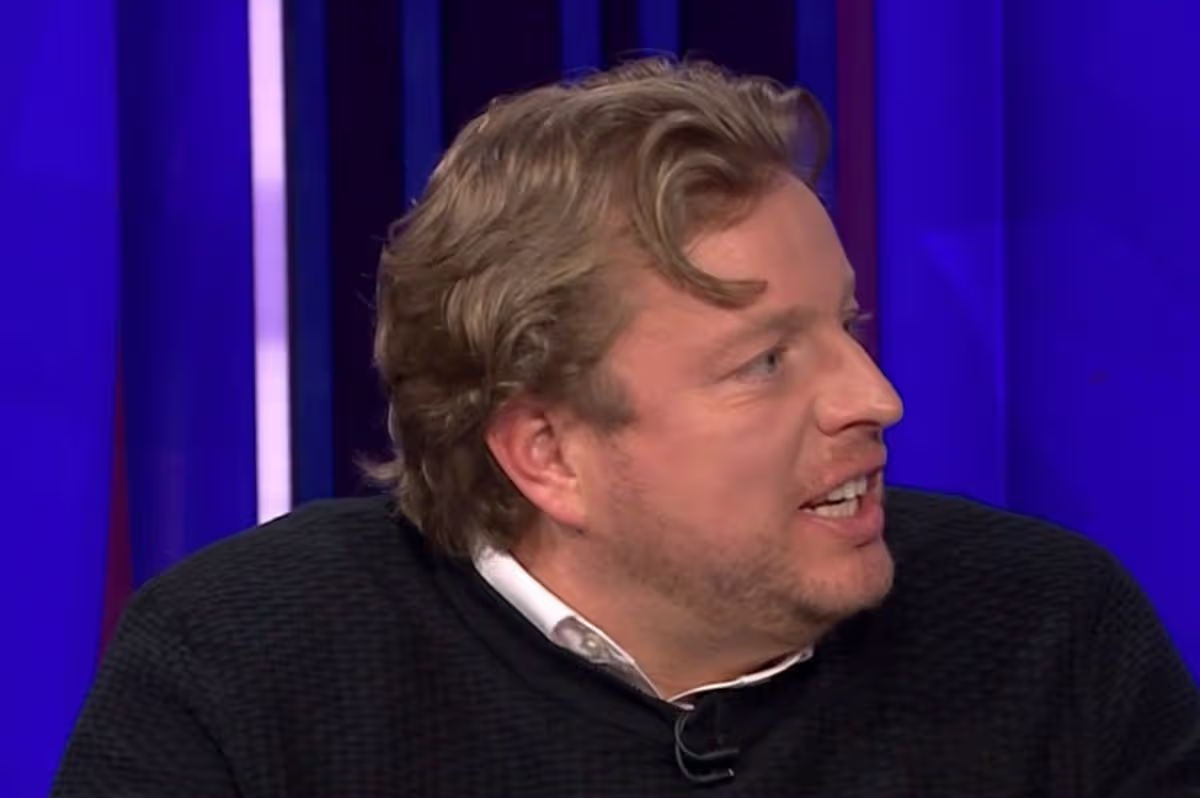
TV personality Tom Skinner squirmed under interrogation from Fiona Bruce during a showdown about social media on Question Time.

The presenter of the topical debate programme accused Mr Skinner, 35, of being “part of the problem” amid the debate around the pros and cons of apps, such as TikTok and Instagram. The entrepreneur regularly posts videos to his 536,000 TikTok followers, including clips of him eating full English breakfasts at his favourite café. He told Question Time he also makes money by promoting products on Instagram, TikTok and other apps.

But Ms Bruce fronted him on his use of the platforms, suggesting he himself was actually playing into the challenges young people and their parents face with social media. Meta and Google were this week found liable for causing addiction in users in a landmark £2.2million legal case, which led to last night’s debate around how they government should help protect children from such addiction.

Addressing Mr Skinner, the host said: “As you said, you are benefiting from social media, you make part of your living that way and, part of the reason you are able to do so is because of the addictive algorithms that will push people towards yours (social media content)… It is giving you a platform, and job opportunities come your way because of it. In the nicest possible way, you are part of the problem.”

The remark led to a wry smile from Justice Minister Jake Richards, also on the panel in Clacton-on-Sea, Essex. Dad-of-three Mr Skinner hesitated as he answered, eventually insisting his videos are harmless.

READ MORE: Calls mount for UK social media ban as Meta hit with ruling over ‘addictive’ appsREAD MORE: Parents across UK to get new powers to limit teenagers’ social media use under trial

Ms Bruce, presenter of the programme since 2019, said: “How can you on the one hand say ‘people shouldn’t be doing it so much’ but, on the other hand, you are benefiting from it?” It left the entrepreneur stuttering again, before he went on to stress the importance of the roles parents should play in protecting children.

“It’s bad. It’s bad when people sit on their phone all day. I’ve seen it myself. I’ve done it myself, I sometimes know I’ve got to be up in four hours and I’ve sat there and I’ve scrolled my brains through, watching absolute nonsense,” Mr Skinner, from Romford, east London, said.

Other panellists defended Mr Skinner, arguing his clips are innocent and “do not drive the worst of the algorithms”. The case this week heard Meta and Google both were negligent in the design or operation of their platforms — including the “infinite scroll” feature that was claimed to trigger addiction in users.

The jury also decided each company’s negligence was a major factor in causing harm to a 20-year-old woman, who says her use of social media as a child addicted her to the technology and worsened her mental health struggles.

Both firms have strongly rejected the verdict and plan to appeal. Meta said: “We respectfully disagree with the verdict and are evaluating our legal options”. A spokesperson for Google added: “This case misunderstands YouTube, which is a responsibly built streaming platform, not a social media site.”

Source link

Means’ surgeon general nomination is stalled as senators question her experience and vaccine stance

Wellness influencer Dr. Casey Means’ nomination to be U.S. surgeon general is stalled a month after senators of both major political parties grilled her on vaccines and other health topics during a tense confirmation hearing, deepening doubts about her ability to secure the votes she needs for the role.

The nomination has languished despite ongoing efforts from the White House and Make America Healthy Again activists, revealing how intractable rifts over health policy can be even when Congress has shown deference to President Trump. It’s become the latest snag in Health Secretary Robert F. Kennedy Jr.’s agenda after two legal setbacks last week.

Means, a 38-year-old Stanford-educated physician who became disillusioned with traditional medicine and did not finish her surgical residency program, has faced scrutiny for her lack of experience and potential conflicts. Another sticking point has been her close alignment with Kennedy, whose efforts to dramatically pull back vaccine recommendations have been slammed by lawmakers and medical groups.

To advance to a full Senate vote, Means likely needs every Republican on the Senate Health, Education, Labor and Pensions Committee to support her nomination. But after last month’s hearing, two of them — Sens. Lisa Murkowski of Alaska and Susan Collins of Maine — told reporters they still had questions for her.

Murkowski told reporters Tuesday that “I’m just in the same spot” when it comes to those hesitations. Collins and Republican committee chairman Sen. Bill Cassidy, a physician from Louisiana who interrogated Means about vaccines during the hearing, didn’t respond to multiple inquiries about the delay.

White House spokesman Kush Desai said in a statement that the Trump administration has been having “productive conversations with the Senate” to advance Means. He added that her “elite academic credentials, research background and advocacy on America’s chronic disease epidemic will make her a critical asset for President Trump’s push to Make America Healthy Again.”

Kennedy spokesman Andrew Nixon reinforced the Republican administration’s support for Means and praised her message calling for healthier lifestyle choices rather than “sick care.”

Contentious hearing set the stage for a tough path to confirmation

Means promotes ideas popular with the MAHA movement, including that Americans are overmedicalized and that diet and lifestyle changes should be at the center of efforts to end widespread chronic disease.

But she’s been criticized for having an inactive medical license, for sometimes failing to disclose financial relationships with brands she promotes and for some of her past health-related comments.

Senators asked her during her hearing about how she would speak to the public about vaccines.

Murkowski and Cassidy pressed Means about her past doubts about the birth dose of the hepatitis B vaccine, which the U.S. Centers for Disease Control and Prevention stopped recommending for all children late last year in a move later temporarily blocked by a federal judge. Means called the hepatitis B vaccine important and lifesaving but said parents should make their own decisions with their doctors.

Cassidy also asked Means whether she would advise Americans to vaccinate against the flu and measles amid outbreaks across the country. She didn’t make that commitment, instead emphasizing the importance of informed consent.

Collins asked Means about her past advocacy for the therapeutic use of psychedelic mushrooms. Means, who has spoken positively of her own experience with the drugs, said she wouldn’t recommend psychedelics for the American public.

Kennedy’s supporters put pressure on hesitant senators

Once it appeared Murkowski and Collins were undecided, MAHA activists orchestrated a push to support Means’ bid by surging phone calls to the two senators.

“Please call both of them. Call them time after time. Get your friends to call them,” Tony Lyons, head of the Kennedy-aligned group MAHA Action, told supporters earlier this month.

Others have loudly opposed Means’ nomination. Dr. Jerome Adams, Trump’s first-term surgeon general, has repeatedly called her unqualified for her lack of an active medical license. He said in an interview that Republicans in Congress and in the Trump administration have told him they disapprove of the pick but see it as Kennedy’s choice.

“What I keep hearing from folks is, ‘This is what Bobby wants,’” he said.

While surgeons general aren’t mandated by law to have an active medical license, they are required to be part of the U.S. Public Health Service Commissioned Corps, a group of health professionals that says members should have up-to-date licenses.

Means said during her confirmation hearing that she had voluntarily made her Oregon medical license inactive, and that Adm. Brian Christine, who runs the Commissioned Corps, had testified that she was eligible to serve.

Even if Means advances out of committee, she might have difficulty securing confirmation by the full 100-member Senate. Republican Sen. Thom Tillis of North Carolina, who isn’t seeking another term, told the Associated Press that he’s leaning against voting for Means.

“Her resume already puts me on alert — and then I don’t think she did herself any favors in the hearing,” Tillis said.

Means’ confirmation delay is unusually long

At nearly 300 days since her nomination in May, Means’ confirmation process has taken almost twice as long as the average presidential pick in Trump’s second term, according to data from the nonprofit Partnership for Public Service. The group found that in the first 400 days, the average time between nomination and confirmation for Trump’s nominees was 157 days.

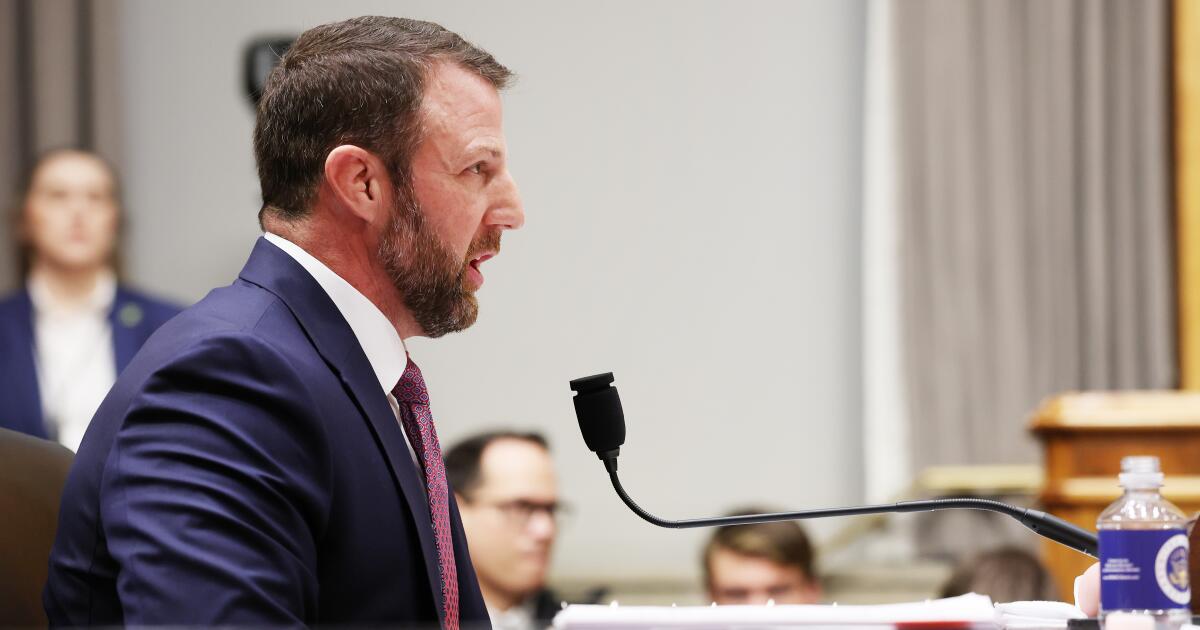
Sometimes the process has gone far more quickly. Markwayne Mullin, the new Department of Homeland Security secretary sworn in Tuesday, had his confirmation hearing, floor vote and swearing-in all within a weeklong period.

One reason for Means’ drawn-out nomination is the birth of her son, which happened last October on the day of her initially scheduled confirmation hearing.

But Chris Piper, manager of public policy and stakeholder engagement at the Partnership for Public Service, said the length of time that has passed since Means’ rescheduled confirmation hearing also is unusual. He said candidates are often voted out of committee within a week of their hearing.

“A monthlong delay following a hearing is atypical for most nominations, particularly at this level of position,” he said.

Swenson writes for the Associated Press. AP writers Joey Cappelletti and Stephen Groves in Washington contributed to this report.

Source link

The Gaza Tribunal: A question of complicity | Genocide

What role has the United Kingdom played in Israel’s war on Gaza? We meet those who say it’s complicit in atrocities committed there.

During the Gaza war, protesters have flooded the streets of major British cities, calling on their leaders to cut off the supply of weapons and other military hardware to Israel.

The United Kingdom’s relationship with its ally is under scrutiny. Jeremy Corbyn, a British MP, set up the Gaza Tribunal to examine whether the UK’s support for Israel amounts to complicity. Doctors and aid workers gave emotional accounts of the horrors they saw while working in the Gaza Strip, and journalists presented evidence of weapons shipments and spy flights allegedly operating from a nearby British air force base. All were making the case that the UK’s unwavering support for Israel is no longer legally or morally justifiable.

In its final report, published on March 16, the Gaza Tribunal said the UK has failed in its duty to prevent genocide and has been complicit in atrocities. It also recommended that the UK end all military cooperation with Israel.

The UK government has yet to comment on the allegations.

Source link

The plan to replace L.A.’s historic Griffith Park Pool

Replacing Griffith Park’s historic but idle swimming pool is likely to take at least three years and cost $40 million while delivering a competition pool, a neighboring recreational pool and a rehabilitated pool house with a gender-neutral bathhouse facility, city officials and designers told Los Feliz residents at an open house meeting Thursday night.

“The pool is being completely replaced. It leaks like a sieve,” said Stephanie Kingsnorth, principal of the architecture firm Perkins Eastman, addressing about 50 community members in a room next to the park’s visitor center.

Perkins Eastman, which is leading the design of the pool site, also worked on the renovation and expansion of Griffith Observatory from 2002 to 2006, when the firm was known as Pfeiffer Partners.

Artist rendition of the proposed renovation for the Griffith Park pool.

While neighbors look on, an artist’s rendition shows the proposed replacement of the Griffith Park Pool and rehabilitation of the pool house. The meeting was held at the Griffith Park Visitor Center Auditorium.

(Gina Ferazzi / Los Angeles Times)

The pool and pool house at Riverside Drive and Los Feliz Boulevard date to 1927, long before Interstate 5 was routed just east of the site in 1964. After decades as a popular spot for children’s swim lessons and recreational lap swimmers, the pool was shut down amid COVID-19 pandemic measures in early 2020. When the city tried to refill the pool, workers found that it no longer held water.

At one point early in planning to replace it, the city Bureau of Engineering forecast construction costs of $28 million. City officials say the project is complicated because of the nearness of the freeway and the Los Angeles River.

Kingsnorth said the project is nearing the end of its design development stage, with many details still under discussion.

In place of the existing seasonal pool, schematic drawings now show a new year-round competition pool, 50 meters long, 25 yards wide and from 3-foot, 6-inches to 12-foot, 9-inches deep.

Next to it, drawings show a training pool 25 yards long and 50 feet wide, with an ADA-compliant gentle slope down to about 4 feet deep.

The two-story pool house’s red tile roof, wooden trellises and Spanish Colonial Revival features will look roughly the same on the outside, Kingsnorth said, and the rehabilitation will comply with federal standards for historic structures.

But some formerly open-air areas will now be covered. An elevator and second set of stairs will be added inside, along with features to boost energy sustainability and meet modern accessibility laws. The site’s open-air showers will be rinse-only.

On the ground floor, the building’s open-air male and female changing rooms will merge into one larger indoor gender-neutral area with private changing rooms and toilet stalls, Kingsnorth said.

“Every single toilet room and dressing room is an individual room,” Kingsnorth said.

Kingsnorth said the gender-neutral dressing room design was not mandated by state or federal restrictions but was a priority for the city’s Recreation and Parks Department. On projects like this, Kingsnorth said, “this is something that’s more common for equity and inclusion.”

Questions from the community focused on features of the pool, public access, cost and effects of the construction work.

“We’re very anxious to have the school come back, so that the kids can learn to swim,” said Marian Dodge, a longtime area resident and past president of the Los Feliz Improvement Assn.

The Griffith Park pool behind a chain-link fence and gate.

The Griffith Park Pool, seen here in 2023, has been closed since 2020, when city workers found major leakage problems.

(Dania Maxwell / Los Angeles Times)

The pool site is within City Council District 4, represented by Nithya Raman, who was not present. Her staffers organized the meeting and urged residents to send questions and comments to griffithparkpool@lacity.org.

The next steps, a handout from the city and design firm read, include creation of construction documents (estimated at six months), obtaining city permits (five months), selecting a construction contractor (five months), construction (18 months), and “project close-out” (six months). If that schedule is met, completion would come in a little over 40 months, around July 2029.

“This is ambitious, but we’re confident that we can get there,” Kingsnorth said.

In an hourlong presentation, followed by about a dozen questions and answers, Kingsnorth was joined by city officials, including Ohaji Abdallah, assistant division head of the Bureau of Engineering’s architectural division, and
Maha Yateem, the Recreation and Parks Department’s principal recreation supervisor for citywide aquatics.

The plan calls for three rows of shaded concrete bleachers for spectators alongside the competition pool. Yateem said the competition pool will include a diving board, adding that “we’re working on a location for that now.”

Because the project means removing tons of existing pool materials and bringing in new ones, “the construction here is going to be quite intense,” Abdallah said. He and Kingsnorth said the “haul route” of construction trucks has not been decided, and Abdallah said he and other officials are discussing the plan’s possible impact on Los Feliz Nursery School, which stands near the pool.

When considering construction costs and “soft costs” like design and environmental review, “I expect this to be about $40 million,” Abdallah said, adding that the project will be vying with other city priorities for dollars from the general fund. He also noted that current estimates were made “before the war started” in Iran and gas prices surged.

After the meeting, Kingsnorth said, “We’re ready to pause if we need to because of the outlying state of the world.”

Source link

Democrats storm out of Justice Department leaders’ briefing on the Epstein files

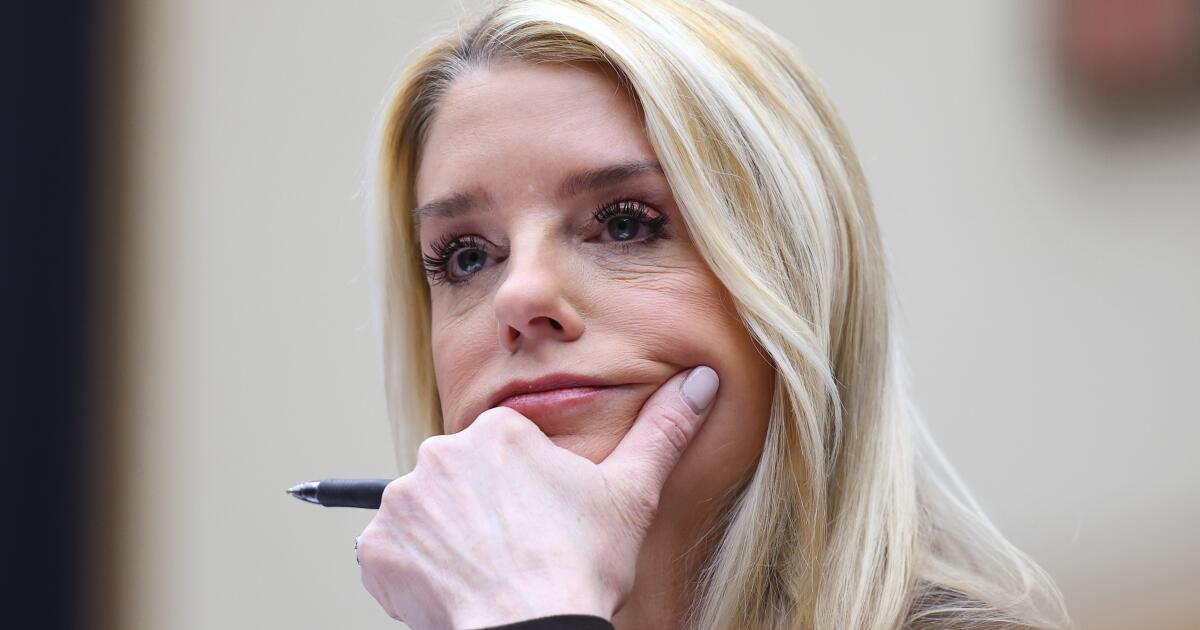
Democratic lawmakers on Wednesday stormed out of a closed-door briefing on the Jeffrey Epstein files by Justice Department leaders, and said they would push to force Atty. Gen. Pam Bondi to answer questions under oath about the case that has plagued the Trump administration.

Bondi and Deputy Atty. Gen. Todd Blanche went to Capitol Hill to try to quell bipartisan frustration over the Justice Department’s handling of millions of files related to Epstein’s sex trafficking investigation.

But less than an hour into the briefing, Democrats walked out in protest of the arrangement and said they would press to enforce a subpoena for Bondi to appear for a sworn deposition next month.

“We want her under oath because we do not trust her,” said Democratic Rep. Maxwell Frost.

Asked by reporters after the briefing whether she would comply with the subpoena, Bondi said, “I made it crystal clear I will follow the law.” She also defended the department’s handling of the Epstein files, saying officials are proud of their work to release millions of documents to the public.

The committee’s Republican chairman, Rep. James Comer, accused Democrats of political grandstanding.

“This for us, for the Republicans, it’s about getting answers,” Comer said after the briefing. “For the Democrats, it’s a political game, and they just demonstrated that today. There’s no reason for them to walk out and clutch their pearls and act like they were offended and outraged.”

Justice Department leaders had hoped the release of documents tied to the disgraced financier would put an end to a political saga that has dogged the president’s second term, but the agency remains consumed by questions and criticism over Epstein’s case and its management of the files. Bondi has accused Democrats of using the furor over the documents to distract from Trump’s political successes, even though some of the most vocal criticism has come from members of the president’s own party.

Five Republicans on the committee voted with Democrats to support the subpoena for Bondi to appear for a deposition on April 14. Lawmakers have accused the Justice Department of withholding too many files and criticized the agency for haphazard redactions that exposed intimate details about victims.

The Justice Department has called the subpoena “completely unnecessary,” noting that members of Congress have been invited to view unredacted files at the Justice Department and that department leaders have made themselves available to answer questions from lawmakers.

The department has sought to assure lawmakers and the public that there has been no effort to shield President Trump, who says he cut ties with Epstein years ago after an earlier friendship, or any other high-profile figures close to Epstein from potential embarrassment. Justice Department leaders have also rejected suggestions that they have ignored victims and insist that while there is no evidence in the files to prosecute anyone else, they remain committed to investigating should new information come forward.

“I’m not trying to defend Epstein — I’m not,” Blanche said in an interview this week with Katie Miller, who is married to top Trump advisor Stephen Miller. “I do defend the work that this department is doing today, right now, which is going after every single perpetrator anyway, and if there is a narrative that exists that we are ignoring Epstein victims, that is false.”

The documents were disclosed under the Epstein Files Transparency Act, the law enacted after months of public and political pressure that requires the government to open its files on the late financier and his confidant and onetime girlfriend, Ghislaine Maxwell. Maxwell, 64, was convicted in December 2021 and sentenced to 20 years in prison for her role over a decade in sexually exploiting and abusing underage girls with Epstein.

Criminal investigations into the financier have long animated online sleuths, conspiracy theorists and others who have suspected government cover-ups and clamored for a full accounting.

After missing a Dec. 19 deadline set by Congress to release all the files, the Justice Department said it tasked hundreds of lawyers with reviewing the records to determine what needed to be redacted, or blacked out. The Justice Department in January said it was releasing more than 3 million pages of documents along with more than 2,000 videos and 180,000 images.

Richer and Groves write for the Associated Press.

Source link

‘Temperament matters’: Senators question Homeland Security nominee at confirmation hearing

At a Senate hearing Wednesday to consider the confirmation of Sen. Markwayne Mullin (R-Okla.) as Homeland Security secretary, Sen. Rand Paul (R-Ky.) opened by asking whether “a man with anger issues” can set the right example for federal immigration agents.

Mullin, President Trump’s pick to replace Secretary Kristi Noem, faced tough questions before the Senate Homeland Security Committee about how he would carry out the administration’s mass deportation effort and how he would steer the agency in the wake of controversies that led to Noem’s firing earlier this month.

For his part, Mullin said he will work to ensure a secure homeland as well as to “bring peace of mind and confidence to the agency.”

“My goal in six months is that we’re not in the lead story every single day,” he said.

Throughout the hearing, Democrats made digs at Noem while examining Mullin’s character and ability to lead the nation’s largest law enforcement agency. Most Republicans painted Mullin as a good man and a hard worker while chastising Democrats for punishing federal workers with the continued Homeland Security funding shutdown.

The leadership shake-up comes amid intense scrutiny over increasingly violent immigration enforcement tactics since last year that intensified after the shooting deaths of two protesters in Minneapolis by immigration agents, which Noem — without evidence — called domestic terrorism.

She was fired days after testifying before congressional oversight committees, during which she faced criticism from Republicans and Democrats alike.

“It’s not the role of the secretary to be a cable news commentator in the wake of a crisis” said Sen. Gary Peters (D-Mich.). “This is a role where temperament matters, where judgment matters and where experience matters.

“We have seen under Secretary Noem’s leadership how shortcomings in these traits can compound the challenges that already come with leading a large and complex department, and now more than ever, we need a DHS secretary who is a steady hand, who will provide thoughtful leadership, follow the facts, tell the truth, and hold agency officials accountable when they need to be.”

Paul brought up incidents to illustrate why Mullin is not fit for the job, including a time in 2023 when he nearly got into a fight in a Senate hearing room and more recently when Mullin called Paul “a freaking snake.”

Paul also confronted Mullin for saying he “completely understood” why Paul was assaulted by a neighbor in 2017, which left him with six broken ribs and a damaged lung.

Mullin did not apologize for his remarks and instead accused Paul of smearing his character.

“I’ve worked with many people in this room,” Mullin told Paul. “It seems like you fight Republicans more than you work with us.”

But Mullin added that their personal differences wouldn’t keep him from doing his job — “it’s bigger than partisan bickering” — and asked Paul to let him earn his respect.

Paul appeared unmoved. Referencing the 2023 near fight with Sean O’Brien, the head of the International Brotherhood of Teamsters, Paul asked Mullin to “explain to the American public how a man who has no regrets about brawling in a Senate committee can set a proper example.”

Mullin was prepared for the moment: O’Brien was sitting behind him. The union president, he said, has become a close friend.

“Both of us agreed we could have done things different,” Mullin said.

Source link

Atty. Gen. Pam Bondi subpoenaed to answer questions from Congress about the Epstein files

Atty. Gen. Pam Bondi was subpoenaed Tuesday to answer questions from Congress about the Justice Department’s sex trafficking investigation of Jeffrey Epstein and the agency’s handling of millions of files related to the disgraced financier.

Bondi was ordered to appear for a deposition on April 14 by the Committee on Oversight and Government Reform after a vote earlier this month that five Republicans supported.

The Justice Department’s failure to fend off the subpoena from the Republican-led committee underscores widespread discontent among President Trump’s own base over Bondi’s management of the review and release of a trove of documents from the criminal investigation into Epstein.

“The Committee has questions regarding the Department of Justice’s handling of the investigation into Jeffrey Epstein and his associates and its compliance with the Epstein Files Transparency Act,” Rep. James Comer, the Republican chairman, said in a letter to Bondi.

“As Attorney General, you are directly responsible for overseeing the Department’s collection, review, and determinations regarding the release of files pursuant to the Epstein Files Transparency Act, and the Committee therefore believes that you possess valuable insight into these efforts,” he wrote.

The department on Tuesday called the subpoena “completely unnecessary.” Bondi and Deputy Atty. Gen. Todd Blanche were expected to provide a private briefing Wednesday to members of the committee.

“Lawmakers have been invited to view the unredacted files for themselves at the Department of Justice, and the Attorney General has always made herself available to speak directly with members of Congress,” the department said in a statement. The agency said it looks forward to “continuing to provide policymakers with the facts.”

The Trump administration has faced constant political headaches since the rollout of the files began in December, with critics accusing the department of hiding certain documents and over-redacting files. In other cases, victims have slammed the department for sloppy redactions that revealed their sensitive information.

The Justice Department has fiercely defended its handling of the Epstein files, saying it worked as quickly and diligently as possible to review and release millions of documents required under the law. The department has denied any accusations that it used redactions to protect certain people or improperly withheld certain materials. And it has said it immediately worked to fix any redaction errors raised by victims.

Richer writes for the Associated Press.

Source link

Trump’s mass deportation agenda is at a crossroads with the Homeland Security shake-up

The Department of Homeland Security will soon be under new management, an opportunity to reset President Trump’s immigration agenda or to double down on his signature campaign promise to conduct the largest deportation operation in American history.

The White House’s political director recently encouraged party lawmakers during a retreat at the Republican president’s golf club in Florida to focus on immigration enforcement against criminals, a pivot from the mass deportation agenda he ran on. House Speaker Mike Johnson said the aggressive operations have created a “hiccup” for the party, which is now embarking on a “course correction.”

Yet all indications are that Trump’s mass deportation operation is not stalling but intensifying, with billions of dollars being spent to hire Immigration and Customs Enforcement officers, build warehouse detention sites and meet the administration’s goal of rounding up and removing some 1 million immigrants from the U.S. this year.

“We are at an interesting moment where it has been an inflection point — the public has finally seen what mass detention and mass deportation mean,” said Sarah Mehta, who tracks the issue at the American Civil Liberties Union.

“This is not an agency that’s slowing down,” she said. “They’re really going forward with some of the cruelest policies.”

White House spokeswoman Abigail Jackson said the president’s policies have sent immigrants out of the U.S., either through forced deportations or on their own, and sealed up the U.S.-Mexico border.

“Nobody is changing the administration’s immigration enforcement agenda,” she said.

Senators ready to grill Trump’s DHS nominee over deportations

The questions put Homeland Security at a crossroads. Secretary Kristi Noem is on her way out, and Trump’s nominee to replace her, Sen. Markwayne Mullin of Oklahoma, appears this week for Senate confirmation hearings.

After the intense deportation sweeps in Minneapolis and other cities — and the deaths of at least three U.S. citizens at the hands of officers — Democratic lawmakers are refusing to provide routine funding unless the department changes its policies.

At the same time, those who believe Trump won the White House with his mass deportation agenda are disappointed the administration did not achieve its goals last year and insist he must do better.

“There has been a lot of talk in Congress and now in the White House about kind of backing away from President Trump’s, candidate Trump’s, mass deportation promise,” said Rosemary Jenks, co-founder of the Immigration Accountability Project, which argues for deportations.

“We believe that now is an opportunity,” she said. “We’ve got to get the deportation numbers up.”

A nation of immigrants no longer?

The debate is playing out as the United States, celebrating its 250th year, squares its founding as a nation of immigrants with images of masked federal agents breaking car windows and detaining people suspected of being in the U.S. without proper legal standing.

The Congress, controlled by Republicans, provided some $170 billion in last year’s tax cuts bill to fuel the effort, more than tripling the budget of ICE.

GOP Sen. Eric Schmitt of Missouri, in a fiery speech, fought back against the Democrats’ proposed restraints. “This question about deporting illegal immigrants was on the ballot. President Trump was not bashful,” he said. “And the American people supported the idea that we are going to deport people.”

Yet there are signs of cracks in the Trump coalition. Some Republicans prefer what one called a more humane approach and are sharing their views with Mullin.

Sen. Ron Johnson (R-Wis.), considered a stalwart against illegal immigration, said in his state it’s immigrants who milk most of the dairy cows, and he’s heard from restaurant groups that rely on immigrants to fill jobs.

“Can we just turn back the clock and have … all these people who came in here illegally, just be back home?” he asked.

“In terms of actually implementing that, it’s a lot tougher — particularly, in fact, when you realize a lot of these people, most of them, came here to seek opportunity, wanting freedom,” he said. “They’re working, supporting their family, contributing to organizations and community.”

Mass deportation group wants more

The Mass Deportation Coalition, a group of conservative organizations including the Heritage Foundation and Erik Prince, founder of the security firm Blackwater, was formed recently to keep the administration on track.

It calls last year’s focus on removing violent criminal immigrants “phase one” and says “phase two” should focus this year on deporting immigrants beyond those with violent criminal histories.

Mark Morgan, who served as acting head of ICE and Customs and Border Protection during Trump’s first term and is part of the coalition, said that doesn’t mean roving patrols through Home Depot parking lots. It’s about strategic enforcement focused on immigrants at worksites and those who have overstayed visas and whom a judge has already ordered removed, he said.

But they’re facing opposition from within the Republican Party, Morgan said, particularly from those who want to narrow deportation to mainly criminals and from business groups that want to ease up on worksite enforcement.

“The Republicans that are saying that their definition of targeted enforcement is only criminal, they’re wrong. They’re on the wrong side of this,” he said.

“That’s why you see some of the base that’s really becoming apoplectic because they’re like, ‘Wait a minute. You’re talking about only removing criminals now? That’s not what you promised,’” Morgan said.

What’s coming next

The deportation advocates as well as those working to protect the rights of immigrants see that the Trump administration’s best chance at reaching its goals is creating an environment so unwelcoming for immigrants that they just leave — what’s often called self-deportation.

Mehta, at the ACLU, expects the administration will step up efforts to end temporary permissions that allow immigrants to remain in the U.S. — particularly refugees and asylum seekers — while their cases are making their way through the system. She called it a “deliberate attempt to make people undocumented — to take away lawful status — and then to be able to enforce against them.”

Sen. Alex Padilla (D-Calif.) said he fears that more nonviolent immigrants will be rounded up to fill the new warehouses being equipped as the Trump administration tries to reach its deportation goals.

That’s unacceptable, he said, and among “the key questions that Senator Mullin will have to answer at his confirmation hearing.”

Mascaro, Santana and Cappelletti write for the Associated Press.

Source link

Inside the room at Oscars 2026: What you didn’t see on TV

An Oscars slugfest for the ages ran its course, with “Sinners” and “One Battle After Another” duking it out and tallying up wins while the low but steady hum of host Conan O’Brien’s patented brand of weirdness tied the room together. A few unnecessarily curt speech interruptions threatened the calm, but mainly, this was a smoothly run machine of a show, devoid of mishaps. Even the rare circumstance of a tie was handled expertly by live-action-short award presenter Kumail Nanjiani, never bringing to mind the immortal confusion of “Moonlight” vs. “La La Land.”

But what didn’t make it to the telecast? Here are some flavorful takeaways — small yet memorable — that stick in mind from our several reporters in the room on Sunday.

A parade of praise for Jessie Buckley

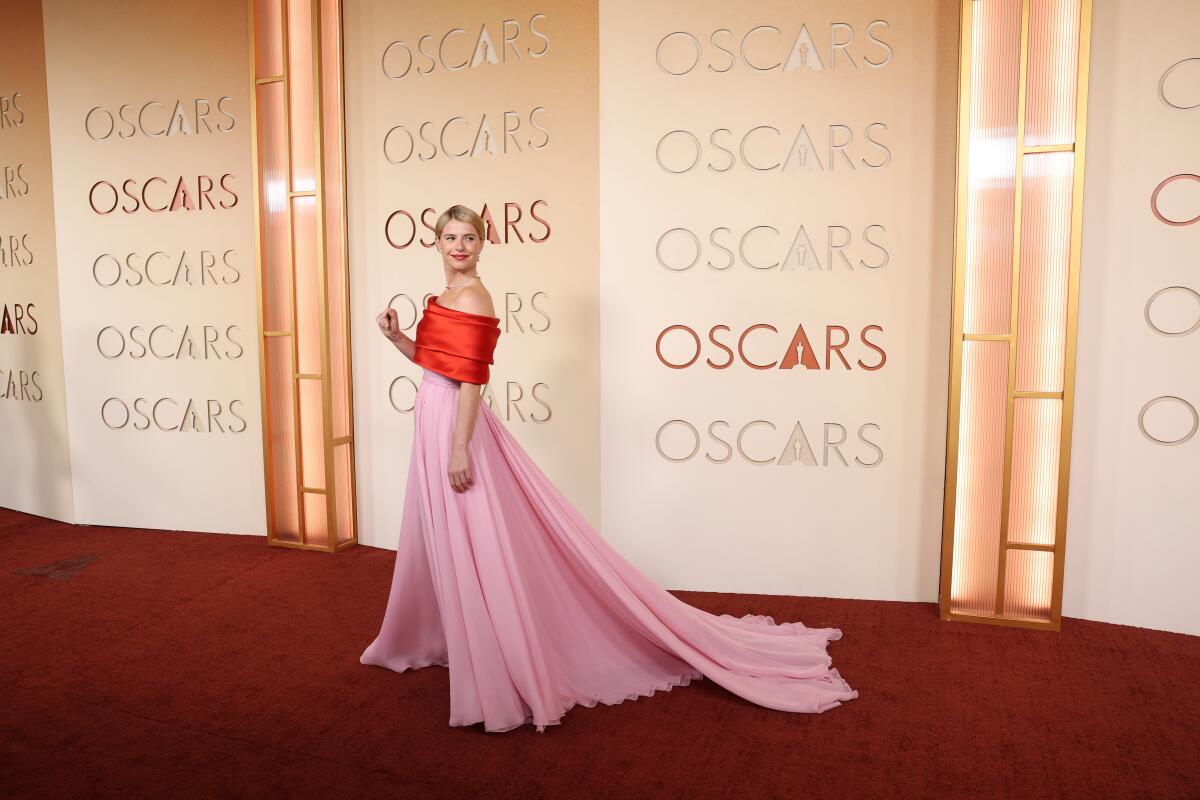
An actor in a pink dress and red top walks the red carpet.

Jessie Buckley arrives on the red carpet at the 98th Annual Academy Awards.

(Myung J. Chun / Los Angeles Times)

As she strode through the lobby of the Dolby Theatre pre-show, Jessie Buckley, nominated for lead actress for her role in “Hamnet,” was fanned with praise by other attendees. Even in the restroom, she couldn’t escape the well-wishers. On her way back to the buzzing lobby, she held the train of her red and pink Chanel gown graciously saying, “Thank you, thank you.” — Brittany Levine Beckman

The pressure’s off for stars during commercial breaks

Two women in gowns hug.

Elle Fanning and Demi Moore hug during the 98th Academy Awards.

(Robert Gauthier / Los Angeles Times)

During the telecast’s first commercial break, supporting actress nominee Elle Fanning of “Sentimental Value” took her loss in stride and leaned over her seat to chat with former “A Complete Unknown” costar Timothée Chalamet, nominated this year for “Marty Supreme,” and his partner, Kylie Jenner.

Across the aisle, “One Battle After Another’s” Leonardo DiCaprio stood up and reached over to lock fingers with Benicio Del Toro. — Yvonne Villarreal

The Oscars address inflation with a goodie box

A note from Conan O’Brien left for attendees in snack boxes.

A note from Conan O’Brien left for attendees in snack boxes.

(Jessica Gelt / Los Angeles Times)

Each year, guests at the Academy Awards are given a small cardboard box of snacks left beneath their seats to get them through the always lengthy ceremony. A note from the host is generally inside. This year’s note, signed by Conan O’Brien, read, “I hope you enjoy this Conan O’Brien ‘Moderately Happy Meal’ ™. These snacks may not look like much but in any movie theater they would run you $85.” The snacks in question were a box of Junior Mints (Times reporter Josh Rottenberg got Raisinets), a small bag of Skinny Pop and a tin bottle of water. — Jessica Gelt

Jesse Plemons won’t succumb to ‘peer pressure’

Kirsten Dunst and Jesse Plemons arrive at the 98th Academy Awards at the Dolby Theatre in Hollywood.

Kirsten Dunst and Jesse Plemons arrive at the 98th Academy Awards at the Dolby Theatre in Hollywood.

(Myung J. Chun / Los Angeles Times)

“Bugonia” star Jesse Plemons stood near the main lobby bar talking with friends and posing for pictures with fans while finishing the dregs of a drink. A server approached him and asked if he’d like another. Plemons politely declined and the server laughed, saying, “Sorry, I didn’t mean to give you any peer pressure.” — Jessica Gelt

Amy Madigan inquires about press room rules; ‘Is it like bingo?’

Amy Madigan after winning the Oscar for supporting actress for "Weapons."

Amy Madigan after winning the Oscar for supporting actress for “Weapons.”

(Kayla Bartkowski / Los Angeles Times)

After taking the stage to accept her first Oscar win for “Weapons” on Sunday, Amy Madigan paused operations in the press room to ask how moderators decide who gets to ask questions of the night’s winners.

“Is it like bingo?” the actor asked. As laughter swelled across the crowd in response, she clarified hers was a “serious question.” — Malia Mendez

After a loss, Stellan Skarsgård knows the meaning of ‘Sentimental Value’

Megan Everett-Skarsgård and Stellan Skarsgård at the 98th Annual Academy Awards.

Megan Everett-Skarsgård and Stellan Skarsgård at the 98th Annual Academy Awards.

(Myung J. Chun / Los Angeles Times)

Stellan Skarsgård, of “Sentimental Value,” enjoyed a cocktail in a VIP room just off the main auditorium fresh off of losing the Oscar for supporting actor to Sean Penn for his performance in “One Battle After Another.”

Fans rushed Skarsgård anyway, shaking his hand and telling him how much his performance as a troubled alcoholic father and artist resonated with them. “We had four actor nominations on an international film,” Skarsgård told one of them. “That’s never happened before.” — Jessica Gelt

Two of this Oscar season’s tallest figures share a moment

During a commercial break, 6-foot-5 “Frankenstein” star Jacob Elordi and 6-foot-6 Oliver Laxe, director of international feature nominee “Sirāt,” greeted one another at the lobby bar. The pair, who have been impossible to miss as two of the tallest people at various events throughout awards season, shared a warm, high-altitude embrace and Elordi introduced the French-born Laxe to his date for the Oscars: his mother, Melissa. — Josh Rottenberg

‘The Singers’ and ‘Two People Exchanging Saliva’ winners are happy to share their Oscars success

From left, producer Jack Piatt and director Sam A. Davis, the co-directors of "The Singers,"

From left, producer Jack Piatt and director Sam A. Davis, makers of “The Singers,” pose with Natalie Musteata and Alexandre Singh, co-directors of “Two People Exchanging Saliva.” All of them won Oscars for live-action short.

(Kayla Bartkowski / Los Angeles Times)

Gasps erupted in the press room after presenter Kumail Nanjiani announced the seventh-ever tie in Academy Awards history Sunday evening, between live-action shorts “The Singers,” directed by Sam A. Davis and produced by Jack Piatt, and “Two People Exchanging Saliva,” directed by Alexandre Singh and Natalie Musteata.

Speaking to the press room after the ultra-rare event, Piatt was unbothered and even enthused by the outcome, saying he wished there could be a “five-way tie” among all the category’s nominees.

Davis agreed, confiding that he’d previously told the “Two People Exchanging Saliva” team “in confidence, that if we lost, I hope we lost to them.”

Shortly thereafter, Musteata said tying with “The Singers” folks was “such a dream.”

“Someone on Reddit asked us if we would be happy to share the award, and we were like, ‘Heck yeah, we would love to share it with another film that is equally beautiful and totally different.’ ” — Malia Mendez

Elle Fanning soothes Timothée Chalamet after lead actor Oscar goes to Michael B. Jordan

Elle Fanning talks with Stellan Skarsgard during the 98th Annual Academy Awards

Elle Fanning talks with Stellan Skarsgård during the 98th Academy Awards. Timothée Chalamet was seated in front of Fanning during the show.

(Robert Gauthier / Los Angeles Times)

When Michael B. Jordan walked off stage and the show went to commercial break, Timothée Chalamet, who was up against Jordan in the lead actor category, took a sip of his drink as Elle Fanning, sitting behind him, gave him a pat on the back.

Fanning talked to her “A Complete Unknown” co-star throughout the night, who barely turned around to look at her. Kylie Jenner kept rubbing and patting Chalamet’s hand while he nervously jiggled his right leg. — Yvonne Villarreal and Jessica Gelt

Autumn Durald Arkapaw receives standing ovation in press room after historic win

Autumn Durald Arkapaw accepts the Oscar for cinematography for "Sinners"

Autumn Durald Arkapaw accepts the Oscar for cinematography for “Sinners” — the first woman to win the award.

(Robert Gauthier / Los Angeles Times)

“Sinners” shooter Autumn Durald Arkapaw on Sunday became the first woman to win the Oscar for cinematography. As she arrived backstage following her historic win, the press room erupted into applause, with many reporters delivering a standing ovation.

Arkapaw was equally thrilled, telling the room, “A lot of little girls that look like me will sleep really well tonight.”

“I heard Karen O say once at a concert… ‘You have to see you to be you,’” she said. “Ryan gives us, the women on this film, and our heads of department, he gives us those opportunities to shine and be ourselves and work in a creative environment where we’re leading.”

Such trust is rarely extended by directors, Arkapaw said, and she is grateful. — Malia Mendez

Source link

Popular food influencer Eating With Tod reveals he’s popped the question to his stunning girlfriend

POPULAR food influencer Eating With Tod has revealed he has asked his stunning girlfriend to marry him.

The social media star, who boasts over 2million followers, revealed he had popped the question to his rarely-seen partner Mea.

Food influencer Eating With Tod has revealed he’s asked his girlfriend to marry himCredit: Instagram
Real name Toby, the social media star popped the question to partner MeaCredit: Instagram
Mea showed off her huge diamond ringCredit: Instagram

The influencer, whose real name Toby Inskip, took to Instagram to share their happy news.

The restaurant reviewer shared a slew of snaps from his romantic proposal, in Brazil, which included one of him down on one knee on a yacht.

Another photo saw Mea flashing her HUGE diamond ring for the camera, while another sweet snap saw the newly engaged couple posing for a romantic selfie.

Toby captioned the engagement announcement post with: “Cheers to the next chapter @mea_c.k – can’t wait for the next adventure with you ❤️

‘DREAMT OF YOU’

Fashion influencer Ainsleigh Paige reveals she’s pregnant with first baby


night-stress

Influencers Sophia and Cinzia slammed for selling pyjamas for almost £100

“Luckily the ring didn’t fall into the water… #engagement #wedding #brazil.”

Fans rushed to share their joy for the couple, with one posting: “Congrats you two!”

Another commented: “This is such wonderful news!”

A third said: “So awesome! Congratulations!!”

A fourth added: “Massive congratulations to you both!”

Mea also shared the sweet snaps and wrote: “03. 03. 26. Rio de Janeiro, Brazil, sailing between Christ the Redeemer and Sugarloaf Mountain Toby proposed.”

The social media star has a huge following Eating With TodCredit: Instagram

Toby’s new fiancee doesn’t appear a lot on Toby’s Instagram, and it is not clear on how long they have been in a relationship for.

Meanwhile, the social media star’s Eating With Tod channel is so popular that he is one of the biggest food influencers in the UK.

Toby’s content sees him review restaurants from around Britain by trying out their different dishes and giving his opinion.

However, despite his popularity, he came under fire last December for his highly-anticipated Christmas food market, held on London’s Tottenham Court Road.

Toby is known for his love of foodCredit: Instagram

Fans posting about the event criticised it for overcrowding and overpricing.

It was noted that one stall was commanding £6 for a cinnamon roll, while another vendor was charging an eyewatering £13 for a burger.

Meanwhile, since rising to fame Toby has boosted his bank balance by working with huge brands like McDonald’s, Tabasco hot sauce and Gordon Ramsay Street Pizza.

Fans can also buy Eating With Tod merch which sees T-shirts being flogged for £25.

The Influencer Insider – Get all the gossip on all your favourite online stars

Want to know more about the influencer who faked cancer? Read all about Brittany Miller and her sham career here.

We have all the inside gossip about Ladbaby mum’s incredible weight loss here.

And talking of weight loss, we know all about what is going on with B&M queen Becki Jones, which you can read up on here.

If health influencers are your thing, then read this on the man behind Tonic Health and his dubious claims here.

Source link

Iran’s succession question: Rouhani’s name resurfaces amid leadership void | Israel-Iran conflict

In Iran’s major turning points, Hassan Rouhani’s name tends to resurface – even when he is no longer at the centre of decision-making. And as the Islamic Republic enters a sensitive transitional phase after Supreme Leader Ali Khamenei was killed in a joint United States-Israeli strike, the question of which figures might be used to calm the domestic arena or rebalance power inside the system has returned to the forefront.

Rouhani, Iran’s former president (2013–2021), a Muslim leader with a doctorate in law, is not an outsider to the system he once promised to “reform”. He is a product of it: a longtime parliamentarian, a veteran of the national-security apparatus, and a former chief nuclear negotiator who rose to the presidency in 2013 as a pragmatist offering economic relief through diplomacy.

The long road through parliament

Rouhani was born in 1948 in Sorkheh, in Iran’s Semnan province. He received religious training in the Hawza system (Islamic religious seminary), then studied law at the University of Tehran, before earning a PhD in law from Glasgow Caledonian University in 1999.

After the revolution, he built his career through parliament. He was elected to the Majlis (Iran’s legislature) for five consecutive terms between 1980 and 2000, giving him practical political experience and longstanding relationships within the elite.

That background explains part of his later image as a “consensus man” more than an ideological confrontational leader: someone who moves within the rules of the game, not outside them.

A ‘third road’ in Iran’s post-revolution politics

To understand Rouhani’s political brand, it helps to place it in a longer arc of post-1979 ideological currents inside the Islamic Republic – an arc often described in Iranian political writing as a sequence of competing “discourses” that nonetheless remained anchored to the revolution and the system’s religious-constitutional framework.

Iran moved through phases that emphasised different priorities: currents sometimes described as “Islamic left”, “Islamic liberalism”, and a more market-oriented turn under former leader Hashemi Rafsanjani; then a period of “Islamic democracy” and “civil society” associated with Mohammad Khatami; followed by a social-justice-heavy, populist register under Mahmoud Ahmadinejad.

That’s when Rouhani arrived with the language of e‘tedal –or “moderation”.

Within that framework, “moderation” presents itself as an attempt to balance what supporters call the system’s two pillars: the “Republic” (pragmatism, governance, responsiveness) and the “Islamic” (ideals, clerical authority, revolutionary identity). This balance became central to Rouhani’s pitch in 2013: He promised to reduce external pressure, restart economic growth and lower domestic polarisation without challenging the authority structure that ultimately constrains any elected president in Iran.

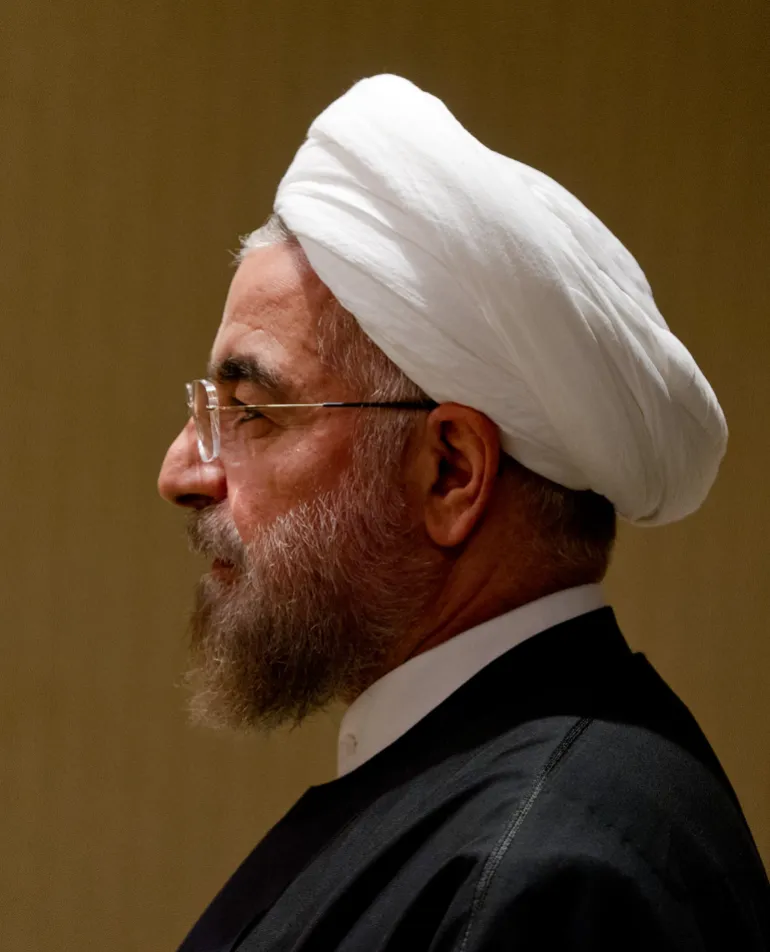
Iranian President Hassan Ruhani Photo: DANIEL BOCKWOLDT/dpa | usage worldwide [Daniel Bockwoldt/Getty Images)
Iranian President Hassan Rouhani, during talks with the German foreign minister at the United Nations General Assembly, in September 2014 [File: Daniel Bockwoldt/Getty Images]

The negotiator and president

Between 2003 and 2005, Rouhani led Iran’s delegation in nuclear negotiations with the “European troika” (Britain, France and Germany). He gained a reputation as a “pragmatist” among Western diplomats, while Iranian hardliners accused him of making concessions.

Later, that record became a pillar of his 2013 presidential campaign: a negotiator rather than a confrontationist.

In June that year, Rouhani won the presidency in the first round with more than 50 percent of the vote, avoiding a run-off in an election that saw high turnout.

Rouhani’s signature achievement was the 2015 nuclear agreement, the Joint Comprehensive Plan of Action (JCPOA), negotiated between Iran and the P5+1 – the US, China, Russia, France, United Kingdom and European Union.

Under the deal, the US and its allies lifted the bulk of sanctions imposed on Iran, and allowed Tehran access to more than $100bn in frozen assets. In exchange, Iran agreed to major caps on its nuclear programme.

At home, Rouhani sold the deal as a route to normalise the economy and curb inflation.

2017: A second mandate – and first brush with Trump

In May 2017, Rouhani won a second term with about 57 percent of the vote. Many inside Iran read the result as a bet by the country’s people on continued “opening” and reduced isolation.

But the power equation within Iran did not change. The presidency manages day-to-day governance, but it does not decide alone on the security services, the judiciary, the Revolutionary Guards or the core media architecture.

The diplomatic opening proved short-lived. In 2018, US President Donald Trump, in his first term, withdrew Washington from the JCPOA and reimposed sweeping sanctions, sharply limiting the economic gains Rouhani had promised. The reversal weakened Iran’s pragmatists and reformists, who had invested political capital in defending the agreement as the best available route out of isolation–while giving hardliners new ammunition to argue that negotiations with the US cannot deliver durable relief.

Post-presidential year – and a return from political exile?

Rouhani’s presidency ended in 2021, and with the rise of conservative dominance within Iran’s politics, he appeared to be gradually pushed to the margins. He then became a member of Iran’s Assembly of Experts – the body constitutionally empowered to choose the supreme leader.

But in January 2024, the Reuters news agency reported that the Guardian Council barred Rouhani from running again for the Assembly of Experts.

Two years later, after the February 28 strike that killed Khamenei, the country – according to the constitution– entered a temporary arrangement phase until the Assembly of Experts selects a new leader. President Masoud Pezeshkian, Supreme Court Chief Justice Gholam-Hossein Mohseni-Ejei and Guardian Council member Ayatollah Alireza Arafi form the interim leadership council that are in charge until the Assembly of Experts announces its pick for the next Supreme Leader. 

And from the hushed conversations and chatter that have emerged from within Iran’s elite circles over potential candidates for the supreme leader’s role, Rouhani’s name has resurfaced.

That possible return to political life, analysts say, is a testament to what Rouhani represents in Iran’s factional geometry: a governing style that privileges tactical compromise, economic management and controlled engagement – while remaining fundamentally loyal to the Islamic Republic’s constitutional-religious architecture.

As Iran plans Khamenei’s succession, it faces a central question: whether to broaden legitimacy by incorporating pragmatic faces or double down on a security-first posture. Rouhani sits at that crossroads – not the architect of the system, and no longer a principal decision-maker, but a durable indicator of how far Iran’s establishment is willing to bend without breaking.

Source link