politics

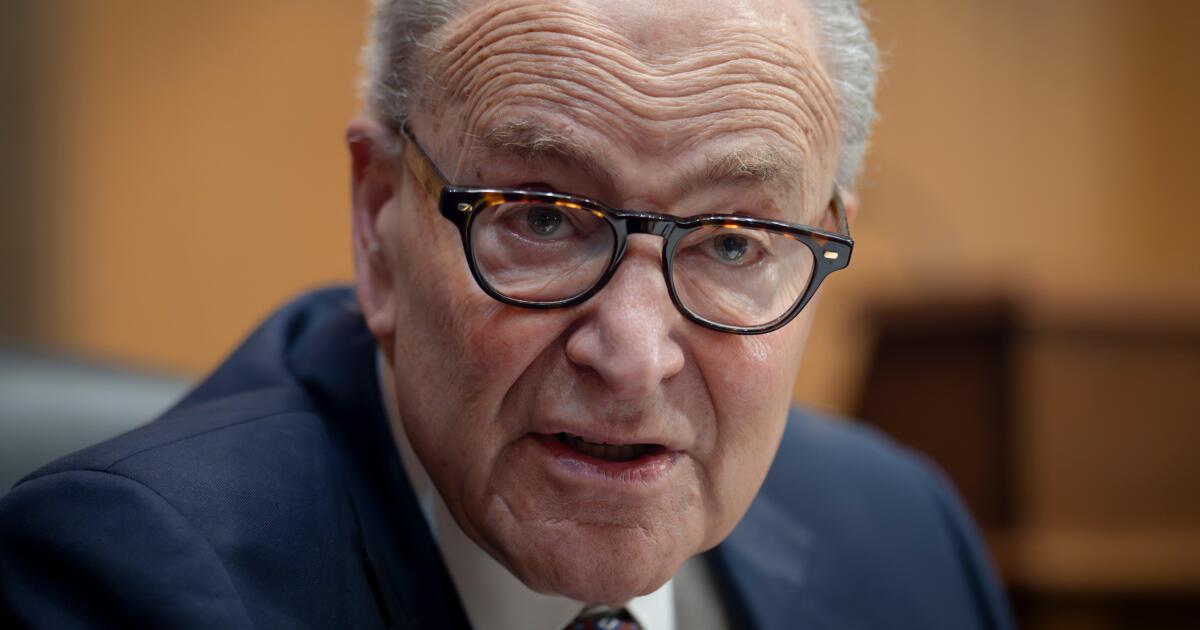
Schumer had a plan to win back the Senate. But some Democrats aren’t on board

Democrats’ hopes of reclaiming the U.S. Senate are colliding with a fight within their own party.

In Maine, Senate Minority Leader Chuck Schumer has thrown his weight behind Gov. Janet Mills in a crucial race, but some of his Senate colleagues are backing insurgent candidate Graham Platner in a rebuke of his strategic vision. A similar dynamic is playing out in other battlegrounds, including Michigan and Minnesota, where progressive senators are endorsing non-establishment candidates.

At stake is more than any single race. Democrats are fighting over whether the party’s traditional playbook still works in a country that elected Donald Trump for a second time — and whether leaders like Schumer should remain in charge.

“Clearly there’s a disagreement of strategy here,” said New Mexico Sen. Martin Heinrich, who has endorsed Platner.

He added that “the business-as-usual calculation for what is going to be successful in a given election cycle does not necessarily, in my view, meet the moment.”

The divide reflects a Democratic base frustrated after the last presidential election, when President Biden ran for a second term despite widespread concerns about his age. He dropped out and endorsed Vice President Kamala Harris, who lost to Trump.

Nan Whaley, a Democratic strategist in Ohio who ran for governor four years ago, said the debate is no longer about progressive or moderate.

“It’s really about, who do you trust? Establishment or not establishment?” she said. “And frankly, the establishment hasn’t given us a lot to trust these past few years.”

‘A rebuke of Schumer’

In Maine, Schumer and the Democratic Senatorial Campaign Committee have backed Mills, a 78-year-old moderate in her second term.

Platner, a veteran and oyster farmer, quickly won the backing of Sen. Bernie Sanders (I-Vt.), just days after launching his campaign. His bid has since gained momentum despite scrutiny over past controversial comments and a tattoo resembling a Nazi symbol.

In recent weeks, Heinrich, Arizona Sen. Ruben Gallego and Massachusetts Sen. Elizabeth Warren have endorsed Platner as he builds support on Capitol Hill. Heinrich and Rhode Island Sen. Sheldon Whitehouse held a fundraiser for him, too.

Gallego, a first-term senator who won a battleground race in 2024, downplayed the endorsements as a broader critique of party leadership.

“Senate leadership didn’t back me at the beginning. So I didn’t take that as a critique,” Gallego said.

Michigan also has a contentious primary, with three high-profile candidates. State Sen. Mallory McMorrow has said she would not support Schumer as the caucus leader if Democrats regain the majority, and she’s been endorsed by four senators.

Abdul El-Sayed, running further to the left, has been endorsed by Sanders and has also run on an anti-establishment platform.

U.S. Rep. Haley Stevens has aligned with establishment figures, working with a former executive director of the Democratic campaign committee and securing support from two senators.

Democratic strategist Lis Smith said the endorsements in races like Maine and Michigan are “as much as a rebuke of Schumer as it is an endorsement of these candidates.”

“It’s pretty uncommon for sitting senators to endorse against the Senate leader,” Smith said. “Senators are reading the tea leaves and are getting feedback from the grassroots that they are dissatisfied with Schumer’s performance as leader.”

In Minnesota, an open-seat race has similarly emerged as a test of the party’s direction. Rep. Angie Craig is seen as the centrist candidate in the primary, with endorsements from House Democratic Leader Hakeem Jeffries and Rep. Nancy Pelosi. Lt. Gov. Peggy Flanagan, the more progressive candidate, has been backed by Sanders, Warren and others, including Minnesota Sen. Tina Smith, who is vacating the seat.

“She understands that right now what we need are fierce fighters, people who are willing to stand up to the status quo,” Smith said in her endorsement.

‘The election may impact’ Schumer’s time as leader

Some tensions trace to March 2025, when Schumer voted with Republicans to end a government shutdown, drawing backlash from Democrats who argued he did not push hard enough against Trump’s agenda.

Later that year, Democrats held firm in a record-long shutdown fight, helping regain some ground with activists and progressives. But divisions resurfaced when a group of moderates ultimately sided with Republicans, fueling renewed frustration with party leadership even as Schumer opposed the move.

Since he became Senate leader in 2017, Schumer’s record in elections has been mixed. He led Democrats back to the majority in 2020 and expanded it in 2022 but lost ground in both 2018 and 2024.

“Leader Schumer’s North Star is taking back the Senate and is pursuing a path to do just that,” said Allison Biasotti, a spokesperson for Schumer.

He’s recruited high-profile candidates this year in tough Senate races, such as Alaska, Ohio and North Carolina. Maeve Coyle, communications director for the campaign committee, said Schumer “created a path to win a Democratic Senate majority this cycle” with the recruitment.

“Senate Democrats overperformed in the last four election cycles and in 2026, we will win seats and flip the majority,” she added.

David Axelrod, who served as a top strategist for President Obama, said that being Senate leader is never easy, and that Schumer “has been under fire for some time, particularly from progressives in the party.”

Schumer’s time as leader, Axelrod added, is likely directly linked to the outcome of the 2026 midterms.

“There’s questions as to whether he’ll run in 2028. There’s even questions as to whether he might be challenged as leader,” he said. “I think the results of this election may impact that.”

For now, Schumer’s caucus is tentatively standing behind him. None have explicitly called for him to step aside. But discontent has lingered, with some openly questioning whether the party needs a new direction.

“How people did politics in the 1990s is going to feel different than in the 2020s,” said Heinrich.

Cappelletti writes for the Associated Press.
Source link

Georgia proposal could take DNA swabs from immigrants in custody for minor offenses

Over the past three decades, the collection of DNA from convicted criminals has become standard in the U.S. justice system, and many states now also swab people arrested for serious crimes.

Legislation awaiting a final vote in Georgia would take that a step further by collecting DNA from people charged with less serious misdemeanors — but only if federal immigration authorities want them detained. That could include immigrants not ultimately deported.

If enacted, Georgia’s measure would make it the third state to single out immigrants believed to be in the U.S. illegally for the collection of genetic material that wouldn’t be taken from others. Florida passed a similar law in 2023. And Oklahoma in 2009 authorized DNA collection from immigrants in the U.S. illegally, though it remains subject to funding.

The new legislation comes as President Trump’s administration seeks to expand its use of DNA and biometrics in immigration enforcement as it carries out a plan to deport millions of people from the U.S.

“It is one example of something we are seeing across the landscape, which is government actors at all levels vacuuming up DNA in all available contexts,” said Stevie Glaberson, director of research and advocacy at the Center on Privacy and Technology at Georgetown University law school.

Immigrant DNA collection has grown in recent years

The FBI launched the National DNA Index System in 1998 to compile DNA samples submitted by federal, state and local authorities. It’s grown in size and scope and now contains more than 26 million DNA profiles, many from people convicted of crimes.

A federal law enacted 20 years ago allowed the attorney general to expand DNA collection to people arrested and to noncitizens detained under federal authority. But because of exceptions authorized by federal officials, few immigrants had their DNA collected.

That changed in 2020, during Trump’s first term, when a new Department of Justice rule took away much of that discretion. Over the next five years, the Department of Homeland Security added the DNA profiles of more than 2.6 million detainees to the national database, according to an analysis by the Center on Privacy and Technology.

The department did not answer questions from the Associated Press about the percentage of detained immigrants whose DNA has been collected during Trump’s second term.

But the department is looking to expand its authority. A proposed rule would allow it to collect DNA, including from U.S. citizens, to determine family relationships in immigrant benefit cases.

States don’t typically collect DNA for misdemeanor arrests

Though many states collect DNA from people arrested for felonies, just 10 states collect it from people arrested for certain misdemeanors, such as sex offenses, and none collect it for all misdemeanor arrests, according to an AP analysis of data compiled by the Boise State University Department of Criminal Justice.

But under the Florida and Oklahoma laws, any arrest could lead to DNA collection for immigrants subject to federal detainer requests. Officials in the Florida Department of Law Enforcement and Oklahoma State Bureau of Investigation did not respond to questions about whether those laws are being used.

The Georgia legislation would require DNA collection from immigrants facing any misdemeanor or felony charges if U.S. Immigration and Customs Enforcement has issued a detainer request but has not picked up the person within 48 hours.

Georgia state Sen. Tim Bearden, a Republican sponsoring the bill, described the measure as a means of solving crimes.

“Technology is changing quickly, and DNA is one of those things that help us tremendously when we’re trying to make sure to bring justice to victims in this state and across this country,” Bearden said at a March hearing.

The Department of Homeland Security said in a statement that “partnerships with law enforcement are critical to having the resources we need to arrest criminal illegal aliens across the country.”

Could a broken tail light lead to a DNA swab?

A 2024 Georgia law mandates that local law enforcement cooperate with federal authorities to identify and detain immigrants in the U.S. illegally, or else lose state funding. This year’s legislation would build upon that.

Some legal experts say it could result in DNA collections from immigrants taken into custody for minor violations. Traffic offenses that are penalized as civil violations in some states are considered misdemeanors in Georgia, making them subject to the new law, said Mazie Lynn Guertin, executive director and policy advocate with the Georgia Assn. of Criminal Defense Lawyers.

“We don’t think that swabbing a person who’s committed a traffic violation is a boon for public safety,” Guertin said. “The correlation between a broken tail light and a crime that’s solvable with DNA is pretty attenuated in most cases.”

People subject to federal immigration detainer requests aren’t necessarily undocumented or deportable, because they may later prove their legal presence, said Kyle Gomez-Leineweber, director of policy for Common Cause Georgia. But such people could have their DNA collected under the Georgia legislation.

“What this really does is it creates a two-tiered system where some of the DNA would be collected based off of the perception of an individual’s immigration status,” said Gomez-Leineweber.

The U.S. Supreme Court in 2013 upheld a Maryland law allowing DNA to be collected from people charged — but not yet convicted — of certain serious crimes. That law allows DNA to be added to a database after it’s determined there is probable cause to detain someone, provided it’s deleted if the person is not ultimately convicted.

The Maryland case often is cited as justification for an expansion of DNA collection. But some immigrant advocates question whether civil immigration detainers meet the probable cause threshold to make DNA collection acceptable under the U.S. Constitution’s Fourth Amendment protection against unreasonable searches and seizures.

“There doesn’t appear to be any kind of meaningful justification for states to step in to require the collection of DNA — of genetic material — from noncitizens in their custody who have merely been accused of a crime, even a low-level crime,” said Jorge Loweree, managing director of the American Immigration Council. “It seems like this is just an effort to increase the surveillance of noncitizens.”

Kramon and Lieb write for the Associated Press. Lieb reported from Jefferson City, Mo.

Source link

Airport cleared to be renamed for Trump as he unveils design for skyscraper library

A Florida airport was cleared to be renamed after President Trump on Monday, hours before the president separately revealed plans for a Miami skyscraper planned to house his presidential library.

Florida Gov. Ron DeSantis signed a bill allowing Palm Beach International Airport to be renamed the President Donald J. Trump International Airport. The change is set to take place in July, formally rebranding the airport near Trump’s Mar-a-Lago estate.

Later Monday, Trump posted a video to social media that appears to show digital renderings for his presidential library. Set to dramatic music, the video unveils a piercing tower along the Miami skyline emblazoned with the signature “Trump” lettering seen on his other towers.

The video includes panning shots of the tower’s exterior and interior, with a presidential jet parked in the lobby alongside a gold escalator like the one Trump rode down while launching his presidential campaign in 2015. Other shots show a giant ballroom like the one he’s planning for the White House, a replica Oval Office, rooftop gardens and a large, gold statue of Trump.

A credit says the design comes from Bermello Ajamil, a Miami-based firm. Trump posted the video with no explanation beyond a link to a new website for the library. The website says, “coming soon,” with a link to donate money.

The White House did not immediately respond to questions about the plans.

Miami Dade College gave up a nearly three-acre plot of downtown real estate as a gift for the future library. A judge in December dismissed a complaint challenging the gift on grounds that the college’s board didn’t give sufficient public notice. The site is valued at more than $67 million.

Trump’s son Eric previously said the library will be “one of the most beautiful buildings ever built” and “an Icon on the Miami skyline.”

Since he returned to the White House, Trump has pressed to get his name on all manner of American institutions, including the U.S. Institute of Peace, the Kennedy Center for the Performing Arts and U.S. currency.

In Palm Beach, a stretch of road from the airport to Trump’s estate was recently renamed Donald J. Trump Boulevard.

Source link

Trump signs executive order limiting mail-in ballots; California leaders say they’ll fight

President Trump signed an executive order Tuesday purporting to place new federal controls on voting by mail in states such as California, repeating his long-held but unsubstantiated claim that mail-in ballots are a source of widespread fraud in U.S. elections.

California leaders immediately responded with promises to fight the order in court. They said mail ballots are a safe and secure method for voting relied on by millions of Californians, that Trump’s order infringes on the state’s constitutional right to administer elections as it sees fit, and that it amounts to an “illegal power grab” ahead of midterm elections in which his party is poised to suffer substantial losses.

The order directs the United States Postal Service to take control of mail balloting by designing new envelopes with special bar codes that will allow the federal government to ensure that such ballots go out only to eligible voters, and that only eligible voters return such ballots.

It requires states to submit to the USPS process if they plan to use the federal mail system for sending or receiving ballots, and to submit to the USPS lists of eligible voters in advance of such ballots passing through the mail system.

It also requires the Department of Homeland Security, U.S. Citizenship and Immigration Services, and the Social Security Administration to “compile and transmit to the chief election official of each State a list of individuals confirmed to be United States citizens who will be above the age of 18 at the time of an upcoming Federal election and who maintain a residence in the subject State.”

Those lists will be drawn from federal citizenship and naturalization records, Social Security records and “other relevant Federal databases,” and the USPS will be barred from transmitting ballots that do not match those lists, the order says.

“Secure ballot envelope identifiers provide a reliable, auditable mechanism to enforce Federal law without unduly burdening or infringing on the rights of eligible voters,” the order reads. “Unique ballot envelope identifiers, such as bar codes, enable confirmation that only citizens receive and cast ballots, reducing the risk of fraud and protecting the integrity of Federal elections.”

Trump — who recently voted by mail himself in Florida — framed the order as a solution to “massive cheating” in U.S. elections currently, which he did not back up with evidence.

“The cheating on mail-in voting is legendary. It’s horrible what’s going on,” Trump said.

“He’s going to make sure that mail-in ballots are safe secure and accurate,” said Commerce Secretary Howard Lutnick, who appeared alongside Trump and whose agency the order requires to be involved in the coordination of the new voting measures.

California officials blasted the president for attacking and undermining election integrity, rather than shoring it up, and said they would fight the order from taking effect.

“President Trump’s Executive Order marks a dangerous and unprecedented escalation in his ongoing attacks on our elections. The power to regulate elections belongs to the States and to Congress — he has no role to play. We blocked his previous Executive Order on elections in court, and we are prepared to stop him again,” said California Atty. Gen. Rob Bonta.

“The reality is that President Trump and Congressional Republicans see the writing on the wall — that they are likely to lose in the upcoming midterms — and they are pushing to make it harder for people to vote,” Bonta added. “We won’t stand idly by.”

Sen. Alex Padilla (D-Calif.), in a statement to The Times, said Trump’s actions were “a clear and present threat to our democracy,” that he will “use every tool I can to stop him,” and that he expects “immediate legal challenges in order to protect our free and fair elections.”

“Instead of focusing on lowering the cost of energy, groceries, and health care, Donald Trump is desperately attempting to take over and rig our elections and avoid accountability in November. This executive order is a blatant, unconstitutional abuse of power,” said Padilla, the ranking Democrat on the Senate Committee on Rules and Administration.

“The President and the Department of Homeland Security have no authority to commandeer federal elections or direct the independent Postal Service to undermine mail and absentee voting that nearly 50 million Americans relied on in 2024,” he said. “A decade of lies about election fraud does not change the Constitution.”

“In the middle of an unauthorized war abroad and an escalating authoritarian crackdown by ICE here at home, Trump is attempting another illegal power grab,” Padilla said.

A vast majority of Californians vote by mail. In the state’s 2025 special election on Proposition 50, the state’s mid-decade redistricting measure, nearly 89% of votes were cast by mail, according to California Secretary of State Shirley Weber’s office — or nearly 10.3 million out of about 11.6 million votes cast.

Trump has long criticized mail-in ballots — without evidence — as a source of fraud and a factor in his losing the 2020 election to President Biden, which he still contends was illegitimate.

Election experts, voting rights advocates, local elections officials and other California leaders have all dismissed those claims as unfounded and inaccurate. They have also been preparing for Trump to act to curtail such voting.

Padilla previously warned colleagues that he would force a vote on any effort by Trump to declare a national emergency in order to seize control of this year’s midterm elections from the states, forcing them to either co-sign on the power grab or resist it.

Critics of mail ballots have also been actively working to end or curtail the practice. Just last week, the U.S. Supreme Court heard arguments in a case in which the Republican Party challenged a Mississippi law that allows ballots to be accepted and counted if they arrive up to five days after election day.

During those arguments, the court’s six conservatives sounded ready to rule that federal law requires ballots to be received by election day in order to be counted as legal.

Weber, California’s top elections official, has warned that attacks on mail-in voting risked undermining a system the state has spent years building around universal mail voting.

Trump’s executive order is the latest front in a years-long campaign he has led attacking the integrity of U.S. elections — which has contributed to a steep decline in voter trust in U.S. elections.

On Tuesday, Trump said his order was drafted by “great legal minds,” and will survive any legal challenges unless “rogue” judges rule against it inappropriately.

“We want to have honest voting in our country,” he said.

Rick Hasen, an election law expert and director of the Safeguarding Democracy Project at UCLA Law, argued otherwise in a post Tuesday, noting that an earlier executive order purporting to place new federal controls on elections was blocked in court, and “this one is likely to fare no better.”

“To put this in plain terms: the order would use the USPS, which is not under the direct control of the President, to interfere with a state’s lawful transmission of ballots. If the state does not comply with these rules, federal law would purport to interfere with a state’s conduct of its own elections,” Hasen wrote. “The President does not have the authority to do this.”

Source link

Russian tanker reaches Cuba amid critical energy shortage | Oil and Gas News

A Russian tanker has delivered enough fuel to meet Cuba’s energy needs for up to 10 days, following a three-month blockade.

A Russia-flagged tanker carrying 730,000 barrels of oil has docked in Cuba, marking the first time in three months that an oil tanker has reached the island nation.

The administration of United States President Donald Trump allowed the Anatoly Kolodkin to proceed despite an ongoing US energy blockade. The Aframax tanker entered the Bay of Matanzas – the country’s largest supertanker and fuel storage port – on Tuesday at daybreak.

Recommended Stories

list of 4 itemsend of list

The vessel, under US sanctions, entered Cuban territorial waters late on Sunday, not far from the US Navy base at Guantanamo Bay. The United States said it was allowing the tanker to deliver fuel for humanitarian reasons.

The Anatoly Kolodkin entered the Bay of Matanzas under clear skies and light winds at sunrise. Much of the nearby city – and the majority of Cuba – was without power when the tanker arrived at the port area.

Cuba has not received an oil tanker in three months, according to President Miguel Diaz-Canel, exacerbating an energy crisis that has led to seemingly endless blackouts across the country of 10 million people and brought hospitals, public transportation, and farm production to the brink of collapse.

Cubans, including Energy and Mines Minister Vicente de la O Levy, cheered the ship’s arrival. A shortage of petroleum has exacerbated a deep economic crisis, leaving the population mired in long blackouts and facing severe shortages of food and medicine.

“Our gratitude to the Government and People of Russia for all the support we are receiving. A valuable shipment that arrives amidst the complex energy situation we are facing,” de la O Levy wrote on X.

The fuel, if delivered, would give Cuba’s communist-run government breathing room amid growing pressure from the Trump administration, which has promised change in Cuba.

It will take days before the crude on board the Anatoly Kolodkin can be processed domestically and turned into motor fuel and refined products, such as diesel and fuel oil for power generation.

The ship is carrying Russian Urals, a medium sour crude, which is a good fit for Cuba’s ageing refineries.

Cuba produces barely 40 percent of its required fuel and relies on imports to sustain its energy grid. Experts say the anticipated shipment could produce about 180,000 barrels of diesel, enough to feed Cuba’s daily demand for nine or 10 days.

Cuba used to receive most of its oil from Venezuela, but those shipments have been halted ever since the US attacked the South American country and abducted its leader, Nicolas Maduro, in early January.

Source link

Army suspends 2 copter crews who flew near Kid Rock’s Nashville home

The crews of two AH-64 Apache helicopters that hovered next to Kid Rock’s swimming pool while he clapped and saluted Saturday have been suspended from flying pending an investigation of their actions, a U.S. Army spokesperson said Tuesday.

The suspension is a discretionary, but not unusual, step when an investigation is underway, Maj. Montrell Russell said.

“The Army has confirmed that on March 28, two Apache helicopters from the 101st Combat Aviation Brigade at Fort Campbell conducted a flight in the Nashville area that has attracted public and media attention,” according to a statement from the Army on Tuesday. The Army is reviewing “the circumstances surrounding the mission, including compliance with relevant FAA regulations, aviation safety protocol, and approval requirements.”

Kid Rock, an entertainer who is an outspoken supporter of President Trump, told WKRN-TV on Monday that it’s not uncommon for helicopters from nearby Ft. Campbell to fly near his home. He said he is a big supporter of the military and he’s performed for troops overseas in Afghanistan, Iraq and other countries.

“I think they know this is a pretty friendly spot,” he said. He noted that at Thanksgiving he was at Ft. Campbell, a sprawling Army base on the Tennessee-Kentucky border, with Vice President JD Vance. “I’ve talked to some of these pilots. I’ve told them, ‘You guys see me waving when you come by the house?’ I’m like, ‘You guys are always welcome to cruise by my house, any time,’” he said.

Kid Rock posted two short videos Saturday on social media. Each shows a helicopter hovering alongside his swimming pool while the entertainer claps, salutes and raises his fist in the air. One post included a caption by Kid Rock disparaging Democratic California Gov. Gavin Newsom, a frequent Trump critic.

In the videos, Kid Rock stands next to a replica of the Statue of Liberty and a sign by the pool that reads, “The Southern White House.” His home on a hill overlooking Nashville was built to resemble the White House.

The helicopters were on a training mission when they stopped by Kid Rock’s house, said Maj. Jonathon Bless, public affairs officer for the 101st Airborne Division. The helicopters also flew over a “No Kings” protest against Trump in downtown Nashville, but Bless said their presence had nothing to do with the protest.

Kid Rock said he thought it was “really cool” that they stopped to hover at his house.

“If it makes their day a little brighter for their service to our country, protecting us, I think that’s a great thing,” he said.

Asked about possible repercussions for the crews, he said, “I think they’re going to be all right. My buddy’s the commander in chief.”

Loller writes for the Associated Press.
Source link

Court dismisses wrongful termination suit by former Fox News producer

A U.S. District Court judge dismissed a wrongful termination suit filed by a Fox News producer who claimed he was fired in retaliation for calling out the network’s reporting on President Trump’s erroneous charges of 2020 election fraud and the riot at the U.S. Capitol on Jan. 6, 2021.

Jason Donner, who worked at the network’s Washington bureau as a reporter and producer was fired on Sept. 28, 2022, two days after calling in sick. He was told he had been terminated for his absence.

In 2023, Donner filed a lawsuit in a Washington, D.C., court that contended his dismissal was linked to several instances in which he challenged the veracity of the network’s coverage.

But U.S. District Judge Amir Ali determined in his ruling issued Monday that Donner failed to meet the company rules and that his conduct was not protected by the District of Columbia’s sick leave law.

Donner’s attorney did not immediately respond to a request for comment.

The lawsuit noted that Fox News bosses criticized the network’s journalists for not considering the feelings of its pro-Trump audience following the election that sent Joe Biden to the White House.

Those comments are supported by the depositions and evidence collected for the Dominion Voting Systems defamation suit against Fox News, which was settled in April for $787.5 million.

But Ali also said Donner was an at-will employee and that his case failed to identify “a public policy that precluded Fox from firing him over his ardent objections to the network’s programming, no matter their validity.”

The same point was raised when U.S. District Judge Christopher Cooper dismissed that portion of Donner’s claim in 2024.

“As we have maintained, this lawsuit was entirely without merit, and we are pleased with the court’s ruling on the matter,” a Fox News representative said in a statement.

Source link

Citing First Amendment, federal judge blocks Trump order to end funding for NPR and PBS

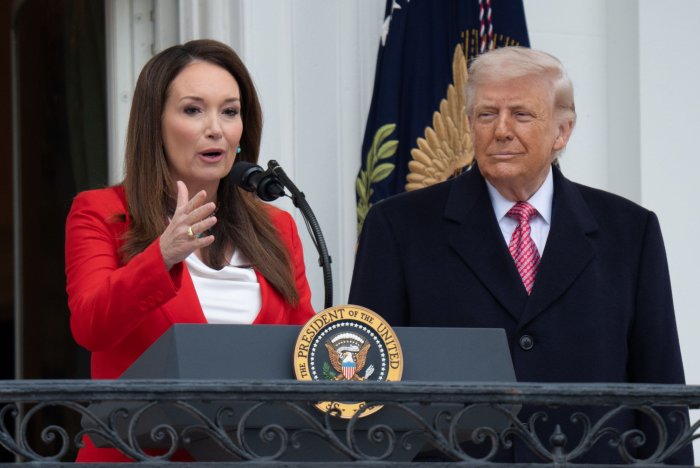
Citing the First Amendment, a federal judge on Tuesday agreed to permanently block the Trump administration from implementing a presidential directive to end federal funding for National Public Radio and the Public Broadcasting Service, two media entities that the White House has said are counterproductive to American priorities.

The operational impact of U.S. District Judge Randolph Moss’ decision was not immediately clear — both because it will likely be appealed and because too much damage to the public-broadcasting system has already been done, both by the president and Congress.

Moss ruled that President Trump’s executive order to cease funding for NPR and PBS is unlawful and unenforceable. The judge said the First Amendment right to free speech “does not tolerate viewpoint discrimination and retaliation of this type.”

“It is difficult to conceive of clearer evidence that a government action is targeted at viewpoints that the President does not like and seeks to squelch,” wrote Moss, who was nominated to the bench by President Barack Obama, a Democrat.

Punishment for ‘past speech’ cited in decision

The judge noted that Trump’s executive order simply directs that all federal agencies “cut off any and all funding” to NPR, which is based in Washington, and PBS, based in Arlington, Virginia.

“The Federal Defendants fail to cite a single case in which a court has ever upheld a statute or executive action that bars a particular person or entity from participating in any federally funded activity based on that person or entity’s past speech,” the judge wrote.

Last year, Trump, a Republican, said at a news conference he would “love to” defund NPR and PBS because he believes they’re biased in favor of Democrats.

“The message is clear: NPR and PBS need not apply for any federal benefit because the President disapproves of their ‘left wing’ coverage of the news,” Moss wrote.

NPR accused the Corporation for Public Broadcasting of violating its First Amendment free speech rights when it moved to cut off its access to grant money appropriated by Congress. NPR also claims Trump wants to punish it for the content of its journalism.

“Public media exists to serve the public interest — that of Americans — not that of any political agenda or elected official,” said Katherine Maher, NPR’s president and CEO. She called the decision a decisive affirmation of the rights of a free and independent press.

PBS chief Paula Kerger said she was thrilled with the decision. The executive order, she said, is “textbook” unconstitutional viewpoint discrimination and retaliation. “At PBS, we will continue to do what we’ve always done: serve our mission to educate and inspire all Americans as the nation’s most trusted media institution.”

Last August, CPB announced it would take steps toward closing itself down after being defunded by Congress.

A victory, though incremental, for press freedom

Plaintiffs’ attorney Theodore Boutrous said Tuesday’s ruling is “a victory for the First Amendment and for freedom of the press.”

“As the Court expressly recognized, the First Amendment draws a line, which the government may not cross, at efforts to use government power — including the power of the purse — ‘to punish or suppress disfavored expression’ by others,” Boutrous said in a statement. “The Executive Order crossed that line.”

The judge agreed with government attorneys that some of the news outlets’ legal claims are moot, partly because the CPB no longer exists.

“But that does not end the matter because the Executive Order sweeps beyond the CPB,” Moss added. “It also directs that all federal agencies refrain from funding NPR and PBS — regardless of the nature of the program or the merits of their applications or requests for funding.”

While Trump was sued in this legal action, the case did not include Congress — and the legislative body has played a large role in the public-broadcasting saga in the past year.

Trump’s executive order immediately cut millions of dollars in funding from the Education Department to PBS for its children’s programming, forcing the system to lay off one-third of the PBS Kids staff. The Trump order didn’t impact Congress’ vote to eliminate the overall federal appropriations for PBS and NPR, which forced the closure of the Corporation for Public Broadcasting, the entity that funneled that money to the TV and radio networks.

Kunzelman writes for the Associated Press. AP writer David Bauder contributed to this report.
Source link

Former FBI agents sue Patel, Bondi for alleged political firings

March 31 (UPI) — Three former FBI agents filed a lawsuit against FBI Director Kash Patel, Attorney General Pam Bondi and their departments Tuesday for firing them, claiming it was for political retribution.

The suit includes a proposed class-action of all FBI employees already fired or potentially fired in the future for political reasons. It was filed in the Federal District Court in Washington, D.C.

Former FBI agents Jamie Garman, Blaire Toleman and Michelle Ball served on a public corruption squad at the FBI that investigated President Donald Trump‘s efforts to overturn the 2020 election. Special counsel Jack Smith eventually took over the investigation code named Arctic Frost. He dropped the charges against Trump after he was elected in 2024.

The three agents were fired last fall.

“Our removal from federal service — without due process and based on a false perception of political bias — is a profound injustice that raises serious concerns about political interference in federal law enforcement,” they said in a statement released by their lawyer, Daniel M. Eisenberg. “We bring this lawsuit to protect the rule of law and to allow our former colleagues to do their jobs without fear of retaliation.”

A federal judge will have to decide if the case can be a class-action suit. The three agents are seeking to include more than 50 FBI employees who have been fired since Trump took office.

Since taking control of the FBI in February 2025, Patel and the other defendants “have summarily terminated members of the proposed class because of their perceived political affiliation, without legitimate investigation, finding of misconduct, pre-termination notice of charges to the employees, an opportunity for the employees to present a defense, and/or any compelling or exigent circumstances,” the suit said.

At the Conservative Political Action Conference in Texas Thursday, Deputy Attorney General Todd Blanche said in a speech that Patel had “cleaned house” at the FBI.

“There isn’t a single man or woman with a gun, federal agent, still in that organization that had anything to do with the prosecution of President Trump,” the lawsuit alleges Blanche said.

President Donald Trump stands with U.S. Secretary of Agriculture Brooke Rollins during an event celebrating farmers on the South Lawn of the White House on Friday. Photo by Aaron Schwartz/UPI | License Photo

Source link

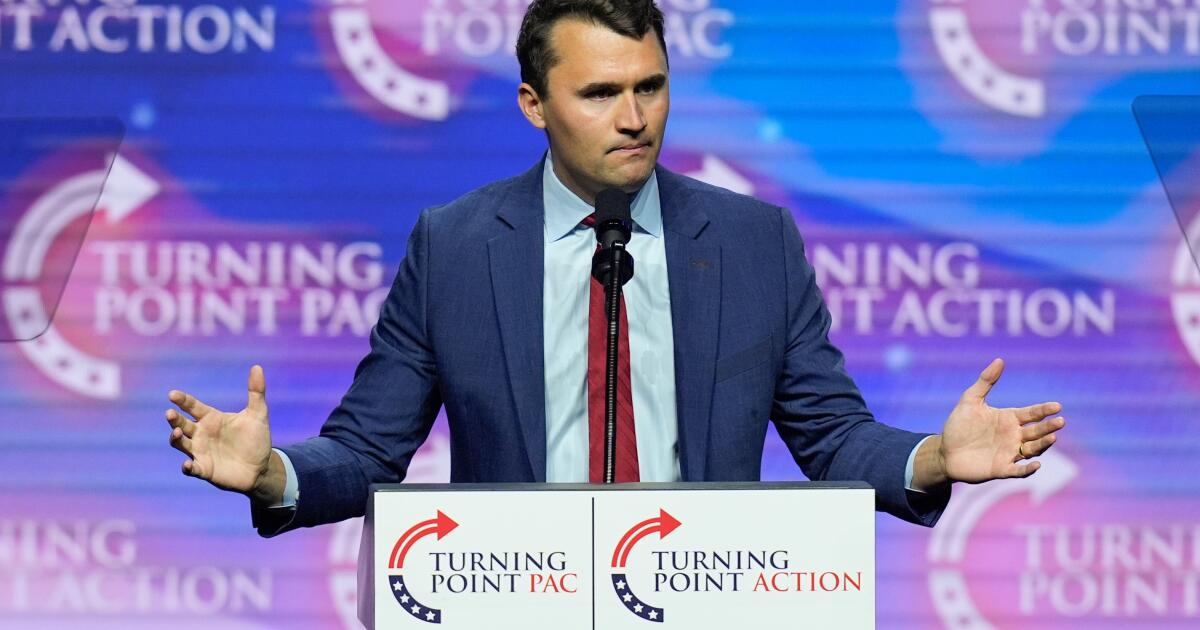
Charlie Kirk highway got vetoed in Arizona. Elected officials are citing politics

There will be no Charlie Kirk highway in his home state of Arizona. The reason: politics.

Exactly whose politics is to blame has become a point of debate.

Kirk, the conservative activist known for his campus debates, was assassinated last year during an event at Utah Valley University. Republicans in Arizona, where Kirk’s Turning Point USA organization is based, passed legislation attempting to add Kirk’s name to Loop 202, a highway circling through the sprawling Phoenix area.

Democratic Gov. Katie Hobbs vetoed it on Friday.

In a veto message to state lawmakers, Hobbs denounced political violence but suggested that Republicans had inappropriately injected politics into a decision rightly left to a state board that names historic highways.

“I will continue working toward solutions that bring people together, but this bill falls short of that standard by inserting politics into a function of government that should remain nonpartisan,” Hobbs wrote.

Republican state Senate President Warren Petersen, who sponsored the legislation, said it was Hobbs who practiced politics by breaking with “a long-standing Arizona tradition” of recognizing people who made an impact on society.

The veto “tells people that recognition now depends on political alignment, not contribution,” Petersen said in a statement. “That’s not how Arizona has ever approached these decisions, and it’s a disappointing shift for our state.”

Lawmakers in more than 20 states have introduced over five dozen bills seeking to honor Kirk, according to an Associated Press analysis using the bill-tracking software Plural. Many propose naming things after Kirk or creating an official day of remembrance. Others invoke Kirk’s name for measures that would protect free speech rights on college campuses or encourage schools to teach about the role of Judeo-Christian values in American history.

Arizona and Florida were among the first states to give final approval to Kirk-inspired legislation.

Republican Florida Gov. Ron DeSantis has yet to act on a bill that would designate a road in Miami-Dade County as “Charlie Kirk Memorial Avenue” while also designating a road in Broward County as “President Donald J. Trump Boulevard.”

Lieb writes for the Associated Press.

Source link

Democrats try a new tactic to win a House seat in Utah — running as progressives in a red state

For decades, Democrats’ only chance of getting elected to Congress from the conservative state of Utah was by convincing voters that they were sensible moderates, not like the zealous progressives from California or Colorado.

But the political landscape has changed, thanks to a redistricting shakeup that created a deep blue district anchored by Salt Lake City. Suddenly, congressional candidates are trying to outflank each other on the left in an unusual race that could help determine whether Democrats take back control of the U.S. House in the midterms.

Exhibit A is Ben McAdams, a former congressman who once described himself as pro-life and voted against a federal minimum wage increase. As he mounts a comeback campaign in a much more Democratic district, he pledged his support for abortion rights and raising the minimum wage during a recent forum for young voters.

As primary opponents criticized McAdams as the most conservative among them, he insisted that he’s only “moderate in tone.”

It’s a far different approach than McAdams used in 2018, when he ousted a Republican incumbent in the midterms of President Donald Trump’s first term. While representing the southwest Salt Lake Valley and parts of deep-red Utah County in the former 4th district, he was considered the most conservative House Democrat during his single term by one analysis, before losing reelection to a Republican.

McAdams is now running in the new 1st district, including all of Salt Lake City and much of its suburbs, which emerged from a years-long legal battle over Utah’s congressional map.

Whoever wins the primary will likely win the November general election, and McAdams faces a half-dozen Democratic opponents.

“What makes me a strong candidate is the fact that I’ve actually delivered on a lot of things people are talking about,” McAdams told The Associated Press. “It’s easy to have a strongly worded tweet or talking points, but I can actually follow that up with accomplishments that are making life better.”

Democratic National Committee Chairman Ken Martin views Utah’s 1st district as a foothold in a red state that could not only help the party win the House this year but set it up for long-term success. He said the party is pouring more money into Utah than ever before — at least $22,500 a month — to build infrastructure ahead of the 2030 census, when the fast-growing state could gain House seats.

The recipe for success, Martin said, is a willingness to meet voters where they’re at and a platform that reflects “not just the majority of Democrats, but the majority of the people in the district.”

Unlike state Republicans, the Democrats are holding an open primary on June 23, meaning anyone in the district can vote, regardless of party affiliation. That could benefit a candidate like McAdams, who built a broad base during his previous campaign. But state party leaders have said they’re confident that registered Democrats have a strong enough majority to decide the primary.

Democrats have historically struggled to gain solid footing in Utah, where about half the population belongs to The Church of Jesus Christ of Latter-day Saints. Members of the faith known widely as the Mormon church have always leaned Republican.

Even though the church is headquartered in Salt Lake City, the capital is one of the only places where Democrats hold local control and religion takes a back seat in politics.

Martin expects the youth vote will be key to winning in Utah and building longevity there. Utah is the youngest state, with a median age of about 32.

“This is a group that’s up for grabs,” he told the AP, noting that Democrats too often assume young voters are with them. He said that could mean Utah “is one of the biggest potential swing states in the country.”

Robert Axson, chairman of the Utah Republican Party, rejected that notion.

“Everything I am seeing shows the younger generation continuing to lead in the promotion of our conservative principles,” he said. “While we see the generational passing of the torch, there is not a political swing away from the values that make Utah a wonderful place to call home.”

Jockeying for the Gen Z vote

Several young voters who came to meet candidates on a Saturday morning in Taylorsville said they hoped to capitalize on the opportunity to elect a progressive.

Milo Hohmann, 22, of Holladay, said state Sen. Nate Blouin is the “firebrand” that Utah needs in Congress.

Perhaps the most vocal Democrat in the Republican-led state legislature, Blouin has racked up endorsements from some of the country’s most prominent progressives, including Sen. Bernie Sanders and Reps. Pramila Jayapal, Greg Casar and Maxwell Frost.

Blouin said he aims to energize an electorate that has grown accustomed to settling for someone who will “play nice” with Republicans.

He jabbed at McAdams’ voting record while defending himself against criticisms that he has never passed legislation. Blouin said he’s been effectively blacklisted by Republican legislative leaders, and at least two bills that he originally sponsored passed after they advanced under other lawmakers’ names.

“I don’t measure progress by how many times you can get pats on the back from Republicans,” he told the AP.

His stance resonated with Hohmann, a transportation engineer, who said Utah has “an electric moment” to elect a Democrat who won’t compromise their values.

Hannah Paisley Zoulek, 19, of Millcreek, said she’s leaning toward Blouin or his colleague in the state Senate, former teacher Kathleen Riebe. But she had a concern about Blouin.

“I struggle a bit with Senator Blouin’s emphasis on how hard he holds his own positions,” Zoulek said. “It’s great if you want to make a statement, but not necessarily if you want to do the work.”

Neither Hohmann nor Zoulek thought McAdams was the right fit for the new district given his more moderate past.

Ben Iverson, who will be voting for the first time this year, disagrees.

The 17-year-old from Cottonwood Heights considers himself very progressive and said he thinks McAdams is “a great option.” He noted that McAdams voted to impeach Trump in 2019, despite knowing it could cost him reelection.

“I don’t think left-wing voters want a moderate Democrat who will capitulate to the right,” Iverson said, adding that he thinks McAdams has successfully shed the moderate label.

Throughout his life, Iverson said McAdams has been a mainstay of local politics. He was Salt Lake County’s state senator, then its mayor, and represented much of the area in his previous congressional district.

“I’ve been in the trenches, rolling up my sleeves, saying not ‘How do we pass a bill that will never become law?’ but ‘How do we actually enact legislation that will make people’s lives better?’” McAdams said.

Schoenbaum writes for the Associated Press.
Source link

Venezuela’s ‘Chavismo’ movement faces a crossroads after US attack | US-Venezuela Tensions News

A new economic partner?

Libertad Velasco, a Chavista who grew up in the 23 de Enero neighbourhood, was only a teenager when Chavez came to power.

She went on to become one of the founding members of the youth wing of Chavez’s party, the United Socialist Party of Venezuela (PSUV). Eventually, she became the head of a government agency to expand access to higher education to members of vulnerable communities.

Still, Velasco described the period after Maduro’s abduction as a sort of awakening.

“It’s like we’re looking at ourselves without makeup,” Velasco said. “Now, everything is laid bare, revealed in its purest state, and we are beginning to recognise ourselves again.”

Since the US attack and Maduro’s removal, Velasco has thought deeply about her “red lines”: the ideals she feels should not be violated under the new government.

Standing up against invasive foreign powers remains one of her top priorities.

“I refuse to be colonised,” Velasco said. “For me, we shouldn’t have relations with Israel, and abandoning anti-imperialism is non-negotiable.”

Yet Velasco does not believe that the Venezuelan government has crossed that line yet. Rather, she is open to the prospect of the US as a trading partner to Venezuela, paying for access to its natural resources.

“It is a customer who should pay market price for the product they need. If Venezuela must act as a market player to lift people out of suffering, I can go along with that,” Velasco said.

Delia Braches in her home in Caricuao, Venezuela
Delia Bracho of Caricuao, Venezuela, says she has grown disillusioned with the Chavismo movement [Catherine Ellis/Al Jazeera]

But it is unclear whether that is happening. Critics point out that the Trump administration has demanded greater control over Venezuela’s natural resources. It has even claimed that Chavez stole Venezuelan oil from US hands.

Already, Venezuela has surrendered nearly 50 million barrels of oil to the US, with the Trump administration splitting the proceeds between the two countries.

Rodriguez, Venezuela’s interim president, has also agreed to submit a monthly budget to the US for approval.

Among Chavistas, there remains debate about whether the relationship with the US is beneficial or exploitative.

But economic recovery is an overwhelming priority for many Venezuelans of all political leanings. Under Maduro, Venezuela entered one of its worst economic crises in history. Inflation is currently at 600 percent, and living standards remain low.

Many Chavista loyalists blame US sanctions for their economic woes. Yet, analysts credit a combination of factors, including declining oil prices, economic mismanagement and pervasive corruption.

Delia Bracho, 68, lives in a district of Caracas called Caricuao, where water is delivered just once a week. Once a committed Chavista, she said her faith in the movement has faded.

Today’s movement, she explained, has been “ruined”, and she no longer wants anything to do with it.

“It’s like when you put on a pair of shoes,” she said. “They break, and you throw them away. Are you going to pick them up again, knowing they are no longer useful?”

Despite her initial fear after the US intervention, Bracho said she now feels cautiously optimistic that Venezuela might change for the better.

“It’s not that everything is fixed, but there is a different atmosphere — one of hope.”

Source link

Seizing Kharg Island would risk U.S. troops’ lives and may not end Iran war, experts say

President Trump is threatening to deploy ground troops to seize critical oil infrastructure on Iran’s Kharg Island, a military gambit that experts say would risk American lives and could still fail to end the war.

If Trump wants to hobble Iran’s oil industry for leverage in negotiations, a better option might be setting up a blockade at sea against ships that have filled up at Kharg Island’s oil terminals, the experts said.

The island — located on the other side of the Persian Gulf from U.S. bases in Kuwait and Saudi Arabia — is the beating heart of Iran’s oil industry, through which 90% of its exports pass. It is important because Iran’s coastline is mostly too shallow for tanker ships to dock.

“Putting people on the ground might be the most psychologically compelling way of striking a blow at Iran,” said Michael Eisenstadt, a former U.S. military analyst who now directs the Military and Security Studies Program at the Washington Institute for Near East Policy.

“On the other hand, you’re putting your own troops at jeopardy,” said Eisenstadt, a retired Army reserve officer who served in Iraq. “It’s not far from the mainland. So they can potentially rain a lot of destruction on the island, if they’re willing to inflict damage on their own infrastructure.”

Seizing Kharg Island could escalate the conflict, said Danny Citrinowicz, an Iran expert at Israel’s Institute for National Security Studies.

He said Iran and its proxies — including Yemen’s Houthi rebels — could intensify their retaliation, including by laying mines in the Strait of Hormuz or striking targets with drones across the Arabian Peninsula, from the Persian Gulf to the Red Sea.

Commodities researchers and investment banks warn major retaliation could have lasting implications for energy prices and the global economy.

“It will be hard to take. It will be hard to hold,” Citrinowicz said of Kharg Island. “And it might damage the economy, but not in a way that will force the Iranians to capitulate.”

Trump says ‘maybe we take Kharg Island’

Trump is under growing pressure to end the monthlong conflict with Iran, which has attacked U.S. bases and allies in the region.

Iran also has largely closed the Strait of Hormuz, a narrow chokepoint through which 20% of the world’s oil normally flows, causing fuel prices to soar and other economic tumult.

Trump said in a social media post Monday that “great progress is being made” in talks with Iran to end military operations. But he said that if a deal is not reached “shortly” and the strait is not immediately reopened, the U.S. would obliterate power plants, oil wells, Kharg Island and possibly even desalination plants.

Trump has raised the idea of American forces seizing Kharg Island.

“Maybe we take Kharg Island, maybe we don’t. We have a lot of options,” Trump told the Financial Times. “It would also mean we had to be there (on Kharg Island) for a while.”

Asked about Iranian defenses there, he said: “I don’t think they have any defense. We could take it very easily.”

Secretary of State Marco Rubio said Friday that ground troops would not be needed to achieve the Trump administration’s goals. He did not repeat that assertion Monday after being asked about plans for U.S. ground troops, saying “the president has several options at his disposal” but diplomacy is Trump’s preference.

“Now, they are making threats about controlling the Hormuz Strait in perpetuity, creating a tolling system and the like,” Rubio told ABC’s “Good Morning America.” “That’s not going to be allowed to happen. And the president has a number of options available to him, if he so chooses, to prevent that from happening.”

U.S. has hit targets on the island crucial to Iran

The U.S. has already struck various targets on the island, including air defenses, a radar site, the airport and a hovercraft base, according to satellite analysis by the Institute for the Study of War and American Enterprise Institute’s Critical Threats Project.

Petras Katinas, an energy researcher at the Royal United Services Institute, said disrupting Kharg Island would not completely halt oil exports as Iran has other small ports. But it would reduce the oil revenue flowing to Iran’s government, “forcing flows through a much smaller, costlier and less efficient export system,” he said.

However, Tehran has too much at stake to surrender over a single asset, no matter how economically significant, said Citrinowicz, the Iran expert at Israel’s Institute for National Security Studies.

While occupying Kharg might offer Washington some leverage in any negotiations, he said the notion that control of the island could be traded for Iran’s stockpile of enriched uranium was far-fetched.

“It’s in no way a decisive blow,” Citrinowicz said.

U.S. troops face risk from Iran’s mainland if they tried to seize Kharg Island

A U.S. Navy ship carrying about 2,500 Marines recently arrived in the Middle East, while at least 1,000 troops from the 82nd Airborne Division are expected soon. Another 2,500 Marines are being deployed from California. The Trump administration has not said what all those troops will be doing, but the 82nd Airborne is trained to parachute into hostile or contested territory to secure key territory and airfields.

One of the reasons American troops would be vulnerable on Kharg Island is its close proximity — about 33 kilometers (21 miles) — to the Iranian mainland, from which missiles, drones and artillery could be fired. Despite continued U.S. and Israeli strikes, the Islamic Republic is still attacking targets across the region, including a Saudi air base hundreds of miles away where more than two dozen American troops were injured last week.

Even with American ships and planes providing support, there would still be a relatively short window of time to shoot down every drone or missile launched from the mainland at the island, Eisenstadt said.

“The coast tends to be mountainous, so the drones can come in through mountain passes where it’s hard for our radar to pick up,” he said. “And we don’t have the warning time.”

Eisenstadt says a sea blockade against ships carrying Iranian oil would be a safer strategy and achieve the same goal of controlling most of Iran’s oil industry.

“Throw up a quarantine that seeks to seize Iranian oil shipments that are exiting the Gulf,” agreed Clayton Seigle, an energy security expert at the Center for Strategic and International Studies. It could be done at a distance “outside the range of the lion’s share of Iran’s weapon systems.”

Seigle argued against destroying Kharg Island’s oil infrastructure, which Trump also suggested.

“We were supposed to be coming to the rescue of the people that had been rising up and protesting for a better future,” Seigle said. “So to cripple Iran’s revenue-generating potential for many years to come would definitely not work in that direction.”

Finley and Metz write for the Associated Press. Metz reported from Ramallah, West Bank.

Source link

Quake Victims, Insurance Carriers Meet Head-On at Hearing : Aftermath: More than 300 turn out for often heated town hall meeting. Disgruntled victims of temblor and representatives of several companies state their cases.

It was a showdown between quake-weary homeowners and the insurance companies they are still battling six months later.

More than 300 people turned out for the confrontation Wednesday night, filling an auditorium at Birmingham High School in Van Nuys for a hearing presided over by state Sen. Art Torres (D-Los Angeles), chairman of the Senate insurance committee and the Democratic nominee for insurance commissioner in the November election.

Besides disgruntled victims of the Northridge quake, the speakers included representatives of State Farm, the state’s largest carrier with 20% of the homeowners market, and No. 3 Farmers Insurance Group.

Nettie Hoge, head of consumer services for the California Department of Insurance, also participated in the often heated town hall meeting that Torres conducted as an official hearing of the insurance committee.

Hoge told the crowd that state Insurance Commissioner John Garamendi had persuaded Woodland Hills-based 20th Century Insurance Co. to restore homeowners coverage to about 14 of its customers whose policies the company recently canceled.

20th Century received so many quake claims that the state insurance department granted the company special permission to get out of the homeowners coverage business. One of the conditions, however, was that the company offer its customers two more annual renewals. Some of its policyholders have complained recently that the company was seizing on technical excuses to refuse immediately to renew their policies.

Many people in the audience brandished signs such as “Boycott 20th Century” and “20th Century, What Did You Do With Our Premiums?”

Torres said 20th Century was invited to send a speaker to the meeting, but declined. However, when Torres asked if anyone from 20th Century was in the audience, two people raised their hands. Rick Dinon, a senior vice president, said the executives were there because they hoped to “correct some misinterpretations of the company’s actions, motives and finances.”

“It hurts,” Dinon said of the homemade signs criticizing the company. “We hope we have the respect of our customers and we most assuredly respect them.

“It hurts a lot to be placed in an adversarial relationship with our customers. It is disappointing we can’t continue to offer them the kind of protection we have in the past.”

When an earthquake hits, “much of the suffering is from the reprehensible conduct of the insurance industry adjusting the earthquake loss,” said George Kehrer, executive director of Community Assistance Recovery, or CARE, a Northridge-based consumer group he said represents more than 5,000 property owners.

“Adjusters swarm into the state like killer bees,” Kehrer said, drawing a standing ovation.

Torres told the group that many of the complaints he has received have come from people who fear their company will abandon them. But he noted that Garamendi is proposing a statewide insurance industry pool as well as supporting proposals for national disaster insurance.

“It’s hard to be patient,” he said. “People in northern California are still dealing with insurance companies from the Loma Prieta quake” in October, 1989.

Bill Gausewitz, of Farmer’s Insurance, said his company had resolved 27,241 quake-related claims, about 90% of those it had received. Of those, 7,877 were dismissed without payment and the others received compensation, he said.

Torres asked Gausewitz if Farmers had received complaints that it refused to pay the true cost of earthquake repairs.

“Not that I know of,” Gausewitz replied, drawing hoots and jeers from the audience.

Hoge said the insurance department has received complaints of low payments by virtually all insurance companies hit by Northridge quake claims.

Torres, whose committee is wrestling with many quake-caused problems, including a growing homeowners coverage crisis, said he arranged the meeting to give angry quake victims a chance to air their grievances.

Disillusioned policyholders have inundated his Los Angeles and Sacramento offices with complaints, he said, ranging from switching adjusters in the middle of the claims process to “low-ball” offers to settle to delays receiving payoff checks. Some accused their insurance carriers of breaking promises or lying to avoid paying claims.

Source link

Like in Ethiopia? A Failed Transition’s Lessons for Venezuela

In 2012, I participated in a United Nations mission in Ethiopia for a technical cooperation event on international trade, which at the time was my area of expertise. Since then, every major development in Venezuela brings me back to that trip, which proved far more revealing than I could have imagined. More than once, I have found myself thinking: this is just like in Ethiopia.

I witnessed firsthand, before it unfolded in Venezuela, that totalitarian systems do not just collapse. They transform in order to survive and advance, as Hannah Arendt argued. Over time, I also came to understand that while authoritarian regimes may promise reform and a democratic transition, without sustained external and domestic commitments those promises tend to dissolve sooner rather than later. This insight is particularly relevant in the current Venezuelan process.

On my way from Addis Ababa airport to the hotel, I noticed large portraits of a politician displayed throughout the city. Thinking of the strongman politics I knew from home, I asked the official accompanying me whether he was the president. “No,” he replied, “the prime minister. He died.” Surprised, I asked why his images were still everywhere. “Don’t these images bother the new one?” “No, because he chose his successor,” came the answer. When I pressed further and asked whether people had voted for him, the response was matter-of-fact: they belonged to the same party, and parliament had selected him.

In those few days, I caught a glimpse of what Venezuela would later experience between 2013 and 2019, after Chávez died and his handpicked successor Maduro came to power. I saw a country marked by hunger, where people wandered with a vacant, distant gaze. A look that would later become painfully familiar during Venezuela’s humanitarian crisis. That image contrasted sharply with the ruling elite, visibly prosperous, gathering in luxury hotels and indulging in imported comforts. I saw women collecting firewood to cook because two decades of socialist mismanagement and corruption had destroyed the electrical system. I saw the haze produced by environmental degradation, similar to what would later hang over Caracas. I also observed a strong Chinese presence, already a dominant economic partner and creditor.

During that mission, I came to understand how the ruling system had entrenched poverty, controlled resources, and normalized corruption, not merely as governance failures but as mechanisms of social control. Years later, working from a human rights perspective, I would recognize these patterns as instruments of ideology, repression, and economic, and ethnic exclusion.

His profile seemed ideal: a system-man, with military and security credentials, Western education, and a discourse centered on reform and reconciliation.

I also witnessed the regime’s hostility toward international actors, imposing strict conditions on United Nations operations and limiting the work of officials on the ground. Hearing the likes of Jorge Rodríguez and other Venezuelan representatives threaten Volker Turk this year, the High Commissioner for Human Rights, did not surprise me. I had seen that before, years earlier, in the Horn of Africa.

Now, I return to the phrase like in Ethiopia because, following the US operation to capture Maduro, the proposed plan for stabilization, recovery, and democratization echoes a trajectory that Ethiopia followed over the past decade. 

The Ethiopian Delcy

Let’s go back to 2018. A figure from within the ruling coalition, Abiy Ahmed, rose to power after three years of widespread protests and political unrest that led to the resignation of Hailemariam Desaleng. Although it is not clear how much the US and the EU were involved in his rise, he was not directly imposed from outside as has been the case with Delcy Rodríguez, but he was “unequivocally embraced” by the United States and the European Union. Abiy became the media’s darling, who placed their bets on him and promoted the new leader as a reformist capable of modernizing the country.

His profile seemed ideal: a system-man, with military and security credentials, Western education, and a discourse centered on reform and reconciliation. Between 2018 and 2020, Ethiopia experienced a period of remarkable transformation on three fronts: recovering the economy, stabilizing the region and strengthening the rule of law.

The economy grew at an annual rate of around 7 percent, key sectors were opened to foreign investment, and political reforms were introduced, including the release of political prisoners, the return of those in exile, the legalization of opposition parties, and greater press freedom. Women were incorporated into government at unprecedented levels. On the international stage, Ethiopia expanded its diplomatic engagement, signed trade agreements, and most notably reached a peace agreement with Eritrea, which earned Abiy the Nobel Peace Prize.

Political attention from foreign actors is limited, international agendas evolve rapidly, and what might begin as a priority can quickly be overtaken by other crises.

Yet this period of optimism proved fragile. Tensions in 2020 with the Tigray People’s Liberation Front, once part of the ruling coalition, escalated into a full-scale internal conflict. Abiy’s government shifted course and relapsed. The reform process gave way to a reassertion of authoritarian power, along with widespread human rights violations, restrictions on the press, and accusations of war crimes.

The response from the United States and the European Union included targeted sanctions, visa restrictions, suspension of trade benefits, and partial freezes on aid. Abiy’s international image deteriorated significantly, and Ethiopia began to diversify its alliances, strengthening ties with China, engaging with Russia, and expanding cooperation with actors such as Turkey, the United Arab Emirates, and Iran, eventually becoming members of the anti-West BRICS alliance.

Careful with the honeymoon phase

The Ethiopian case offers at least one revealing lesson. External support can facilitate an initial opening and even generate strong economic momentum, but it does not guarantee a democratic transition. 

When international commitment weakens before new institutional rules are consolidated, the outcome is often not transformation but reconfiguration. The system adapts to the new reality, but is not replaced or merely revamped. This dynamic reflects a broader pattern in contemporary international politics. Particularly since the costly experiences of Iraq and Afghanistan, external actors have tended to favour reform processes led by internal figures rather than imposing leadership from outside. However, the central challenge lies not in how these processes begin, but in what happens when external support diminishes, which often occurs during the crucial consolidation phase.

Both the United States and Europe tend to operate within relatively short time horizons when supporting political transitions, often between two and four years, three if I revert to an American security and communications expert whom I worked with yet in another career chapter. These timelines are shaped by electoral cycles, budgetary constraints, shifting strategic priorities, and, in the European case, the difficulty of sustaining consensus among multiple states with divergent interests. Political attention is limited, international agendas evolve rapidly, and what might begin as a priority can quickly be overtaken by other crises. The result is a form of strategic fatigue that has been evident in multiple contexts over the past decades.

By contrast, the transitions most often cited as successful (such as those in Chile, South Africa, and Eastern Europe) were characterized by sustained external engagement over much longer periods, often a decade or more, combined with favourable internal conditions. These cases demonstrate that democratic consolidation is not the product of a short window of opportunity, but of a prolonged commitment.

For Venezuela, the implications are clear. The current process may well generate an initial opening, attract investment, and produce early signs of stabilization. But without sustained international engagement beyond the initial phase, there is a risk that the system will stabilize without fundamentally democratizing. The lesson from Ethiopia is not that transition is impossible, but that it is incomplete if the conditions for its consolidation are not maintained.

The real challenge, therefore, is not how the transition begins, but whether it is sustained long enough to transform the underlying structures of power. Otherwise, we may once again find ourselves looking at a familiar outcome and thinking, once again, like in Ethiopia.

Source link

The real questions for courts after Bianco seized Riverside County ballots

Riverside County Sheriff Chad Bianco says he’d like to be our governor, but more and more, it’s looking to me like the real goal for the far-right provocateur is just to be MAGA-famous.

That’s cool. That’s fine. Honestly, who in Southern California hasn’t dreamed of their 15 minutes? And he certainly has the cop-stache to play the role of rogue Wild West lawman.

But Bianco’s bid for celebrity may help extremists take down American elections, and that is a problem — one California needs to deal with quickly, before the midterms suffer from his antics. There are two separate issues at play here, both of which state courts will be asked to weigh in on in coming days — Bianco apparently is putting his so-called investigation on hold until those cases bring some measure of clarity, and hopefully sanity.

First, are California sheriffs answerable to anyone, or are they a law unto themselves? Second, who in California can legally handle and count ballots according to law, if state law does in fact matter?

The fact that these two issues are coming up now — together— is no accident. President Trump’s election fraud claims have been moving toward this moment for years, largely out of the consciousness of mainstream voters, but very much intentionally pushed by those who would like to see MAGA officials remain in power, even at the cost of democracy.

The real question being answered right now in Riverside — the one we should all be clear on — is, if Republicans want to invalidate election results that don’t go their way this November, what’s the nitty-gritty of actually doing that?

Bianco is attempting an answer.

“This is about more than just what Sheriff Bianco is doing,” said Matt Barreto, faculty director of the UCLA Voting Rights Project. “… It shouldn’t happen. And again, it doesn’t matter if Democrats are winning or Republicans are winning, no sheriff should come in and take over possession or counting of ballots.”

By now, you’ve probably heard that Bianco has obtained multiple secret, sealed search warrants from a buddy judge that allowed him to spirit away hundreds of thousands of ballots in his county from November’s Proposition 50 election.

Bianco claims he has the right to seize these ballots and investigate as he sees fit — and it’s not our business or anyone else’s, not even state Atty. Gen. Rob Bonta, who ordered Bianco to stop what he was doing until Bonta could review it.

Bianco has largely ignored that order, instead scooping up even more ballots late last week — all but giving Bonta a certain finger reserved for simple communication. Fox News loved it. Bianco’s admission Monday that he is pausing his effort is the first hint that even he may see he’s gone too far.

But Bianco’s hubris is in line with the attitude of many so-called constitutional sheriffs, a national movement by some far-right elected lawmen that Bianco has been associated with, though he’s never claimed outright affinity.

These extremist sheriffs misguidedly believe that they are above both state and federal law, and get to decide for themselves what’s constitutional or not in their jurisdictions — and therefore what’s law and what’s not.

Since about 2020, empowered by successes in ignoring pandemic restrictions, these sheriffs have dived deeper and deeper into the election fraud movement that Trump loves so much, claiming increasing rights to investigate alleged fraud. Though their national organization doesn’t publish its membership list, media and other tracking show there are at minimum dozens of these like-minded lawmen across the country, likely closely watching Riverside County.

Some election experts now worry that if Bianco is successful in the courts in retaining the right to take ballots, it will give a dangerous legal precedent that empowers other constitutional sheriffs to do the same at the midterms. Only then it would be fresh, uncounted ballots — leaving these far-right sheriffs in charge of providing results instead of trained, trusted elections officials.

“What happens if the ballots have not been properly counted by the right people yet and a sheriff decides they want to go confiscate them?” said Chad Dunn, co-founder of UCLA’s Voting Rights Project and the trial lawyer who successfully halted Texas’ gerrymandering effort, for now anyway.

“Once the chain of custody … is broken, as they have been with these, you’ll never count them in a way that you’ll be able to get reasonable confidence from the public,” Dunn said. “It puts the entire election process in jeopardy.”

The constitutional sheriffs would become the boots on the ground for Trump’s election deniers to implement their will, seizing ballots as they see fit and creating such a crisis of confidence that it’s likely we the voters would never accept the results, Republican or Democrat.

It could even give Republican Speaker of the House Mike Johnson a plausible reason — an ongoing fraud investigation — not to seat elected Democrats, stalling as he did with Arizona’s Adelita Grijalva last year after she won a special election.

The Voting Rights Project, along with Democratic gubernatorial candidate Xavier Becerra, filed a lawsuit last week asking the state Supreme Court to uphold the laws that govern how ballots are handled in California — basically protecting that chain of custody and making it clear sheriffs can’t ignore it and are not part of it.

“They do not, under California law, have the right to take ballots away from the Registrar of Voters, and they do not, under California law, have the right to count or handle ballots,” Barreto said. “There’s no question that it violates California election law.”

Separately, Bonta’s office filed its own action, with that issue of constitutional sheriffs front and center. Bonta is asking courts to tell Bianco that he’s not a law unto himself, and does in fact answer to the state attorney general.

This issue of whether sheriffs have any legal duty to listen to the state’s top law enforcement officer has long been one of Bonta’s fights — he argued about it with then-L.A. Sheriff Alex Villanueva in another public corruption fiasco over then-L.A. County Supervisor Sheila Kuehl.

I’m guessing Bianco will refer Bonta back to that simple communication of a single finger, much the same as Villanueva did.

But it’s long past time that the state decide just how powerful sheriffs are, for the good of the country this time. The state Legislature has repeatedly kicked the can on clarifying the issue, a failure on their part.

Legislators could amend the state Constitution to make sheriffs appointed instead of elected — the same as police chiefs. Then boards of supervisors could hire and fire them just like other law enforcement leaders.

With the Legislature’s resounding absence on the issue, we have to rely on courts. That’s likely to be a long battle.

In the meantime, Bianco is up to his mustache in attention. This has become a national story, boosting his profile throughout the MAGA-verse as a champion of election deniers everywhere.

Whether Bianco wins or loses these legal battles, resumes his investigation or not, he’s won the attention battle — he’s even polling at the top in the gubernatorial race, thanks to the 8 million Democrats who refuse to drop out.

Riverside County, once as red as it comes, is increasingly purple, Barreto points out. Bianco’s tenure as elected sheriff may not last forever. His shot at governor, despite the polls, is unlikely.

But maybe Fox News will be so impressed with his aggressive rants that he’ll get an offer. Maybe Trump, known for watching it, will like what he sees. So many possibilities from the publicity.

And so much real damage to democracy.

Source link

What can nations do to make up for the ongoing energy shortfall? | US-Israel war on Iran

The Middle East conflict has cut off 20 percent of the world’s fuel supply. Countries are scrambling for alternatives.

The disruption in the Strait of Hormuz has cut access to one-fifth of the world’s oil and gas supply, leaving many countries scrambling for alternatives.

So what can they rely on to make up for the shortfall in a quick time?

Many Asian countries are turning to coal, reopening shuttered plants and expanding production.

Policymakers say immediate energy needs supplant environmental concerns.

Others are hoping to turn to renewables. Solar power is now the cheapest form of electricity in many parts of the world. But renewables, especially wind, have faced hostility from the Trump administration.

Source link

Waters Red-Faced Over Greens Mailer

Thousands of voters who got Democratic Rep. Maxine Waters’ “official sample ballots” this week might have wondered at her recommendations for president.

One version of the fliers, which are made to look like ballots, have bright red circles around the names of Green Party candidate Ralph Nader and his running mate, Winona LaDuke. In another version, the names of Libertarian candidate Harry Browne and running mate Art Olivier are circled.

On Thursday, the Waters camp was scrambling to correct the mistake; the congresswoman from Los Angeles’ 35th District firmly supports the Al Gore/Joseph I. Lieberman ticket.

“It was a printing error,” explained Karen Waters, the congresswoman’s daughter and spokeswoman for campaign activities. “It has been corrected, and voters will receive a letter of apology.”

Nader campaign officials, of course, said no apology was necessary.

“All we can say is, thank you, thank you, great campaign karmic gods,” said Ross Mirkarimi, state director of the Nader 2000 effort.

Political consultant Parke Skelton said he thinks “it’s funny.”

“But I also think it will cost Gore some votes. Not enough to put the state in danger, of course. But Waters definitely has a following, and some people may follow the recommendations,” Mirkarimi said.

That would be particularly fortuitous for Nader, he added, “who has not been polling well in African American communities.”

But Joyce Marshall, a designer of political direct mail, disagreed that the error is funny. “This is not a small error. It’s totally serious.” Marshall and others have long been critical of Waters’ phony sample ballots, which are adorned with the same flag, seal and layout as the real thing.

Robert Stern, a former chief counsel for the state Fair Political Practices Commission, has decried the mailers as “really outrageous.”

Waters’ mailer does contain a disclaimer on each page, as well as asterisks next to the names of the candidates who paid to be listed among those backed by the influential Democratic legislator and chairwoman of the Congressional Black Caucus.

Waters first mailed a version of the mock ballot in 1992. So far, the mailer has survived state scrutiny.

In years past, candidates have invested heavily in the tactic. In 1998, the Checci for Governor campaign spent $50,000 to be included; the campaign to elect Bill Lockyer attorney general paid $15,000.

“This strategy has been done in the past,” the congresswoman’s daughter said, “and we think voters look forward to receiving them.”

Maxine Waters said 10,000 to 15,000 voters saw the boo-boo.

“It was small enough to have a rerun and have the mailers back out in the mail by [Thursday]. At the same time, a coordinating campaign did telephone calls into all those homes Wednesday night,” she said, “so the damage control was quick and effective.”

Source link

Germany’s Merz says 80% of Syrian refugees to return home in 3 years

German Chancellor Friedrich Merz, right, and Syrian President Ahmed al-Sharaa attend a joint press conference during their meeting at the Federal Chancellery in Berlin on Monday, where they announced a goal of 80% of Syrian refugees who fled the country during its 14-year-long civil war to return home. Photo by Filip Singer/EPA

March 30 (UPI) — The chancellor of Germany and president of Syria on Monday said that their goal is for 80% of Syrian refugees who have fled there to return home in the next three years.

With few details offered, Chancellor Friedrich Merz and President Ahmed al-Sharaa set an ambitious goal for the majority of the roughly one million people there who sought asylum from the bloody civil war in Syria, The BBC reported.

Merz and Sharaa met Monday to discuss the return of Syrian refugees, while noting they have been a boon to Germany and are not being kicked out.

“Looking ahead over the next three years — as Sharaa has expressed his hope — around 80% of Syrians currently residing in Germany are expected to return to their home country,” Merz said during a press conference.

Sharaa thanked Merz and the country for welcoming Syrians during the civil war and said the country is “proud that Syrians have learned very quickly how to contribute to society.”

He said that his government is working with the German government to “establish a ‘circular’ migration model” that would allow Syrians to contribute to the reconstruction of Syria without abandoning the lives they have build in Germany.

Sharaa led forces that pushed former Syrian dictator Bashar al-Assd to flee the country in late 2024 after they captured Damascus. His administration is now working to reconstruct and unify the country after 14 years of civil war there.

At the press conference, Merz and Sharaa said that overall conditions in Syria have “fundamentally improved,” a point which German politicians have been debating since the new Syrian president took over, Deutche Weille reported.

A child stands atop an abandoned tank while opposition fighters spread out to areas previously controlled by Assad’s regime in the liberated areas of Daraa, in northern Syria, on December 17, 2024. Photo by Fadel Itani /UPI | License Photo

Source link

In L.A. mayor’s race, controversial poll shows Nithya Raman ahead of Karen Bass

City Councilmember Nithya Raman came out ahead of incumbent Karen Bass in a new poll on the Los Angeles mayor’s race, though the poll’s director cautioned that it did not give the whole picture.

Raman had a commanding lead in a field of five major candidates, with 33% of voters supporting her, while Bass trailed at 17%, according to the poll by the Loyola Marymount University Center for the Study of Los Angeles.

Leftist Rae Huang came in just behind Bass at nearly 17%, while tech executive Adam Miller had 13% and conservative reality TV star Spencer Pratt had 12%.

Other polls have shown Bass in first place.

She was at 20% in an Emerson College Polling/Inside California Politics poll, with Raman at just over 9%. In a UC Berkeley Institute of Governmental Studies poll, co-sponsored by The Times, Bass was at 25% and Raman at 17%.

In the Loyola Marymount poll, unlike the other polls, respondents were given brief descriptions of the candidates, including their occupations and political priorities.

Raman was labeled a “progressive LA City Councilmember focused on housing affordability, homelessness and systemic reform,” while Bass was “incumbent mayor of Los Angeles, veteran legislator, focused on homelessness.”

One of Raman’s challenges, as a councilmember representing Los Feliz and Silver Lake as well as parts of the San Fernando Valley, is to spread her name recognition citywide, with the June 2 primary election about two months away. She entered the race to challenge Bass, her one-time ally, at the last minute, hours before the early February filing deadline.

The Loyola Marymount poll of 370 registered Los Angeles voters was conducted from Feb. 11 to March 16. It did not include a choice for “undecided,” while the other two polls showed that significant percentages of voters hadn’t made up their minds.

“This poll shows if only positive descriptors are used and context is provided, Raman is ahead,” said Fernando Guerra, director of Loyola Marymount’s Center for the Study of Los Angeles, who directed the poll.

Guerra said he believes Bass is the front-runner, taking the previous polls into account.

Bass’ campaign took issue with the Loyola Marymount poll.

“In 2022, this same LMU poll had Karen Bass at 16% — she ended up winning the primary with 43%. The only thing more ridiculous than this poll is Spencer Pratt’s performance on The Hills,” said Alex Stack, a spokesperson for the Bass campaign, referencing Pratt’s reality show.

Raman’s campaign did not immediately respond to a request for comment. In a post on X citing the poll, Raman wrote, “OUR CAMPAIGN IS SURGING … Angelenos are ready for a city that actually works.”

Paul Mitchell, vice president of the bipartisan voter data firm Political Data Inc., said the poll’s sample size was too small to draw conclusions and that the poll was less reliable because it was conducted over the course of more than a month.

He also noted that with many of the candidates relatively unknown, including the descriptors could have a major effect.

“I’m sure Nithya Raman doesn’t have citywide name recognition, but that description is really great,” Mitchell said.

Guerra said he didn’t include an “undecided” option because he wanted to “force” respondents to give an answer, similar to when they actually vote.

In the Emerson poll, more than 50% of voters were undecided on who to support for mayor. The Berkeley IGS poll showed about a quarter of voters were undecided.

In LMU’s mayoral poll from 2022, released in early March of that year, 42% of respondents chose “undecided/someone else” for mayor.

After Bass, who had 16% support, then-City Councilmember Kevin de Léon was second at 12% in the 2022 poll. Rick Caruso, the billionaire developer, who ended up making the runoff election against Bass, received 6% support.

In that year’s June primary, Bass got 43% of the vote, Caruso nearly 36% and De Léon about 8%.

This year’s LMU poll also asked L.A. voters what kind of candidate they would prefer for mayor.

Nearly 50% said they prefer a Democratic Socialist, while 25% said they want a moderate Democrat, 19% said a conservative and just 8% said an establishment Democrat.

“Los Angeles is much more progressive than its elected leadership. This poll captures that,” Guerra said.

Some disagreed.

Mike Trujillo, a consultant for moderate Democrats who is not representing anyone in the mayoral race, said polling he has done across the city shows that the Democratic Socialists of America’s popularity is much lower.

Raman is a dues-paying member of the Los Angeles chapter of DSA, which endorsed her in her two successful City Council campaigns.

“If you believe this poll, I have bridges to sell you on 1st Street, 6th Street, and Alameda Street — and there’s no bridge on Alameda,” he said. “The poll was basically A to Z in Nithya Raman’s contact list.”

This year’s LMU poll also asked L.A. County voters about the governor’s race. Former U.S. Rep. Katie Porter led at about 16%, followed by Republican Steve Hilton at 13% and billionaire Tom Steyer at 12%.

The Berkeley IGS poll showed two Republicans — Riverside County Sheriff Chad Bianco and Hilton — leading the crowded field of gubernatorial candidates by slim margins among voters statewide, with Democratic support split among multiple candidates in a left-leaning state.

Source link

The war in Iran: Key takeaways from Al Jazeera’s interview with Marco Rubio | US-Israel war on Iran News

US Secretary of State Marco Rubio has said that talks with Iran are under way through intermediaries and that Washington will continue its military campaign until Tehran abandons its nuclear and missile programmes.

He warned on Monday that the Strait of Hormuz will be kept open “one way or another” and that US war objectives could be achieved “in weeks, not months”.

Recommended Stories

list of 2 itemsend of list

He also said the United States would welcome political change in Iran if the opportunity arose, but said it was not an official objective. Rubio criticised some NATO allies for refusing US access to bases during the war, and said Washington is closely watching developments in Cuba and Venezuela.

Here are the key takeaways from Rubio’s exclusive interview with Al Jazeera’s Hashem Ahelbarra:

Marco Rubio says talks with Iran are happening

Much of the communication between Tehran and Washington is indirect and through intermediaries, but Rubio insisted that it is ongoing.

He said there are “messages and some direct talks going on between some inside of Iran and the United States, primarily through intermediaries”, adding that the US president “always prefers diplomacy, always prefers an outcome”.

His comments come as US President Donald Trump escalated his rhetoric on social media, threatening to “obliterate” Iran’s energy infrastructure if a ceasefire is not reached soon, Al Jazeera’s Kimberly Halkett reported from Washington.

“Taken together, Rubio’s statements and Trump’s posts suggest the US is pursuing a dual-track approach: keeping diplomatic channels open through intermediaries while simultaneously increasing military and economic pressure on Iran,” she said.

US demands Iran abandon nuclear and missile programmes

Rubio said Iran must abandon its nuclear weapons ambitions and stop producing missiles and drones that can threaten countries across the Gulf region, and insisted “The Iranian regime can never have nuclear weapons.”

He said Iran’s missile programme poses a direct threat to countries across the Gulf, and claimed “These short-range missiles that they’re launching, they only have one purpose, and that is to attack Saudi Arabia and the UAE and Qatar and Kuwait and Bahrain.”

Rubio said Iran could pursue civilian nuclear energy, but not in a way that would allow it to quickly develop a nuclear weapon.

“What they cannot have is a system that allows them to quickly weaponise it,” he said. “They have to abandon all these weapon programmes and all their nuclear ambitions.”

However, Hassan Ahmadian, an assistant professor at the University of Tehran, questioned the narrative that Iran poses an offensive threat in the region.

“When was the last time Iran attacked its neighbours over three centuries?” Ahmadian asked, arguing that Iran’s military strategy is shaped by deterrence in an asymmetric conflict.

“Why is it doing this now? Because it’s the underdog in an asymmetric war that it wants to shield itself by expanding.”

Ahmadian added that Iran has been a central focus of US policy for years.

“With the break of two wars in less than a year, we have experienced, Iran has been on the table in different US administrations – all options are on the table,” he said.

Strait of Hormuz will be kept open ‘one way or another’

Rubio said the US would not accept Iran claiming sovereignty over the Strait of Hormuz and warned that the waterway would remain open regardless of Iran’s actions.

“Not only is the sovereignty over the Strait of Hormuz not acceptable to us, it won’t be acceptable to the world.”

“It sets an incredible precedent … nations can now take over international waterways and claim them as their own.”

“The Strait of Hormuz will be open … It will be open one way or another,” he said, adding that otherwise, Iran would “face real consequences” from the US and other countries.

Iranian analysts suggested the closure of the strait is a temporary wartime measure and could be reversed once the conflict ends.

“It’s opened partially,” Ahmadian said, adding “I think there is no Iranian interest to not open it beyond the war.”

“It’s an asymmetric way of putting pressure on Americans, just as they are bombing Iran, and so after the war there would be no need,” Ahmadian explained. “There will be an arrangement, according to the Iranians, with the GCC [Gulf Cooperation Council] countries to reopen it and see how things are managed.”

War objectives will be achieved ‘in weeks, not months’

Rubio said the US military campaign is progressing quickly and outlined the military objectives Washington is trying to achieve.

“Those objectives are the destruction of their air force, which has been achieved, the destruction of their navy, which has largely been achieved.”

“A significant reduction in the number of missile launchers… and we are going to destroy the factories that make those missiles and those drones.”

“We are well on our way or ahead of schedule.”

“We will achieve them in weeks, not months.”

“That’s a matter of weeks. I’m not going to tell you exactly how many weeks, but a matter of weeks, not months.”

Rubio says status of Iran’s new supreme leader is uncertain

Asked by Al Jazeera about his thoughts on Iran’s new Supreme Leader, Mojtaba Khamenei, Rubio said his status remains unclear.

“We don’t even know he’s in power. I know they say he’s in power. No one has seen him. No one has heard from him,” Rubio said.

“It’s very opaque right now. It’s not quite clear how decisions are being made inside of Iran.”

Iran’s leadership change is not an objective of the military operation

The US secretary of state suggested the US would welcome political change in Iran, though he said it was not the official objective of the military operation.

“We would always welcome a scenario in which Iran was led by people that had a different view of the future,” Rubio said. “If that opportunity presents itself, we’re going to take it.”

He said the Iranian people “deserve better leadership” and indicated Washington would not oppose a change in government if it occurred.

“Do we think the people of Iran deserve better leadership than what they’ve gotten from the clerical regime? One hundred percent,” Rubio said. “Would we be heartbroken if there was a change in leadership? Absolutely not.”

He also suggested the US would be willing to play a role if political change became possible.

“If there’s something we could do to facilitate that, would we be interested in participating? Of course.”

However, analysts said Washington’s position on regime change appears to have shifted over time.

“Originally bringing down the government was the goal; there has been a constant drawdown from that,” Paul Musgrave, a professor of government at Georgetown University in Qatar, told Al Jazeera.

“And now we have President Donald Trump on Truth Social saying he is negotiating with elements of what could become a new regime, so there is a lot of confusion here, but it is no longer the number one goal. It’s not something they are laying out,” he noted.

Rubio criticises NATO allies and warns alliance may be reviewed

Rubio said some NATO countries denied the US use of airspace and bases during the conflict and suggested Washington may need to reassess the alliance after the war.

“We have countries like Spain, a NATO member that we are pledged to defend, denying us the use of their airspace and bragging about it, denying us the use of their bases.”

“And so you ask yourself, well, what is in it for the United States?”

“If NATO is just about us defending Europe from attack, but them denying us basing rights when we need them, that’s not a very good arrangement.”

“All of that is going to have to be re-examined.”

Source link