news

New EA-37B Compass Call Electronic Warfare Jets Cross Atlantic, Middle East Next? (Updated)

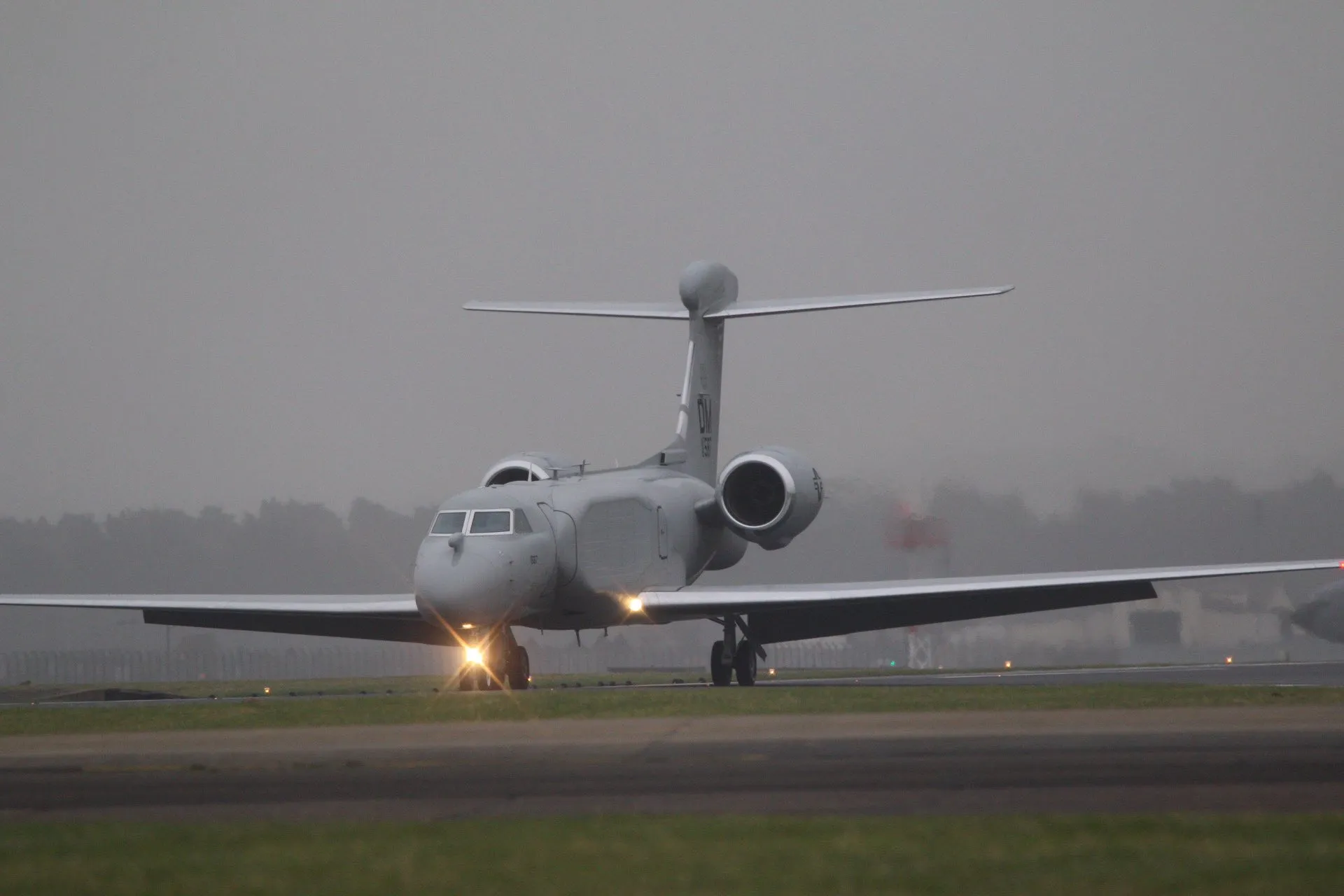
A pair of the U.S. Air Force’s new EA-37B Compass Call electronic warfare jets have touched down at RAF Mildenhall in England, from where they could move forward and join America’s growing aerial armada in the Middle East. 

Last night, open-source flight trackers began to track the progress of the two jets — tail numbers 19-1587 and 17-5579 — that were flying with the callsigns AXIS41 and AXIS43. Photos of the aircraft arriving at Mildenhall were provided to TWZ by g.lockaviation.

One of the two EA-37B Compass Call jets after landing at RAF Mildenhall yesterday evening. g.lockaviation

A pair of U.S. Air Force EA-37B Compass Call electronic warfare aircraft arrived today at RAF Mildenhall in the UK, likely in preparation for a deployment to the Middle East.

17-5579 as AXIS43
19-1587 as AXIS41 pic.twitter.com/1GVyDbmqJO

— Egypt’s Intel Observer (@EGYOSINT) March 31, 2026

This could become the EA-37B’s first operational deployment, but we cannot say that for certain at this time. One of the EA-37Bs was in Europe earlier this year to introduce airmen to the platform, but it was not yet operational. You can read more about that here.

It is worth bearing in mind that, during Operation Desert Storm in 1991, a pair of E-8 Joint STARS surveillance aircraft were also deployed, but were operated by civilian crews. The same could be the case here, or at least mixed crews.

The 55th Wing at Offutt Air Force Base, which operates the Compass Calls, declined to provide TWZ with a comment, deferring us to CENTCOM, which could not immediately comment.

g.lockaviation

The Air Force plans to acquire 10 EA-37Bs to replace its aging and steadily shrinking fleet of turboprop-powered EC-130H Compass Call planes, of which only four are still in service. Two are deployed to the Middle East for Operation Epic Fury. There have been some unconfirmed reports that these aircraft may have been damaged in the attack on Prince Sultan Air Base that saw an E-3 destroyed. Losing EC-130H capability in the region could have very well prompted an emergency deployment of EA-37Bs, even ahead of their planned entry into full operational availability. But we cannot confirm that is the case at this time.

Electromagnetic warfare, evolved


The new aircraft are designed to provide critical standoff jamming support against enemy communications systems, including hostile air defense systems.

As we have pointed out, even improvised systems cobbled together by Iranian-backed Houthi militants in Yemen, as well as their hodgepodge of other air defenses, have shown their ability to challenge even the most advanced fighters in the U.S. inventory. Iran’s capabilities, while now in a deeply degraded state, are more advanced and already seem to have had some success in targeting U.S. military aircraft, while others have faced close calls.

At the same time, while air defenses are certainly part of the equation, simply keeping the Iranian military from communicating and (further) disrupting their already fractured command-and-control infrastructure is a highly significant capability to bring to bear.

The EA-37B also has an important intelligence, surveillance, and reconnaissance (ISR) function, given its ability to spot, track, and geolocate various types of emitters.

This aircraft, which represents the cutting edge in U.S. electronic warfare capabilities, would be highly important for any ground operation, helping to protect troops put in harms way, should this come to pass.

We will have to wait and see if the EA-37Bs make the leap to the CENTCOM area of responsibility. If they do, it will be something of a baptism by fire for America’s new Compass Call.

A full deep-dive into the various capabilities of the EA-37B can be found in this interview with top executives from the two co-primes that are working on the electronic attack aircraft program.

UPDATES:

Our coverage for the day has concluded.

UPDATE: 5:38 PM EST –

CENTCOM spokesman Capt. Tim Hawkins provided us with the latest casualty figures for Epic Fury.

There have been 348 troops wounded, six seriously and 315 have returned to duty. There have been 13 troops killed.

Trump told reporters at the White House that the U.S. military will soon depart from the Strait of Hormuz.

“We’ll be leaving very soon,” he proclaimed. “What happens [there] we’ll have nothing to do with.

Trump: “We’ll be leaving very soon… what happens in [Hormuz] we’ll have nothing to do with”

Other countries can “fend for themselves” if they want gas or oil from the Persian Gulf. pic.twitter.com/mZbaQNLCjA

— OSINTtechnical (@Osinttechnical) March 31, 2026

CNN said top administration officials acknowledge that the U.S. cannot swiftly end the war within the Trump-imposed four to six week timeline and keep the Strait of Hormuz.

As the White House stares down Trump’s self-imposed four- to six-week deadline for ending the war, top administration officials have privately acknowledged that they can’t both achieve their military objectives swiftly and vow to reopen the strait within the same timeline,…

— Alayna Treene (@alaynatreene) March 31, 2026

Secretary of State Marco Rubio reiterated the Trump administration’s rationale for going to war with Iran, stating “we were on the verge of having an Iran that had so many missiles and so many drones that nobody could do anything about their nuclear weapons program…”

From Day One, the mission was crystal clear: This was the final, best chance to wipe out Iran’s threat for good – so they can never have a nuclear weapon.@SecRubio breaks it down ⬇️ pic.twitter.com/eChlkRPzyb

— The White House (@WhiteHouse) March 31, 2026

It appears that USS Tulsa and USS Santa Barbara, a pair of U.S. Navy Independence class Littoral Combat Ships (LCS) configured for minesweeping, remain in the Pacific.

According to open-source researcher MT Anderson, satellite imagery shows vessels moored alongside each other at Sembawang Shipyard in Singapore. As we have previously noted, ships remain thousands of miles away from their primary assigned operating area in the Middle East, where the conflict with Iran grinds on. That despite concerns that the Strait of Hormuz could be mined.

🇺🇸LCS WATCH: The Sembawang Sit-In
Mar 30 imagery confirms 2x Independence-class Littoral Combat Ships remain moored alongside at Sembawang Shipyard in Singapore.

➡️The distinct trimaran hulls are clearly visible taking up pier space in this false-color capture.
➡️Given the… pic.twitter.com/HL4UjJ2qaX

— MT Anderson (@MT_Anderson) March 31, 2026

Iran released new video of its Eagle 44 underground airbase showing it still has some aircraft. As TWZ editor-in-chief Tyler Rogoway notes in a post on X, low-resolution satellite imagery from March 16 shows relatively little damage at the site. However, things may have changed since then and the site may have been it. Regardless, it doesn’t matter if Eagle 44 only has jets, which wouldn’t last very long even if they got off the ground. However, if the facility were stuffed with missiles, that would be a concern. You can read more about Eagle 44 here.

He’s talking about the Eagle 44 installation. Low res imagery up to 16th doesn’t show signs of major destruction, but it really doesn’t matter at this point as far as the aircraft go. If it has missiles stuffed in there still then yes. More on Eagle 44: https://t.co/cA9hYI8RzX https://t.co/UX01AwvGUL

— Tyler Rogoway (@Aviation_Intel) March 31, 2026

UPDATE: 4:06 PM EST –

In a brief exchange during an interview with NBC News Tuesday afternoon, Trump hinted that Epic Fury might be drawing to a close.

“We’re doing great,” Trump told the network. “And it’s coming to an end.”

He offered no further details.

The U.K. is sending more troops and Sky Sabre air defense systems to the Middle East to defend against Iranian attacks. This will bring the total number of UK personnel in the Gulf and Cyprus to around 1,000, the BBC noted.

“On a trip to the Gulf nations, Defense Secretary John Healey said extra air defence teams and systems would be deployed to Saudi Arabia, Bahrain and Kuwait while the use of Typhoon jets in Qatar will be extended,” the outlet added. “My message to Gulf partners is: Britain’s best will help you defend your skies.”

Iran’s foreign minister Abbas Araghchi told Al Jazeera that his country is exchanging messages with the U.S. either directly or through friends in the region.

But that doesn’t mean there are peace talks with Washington, Araghchi posited.

“I receive messages from [U.S. envoy Steve] Witkoff directly, as before, and this does not mean that we are in negotiations,” he told the news outlet.

Araghchi added that Iran has no “faith that negotiations with the U.S. will yield any results. The Trust level is zero.”

Netanyahu said that as a result of constant Israeli attacks on Iran, “sooner or later, it will end up falling.”

The Israeli leader also said “we are working on transforming Israel into a super nation in the region and globally.”

The IRGC confirmed the killing of another Iranian leader, this time Jamshid Eshaghi, head of budget and financial affairs for the Iranian Armed Forces General Staff. He was killed in a missile strike in Tehran on an unspecified date, according to the IRGC.

Eshaghi played a key role in evading oil sanctions and financing the group’s missile projects, according to Ariel Oseran, senior Middle East correspondent for Israel’sI24 News in a post on X.

The IRGC confirms the elimination of Jamshid Eshaghi, head of budget and financial affairs for the Iranian Armed Forces General Staff, in an Israeli airstrike in Tehran, without specifying the date. Eshaghi played a key role in evading oil sanctions and financing the IRGC’s… pic.twitter.com/hs2npoQTt5

— Ariel Oseran أريئل أوسيران (@ariel_oseran) March 31, 2026

The State Department said it is “tracking reports of threats against locations where American citizens gather” in Saudi Arabia. ”We advise U.S. citizens that hotels and other gathering points including U.S. businesses and U.S. educational institutions may be potential targets.”

Saudi Arabia: We are tracking reports of threats against locations where American citizens gather. We advise U.S. citizens that hotels and other gathering points including U.S. businesses and U.S. educational institutions may be potential targets. On March 22, the Department of… pic.twitter.com/9Xm2oLzxzr

— TravelGov (@TravelGov) March 31, 2026

UPDATE 12:46 PM EST –

The Navy released video today of the aircraft carrier USS George H.W. Bush departing for deployment. As we previously noted, the carrier is reportedly heading to the Middle East region. The Bush will likely replace the aircraft carrier USS Gerald R. Ford, which left the region and is undergoing repairs in Croatia after a fire.

📍NORFOLK, Va. – The Nimitz-class aircraft carrier USS George H.W. Bush (CVN 77), the flagship of the George H.W. Bush Carrier Strike Group, departs Naval Station Norfolk to begin operations in support of its scheduled deployment, March 31, 2026. pic.twitter.com/ePDTv4IcPE

— U.S. Fleet Forces (@USFleetForces) March 31, 2026

Israeli Prime Minister Benjamin Netanyahu hinted at something on Tuesday that at one time was unthinkable – a military alliance with Saudi Arabia and other Arab nations.

According to Israeli media, “Netanyahu told ministers at a cabinet meeting that new alliances are being formed with leaders of Arab countries who ‘are talking about fighting together on our side,’” The Times of Israel reported.

“In the past, I had secret conversations with Arab leaders,” Netanyahu reportedly said. “I told them, ‘As soon as Iran can, it will conquer you and overthrow your kingdoms.’ Back then, they didn’t really internalize things. Today they understand.”

BREAKING 🇮🇱🇦🇪🇸🇦: Israeli PM Netanyahu says talks underway to form alliance with Arab countries to fight alongside Israel. pic.twitter.com/BOmDeCr8H9

— War Radar (@War_Radar2) March 31, 2026

Lebanon has informed the United Nations in a letter that it has outlawed Hezbollah’s military wing. Beirut’s letter, dated a few weeks ago but made public today, also mentioned the Lebanese government’s March 2 decision to ban all military activity by the group.

Lebanon has informed the United Nations in a letter that it has outlawed Hezbollah’s military wing. Beirut’s letter, dated a few weeks ago but made public today, also mentioned the Lebanese government’s March 2 decision to ban all military activity by the group. pic.twitter.com/2npN5Fckpa

— Ariel Oseran أريئل أوسيران (@ariel_oseran) March 31, 2026

Hegseth not only validated Trump’s idea to move forward with plans to attack Iran, he also downplayed the inherent risks of the conflict spiraling out of control, according to CNN.

In the immediate lead-up to Iran war, Hegseth not only validated the Trump’s idea to move forward, he also downplayed the inherent risks of the conflict spiraling out of control, three sources tell me & @KristenhCNN.

Nobody in the room during that critical meeting emphasized…

— Zachary Cohen (@ZcohenCNN) March 31, 2026

Poland has no intention of shipping any Patriot batteries to the Middle East despite a request from the U.S. to do so, says Polish Defense Minister Władysław Kosiniak-Kamysz.

“Our Patriot batteries and their armament are used to protect Polish skies and NATO’s eastern flank,” he stated on X. “Nothing is changing in this regard, and we are not planning to relocate them anywhere! Our allies know full well and understand how important the tasks we have here are. Poland’s security is an absolute priority.”

Nasze baterie Patriot i ich uzbrojenie służą do ochrony polskiego nieba i wschodniej flanki NATO. Nic w tej kwestii się nie zmienia i nigdzie nie planujemy ich przemieszczać! Nasi sojusznicy dobrze wiedzą i rozumieją jak ważne mamy tu zadania. Bezpieczeństwo Polski jest…

— Władysław Kosiniak-Kamysz (@KosiniakKamysz) March 31, 2026

The Islamic Revolutionary Guard Corps (IRGC) has threatened to strike 18 U.S. technology and defense-related companies operating in the Middle East, Israel’s I24 News reported. The IRGC warned the action could begin as early as tomorrow night if Iran’s senior commanders are targeted.

“In a statement, the IRGC urged employees of the listed firms to evacuate immediately, and advised nearby residents to leave surrounding areas, describing the companies as ‘terrorist’ entities allegedly supporting US and Israeli operations against Iran,” the publication added.

The IRGC threatens to attack 18 U.S. tech companies’ sites in the Middle East, including Apple, Google and Tesla, in response to any future targeted eliminations of its senior commanders as of tomorrow night.

“We advise employees of these companies to leave their workplaces…

— Ariel Oseran أريئل أوسيران (@ariel_oseran) March 31, 2026

U.S. President Donald Trump said today that countries should be prepared to go to the Strait of Hormuz and “take” fuel themselves, urging them to show greater resolve. Writing on Truth Social, he argued that nations would need to “learn how to fight for yourselves,” adding that the United States would no longer step in to assist, particularly after what he described as their refusal to support efforts to topple Iran’s leadership.

Trump suggested that countries facing shortages could instead purchase jet fuel from the United States, where supplies are abundant. He added that Iran had effectively been “decimated” and concluded by telling nations to secure their own oil.

“All of those countries that can’t get jet fuel because of the Strait of Hormuz, like the United Kingdom, which refused to get involved in the decapitation of Iran, I have a suggestion for you…” – President Donald J. Trump pic.twitter.com/aPYmL0qspa

— The White House (@WhiteHouse) March 31, 2026

NEWS 🧵: I called President Trump for some clarity on this post. He says the U.S. is not pulling assets in and around the Strait of Hormuz yet: “At some point I will, not quite yet, but countries have to come in and take care of it. Iran has been decimated, but they’re going to… pic.twitter.com/67BRdrOkRV

— Weijia Jiang (@weijia) March 31, 2026

In a press conference today, U.S. Secretary of War Pete Hegseth stressed that Operation Epic Fury would conclude “on our terms” and that the United States remains committed to shaping the outcome of the conflict according to its own objectives.

The next days of the Iran war will be “decisive,” Pentagon chief Hegseth said at his first news conference in nearly two weeks. He adds: “We have more and more options, and they have less… in only one month, we set the terms, the upcoming days will be decisive. Iran knows that, and there’s almost nothing they can militarily do about it.”

The war secretary reaffirmed that the option of some kind of ground campaign has not been ruled out. Hegseth said that “maybe negotiations will work,” but he was unwilling to commit one way or the other when asked about the potential for American boots on the ground.

Hegseth continued:

“You can’t fight and win a war if you tell your adversary what you are willing to do or what you are not willing to do, to include boots on the ground. Our adversary right now thinks there are 15 different ways we could come at them with boots on the ground, and guess what? There are. And so if we needed to, we could execute those options on behalf of the president of the United States and this department.”

“Or maybe we don’t have to use them at all. Maybe negotiations work, or maybe there’s a different approach. But the point is to be unpredictable in that you certainly do not let anybody know what you’re willing to do or not do.”

More here. Hegseth, speaking to concerns about the war in Iran from some of Trump’s political base:

“As far as President Trump and boots on the ground, I don’t understand why the base, which they have already, they understand wouldn’t have faith in his ability to execute on… https://t.co/7wBzUlntGI

— Dan Lamothe (@DanLamothe) March 31, 2026

Hegseth went on to argue that recent events have exposed the level of support the United States can expect from its allies, suggesting that their responses have fallen short. According to Hegseth, while the missiles in question do not threaten the United States directly but rather its allies, requests for assistance — or even basic overflight access — have often been met with hesitation or obstacles.

Hegseth also confirmed that he had briefly visited the U.S. Central Command region recently.

Press conference at Pentagon just began. Hegseth says he was in the Centcom region for half a day recently — something not previously disclosed.

He has a notably different tone in his opener today, sharing details about what he saw and gratefulness to the service members in the…

— Dan Lamothe (@DanLamothe) March 31, 2026

He concluded by warning that an alliance loses its meaning if member countries are unwilling to stand together when it matters most.

When it comes to overflight access, France has apparently joined Spain in denying U.S. military access to their airspace for taking part in attacks on Iran. In a statement, Trump slammed France for refusing to let U.S. military aircraft carrying military supplies operate in its airspace.

Trump:

The Country of France wouldn’t let planes headed to Israel, loaded up with military supplies, fly over French territory.

France has been VERY UNHELPFUL with respect to the “Butcher of Iran,” who has been successfully eliminated! The U.S.A. will REMEMBER!!! pic.twitter.com/uu7hezFJUq

— Clash Report (@clashreport) March 31, 2026

In other France-related news, Israel has apparently stopped defense exports to the European country, citing “hostile attitude,” sources told The Jerusalem Post.

Meanwhile, Italy confirmed that it denied permission for U.S. military aircraft to land at Sigonella Air Base in Sicily last week, before heading to the ​Middle East; this was due to Washington having not sought prior authorization from the government in Rome, Reuters reports. A source at the Italian defense ministry told The Guardian that “some US bombers” had been due to land at Sigonella en route to the Middle East. Otherwise, U.S. military aircraft continue to operate from Italian airbases as a matter of course, the defense ministry confirmed.

Italian MOD just released this:

Someone is trying to push the narrative that Italy has decided to suspend the use of its bases by U.S. assets.

That is simply false, because the bases are active, in use, and nothing has changed.

The Government continues to do what all Italian… https://t.co/j505zNnuVu

— The Aviationist (@TheAviationist) March 31, 2026

Gen. Dan Caine, the Chairman of the Joint Chiefs of Staff, has said the U.S. military is delivering precision strikes against manufacturing nodes “deep within Iran.”

He says around 11,000 targets have been hit in the past 30 days. The U.S. military “continues to assert dominance over the Iranian Navy,” he added.

Caine added that more than 150 ships have been “taken out.”

An underground missile storage facility in Sofeh, in Isfahan province, appears to be among the hardened facilities targeted in recent strikes. Earlier accounts suggested that the target was an Iranian underground missile base, but that seems to be refuted by the geolocation of the imagery available.

Videos purporting to show the aftermath of the strikes include multiple secondary explosions, suggesting that bunker-busting munitions managed to penetrate the vaults and then detonate the missiles stored there. As we have described in the past, a key vulnerability of Iranian subterranean installations is the risk that even a single weapon penetrating their hardened exterior by any means could have absolutely catastrophic results.

Last night, President Trump published footage on his Truth Social account showing massive explosions and secondary detonations in Iran.
Reports indicated that the strike took place in the Safeh–Havanirooz area, south Esfahan.@NASA Fire monitoring maps indeed detected active… https://t.co/69f3khsLiw pic.twitter.com/6ffTI0xZIk

— Ben Tzion Macales (@BenTzionMacales) March 31, 2026

Officials familiar with U.S. and Western intelligence assessments say the U.S.-Israeli war on Iran has fractured the Iranian government, making it harder for the country to make decisions or coordinate large-scale retaliatory attacks, The New York Times reports.

Since the conflict began four weeks ago, several dozen Iranian leaders and their deputies have been killed. Survivors face significant communication challenges and are unable to meet in person, fearing that their calls could be intercepted by the United States or Israel and lead to airstrikes.

Although Iran’s security and military agencies remain operational, the government’s capacity to develop new strategies or policies has been significantly weakened.

The U.S.-Israeli war against Iran has fractured the Iranian government, complicating its ability to make decisions and coordinate larger retaliatory attacks.

Several dozen Iranian leaders and their deputies have been killed since the war began four weeks ago. Those who survive…

— Ronen Bergman (@ronenbergman) March 30, 2026

Iranian state media reported yesterday that a parliamentary committee has approved a plan to impose tolls on ships passing through the Strait of Hormuz.

According to a Telegram post by the Fars News Agency, the strait would remain closed to vessels from the United States, Israel, and countries involved in sanctions against Iran. The report added that Iran would play a “sovereign” role in enforcing the new system.

The proposal, which has been backed by Iran’s parliament security committee, would still require agreement from other countries bordering the strait. Details on the level of the proposed tolls have not been disclosed.

Meanwhile, as you can read about in our previous coverage, President Trump warned that if no agreement is reached with Iran — including reopening the Strait of Hormuz shipping route — the U.S. military forces would destroy “all of their Electric Generating Plants, Oil Wells and Kharg Island (and possibly all desalinization plants!).”

More information on the proposed toll arrangement emerged today, including the surprising suggestion that Oman is slated to help shape the legal framework. This was reported by Fars and later picked up by Bloomberg, but has yet to be independently verified. Oman has strong relations with the United States, including extensive security cooperation. Oman also plays a key role as a regional mediator, particularly between the United States and Iran.

A pair of container ships operated by the Chinese shipping giant Cosco have successfully transited the Strait of Hormuz and exited the Gulf, according to ship-tracking data.

The vessels, CSCL Indian Ocean and CSCL Arctic Ocean, sailed near the Iranian-controlled island of Larak and are now heading toward Port Klang in Malaysia.

While Iran has largely restricted traffic through the key waterway, it appears to be permitting limited passage for ships from countries it considers “non-hostile,” including Thailand, China, Pakistan, and India.

Two COSCO Container Ships Make First Major Commercial Crossing of Strait of Hormuz Since War Began

After turning back on an initial attempt, the CSCL Indian Ocean and CSCL Arctic Ocean sailed through the strategic waterway on Monday toward Malaysia, a rare transit for major… pic.twitter.com/kBwscFC7qU

— Washington Eye (@washington_EY) March 30, 2026

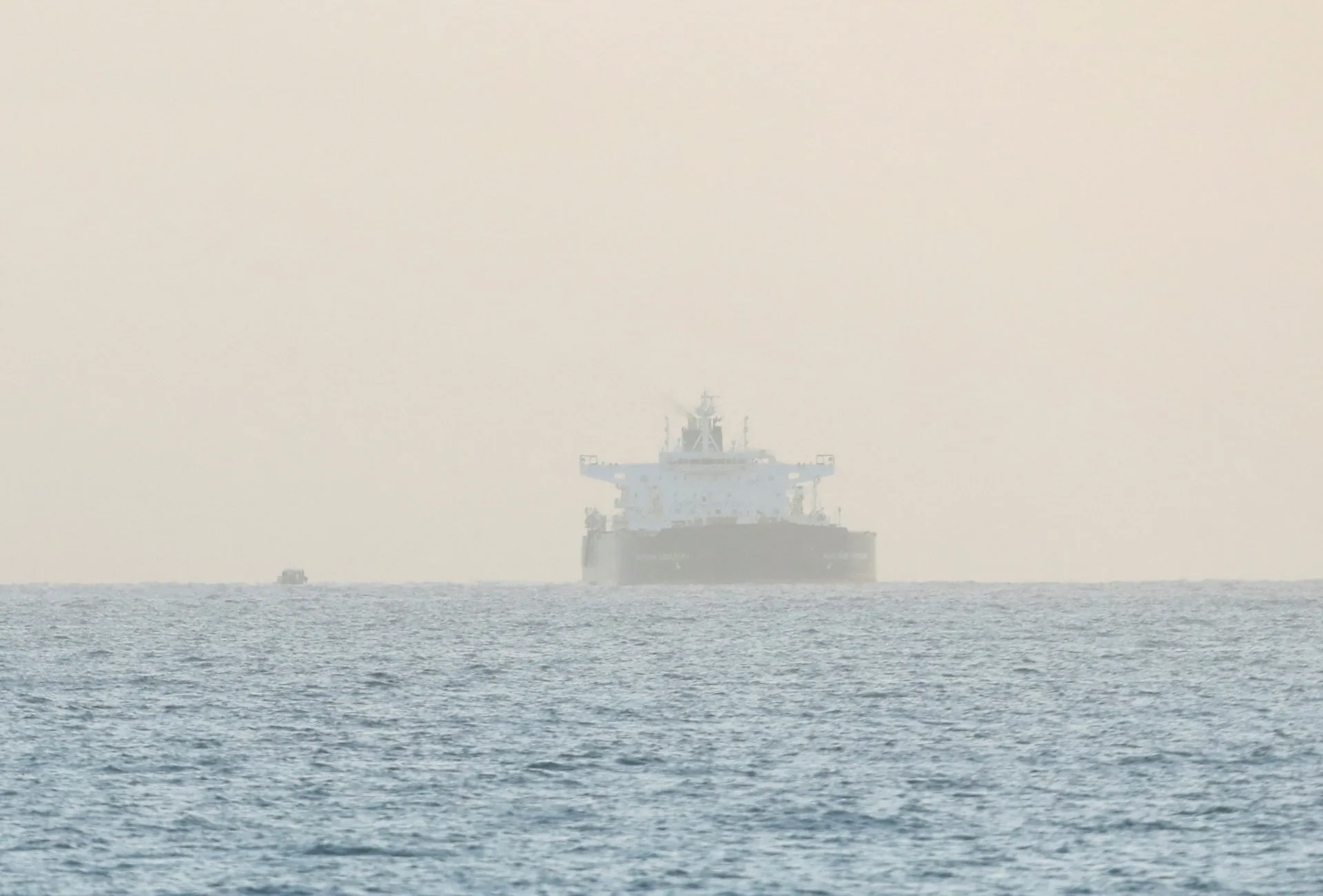
Iran struck a fully laden crude oil tanker anchored in the port of Dubai, setting it on fire and damaging its hull in what marks the latest attack on commercial shipping in the Gulf and the Strait of Hormuz during the conflict.

Authorities in Dubai said the drone strike on the Al Salmi tanker sparked a blaze that was brought under control early Tuesday, several hours after the incident was first reported. They later confirmed that no oil spill had occurred.

Dubai authorities confirm that response teams have successfully contained the incident involving the Kuwaiti oil tanker in Dubai waters, with no oil leakage and no injuries reported.

— Dubai Media Office (@DXBMediaOffice) March 31, 2026

Iran is reportedly pushing the Houthis to prepare for a renewed campaign against Red Sea shipping, contingent upon any further escalation by the United States in the conflict with Iran. This was reported by Bloomberg, citing European officials familiar with the matter.

An Israeli military spokesperson has said the country is ready to continue its offensive against Iran for an extended period. According to Reuters, Lt. Col. Nadav Shoshani told reporters that Israel is prepared for “weeks” more of fighting in the conflict, which began on February 28 when joint U.S.-Israeli airstrikes killed Iran’s supreme leader, Ali Khamenei. He emphasized that while the final decision rests with political leaders, “we are prepared to keep operating for weeks to come. We have the targets for that, the munitions for that, the manpower for that, and it’s up to the leadership to decide”.

His remarks follow comments from Israeli Prime Minister Benjamin Netanyahu, who said the campaign was “definitely beyond the halfway point,” later clarifying that he was referring to progress in terms of “missions” rather than “not necessarily in terms of time.”

A photo released by the Israeli Air Force today shows an F-16D Barak armed with 2,000-pound-class Joint Direct Attack Munitions (JDAMs), apparently heading out to attack infrastructure belonging to Hezbollah in Beirut. IAF

In a televised interview, Netanyahu has claimed that Iran has tried to kill President Trump twice, although he did not provide a timeline for when these attempts were made or how. “They’re still trying to kill him,” the Israeli leader added.

The Israeli military claimed today that all of its critical and essential pre-war targets in Iran will have been destroyed by Wednesday.

This represents the complete elimination of the top two priority categories of pre-war targets and is part of the broader campaign in which the IDF has destroyed roughly 60 to 70 percent of all designated targets within the Islamic Republic.

The Israeli Air Force carried out over 230 strikes in Iran in the past day, the military says, publishing footage showing attacks on Iranian air defense systems in Tehran.

The IDF says other targets hit in the past day included primed ballistic missile launchers and weapon… pic.twitter.com/sLuUZFqYV8

— Emanuel (Mannie) Fabian (@manniefabian) March 31, 2026

“Critical” targets include those posing an immediate threat to Israel, such as ballistic missile facilities, as well as key sites central to the objectives of the campaign, including the few remaining nuclear-related installations.

The IDF announced that all of its critical and essential pre-war Iran targets, including ballistic missile industry targets and nuclear-related targets, will have been destroyed by Wednesday.

✍️ @Jeremybob1 https://t.co/EYankG9iuQ

— The Jerusalem Post (@Jerusalem_Post) March 31, 2026

On the topic of nuclear-related targets, President Trump disclosed today that he considers that Iran’s nuclear facilities are buried so deeply that it would be difficult to raid them to secure their enriched uranium stockpiles.

“I don’t even think about it. I just know that, you know, that’s so deeply buried it’s gonna be very hard for anybody,” Trump told CBS News.

TWZ has previously explored the possibility of U.S. and/or Israeli authorities launching a special operations ground raid to extract or otherwise neutralize Iran’s stockpile of enriched uranium. While noting that it is far from easy to achieve this objective from the air alone, it is also true that Israel has demonstrated its ability and willingness to carry out complex raids on subterranean facilities in the past. Nevertheless, any such operation would still face immense risks and uncertainties.

Four Israeli soldiers have been killed during fighting in southern Lebanon, the Israeli military said on Tuesday, as its forces continue to clash with the Iran-backed Hezbollah.

In a statement, the military identified three soldiers from the same battalion who “fell during combat,” while a separate statement said a fourth soldier, whose name has not yet been released, was also killed in the same incident, according to Agence France-Presse.

The military added that another soldier was seriously injured, while a reservist sustained moderate wounds.

🕯️Captain Noam Madmoni, 22
🕯️Staff Sergeant Ben Cohen, 21
🕯️Staff Sergeant Maxsim Entis, 21

All 3 soldiers, a team commander and 2 soldiers, from the Nahal Reconnaissance Battalion (934th), Nahal Brigade, fell during combat in southern Lebanon.

I send my deepest condolences… pic.twitter.com/6fVH6PpyJm

— LTC Nadav Shoshani (@LTC_Shoshani) March 31, 2026

Saudi Arabia’s defence ministry has said it intercepted and destroyed 10 drones in recent hours, along with eight missiles targeting the Riyadh area and the country’s eastern region.

The United Arab Emirates says its air defenses engaged eight ballistic missiles, four cruise missiles, and 36 drones launched from Iran earlier today.

UAE air defences engaged 8 Ballistic missiles and 4 Cruise missiles and 36 UAV’s.

The UAE air defences on 31th March 2026 engaged 8 Ballistic missiles, 4 Cruise missiles and 36 UAV’s launched from Iran.

Since the start of the blatant Iranian attacks, UAE air defences have… pic.twitter.com/kSolj166Kq

— وزارة الدفاع |MOD UAE (@modgovae) March 31, 2026

Furthermore, Kuwait reported that its air defences were responding to hostile missile and drone attacks. Neither country specified the origin of the projectiles.

Gulf partners of the United States, especially Saudi Arabia and the United Arab Emirates, are pressing President Trump to keep up military operations against Iran, asserting that Tehran has not been sufficiently weakened by the month‑long U.S.‑led bombing campaign, according to U.S., Gulf, and Israeli officials, AP reports.

“Officials from Saudi Arabia, United Arab Emirates, Kuwait and Bahrain have conveyed in private conversations that they do not want the military operation to end until there are significant changes in the Iranian leadership…” https://t.co/WRh4iTIwx5

— Michael Weiss (@michaeldweiss) March 30, 2026

A recent video released by U.S. Central Command includes footage of attacks on pickup trucks configured to launch drones, including Shahed-136 one-way attack drones.

🇮🇷🇺🇸 This is, to my knowledge, the first indication that Iran is launching Shahed-136 strike drones, among other designs, from pickup trucks (without the use of a rocket booster/RATO) during this war. This is a low-signature approach that is well-suited for use in surprise… https://t.co/R1AJdAoG4h pic.twitter.com/cGUoAOqE2b

— Shahryar Pasandideh (@shahpas) March 31, 2026

NPR has reported that the Iranian strike on Saudi Arabia’s Prince Sultan Air Base last week damaged two U.S. Air Force E-3G Sentry AWACS aircraft. Previously, we had gotten confirmation that one aircraft was entirely destroyed. The extent of the damage to the other is unclear.

NPR now reports that Iranian strike on Saudi Arabia’s Prince Sultan Air Base damaged two U.S. E-3 Sentry AWACS aircraft.

One has been confirmed destroyed. https://t.co/ZmYHTAOJvh

— Clash Report (@clashreport) March 31, 2026

Ukraine’s president, Volodymyr Zelensky, has claimed that Ukrainian intelligence had information that a Russian spy satellite had photographed the base three times before the attack, with targeting data provided to Iran. While that may be true, commercially available satellite imagery over the same period also revealed the likely position of the E-3s at the base.

Comparative images in planet labs of Prince Sultan Air Base from two weeks ago (delayed) and days before tell you everything you need to know about how Iran could have targeted certain aircraft on that airfield even without real time intel.

— Tyler Rogoway (@Aviation_Intel) March 30, 2026

A video circulating on social media appears to show an Iranian ballistic missile maneuvering to evade an Israeli interceptor. If verified, this would not be the first occasion that we have seen evidence of more advanced types of Iranian missiles still being fired at Israel and eluding air defenses. We have seen multiple occasions where Iranian maneuverable reentry vehicles (MaRVs) have been able to pierce interceptor barrages during the terminal stage.

At least some of the aircrews of the three U.S. Air Force F-15E Strike Eagles that were shot down in a friendly-fire incident by Kuwaiti air defenses are still flying missions in Epic Fury, Secretary of War Pete Hegseth has confirmed. “Admiral Cooper noted this morning that the three Air Force captains who were shot down by Kuwaiti friendly fire early in the fight never left the theater. All dropped bombs over Tehran last night.”

.@SECWAR “Admiral Cooper noted this morning that the three Air Force captains who were shot down by Kuwaiti friendly fire early in the fight never left the theater.

All dropped bombs over Tehran last night.” pic.twitter.com/tWGQdKBAx2

— DOW Rapid Response (@DOWResponse) March 31, 2026

Contact the author: thomas@thewarzone.com
Thomas is a defense writer and editor with over 20 years of experience covering military aerospace topics and conflicts. He’s written a number of books, edited many more, and has contributed to many of the world’s leading aviation publications. Before joining The War Zone in 2020, he was the editor of AirForces Monthly.


Howard is a Senior Staff Writer for The War Zone, and a former Senior Managing Editor for Military Times. Prior to this, he covered military affairs for the Tampa Bay Times as a Senior Writer. Howard’s work has appeared in various publications including Yahoo News, RealClearDefense, and Air Force Times.


Source link

Al-Sharaa says Syria to stay out of war on Iran unless attacked | US-Israel war on Iran

NewsFeed

’14 years of war is enough for Syria’: Syrian President Ahmed al-Sharaa says Syria will remain outside the US-Israeli war on Iran unless it is directly targeted. His comments come as fighting continues across the region for a 31st day.

Source link

Judge temporarily halts Trump’s $400m White House ballroom project | Donald Trump News

District Judge Richard Leon says construction has to stop until Congress provides statutory authorisation.

A judge has ruled that US President Donald Trump cannot proceed with his planned $400m ballroom on the site of the White House’s demolished East Wing without approval from Congress.

District Judge Richard Leon on Tuesday granted a request for a preliminary injunction filed by the National Trust for Historic Preservation, which sued after alleging Trump had exceeded his authority by razing the historic East Wing and launching construction on the new building.

Recommended Stories

list of 2 itemsend of list

“I have concluded that the National Trust is likely to succeed on the merits because no statute comes close to giving the President the authority he claims to have,” Leon, an appointee of former Republican President George W Bush, wrote in the ruling.

“The President of the United States is the steward of the White House for future generations of First Families. He is not, however, the owner!” he said. “Unless and until Congress blesses this project through statutory authorization, construction has to stop!”

Leon said the order does not affect “construction necessary to ensure the safety and security of the White House”.

His ruling keeps the 90,000 square-foot (8,360 square-metre) ballroom project on hold while the lawsuit continues.

The judge said he was pausing his order for 14 days to allow the ⁠Trump administration to appeal. Hours later, the Justice Department filed an appeal at the Washington, DC-based US Court of Appeals for the District of Columbia Circuit.

Artist renderings of the new White House East Wing and Ballroom
Artist renderings of the new White House East Wing and Ballroom [Jon Elswick/AP]

Carol Quillen, president and CEO of the National Trust, welcomed Leon’s ruling.

“This is a win for the American people on a project that forever impacts one of the most beloved and iconic places in our nation,” Quillen said in a statement.

In a social media post, Trump called the National Trust a group of left-wing “lunatics” and said his ballroom is “under budget, ahead of schedule, being built at no cost to the Taxpayer, and will be the finest Building of its kind anywhere in the World”.

The Republican has championed the ballroom as a defining addition to the White House and a lasting symbol of his presidency.

Source link

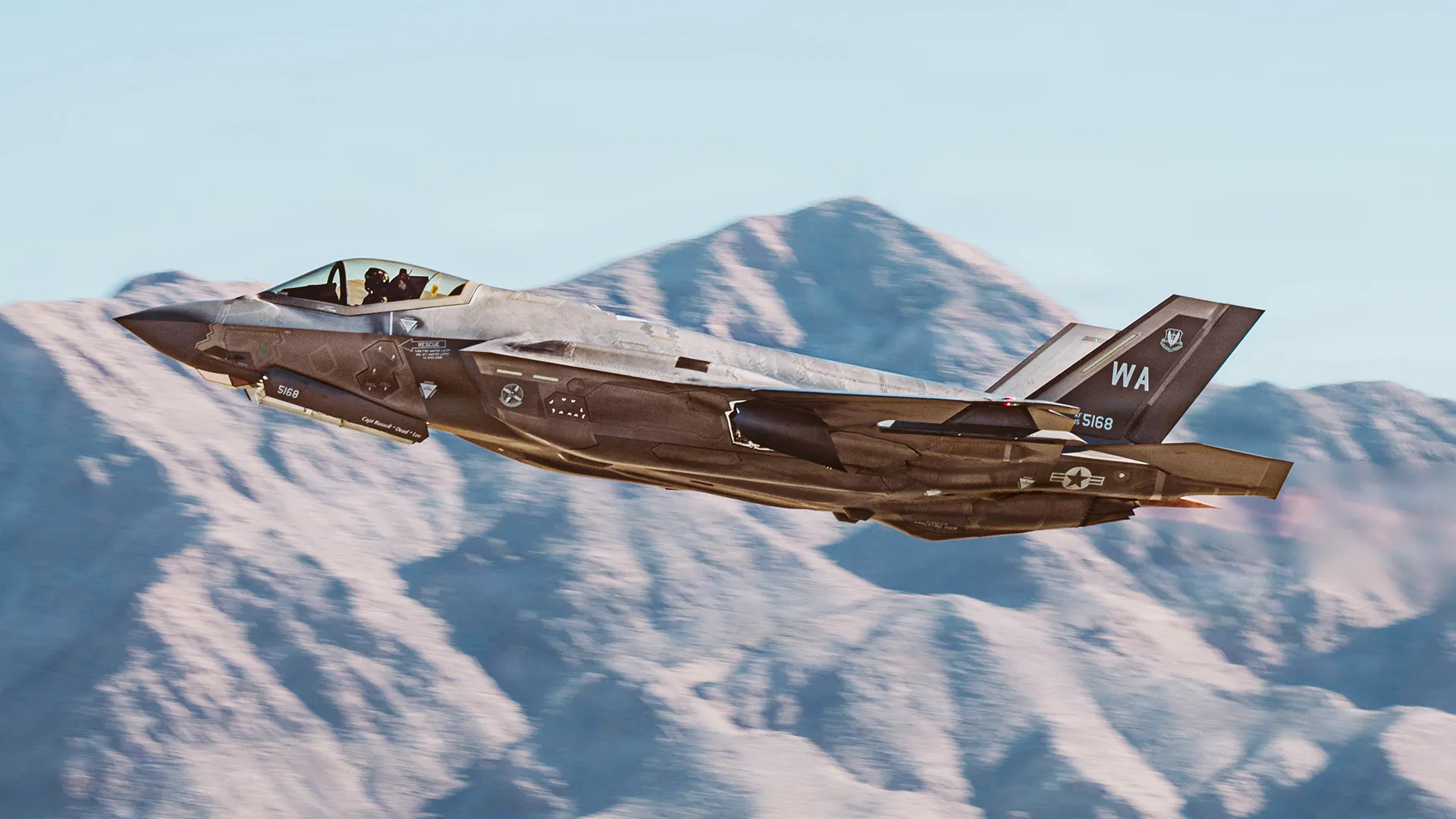
F-35 Crashes In The Nevada Test And Training Range Complex (Updated)

An F-35 crashed in the Nevada Test and Training Range in Southern Nevada. The pilot ejected and is reportedly safe after sustaining only minor injuries.

According to KSNV News 3, “The U.S. military is searching for a pilot who had to eject from an aircraft over Southern Nevada on Tuesday, sources tell News 3… The aircraft reported trouble maneuvering around noon, according to sources.” The outlet subsequently reported that the pilot was found in good condition.

UPDATE: Nellis Air Force Base tells News 3 the pilot is safe, having reported minor injuries. An F-35 from Nellis AFB crashed north of Las Vegas, and emergency responders are on scene.https://t.co/KNlxePnBRm

— KSNV News 3 Las Vegas (@News3LV) March 31, 2026

TWZ has reached out to Creech AFB and Nellis AFB for more information. We will update this post as we find out more.

UPDATE: 5:24pm EST—

We have now gotten a statement from the 57th Wing at Nellis AFB (the range complex falls under the installation’s command). We now know the F-35 that was lost was based out of Nellis. F-35s are major tenants of the base, for weapons tests and tactics development tasks and aggressor duties, and visiting F-35s frequent the base for training and exercises. The statement reads:

An F-35 from Nellis AFB crashed north of Las Vegas today. The incident occurred approximately 25 miles northeast of Indian Springs, Nevada, within the controlled airspace and restricted federal property of the Nevada Test & Training Range.

Emergency responders are on-scene and there is no impact to populated areas. The pilot is safe and being treated for minor injuries. The safety of our personnel and the community remain our top priority.

We will provide additional information as it becomes available.

Contact the author: Tyler@twz.com

Tyler’s passion is the study of military technology, strategy, and foreign policy and he has fostered a dominant voice on those topics in the defense media space. He was the creator of the hugely popular defense site Foxtrot Alpha before developing The War Zone.


Source link

Tiger Woods pleads not guilty to DUI in car crash where opioids found | Football News

Plea comes hours after sheriff’s report said the golfer showed signs of impairment at the scene of last week’s crash.

Golfer Tiger Woods pleaded not guilty in his driving under the influence case in Florida on Tuesday, hours after a sheriff’s report said he had pain pills and showed signs of impairment at the scene of the crash last week.

The online court docket for Martin County, Florida, showed that Woods entered a written plea of not guilty and planned to waive his appearance during an arraignment hearing next month.

Recommended Stories

list of 4 itemsend of list

Woods’s eyes were bloodshot and glassy, his pupils were dilated, and he had opioid pills in his pocket when interviewed at the scene of the crash, according to the arrest report released by the Martin County Sheriff’s Office.

The golfer’s movements were slow and lethargic, and he was sweating as he talked to deputies and told them he had taken prescription medication earlier in the morning, according to the report. Woods told deputies he had been looking at his phone and fiddling with the radio before he clipped a truck in front of him, the report said.

Deputies found two white pills, which were identified as the opioid hydrocodone, used to treat pain, in his pocket, the report said.

When asked by a deputy if he took any prescription medications, Woods said, “I take a few.”

Woods’s agent at Excel Sports, Mark Steinberg, has not responded to multiple messages seeking comment.

The golfer was travelling at high speeds on a beachside, residential road on Jupiter Island when his Land Rover clipped the truck and rolled onto its side, according to the sheriff’s office, which noted that Woods had shown signs of impairment.

The truck had $5,000 in damage, according to the report.

The truck driver and another person helped Woods out of his vehicle, with the golfer needing to climb out from the passenger side. Neither Woods nor the truck driver was injured.

During a field sobriety test, deputies noticed Woods limping and that he had a compression sock over his right knee. The golfer explained he had undergone seven back surgeries and more than 20 leg operations, and that his ankle seizes up while walking. Woods, who was hiccupping during the questioning, continuously moved his head during one of the sobriety tests, and deputies had to instruct him several times to keep his head straight, the report said.

“Based on my observations of Woods, how he performed the exercises and based on my training, knowledge, and experience, I believed that Woods’ normal faculties were impaired, and he was unable to safely operate the motor vehicle,” the deputy wrote after the tests.

Woods, 50, is the most influential figure in golf and has become as recognisable as any athlete in the world. The first person of Black heritage to win the Masters in 1997, he has captivated golf fans with records likely never to be broken.

But his injuries kept him from accomplishing more, including those suffered in a 2021 car crash that damaged his right leg so badly he said doctors considered amputation.

At this latest crash, Woods agreed to a breathalyser test, which showed no signs of alcohol, but he refused a urine test, authorities said. He was arrested and released on bail eight hours later.

No one from Woods’s camp or the PGA Tour – he is on the board and is the chairman of the committee reshaping the competition model – has commented since his arrest.

Woods, who has been involved in many crashes over the years, is charged with driving under the influence, with property damage and refusal to submit to a lawful test. He is scheduled for arraignment on April 23. Online court records do not list a lawyer for him.

Under a change to Florida law last year, refusing a law enforcement officer’s request to take a breath, blood or urine test has become a misdemeanour, even for a first offence.

Source link

Russian tanker reaches Cuba amid critical energy shortage | Oil and Gas News

A Russian tanker has delivered enough fuel to meet Cuba’s energy needs for up to 10 days, following a three-month blockade.

A Russia-flagged tanker carrying 730,000 barrels of oil has docked in Cuba, marking the first time in three months that an oil tanker has reached the island nation.

The administration of United States President Donald Trump allowed the Anatoly Kolodkin to proceed despite an ongoing US energy blockade. The Aframax tanker entered the Bay of Matanzas – the country’s largest supertanker and fuel storage port – on Tuesday at daybreak.

Recommended Stories

list of 4 itemsend of list

The vessel, under US sanctions, entered Cuban territorial waters late on Sunday, not far from the US Navy base at Guantanamo Bay. The United States said it was allowing the tanker to deliver fuel for humanitarian reasons.

The Anatoly Kolodkin entered the Bay of Matanzas under clear skies and light winds at sunrise. Much of the nearby city – and the majority of Cuba – was without power when the tanker arrived at the port area.

Cuba has not received an oil tanker in three months, according to President Miguel Diaz-Canel, exacerbating an energy crisis that has led to seemingly endless blackouts across the country of 10 million people and brought hospitals, public transportation, and farm production to the brink of collapse.

Cubans, including Energy and Mines Minister Vicente de la O Levy, cheered the ship’s arrival. A shortage of petroleum has exacerbated a deep economic crisis, leaving the population mired in long blackouts and facing severe shortages of food and medicine.

“Our gratitude to the Government and People of Russia for all the support we are receiving. A valuable shipment that arrives amidst the complex energy situation we are facing,” de la O Levy wrote on X.

The fuel, if delivered, would give Cuba’s communist-run government breathing room amid growing pressure from the Trump administration, which has promised change in Cuba.

It will take days before the crude on board the Anatoly Kolodkin can be processed domestically and turned into motor fuel and refined products, such as diesel and fuel oil for power generation.

The ship is carrying Russian Urals, a medium sour crude, which is a good fit for Cuba’s ageing refineries.

Cuba produces barely 40 percent of its required fuel and relies on imports to sustain its energy grid. Experts say the anticipated shipment could produce about 180,000 barrels of diesel, enough to feed Cuba’s daily demand for nine or 10 days.

Cuba used to receive most of its oil from Venezuela, but those shipments have been halted ever since the US attacked the South American country and abducted its leader, Nicolas Maduro, in early January.

Source link

Venezuela Reclaims US Diplomatic Venues as Rodríguez Promotes ‘Faith Diplomacy’

Caracas and Washington have fast-tracked a diplomatic rapprochement following the January 3 bombings and kidnapping of President Nicolás Maduro. (VTV)

Mérida, March 31, 2026 (venezuelanalysis.com) – The Venezuelan government has officially retaken control of its diplomatic headquarters in Washington, DC, as part of the two countries’ diplomatic rapprochement.

The move followed days of high-level activity in the US capital by a Venezuelan delegation with the aim of rehabilitating consular services for hundreds of thousands of nationals residing in the United States.

On Thursday, Venezuelan officials re-hoisted the national flag at the diplomatic mission buildings, which had been under the “temporary control” of the US State Department since 2023.

The properties, including the embassy in Georgetown and the ambassador’s residence, were previously handed over to the self-proclaimed “interim government” led by Juan Guaidó after the first Trump administration recognized it as Venezuela’s legitimate authority in 2019. The Venezuelan embassy was forcefully taken over by security forces after a group of solidarity activists attempted to defend it from the US-backed hardline opposition.

Caracas’ delegation, sent by Acting President Delcy Rodríguez, was led by Félix Plasencia, Venezuela’s Chargé d’Affaires to the US, and Oliver Blanco, Vice-Minister for Europe and North America. The group inspected the facilities, and Plasencia confirmed that the buildings would undergo an immediate “rehabilitation process” to resume institutional functions.

“This is a significant achievement in the protection of our national assets,” Plasencia stated via social media, sharing images of the Venezuelan flag outside diplomatic venues.

“We are working to reinstate these spaces as a service to all Venezuelan citizens, to support them in their consular needs, the authentication of their identity documents, and the protection of their rights abroad,” he added.

According to Blanco, the delegation held meetings with several State Department officials last week with the purpose of “exploring opportunities to strengthen the bond between both nations” and establishing a permanent presence to address bilateral interests, specifically in trade, migration, and energy.

Venezuela’s retaking of its diplomatic facilities on US soil was made possible by the US Treasury Department’s Office of Foreign Assets Control (OFAC) issuing General License 53.

The sanctions waiver allows the provision of goods and services to Venezuela’s diplomatic missions, allowing them to engage in financial transactions to ensure the normal functioning of consular activities.

Since 2019, Venezuelans residing in the US have faced hurdles to access official channels for passport renewal and birth certificate issuance, and have been forced to seek alternative solutions through third-country consulates or by utilizing expired documentation. 

Venezuelan migrants have also been heavily targeted by the Trump administration’s anti-migration crackdown, with hundreds of thousands placed at risk of deportation with the suspension of Temporary Protected Status (TPS) and the CHNV parole program. US and Venezuelan authorities presently coordinate three weekly deportation flights.

Caracas and Washington fast-tracked a diplomatic re-engagement in the wake of the January 3 military attack that saw US special forces kidnap Venezuelan President Nicolás Maduro and First Lady Cilia Flores. The pair is currently facing charges including drug trafficking conspiracy.

The two countries formalized the reestablishment of diplomatic ties on March 5 following a seven-year hiatus. Days later, the Trump administration recognized Rodríguez as Venezuela’s “sole” authority. On Monday, the US State Department announced the reopening of the US embassy in Caracas.

Since January, the acting president has hosted multiple White House officials who have praised her government’s pro-business reforms in the energy and mining sectors. For her part, Rodríguez has defended diplomacy and the prospect of “mutually beneficial” relations with the US.

“Faith diplomacy” gathering

The Rodríguez administration’s outreach to the US recently included a high-profile “faith diplomacy” gathering with evangelical pastors. Venezuelan authorities stated that the meeting aimed to promote “peace and spiritual union.”

The Friday event in the Poliedro in Caracas featured prominent international religious figures alongside Venezuelan cabinet members and the national evangelical community. The guest of honor was Pastor Ramiro Abel Peña Jr., a key figure in the “Office of Faith-Based and Neighborhood Partnerships” during Trump’s first term and a current spiritual advisor to the US President.

Peña, a pastor from the “Christ the King” Baptist Church in Waco, Texas, has cultivated close ties with the Trump family and has been a vocal advocate for hardline evangelical and zionist causes. During the event, Peña led the central prayer for the “restoration” and “blessing” of Venezuela.

He was joined by other international religious leaders such as Pastor Roosevelt Fonseca of the “Christian Life Mission” (Colombia-USA), who participated in “revival prayers” intended to foster social cohesion during the 2026 Holy Week.

For her part, Rodríguez called for “an end to hatred” and reaffirmed the government’s commitment to a national amnesty law that has seen thousands released from prison or have their judicial cases dropped. She urged a prayer for an end to US sanctions and advocated for Venezuelans to look to “the words of Jesus” as a guide to overcoming the country’s struggles.

Edited by Ricardo Vaz in Caracas.


Source link

Court dismisses wrongful termination suit by former Fox News producer

A U.S. District Court judge dismissed a wrongful termination suit filed by a Fox News producer who claimed he was fired in retaliation for calling out the network’s reporting on President Trump’s erroneous charges of 2020 election fraud and the riot at the U.S. Capitol on Jan. 6, 2021.

Jason Donner, who worked at the network’s Washington bureau as a reporter and producer was fired on Sept. 28, 2022, two days after calling in sick. He was told he had been terminated for his absence.

In 2023, Donner filed a lawsuit in a Washington, D.C., court that contended his dismissal was linked to several instances in which he challenged the veracity of the network’s coverage.

But U.S. District Judge Amir Ali determined in his ruling issued Monday that Donner failed to meet the company rules and that his conduct was not protected by the District of Columbia’s sick leave law.

Donner’s attorney did not immediately respond to a request for comment.

The lawsuit noted that Fox News bosses criticized the network’s journalists for not considering the feelings of its pro-Trump audience following the election that sent Joe Biden to the White House.

Those comments are supported by the depositions and evidence collected for the Dominion Voting Systems defamation suit against Fox News, which was settled in April for $787.5 million.

But Ali also said Donner was an at-will employee and that his case failed to identify “a public policy that precluded Fox from firing him over his ardent objections to the network’s programming, no matter their validity.”

The same point was raised when U.S. District Judge Christopher Cooper dismissed that portion of Donner’s claim in 2024.

“As we have maintained, this lawsuit was entirely without merit, and we are pleased with the court’s ruling on the matter,” a Fox News representative said in a statement.

Source link

Bunkers For U.S. Bases In Middle East Now A Top Priority For Pentagon

Fielding more hardened shelters to better protect U.S. forces at bases in the Middle East is now a top priority in the face of Iranian attacks, according to Secretary of War Pete Hegseth. At the same time, this underscores questions about why more investments in physical hardening were not made in the region well before the current conflict. This is especially true given months of planning leading up to this and the clear threats that Iranian drones and missiles posed.

For years now, TWZ has been highlighting how the lack of hardened infrastructure at American military facilities abroad and at home creates worrisome vulnerabilities. This is especially concerning when it comes to aircraft parked in the open, like the E-3 Sentry Airborne Warning and Control System (AWACS) that was destroyed in an Iranian attack last week.

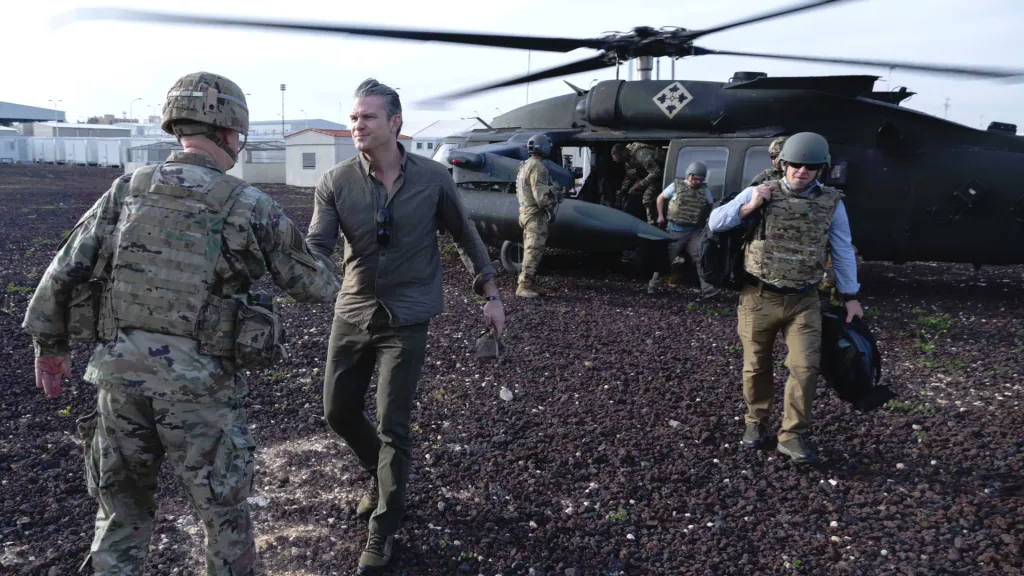
Hegseth talked about U.S. defensive posture in the Middle East at a press conference today at the Pentagon. The Secretary also announced that he had made a previously undisclosed visit to the region to meet with American service members.

Hegseth shakes hands with a US service member somewhere in the Middle East during his recent trip. US Military

“I’ll say, what I witnessed, where I went, was a completely locked-in discipline of bunker use and bunker improvement. So, from the beginning, as we stated very clearly, the first thing we did was set up a defense and make sure our defensive capabilities were maxed out before any of this even started,” Hegseth said. “That included fortifications, as much as possible, but it also included dispersement [sic]. If all of our people are in one place, you can imagine why that’s a big problem.”

“Alongside that dispersement [sic] is more and more bunkers. And I can tell you, talking to base commanders, talking to our allies in Israel, talking to others, rapidly fielding that and then improving those positions is a theater priority, no doubt, as are the air defenses and the layered air defenses,” he continued. “It’s not just Patriots and THAADs [Terminal High Altitude Area Defense systems]. It’s fighters and defensive CAPs [combat air patrols]. It’s other kinetic defeat systems. It’s electronic warfare. So the defense of our troops and our assets is max [sic].”

“I will say, on some of those other assets you talked about, air wings, airframes, there’s some things adversaries are doing to provide info and intel that they shouldn’t. We’re aware of it, and ultimately, we move things around,” he added. “One of the biggest principles you learn in the military is to not set patterns, predictable patterns, and so we’re – commanders are working hard to adjust in real time with those systems and make sure they’re in the right places and not easily targetable.”

Hegseth was responding to a two-part question about the status of efforts to establish additional bunkers at bases in the region and what other measures were being taken to better protect high-value assets, including aircraft like the E-3 Sentry Airborne Warning and Control System (AWACS). On March 27, an Iranian attack on Prince Sultan Air Base in Saudi Arabia succeeded in destroying one of these prized AWACS jets, as well as damaging other aircraft and injuring several American service members, as you can read more about here.

Separately, on March 23, the U.S. Space Force had put out a contracting notice to identify “potential sources” of “prefabricated, transportable, hardened shelter systems” that could be delivered to Jordan within weeks or even days of a contract award. The U.S. military has a major presence in Jordan, particularly at Muwaffaq Salti Air Base, which has been a key hub in the current campaign against Iran. Muwaffaq Salti has, in turn, also come under Iranian attack, with an AN/TPY-2 missile defense radar there having been notably targeted.

The U.S. Army Corps of Engineers also put out another contracting notice regarding planned new hardened underground facilities at Al Udeid Air Base in Qatar on March 25, which TWZ was first to report. This is a longer-term project, with work not expected to start until 2028.

Though Hegseth says more bunkers for bases in the Middle East are now a priority, it remains unclear why this was not already the case years ago. There has been no shortage of examples in the region of the threats posed by Iran’s drone and missile arsenals, as well as those employed by Iranian-backed proxies. This includes numerous instances of direct and sometimes fatal attacks on U.S. forces, as well as on allies and partners. Drone threats, in general, are not new and have only continued to grow, something TWZ has been sounding the alarm on for nearly a decade now. In turn, we have also highlighted the curious lack of investment in hardened infrastructure, especially to better protect aircraft, which are especially vulnerable when parked out on open flight lines.

KC-135 tankers seen parked out in the open at Al Udeid Air Base in Qatar in 2021. USAF

In recent years, U.S. military officials have often pushed back on calls for more physical hardening, having questioned the cost-effectiveness and general utility of doing so. More emphasis has generally been put on expanding active defenses, such as surface-to-air missiles, as well as employing concepts of operations centered on dispersion of forces and camouflage, concealment, and deception. In addition to talking about the importance of bunkers, Hegseth hit these same general talking points himself just this morning.

The destruction of the E-3 at Prince Sultan Air Base raises additional questions about the limits of dispersal and other operating concepts, which the U.S. Air Force has codified under the banner of Agile Combat Employment (ACE). Satellite imagery makes clear that E-3s and other aircraft have continued to be parked out in the open at well-established points on the taxiways at the base in Saudi Arabia. More broadly speaking, American forces in the region continue to operate primarily from a small number of large bases, the locations of which are well known.

Visualizing ACE


Furthermore, in his remarks today, Hegseth alluded to reports that Russia and China have been helping Iran target key assets at bases in the Middle East, including through the provision of satellite imagery. In the past decade, the Chinese have dramatically expanded their space-based surveillance capabilities. The commercial satellite imagery sector in that country has also grown.

At the same time, while additional information from those sources would help refine Iranian targeting processes, it would not be necessary to launch attacks on key assets and facilities, especially larger ones, at locations like Prince Sultan or Muwaffaq Salti in Jordan. Iran has its own intelligence streams in the region that it could leverage, as well. We have seen numerous examples of very deliberate targeting on the part of Iranian forces, especially when it comes to prized air and missile defense radars and communications arrays, many of which are fixed in place, from the start of the current conflict.

And they VERY likely had recent intel from satellite imagery (China and Russia)

— Tyler Rogoway (@Aviation_Intel) March 30, 2026

There are ways to provide targeting data beyond near real time satellite imagery. And even then, who knows how often they are moving them. It would be worth a BM and definitely worth a hopeful shot of a one-way attack drone.

— Tyler Rogoway (@Aviation_Intel) March 29, 2026

In the past few years, there has been some signs of a tonal shift across the U.S. military when it comes to physical hardening, especially against drone attacks. Just last week, authorities at Shaw Air Force Base in California put out a contracting notice regarding plans to put up counter-drone nets around non-hardened sunshade-type shelters on the flightline, a defensive measure that other Air Force facilities have been exploring, as well. In addition to seeing more pushes for additional passive defenses at established bases, work has been touted on more rapidly deployable capabilities to support expeditionary and distributed operations.

An entire section on physical hardening from new counter-drone guidance the US military released in January. US Military

At the same time, the U.S. military is clearly still playing catch-up in this regard. These are issues that extend well beyond the Middle East and the current conflict with Iran, too. Though Iran’s drones and missiles clearly present real dangers, the scale and scope of those attacks pale in comparison to the volume and diversity of incoming threats U.S. forces would expect to face in a large-scale conflict in the Pacific against China.

It is true that you cannot protect everything from every threat, but physical hardening can help lessen the impacts. It also limits the overall options an enemy has for attacking a particular target and imposes additional costs to achieving the desired level of destruction. Paired with other tactics, it can drastically improve the survivability of a combat air force on the ground.

Hopefully there will FINALLY be a real wake up call here on hardened infrastructure for air bases. They (DoW leadership) have and are living in a fantasy land with this. It’s maddening. It’s easier to kill your most potent combat aircraft on the ground, where they sped the vast…

— Tyler Rogoway (@Aviation_Intel) March 29, 2026

And this is at home and overseas. You can’t protect everything, not even close, but you can protect a portion of your fleet and plan around that capacity.

— Tyler Rogoway (@Aviation_Intel) March 29, 2026

The current conflict with Iran has clearly put new emphasis on expanding the hardened infrastructure at air bases and other facilities in the Middle East, but it remains to be seen whether this latest wakeup call will be heard more broadly.

Contact the author: joe@twz.com

Joseph has been a member of The War Zone team since early 2017. Prior to that, he was an Associate Editor at War Is Boring, and his byline has appeared in other publications, including Small Arms Review, Small Arms Defense Journal, Reuters, We Are the Mighty, and Task & Purpose.


Source link

US-Israel launch major attacks as Iranian authorities maintain defiance | US-Israel war on Iran News

Tehran, Iran – Strikes by the United States and Israel have hit Tehran, Isfahan, and other Iranian cities, as local commanders said they were prepared for a war of attrition involving potential US ground incursions.

Numerous air raids struck areas across the capital before and after midnight – and periodically throughout Tuesday – once more leading to electricity outages in multiple areas. The Ministry of Energy confirmed that shrapnel and shock waves damaged a main power transfer line, but said the disruption was fixed within hours.

Recommended Stories

list of 3 itemsend of list

A number of industrial areas in nearby Karaj and surrounding towns were also struck, while the Israeli army released a new aerial map to warn citizens to stay away from an area of Vardavard, located west of Tehran, pending attacks. The area is a base for multiple pharmaceutical companies.

Authorities reported extensive damage was done to a major pharmaceuticals company, Tofigh Darou, which was believed to have been targeted with multiple projectiles.

Iran produces more than 90 percent of its medicine domestically due to US sanctions, and the company is among the top producers of ingredients used in a wide range of drugs, including cancer medication and immunomodulator medication used to treat multiple sclerosis.

In central Iran’s Isfahan, residents were shocked after a large number of heavy bunker-buster bombs were dropped over a mountainous area next to the metropolis in an apparent attempt to target military installations. The munitions caused secondary explosions that were some of the largest recorded since the start of the war over a month ago and lit up the night sky, followed by massive sounds that reverberated across the city.


In Zanjan to the northwest of Iran, local media showed footage of considerable destruction after a building described as the “administrative department” of Hosseinieh Azam, a major religious centre, was hit. At least four people were killed and others injured, according to local authorities, who did not identify the deceased.

Iranian authorities say that more than 2,000 people have been killed in US-Israeli strikes since the start of the war on February 28, and a large number of residential units, schools, hospitals, and historical sites have been impacted.

US and Israeli warplanes this week also bombed multiple civilian nuclear sites, the country’s top steel manufacturers and their electricity sources, petrochemical plants, and the Iran University of Science and Technology in Tehran, where an imaging satellite had been developed. A professor at the university, who had helped advance Iran’s missile programme, was assassinated along with his two children at their home in northern Tehran last week.

US President Donald Trump again threatened to attack oil and gas installations, destroy power generation plants, and “possibly” obliterate all of Iran’s water desalination plants.

‘Wish they will take to the grave’

The top commanders of Iran’s Islamic Revolutionary Guard Corps (IRGC), currently believed to be running the war and deciding the future of the country, have continued to signal defiance after this week’s attacks.

The spokesman of the Khatam al-Anbiya Central Headquarters of the IRGC said on Tuesday that Tehran’s enemies are “humiliated and on the path of destruction” as the US raises the prospects of launching ground attacks on strategic islands on Iran’s southern shores.

The idea of gaining dominance over the Strait of Hormuz through military attack is a “wish they [the US] will take forever to the grave”, Ebrahim Zolfaghari said in a video message as an Iranian drone attack sparked fire on a Kuwaiti tanker at Dubai Port.

The IRGC also released footage of ballistic missiles fired towards Israel and countries across the region, as well as footage of shooting down what it said were two of the US military’s advanced MQ-9 Reaper drones. It said retaliatory attacks would be launched against technology companies linked to the US and Israel in the region.

State television aired a programme where analysts said they believed a ground military incursion by US soldiers amassing in the region could militarily benefit the Islamic Republic, as they could sustain losses while trying to take over fortified positions held by the IRGC on the islands.

“American vessels are the most vulnerable point of the enemy,” Ali Fadavi, one of the most senior remaining commanders of the IRGC, told state television during an interview broadcast on Tuesday.

He claimed that US warships are generating “fake signals” from their transponders and are actually situated far further from Iranian shores than they show, which the commander said reflected “full preparedness of our forces”.

Ali Akbar Velayati, a former foreign minister and longtime foreign policy adviser to the late Supreme Leader Ayatollah Ali Khamenei, said in a social media post that any ground aggression would escalate the war into an “historical and civilisational defence”, in reference to Israel and US officials branding the conflict a war for civilisation.

Iran announces more executions

Iranian authorities continue to warn through state media that they take any form of local dissent seriously, and are prepared to exact punishments that include execution by hanging.

Two more people were executed on Tuesday morning, the judiciary confirmed, saying they were armed members of the foreign-based Mojahedin-e-Khalq (MEK) group that is considered a “terrorist” outfit by Tehran.

This comes after executions on Monday, as well as others over recent weeks, some of which were also related to Iran’s nationwide protests in January, when thousands were gunned down on the streets of Tehran and cities across the country.

The United Nations and human rights organisations accuse state forces of carrying out an unprecedented crackdown against peaceful protesters, but the authorities blame “terrorists” and “rioters” backed by the US and Israel.

Iran’s judiciary spokesman Alireza Jahangir told state television on Tuesday that new indictments have been issued against 200 “mercenaries” who are accused of assisting the US and Israel, including by recording footage of air strikes and sending them to foreign-based outlets in defiance of the theocratic establishment.

The judiciary reiterated that punishments for national security charges will include full confiscation of assets, as well as execution. A number of local and foreign-based Iranian celebrities and businesspeople have already had their assets seized for opposing the Islamic Republic.

The government of President Masoud Pezeshkian late on Monday held its first cabinet meeting since the start of the war, with an image showing a makeshift space decorated with a blue covering at an undisclosed location serving as the meeting place.

Israel’s Channel 14 alleged in a report that Pezeshkian has been pushing to gain negotiating powers with the US, as Trump claims talks have advanced. But the Israeli outlet said IRGC chief Ahmad Vahidi declined the request and did not want to give concessions to the US and Israel. Iran has not commented on the report.

“Any decision-making about ending the war will be adopted strictly while considering all raised conditions and in the framework of ensuring dignity, security and interests of the great Iranian nation,” Pezeshkian was quoted as saying during the cabinet meeting, in reference to Iran’s demands for guarantees and reparations.

Source link

Trump attacks NATO allies as pressure mounts over Strait of Hormuz | Donald Trump News

US President Donald Trump has released a series of posts attacking NATO countries including France, Spain and the UK over their role in securing the Strait of Hormuz. Al Jazeera’s Alan Fisher explains what Trump’s latest criticism of US allies means.

Source link

UK accused of ‘intimidation tactics’ against bailed pro-Palestine activists | Israel-Palestine conflict News

London, United Kingdom – Civil rights groups and Palestine solidarity campaigners are accusing the United Kingdom of “intimidation tactics” after two young pro-Palestinian activists were recently arrested while on bail.

On Monday, 21-year-old Qesser Zuhrah was detained after sharing a social media post calling on people to take “direct action”.

Recommended Stories

list of 4 itemsend of list

Masked officers handcuffed Zuhrah at her home in Watford at dawn. Just a month ago, she was released on bail following 15 months in prison awaiting trial, during which she participated in a lengthy hunger strike.

Four days earlier, on Thursday, plainclothes police officers in south London also arrested Audrey Corno, 23, accusing her of tampering with her electronic tag in breach of bail conditions – a charge she denies.

“They just grabbed me,” Corno told Al Jazeera. “I broke down into tears. This was a complete shock and very re-traumatising.”

She was told that a month earlier, her tag had been offline for 20 minutes.

The police surprised her as they emerged from “an undercover car” that was parked “right outside my home address”, Corno said.

“I don’t know how long they had been waiting there for. I was just back from a walk with my friends,” she said. “I would have no idea how to tamper with my tag for it to stop working and then work again.”

Before their latest arrests, both Zuhrah and Corno were imprisoned over their alleged participation in separate raids on military hardware manufacturers in 2024 that were claimed by Palestine Action, the direct action group whose stated mission is to target companies associated with the Israeli war machine.

Although the High Court ruled in February that the UK’s ban on Palestine Action as a “terrorist” organisation was unlawful, it is still illegal to show support for the group as the government prepares for an appeal due to take place later this month.

‘Charges in connection with social media post’

Counterterrorism police on Monday said that Zuhrah’s latest charge was “encouraging or assisting” the commission of an offence, “namely criminal damage”.

“The charges are in connection with posts made on social media,” the force said.

Zuhrah was granted bail again on Tuesday. She is due to appear in court on April 17.

She is a member of the so-called “Filton 24” collective, accused of breaking into a weapons factory in Filton, Bristol belonging to Elbit Systems UK, a subsidiary of Israel’s largest weapons manufacturer, in August 2024.

In Corno’s latest case, she was also released hours after being arrested for a second time.

Naila Ahmed, head of campaigns at CAGE International, said, Zuhrah’s “rearrest” is a continuation of the “active repression” targeting pro-Palestine activists across the UK.

“These laws were not misapplied or stretched beyond their intent – they were designed precisely to criminalise political speech and dissent, and that is exactly what they are doing here,” she said. “Terrorism legislation should be abolished in its entirety. It has never been a tool of public protection – it is and has always been a tool of political control, used to police those who challenge state power and silence those who speak out against injustice.”

Corno was previously accused of offences related to a June 2024 break-in at the Wooburn Green, Buckinghamshire facility of GRiD Defence Systems, which Palestine Action said supplies the Israeli military – a charge denied by the company.

She believes officials are using “intimidation tactics” because several charges against Palestine Action-linked activists have been dropped and dozens of them have been released on bail. All Filton 24 activists, for example, have been acquitted of aggravated burglary, and 23 have been freed from prison.

“This is a reaction to the acquittals and zero convictions in the Filton 24 case so far,” Corno said. “Take direct action” is not a contentious thing to say, she argued.

“Direct actionists who either are released on bail as they should be, or found not guilty, are still being heavily surveilled and heavily repressed by the state as a reminder, that although the public may find us not guilty, the state does.”

Last week, Zuhrah and other Filton 24 defendants spoke about alleged prison mistreatment and said they were planning to take legal action over medical neglect.

Campaigners supporting the group said, “We believe this is a coordinated campaign by the state to retaliate [after failing] to secure a single conviction at the first trial of the Filton 24. There is no doubt that this arrest was politically motivated, as it is unprecedented to charge people under the Serious Crime Act”.

The detentions come at a time of increasing friction between the police and Britain’s significant Palestine solidarity movement – and ahead of a march that could bring new tensions.

On Saturday, crowds of protesters are expected to gather again in London to demonstrate their support for Palestine Action as the genocide in Gaza continues. To date, thousands of peaceful protesters have been arrested for signs reading: “I oppose genocide, I support Palestine Action”.

While London’s Met Police refrained from detaining protesters following the High Court’s ruling, the force recently reversed that policy, meaning mass arrests are once again likely.

Meanwhile, a court is expected on Wednesday to rule in the case of Palestine Solidarity Campaign’s Ben Jamal and Stop the War Coalition’s Chris Nineham, who are accused of breaching protest restrictions in January 2025.

Since Israel’s onslaught on Gaza began in October 2023, tens of thousands of Britons have rallied in support of Palestine.

According to YouGov polling, one in three Britons has “no sympathy at all for the Israeli side in the conflict” after Israel killed more than 72,000 people in two years and decimated the Gaza Strip.

The government, led by Labour leader Keir Starmer, has long been accused of cracking down on pro-Palestine solidarity because of a wave of arrests during demonstrations and due to its proscription of Palestine Action.

Human Rights Watch has said that its research found a “disproportionate targeting of certain groups, including climate change activists and Palestine protesters, undermining the right to protest freely and without fear of harassment”.

Source link

Venezuela’s ‘Chavismo’ movement faces a crossroads after US attack | US-Venezuela Tensions News

A new economic partner?

Libertad Velasco, a Chavista who grew up in the 23 de Enero neighbourhood, was only a teenager when Chavez came to power.

She went on to become one of the founding members of the youth wing of Chavez’s party, the United Socialist Party of Venezuela (PSUV). Eventually, she became the head of a government agency to expand access to higher education to members of vulnerable communities.

Still, Velasco described the period after Maduro’s abduction as a sort of awakening.

“It’s like we’re looking at ourselves without makeup,” Velasco said. “Now, everything is laid bare, revealed in its purest state, and we are beginning to recognise ourselves again.”

Since the US attack and Maduro’s removal, Velasco has thought deeply about her “red lines”: the ideals she feels should not be violated under the new government.

Standing up against invasive foreign powers remains one of her top priorities.

“I refuse to be colonised,” Velasco said. “For me, we shouldn’t have relations with Israel, and abandoning anti-imperialism is non-negotiable.”

Yet Velasco does not believe that the Venezuelan government has crossed that line yet. Rather, she is open to the prospect of the US as a trading partner to Venezuela, paying for access to its natural resources.

“It is a customer who should pay market price for the product they need. If Venezuela must act as a market player to lift people out of suffering, I can go along with that,” Velasco said.

Delia Braches in her home in Caricuao, Venezuela
Delia Bracho of Caricuao, Venezuela, says she has grown disillusioned with the Chavismo movement [Catherine Ellis/Al Jazeera]

But it is unclear whether that is happening. Critics point out that the Trump administration has demanded greater control over Venezuela’s natural resources. It has even claimed that Chavez stole Venezuelan oil from US hands.

Already, Venezuela has surrendered nearly 50 million barrels of oil to the US, with the Trump administration splitting the proceeds between the two countries.

Rodriguez, Venezuela’s interim president, has also agreed to submit a monthly budget to the US for approval.

Among Chavistas, there remains debate about whether the relationship with the US is beneficial or exploitative.

But economic recovery is an overwhelming priority for many Venezuelans of all political leanings. Under Maduro, Venezuela entered one of its worst economic crises in history. Inflation is currently at 600 percent, and living standards remain low.

Many Chavista loyalists blame US sanctions for their economic woes. Yet, analysts credit a combination of factors, including declining oil prices, economic mismanagement and pervasive corruption.

Delia Bracho, 68, lives in a district of Caracas called Caricuao, where water is delivered just once a week. Once a committed Chavista, she said her faith in the movement has faded.

Today’s movement, she explained, has been “ruined”, and she no longer wants anything to do with it.

“It’s like when you put on a pair of shoes,” she said. “They break, and you throw them away. Are you going to pick them up again, knowing they are no longer useful?”

Despite her initial fear after the US intervention, Bracho said she now feels cautiously optimistic that Venezuela might change for the better.

“It’s not that everything is fixed, but there is a different atmosphere — one of hope.”

Source link

What’s Israel’s death penalty law that only applies to Palestinians? | Occupied West Bank News

The Israeli parliament’s approval of a legislation that seeks the death penalty for Palestinians convicted of deadly attacks has stoked fears among the Palestinians and drawn condemnation from the international community, dismayed at the further entrenching of what rights groups have long described as Israel’s “system of apartheid”.

The law, which does not apply to Jewish citizens of Israel, was met with jubilation among its backers in the country’s far right.

Recommended Stories

list of 4 itemsend of list

France, Germany, Italy and the United Kingdom have all raised concerns over what many describe as the overtly racist nature of the bill, whose nature and wording appear to exclusively target Palestinians.

“We are particularly worried about the de facto discriminatory character of the bill. The adoption of this bill would risk undermining Israel’s commitments with regards to democratic principles,” the foreign ministries wrote in a joint statement on Sunday.

Rights groups have also criticised the bill, with Amnesty International in February saying the legislation would make the death penalty “another discriminatory tool in Israel’s system of apartheid”.

Human Rights Watch (HRW) on Tuesday called the law discriminatory as it would primarily, if not exclusively, be applied to Palestinians.

“Israeli officials argue that the imposing the death penalty is about security, but in reality, it entrenches discrimination and a two-tiered system of justice, both hallmarks of apartheid,” Adam Coogle, deputy Middle East director at Human Rights Watch, said in a statement.

“The death penalty is irreversible and cruel. Combined with its severe restrictions on appeals and its 90-day execution timeline, this bill aims to kill Palestinian detainees faster and with less scrutiny.”

Nevertheless, on its successful passage through parliament, amidst the celebrating lawmakers, the legislation’s principal champion, far- right National Security Minister Itamar Ben-Gvir – who has previous convictions for far-right “terrorism” – was seen brandishing a champagne.

Israeli Prime Minister Benjamin Netanyahu, who had attended the chamber to support the bill, could also be seen congratulating lawmakers on its passage.

So, how can Israel pass a law targeting one ethnic group and not others? Is that legal, and is this the first time Israel has passed legislation that deliberately discriminates against Palestinians?

Here’s what we know.

How does the law target Palestinians and not Israelis?

By limiting the bulk of the legislation to the military courts that only try Palestinians under occupation.

Under the new legislation, anyone found guilty of the killing of an Israeli citizen within the occupied West Bank will, by default, be sentenced to death by the military courts overseeing the occupied territory.

While the courts do not regularly publish statistics on convictions, in 2010, the court system did concede that, of the Palestinians tried for offences committed in the occupied West Bank, 99.74 percent were found guilty.

In contrast, Israeli settlers, who have killed seven Palestinians in just the weeks following the start of their country’s war on Iran in late February, are tried in civilian courts in Israel. According to an analysis by the UK’s Guardian newspaper in late March, Israel has yet to prosecute any of its citizens for killing Palestinians in the occupied West Bank since the start of this decade.

Under the new legislation, Israel’s civilian courts are granted an extra degree of leniency in sentencing Israelis found guilty of killing Palestinians in the occupied West Bank, with judges having the option to choose between the death penalty and life imprisonment.

Sentences for the military courts trying Palestinians, in contrast, carry an automatic death penalty, with life imprisonment only available under extreme circumstances.

According to a study by the Israeli rights group, Yesh Din, conviction rates for settlers found guilty by civilian courts of committing crimes against Palestinians in the West Bank (excluding East Jerusalem) between 2005 and 2024 ran to about 3 percent. Some 93.8 percent of investigations into settler violence were closed at the end of an investigation with no indictment filed, the group noted.

Underpinning much of this is Israel’s 2018 Nation State law, which, in the eyes of many, codifies Israel’s apartheid system of government, defining Israel as the exclusive homeland of the Jewish people and prioritising Jewish settlement as a national value.

Critics argue that it downgrades the status of Palestinian citizens, who make up about 20 percent of the population, by omitting any guarantee of equality.

According to many, it isn’t.

Despite the best efforts of Prime Minister Netanyahu and his Finance Minister Bezalel Smotrich – who has administrative power over the occupied West Bank – to annex the Palestinian territory, it remains a foreign territory under military occupation.

According to Amichai Cohen, a senior fellow at the Center for Security and Democracy of The Israel Democracy Institute, international law does not permit Israel’s parliament to legislate for the West Bank, since the area is not legally part of Israel’s sovereign territory.

In September 2024, the United Nations General Assembly overwhelmingly called for end to Israeli occupation of the occupied West Bank and East Jerusalem within a year. The UNGA resolution backed an advisory opinion by the International Court of Justice (ICJ), which called Israeli occupation “unlawful”.

Similarly, the Association of Civil Rights in Israel announced it had already taken the matter to Israel’s highest court only minutes after the bill was approved. The group argued that the measure was “discriminatory by design” and that lawmakers had no legal authority to impose it on Palestinians living in the occupied West Bank, who are not Israeli citizens.

Far from it.

Human rights groups – including HRW and Amnesty International – have long argued that the legal systems applying to Palestinians and to Israeli settlers in the West Bank are fundamentally unequal.

Palestinians live under military law, while settlers fall under Israeli civil law, creating two parallel systems in the same territory.

According to rights groups, this structure enables discriminatory detention practices, such as administrative detention (where people can be held indefinitely without charge), dramatically unequal protections under the law, and the selective enforcement of those laws, which have all underpinned widespread accusations of apartheid.

As of March 2026, approximately 9,500 Palestinians are detained in Israeli prisons under harsh conditions, with about half held under administrative detention or labelled “unlawful combatants”, denied trial and unable to defend themselves.

Legislation relating to the treatment of children in custody has led to concern among many international observers and rights groups. Palestinian minors can be interrogated without parental present and are often denied timely access to legal counsel in defiance of Israel’s own and international law, the HRW noted.

Another key area of international concern is the ongoing demolition of Palestinian homes built without permits, which are nearly impossible for Palestinians to obtain. Unauthorised settler outposts, in contrast, are rarely troubled and increasingly retroactively legalised.

Source link

Dodgers struggle at the plate and suffer first loss of season

From Maddie Lee: A fastball up and off the plate to Guardians left-handed hitter Steven Kwan was an inauspicious beginning to Dodgers right-hander Roki Sasaki’s season debut.

The arm-side miss fell in line with a persistent spring-training pattern for Sasaki, who struggled with command from his first Cactus League start through his Freeway Series appearance last week.

Over the course of a seven-pitch strikeout, however, Sasaki adjusted — something he failed to do during game action this spring.

“I actually didn’t have confidence at all before this game started,” Sasaki said through an interpreter Monday. “But I was just focusing on doing what I can control.”

Go beyond the scoreboard

Get the latest on L.A.’s teams in the daily Sports Report newsletter.

In the Dodgers’ 4-2 loss Monday, Sasaki’s first start of the season was something of a best-case scenario. He held the Guardians to one run and four hits in four-plus innings. And the biggest difference from his spring training struggles was he issued just two walks.

The Dodgers squandered the effort with a lack of offense, in their first loss of the season.

Sasaki will have more to prove against stronger offenses than Cleveland’s. But his performance at least suggested that the Dodgers’ faith in him wasn’t misplaced.

“We know he can do it here, and especially now that his velocity is back to closer to where it used to be,” Dodgers general manager Brandon Gomes said last week. “I feel like he puts us in a great position to win.”

Continue reading here

Dodgers-Guardians box score

MLB scores

MLB standings

LeBron James gets his 125th triple-double

Lakers star LeBron James, left, stands next to his son and Lakers guard Bronny James at Crypto.com Arena.

Lakers star LeBron James, left, stands next to his son and Lakers guard Bronny James before a win over the Washington Wizards on Monday at Crypto.com Arena.

(Robert Gauthier / Los Angeles Times)

From Broderick Turner: The Lakers followed the lead of their oldest member, the triple-double producing LeBron James, in dispatching the Wizards 120-101 at Crypto.com Arena on Monday night.

Two days off between games left James looking spry, with lob dunks and dunks on the fast break contributing to his 21 points, 12 assists and 10 rebounds. James was eight for 16 from the field in notching his third triple-double of the season and the 125th of his 23-year NBA career, ranking him fifth all time.

At 41 years and 90 days old, James once again became the oldest player in league history to record a triple-double, passing his previous mark (41 years, 79 days).

“I mean, I’ve had moments more this year and last year that I’ve enjoyed more in the moment,” James said. “It’s pretty cool to know that I’m at this point in my career (and) I’m still able to do those things, man. It’s super dope. It’s super humbling. And I just try to put the work in and continue to put the work in and those are the results of it.”

Continue reading here

Lakers-Wizards box score

NBA scores

NBA standings

UCLA has some homework before Final Four

UCLA guard Kiki Rice dribbles under pressure from Texas guard Rori Harmon on Nov. 26 in Las Vegas.

UCLA guard Kiki Rice dribbles under pressure from Texas guard Rori Harmon on Nov. 26 in Las Vegas.

(Ian Maule / Getty Images)

From Marisa Ingemi: UCLA finally knows who it will face in the Final Four in Phoenix this week.

A day after taking down No. 3-seed Duke in the Elite Eight, the Bruins learned on Monday they will face fellow No. 1-seed Texas on Friday, the only team to beat them all season.

Texas (35-3) defeated UCLA 76-65 on Nov. 26, when Rori Harmon put up a game-high 26 points on nine-of-15 shooting from the floor.

Since their Final Four debut ended with a 34-point loss to UConn last season, the Bruins have been on a mission to prove themselves. They faced their first adversity of the tournament during Sunday’s win over Duke when they trailed at the half, and now they’ll get a true test against the Longhorns.

Continue reading here

NCAA women’s basketball bracket

Sean McVay hopes Puka Nacua will learn from incidents

Rams wide receiver Puka Nacua warms up before a wild-card playoff game against the Carolina Panthers.

Rams wide receiver Puka Nacua warms up before a wild-card playoff game against the Carolina Panthers in January.

(Eric Thayer / Los Angeles Times)

From Gary Klein: Rams coach Sean McVay could not help repeating himself when asked about star receiver Puka Nacua.

“I trust this kid’s heart,” McVay said three times Monday at the NFL owners meetings.

But do the Rams trust Nacua, who has been at the center of several off-the-field situations, enough to break the bank with a massive extension?

Last week, a woman filed a civil lawsuit against Nacua, alleging that on New Year’s Eve he made an antisemitic statement during a group dinner and later bit her shoulder. Nacua’s attorney told The Times before the lawsuit was filed that Nacua “denies these allegations in the strongest possible terms,” and that Nacua would “pursue all available legal remedies in response to these false and damaging statements.”

Continue reading here

How to buy tickets for L.A. 2028 Olympics

Dr. Dre and Snoop Dogg perform at the Los Angeles 2028 Olympic Games handover celebration in Long Beach.

Dr. Dre and Snoop Dogg perform at the Los Angeles 2028 Olympic Games handover celebration in Long Beach in August 2024.

(Emma McIntyre / Getty Images for LA28)

From Thuc Nhi Nguyen: There’s still more than two years remaining before the Olympics return to L.A., but fans can lock in their seats this week when tickets officially go on sale.

The virtual ticket box opens April 2 for locals in Southern California and Oklahoma. LA28 is planning to make 14 million tickets available for the Games, which would break the record for total tickets sold set by Paris 2024. The L.A. Games already attracted a record number of ticket registrations, topping 5 million fans from 197 countries and territories for the first drop.

Continue reading here

Angels fall to Cubs for third straight loss

From The Associated Press: Edward Cabrera pitched six shutout innings, Ian Happ hit a solo homer and the Chicago Cubs beat the Angels 7-2 on Monday night.

Cabrera gave up one hit and walked one in his Chicago debut, delighting the crowd of 36,702 on a picturesque night at Wrigley Field. The 6-foot-5 right-hander was acquired in a January trade with Miami.

Carson Kelly and Moisés Ballesteros each drove in two runs for the Cubs (2-2) in the opener of a three-game series.

Continue reading here

Angels-Cubs box score

Ducks lose in overtime to Toronto

From the Associated Press: John Tavares redirected a shot from Morgan Rielly into the net with five seconds left in overtime to lift the Toronto Maple Leafs to a 5-4 come-from-behind victory over the Ducks in a fight-marred game Monday night.

The Leafs overcame a 3-1 deficit with three goals in the third period, including Rielly’s snap shot from the high slot that beat Ducks goalie Ville Husso stick-side to give Toronto a 4-3 lead with three minutes left in regulation.

But Leo Carlsson, who hobbled to the locker room after taking a hard hit and falling to the ice in the first minute of the third, gathered a loose puck near the left circle and flicked a shot past Toronto goalie Anthony Stolarz to make it 4-4 with 1:39 left.

Tavares added a first-period goal, and Stolarz stopped 28 of 32 shots for Toronto, which took the ice about 1½ hours after general manager Brad Treliving was fired near the end of his third season, with the Maple Leafs on the verge of being eliminated from the playoffs for the first time in a decade.

Continue reading here

Ducks-Maple Leafs box score

NHL scores

NHL standings

Las Vegas to host another Super Bowl

From the Associated Press: The Super Bowl will return to Las Vegas in 2029 for the second time after NFL owners voted Monday to award the nation’s gambling and entertainment capital the big game.

Las Vegas getting the Super Bowl back seemed only like a matter of time after Kansas City defeated San Francisco 25-22 in overtime at Allegiant Stadium in February 2024.

Commissioner Roger Goodell all but gave the return his blessing after the first Super Bowl in a city the league long shunned because of concerns about legalized sports betting.

Continue reading here

Former USC star Joey Browner dies

Joey Browner wears a purple blazer and speaks at a podium on a football field next to a framed Vikings jersey with his name

Former Minnesota Vikings safety Joey Browner talks during his induction ceremony to the team’s ring of honor on Oct. 27, 2013, in Minneapolis.

(Jim Mone / Associated Press)

From Chuck Schilken: Joey Browner, a star defensive back at USC and a six-time NFL Pro Bowl selection, has died. He was 65.

“The Vikings are mourning the loss of Ring of Honor member Joey Browner,” the team said Sunday in a statement. “Browner will be deeply missed by former coaches and teammates, as well as many others he impacted throughout his life.”

The Vikings added in a separate post: “He helped define what it is to be an NFL safety.”

No cause of death was given. In August, former Minnesota quarterback Tommy Kramer organized a fundraiser for Browner, who Kramer said was “battling through some serious health issues.”

Continue reading here

This day in sports history

1923 — The Ottawa Senators of the NHL completes a two-game sweep of the WCHL’s Edmonton Eskimos with a 1-0 victory to win the Stanley Cup for the third time in four years. Harry “Punch” Broadbent scores the goal.

1931 — Notre Dame football coach Knute Rockne and seven others die in a plane crash in a wheat field near Bazaar, Kansas. During his 13 years at Notre Dame, the 43-year-old coach, led the “Fighting Irish” to 105 victories, 12 losses, five ties and three national championships.

1968 — The American League’s new franchise in Seattle chooses Pilots as its nickname.

1973 — The Philadelphia Flyers tie an NHL record for most goals in one period, scoring eight goals in the second period of a 10-2 win over the New York Islanders.

1973 — Ken Norton scores a stunning upset by winning a 12-round split decision over Muhammad Ali to win the NABF heavyweight title. Norton, a 5-1 underdog, breaks Ali’s jaw in the first round.

1975 — UCLA beats Kentucky 92-85 for its 10th NCAA basketball title under head coach John Wooden. Wooden finishes with a 620-147 career record after announcing his retirement two days earlier.

1976 — Cleveland Cavaliers beat Jazz to clinch club’s first ever NBA playoff berth.

1980 — Larry Holmes scores a TKO in the eighth round over Leroy Jones to retain his WBC heavyweight title in Las Vegas.

1980 — Mike Weaver knocks out John Tate in the 15th round to win the WBA heavyweight title in Knoxville, Tenn.

1982 — NBA and NBAPA reach 4-year agreement on return for minimum & maximum payrolls, the first of its kind in team sports.

1984 — Mike Bossy becomes first player in NHL history to record 7 straight 50 goal seasons.

1985 — Old Dominion beats Georgia in the 4th NCAAW National Championship.

1986 — Freshman center Pervis Ellison hits two free throws with 27 seconds left to seal Louisville’s 72-69 victory over Duke in the NCAA basketball championship.

1990 — 20-year old C Joe Sakic becomes the youngest player in NHL history to score 100 points in a season

1991 — Tennessee edges Virginia 70-67 in overtime for its third NCAA women’s basketball title. It’s the first overtime in the NCAA’s 10-year history.

1991 — Amy Alcott wins the Dinah Shore golf tournament with a record eight-shot victory over Dottie Mochrie.

1994 — Chicago White Sox assigns former NBA superstar Michael Jordan to the Birmingham Barons of Class AA Southern League.

1995 — Major league baseball players end their strike.

1997 — Martina Hingis becomes the youngest No. 1 player in tennis history. The 16-year-old Swiss sensation, who claimed her fifth title of 1997 at the Lipton Championships on March 29, supplants Steffi Graf in the WTA Tour rankings.

1998 — Expansion clubs, Tampa Bay Devil Rays and Arizona Diamondbacks both suffer losses in their MLB debuts.

2002 — UConn women’s basketball team beat Oklahoma, 82-70; Huskies conclude perfect season (39-0).

2002 — Andre Agassi wins his 700th career match and captures his second straight Key Biscayne Title.

2005 — Tarence Kinsey hits a 3-pointer with 1.3 seconds left to lift South Carolina to a 60-57 victory over Saint Joseph’s for the NIT championship.

2012 — Ray Whitney passes 1,000 career points with a goal and assist in Phoenix’s 4-0 victory over Anaheim.

2013 — In one of the biggest upsets in the history of the NCAA women’s tournament, sixth-seeded Louisville stuns defending national champion Baylor in the regional semifinals, 82-81. It’s the end of a remarkable college career for Baylor’s Brittney Griner, a record-setting 6-foot-8 post player who ended up as the second-highest scoring player in NCAA history.

2013 — Pete Weber ties Earl Anthony by winning his 10th major Professional Bowlers Association title with a 224-179 win over Australian Jason Belmonte in the Tournament of Champions.

2017 — UConn’s record 111-game winning streak comes to a startling end when Mississippi State pulls off perhaps the biggest upset in women’s basketball history, shocking the Huskies 66-64 on Morgan William’s overtime buzzer beater in the national semifinals.

2018 — Anthony Joshua beats Joseph Parker by unanimous decision to become a three-belt world heavyweight boxing champion. Joshua adds Parker’s WBO belt to his WBA and IBF titles, and moves within one belt of becoming the first undisputed champion since Lennox Lewis in 2000.

Compiled by the Associated Press

Until next time…

That concludes today’s newsletter. If you have any feedback, ideas for improvement or things you’d like to see, email me at houston.mitchell@latimes.com. To get this newsletter in your inbox, click here.

Source link

Caster Semenya pledges to fight against Olympic gender-testing policy | Athletics News

‘We’re going to be vocal about it, we’re going to make noise until we’re heard,’ South Africa’s gold medallist says.

Double Olympic champion Caster Semenya ⁠says she intends to fight ⁠against the introduction of gender testing for the female category at the Olympics, a policy the South African insists “undermines women’s rights”.

The International Olympic Committee (IOC) unveiled the policy last week and it is expected to become a universal ⁠rule for competitors in female elite sports after years of fragmented regulation that led to controversy.

Recommended Stories

list of 4 itemsend of list

Semenya has been at the centre of one of those controversies due to her long-running legal case against World Athletics over her right to compete on the track despite having a ⁠Difference of Sexual Development (DSD).

“We’re going to be vocal about it, we’re going to make noise until we’re heard,” the 35-year-old athlete told the Reuters news agency on Monday.

“Now it’s a matter of women standing for themselves to say, ‘Enough is enough.’ We are not going to be told how to do things.

“If really we are accepted as women to take part, why does my appearance or my voice, why do my inner parts ‌need to be a problem to take part in the sport?”

DSDs are a group of rare conditions involving genes, hormones and reproductive organs. Some people with DSDs are raised as female but have XY sex chromosomes and blood testosterone levels in the male range.

The IOC policy document said including “androgen-sensitive XY-DSD athletes” in the female category in events that rely on strength, power or endurance “runs fundamentally counter to ensuring fairness, safety and integrity in elite competition”.

Semenya, who won two Olympic and three world titles in the 800 metres before being limited to shorter events, believes the IOC got the science wrong.

Semenya said “there’s no science” that XY-DSD gave an athlete ⁠an advantage. “I’ve been there, I’ve done that. There’s no such thing as that,” she said.

“There are people ⁠who are delusional. There are people who are convinced because a woman is masculine, a woman is born with intersex conditions, the DSD, they’ve mentioned all those things [that they have an advantage].

“But what I say is that if you’re going to be a great athlete, it’s through hard work.”

The test that will be applied to ⁠all athletes who want to compete in the female class will be conducted by a cheek swab or saliva analysis.

There will be further investigation for any athletes who test positive for the SRY gene, ⁠which is on the Y chromosome and triggers the development of male characteristics in ⁠mammals.

“What this decision does, it undermines women. It undermines women’s dignity. It violates women’s rights because we know historically, these [tests] have failed before,” Semenya said.

“Women need to be celebrated. Women are not supposed to be questioned about their gender. Why that is their physique? Why it is how they look like? It doesn’t matter. Neither also the ‌hormone level. Those are the things that are obviously genetics that cannot be controlled.”

Semenya said IOC President Kirsty Coventry, the first woman and first African to hold the office, had failed to properly consult her or other athletes living with DSDs about the policy.

“They sent us ‌a ‌letter the day they were going to publish [the new policy],” she said.

“If you’re going to consult, consult with a genuine heart. Don’t consult because you’re ticking the box. Unfortunately, they have ticked a wrong box.”

Source link

Sudan war ‘being fought on women’s bodies’: Survivors detail sexual assault | Sudan war News

In a new report, Doctors Without Borders says sexual violence is the ‘defining feature’ of the conflict in Sudan.

Hanaan was 18 years old when she was raped by members of the Rapid Support Forces (RSF), a paramilitary group accused of committing widespread “war crimes” during nearly three years of fighting against Sudan’s army.

She was walking alongside a female friend to her makeshift home in an encampment for displaced people in South Darfur, when four men on motorbikes stopped them and asked where they were going.

Recommended Stories

list of 3 itemsend of list

“Two took each girl, and they raped us,” she told Doctors Without Borders, an international medical NGO known by its French initials MSF.

“I feel uncomfortable in my body, heavy. I don’t feel pain, apart from in my back – because they beat me, they beat me with their guns on my back,” she said.

Hanaan – not her real name – shared her testimony as part of a report released by MSF on Tuesday, which details the widespread use of sexual violence as a weapon in Sudan’s ongoing brutal civil war.

The NGO said 3,396 survivors of sexual violence sought treatment in MSF-supported health facilities across North and South Darfur between January 2024 and November 2025.

The data, presented in the report titled, There is Something I Want to Tell You…, was drawn from MSF programmes in just two of Sudan’s 18 states and reflects only a fraction of the crisis, while the true scale of the phenomenon remains unknown.

Women and girls accounted for 97 percent of survivors treated in MSF programmes. The RSF and allied militias were found to be primarily responsible for the systematic abuse.

Children among the survivors

“Sexual violence is a defining feature of this conflict – not confined to front lines, but pervasive across communities,” Ruth Kauffman, MSF emergency health manager, said in a statement.

“This war is being fought on the backs and bodies of women and girls. Displacement, collapsing community support systems, lack of access to healthcare and deep-rooted gender inequalities are allowing these abuses to continue across Sudan.”

Following the RSF’s capture of el-Fasher, the capital of North Darfur, on October 26, 2025, MSF treated more than 140 survivors fleeing to Tawila. Among them, 94 percent were attacked by armed men, with many reporting assaults along escape routes.

The assaults “deliberately targeted non-Arab communities as a means of humiliation and terror, echoing previous RSF atrocities such as the dismantling of Zamzam camp”, the report said. The RSF took control of famine-hit Zamzam camp in the western Darfur region after two days of heavy shelling and gunfire in April 2025.

Survivors described attacks not only during fighting, but in everyday settings, such as fields, markets and displacement camps.

Children were also among the survivors. In South Darfur, one in five survivors was under 18, including 41 children younger than five, the organisation said.

MSF called on the United Nations, donors and humanitarian actors to urgently scale up health and protection services in Darfur and all of Sudan, and on all parties to the conflict to cease and prevent sexual violence and hold perpetrators accountable.

Source link

Israel says four soldiers killed as army pushes deeper into south Lebanon | Israel attacks Lebanon News

Hezbollah attempts to make Lebanon ground invasion ‘costly’ for Israeli army as it continues its advance.

The Israeli military has said four soldiers were killed in combat in southern Lebanon, where its forces are clashing with Hezbollah fighters after launching a ground invasion of the country.

An army statement on Tuesday named three soldiers from the same battalion who “fell during combat”. In a separate statement, it said another soldier had been killed in the same incident and two others wounded, without naming them.

Recommended Stories

list of 3 itemsend of list

Ten Israeli soldiers have been reported killed since fighting between Israel and Hezbollah flared up on March 2, following a United States-Israeli joint attack on Iran. More than 1,200 people have been killed in Israeli attacks on Lebanon, according to the Lebanese Ministry of Public Health, and more than a million displaced.

This comes a day after the United Nations Interim Force in Lebanon (UNIFIL) said two peacekeepers were killed “when an explosion of unknown origin destroyed their vehicle” near the southern Lebanese village of Bani Haiyyan. Another peacekeeper was killed by a projectile on Sunday near the southern Lebanese village of Aadchit el-Qsair.

Israeli Prime Minister Benjamin Netanyahu on Monday ordered the military to expand its invasion in southern Lebanon, pushing deeper to extend what he calls a “buffer zone” reaching the Litani River.

Israel’s far-right ministers have urged Netanyahu to annex southern Lebanon, as the military destroys bridges and homes to cut the area off from the rest of the country.

Al Jazeera’s Lebanon correspondent Zeina Khodr said Monday night marked a new escalation as Israel opened a new front in Lebanon’s Bekaa Valley, targeting roads that link towns known to be Hezbollah strongholds and strategic supply lines for the group.

“In the past weeks, [the Israeli army] hit bridges over the Litani, now they are trying to isolate the west Bekaa from southern Lebanon,” Khodr said, reporting from Beirut.

“Hezbollah Secretary-General Naim Qassem made it very clear they know the imbalance of power. They are not going to be able to stop this invasion, and the Israeli army will most likely reach until the Litani River, but they will not make it easy for them to consolidate control,” she continued.

“What Hezbollah is trying to do is make this a costly war for Israel.”

The escalation in Lebanon comes amid the ongoing US-Israel war on Iran, which has killed more than 1,340 people since February 28.

The Israel Hayom newspaper on Monday reported that Netanyahu told senior US officials that any future agreement between the US and Tehran would not stop Israel’s war in Lebanon.

Israel’s far-right Minister of Finance Bezalel Smotrich last week said in an Israeli radio interview that the war in Lebanon “needs to end with a different reality entirely”, which includes a “change of Israel’s borders”.

Source link