District Judge Richard Leon says construction has to stop until Congress provides statutory authorisation.
Published On 1 Apr 20261 Apr 2026
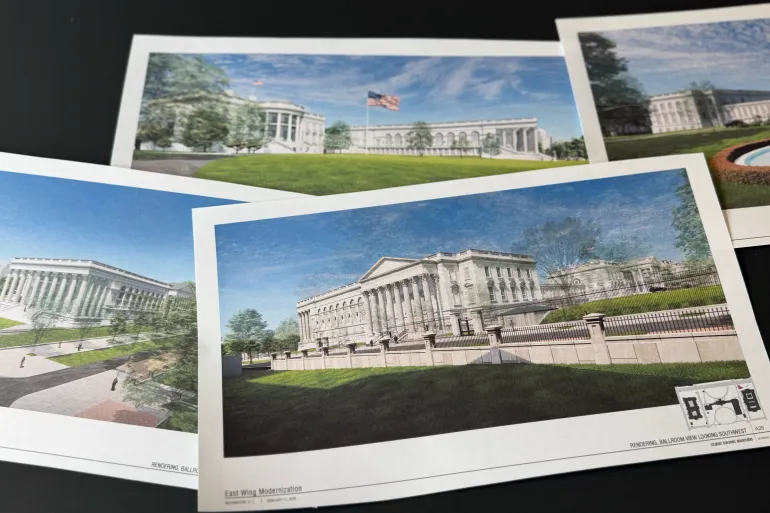
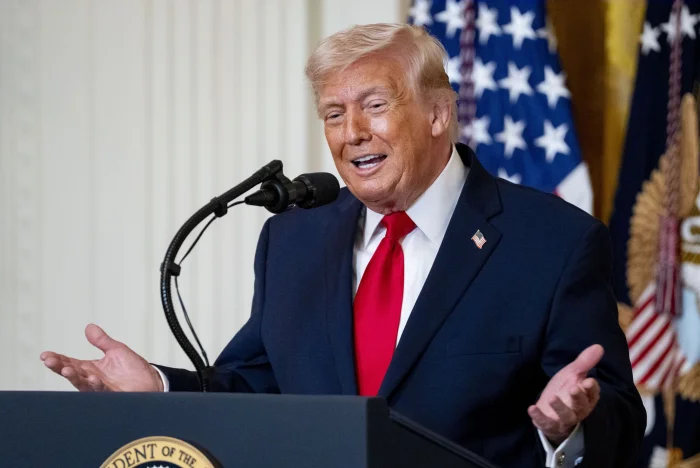
A judge has ruled that US President Donald Trump cannot proceed with his planned $400m ballroom on the site of the White House’s demolished East Wing without approval from Congress.
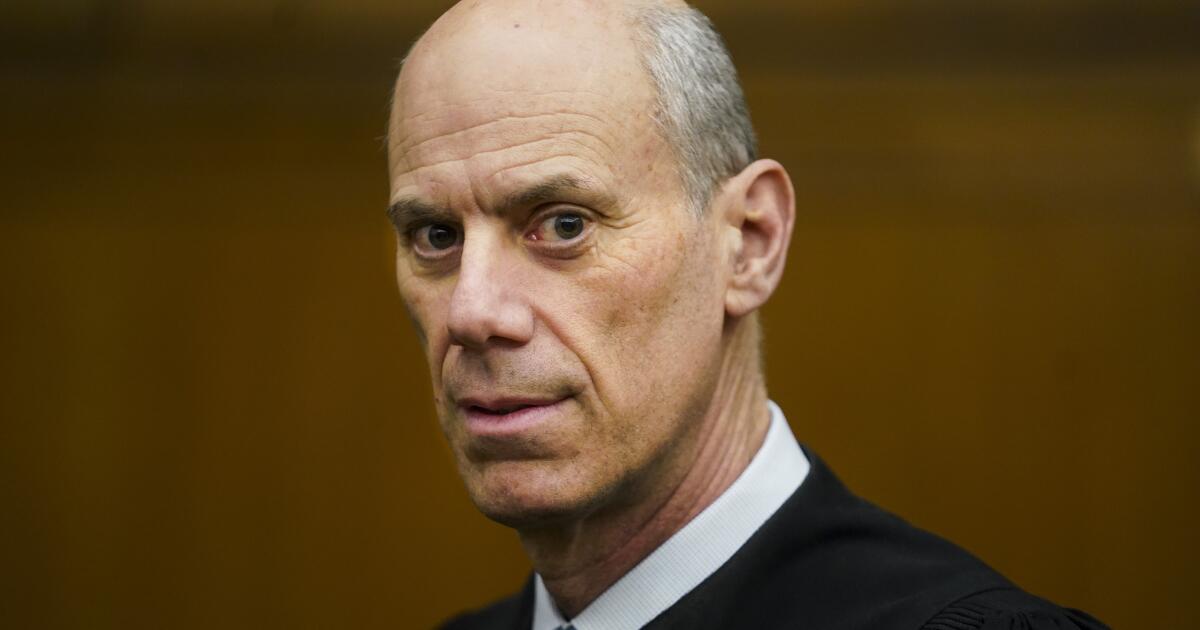
District Judge Richard Leon on Tuesday granted a request for a preliminary injunction filed by the National Trust for Historic Preservation, which sued after alleging Trump had exceeded his authority by razing the historic East Wing and launching construction on the new building.
Recommended Stories
list of 2 itemsend of list
“I have concluded that the National Trust is likely to succeed on the merits because no statute comes close to giving the President the authority he claims to have,” Leon, an appointee of former Republican President George W Bush, wrote in the ruling.
“The President of the United States is the steward of the White House for future generations of First Families. He is not, however, the owner!” he said. “Unless and until Congress blesses this project through statutory authorization, construction has to stop!”
Leon said the order does not affect “construction necessary to ensure the safety and security of the White House”.
His ruling keeps the 90,000 square-foot (8,360 square-metre) ballroom project on hold while the lawsuit continues.
The judge said he was pausing his order for 14 days to allow the Trump administration to appeal. Hours later, the Justice Department filed an appeal at the Washington, DC-based US Court of Appeals for the District of Columbia Circuit.
Artist renderings of the new White House East Wing and Ballroom [Jon Elswick/AP]
Carol Quillen, president and CEO of the National Trust, welcomed Leon’s ruling.
“This is a win for the American people on a project that forever impacts one of the most beloved and iconic places in our nation,” Quillen said in a statement.
In a social media post, Trump called the National Trust a group of left-wing “lunatics” and said his ballroom is “under budget, ahead of schedule, being built at no cost to the Taxpayer, and will be the finest Building of its kind anywhere in the World”.
The Republican has championed the ballroom as a defining addition to the White House and a lasting symbol of his presidency.
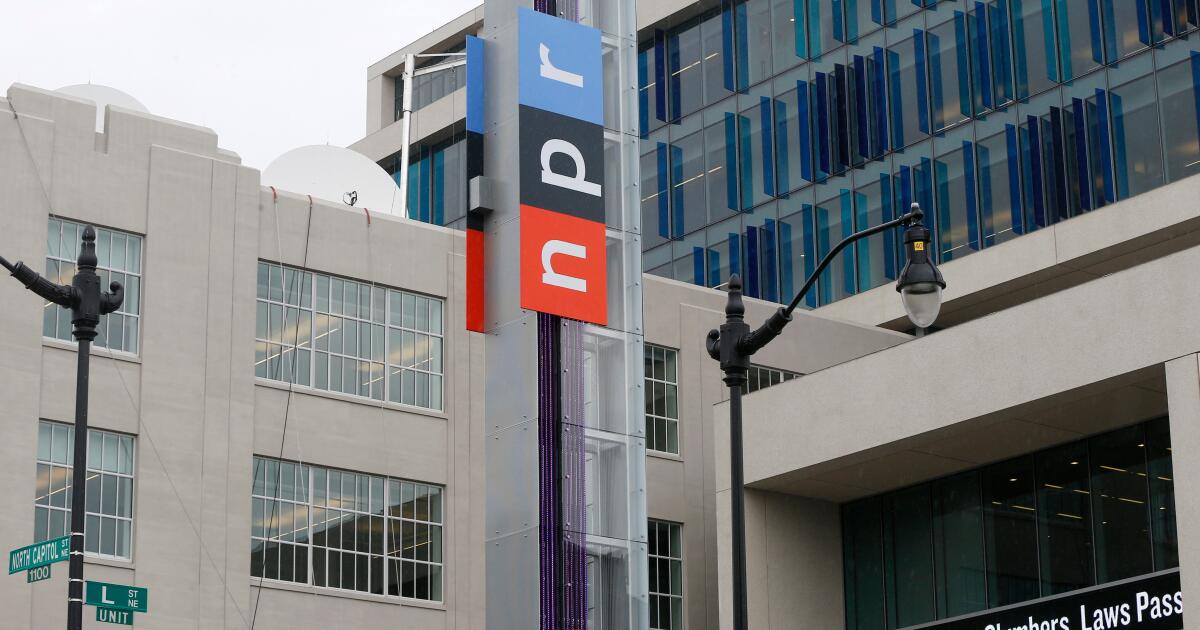
The headquarters for National Public Radio is seen in Washington, D.C., on May 27. A federal judge sided with NPR’s lawsuit saying Trump’s cut to federal funding was a violation of the First Amendment. File Photo by Bonnie Cash/UPI | License Photo
March 31 (UPI) — A federal judge in Washington, D.C., ruled Tuesday that President Donald Trump‘s executive order cutting funding to NPR and the PBS was a violation of their First Amendment rights.
U.S. District Judge Randolph Moss said the executive order signed in May violated the companies’ constitutional rights to a free press because Trump targeted for what he described as liberal views. He described the cut to funding as “viewpoint discrimination.”
“The message is clear: NPR and PBS need not apply for any federal benefit because the president disapproves of their ‘left-wing’ coverage of the news,” Moss said in his ruling.
“It is difficult to conceive of clearer evidence that a government action is targeted at viewpoints that the president does not like and seeks to squelch,” he added.
“To be sure, the president is entitled to criticize this or any other reporting, and he can express his own views as he sees fit. He may not, however, use his governmental power to direct federal agencies to exclude plaintiffs from receiving federal grants or other funding in retaliation for saying things that he does not like.”
Trump’s executive order, called Ending Taxpayer Subsidization of Biased Media, ordered the Corporation for Public Broadcasting to stop funding National Public Radio and the Public Broadcasting Service to the maximum extent allowed by law.
At the time, more than 70% of CPB’s congressionally approved $535 million budget went directly to public media stations through grants.
According to NPR, about 1% of its annual operating budget came in the form of grants from CPB and federal agencies and departments, excluding CPB funding for the Public Radio Satellite System. Its largest funding stream — about 36% — comes from sponsorships, donations, memberships and licensing fees.
According to PBS, federal funding covered about 15% of its revenue.
CPB was founded in 1967 as a private nonprofit corporation to fund public television and radio stations and their programs.
NPR sued the Trump administration later in the month, citing First Amendment and 1967 Public Broadcasting Act violations.
President Donald Trump stands with U.S. Secretary of Agriculture Brooke Rollins during an event celebrating farmers on the South Lawn of the White House on Friday. Photo by Aaron Schwartz/UPI | License Photo
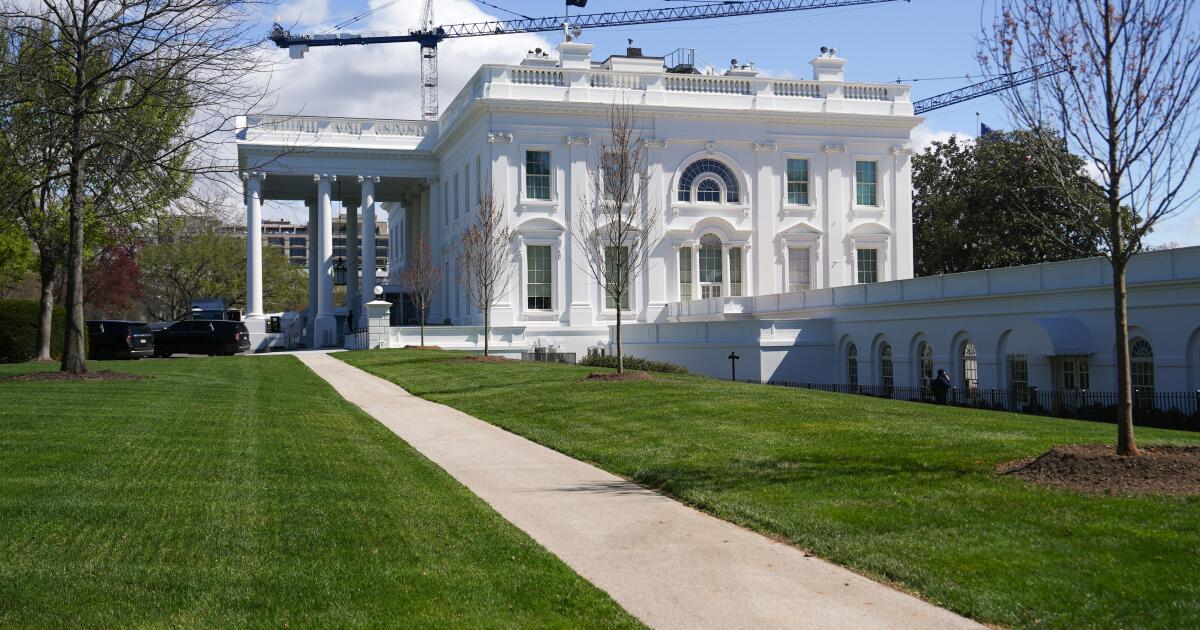
WASHINGTON — A federal judge on Tuesday ordered the Trump administration to suspend its construction of a $400 million ballroom where it demolished the East Wing of the White House, barring construction work from proceeding without congressional approval.
U.S. District Judge Richard Leon in Washington granted a preservationist group’s request for a preliminary injunction that temporarily halts President Trump’s White House ballroom project.
Leon, who was nominated to the bench by Republican President George W. Bush, concluded that the National Trust for Historic Preservation is likely to succeed on the merits of its claims because “no statute comes close to giving the President the authority he claims to have.”
“The President of the United States is the steward of the White House for future generations of First Families. He is not, however, the owner!” the judge wrote.
Leon suspended enforcement of his order for 14 days, acknowledging that the case “raises novel and weighty issues, that halting an ongoing construction project “may raise logistical issues.” He also recognized that the administration is likely to appeal his decision.
The judge ruled that any construction work that’s necessary to ensure the safety and security of the White House is exempt from the scope of the injunction. Leon said he reviewed material that the government privately submitted to him before concluding that halting construction wouldn’t jeopardize national security.
Trump, in a social media post, criticized the trust for suing him over a project that he said is being built at no cost to taxpayers. “Doesn’t make much sense, does it?” he wrote.
The White House did not immediately respond to a request for comment on the ruling.
The preservationists sued to obtain an order pausing the ballroom project until it undergoes multiple independent reviews and receives congressional approval.
The White House announced the ballroom project over the summer. By late October, Trump had demolished the East Wing to make way for a ballroom that he said would fit 999 people. The White House said private donations, including from Trump himself, would pay for the planned construction of a 90,000-square-foot ballroom.
Trump proceeded with the project before seeking input from a pair of federal review panels, the National Capital Planning Commission and the Commission of Fine Arts. Trump has stocked both commissions with allies.
On Feb. 26, Leon rejected the preservationist group’s initial bid to temporarily halt the ballroom’s construction. He said the privately funded group had based its challenge on a “ragtag group” of legal theories and would have a better chance of success if it amended the lawsuit, which it did.
The administration has said above-ground construction on the ballroom would begin in April.
“We are two weeks away,” plaintiffs’ attorney Thaddeus Heuer said during a March 17 hearing. “The imminence is now imminent.”
During the hearing, Leon sounded skeptical of what he referred to as the government’s “shifting theories and shifting dynamics” for its arguments in the case.
“I don’t think it’s a new theory,” Justice Department attorney Jacob Roth told the judge.
Leon expressed frustration at Roth’s attempts to equate the massive ballroom project with relatively modest construction work at the White House under previous administrations.
“This is an iconic symbol of this nation,” the judge said.
The administration argued that other presidents didn’t need congressional approval for previous White House renovation projects, large and small.
“Many of those projects were highly controversial in their time yet have since become accepted — even beloved — parts of the White House,” government attorneys wrote.
Kunzelman writes for the Associated Press. AP writer Darlene Superville contributed to this report.
WASHINGTON — Citing the First Amendment, a federal judge on Tuesday agreed to permanently block the Trump administration from implementing a presidential directive to end federal funding for National Public Radio and the Public Broadcasting Service, two media entities that the White House has said are counterproductive to American priorities.
The operational impact of U.S. District Judge Randolph Moss’ decision was not immediately clear — both because it will likely be appealed and because too much damage to the public-broadcasting system has already been done, both by the president and Congress.
Moss ruled that President Trump’s executive order to cease funding for NPR and PBS is unlawful and unenforceable. The judge said the First Amendment right to free speech “does not tolerate viewpoint discrimination and retaliation of this type.”
“It is difficult to conceive of clearer evidence that a government action is targeted at viewpoints that the President does not like and seeks to squelch,” wrote Moss, who was nominated to the bench by President Barack Obama, a Democrat.
Punishment for ‘past speech’ cited in decision
The judge noted that Trump’s executive order simply directs that all federal agencies “cut off any and all funding” to NPR, which is based in Washington, and PBS, based in Arlington, Virginia.
“The Federal Defendants fail to cite a single case in which a court has ever upheld a statute or executive action that bars a particular person or entity from participating in any federally funded activity based on that person or entity’s past speech,” the judge wrote.
Last year, Trump, a Republican, said at a news conference he would “love to” defund NPR and PBS because he believes they’re biased in favor of Democrats.
“The message is clear: NPR and PBS need not apply for any federal benefit because the President disapproves of their ‘left wing’ coverage of the news,” Moss wrote.
NPR accused the Corporation for Public Broadcasting of violating its First Amendment free speech rights when it moved to cut off its access to grant money appropriated by Congress. NPR also claims Trump wants to punish it for the content of its journalism.
“Public media exists to serve the public interest — that of Americans — not that of any political agenda or elected official,” said Katherine Maher, NPR’s president and CEO. She called the decision a decisive affirmation of the rights of a free and independent press.
PBS chief Paula Kerger said she was thrilled with the decision. The executive order, she said, is “textbook” unconstitutional viewpoint discrimination and retaliation. “At PBS, we will continue to do what we’ve always done: serve our mission to educate and inspire all Americans as the nation’s most trusted media institution.”
Last August, CPB announced it would take steps toward closing itself down after being defunded by Congress.
A victory, though incremental, for press freedom
Plaintiffs’ attorney Theodore Boutrous said Tuesday’s ruling is “a victory for the First Amendment and for freedom of the press.”
“As the Court expressly recognized, the First Amendment draws a line, which the government may not cross, at efforts to use government power — including the power of the purse — ‘to punish or suppress disfavored expression’ by others,” Boutrous said in a statement. “The Executive Order crossed that line.”
The judge agreed with government attorneys that some of the news outlets’ legal claims are moot, partly because the CPB no longer exists.
“But that does not end the matter because the Executive Order sweeps beyond the CPB,” Moss added. “It also directs that all federal agencies refrain from funding NPR and PBS — regardless of the nature of the program or the merits of their applications or requests for funding.”
While Trump was sued in this legal action, the case did not include Congress — and the legislative body has played a large role in the public-broadcasting saga in the past year.
Trump’s executive order immediately cut millions of dollars in funding from the Education Department to PBS for its children’s programming, forcing the system to lay off one-third of the PBS Kids staff. The Trump order didn’t impact Congress’ vote to eliminate the overall federal appropriations for PBS and NPR, which forced the closure of the Corporation for Public Broadcasting, the entity that funneled that money to the TV and radio networks.
Kunzelman writes for the Associated Press. AP writer David Bauder contributed to this report.
Minnesota public universities can continue to offer in-state tuition and scholarships to some immigrants in the country without legal status, a federal judge ruled Friday, dismissing a lawsuit filed by the U.S. Justice Department last summer that attempted to halt the programs.
The decision follows a series of clashes between the federal government and Minnesota officials over immigration enforcement.
U.S. District Judge Katherine Menendez said in her decision that the federal government failed to prove that programs offering in-state tuition for immigrants without legal status discriminated against U.S. citizens.
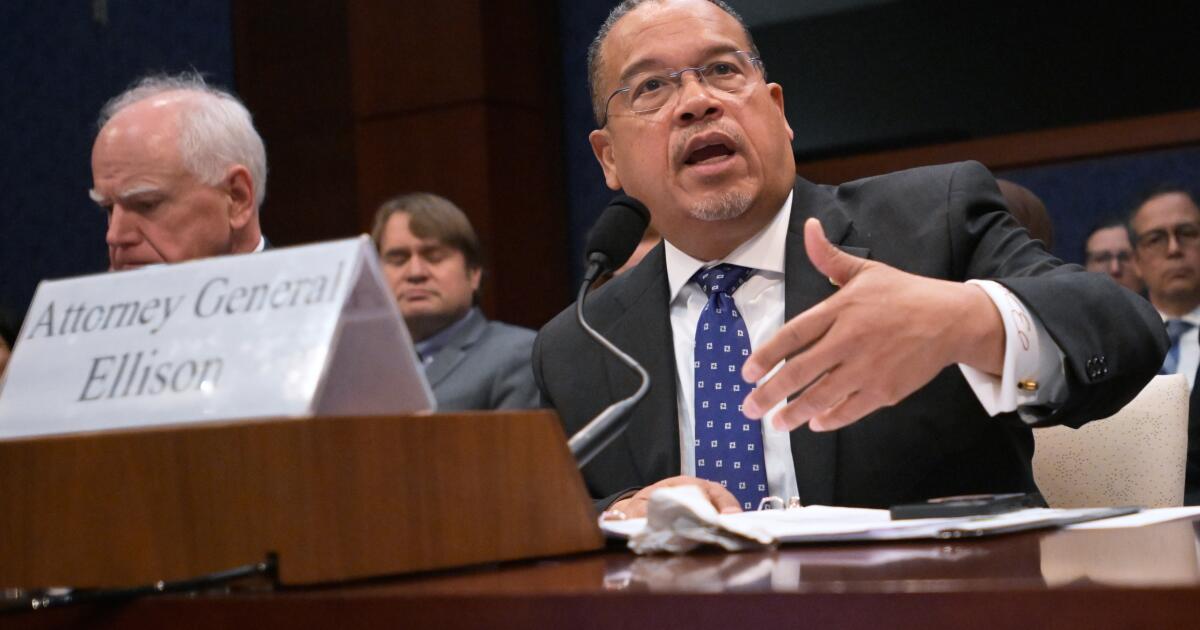
The federal lawsuit named Democratic Gov. Tim Walz and Democratic state Atty. Gen. Keith Ellison as defendants, along with the state’s Office of Higher Education. It said Minnesota law discriminates against U.S. citizens because it provides in-state tuition and scholarships to students living in the U.S. illegally if they attended a Minnesota high school for three years, and U.S. citizens who attended schools outside of the state cannot receive the same benefits. States generally set higher tuition rates for out-of-state students.
The federal government said those state statutes “flagrantly” violate a federal law that prevents states from providing preferential benefits to immigrants in the U.S. illegally regardless of whether or not they meet residency requirements.
“No state can be allowed to treat Americans like second-class citizens in their own country by offering financial benefits to illegal aliens,” U.S. Atty. Gen. Pam Bondi said in a statement after the lawsuit was filed last year.
Menendez said the Justice Department misinterpreted the law, enacted during the Clinton administration, because anyone who attended a Minnesota high school for at least three years are granted the same public benefits, regardless of their U.S. residency or immigration status.
She also said the federal government didn’t have standing to sue the state attorney general or governor since neither has the power to change the state laws that determine tuition eligibility.
Ellison celebrated the decision in a statement Friday.
“Today, we defeated another one of Donald Trump’s efforts to misconstrue federal law to force Minnesota to abandon duly passed state laws and become a colder, less caring state,” he wrote.
The funding for immigrants without legal status represents an “investment for our state to do everything we can to encourage a more educated workforce,” Ellison wrote.
The U.S. Justice Department didn’t respond to an email request for comment Friday.
The department has filed similar lawsuits this month against policies in Kentucky and Texas. Last week, a federal judge in Texas blocked that state’s law giving a tuition break to students living in the U.S. illegally after the state’s Republican attorney general, Ken Paxton, said he supported the legal challenge.
In discussing the Texas case last year, Bondi suggested more lawsuits might be coming.
Florida ended in-state tuition eligibility for immigrants living in the U.S. illegally. At least 22 states and the District of Columbia have laws or policies granting the in-state benefit, according to the National Immigration Law Center. Those states include Democratic-led California and New York, but also Republican states including Kansas and Nebraska.
According to the center, at least 13 states in addition to Minnesota allow immigrant students without legal status to receive financial aid and scholarships on top of in-state tuition.
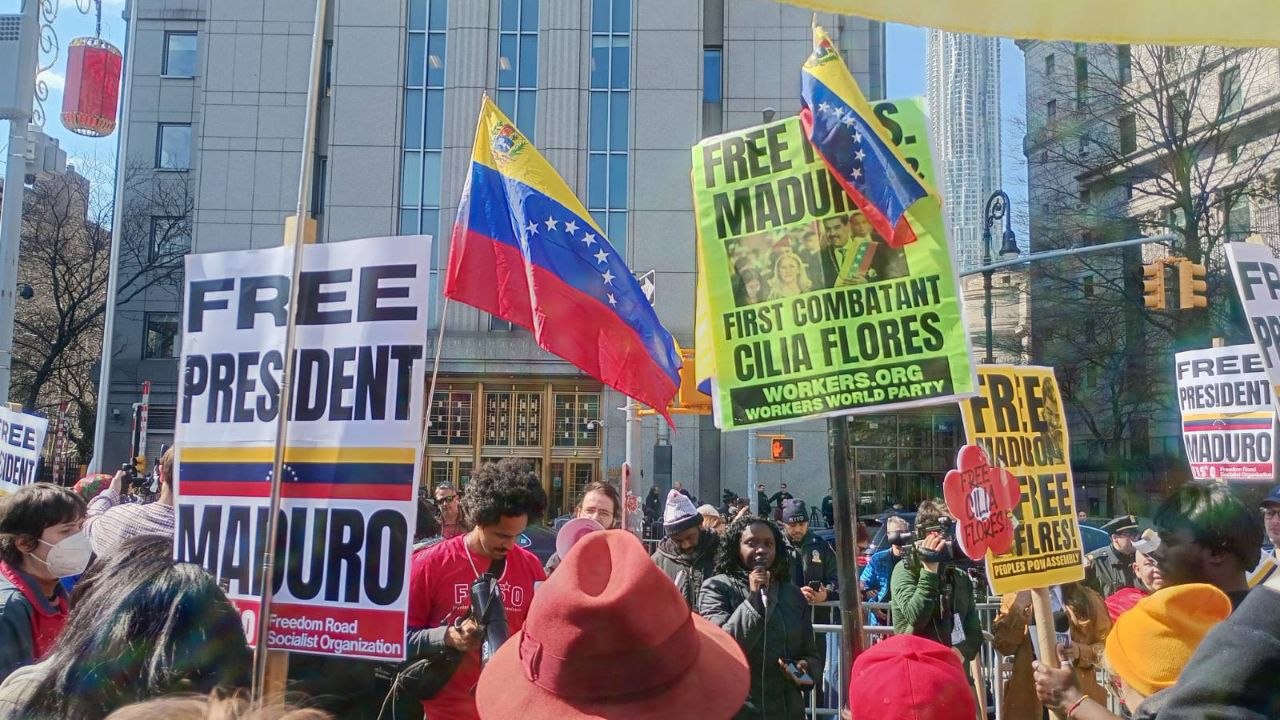
Solidarity activists gathered outside the courthouse and demanded the release of Maduro and Flores. (Katrina Kozarek / Venezuelanalysis)
Caracas, March 26, 2026 (venezuelanalysis.com) – US Judge Alvin Hellerstein ruled out dismissing the case against Venezuelan President Nicolás Maduro and First Lady Cilia Flores in a hearing on Thursday in Brooklyn.
The defense team for Maduro and Flores—who face charges including drug trafficking conspiracy and weapons possession—requested that the case be thrown out after the US Treasury’s Office of Foreign Assets Control (OFAC) denied them authorization to use Venezuelan state funds to pay for legal counsel. OFAC had initially granted the license on February 9 but revoked it three hours later.
New York Southern District Judge Hellerstein declined to throw out the charges due to the blockaded funds, calling it “a serious step based on hypotheticals.” However, he did not formally rule and left the door open to revisit the decision in the future.
US Justice Department prosecutor Kyle Wirshba argued that allowing access to Venezuelan state funds would undermine existing sanctions policy, adding that if the defendants are unable to hire private attorneys, court-appointed counsel could be assigned. Maduro attorney Barry Pollack countered that such a measure would violate their Sixth Amendment right to choose their own legal representation.
During the hearing, Hellerstein challenged the prosecutors’ arguments, adding that OFAC’s personal sanctions against Maduro and Flores would also block them from using personal funds. The judge likewise disagreed with the prosecution’s claims that the blocking of funding for the defense was a matter of national security, stating that Maduro and Flores “no longer represent a threat.”
He further remarked that “things have changed” and that the United States is already “doing business” with Venezuela.
According to observers in the courthouse, Maduro and Flores, both in beige prison uniforms and handcuffed, appeared calm throughout the hearing, using headphones for simultaneous translation. Neither spoke. Observers noted that Maduro appeared thinner. Flores’ attorney, Mark Donnelly, made an urgent request for a medical evaluation, specifically an electrocardiogram, citing a pre-existing condition. The judge approved the request.
Hellerstein will set a new court date in the coming days. Maduro and Flores have not requested bail and were returned to the Metropolitan Detention Center in Brooklyn after the hearing.
Maduro and Flores, who is also a lawmaker, were kidnapped by US special forces during a military attack against Caracas on January 3. They pleaded not guilty at their arraignment two days later. Despite recurring “narcoterrorism” accusations over the years, US officials have not presented evidence tying high-ranking Venezuelan leaders to narcotics activities. Specialized agencies have consistently found Venezuela to play a marginal role in global drug trafficking.
Trump calls for additional ‘charges’
Prior to the hearing, US President Donald Trump argued before reporters that additional charges should be brought against the Venezuelan president.
“He emptied his prisons into our country, and I expect that at some point he will be charged for that,” he said. Trump has repeatedly raised unfounded claims that the Venezuelan government “emptied” prisons and mental institutions into US territory.
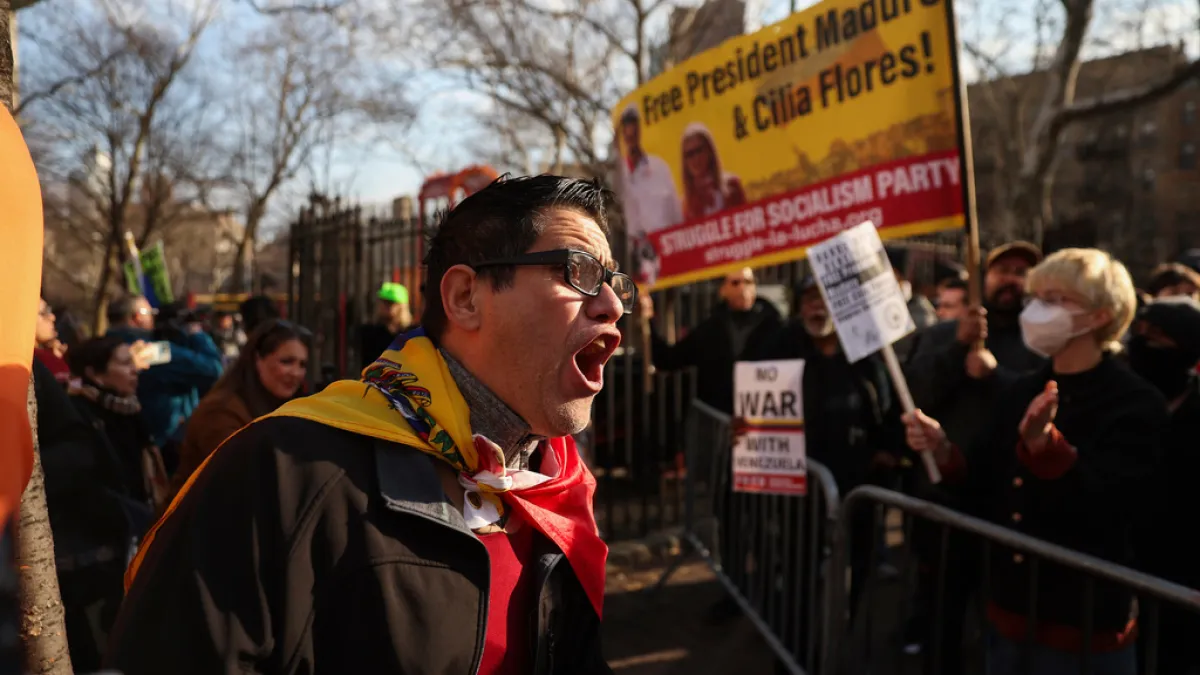
Outside the courthouse, a heavy police presence separated Venezuelan opposition supporters from solidarity activists demanding the release of Maduro and Flores and an end to US attacks against the Caribbean nation.
In Caracas, social movements gathered at Plaza Bolívar to express support for the president and first lady. The demonstration followed another mobilization earlier in the week demanding the lifting of US economic sanctions against Venezuela.
Speaking at the rally, lawmaker Nicolás Maduro Guerra—the president’s son and also facing US Justice Department charges—described his father as “a worker” who identifies “as a son of God above any political office.” Days earlier, in a social media post, Maduro Guerra had said his father would appear “in high spirits” and “in good shape” due to regular exercise.
He was joined by Caracas Mayor Carmen Meléndez, while the ruling United Socialist Party of Venezuela (PSUV) also called for Maduro’s release in a public statement.
For her part, Acting President Delcy Rodríguez has yet to comment on Thursday’s hearing. Venezuelan authorities have also not publicly addressed US efforts to block the funding of Maduro and Flores’ legal expenses.
Since January 3, the Rodríguez administration has led a diplomatic rapprochement with Washington, with several White House officials visiting Venezuela in recent weeks. A Venezuelan government delegation arrived in the US capital on Thursday, led by Vice Minister Oliver Blanco, who reported meetings with State Department officials to boost “mutually beneficial” relations.
A United States judge has said that he will not dismiss the drug-trafficking and weapons possession charges brought against former Venezuelan President Nicolas Maduro and his wife Cilia Flores.
But in a Thursday court hearing, Judge Alvin Hellerstein questioned whether the US government has the right to bar Venezuela from funding Maduro’s legal expenses.
Recommended Stories
list of 3 itemsend of list
The hearing was the first for Maduro and his wife since a brief January arraignment, where they pleaded not guilty.
Maduro and Flores have sought to have the charges against them thrown out. Hellerstein declined to do so, but he pressed the prosecution on some of the issues Maduro’s legal team raised in its petition to dismiss the case.
Among them was a decision by the administration of US President Donald Trump to prevent the Venezuelan government from financing Maduro’s defence.
Federal prosecutors argued that national security reasons prevented the US from allowing such payments. They also pointed to ongoing sanctions against the Venezuelan government.
But Hellerstein pushed back against that argument, noting that Trump had eased sanctions against Venezuela since Maduro’s abduction on January 3. He also questioned how Maduro might pose a security threat while imprisoned in New York.
“The defendant is here. Flores is here. They present no further national security threat,” said Hellerstein. “I see no abiding interest of national security on the right to defend themselves.”
Hellerstein emphasised that, in the US, all criminal defendants have the right to a vigorous defence, as part of the Constitution’s Sixth Amendment.
“The right that’s implicated, paramount over other rights, is the right to constitutional counsel,” he said.
Maduro, who led Venezuela from 2013 to 2026, has been charged with four criminal counts, including narco-terrorism conspiracy, conspiracy to import cocaine, the possession of machine guns and the conspiracy to possess machine guns and other destructive devices.
He and his wife were taken into US custody on January 3, after Trump launched an attack on Venezuela.
The Trump administration has framed the military operation as a “law enforcement function”, but experts say it was widely considered illegal under international law, which protects local sovereignty.
Maduro has cited his status as the leader of a foreign country as part of his push to see the case dismissed.
When he last appeared in court, on January 5, he told the judge, “I’m still the president of my country.”
In a February hearing, his defence team sought to dismiss the charges on the basis that preventing Venezuela from paying his legal fees was “interfering with Mr Maduro’s ability to retain counsel and, therefore, his right under the Sixth Amendment to counsel of his choice”.
In an interview with the news agency AFP on Thursday, Maduro’s son, Venezuelan lawmaker Nicolas Maduro Guerra, said that he trusts the US legal system but believes that his father’s trial has been mishandled.
“This trial has vestiges of illegitimacy from the start, because of the capture, the kidnapping, of an elected president in a military operation,” Maduro Guerra said in Caracas.
Protests and counter-protests took place in front of the New York City courthouse on Thursday, with some condemning the US’s actions and others holding signs in support of the trial with slogans like, “Maduro rot in prison.”
Trump himself weighed in on the proceedings during a Thursday cabinet meeting, hinting that further charges could be brought against Maduro.
“He emptied his prisons in Venezuela, emptied his prisons into our country,” Trump said of Maduro, reiterating an unsubstantiated claim.
“And I hope that charge will be brought at some point. Because that was a big charge that hasn’t been brought yet. It should be brought.”
Trump has had an adversarial relationship with Maduro since his first term in office, when he issued a bounty for the Venezuelan leader’s arrest. He has frequently repeated baseless claims that Maduro intentionally sent immigrants and drugs to the US in a bid to destabilise the country.
Those claims have served as a pretext for Trump claiming emergency powers in realms such as immigration and national security. On Thursday, Trump emphasised that, while he expected a “fair trial”, he expected more legal action to be taken against Maduro.
“I would imagine there are other trials coming because they’ve really sued him just at a fraction of the kind of things that he’s done,” Trump said. “Other cases are going to be brought, as you probably know.”
WASHINGTON — A federal judge on Monday ordered the government to return to the U.S. a California DACA recipient who was deported last month to Mexico.
U.S. District Judge Dena Coggins in Sacramento gave the government seven days to return Maria de Jesus Estrada Juarez, 42, and restore her protections under the Obama-era program Deferred Action for Childhood Arrivals, “as if her Feb. 19, 2026 removal never occurred.”
A lawyer for Estrada Juarez argued that she was unlawfully deported within a day of appearing at a scheduled immigration appointment in Sacramento.
Lawyers for the government, meanwhile, argued that the court lacked jurisdiction over Estrada Juarez’s case because her petition was filed after she was deported and because her removal was a discretionary decision the government is entitled to.
Coggins said she found the government’s argument “unavailing,” writing in her ruling that Estrada Juarez “was removed in flagrant violation of the regulatory protections afforded to her under DACA, and in violation of the Constitutional protections afforded to her under the Due Process Clause of the Fifth Amendment to the U.S. Constitution.”
In a statement, Estrada Juarez said she was “overwhelmed with relief and hope” after learning the court’s decision.
The Department of Homeland Security said it had reinstated an expedited removal order for Estrada Juarez from 1998, when she was 15. But her lawyer, Stacy Tolchin, said the record showed that the order lacked supervisory approval and was never finalized, so there was no valid removal order to reinstate.
Homeland Security previously told The Times that an immigration judge had ordered Estrada Juarez’s deportation in 1998 “and she was removed from the United States shortly after.” Tolchin said Estrada Juarez never saw an immigration judge.
Estrada Juarez, who worked as a regional manager for Motel 6, has had protection from deportation under DACA since 2013. She applied for legal permanent residency, or a green card, through her daughter, Damaris Bello, 22, who is a U.S. citizen.
Her deportation after the green card interview garnered public attention and outrage from members of Congress, including Sen. Alex Padilla (D-Calif.).
DACA was created to protect undocumented people who were brought to the U.S. as children.
As of June 2025, there were more than 515,000 DACA recipients, known as “Dreamers,” in the U.S. California has 144,000 DACA recipients, the most of any state, according to federal data.
NEW YORK — In a strongly worded decision this week, a federal judge ordered that the Voice of America — an international broadcaster with the mission to provide news for countries around the world that was largely shut down for the last year by the Trump administration — come roaring back to life.
Whether or not that actually happens is uncertain.
The government filed notice Thursday to appeal U.S. District Judge Royce C. Lamberth’s order two days earlier to put hundreds of VOA employees who have been on paid leave the last year back to work. Lamberth had ruled on March 7 that Kari Lake, President Trump’s choice to oversee the bureaucratic parent U.S. Agency for Global Media, didn’t have the authority to reduce VOA to a skeleton.
The Voice of America was established as a news source in World War II, beaming reports to many countries that had no tradition of a free press. Before Trump took office again last year, Voice of America was operating in 49 different languages, heard by an estimated 362 million people.
Trump’s team contended that government-run news sources, which also include Radio Free Europe/Radio Liberty, were an example of bloated government and that it wanted news reporting more favorable to the current administration. With a greatly reduced staff, VOA currently operates in Iran, Afghanistan, China, North Korea and in countries with a large population of Kurds.
Lamberth, in his decision, said Lake had “repeatedly thumbed her nose” at laws mandating VOA’s operation.
Time to turn the page at VOA?
VOA director Michael Abramowitz said legislators in both parties understand the need for a strong operation and have set aside enough funding for the job to be done. “It is time for all parties to come together and work to rebuild and strengthen the agency,” he said.
Don’t expect that to happen soon. “President Trump was elected to eliminate waste, fraud and abuse across the administration, including the Voice of America — and efforts to improve efficiency at USAGM have been a tremendous success,” said White House spokeswoman Anna Kelly. “This will not be the final say on the matter.”
Patsy Widakuswara, VOA’s White House bureau chief and a plaintiff in the lawsuit to bring it back, said that “restoring the physical infrastructure is going to take a lot of money and some time, but it can be done. What is more difficult is recovering from the trauma that our newsroom has gone through.”
It’s an open question whether the administration wants a real news organization or a mouthpiece, said David Ensor, a former Voice of America director between 2010 and 2014. “We don’t know — maybe no one does at the moment — what the future holds,” he said.
The administration’s efforts over the last year to bolster friendly outlets and fight coverage that displeases Trump offer a clue, even though Congress has required that Voice of America be an objective and unbiased news source. This week it was announced that Christopher Wallace, an executive at the far-right network Newsmax who had previously spent 15 years at Fox News Channel, will be the new deputy director at VOA. Abramowitz didn’t know he was getting a new deputy until it was announced.
Widakuswara wouldn’t comment on what Wallace’s appointment might mean. “I’m not going to pass judgment before seeing his work,” she said.
While Lamberth ordered more than a thousand employees on leave to go back to work, it’s not clear how many of them moved on to other jobs or retired in the last year. The judge also said he did not have the authority to bring back hundreds of independent contractors who were terminated.
One employee who left is Steve Herman, a former White House bureau chief and national correspondent at VOA and now executive director of the Jordan Center for Journalism Advocacy and Innovation at the University of Mississippi. Despite the court decisions, he questions whether the Trump administration would oversee a return to what the organization used to be.
“I’m a bit of a pessimist,” Herman said. “I think it’s going to be very difficult.”
An administration loath to admit defeat
Besides fighting to shut it down, Trump is loath to admit defeat. The White House recently nominated Sarah Rogers, the undersecretary of State for public diplomacy, to run the U.S. Agency for Global Media, putting it more firmly within the administration’s control. Her nomination requires Senate approval.
“Is Marco Rubio’s State Department going to allow objective journalism in 49 languages?” Herman asked. “I don’t think so. I would want that to happen, but that’s a fairy tale.”
In the budget bill passed in February, Congress set aside $200 million for Voice of America’s operation. While that represents about a 25% cut in the agency’s previous appropriation, it sent a bipartisan message of support, said Kate Neeper, VOA’s director of strategy and performance evaluation. Besides being a plaintiff with Widakuswara in the lawsuit to restore the agency, she has helped some of her colleagues deal with some of their own problems over the past year, including immigration issues.
“There is a lot of enthusiasm for going back to work,” she said. “People are eager to show up on Monday.”
The hunger for information from Voice of America in Iran when he was director was a clear example of what the organization meant, Ensor said. Surveys showed that between a quarter and a third of Iran’s households tuned in to VOA once a week, primarily on satellite television. Occasionally the government would crack down and confiscate satellite dishes, but Iranians could usually quickly find replacements, he said.
“I believe in Voice of America as a news organization and as a voice of America,” Ensor said. “It was important, and it can be again.”
California Atty. Gen. Rob Bonta is asking a judge to unravel Nexstar Media Group’s $6.2-billion acquisition of rival TV station owner Tegna — the latest in a flurry of merger twists.
The state officials sued to block the union of the station groups, alleging the new colossus would violate antitrust rules and a federal law limiting broadcast station ownership.
The lawsuit was filed in U.S. District Court in Sacramento.
Hours after that filing, the Federal Communications Commission’s Media Bureau in Washington approved Nexstar’s deal — clearing the way for the nation’s largest TV station group owner to swallow the third-largest station group.
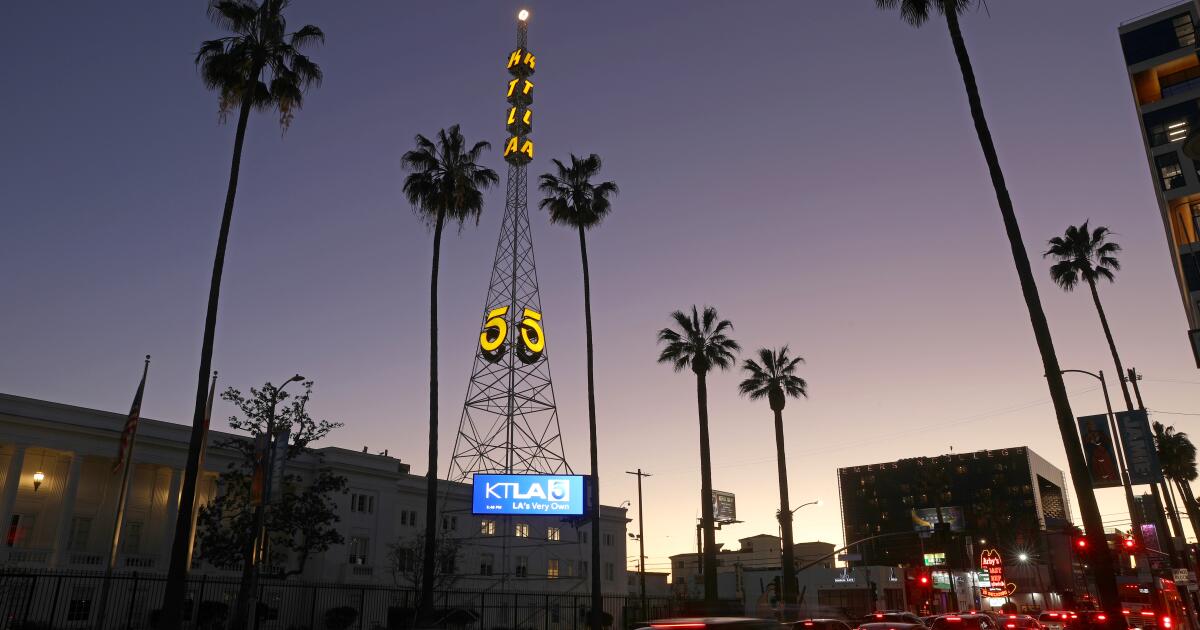
The purchase gives Nexstar, which owns KTLA-TV Channel 5 in Los Angeles, 265 television stations.
On Friday, Bonta and the other attorneys general asked a judge for a temporary restraining order to freeze the takeover until a hearing on the matter.
“Nexstar/Tegna is not a done deal,” Bonta said Friday in a statement. “I will not let these corporate behemoths merge without a fight.”
It was not immediately clear when a judge might rule on the request for a restraining order.
Bonta appeared at a lawmakers’ hearing in Burbank on Friday to explore the impacts of another huge merger: Paramount Skydance’s proposed $111-billion takeover of Warner Bros. Discovery. Bonta’s office has opened an investigation into the Paramount-Warner merger, but Bonta said Friday that no decision has been made on whether he or other attorneys general will seek to block it.
For now, he is focused on derailing the Nexstar-Tegna deal.
“We filed a suit before that deal closed,” Bonta told The Times. “We think our case is extremely strong. There is no way this should be approved.”
At issue is whether the FCC had the power to grant a waiver that would allow Nexstar to control TV stations that reach nearly 80% of U.S. households. In 2003, Congress set the station ownership cap at 39% of the country.
The Department of Justice also gave its blessing to close the deal.
The three FCC commissioners did not vote on the matter — despite pleas from the lone Democrat on the panel who advocated for an open process.
“We need more competition against THE ENEMY, the Fake News National TV Networks,” Trump wrote in his social media post.
“Letting Good Deals get done like Nexstar – Tegna will help knock out the Fake News because there will be more competition, and at a higher and more sophisticated level,” Trump wrote. “GET THAT DEAL DONE!”
In a statement Thursday, Nexstar founder and chief executive Perry Sook thanked Trump and FCC Chairman Brendan Carr, saying Nexstar was “grateful” they recognized the “dynamic forces shaping the media landscape” and allowed the transaction to move forward.
A federal judge in the United States has agreed to block the administration of President Donald Trump from enforcing a policy limiting news reporters’ access to the Pentagon.
Friday’s ruling sides with The New York Times in its argument that key portions of the new rules are unlawful.
Recommended Stories
list of 3 itemsend of list
US District Judge Paul Friedman in Washington, DC, ruled that the Pentagon policy illegally restricts the press credentials of reporters who walked out of the building rather than agree to the new rules.
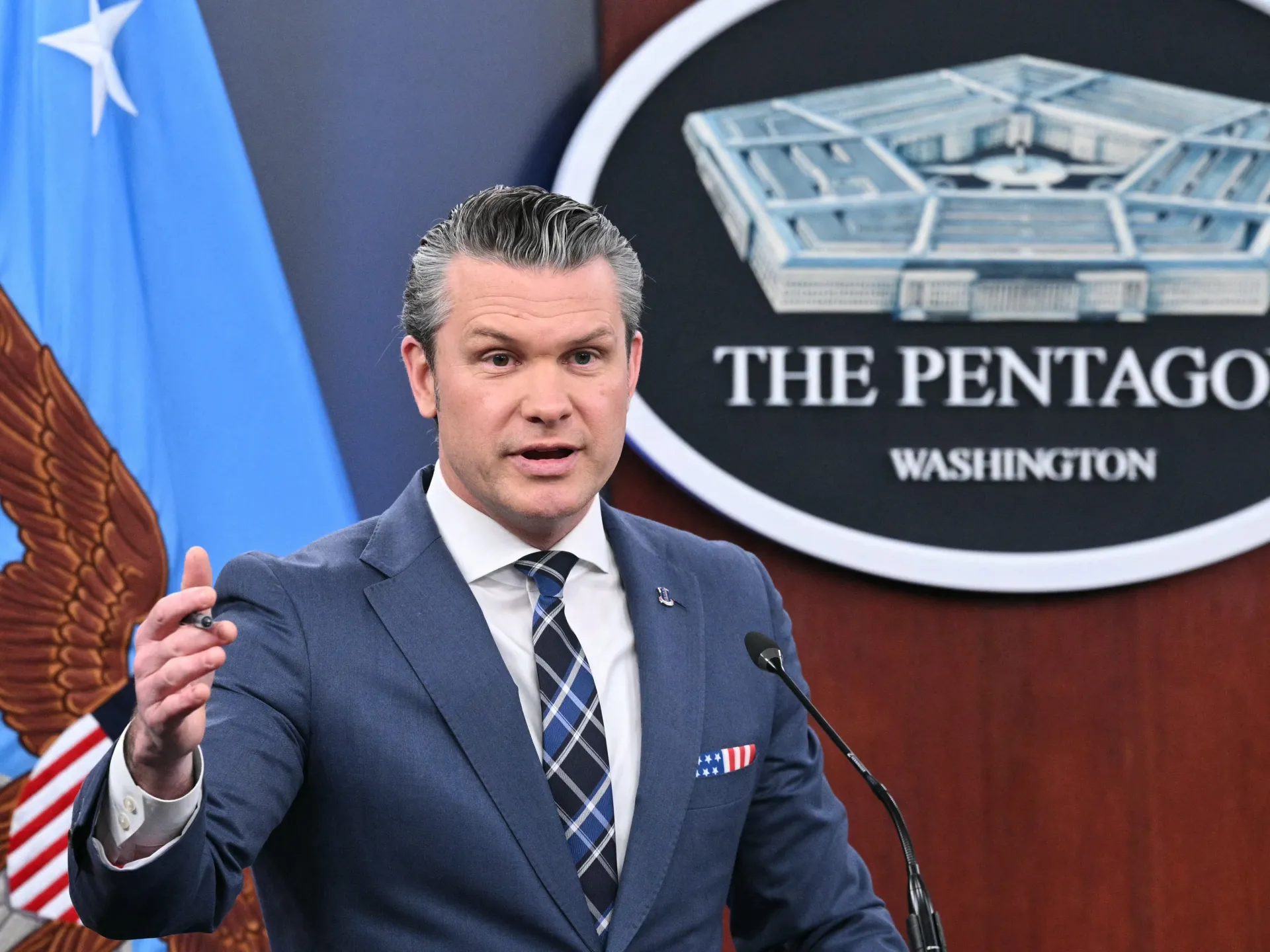
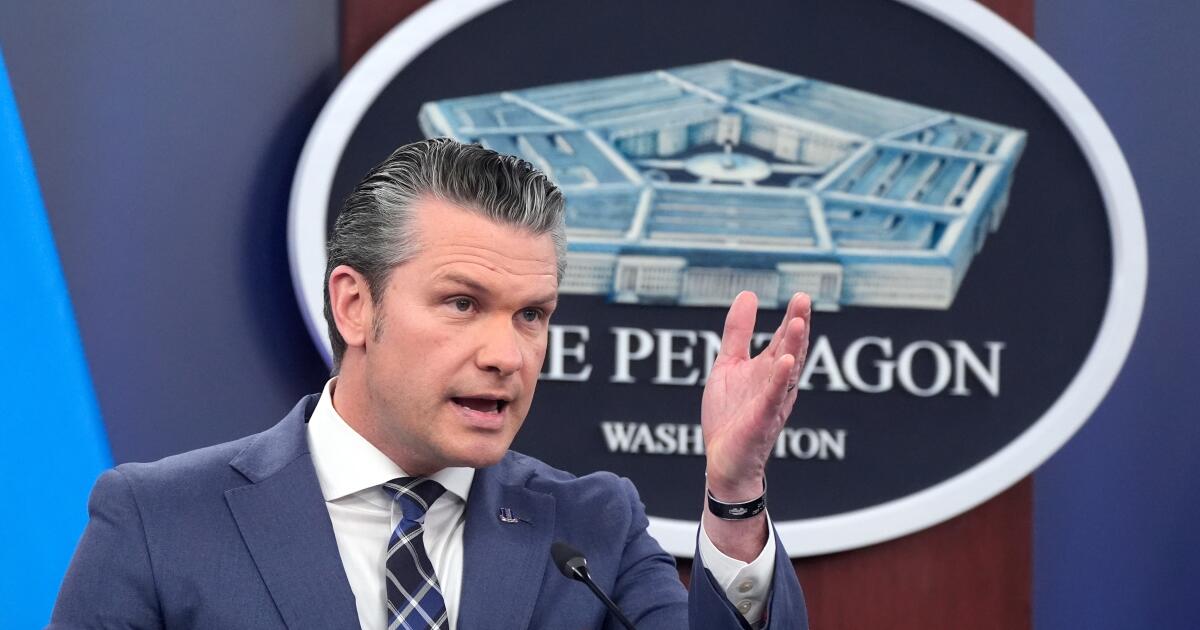
The Times sued the Pentagon and Defense Secretary Pete Hegseth in December, claiming the credentialing policy violates the journalists’ constitutional rights to free speech and due process.
The current Pentagon press corps is comprised mostly of conservative outlets that agreed to the policy. Reporters from outlets that refused to consent to the new rules, including those from The Associated Press, have continued reporting on the military.
Friedman, who was nominated to the bench by Democratic President Bill Clinton, said the policy “fails to provide fair notice of what routine, lawful journalistic practices will result in the denial, suspension, or revocation” of Pentagon press credentials.
He ruled that the Pentagon policy ultimately violates the First and Fifth Amendment rights to free speech and due process.
“Those who drafted the First Amendment believed that the nation’s security requires a free press and an informed people and that such security is endangered by governmental suppression of political speech. That principle has preserved the nation’s security for almost 250 years. It must not be abandoned now,” the judge wrote.
Times lauds ruling
New York Times spokesperson Charlie Stadtlander said the newspaper believes the ruling “enforces the constitutionally protected rights for the free press in this country”.
“Americans deserve visibility into how their government is being run, and the actions the military is taking in their name and with their tax dollars,” Stadtlander said in a statement. “Today’s ruling reaffirms the right of The Times and other independent media to continue to ask questions on the public’s behalf.”
Theodore Boutrous, a lawyer who represented the Times at a hearing earlier this month, said in a statement that the court ruling is “a powerful rejection of the Pentagon’s effort to impede freedom of the press and the reporting of vital information to the American people during a time of war”.
The Pentagon did not immediately respond to a request for comment on the ruling.
It has argued that the policy imposes “common sense” rules that protect the military from the disclosure of national security information.
“The goal of that process is to prevent those who pose a security risk from having broad access to American military headquarters,” government lawyers wrote.
The Times’ legal team, meanwhile, claimed the policy is designed to silence unfavourable press coverage of President Trump’s administration.
“The First Amendment flatly prohibits the government from granting itself the unbridled power to restrict speech because the mere existence of such arbitrary authority can lead to self-censorship,” they wrote.
Weeding out ‘disfavoured’ journalists
The judge said he recognises that “national security must be protected, the security of our troops must be protected, and war plans must be protected”.
“But especially in light of the country’s recent incursion into Venezuela and its ongoing war with Iran, it is more important than ever that the public have access to information from a variety of perspectives about what its government is doing,” Friedman wrote.
Friedman said the “undisputed evidence” shows that the policy is designed to weed out “disfavored journalists” and replace them with those who are “on board and willing to serve” the government, a clear instance of illegal viewpoint discrimination.
“In sum, the Policy on its face makes any newsgathering and reporting not blessed by the Department a potential basis for the denial, suspension, or revocation of a journalist’s [credentials],” he wrote. “It provides no way for journalists to know how they may do their jobs without losing their credentials.”
The Pentagon had asked the judge to suspend his ruling for a week for an appeal. Friedman refused.
The judge ordered the Pentagon to reinstate the press credentials of seven Times journalists. But he said his decision to vacate the challenged policy terms applies to “all regulated parties”.
Friedman gave the Pentagon a week to file a written report on its compliance with the order.
The Times argued that the Pentagon has applied its own rules inconsistently. The newspaper noted that Trump ally Laura Loomer, a right-wing personality who agreed to the Pentagon policy, appeared to violate the Pentagon’s prohibition on soliciting unauthorised information by promoting her “tip line”.
The government didn’t object to Loomer’s tip line but concluded that a Washington Post tip line does violate its policy because it purportedly “targets” military personnel and department employees.
The judge said he does not see any meaningful difference between the two tip lines.
“But the problem is that nothing in the Policy explicitly prevents the Department from treating these two nearly identical tip lines differently,” Friedman added.
WASHINGTON — A federal judge agreed Friday to block the Trump administration from enforcing a policy limiting news reporters’ access to the Pentagon, agreeing with The New York Times that key portions of the new rules are unlawful.
U.S. District Judge Paul Friedman in Washington sided with the newspaper and ruled that the Pentagon policy illegally restricts the press credentials of reporters who walked out of the building rather than agree to the new rules.
The Times sued the Pentagon and Defense Secretary Pete Hegseth in December, claiming the credentialing policy violates the journalists’ constitutional rights to free speech and due process.
The current Pentagon press corps is comprised mostly of conservative outlets that agreed to the policy. Reporters from outlets that refused to consent to the new rules, including from the Associated Press, have continued reporting on the military.
Friedman, who was nominated to the bench by Democratic President Bill Clinton, said the policy “fails to provide fair notice of what routine, lawful journalistic practices will result in the denial, suspension, or revocation” of Pentagon press credentials. He ruled that it violates the First and Fifth amendment rights to free speech and due process.
“In sum, the Policy on its face makes any newsgathering and reporting not blessed by the Department a potential basis for the denial, suspension, or revocation of a journalist’s (credential),” he wrote. “It provides no way for journalists to know how they may do their jobs without losing their credentials.”
The Pentagon did not immediately respond to a request for comment on the ruling.
It has argued that the policy imposes “common sense” rules that protect the military from the disclosure of national security information.
“The goal of that process is to prevent those who pose a security risk from having broad access to American military headquarters,” government attorneys wrote.
Times attorneys claim the policy is designed to silence unfavorable press coverage of President Trump’s administration.
“The First Amendment flatly prohibits the government from granting itself the unbridled power to restrict speech because the mere existence of such arbitrary authority can lead to self-censorship,” they wrote.
Kunzelman writes for the Associated Press. AP writer Konstantin Toropin contributed to this report.
WASHINGTON — The Supreme Court agreed Monday to rule on whether the Trump administration may end the temporary protection that had been extended in the past to migrants who live and work in the United States.
At issue are legal protections for about 6,000 Syrians and up to 350,000 Haitians.
The court’s announcement signals the justices want to resolve this issue in a written opinion rather through emergency appeals.
Twice last year, the court’s conservatives set aside decisions from judges in San Francisco who said President Trump’s Homeland Security secretary had overstepped her authority.
But those decisions did not set clear precedents, and in recent weeks, judges in New York and Washington, D.C., blocked the administration’s plan to end the special protections for Haitians and Syrians.
Frustrated by what he labeled “indefensible” decisions, Trump’s Solicitor Gen. D. John Sauer advised the court to hear arguments and issue a written ruling on the issue.
The justices on Monday agreed to just that. Arguments will be heard in April, and a decision will be handed down by July.
Immigrant-rights advocates argued the repeal of the special protection would be cruel and unjust to migrants who have established lives and careers in this country.
In 1990, Congress authorized giving temporary shelter to non-citizens from countries experiencing armed conflict, natural disaster or “extraordinary and temporary conditions” that prevent them from returning there.
In 2012, the Homeland Security secretary extended this protection to Syrians in response to a “brutal crackdown” engineered by its then-President Bashar al-Assad.
Last year, citing Assad’s fall from power, Trump’s Secretary Kristi Noem proposed to cancel the temporary protection for Syrians. Lawyers for the Syrians questioned how this could be seen as an emergency requiring an immediate ruling.
They said about 6,100 Syrians who have lived here lawfully for years.
They are “highly sought-after doctors and medical professionals, reporters, students, teachers, business owners, caretakers, and others who have been repeatedly vetted and by definition have virtually no criminal history. The government apparently needs urgent authority to send them to a country in the middle of an active war,” the lawyers said.
In 2010, the Obama administration extended the protection to Haiti after an earthquake caused death and damage in Port-au-Prince, the capital.
Judges in New York and Washington blocked those repeals and said the high court had given “no explanation” for its decision upholding the repeal for Venezuelans.
Those judges said the Supreme Court’s earlier orders orders “involved a TPS designation of a different country, with different factual circumstances, and different grounds for resolution by the district court.”
Sauer pointed to a provision in the 1990 law that says judges have no authority to second-guess the government’s decision to end it.
“There is no judicial review of any determination of the [Secretary] with respect to the designation, or termination or extension of a designation, of a foreign state under this subsection,” the law says.
In the three weeks since Trump’s attorney filed his emergency appeal, there have been two significant changes since then.
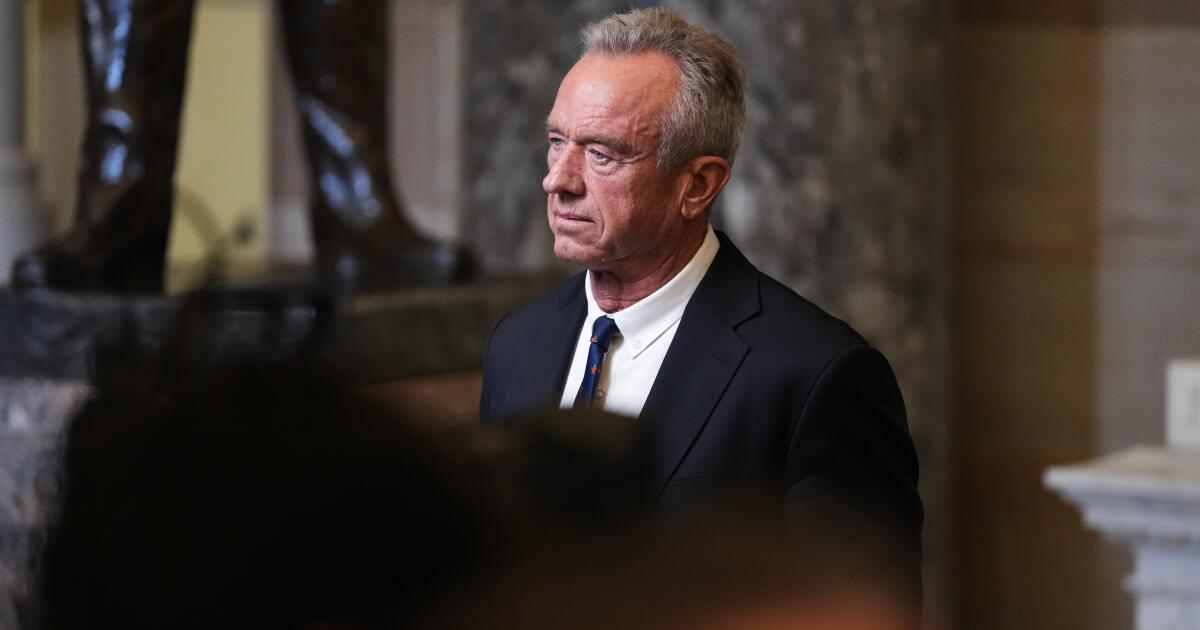
A federal judge on Monday temporarily blocked federal health officials from cutting the number of vaccines recommended for every child, and said U.S. Health Secretary Robert F. Kennedy Jr. likely violated federal procedures in revamping a key vaccine advisory committee.
The decision halts an order by Kennedy — announced in January — to end broad recommendations for all children to be vaccinated against flu, rotavirus, hepatitis A, hepatitis B, some forms of meningitis and RSV.
A number of leading medical groups raised alarms that the vaccine recommendation changes made under Kennedy would undermine protections against a half-dozen diseases. And the American Academy of Pediatrics and some other groups amended a lawsuit they had filed in July, asking the judge to stop the scaling back of the nation’s childhood vaccination schedule.
The original lawsuit, in federal court in Boston, focused on Kennedy’s decision to stop recommending COVID-19 vaccinations for most children and pregnant women.
The suit was updated as Kennedy took more steps that alarmed medical societies, causing the plaintiffs to ask Judge Brian E. Murphy to take steps to address those policy changes too. For example, the amended complaint asked the court to look at Kennedy’s actions concerning the Advisory Committee on Immunization Practices, which advises public health officials on what vaccines to recommend to doctors and patients.
Kennedy, a leading anti-vaccine activist before becoming the nation’s top health official, fired the entire 17-member panel last year and replaced it with a group that includes several anti-vaccine voices.
Murphy, who was nominated to the bench by President Biden, said Kennedy’s reconstitution of ACIP likely violated federal law. He ordered the appointments — and all decisions made by the reformed committee — put on hold.
Department of Health and Human Services spokesman Andrew Nixon said: “HHS looks forward to this judge’s decision being overturned just like his other attempts to keep the Trump administration from governing.”
ACIP was scheduled to meet this week to discuss COVID-19 vaccines, among other issues, but that gathering was being postponed.
“ACIP as currently constituted cannot meet,” said Richard Hughes IV, an attorney representing the AAP. “How can a committee meet without nearly the entirety of its membership?”
BOSTON — A U.S. court ruling in Massachusetts has temporarily paused the looming termination of Temporary Protected Status for immigrants from Somalia.
U.S. District Judge Allison D. Burroughs’ ruling Friday said there would be “weighty” consequences if Somalia’s TPS designation were allowed to expire Tuesday. Advocates filed an emergency motion in federal court seeking to pause the termination after the Trump administration promised to end the designation last month during an immigration crackdown in Minneapolis, where many Somalis live.
“Over one thousand people will face ‘a myriad of grave risks,’ including detention and deportation, physical violence if removed to Somalia, and forced separation from family members,” the ruling said.
Burroughs said implementing an administrative stay and deferring ruling on the postponement gives both sides time to file briefs on the emergency motion.
“While the stay is in effect, the termination shall be null, void, and of no legal effect,” the ruling said, noting that those with TPS status or pending applications will retain rights including eligibility for work authorization and protection against deportation and detention.
In a statement, the U.S. Department of Homeland Security said the ruling is the latest example of a judge preventing Trump from “restoring integrity” to the U.S. immigration system.
“Temporary means temporary,” the statement said. “Country conditions in Somalia have improved to the point that it no longer meets the law’s requirement for Temporary Protected Status. Allowing Somali nationals to remain temporarily in the United States is contrary to our national interests. The Trump administration is putting Americans first.”
Representatives of the plaintiffs fighting the termination said in a statement that even though the order is temporary and “many battles lie ahead,” they are “heartened by the interim protection today’s order affords all Somali people in the U.S. who have TPS or pending TPS applications.”
March 13 (UPI) — A federal judge this week quashed subpoenas the Department of Justice had issued to Federal Reserve Chair Jerome Powell because they were issued to pressure him into adjusting interest rates.
Judge James Boasberg redressed the DOJ for the subpoenas, saying that their purpose had nothing to do with a probe about renovations at the Federal Reserve in Washington, D.C.
The DOJ in January launched a criminal investigation into Powell’s testimony last year about the renovations, which Powell at the time said were “pretexts” to punish him and the Fed after they did not set interest rates at levels demanded by President Donald Trump.
“The Government has produced essentially zero evidence to suspect Chair Powell of a crime; indeed, its justifications are so thin and unsubstantiated that the Court can only conclude that they are pretextual,” Boasberg wrote in the opinion.
The department in January issued grand jury subpoenas in reference to Powell’s comments about the multi-year project to renovate the Fed’s office buildings during his June 2025 testimony before the Senate Banking Committee.
During a tour of the renovations, Powell disputed Trump’s over-estimates of the renovation’s cost, and threatened to sue him for the “horrible and grossly incompetent job” Powell had done on the project.
Overall, however, Trump has repeatedly ripped into and mused about firing Powell, which he cannot do, because the Fed chair has repeatedly said that interest rate changes would be dictated by only the market, rather than the preferences of any one person.
In the opinion, which was unsealed Friday, Boasberg said he blocked the subpoenas because “a mountain of evidence suggests that the Government served these subpoenas on the Board to pressure its Chair into voting for lower interest rates or resigning.”
President Donald Trump speaks during an event celebrating Women’s History Month in the East Room of the White House on Thursday. Photo by Bonnie Cash/UPI | License Photo
WASHINGTON — A federal judge on Friday quashed Justice Department subpoenas issued to the Federal Reserve in January, a severe blow to an investigation that has already attracted strong criticism on Capitol Hill.
Judge James Boasberg said that a “mountain of evidence suggests” that the purpose of the subpoenas was simply to pressure the Fed to cut its key interest rate, as President Trump has repeatedly demanded.
Fed Chair Jerome Powell revealed the investigation Jan. 11, prompting Senator Thom Tillis, a North Carolina Republican to block consideration of Trump’s pick to replace Powell as Fed chair when his term expires May. 15.
Great British Bake Off winner Nadiya Hussain has spoken out about the Channel 4 series
Nadiya Hussain has had her say on Bake Off(Image: Dave Benett, Dave Benett/Getty Images)
More than a decade since she was crowned winner of The Great British Bake Off and became one of TV’s most successful new stars, Nadiya Hussain has admitted that she no longer watches the Channel 4 show.
Despite going on to enjoy a huge TV career, the last 12 months have proved something of a torrid time for the 41-year-old mum-of-three as the BBC cancelled her shows.
In a new interview with the Radio Times, Nadiya admits “it’s sad” how it ended but “near the end” of her relationship with the Beeb, she had voiced concerns about how her programmes were being made.
And as far as Bake Off is concerned, she admits it’s not a show she watches any more. She said: “The magic has disappeared for me. Sometimes it feels like it’s competing with some of the shows on Netflix where it’s bigger and bolder and more outrageous, and I don’t think it needs any of that. It’s a beautiful show, it’s a classic.”
As for new judge Nigella Lawson replacing Prue Leith, Nadia said: “Nigella’s got a lot to live up to following Prue. It’s very easy to become quite stuffy and very proper, and I love that she’s got a little wild streak about her. I want to be like Prue when I’m older. If I get to that lovely age.”
Following her triumph on GBBO in 2015, Nadiya went on to front numerous BBC shows including Nadiya Bakes, Nadiya’s Fast Flavours and Nadiya’s Simple Spices. She has also appeared as a guest panellist on ITV’s Loose Women.
Other achievements include being named by Debrett’s as one of the 500 most influential people in the UK, included on BBC News’ 100 Women list and invited to bake a cake for the 90th birthday celebrations of Queen Elizabeth II.
After gaining a publishing deal she was also shortlisted for Children’s Book of the Year prize at the British Book Awards for Bake Me A Story.
However, in a social media post last year, the presenter disclosed that the BBC had axed her series, calling it a “turning point” in her professional journey.
At the time, a BBC spokesperson said: “After several wonderful series we have made the difficult decision not to commission another cookery show with Nadiya Hussain at the moment. Nadiya remains a much-valued part of the BBC family, and we look forward to working together on future projects.”
In conversation with the Sun’s Fabulous magazine, she reflected: “The last year has been physically and mentally one of the hardest so my next biggest achievement would be choosing myself and deciding what’s right for me.”
This follows Nadiya describing her three children, Musa, 19, Dawud, 18, and Maryam, 15, as her “biggest achievement”. Nadiya shares her children with husband Abdal Hussain, whom she wed in Bangladesh at the age of 20.
Following the axing of her programme, she took the decision to switch careers and move into education. She’s now employed in schools as a teaching assistant, with aspirations of potentially qualifying as a teacher down the line.
She revealed that other broadcasters, including ITV and Channel 4, approached her about another series, but insists it’s “not something that I want to do”.
Speaking to woman&home magazine, she explained: “I’m currently working as a teaching assistant at a lovely little primary school. The plan is to gain some training and maybe in the future become a teacher.”
For the latest showbiz, TV, movie and streaming news, go to the new **Everything Gossip** website.
Live Nation has reached a settlement with the Justice Department in an antitrust case that put the entertainment giant at risk of being separated from Ticketmaster.
The ticket vendor’s settlement offer was announced, in a court hearing on Monday, less than a week after the long-awaited trial began. With pending approval from the judge, Live Nation will have to pay damages to the suing states and allow competitors to sell tickets on its platform. Media reports have said the company agreed to pay more than $200 million as part of the settlement.
The settlement caught Judge Arun Subramanian off guard. He said no one informed him of the tentative deal until late Sunday, even though a term sheet for a possible settlement was signed on Thursday, according to the Associated Press.
A 12-person jury was seated last Tuesday in a Manhattan federal courthouse and the trial had reached witness testimony by the end of last week. The complaint was filed in 2024, when the federal government, 39 states including California and the District of Columbia, alleged that Live Nation and Ticketmaster have monopolies in various aspects of the live music industry, such as concert promotion, venue operations, artist management and ticketing services.
Live Nation could not immediately be reached for a comment.
Many of the large monopoly claims were thrown out during a pretrial hearing last month, including an allegation that Live Nation’s industry power raises ticket prices and harms consumers. But the new settlement offers major structural changes to the company’s ticketing services.
If the trial judge approves the settlement, the Beverly Hills-based company will have to open parts of its platform to rival ticketing operators. This means third-party sellers like SeatGeek could list tickets and have access to Ticketmaster’s technology.
Another key claim in the lawsuit concerned Ticketmaster’s alleged exclusivity contracts, which required artists who booked Live Nation-owned venues to also use its ticketing services. The settlement now limits these contracts to four years and allows venues to place a number of its tickets on competing platforms.
The original lawsuit also argued that Live Nation manages more than 400 artists and controls more than 265 venues in North America — all while Ticketmaster simultaneously controls around 80% of the primary ticket marketplace and is increasing its involvement in the resale market. Under the pending legal agreement, Live Nation would have to divest more than 10 of its venues and Ticketmaster would also have to cap service fees at 15%.
Serona Elton, attorney and interim vice dean at the University of Miami’s Frost School of Music, said this outcome can be understood in two ways — it’s either a win that addresses anti-competitive behaviors or a deal that does not go far enough.
“It is important to understand that it is not illegal to be a monopoly and control a large portion of the market,” said Elton in a statement. “What is illegal is the use of anti-competitive tactics. In analyzing the settlement, the question to ask is if it does enough to address the alleged tactics and the harm they may have caused.”
Elton added that venues could benefit from these adjustments, but “music fans should not think this is going to bring ticket prices down to an affordable level as there are other causes behind the sky-high ticket prices.”
Stephen Parker, the executive director of the National Independent Venue Association, similarly expressed some skepticism about the potential settlement.
“The reported settlement does not appear to include any specific and explicit protections for fans, artists, or independent venues and festivals,” he said in a statement.
“Reported details also indicate that ticket resale platforms could be further empowered through new requirements for Ticketmaster to host their listings, which would likely exacerbate the price gouging potential for predatory resellers and the platforms that serve them,” Parker added . “If these facts are true, NIVA views this as a failure of the justice system.”
A settlement could mark the potential end to one of the major legal battles Live Nation is facing. The company is also being sued by the Federal Trade Commission and is dealing with a handful of class-action lawsuits from groups of concertgoers.
After the news of the settlement broke, Live Nation’s stock jumped over 5% to $164.03.
“Why were state law enforcement officers excluded?” U.S. District Judge Christina A. Snyder wanted to know.
The judge pressed California Deputy Atty. Gen. Cameron Bell to explain the thinking behind a pair of trailblazing new laws meant to unmask the federal immigration agents patrolling Golden State streets and compel them to identify themselves.
One of the laws required all law enforcement operating in the state to visibly display identification while on duty, with narrow exclusions for plainclothes, undercover and SWAT details. It applied to everyone else, including U.S. Immigration and Customs Enforcement officers.
But the other law, a ban on masks worn by on-duty law enforcement officers, applied only to local cops and federal agents, with a broad exemption for the California Highway Patrol and other state peace officers.
Snyder wanted to know: Why were the laws different?
She never got an answer. Bell said she couldn’t comment on the actions of the Legislature.
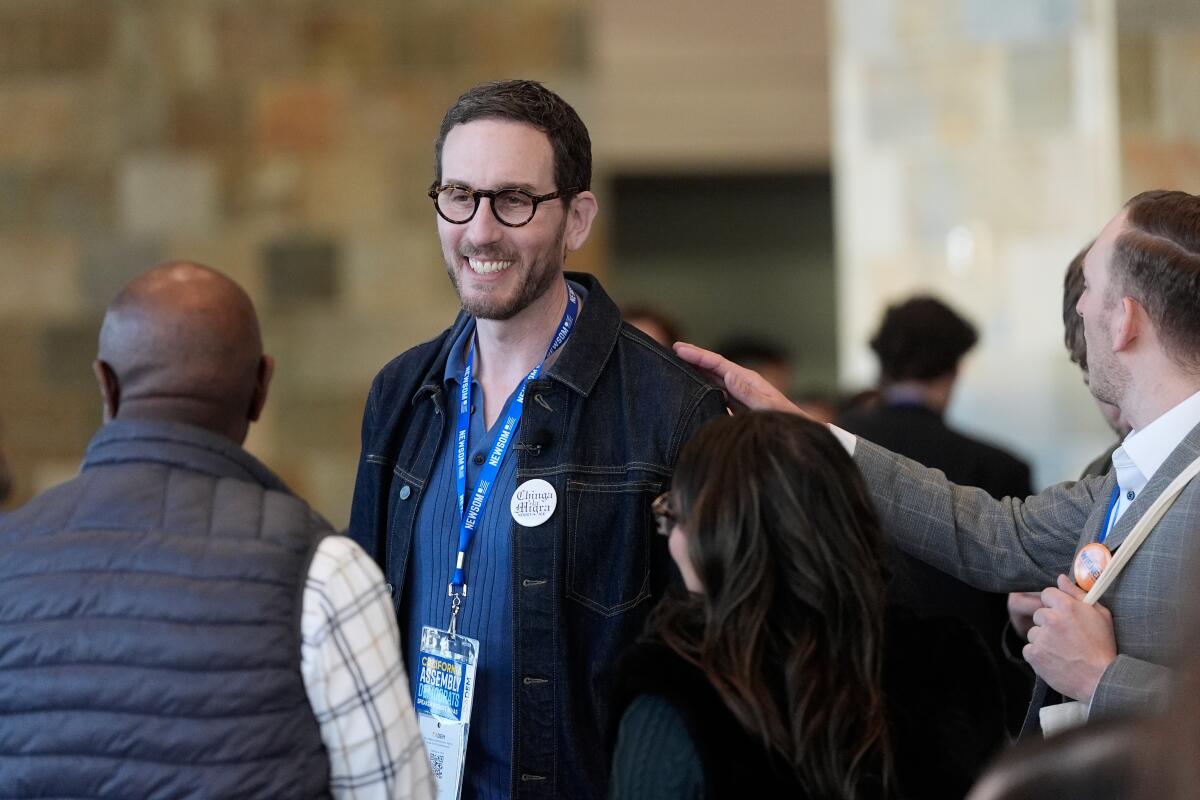
State Sen. Scott Wiener attends the California Democratic Party convention in San Francisco in February.
(Jeff Chiu / Associated Press)
In the halls of the statehouse last year, Sen. Scott Wiener’s (D-San Francisco) No Secret Police Act and Sen. Sasha Renée Pérez’s (D-Alhambra) No Vigilantes Act were referred to as “legislative twins,” a nod to their shared gestation and conjoined legal fate. If passed, both would immediately be challenged by the Trump administration.
That’s precisely what happened. Both measures became law — but only the ID law survived its first court battle, sending state legislators back to the drawing board on the mask ban.
Polls show unmasking ICE is overwhelmingly popular with voters, and both Wiener and Gov. Gavin Newsom took credit for getting the bill passed.
But behind the scenes, according to nearly two dozen sources familiar with the legislative process who spoke to The Times, a fight had been brewing between the two Democrats.
Days before the amendment deadline last summer, Newsom’s office proposed changes to Wiener’s mask ban that, according to legal experts and opponents, would have exempted most ICE and Customs and Border Protection operations from the bill. The governor’s team denies that was the intent of their proposal. The resulting compromise exempted state peace officers from the law instead.
Snyder struck it down on Feb. 9, writing that she was “constrained” to do so because the exemption of state police “unlawfully discriminates against federal officers.”
Interviews with more than 20 lawmakers, policy advisors, law enforcement and legal experts show how the Labor Day weekend deal came together, ensuring both Wiener and the governor a political victory that in short order became a court triumph for the president.
There are now more than a dozen similar bills winding through statehouses from Olympia, Wash., to Albany, N.Y., as legislators try to rein in a practice the majority of Americans see as dangerous and corrosive. In Sacramento, similar efforts are underway to pass a narrower version of the law, and both Newsom and Wiener have said they were proud to make California the first state to pass an ICE mask ban.
Both sides said the legislative process is messy, and that eleventh-hour amendment fights are inevitable in a statehouse where more than 900 bills were passed and close to 800 signed into law last year.
Yet neither the governor’s office nor the legislator’s team has offered clear answers for why both accepted a last-minute change on a nationally watched bill that each was informed could kneecap the law’s constitutional standing in court.
“Seeing the carve-out, I was immediately really surprised,” said Bridget Lavender, staff attorney at the State Democracy Research Initiative, the nation’s leading expert on the myriad legal efforts to unmask ICE across the U.S. “That’s ultimately what doomed it.”
Others were more blunt.
“When I saw the final bill I said, ‘What happened here?’” said one prominent constitutional scholar, who asked not to be identified because they were advising several other state legislatures on similar mask ban efforts. “I can’t believe this happened.”
All eyes were really on California.
— Bridget Lavender, staff attorney at the State Democracy Research Initiative
Legally, the mask ban was always going to be a cat fight. Law enforcement groups loathed it. Constitutional scholars were wary. The Justice Department contends both the mask ban and the ID law illegally interfere with the operation of the federal government, a violation of the Constitution’s supremacy clause, while California likens them to highway speed limits, which apply to everyone equally.
“There is a very strong argument that the law is constitutional so long as it applies to all law enforcement,” said Erwin Chemerinsky, dean of the UC Berekely Law School and an early champion of the original No Secret Police Act, known in Sacramento as SB 627.
Others saw it differently.
“It’s a very complicated question as to whether states can enact law enforcement policies that bind the federal government,” said Eric J. Segall, a professor at Georgia State University College of Law. “The answer [here] is probably not. I regret that’s the law, but I’m pretty sure that’s the law.”
Everyone agreed, the Golden State would set the precedent.
“All eyes were really on California,” Lavender said.
Judge Snyder agreed with the state, upholding the ID law. Judges for the 9th Circuit Court of Appeals sharply questioned both the federal government and California in a hearing Tuesday, repeatedly emphasizing the lack of clear precedent and constitutional uncertainty of the law.
“California has done something that we just haven’t seen before,” said Judge Jacqueline Nguyen.
Most scholars believe it will ultimately be settled by the Supreme Court.
The mask ban would be on the same track now, if not for the state police exemption.
“We knew we really had to thread that needle very carefully,” said state Sen. Patricia Fahy of New York, whose mask ban bill could soon be fast-tracked in Albany. “You had to put all law enforcement in it. I say that as a non-lawyer, but I knew that.”
Wiener knew it too. A Harvard-trained lawyer and a former deputy city attorney for San Francisco, he’d rebuffed early requests to exempt state and local officers from the bill and circulated Chemerinsky’s July 23 op-ed in the Sacramento Bee explaining the necessity of a universal ban, including to the governor’s team.
The state’s powerful law enforcement unions were livid. They railed against the bill in public and in the Legislature, testifying relentlessly about the harm that would flow to them from a ban — including being required to enforce it against armed federal agents.
“The last thing you want is two people with firearms on their hips getting into an argument,” said Marshall McClain, a regional director in the Peace Officers Research Assn. of California, among the state’s richest and most powerful lobbying groups.
Law enforcement objections shaped the changes the governor’s legislative office sought just days before the Sept. 5 amendment deadline, according to a stakeholder involved in those discussions.
Gov. Gavin Newsom speaks during a news conference in Los Angeles in 2024.
(Eric Thayer / Associated Press)
The most controversial ask from Newsom’s team was an exemption for all types of officers engaged in “warrant and arrest related operations” — precisely the type of enforcement Alex Pretti was filming when masked CBP agents tackled him to the ground and shot him to death in Minneapolis last month.
The governor’s office also sought an exemption for all officers engaged in “crowd management, intervention, and control” — the work ICE agent Jonathan Ross was doing when he shot and killed Renee Good less than three weeks earlier.
“We were working to ensure state officer safety and operational effectiveness, not exempt ICE,” said Diana Crofts-Pelayo, Newsom’s chief deputy director of communications.
Yet California Deputy Solicitor Gen. Mica Moore told the 9th Circuit on Tuesday that the state’s ID law only applies to officers engaged in “arrest or detention operations or … crowd control” — activities she characterized as central to its purpose.
Rather than swallow bad terms or risk Newsom’s veto, Wiener countered with the state police carve-out — a move constitutional experts advised him would leave the law at least some chance of survival.
The governor’s legislative team quickly accepted, leaving Bell and the attorney general’s office on the hook to defend the exemption.
Boosters argue that even with its fatal flaw, California’s law advanced such bans nationally in a pivotal moment last September.
“The politics have changed dramatically,” said Hector Villagra, vice president of policy advocacy for MALDEF, one of the mask ban’s sponsors. “[Today] people realize this is not normal in a democracy like ours.”
WASHINGTON — The Supreme Court revived a San Diego judge’s order Monday and said parents have a right to know about their child’s gender identity at school.
The decision came in a 6-3 order granting an emergency appeal from lawyers for Chicago-based Thomas More Society.
They said the student privacy policy enforced in California infringes parents’ rights and the free exercise of religion.
“The parents object that these policies prevent schools from telling them about their children’s efforts to engage in gender transitioning at school unless the children consent to parental notification,” the court said. “The parents also take issue with California’s requirement that schools use children’s preferred names and pronouns regardless of their parents’ wishes.”
The judge’s injunction “does not provide relief for all the parents of California public school students, but only for those parents who object to the challenged policies or seek religious exemptions,” the justices added.
The six conservatives were in the majority, while the three liberals dissented.
Religious liberty advocates hailed the decision.
“Parents’ fundamental right to raise their children according to their faith doesn’t stop at the schoolhouse door,” said Mark Rienzi, president of the Becket Fund for Religious Liberty. “California tried cutting parents out of their children’s lives while forcing teachers to hide the school’s behavior from parents. We’re glad the Court stepped in to block this anti-family, anti-American policy.”
The 9th Circuit Court of Appeals had put on hold a late December ruling by U.S. District Judge Roger Benitez, who held that the student privacy rules enforced by California school officials were unconstitutional.
“Parents and guardians have a federal constitutional right to be informed if their public school student child expresses gender incongruence,” Benitez wrote. “Teachers and school staff have a federal constitutional right to accurately inform the parent or guardian of their student when the student expresses gender incongruence.”
Escondido public schoolteachers Elizabeth Mirabelli and Lori Ann West, who described themselves as “devout Catholics,” sued in 2023, and they were later joined by parents in Pasadena and Clovis.
The Supreme Court’s ruling refers only to the parents.
The parents who brought the case “have sincere religious beliefs about sex and gender, and they feel a religious obligation to raise their children in accordance with those beliefs,” the court said.
The court added: “Gender dysphoria is a condition that has an important bearing on a child’s mental health, but when a child exhibits symptoms of gender dysphoria at school, California’s policies conceal that information from parents and facilitate a degree of gender transitioning during school hours.”
“This is a watershed moment for parental rights in America,” said Paul M. Jonna, special counsel at Thomas More Society. “The Supreme Court has told California and every state in the nation in no uncertain terms: you cannot secretly transition a child behind a parent’s back.”
The 9th Circuit had agreed with the state’s attorneys who said the judge had misstated California law.
“The state does not categorically forbid disclosure of information about students’ gender identities to parents without student consent,” they said in a 3-0 decision.
“For example, guidance from the California Attorney General expressly states that schools can ‘allow disclosure where a student does not consent where there is a compelling need to do so to protect the student’s wellbeing,’ and California Education Code allows disclosure to avert a clear danger to the well-being of a child.”
In their parents’ rights appeal to the Supreme Court, attorneys said school employees are secretly encouraging gender transitions.
“California is requiring public schools to hide children’s expressed transgender status at school from their own parents — including religious parents — and to actively facilitate those children’s social transitions over their parents’ express objection,” they told the court.
“Right now, California’s parental deception scheme is keeping families in the dark and causing irreparable harm. That’s why we’re asking the U.S. Supreme Court to intervene immediately,” Jonna wrote in his appeal. “Every day these gender secrecy policies stay in effect, children suffer and parents are left in the dark.”
California state attorneys had urged the court to put the case on hold while it is under appeal.
They said the judge’s order “appears to categorically bar schools across the State from ever respecting a student’s desire for privacy about their gender identity or expression — or respecting a student’s request to be addressed by a particular name or pronouns—over a parent’s objection.”
They said the order “would allow no exceptions, even for extreme cases where students or teachers reasonably fear that the student will suffer physical or mental abuse.”