continue

European markets set for lower open as oil prices continue to soar

Published on Updated

European markets are set to open lower on Monday, with futures pointing to declines across major indices as investor sentiment remains cautious amid rising oil prices and geopolitical tensions in the Middle East.


ADVERTISEMENT


ADVERTISEMENT

As of early morning trading, Germany’s DAX was down around 0.5%, the FTSE 100 fell roughly 0.3%, and France’s CAC 40 was also in negative territory, according to IG data.

The weaker outlook follows losses in Asia, where shares mostly dipped overnight as concerns persisted around soaring oil prices and the potential for further escalation in the US war with Iran.

The declines follow steep losses on Wall Street on Friday, marking a fifth consecutive losing week — the longest such streak in nearly four years.

“US equity markets remained under sustained pressure, with the S&P 500 falling 2.1% for the week and the Nasdaq 100 sliding 3.2%. The Dow Jones held up comparatively better, declining 0.9%, owing to its lower technology weighting. Both the Nasdaq 100 and the Dow Jones have now officially entered correction territory after recording drawdowns of more than 10% below their respective peaks,” IG market analyst Fabien Yip said in a commentary note.

Asia-Pacific markets lower overnight

Japan’s benchmark Nikkei 225 fell 4.5% in early trading, Australia’s S&P/ASX 200 dropped 1.2%, and South Korea’s Kospi slid 3.2%. Hong Kong’s Hang Seng declined 1.7%, while the Shanghai Composite edged 0.7% lower.

Investor worries have been particularly acute due to the risk of disrupted access to the Strait of Hormuz, a critical route for global oil shipments.

Benchmark Brent crude rose above $116 a barrel in early trading, marking an increase of more than 50% since the Iran conflict began on 28 February. Prices were just over $70 a barrel when the war started. US benchmark crude was also up, at around $101 a barrel, reflecting continued volatility in global energy markets.

The surge comes as US President Donald Trump raised the possibility of American forces seizing Iran’s Kharg Island, the country’s main oil terminal in the Persian Gulf. He made the comment in an interview published early Monday by the Financial Times.

“Maybe we take Kharg Island, maybe we don’t. We have a lot of options,” Trump told the newspaper. “It would also mean we had to be there (on Kharg Island) for a while.”

Asked about Iranian defences there, he said: “I don’t think they have any defence. We could take it very easily.”

The US has already launched airstrikes it said targeted military positions on the island. Iran has threatened to launch its own ground invasion of Gulf Arab countries and new attacks if US troops land on its territory.

Meanwhile, G7 finance ministers, energy ministers and central bank governors are set to hold an emergency meeting today to discuss the conflict and its consequences. It will mark the fourth time since the start of the war in Iran the G7 has convened at a ministerial level.

Source link

US Sanctions on Venezuela Continue: Corporate Beneficiaries and a Targeted Society

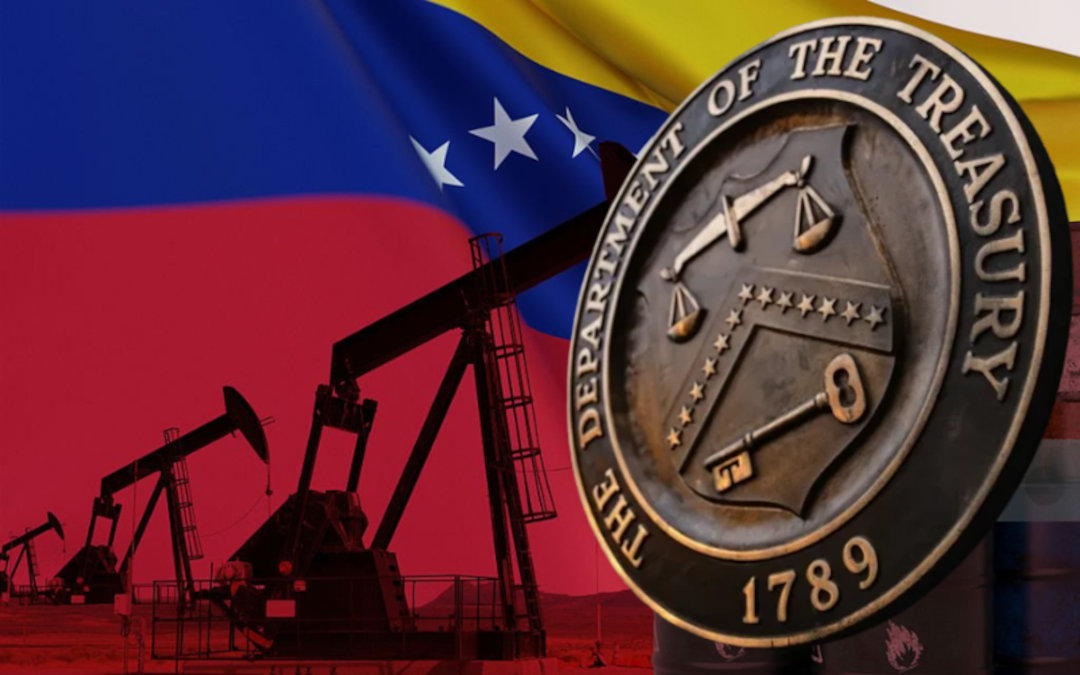
The Trump administration has issued sanctions waivers while mandating that royalty and tax payments be made to US Treasury-run accounts. (Archive)

In the wake of Washington’s January 3 military attack and then problematic détente with Caracas, corporate media suggest a meaningful shift in Venezuela policy, implying relief for a country long subjected to economic coercion. However, far from dismantling the sanctions regime, the US has merely adjusted its application through licensing mechanisms, leaving the core structure of coercive measures fully intact.

Reuters reported “US lifts some Venezuela sanctions,” followed by news of sanctions being further “eased.” Both NBC News and ABC News likewise reported sanctions “eased,” while the Financial Times wrote that Washington “relaxes sanctions.” Reuters later found that “US waives many of the sanctions,” and the Los Angeles Times noted “targeted relief from sanctions.” The Washington Office on Latin America (WOLA) described a “huge easing of sanctions.”

Not a single sanction has been rescinded

In fact, there is no evidence of any revocation of executive orders, removal of Venezuela-related sanctions authorities, and certainly no formal termination or suspension of Washington’s sanctions regime.

At a February 21 meeting I attended in Venezuela, Anti-Blockade Vice Minister William Castillo described sanctions as a “policy of extermination.” These measures, “the most cruel aggression against our people,” had been renewed the day before by Trump. To do so, he had to certify the original mistruth first fabricated by Barack Obama in 2015: that Venezuela poses an “extraordinary threat” to US national security.

Castillo cited 1,087 measures imposed by the US and another 916 by its echo, the European Union. These unilateral coercive measures have a corrosive effect on popular support for the government, which is precisely the purpose of this form of collective punishment, illegal under international law.

In 2023, Castillo described Washington’s economic aggression as a means to destroy Venezuela without having to invade. The Bolivarian Revolution’s successful resistance, including positive GDP growth while under siege, suggests why the US felt compelled to escalate with a military incursion on January 3, killing over 100 and kidnapping the country’s lawful head of state and his wife.

In Castillo’s words, the US escalated from “a war without gunpowder…against the civilian population” to an actual one. As grave as the direct US military aggression has been – including 157 fatalities since last September in alleged drug interdictions of small craft in the Caribbean and eastern Pacific – the body count from the coercive economic measures has been far higher. Former UN Special Rapporteur Alfred de Zayas estimated that sanctions have caused over 100,000 excess deaths.

There is even a literal playbook on how to apply sanctions to inflict “pain” on civilians for “maximum effectiveness.” The author of The Art of Sanctions is Richard Nephew, a former US State Department senior official in the Biden administration who was responsible for implementing such policies.

Licenses vs. sanctions

What has happened in practice is a much more limited form of relief under the sanctions regime. The Treasury’s Office of Foreign Asset Control (OFAC) has issued broad licenses allowing certain dealings primarily with Venezuela’s state oil (PDVSA) and gold (Minerven) sectors.

OFAC licenses carve out limited exceptions principally benefitting US and other foreign corporations, not necessarily the Venezuelan people. Activities are authorized that would otherwise be illegal under US law, even though such activities are lawful under international law. They come with conditions, limits, and reporting requirements and can be revoked at any time.

In practical terms, sanctions remain in place, although certain transactions are temporarily allowed under strict licensing rules. “The result is a hybrid scheme in which formal sanctions and operational licenses coexist, enabling limited flows of economic activity,” according to Misión Verdad.

This flexible arrangement of sanctions combined with licenses allows US and other foreign corporations to make a profit off of the coercive system. Under sanctions alone, the targeted people overwhelmingly suffer but, secondarily, US and other corporations are shut out. Under this hybrid system, control is maintained and money is made.

However, most foreign investors are reluctant to make important investment decisions when there is uncertainty, especially given Mr. Trump’s mercurial reputation. A temporary license does not provide the security that corporations normally require. Recuperating the Venezuelan oil industry would necessitate “a gigantic investment.” Such investments will be unlikely if Venezuela is sanctioned, the licenses notwithstanding.

Media framing and blaming

Meanwhile, Venezuelan President Nicolás Maduro and “First Combatant” Cilia Flores remain in a New York City jail, reportedly in solitary confinement.

Regarding what happened on January 3, corporate media sources overwhelmingly use relatively anodyne terms such as “downfall,” “removal,” or “ouster,” rather than the more pointed “kidnapping” or “abduction.” When the legality of this clearly illegal act of war is questioned by either the media or by the Democrats, it is mainly confined to whether President Trump required congressional approval.

Likewise, application of international law regarding the illegality of unilateral coercive measures is largely absent from media coverage. Where legal issues appear, they tend to address mechanics (e.g., the US-controlled fund arrangement), rather than whether sanctions themselves violate international law.

When media outlets express concern about Washington’s restrictions, it is often that easing them would “reward Maduro loyalists.” While the plight of the Venezuelan people may be acknowledged, the blame is mainly attributed to corruption and economic mismanagement, with little if any opprobrium for sanctions.

As former political science professor at the Universidad de Oriente Steve Ellner (pers. comm.), notes, corruption and mismanagement do exist. But the overwhelming factor has been the sanctions regime. The blockade targeted Venezuela’s oil industry – at one point accounting for 99% of foreign-exchange earnings – forcing the country out of normal dollar-denominated markets and into black markets to survive.

What Alfred de Zayas dubs the “human rights industry” similarly exhibits a convenient blind spot regarding sanctions. WOLA, for example, advocates “addressing the complex humanitarian emergency.” Yet the NGO strongly opposes sanctions relief for the people, because the coercive measures are such an effective “pressure” tool on the leadership.

Former WOLA staffer David Smilde is preoccupied with “restoring” American-style democracy by imposing pressure on the “regime.” He argues: “The democratic transition in Venezuela…requires the support of international organizations.”

In contrast, acting President Delcy Rodríguez views ending interference by foreign actors in Venezuela’s internal affairs as a precondition for credible elections. In particular, she calls for the US “blockade and sanctions against Venezuela [to] cease.” With sanctions still in place, the US remains the biggest obstacle to free and fair elections in Venezuela.

Roger D. Harris is with the Venezuela Solidarity Network, Task Force on the Americas, and the US Peace Council. He recently visited Venezuela.

The views expressed in this article are the author’s own and do not necessarily reflect those of the Venezuelanalysis editorial staff.


Source link

The signs say Uniqlo Field. You will continue to say Dodger Stadium

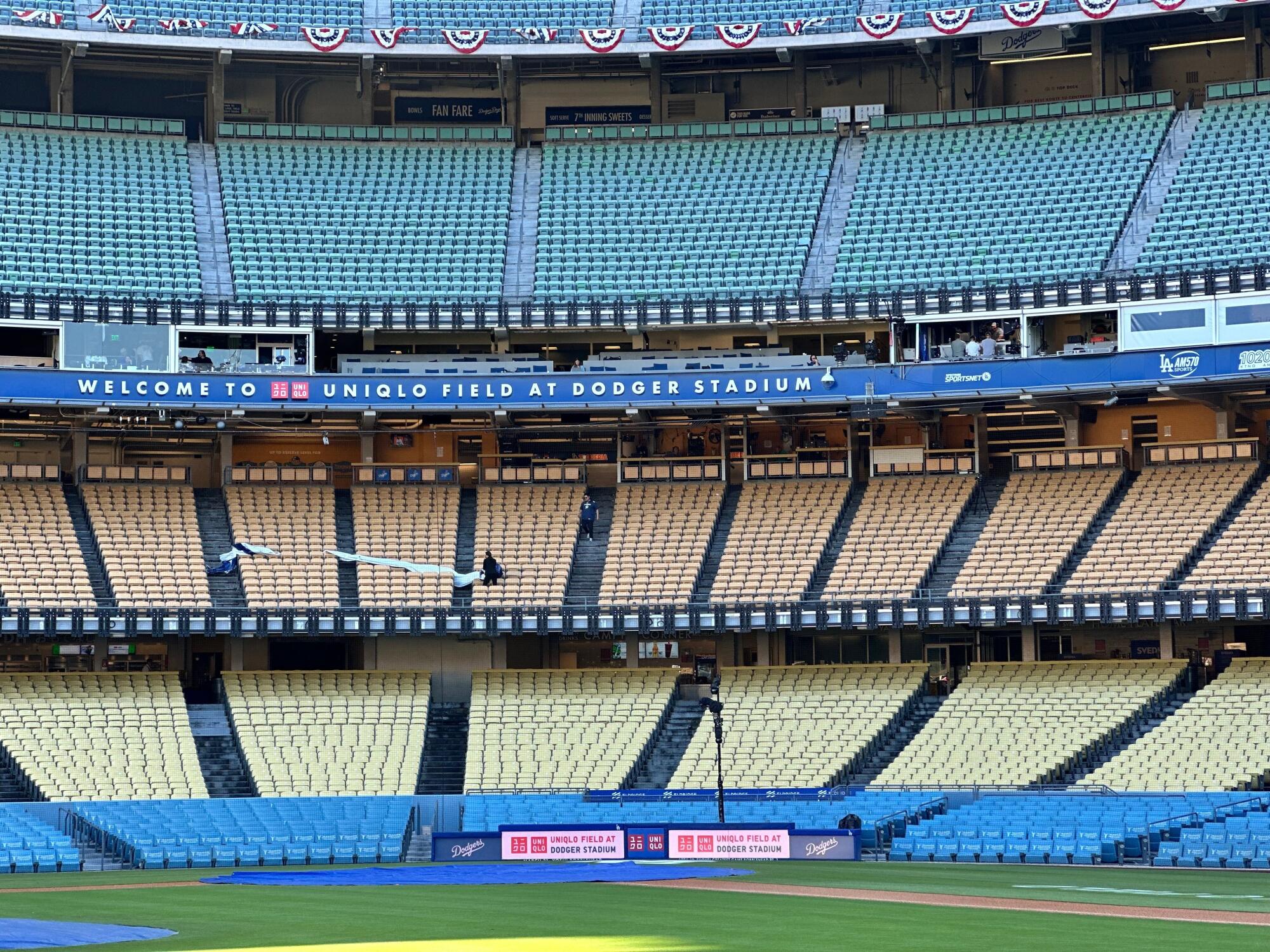
It was Dodger Stadium on Wednesday, when the grass outside the baseline and the bright red sign high above center field read “UNIQLO FIELD.” It will be Dodger Stadium on Thursday, when the defending World Series champions open their new season, and forevermore.

The official name of our summer home is now Uniqlo Field at Dodger Stadium. The team announcers will say that, and so will some of the signs. The fans won’t, and the founder of the company that just spent nine figures on the name you won’t use said he completely understands.

“That’s a very natural reaction,” Uniqlo founder Tadashi Yanai told me through an interpreter. “We respect that.”

Yanai said his company’s deal with the Dodgers covers five years. He would say only that the total value was “more” than $125 million. That provides the Dodgers with an annual naming rights payment in line with the ones at Crypto.com Arena, Intuit Dome and Sofi Stadium, without the Dodgers having to sell naming rights to the actual venue.

Are the Dodgers baseball’s version of a gold mine? Yes. Do they spend big and win big? Also yes. Do you mind if Uniqlo essentially covers Freddie Freeman’s salary this season?

“We need a lot of revenue to put out the product that we do,” Dodgers president Stan Kasten said. “That’s not a secret. And we’re proud of everyone who helps us do it: all of our fans, all of our media partners, and all of our sponsor partners. They are all important. It is how this all comes together.”

While Uniqlo would be delighted if you used its name, whatever local fans choose to call the stadium is not critical to the success of the partnership.

For a Japanese company in pursuit of brand awareness and expansion in the United States and elsewhere, there might be nothing better than getting your name in front of millions of fans around the world watching Shohei Ohtani play on television.

Ohtani made an estimated $125 million in endorsements and sponsorships last year, Sportico reported, a larger annual haul “than any other athlete in the history of sports.”

“The Dodgers are such a popular team,” Yanai said. “I usually ask my wife, after I come back from the office, whether Shohei hit a home run. I think all the Japanese people do that.”

Uniqlo Field signs were unveiled Wednesday at Dodger Stadium in the wake of the team's naming rights deal.

Uniqlo Field signs were unveiled Wednesday at Dodger Stadium in the wake of the team’s naming rights deal.

(Beth Harris / Associated Press)

According to Forbes, Yanai is the richest man in Japan, where baseball teams carry corporate names. Why not buy a team and call it, say, the Uniqlo Bears?

“I always keep saying that could be very interesting,” he said, “but my wife turned it down. She keeps telling me, ‘Tadashi, you are not cut out to manage sports teams.’”

Instead, he is managing Uniqlo, an apparel company that pitches itself as blending comfort with quality. “We do not make disposable clothing,” Yanai said in the company’s last annual report.

Uniqlo has 794 stores in Japan but only 77 in the United States, including 14 in the Southland. Koji Yanai, a senior executive officer and Tadashi’s son, said the company aspires to grow annual U.S. revenues from $6 billion to $30 billion.

He shared what might be a more challenging aspiration.

“The Uniqlo Field at Dodger Stadium name may be very new for everyone,” he said, “but I hope in the near future the fans will like it and will love it.”

United Airlines Field at the Coliseum? Yeah, no.

Jeff Marks, the chief executive of Los Angeles-based Innovative Partnerships Group, once brokered a naming rights deal in which the Cal football team would play on Kabam Field at California Memorial Stadium. He tried to find a receptive audience for the name.

“We educated a lot of freshmen, sophomores, and newcomers,” Marks said. “Are you going to go after alumni who have been calling it Memorial Stadium? No. So you didn’t focus on that. You focused on people that could be more impressionable, and it worked.”

With Dodger Stadium, we’ll see. For the 2026 season, it is now time for Dodgers baseball, but not before one reporter at a press conference Wednesday asked company officials whether Uniqlo would provide the Dodgers players with free clothing.

Kasten could not pass up the chance to interject.

“We pay them enough,” he said with a grin, “to shop at Uniqlo stores.”

Source link

Mexico will continue accepting Cuban medical workers despite US pressure | Donald Trump News

Mexican President Claudia Sheinbaum praises services from Cuban doctors, who often work in underserved rural areas.

Mexican President Claudia Sheinbaum has confirmed that her country will continue receiving Cuban medical workers, as part of a longstanding programme meant to build goodwill between the island and other Latin American countries.

Her remarks on Wednesday come as the United States pressures Latin American countries to sever their ties to Cuba’s medical programme.

Recommended Stories

list of 3 itemsend of list

Sheinbaum, however, told reporters during a news conference that the agreement was a benefit to Mexico. Thousands of Cuban medical workers have deployed there since 2022 to work largely in poor, rural areas.

“We have a very good agreement that’s also been a great help to us. It’s a bilateral agreement that’s been very beneficial for Mexico,” said Sheinbaum.

“It’s hard to get Mexican doctors and specialists to go out to many rural areas where we need medical specialists, and the Cubans are willing to work there.”

In February, the US passed a law that opens the door to sanctions on countries that continue to participate in the programme.

It called for the US secretary of state to issue a report within 90 days about which countries continue to pay the government of Cuba for the “coerced and trafficked labour of Cuban medical professionals”.

The move comes amid a wider push to further isolate Cuba and topple the government in Havana, a longtime target of US ire. So far, countries including the Bahamas, Honduras, Guatemala, Jamaica and Guyana have ended their participation in the Cuban medical exchange programme.

Cuba has long depicted the decades-old programme as a means of signalling solidarity with other countries. It has also become an important source of foreign revenue for the island nation, which has been under a restrictive US economic embargo since 1960.

The administration of US President Donald Trump, however, has depicted the programme as akin to forced labour.

“Basically, it’s human trafficking,” Secretary of State Marco Rubio told reporters in February.

“I mean, they’re barely even being paid. Their freedom of movement is tightly restricted. And we want these countries to understand that’s what they’re participating in.”

Experts at the United Nations have also raised similar concerns, including about the confiscation of passports, which the Cuban government justifies as a means of preventing trained doctors from fleeing the country after their state-sponsored studies.

The pressure on the Cuban medical missions is part of a broader push under Trump’s second term to seek regime change on the island.

By threatening tariffs on Cuba’s trading partners, Trump has largely cut the island off from accessing the foreign oil necessary to power its electrical grid.

Trump has also said that he hopes to “take” Cuba and install a new government that will be more pliant to US demands.

The Mexican government has tried to balance its friendly relations with Cuba with the US’s demands.

In the absence of energy shipments, Sheinbaum’s government has sent vessels with humanitarian aid to the island.

Source link

Kent meningits cases rise to 27, student vaccinations continue

March 19 (UPI) — The number of cases of meningitis in Kent has risen to 27, the United Kingdom Health Security Agency reported.

There are 15 confirmed cases, and 12 suspected cases, meaning health professionals suspect the illness based on symptoms.

Two people have died since the outbreak began: One high school student and a college student at the University of Kent.

“What is particularly remarkable about this case, and unexpected about this case, is the large number of cases all originating from what seems to be a single event,” Robin May, chief scientific officer at the UKHSA, told The Guardian.

Officials believe some students picked up the disease at Club Chemistry, a nightclub in Canterbury.

“There are two possible reasons for that,” May said. “One is that there might be something about the kind of behaviors that individual people are doing. The other possibility is the bacteria itself may have evolved to be better at transmitting.”

Students at the university are being given preventive antibiotics and vaccines effective against the strain of meningitis B. Officials have given 600 vaccines and 6,500 doses of antibiotics.

Canterbury Christ Church University in Kent confirmed that a student had meningitis, and four schools have seen confirmed cases.

The UKHSA said there was one student with meningitis at a college in London whose case was linked to the Kent outbreak.

Meningitis is an infection of the protective lining of the brain and spinal cord. It can be caused by bacteria or viruses. Meningitis B is caused by the Neisseria meningitidis bacteria, which is also called meningococcus.

Doctors in England were told on Wednesday to prescribe antibiotics to anyone who was at Club Chemistry between March 5 and 7 and to University of Kent students who had left the campus.

“Two doses of the MenB vaccine helps protect individuals against meningococcal B disease,” but not other strains of meningitis, said Trish Mannes, UKHSA regional deputy director for the south east, in a statement. “It is therefore still hugely important that people are aware of the signs and symptoms of invasive meningococcal disease and that they seek immediate medical attention if they or anyone they know develops these signs and symptoms.”

The UKHSA said the National Health Service was well stocked with vaccines after pharmacies reported they were struggling to get them.

Health Secretary Wes Streeting told the BBC there is no reason for people to buy it privately.

“We make it available through the NHS to those groups at risk based on independent scientific advice,” he said.

“In recent days, here in Canterbury we’ve made it more widely available than we normally would to targeted groups of students, club-goers, sixth-formers [older teens] where we think there is a higher risk. We’re doing this as a precaution.”

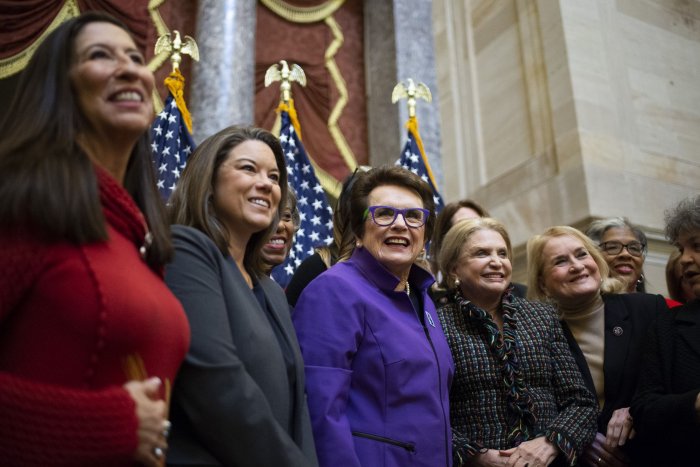
Founder of the Women’s Tennis Association and tennis great Billie Jean King (C) smiles with representatives after speaking during an annual Women’s History Month event in celebration of the 50th anniversary of Title IX in Statuary Hall at the U.S .Capitol in Washington on March 9, 2022. Women’s History Month is celebrated every March. Photo by Bonnie Cash/UPI | License Photo

Source link

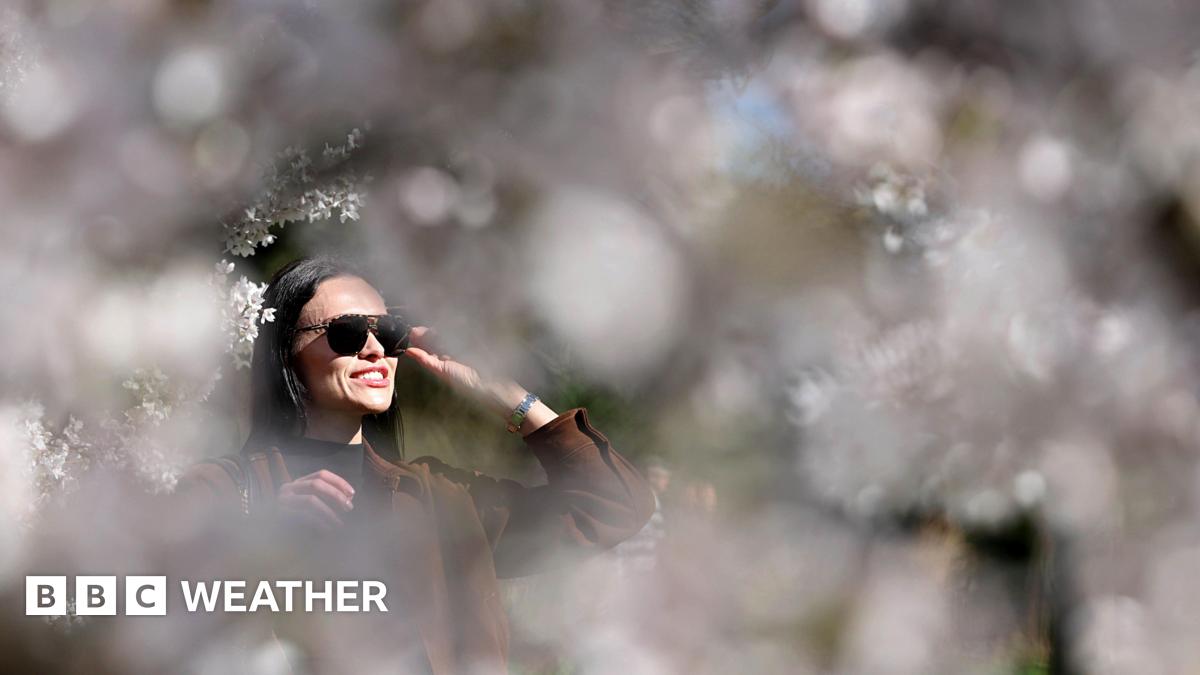
UK weather: Warm settled weather set to continue into the weekend

From early next week, a change in wind direction will bring lower temperatures.

A north-westerly wind will drag in some colder air with temperatures on Monday actually falling below average in Scotland and Northern Ireland.

It will also temporarily turn more unsettled with an area of low pressure tracking across Scotland into Tuesday.

This will bring some showers which could turn a little wintry over the higher ground of Scotland, northern England and Wales.

Feeling chilly early next week too with temperatures ranging from 6C in northern Scotland to 13C in south-east England.

Looking further ahead, there are signs that high pressure will return to bring the settled weather back for the start of the Easter school holidays.

You can stay up to date with the details of that on our monthly outlook.

Source link

L.A. will continue to fund eviction defense program

A dispute over the city of Los Angeles’ eviction defense program came to an end Tuesday when the City Council approved millions of dollars in funding for the next 15 months.

The program, Stay Housed L.A., started in 2021 and provides thousands of renters with legal representation in eviction proceedings as well as other services.

Tenant advocates feared that the new contract, which passed 12 to 1 and funds an initial portion of a three-year, $177-million contract, was under threat after City Atty. Hydee Feldstein Soto urged the council to reconsider it in a confidential memo last week.

Feldstein Soto said she had concerns about awarding such a large contract to Legal Aid Foundation of Los Angeles, which frequently sues the city over homelessness issues.

Legal Aid is the main legal service provider under the Stay Housed L.A. contract, which also funds Southern California Housing Rights Center for short-term emergency rental assistance, Liberty Hill Foundation for tenant outreach and Strategic Actions for a Just Economy to protect tenants from harassment.

The city’s Housing Department had recommended a three-year contract, but the council opted for a shorter period that can be extended.

Legal Aid has argued that its lawsuits against the city are unrelated to its eviction defense work under the Stay Housed L.A. contract.

“We are very relieved that our services can continue uninterrupted,” said Barbara Schultz, director of housing justice for Legal Aid, in an interview after the vote.

Feldstein Soto, who is running for reelection, said in a statement that her office wanted to make sure the city wasn’t giving a “blank check” to Legal Aid without requiring detailed reporting of finances and outcomes.

“The eviction defense program is a city program and is in zero jeopardy,” she said. “What is in question is a $177-million blank check to [Legal Aid] and its partners without the reports and invoice review that is required by law. That is an amount that exceeds the budget of numerous city departments.”

On Tuesday, the City Council added a requirement that the nonprofits in the program provide “performance metrics” including the number of tenants served, case outcomes and demographic data.

Schultz said that Legal Aid already provides monthly data to the city.

John Lee was the only councilmember who voted against the new contract, saying he was not comfortable with the new “transparency requirements.”

Since its inception, Stay Housed L.A. has opened about 26,000 cases overall, providing full representation for 6,150 cases and working on nearly 20,000 “limited scope” cases, according to data from Legal Aid. The original contract, which is set to lapse at the end of the month, was for about $90 million.

The program is funded by Measure ULA, the “mansion tax” passed by city voters in 2022. On Tuesday, the council included a provision that would allow it to cease funding the eviction defense program if Measure ULA were overturned.

Source link

U.S. Gas prices over $3.50 per gallon as strikes on Iran continue

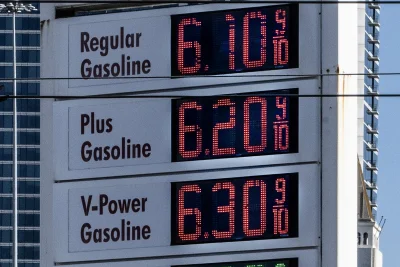
March 10 (UPI) — The average price of a gallon of unleaded gas in the United States hit $3.54 on Tuesday as the Trump administration continues military action against Iran.

AAA reports the current average price for fuel is higher across all grades than it was a year ago. Diesel fuel is up more than 10 cents over Monday’s average, reaching $4.78 per gallon.

Prices are highest on the West Coast, as they typically are, with the highest average cost of a gallon of unleaded gas at $5.29 in California.

Tuesday’s average price marks the highest gas prices have been since July 2024.

Gas prices spiked following bombings in Iran by Israel and the United States on Feb. 28. On Feb. 26, the average price per gallon was $2.98 after months of mild fluctuation.

The price of a barrel of crude oil jumped from $91 to $116 on Sunday.

President Donald Trump urged that the increase in oil prices is temporary and a “small price to pay,” in a post on social media.

Iran has closed the Strait of Hormuz, a crucial route in the oil trade, due to the ongoing conflict with the United States and Israel. About 20% of the world’s oil is shipped through the strait.

Trump told CBS News that he “has thought about taking [the Strait of Hormuz] over.”

Rising gas prices have caused concern for Republicans on Capitol Hill. Senate Majority Leader John Thune, R-S.D., said he hopes to see “things can resume some sense of normalcy in that region in terms of shipping lanes.”

Sen. Lisa Murkowski, R-Alaska, has been more skeptical about the president’s strategy with Iran and its impact on oil prices.

“For heaven’s sakes, are you telling me you didn’t game this one out?” Murkowski told Punchbowl News. “I’m starting to think they didn’t game this one out.”

Source link

UAE president says prepared to confront ‘threats’ as Iran attacks continue | Infrastructure News

The president of the United Arab Emirates spoke for the first time on the widening war in the Middle East as Iran continues to strike Gulf countries hosting US military assets with drones and missiles.

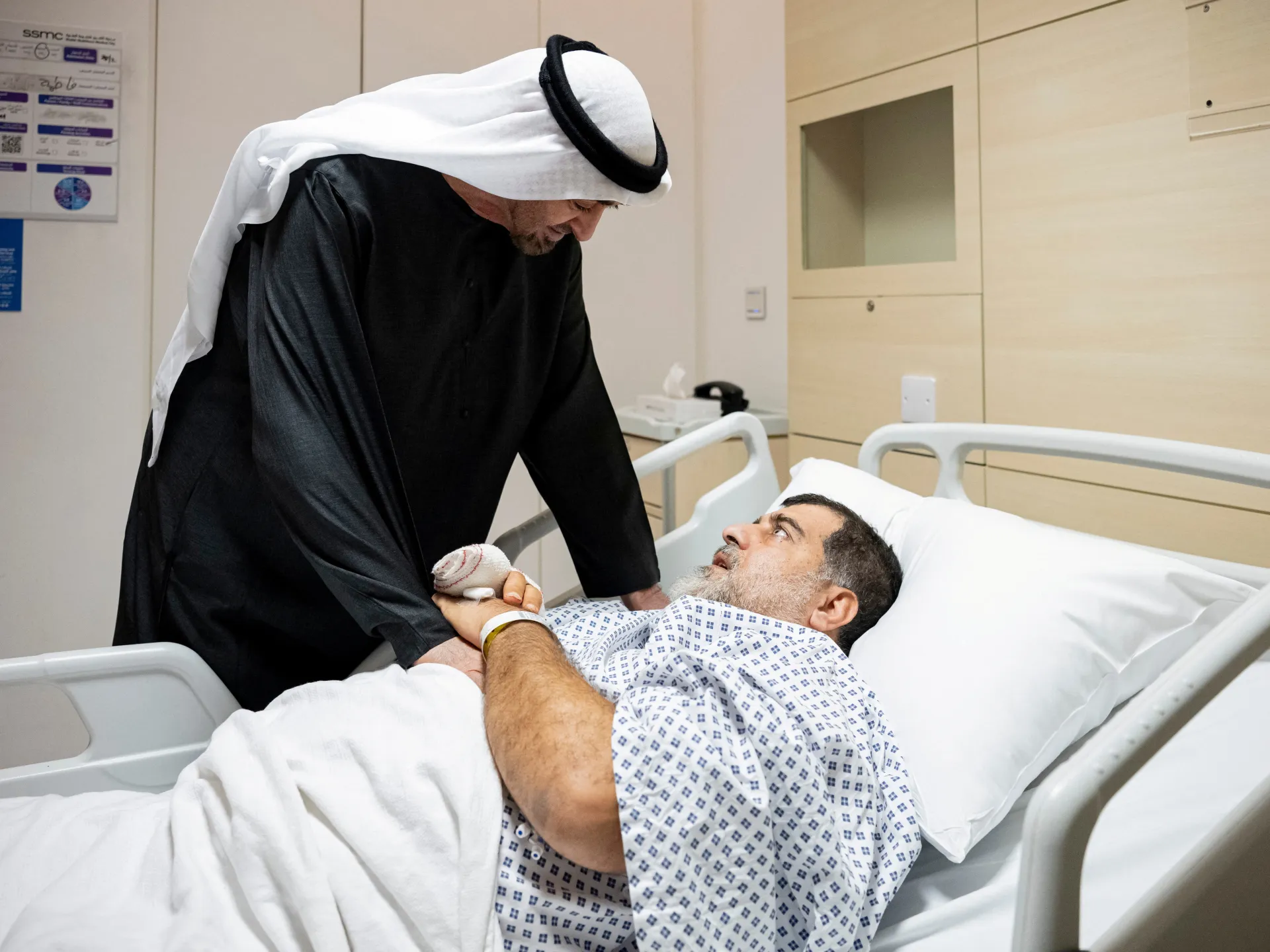
“The UAE has thick skin and bitter flesh – we are no easy prey,” said Sheikh Mohamed bin Zayed Al Nahyan in comments aired by Abu Dhabi TV on Saturday as he visited wounded patients in a hospital.

Recommended Stories

list of 4 itemsend of list

He added the UAE is in “a period of war” but would “emerge stronger”.

In a social media post, Sheikh Mohamed said the UAE, which has seen attacks affecting hubs such as airports, tourist attractions, and the US consulate in Dubai, is prepared to confront “threats” against the “security and the protection of all citizens”.

One driver was killed when debris from an intercepted projectile slammed into his vehicle, Dubai’s Media Office said, describing the victim as Asian but providing no further details.

Sheikh Mohamed’s comments were aired as the region entered a second week of war sparked by a major US-Israeli attack on Iran.

Earlier, Iranian President Masoud Pezeshkian offered an apology to neighbouring nations for launching strikes on their countries housing US military bases. His comments were swiftly contradicted by Iranian judiciary chief Gholamhossein Mohseni Ejei, also a member of the interim leadership council.

“Evidence from Iran’s armed forces shows that the geography of some countries in the region is openly and covertly at the disposal of the enemy,” he said. “The heavy attacks on these targets will continue.”

Pezeshkian himself rolled back on his remarks that Gulf countries would not be targeted unless attacks originated from their territories, caveating that while his country emphasised “the preservation and continuation of friendly relations,” Iran still has an “inherent right” to defend itself against US-Israeli aggression.

Iran’s Foreign Minister Abbas Araghchi also clarified the leader’s comments on X, saying, “President Pezeshkian expressed openness to de-escalation within our region – provided that our neighbours’ airspace, territory, and waters are not used to attack the Iranian people.”

Iran retaliates after attack on water supplies

All the Gulf Cooperation Council (GCC) nations – Saudi Arabia, Qatar, the United Arab Emirates, Kuwait, Bahrain and Oman – have been targeted because of the presence of US assets within and around their borders.

In the Gulf, the deadly attacks have caused major disruption to flights, closure of airspace, and heavy knock-on impacts on oil-and-gas production reverberating across the world.

On Saturday, Iranian state media reported the country’s Islamic Revolutionary Guard Corps targeted US forces at Bahrain’s Jufair airbase in retaliation for an attack on a freshwater desalination plant on Qeshm Island.

Araghchi called the US attack on the plant a “dangerous move with grave consequences”, accusing the US of committing a “blatant and desperate crime”, which affected the water supply to 30 villages.

Iran’s parliament speaker, Mohammad Bagher Ghalibaf, later said the attack was carried out with support from one of the airbases in a southern neighbouring country, stressing nations will not enjoy peace as long as the US has bases in the region.

Harlan Ullman, a senior adviser with the Atlantic Council, told Al Jazeera that attacks on water supplies could bring “greater chaos” to the Gulf.

“About 95 percent of all water in the Gulf comes from desalination,” he said. “If Iran wants to target desalination and water installation plants, they can bring the Gulf to a halt.”

Other attacks on Gulf

The UAE, a US ally and home to US military installations, has been the most heavily targeted nation in the Gulf during the war.

The Emirati Ministry of Defence said on Saturday it was targeted with 16 ballistic missiles and more than 120 drones.

Hours after Pezeshkian’s apology, the IRGC said their drones struck a US air combat centre at al-Dhafra airbase near Abu Dhabi, capital of the UAE.

Later, an unidentified object was intercepted near Dubai airport, the world’s busiest for international traffic, forcing it to briefly suspend operations.

Iranian attacks also hit Abu Dhabi airport, the upmarket Palm Jumeirah development, and the Burj Al Arab luxury hotel over the past week, while drone debris caused a fire at the US consulate in Dubai.

Also on Saturday, Qatar’s armed forces intercepted a missile attack, according to the Ministry of Defence. No immediate details were released about possible damage or casualties.

In Saudi Arabia, the defence ministry said a ballistic missile landed in an uninhabited area after being launched towards Prince Sultan Air Base, southeast of Riyadh, which hosts US troops.

Kuwait also reported intercepting a drone while the country’s national oil company announced a “precautionary” cut to its production of crude because of Iranian attacks and threats to the Strait of Hormuz, a key transit point for Gulf hydrocarbons.

Iran to select new supreme leader

Posting on social media on Saturday, US President Donald Trump warned his country would hit Iran “very hard” and threatened to expand strikes to include new targets.

Speaking at an event hosting Latin American leaders in Miami, Florida, Trump said on Saturday his country’s forces sank 42 Iranian navy ships in three days.

Israel launched what its military described as a new wave of strikes on Tehran and Isfahan. The military said on Saturday that more than 80 fighter jets completed a wave of strikes on Iranian army sites, missile launchers and other targets.

In a statement, the army said targets hit in Iran included missile storage sites, ballistic missile launchers and military facilities linked to Iran’s security forces.

Among the attacks, it said it struck 16 aircraft at Tehran’s Mehrabad airport, which belonged to the Quds Force branch of Iran’s Revolutionary Guard overseeing its foreign operations.

The Israeli military reported missiles were fired from ‌Iran at Israel on eight different occasions on Saturday, setting off air raid sirens in parts of the country and actioning air defences.

Iranian state media reported Saturday that the IRGC hit a Marshall Islands-flagged tanker in Hormuz.

Iran’s Assembly of Experts will be meeting in the next 24 hours to choose a new supreme leader, according to assembly member Ayatollah Mozafari.

Iran’s ambassador to the United Nations, Amir Saeid Iravani, has rejected Trump’s demands to have a say in selecting Iran’s new supreme leader.

Source link